
Skip to Content Facebook Feature Image

Japanese manufacturers are slightly more optimistic despite Trump tariff worries

News

Japanese manufacturers are slightly more optimistic despite Trump tariff worries
News

News

Japanese manufacturers are slightly more optimistic despite Trump tariff worries

2025-07-01 10:18 Last Updated At:10:30

TOKYO (AP) — Business sentiment among large Japanese manufacturers has improved slightly, according to a survey by Japan’s central bank released Tuesday, although worries persist over President Donald Trump’s tariffs.

The Bank of Japan’s quarterly tankan survey said an index for large manufacturers rose to plus 13 from plus 12 in March, when it marked the first dip in a year. The survey is an indicator of companies foreseeing good conditions minus those feeling pessimistic.

Major manufacturers include auto and electronics sectors, whose exports to the U.S. drive the Japanese economy.

U.S. auto tariffs are a worry for major manufacturers like Toyota Motor Corp., but some analysts note global auto sales have held up relatively well in recent months.

The U.S. has imposed 25% tariffs on auto imports. Japanese automakers have plants in Mexico, where Trump has announced a separate set of tariffs. The U.S. has also imposed 50% tariffs on steel and aluminum.

Japanese officials have been talking frequently with the Trump administration, stressing that Japan is a key U.S. ally.

Trump posted on his social media site Monday that Japan wasn’t buying enough rice from the U.S. “They won’t take our RICE, and yet they have a massive rice shortage,” the president wrote, adding that a letter to Japan was coming.

Also on Monday, National Economic Council director Kevin Hassett told reporters at the White House that Trump “is going to finalize the frameworks we negotiated with a whole bunch of countries after the weekend.”

The Bank of Japan, which has kept interest rates extremely low for years to encourage growth, is expected to continue to raise interest rates, but some analysts expect that to wait until next year.

The central bank raised its benchmark rate to 0.5% from 0.1% at the start of this year and has maintained that rate. The next Bank of Japan monetary policy board meeting is at the end of this month. The tankan findings work as important data in weighing a decision.

The weak yen has raised the cost of materials for Japan at a time when the U.S. dollar has been trading at around 140 yen, up considerably from about 110 yen five years ago. A weak yen is a boon for Japan’s exporters by boosting the value of their earnings when converted into yen.

The tankan showed sentiment for large non-manufacturers fell to plus 34 from plus 35. That was better than some forecasts, which projected a deeper decline.

The Japanese government reported last week that the nation’s unemployment rate in May stood at 2.5%, unchanged from the previous month.

Yuri Kageyama is on Threads: https://www.threads.net/@yurikageyama

FILE - The headquarters of Bank of Japan (BOJ) is seen in Tokyo, on Aug. 18, 2023. (AP Photo/Shuji Kajiyama, File)

FILE - The headquarters of Bank of Japan (BOJ) is seen in Tokyo, on Aug. 18, 2023. (AP Photo/Shuji Kajiyama, File)

A Ukrainian drone strike killed one person and wounded three others in the Russian city of Voronezh, local officials said Sunday.

A young woman died overnight in a hospital intensive care unit after debris from a drone fell on a house during the attack on Saturday, regional Gov. Alexander Gusev said on Telegram.

Three other people were wounded and more than 10 apartment buildings, private houses and a high school were damaged, he said, adding that air defenses shot down 17 drones over Voronezh. The city is home to just over 1 million people and lies some 250 kilometers (155 miles) from the Ukrainian border.

The attack came the day after Russia bombarded Ukraine with hundreds of drones and dozens of missiles overnight into Friday, killing at least four people in the capital Kyiv, according to Ukrainian officials.

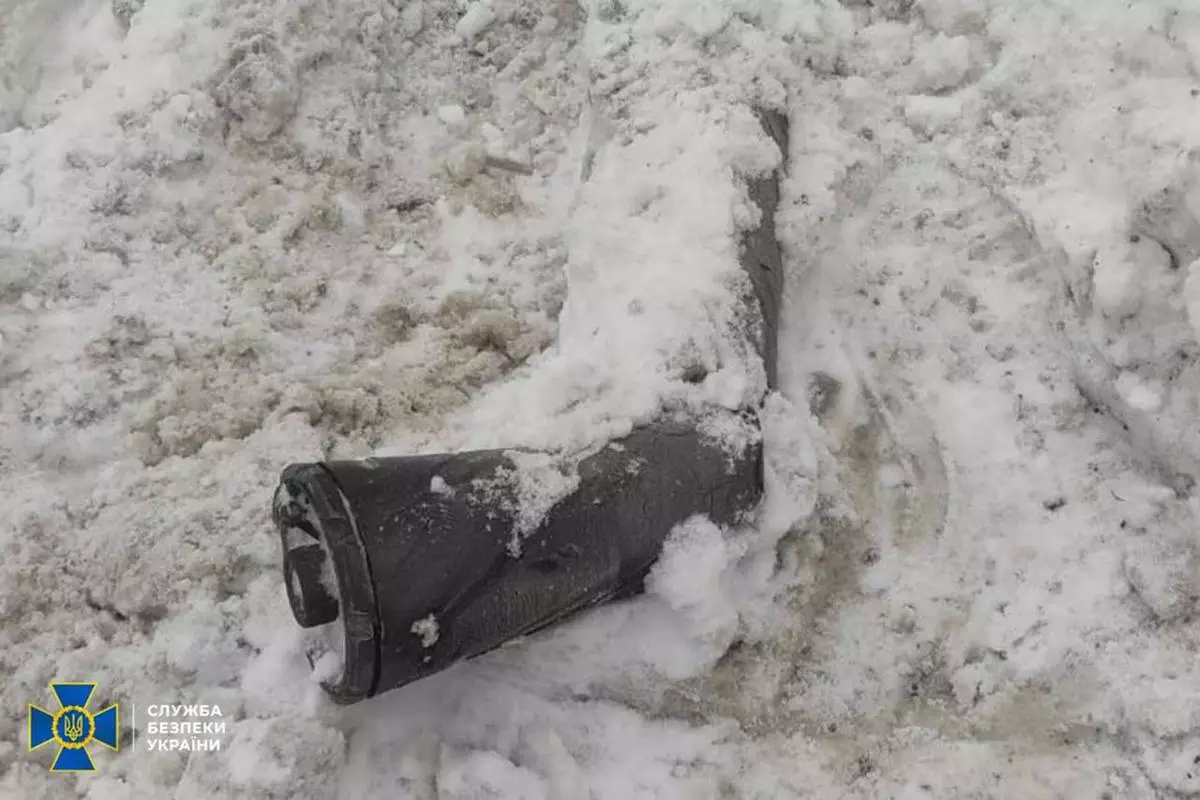
For only the second time in the nearly four-year war, Russia used a powerful new hypersonic missile that struck western Ukraine in a clear warning to Kyiv and NATO.

The intense barrage and the launch of the nuclear-capable Oreshnik missile followed reports of major progress in talks between Ukraine and its allies on how to defend the country from further aggression by Moscow if a U.S.-led peace deal is struck.

Ukrainian President Volodymyr Zelenskyy said Saturday in his nightly address that Ukrainian negotiators “continue to communicate with the American side.”

Chief negotiator Rustem Umerov was in contact with U.S. partners Saturday, he said.

Separately, Ukraine’s General Staff said Russia targeted Ukraine with 154 drones overnight into Sunday and 125 were shot down.

Follow the AP’s coverage of the war in Ukraine at https://apnews.com/hub/russia-ukraine

This photo provided by the Ukrainian Security Service on Friday, Jan. 9, 2026, shows a fragment believed to be a part of a Russian Oreshnik intermediate range hypersonic ballistic missile that hit the Lviv region. (Ukrainian Security Service via AP)

This photo provided by the Ukrainian Security Service on Friday, Jan. 9, 2026, shows a fragment believed to be a part of a Russian Oreshnik intermediate range hypersonic ballistic missile that hit the Lviv region. (Ukrainian Security Service via AP)

President of Ukraine Volodymyr Zelenskyy, second left, listens to British Defense Secretary John Healey during their meeting in Kyiv, Ukraine, Friday, Jan. 9, 2026. (AP Photo/Danylo Antoniuk)

President of Ukraine Volodymyr Zelenskyy, second left, listens to British Defense Secretary John Healey during their meeting in Kyiv, Ukraine, Friday, Jan. 9, 2026. (AP Photo/Danylo Antoniuk)

Recommended Articles