Skip to Content Facebook Feature Image

Hong Kong Launches Southbound Travel Scheme to Enhance Connectivity with Guangdong and Boost Economic Development

HK

Hong Kong Launches Southbound Travel Scheme to Enhance Connectivity with Guangdong and Boost Economic Development
HK

HK

Hong Kong Launches Southbound Travel Scheme to Enhance Connectivity with Guangdong and Boost Economic Development

2025-07-02 23:22 Last Updated At:23:38

Policy announcement of Southbound Travel for Guangdong Vehicles

​The Hong Kong Special Administrative Region Government today (July 2) announced the policy direction of Southbound Travel for Guangdong Vehicles (the Southbound Travel Scheme).

The Southbound Travel Scheme is an important measure to promote the facilitation of the flow of people and vehicles between Hong Kong and the Mainland as well as the transport and logistics development through the study and formulation of transport policies between Hong Kong, Macao and the Mainland, thereby duly implementing the Outline Development Plan for the Guangdong-Hong Kong-Macao Greater Bay Area as well as the requirements of relevant documents of the Central Government. With the agreement of Guangdong and the strong support of the Central Government, Guangdong and Hong Kong have been discussing and taking forward the policy through the task force for collaboration on Guangdong-Hong Kong transportation, and reached a consensus on expediting the implementation of the policy of the Southbound Travel Scheme.

The automated carparks of the Airport Authority Hong Kong (AAHK) at the Hong Kong-Zhuhai-Macao Bridge (HZMB) Hong Kong Port is a part of the Southbound Travel Scheme, providing "park and fly" arrangements before the Hong Kong control point. As for the entry into the urban area via the HZMB, Guangdong and Hong Kong have made advance planning, and will strive to implement it simultaneously in November this year, allowing Mainland residents to apply. The booking procedure for using the port carpark is relatively simple, while Guangdong vehicles entering into the urban area are required to undergo vehicle inspection and other procedures. Therefore, it is expected that Guangdong vehicles will start using the port carpark first, and will also be able to enter into the urban area within this year.

The Secretary for Transport and Logistics, Ms Mable Chan, said, "Since its successful launch in July 2023, Northbound Travel for Hong Kong Vehicles (the Northbound Travel Scheme) has become increasingly popular among Hong Kong citizens. The Northbound Travel Scheme is a mutual arrangement with the Southbound Travel Scheme. Eligible single-plate private cars of Guangdong can apply to travel to Hong Kong via the HZMB through an innovative and simple route, which facilitates mutual visits between residents of the two places and meets the expectations of mutual engagement. Not only will it attract different types of travellers, but also facilitate visits by relatives, friends and business partners in Guangdong, which in turn promote social exchanges, benefit many trades and sectors in Hong Kong, as well as promote the integration of the Greater Bay Area."

For the Northbound Travel Scheme, over 100 000 Hong Kong vehicles have participated, which means that one out of every five vehicles has joined. The usage of the HZMB has also hit new highs. In May this year, the two-way traffic throughput reached 450 000 trips, which was an average of about 15 000 trips per day, an increase of about 170 per cent compared to before the implementation of the Northbound Travel Scheme, among which vehicles travelling under the Northbound Travel Scheme accounted for about 40per cent of the two-way traffic throughput of the HZMB, which amounted to an average of about 6 000 trips per day. We have been working with the Guangdong Provincial Government to optimize the scheme in various aspects, including improving port clearance efficiency, streamlining booking arrangements, etc, with a view to providing Hong Kong citizens with better experiences.

For the Southbound Travel Scheme, the AAHK's "Park & Fly" carpark has 1 800 spaces, and the AAHK has developed the booking system. This arrangement will further attract Mainland residents to transfer flight via the Hong Kong International Airport (HKIA), which fully reflects Hong Kong's status as an international aviation hub. For entry into the urban area, it will start with a small-scale 100 daily booking quota to test the system and procedural arrangements. We will closely monitor the operation, as well as take into consideration the traffic at the port and nearby roads, users' adaptation, social responses, etc, and take it forward in a prudent and manageable manner, that is, to take a "small-and-quick step" approach for accumulating implementation experience, and then increasing the number of quota. In the meantime, the AAHK is taking forward the "Park & Visit" carpark at the HZMB port, which allows Mainland residents to "park and ride" for visiting the facilities on the Airport Island, and then different places in Hong Kong.

From now until November this year, the governments of Guangdong and Hong Kong will continue to actively formulate implementation arrangements for the Southbound Travel Scheme in a prudent and orderly manner, including management arrangements, system interface, construction works, facilitation measures, port clearance, monitoring measures, insurance arrangements, publicity work, and full-scale drills (relevant information at Annex), so that the scheme will be orderly implemented, welcomed by users, to the satisfaction of the public, and beneficial to the community at large. We strive to announce the details as soon as possible within this year.

The Southbound Travel Scheme will open up a new mode of southbound travel for Mainland residents. We welcome travellers with different travel purposes to use the HKIA or stay in Hong Kong, which will benefit the tourism, business, exhibitions, entertainment, professional services, shopping, catering, and other sectors in different districts. Along the above, the Southbound Travel Scheme will further promote the integration of the Greater Bay Area and benefit Hong Kong's economic development.

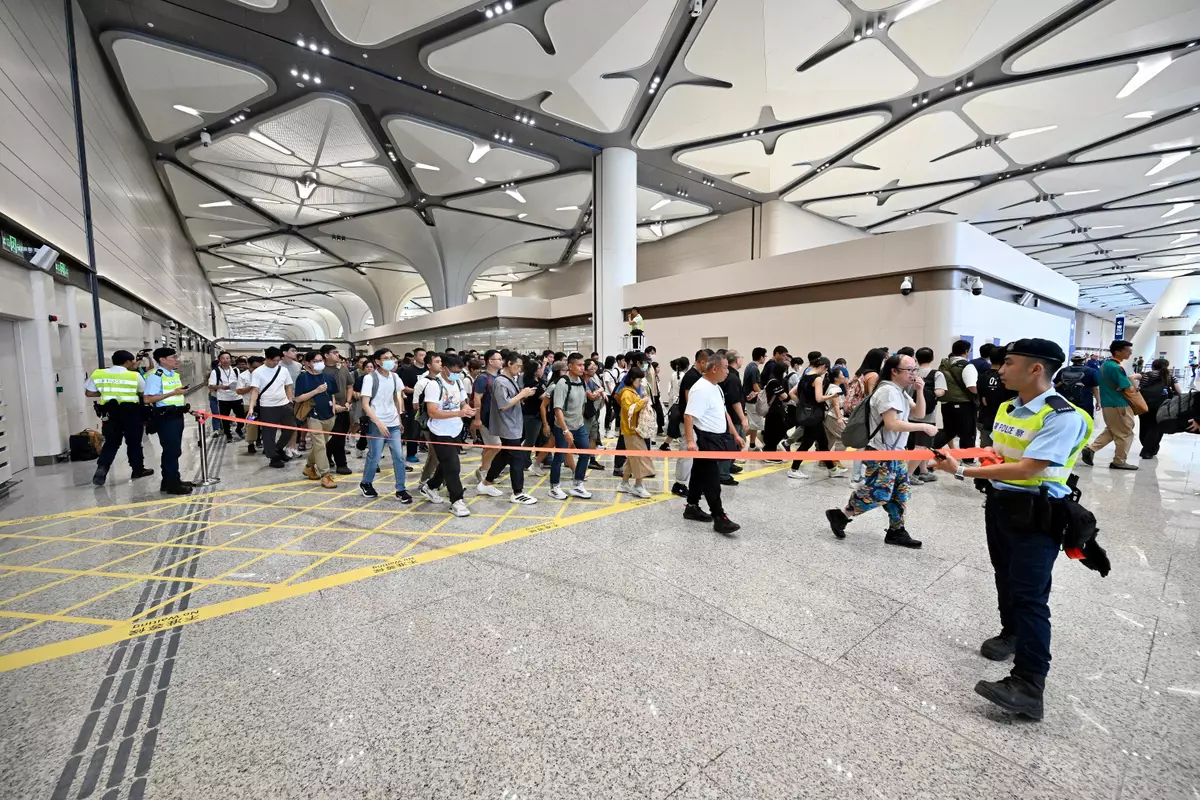
Second large-scale drill and counter-terrorism and major incident exercise conducted at Huanggang Port Hong Kong Port Area

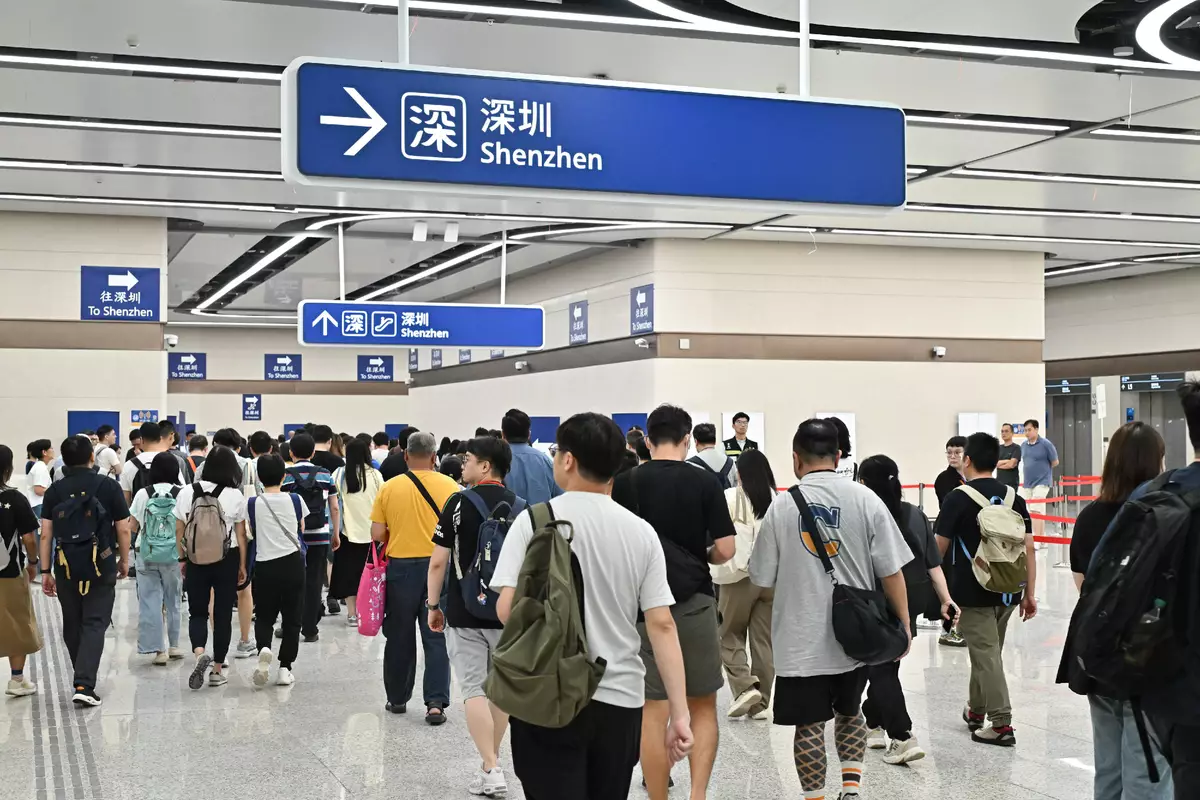
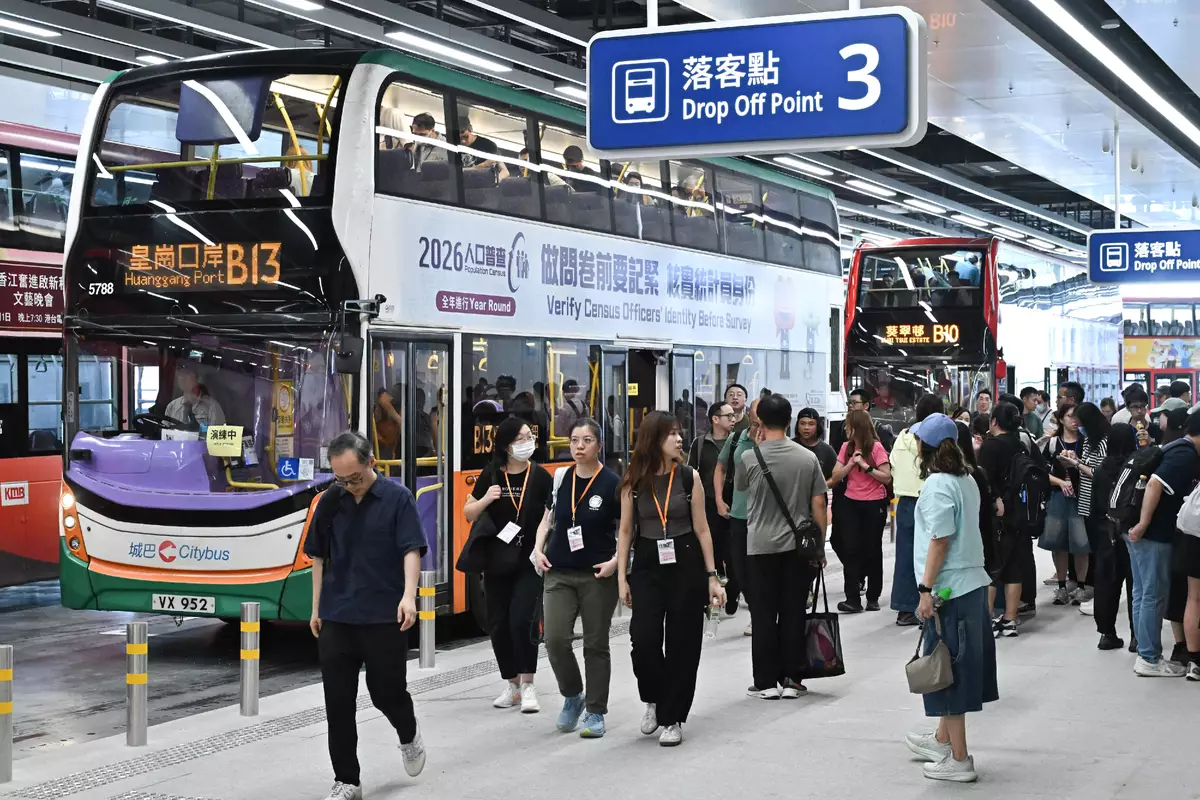
The Hong Kong Special Administrative Region (HKSAR) Government today (August 15) conducted the second large-scale drill at the Huanggang Port Hong Kong Port Area, together with an inter-departmental counter-terrorism and major incident exercise, with a view to further testing the overall management of passenger and vehicular flows at the port building and the public transport interchange (PTI), as well as strengthening the response capabilities of various departments in case of emergencies.

About 5 000 civil servants from around 30 bureaux and departments had been mobilised for this drill. They were instructed to take different modes of public transport to arrive at the port, and then proceeded to the departure hall and the arrival hall of the port building. Subsequently, they followed the instruction to leave the port by taking public transport. Participants and vehicles dispatched by various public transport operators participated in cyclical trials involving more than 250 departures to simulate the flow of people and vehicles arriving and departing from the port.

Participants in the drill simulated queuing for immigration clearance procedures in the departure hall and the arrival hall to test the relevant crowd-control arrangements.

This drill also featured a new "crowd concentrated-flow test". A large number of participants were first held on designated floors as instructed, with a view to creating a short-term unforeseen surge pressure subsequently by simulating a situation where a large number of passengers arrive and proceed to the PTI. This is to test inter-departmental co-ordination arrangements and further test the effectiveness of the management of passenger and vehicular flows and various supporting measures.

During the drill, different types of tests were also featured. These included simulating the operational arrangement of small vehicles crossing the boundary, simulating a large number of passengers queuing in the departure hall to use the clearance facilities, a large number of passengers gathering at the PTI to wait for individual public transport services, the Department of Health's quarantine station discovering suspected cases of infection and requesting ambulancemen to co-operate in handling the situation, and the taxi management arrangements being activated in response to a large number of taxis going to the PTI.

After the flow test, an inter-departmental counter-terrorism exercise was conducted at the departure hall on the fifth floor of the port building in the Hong Kong area. The exercise simulated a scenario in which extremists were discovered to be in possession of firearms and ammunition, who then launched a shooting attack, causing mass casualties and requiring immediate evacuation. The exercise aimed to enhance departments' co-ordination and response capabilities in handling terrorism and violence-related intelligence and responding to different forms of terrorist attacks.

Next, different departments conducted a major-incident exercise, which simulated a serious traffic accident on the new connecting road to the port, thereby hindering vehicles from using the original route to enter the port. Traffic was redirected under police instruction to use the southbound route, with one-lane two-way, intermittent access to the port's PTI. Vehicles were also directed to leave the port and return to the urban area.

Representatives from various bureaux, departments and organisations participated in the drill, including the Security Bureau, the Transport and Logistics Bureau, the Civil Service Bureau, the Hong Kong Police Force, the Transport Department, the Highways Department, the Immigration Department, the Hong Kong Customs and Excise Department, the Department of Health, the Fire Services Department, the Architectural Services Department, the Electrical and Mechanical Services Department, the Government Property Agency, the Digital Policy Office, the Office of the Communications Authority, the Food and Environmental Hygiene Department, the Agriculture, Fisheries and Conservation Department, the Civil Aid Service, the Auxiliary Medical Service, and various public transport operators.

The Secretary for Security, Mr Tang Ping-keung, inspected the drill on-site. Immediately after the drill, Mr Tang held a meeting with the participating departments to review the flow and suggestions given by the participants, in order to make further enhancements in subsequent drills.

The drill was conducted smoothly. The HKSAR Government will continue to conduct drills and tests of various scales to improve detailed arrangements to prepare comprehensively for the opening of the port. The HKSAR Government will work closely with the Shenzhen side to press ahead with the various preparatory tasks at full steam. Upon confirmation by both sides that the port is ready for safe and smooth operation, the governments of Guangdong and Hong Kong will finalise the official opening date of the Huanggang Port and make timely announcements to the public.

Source: AI-found images

Source: AI-found images

Second large-scale drill and counter-terrorism and major incident exercise conducted at Huanggang Port Hong Kong Port Area Source: HKSAR Government Press Releases

Second large-scale drill and counter-terrorism and major incident exercise conducted at Huanggang Port Hong Kong Port Area Source: HKSAR Government Press Releases

Second large-scale drill and counter-terrorism and major incident exercise conducted at Huanggang Port Hong Kong Port Area Source: HKSAR Government Press Releases

Second large-scale drill and counter-terrorism and major incident exercise conducted at Huanggang Port Hong Kong Port Area Source: HKSAR Government Press Releases

Second large-scale drill and counter-terrorism and major incident exercise conducted at Huanggang Port Hong Kong Port Area Source: HKSAR Government Press Releases

Second large-scale drill and counter-terrorism and major incident exercise conducted at Huanggang Port Hong Kong Port Area Source: HKSAR Government Press Releases

Source: AI-found images

Source: AI-found images

Recommended Articles