Skip to Content Facebook Feature Image

In a big bill that hurts clean energy, residential solar likely to get hit fast

News

In a big bill that hurts clean energy, residential solar likely to get hit fast
News

News

In a big bill that hurts clean energy, residential solar likely to get hit fast

2025-07-03 01:50 Last Updated At:02:01

WASHINGTON (AP) — As Republicans in Congress rushed forward with a massive tax and spending cut bill, a North Carolina renewable energy executive wrote to his 190 employees with a warning: Deep cuts to clean energy tax credits were going to hurt.

“(The changes) would almost certainly include the loss of jobs on our team,” wrote Will Etheridge, CEO of Southern Energy Management in Raleigh. “I’m telling you that because you deserve transparency and the truth — even if that truth is uncomfortable.”

More Images
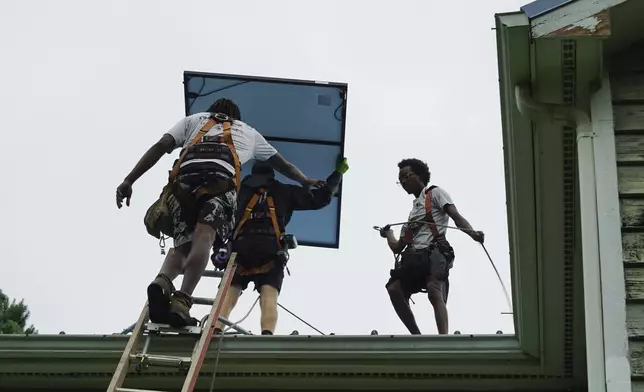
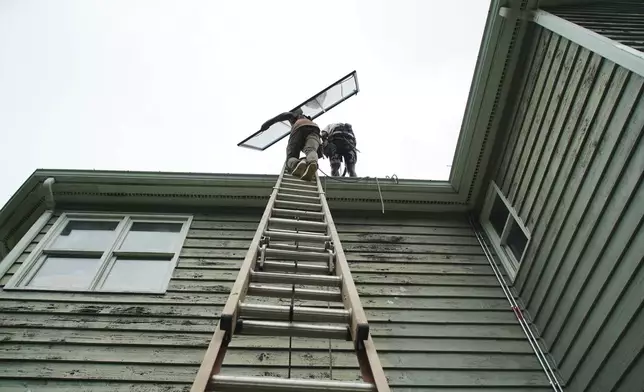
Solar panels are installed on a home in Chapel Hill, N.C., Wednesday, July 2, 2025. (AP Photo/Allen G. Breed)
Solar panels are installed on a home in Chapel Hill, N.C., Wednesday, July 2, 2025. (AP Photo/Allen G. Breed)

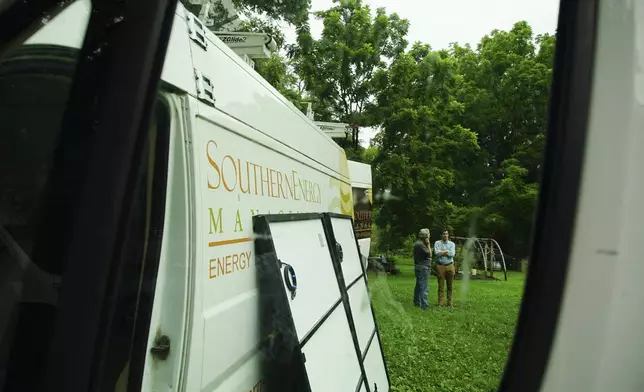
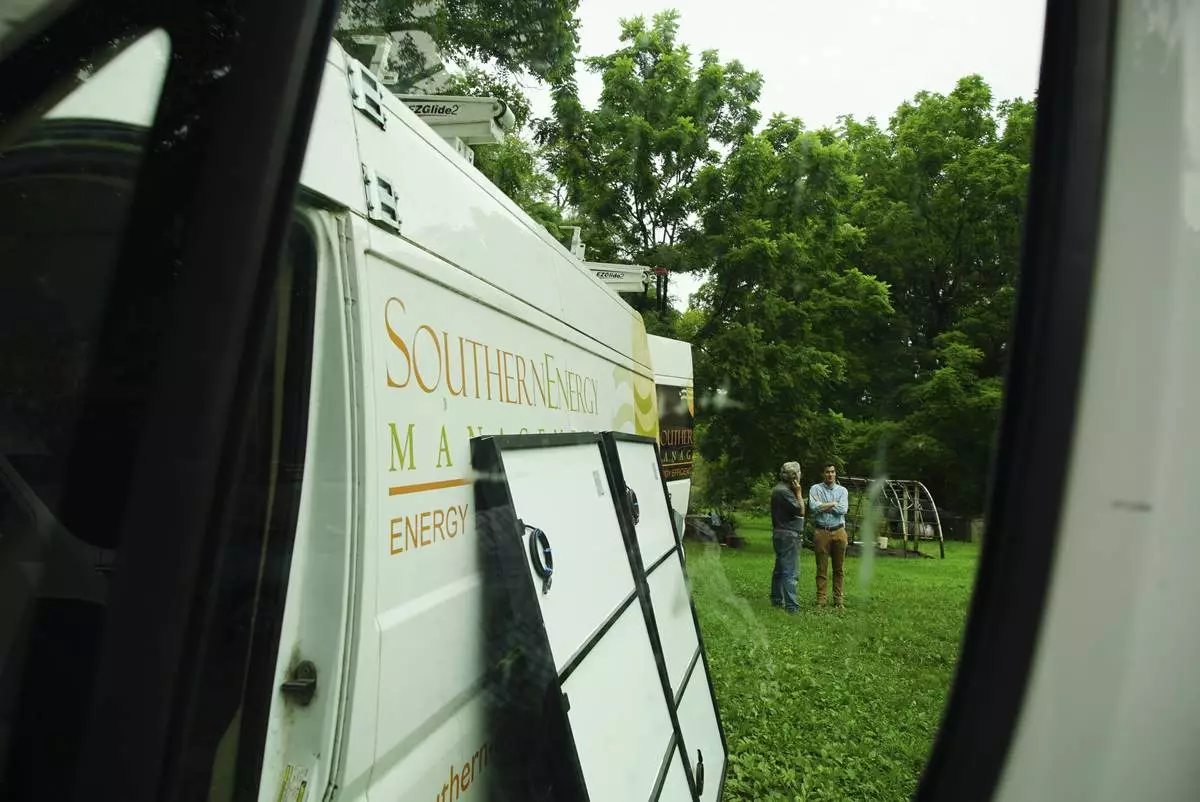
James Asbill, left, speaks with Will Etheridge, CEO of Southern Energy Management, as solar panels are installed on Asbill's home in Chapel Hill, N.C., Wednesday, July 2, 2025. (AP Photo/Allen G. Breed)

James Asbill, left, speaks with Will Etheridge, CEO of Southern Energy Management, as solar panels are installed on Asbill's home in Chapel Hill, N.C., Wednesday, July 2, 2025. (AP Photo/Allen G. Breed)

James Asbill, right, speaks with Will Etheridge, CEO of Southern Energy Management, as solar panels are installed on Asbill's home in Chapel Hill, N.C., Wednesday, July 2, 2025. (AP Photo/Allen G. Breed)

James Asbill, right, speaks with Will Etheridge, CEO of Southern Energy Management, as solar panels are installed on Asbill's home in Chapel Hill, N.C., Wednesday, July 2, 2025. (AP Photo/Allen G. Breed)

Will Etheridge, CEO of Southern Energy Management, looks at a solar panel that will be installed on James Asbill's home in Chapel Hill, N.C., Wednesday, July 2, 2025. (AP Photo/Allen G. Breed)
Will Etheridge, CEO of Southern Energy Management, looks at a solar panel that will be installed on James Asbill's home in Chapel Hill, N.C., Wednesday, July 2, 2025. (AP Photo/Allen G. Breed)

Solar panels are installed on a home in Chapel Hill, N.C., Wednesday, July 2, 2025. (AP Photo/Allen G. Breed)

Solar panels are installed on a home in Chapel Hill, N.C., Wednesday, July 2, 2025. (AP Photo/Allen G. Breed)

The bill now in the House takes an ax to clean energy incentives, including killing a 30% tax credit for rooftop residential solar by the end of the year that the Biden administration's Inflation Reduction Act had extended into the next decade. Trump has called the clean energy tax credits in the climate law part of a “green new scam” that improperly shifts taxpayer subsidies to help the “globalist climate agenda” and energy sources like wind and solar.

Businesses and analysts say the GOP-backed bill will likely reverse the sector's growth and eliminate jobs.

“The residential solar industry is going to be absolutely creamed by this,” said Bob Keefe, executive director of E2, a business group that advocates for pro-environment policies.

President Donald Trump's “Big Beautiful Bill” takes aim at renewables broadly, including phasing out tax credits enjoyed by utility-scale solar and wind. But cutting the residential solar credit will happen sooner.

Companies have announced more than $20 billion in clean-energy investments in North Carolina in recent years. Etheridge, whose company installs solar panels and helps ensure buildings are energy efficient, was among many in the sector to lobby Republican U.S. Sen. Thom Tillis of North Carolina for changes in the bill.

Tillis ultimately was one of three Republicans to vote against the measure, but in a sign of Trump’s power over legislators to pass it, Tillis said he wouldn’t seek reelection after Trump said he'd likely support a primary challenger.

Now, Etheridge says losing the tax credit will likely mean laying off 50 to 55 of his workers. He called the elimination of residential tax credits a “bait and switch.”

“I made a decision from being an employee to taking out a loan from my grandmother to buy into my business and put my house on the line” in part because of the stability of the tax credits, he said. He said he'll scramble now to figure out ways to diversify his business.

“If you require a money-spigot from Washington to make your business viable, it probably shouldn’t have been in business in the first place,” said Adam Michel, director of tax policy studies at the Cato Institute, a libertarian think tank.

Michel said he doubted many clean energy companies would go out of business, but “I think that they will be right sized for the market and that the people that are employed with them will find better jobs and more stable jobs in industries that are actually viable and don’t require billions of dollars of federal subsidies.”

Even ahead of debate over the bill, experts at E2 said in May that $14 billion in clean energy investments across the country had been postponed or cancelled this year.

The bill the Senate passed Tuesday removes a tax on some wind and solar projects that was proposed in a previous version and gives utility-scale projects some time to begin construction before phasing out those tax credits.

Karl Stupka, president of Raleigh-based NC Solar Now that employs about 100 people, said the Senate's bill eased the impact on commercial projects “while destroying the residential portion of the tax credits.” Roughly 85% of his business is residential work.

“They took it away from every average American normal person and gave it to the wealthier business owners,” he said.

Stupka said if the bill becomes law, companies will rush to finish as many solar jobs as they can before the credit ends. He expected to lay off half his employees, with “trickle-down” job losses elsewhere.

“It would cause a pretty severe shock wave,” he said.

The Associated Press receives support from the Walton Family Foundation for coverage of water and environmental policy. The AP is solely responsible for all content. For all of AP’s environmental coverage, visit https://apnews.com/hub/climate-and-environment
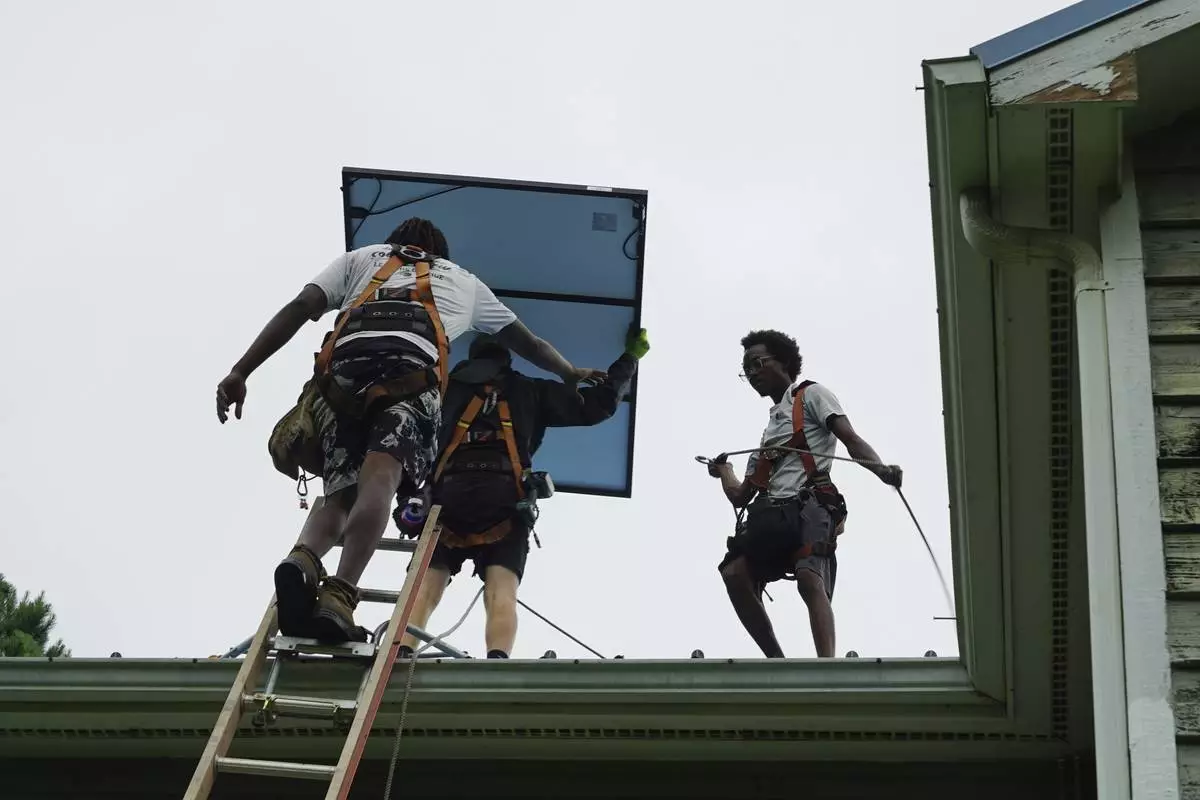
Solar panels are installed on a home in Chapel Hill, N.C., Wednesday, July 2, 2025. (AP Photo/Allen G. Breed)
Solar panels are installed on a home in Chapel Hill, N.C., Wednesday, July 2, 2025. (AP Photo/Allen G. Breed)

James Asbill, left, speaks with Will Etheridge, CEO of Southern Energy Management, as solar panels are installed on Asbill's home in Chapel Hill, N.C., Wednesday, July 2, 2025. (AP Photo/Allen G. Breed)

James Asbill, left, speaks with Will Etheridge, CEO of Southern Energy Management, as solar panels are installed on Asbill's home in Chapel Hill, N.C., Wednesday, July 2, 2025. (AP Photo/Allen G. Breed)

James Asbill, right, speaks with Will Etheridge, CEO of Southern Energy Management, as solar panels are installed on Asbill's home in Chapel Hill, N.C., Wednesday, July 2, 2025. (AP Photo/Allen G. Breed)

James Asbill, right, speaks with Will Etheridge, CEO of Southern Energy Management, as solar panels are installed on Asbill's home in Chapel Hill, N.C., Wednesday, July 2, 2025. (AP Photo/Allen G. Breed)

Will Etheridge, CEO of Southern Energy Management, looks at a solar panel that will be installed on James Asbill's home in Chapel Hill, N.C., Wednesday, July 2, 2025. (AP Photo/Allen G. Breed)
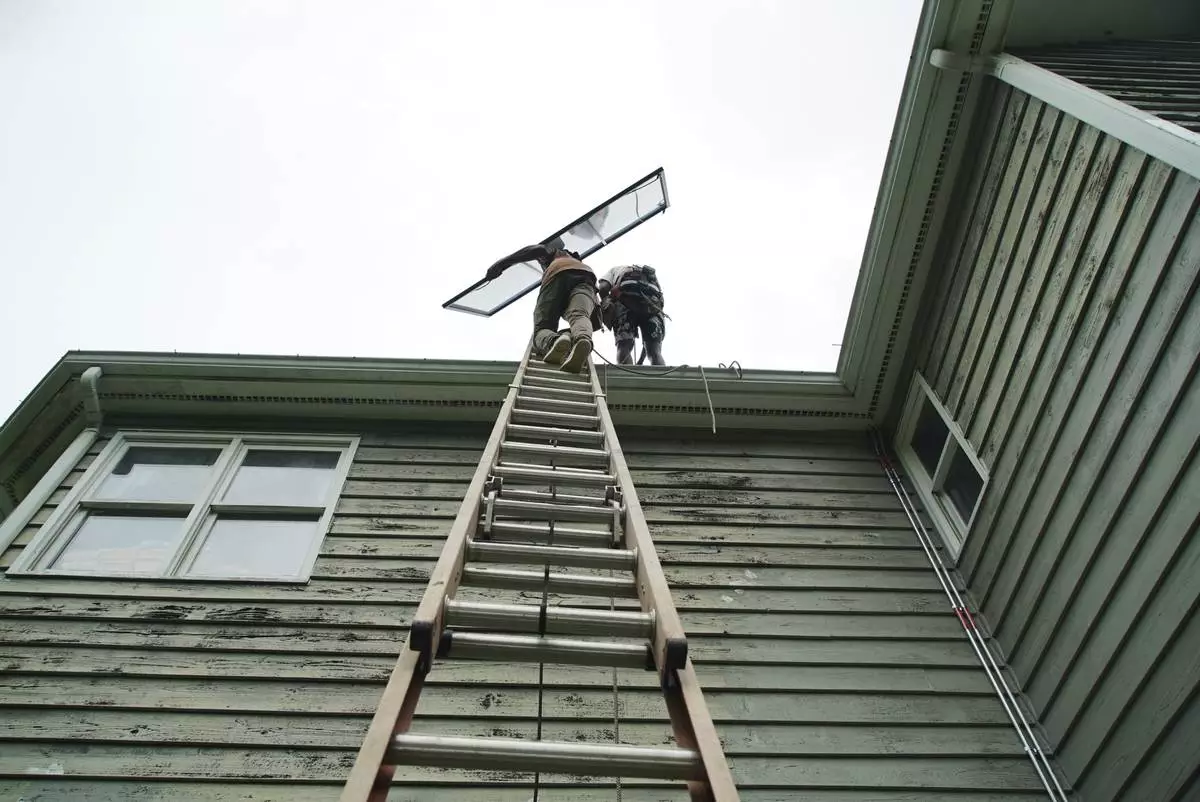
Will Etheridge, CEO of Southern Energy Management, looks at a solar panel that will be installed on James Asbill's home in Chapel Hill, N.C., Wednesday, July 2, 2025. (AP Photo/Allen G. Breed)

Solar panels are installed on a home in Chapel Hill, N.C., Wednesday, July 2, 2025. (AP Photo/Allen G. Breed)
Solar panels are installed on a home in Chapel Hill, N.C., Wednesday, July 2, 2025. (AP Photo/Allen G. Breed)
JERUSALEM (AP) — Over two dozen families from one of the few remaining Palestinian Bedouin villages in the central West Bank have packed up and fled their homes in recent days, saying harassment by Jewish settlers living in unauthorized outposts nearby has grown unbearable.

The village, Ras Ein el-Auja, was originally home to some 700 people from more than 100 families that have lived there for decades.

Twenty-six families already left on Thursday, scattering across the territory in search of safer ground, say rights groups. Several other families were packing up and leaving on Sunday.

“We have been suffering greatly from the settlers. Every day, they come on foot, or on tractors, or on horseback with their sheep into our homes. They enter people’s homes daily,” said Nayef Zayed, a resident, as neighbors took down sheep pens and tin structures.

Israel's military and the local settler governing body in the area did not respond to requests for comment.

Other residents pledged to stay put for the time being. That makes them some of the last Palestinians left in the area, said Sarit Michaeli, international director at B’Tselem, an Israeli rights group helping the residents.

She said that mounting settler violence has already emptied neighboring Palestinian hamlets in the dusty corridor of land stretching from Ramallah in the West to Jericho, along the Jordanian border, in the east.

The area is part of the 60% of the West Bank that has remained under full Israeli control under interim peace accords signed in the 1990s. Since the war between Israel and Hamas erupted in October 2023, over 2,000 Palestinians — at least 44 entire communities — have been expelled by settler violence in the area, B'Tselem says.

The turning point for the village came in December, when settlers put up an outpost about 50 meters (yards) from Palestinian homes on the northwestern flank of the village, said Michaeli and Sam Stein, an activist who has been living in the village for a month.

Settlers strolled easily through the village at night. Sheep and laundry went missing. International activists had to begin escorting children to school to keep them safe.

“The settlers attack us day and night, they have displaced us, they harass us in every way” said Eyad Isaac, another resident. “They intimidate the children and women.”

Michaeli said she’s witnessed settlers walk around the village at night, going into homes to film women and children and tampering with the village’s electricity.

The residents said they call the police frequently to ask for help — but it seldom arrives. Settlement expansion has been promoted by successive Israeli governments over nearly six decades. But Benjamin Netanyahu’s far-right government, which has placed settler leaders in senior positions, has made it a top priority.

That growth has been accompanied by a spike in settler violence, much of it carried out by residents of unauthorized outposts. These outposts often begin with small farms or shepherding that are used to seize land, say Palestinians and anti-settlement activists. United Nations officials warn the trend is changing the map of the West Bank, entrenching Israeli presence in the area.

Some 500,000 Israelis have settled in the West Bank since Israel captured the territory, along with east Jerusalem and the Gaza Strip, in the 1967 Mideast war. Their presence is viewed by most of the international community as illegal and a major obstacle to peace. The Palestinians seek all three areas for a future state.

For now, displaced families of the village have dispersed between other villages near the city of Jericho and near Hebron further south, said residents. Some sold their sheep and are trying to move into the cities.

Others are just dismantling their structures without knowing where to go.

"Where will we go? There’s nowhere. We’re scattered,” said Zayed, the resident, “People’s situation is bad. Very bad.”

An Israeli settler herds his flock near his outpost beside the Palestinian village of Ras Ein al-Auja in the West Bank, Sunday, Jan. 11, 2026. (AP Photo/Mahmoud Illean)

An Israeli settler herds his flock near his outpost beside the Palestinian village of Ras Ein al-Auja in the West Bank, Sunday, Jan. 11, 2026. (AP Photo/Mahmoud Illean)

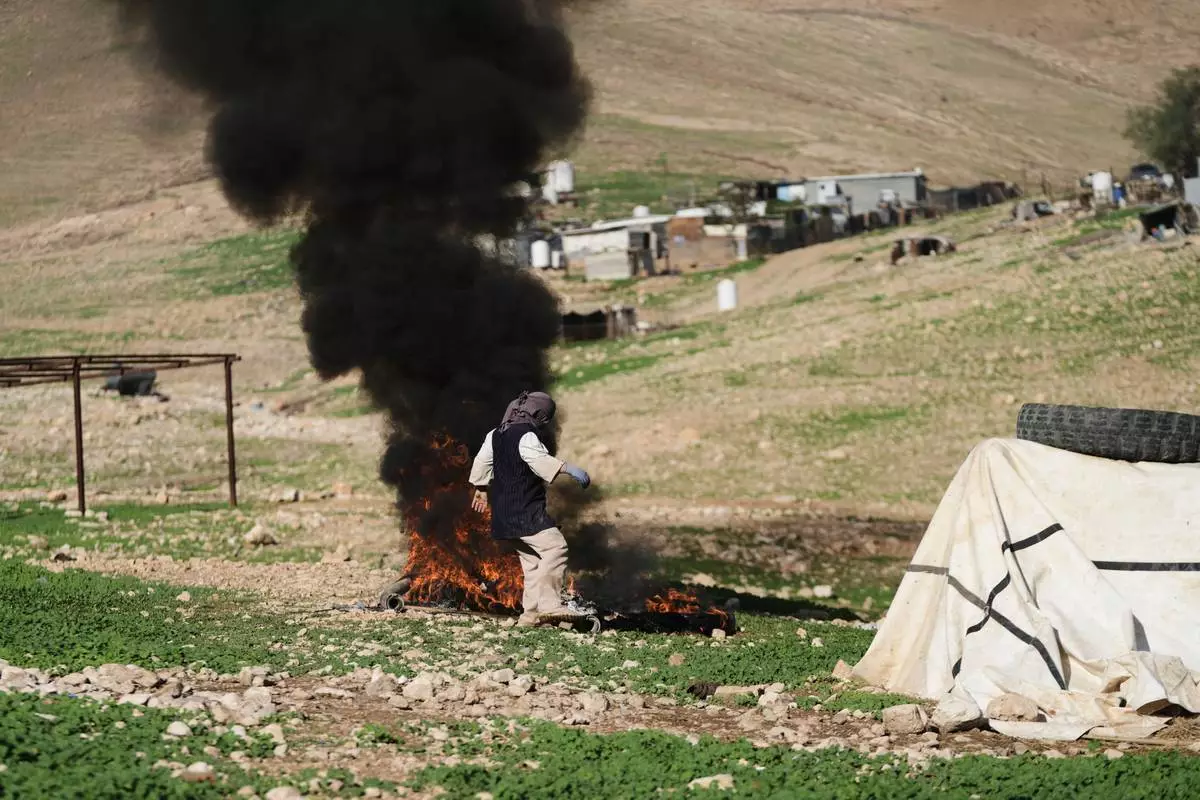
A Palestinian resident of Ras Ein al-Auja village, West Bank burns trash, Sunday, Jan. 11, 2026. (AP Photo/Mahmoud Illean)

A Palestinian resident of Ras Ein al-Auja village, West Bank burns trash, Sunday, Jan. 11, 2026. (AP Photo/Mahmoud Illean)

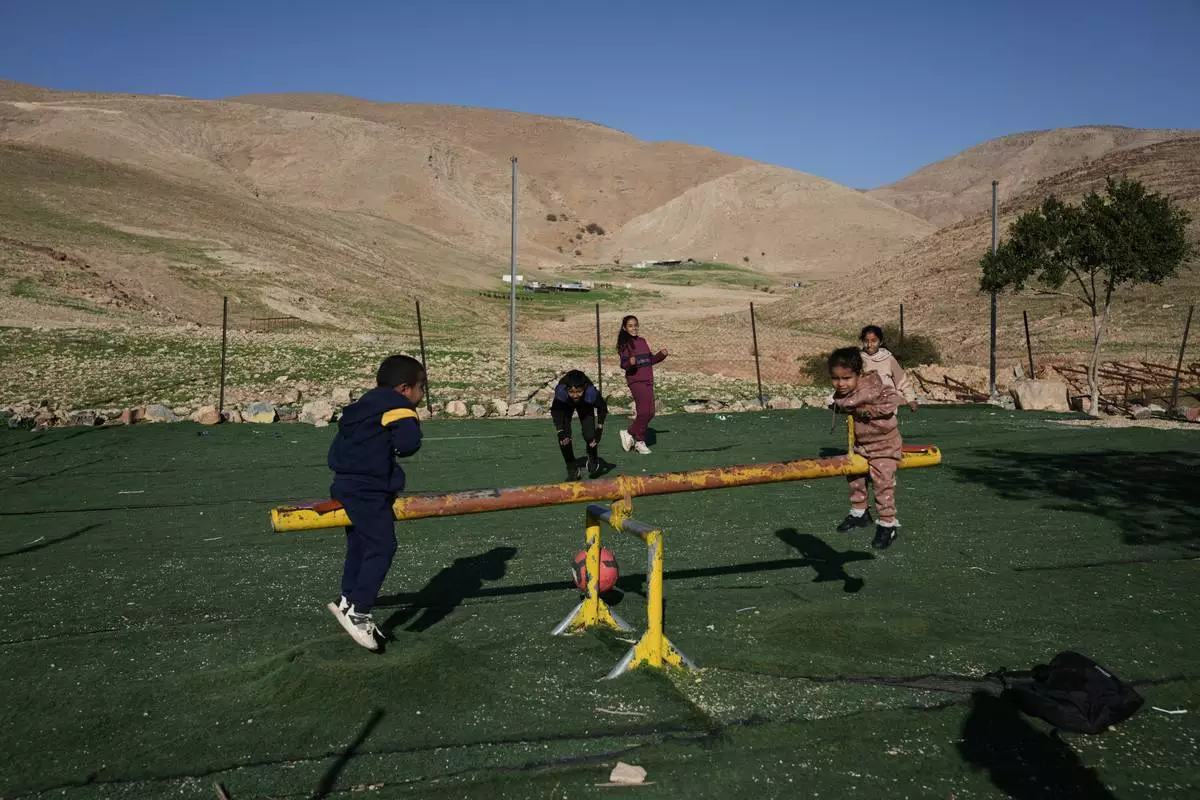
Palestinian children play in the West Bank village of Ras Ein al-Auja, Sunday, Jan. 11, 2026. (AP Photo/Mahmoud Illean)

Palestinian children play in the West Bank village of Ras Ein al-Auja, Sunday, Jan. 11, 2026. (AP Photo/Mahmoud Illean)

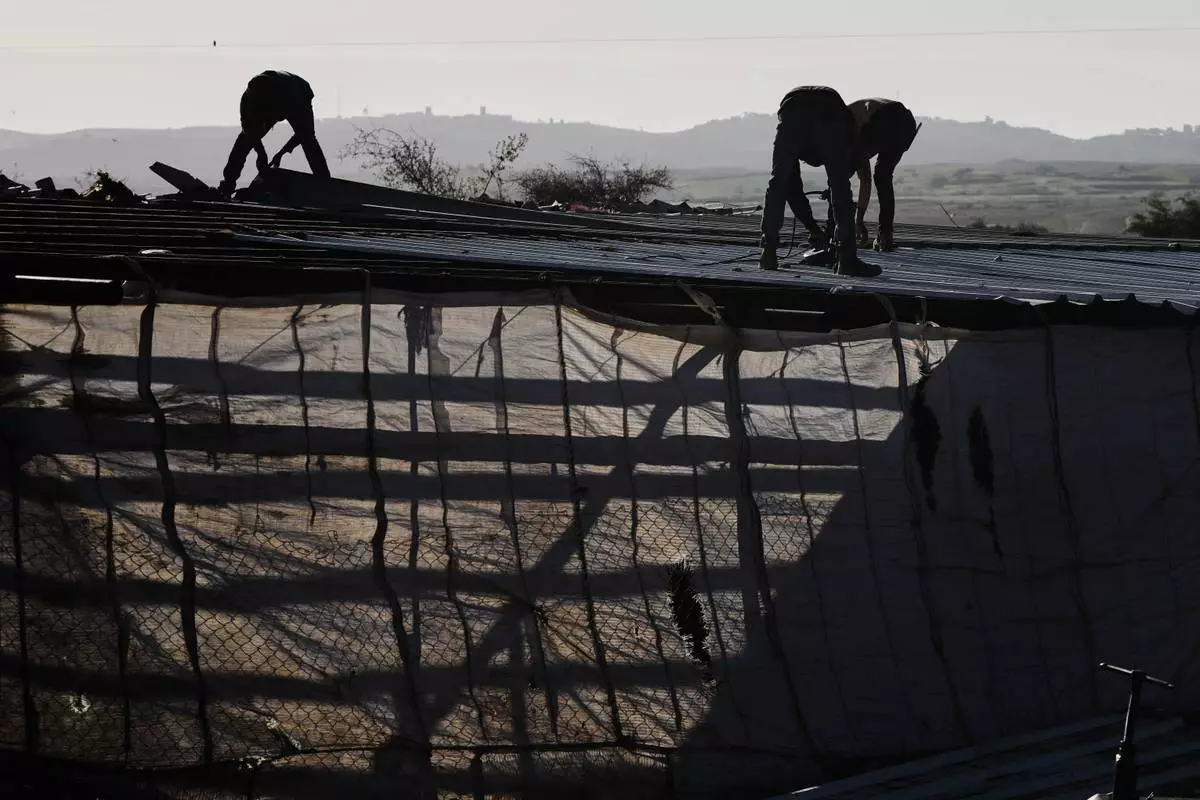
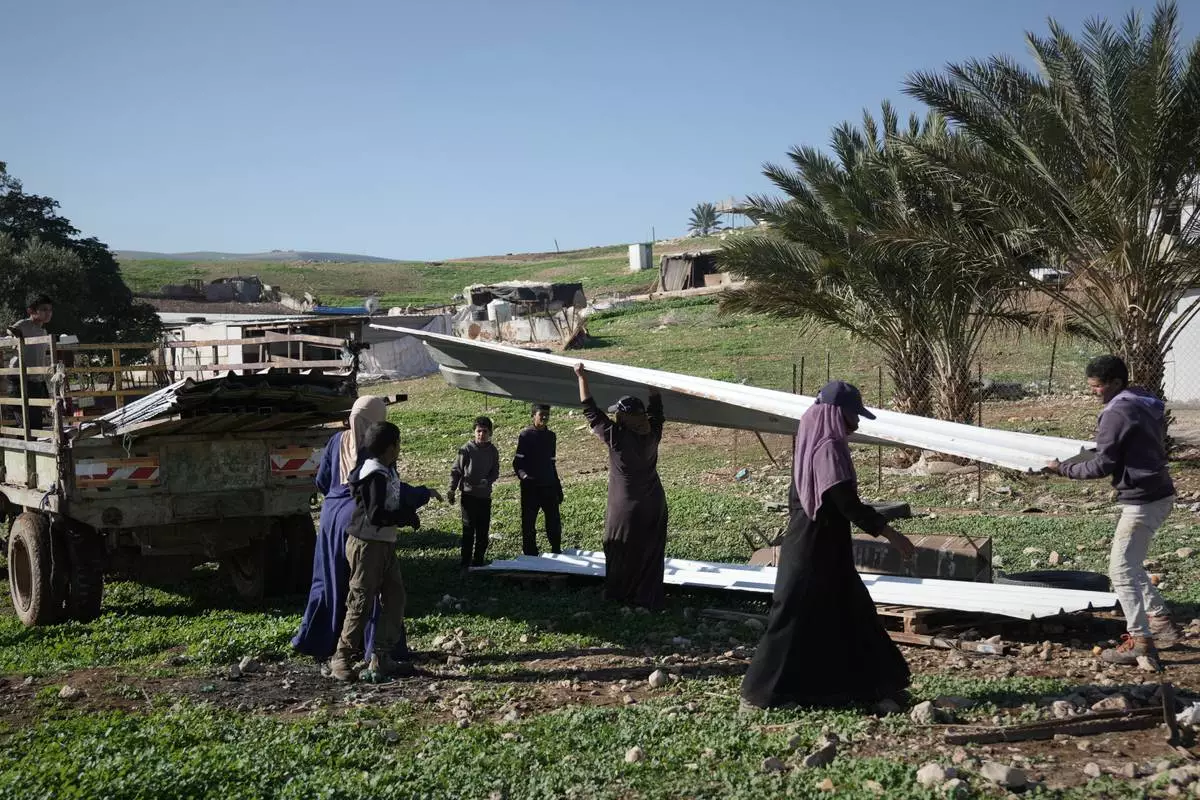
Palestinian residents of Ras Ein al-Auja village, West Bank pack up their belongings and prepare to leave their homes after deciding to flee mounting settler violence, Sunday, Jan. 11, 2026. (AP Photo/Mahmoud Illean)

Palestinian residents of Ras Ein al-Auja village, West Bank pack up their belongings and prepare to leave their homes after deciding to flee mounting settler violence, Sunday, Jan. 11, 2026. (AP Photo/Mahmoud Illean)

Palestinian residents of Ras Ein al-Auja village, West Bank pack up their belongings and prepare to leave their homes after deciding to flee mounting settler violence, Sunday, Jan. 11, 2026. (AP Photo/Mahmoud Illean)

Palestinian residents of Ras Ein al-Auja village, West Bank pack up their belongings and prepare to leave their homes after deciding to flee mounting settler violence, Sunday, Jan. 11, 2026. (AP Photo/Mahmoud Illean)

Recommended Articles