Skip to Content Facebook Feature Image

New CIA report criticizes investigation into Russia's support for Trump in 2016

News

New CIA report criticizes investigation into Russia's support for Trump in 2016
News

News

New CIA report criticizes investigation into Russia's support for Trump in 2016

2025-07-03 05:25 Last Updated At:05:31

WASHINGTON (AP) — A declassified CIA memo released Wednesday challenges the work intelligence agencies did to conclude that Russia interfered in the 2016 presidential election because it wanted Republican Donald Trump to win.

The memo was written on the orders of CIA Director John Ratcliffe, a Trump loyalist who spoke out against the Russia investigation as a member of Congress. It finds fault with a 2017 intelligence assessment that concluded the Russian government, at the direction of President Vladimir Putin, waged a covert influence campaign to help Trump win.

It does not address that multiple investigations since then, including a report from the Republican-led Senate Intelligence Committee in 2020, reached the same conclusion about Russia’s influence and motives.

The eight-page document is part of an ongoing effort by Trump and close allies who now lead key government agencies to revisit the history of the long-concluded Russia investigation, which resulted in criminal indictments and shadowed most of his first term but also produced unresolved grievances and contributed to the Republican president's deep-rooted suspicions of the intelligence community.

The report is also the latest effort by Ratcliffe to challenge the decision-making and actions of intelligence agencies during the course of the Russia investigation.

A vocal Trump supporter in Congress who aggressively questioned former special counsel Robert Mueller during his 2019 testimony on Russian election interference, Ratcliffe later used his position as director of national intelligence to declassify Russian intelligence alleging damaging information about Democrats during the 2016 election even as he acknowledged that it might not be true.

The new, “lessons-learned” review ordered by Ratcliffe in May was meant to examine the tradecraft that went into the intelligence community's 2017 assessment on Russian interference and to scrutinize in particular the conclusion that Putin “aspired” to help Trump win.

The report cited several “anomalies” that the authors wrote could have affected that conclusion, including a rushed timeline and a reliance on unconfirmed information, such as Democratic-funded opposition research about Trump’s ties to Russia compiled by a former British spy, Christopher Steele.

The report takes particular aim at the inclusion of a two-page summary of the Steele dossier, which included salacious and uncorroborated rumors about Trump's ties to Russia, in an annex of the intelligence community assessment. It said that decision, championed by the FBI, “implicitly elevated unsubstantiated claims to the status of credible supporting evidence, compromising the analytical integrity of the judgment.”

But even as Ratcliffe faulted top intelligence officials for a “politically charged environment that triggered an atypical analytic process,” his agency's report does not directly contradict any previous intelligence.

Russia's support for Trump has been outlined in a number of intelligence reports and the August 2020 conclusions of the Senate Intelligence Committee, then chaired by Sen. Marco Rubio, who now serves as Trump's secretary of state. It also was backed by Mueller, who in his 2019 report said that Russia interfered on Trump's behalf and that the campaign welcomed the aid even if there was insufficient evidence to establish a criminal conspiracy.

“This report doesn't change any of the underlying evidence — in fact it doesn't even address any of that evidence,” said Brian Taylor, a Russia expert who directs the Moynihan Institute of Global Affairs at Syracuse University.

Taylor suggested the report may have been intended to reinforce Trump's claims that investigations into his ties to Russia are part of a Democratic hoax.

“Good intelligence analysts will tell you their job is to speak truth to power," Taylor said. "If they tell the leader what he wants to hear, you often get flawed intelligence.”

Intelligence agencies regularly perform after-action reports to learn from past operations and investigations, but it's uncommon for the evaluations to be declassified and released to the public.

Ratcliffe has said he wants to release material on a number of topics of public debate and has already declassified records relating to the assassinations of President John Kennedy and his brother, Sen. Robert F. Kennedy, as well as the origins of COVID-19.
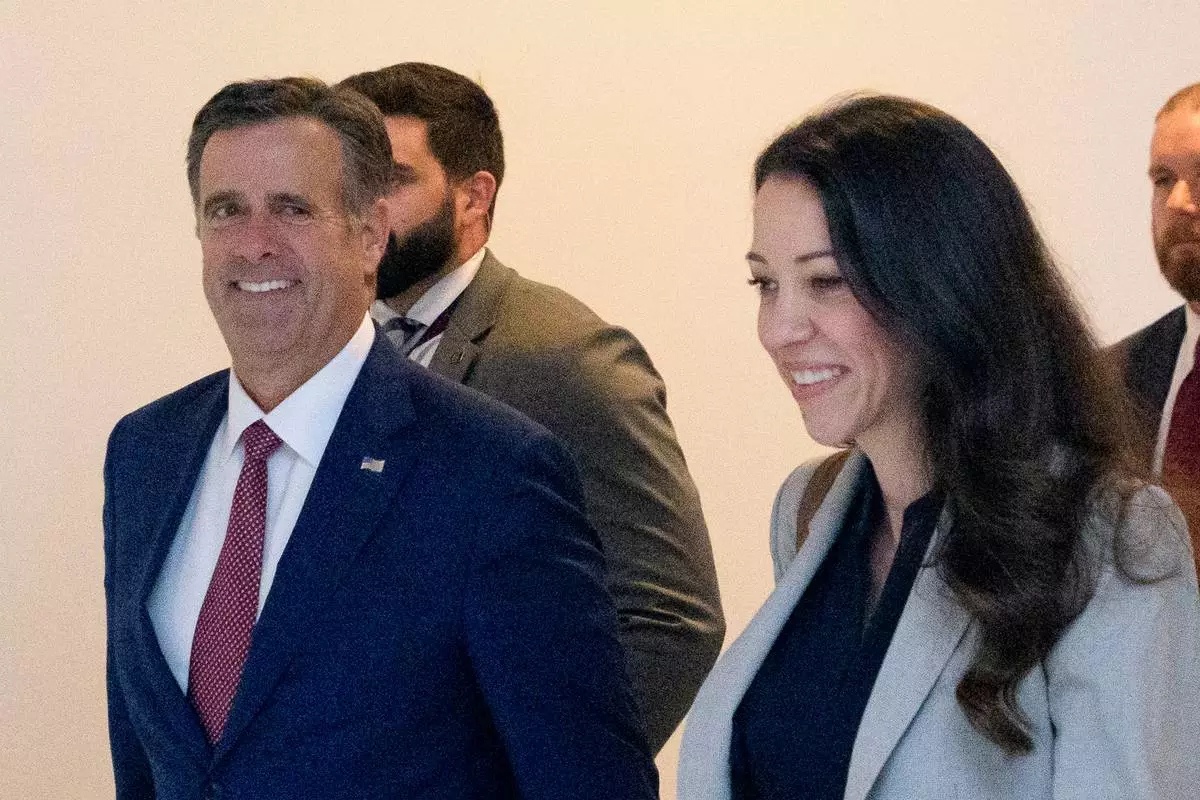
CIA Director John Ratcliffe departs a classified briefing for senators at the Capitol on Capitol Hill, Thursday, June 26, 2025, in Washington. (AP Photo/Rod Lamkey, Jr.)
CIA Director John Ratcliffe departs a classified briefing for senators at the Capitol on Capitol Hill, Thursday, June 26, 2025, in Washington. (AP Photo/Rod Lamkey, Jr.)
WASHINGTON (AP) — President Donald Trump is meeting with oil executives at the White House on Friday in hopes of securing $100 billion in investments to revive Venezuela’s ability to fully tap into its expansive reserves of petroleum — a plan that rides on their comfort in making commitments in a country plagued by instability, inflation and uncertainty.

Since the U.S. military raid to capture former Venezuelan leader Nicolás Maduro on Saturday, Trump has quickly pivoted to portraying the move as a newfound economic opportunity for the U.S., seizing tankers carrying Venezuelan oil, saying the U.S. is taking over the sales of 30 million to 50 million barrels of previously sanctioned Venezuelan oil and will be controlling sales worldwide indefinitely.

On Friday, U.S. forces seized their fifth tanker over the past month that has been linked to Venezuelan oil. The action reflected the determination of the U.S. to fully control the exporting, refining and production of Venezuelan petroleum, a sign of the Trump administration's plans for ongoing involvement in the sector as it seeks commitments from private companies.

It's all part of a broader push by Trump to keep gasoline prices low. At a time when many Americans are concerned about affordability, the incursion in Venezuela melds Trump’s assertive use of presidential powers with an optical spectacle meant to convince Americans that he can bring down energy prices.

The meeting, set for 2:30 p.m. EST, will be open to the news media, according to an update to the president's daily schedule. “At least 100 Billion Dollars will be invested by BIG OIL, all of whom I will be meeting with today at The White House,” Trump said Friday in a pre-dawn social media post.

Trump is set to meet with executives from 17 oil companies, according to the White House. Among the companies attending are Chevron, which still operates in Venezuela, and ExxonMobil and ConocoPhillips, which both had oil projects in the country that were lost as part of a 2007 nationalization of private businesses under Maduro’s predecessor, Hugo Chávez.

The president is meeting with a wide swath of domestic and international companies with interests ranging from construction to the commodity markets. Other companies slated to be at the meeting include Halliburton, Valero, Marathon, Shell, Singapore-based Trafigura, Italy-based Eni and Spain-based Repsol.

Large U.S. oil companies have so far largely refrained from affirming investments in Venezuela as contracts and guarantees need to be in place. Trump has suggested on social media that America would help to backstop any investments.

Venezuela’s oil production has slumped below one million barrels a day. Part of Trump's challenge to turn that around will be to convince oil companies that his administration has a stable relationship with Venezuela’s interim President Delcy Rodríguez, as well as protections for companies entering the market.

Secretary of State Marco Rubio, Energy Secretary Chris Wright and Interior Secretary Doug Burgum are slated to attend the oil executives meeting, according to the White House.

Meanwhile, the United States and Venezuelan governments said Friday they were exploring the possibility of r estoring diplomatic relations between the two countries, and that a delegation from the Trump administration arrived to the South American nation on Friday.

The small team of U.S. diplomats and diplomatic security officials traveled to Venezuela to make a preliminary assessment about the potential re-opening of the U.S. Embassy in Caracas, the State Department said in a statement.

Trump also announced on Friday he’d meet with President Gustavo Petro in early February, but called on the Colombian leader to make quick progress on stemming flow of cocaine into the U.S.

Trump, following the ouster of Maduro, had made vague threats to take similar action against Petro. Trump abruptly changed his tone Wednesday about his Colombian counterpart after a friendly phone call in which he invited Petro to visit the White House.

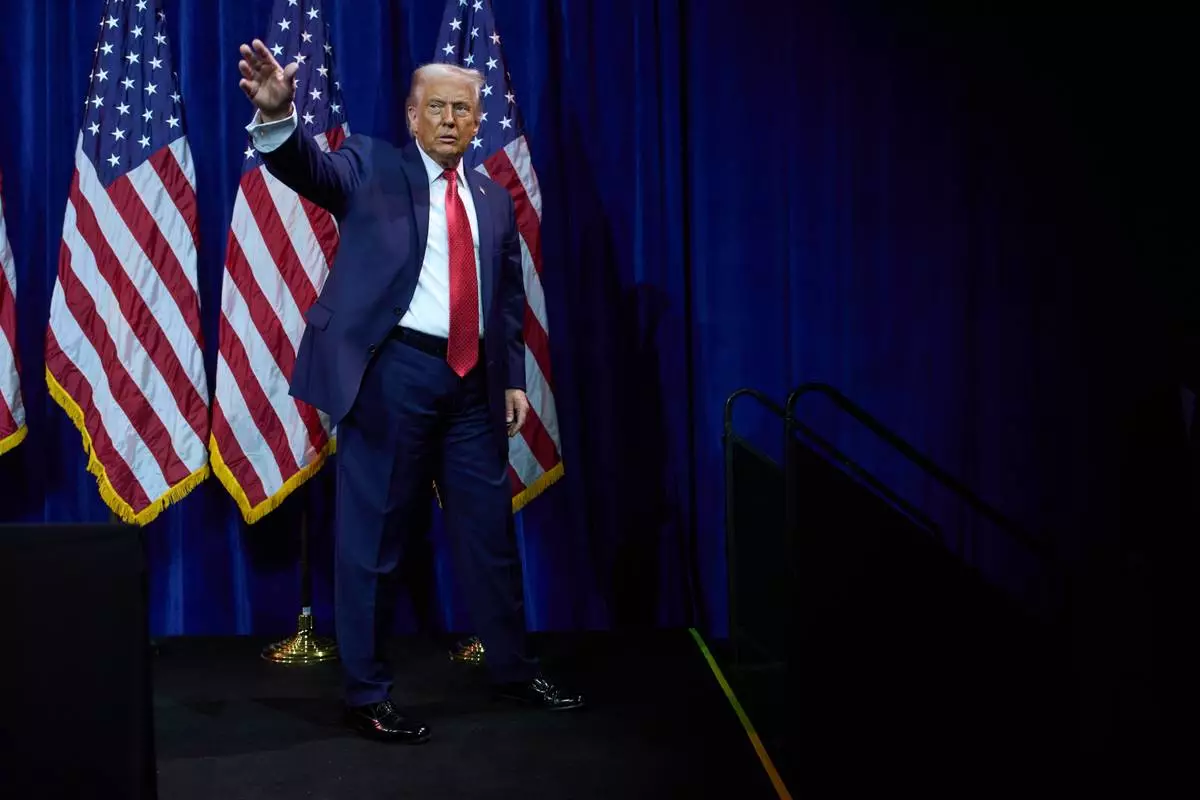
President Donald Trump waves as he walks off stage after speaking to House Republican lawmakers during their annual policy retreat, Tuesday, Jan. 6, 2026, in Washington. (AP Photo/Evan Vucci)

President Donald Trump waves as he walks off stage after speaking to House Republican lawmakers during their annual policy retreat, Tuesday, Jan. 6, 2026, in Washington. (AP Photo/Evan Vucci)

Recommended Articles