UNITED NATIONS (AP) — Haiti’s gangs have gained “near-total control” of the capital and authorities are unable to stop escalating violence across the impoverished Caribbean nation, senior U.N. officials warned Wednesday.
An estimated 90% of the capital Port-au-Prince is now under control of criminal groups who are expanding attacks not only into surrounding areas but beyond into previously peaceful areas, Ghada Fathy Waly, executive director of the U.N. Office on Drugs and Crime, told the U.N. Security Council.
“Southern Haiti, which until recently was insulated from the violence, has seen a sharp increase in gang-related incidents,” she said. “And in the east, criminal groups are exploiting land routes, including key crossings like Belladere and Malpasse, where attacks against police and customs officials have been reported.”
Waly said the state’s authority to govern is rapidly shrinking as gang control expands with cascading effects. Criminal groups are stepping into the vacuum left by the absence or limited delivery of public services and are establishing “parallel governance structures,” and gang control of major trade routes has paralyzed legal commerce, leading to soaring prices for cooking fuel and rice, Haiti’s staple food, she said.
U.N. Assistant Secretary-General Miroslav Jenca told the council “the ongoing gang encirclement of Port-au-Prince” and their strengthened foothold in the capital and beyond is “pushing the situation closer to the brink.”
“Without increased action by the international community, the total collapse of state presence in the capital could become a very real scenario,” he warned.
Gangs have grown in power since the assassination of President Jovenel Moïse in July 2021 and previously were estimated to control 85% of the capital. Haiti has not had a president since the assassination.
A U.N.-backed mission led by Kenyan police arrived in Haiti last year to help quell gang violence, but the mission remains understaffed and underfunded, with only about 40% of the 2,500 personnel originally envisioned. U.N. Secretary-General Antonio Guterres’ proposal in February to have the U.N. provide drones, fuel, ground and air transport and other non-lethal support to the Kenya-led mission has languished in the council.
In response to the gangs, the UNODC’s Waly said there has been a rapid growth in the number and activities of private security companies and vigilante self-defense groups, with some trying to protect their communities while others act illegally and collude with gangs.
“Over the last three months," Jenca said, "these groups reportedly killed at least 100 men and one woman suspected of gang association or collaboration.”
He said the last three months have also seen an increase in sexual violence by gangs with the U.N. political mission in Haiti documenting 364 incidents of sexual violence involving 378 survivors just from March to April.
A new report by U.N. experts covering the period from last October through February said the gangs have exploited political turmoil and the disorganized response to Haiti’s security crisis, pointing to competing political ambitions and allegations of corruption within Haiti’s transitional governing bodies that have stymied action.
“While the expansion of territorial control brings gangs additional sources of revenue and bargaining power,” the experts said, “these attacks are also backed by individuals trying to destabilize the political transition for their own political goals.”
One major result is that very little progress has been made toward restoring public security or implementing the roadmap for organizing national elections by February 2026, the experts monitoring an arms embargo on Haiti and sanctions against key gang leaders said in the report to the Security Council.
With a weak national police force facing acute tensions in its leadership, an army that needs rebuilding, and the limited ability of the multinational force, the experts warned that the gangs will continue “to have the upper hand unless stronger international support is provided.”
As for vigilante groups, the experts said, they “often include local police officers, some of whom actively participate in human rights violations.”
The Haitian National Police have also carried out “a worrying number of extrajudicial killings … with suspected gang members often summarily executed,” the experts said, pointing to 281 summary executions by specialized police units in 2024 including 22 women and 8 children.
Despite the U.N. arms embargo on Haiti, gangs continue to obtain more powerful weapons not only from regional civilian markets but from police stockpiles in Haiti and the neighboring Dominican Republic, the experts said.
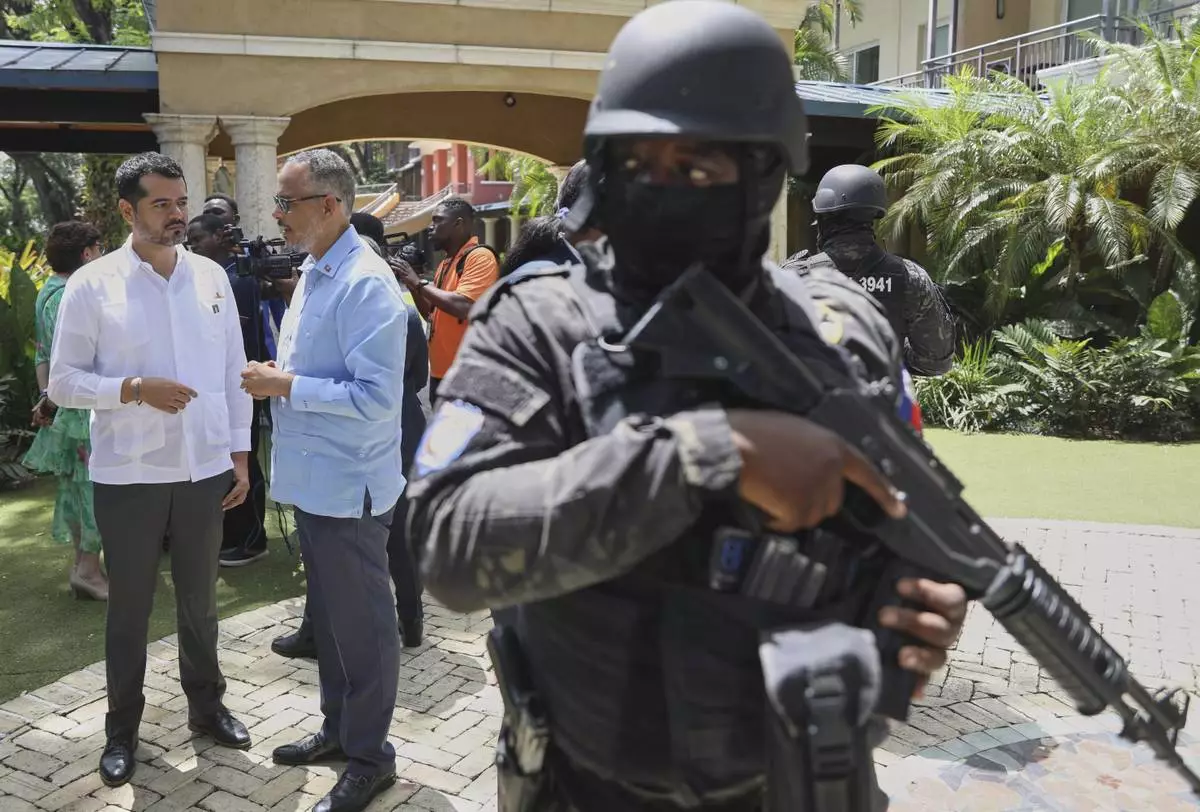
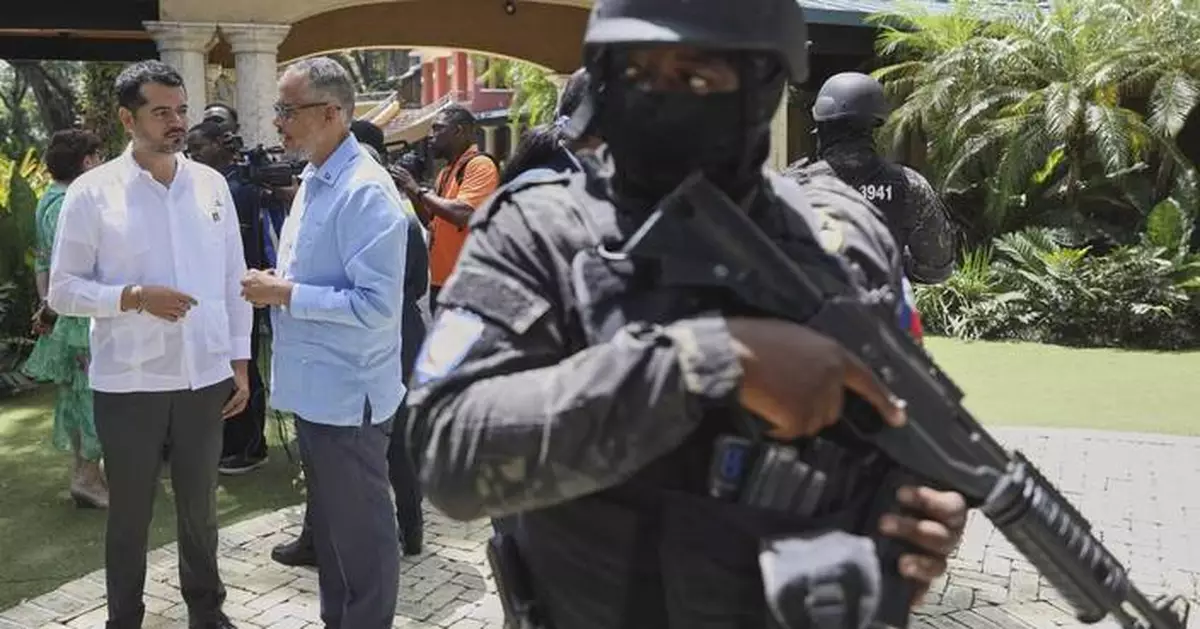
Security guards stand watch as Haiti's Prime Minister Alix Didier Fils-Aime, center, talks with the Mexico's Charge d'Affaires Jesus Cisneros after attending an event marking one year since the start of the Multinational Security Support Mission in Port-au-Prince, Haiti, Thursday, June 26, 2025. (AP Photo/Odelyn Joseph)
DUBAI, United Arab Emirates (AP) — Widening protests in Iran sparked by the Islamic Republic's ailing economy are putting new pressure on its theocracy.
Tehran is still reeling from a 12-day war launched by Israel in June that saw the United States bomb nuclear sites in Iran. Economic pressure, intensified in September by the return of United Nations sanctions on the country over its atomic program, has put Iran's rial currency into a free fall, now trading at some 1.4 million to $1.
Meanwhile, Iran's self-described “Axis of Resistance” — a coalition of countries and militant groups backed by Tehran — has been decimated in the years since the start of the Israel-Hamas war in 2023.
A new threat by U.S. President Donald Trump warning Iran that if Tehran “violently kills peaceful protesters,” the U.S. “will come to their rescue" has taken on new meaning after American troops captured Venezuelan President Nicolás Maduro, a longtime ally of Tehran.
Here's what to know about the protests and the challenges facing Iran's government.
Demonstrations have reached over 170 locations in 25 of Iran’s 31 provinces, the U.S.-based Human Rights Activists News Agency reported early Sunday. The death toll had reached at least 15 killed, it added, with more than 580 arrests. The group, which relies on an activist network inside of Iran for its reporting, has been accurate in past unrest.
Understanding the scale of the protests has been difficult. Iranian state media has provided little information about the demonstrations. Online videos offer only brief, shaky glimpses of people in the streets or the sound of gunfire. Journalists in general in Iran also face limits on reporting such as requiring permission to travel around the country, as well as the threat of harassment or arrest by authorities.
But the protests do not appear to be stopping, even after Supreme Leader Ayatollah Ali Khamenei on Saturday said “rioters must be put in their place.”
The collapse of the rial has led to a widening economic crisis in Iran. Prices are up on meat, rice and other staples of the Iranian dinner table. The nation has been struggling with an annual inflation rate of some 40%.
In December, Iran introduced a new pricing tier for its nationally subsidized gasoline, raising the price of some of the world’s cheapest gas and further pressuring the population. Tehran may seek steeper price increases in the future, as the government now will review prices every three months.
The protests began first with merchants in Tehran before spreading. While initially focused on economic issues, the demonstrations soon saw protesters chanting anti-government statements as well. Anger has been simmering over the years, particularly after the 2022 death of 22-year-old Mahsa Amini in police custody that triggered nationwide demonstrations.
Iran's “Axis of Resistance," which grew in prominence in the years after the 2003 U.S.-led invasion and subsequent occupation of Iraq, is reeling.
Israel has crushed Hamas in the devastating war in the Gaza Strip. Hezbollah, the Shiite militant group in Lebanon, has seen its top leadership killed by Israel and has been struggling since. A lightning offensive in December 2024 overthrew Iran’s longtime stalwart ally and client in Syria, President Bashar Assad, after years of war there. Yemen's Iranian-backed Houthi rebels also have been pounded by Israeli and U.S. airstrikes.
Now Venezuelan ally Maduro is in U.S. custody. Iran’s Foreign Ministry has condemned the “illegal U.S. attack against Venezuela." U.S. Defense Secretary Pete Hegseth likened the attack to the U.S. strikes in Iran last year, saying that “Maduro had his chance, just like Iran had their chance.” He added that adversaries of the U.S. should “remain on notice” that “America can project our will anywhere, anytime.”
China meanwhile has remained a major buyer of Iranian crude oil, but hasn't provided overt military support. Neither has Russia, which has relied on Iranian drones in its war on Ukraine.
Iran has insisted for decades that its nuclear program is peaceful. However, its officials have increasingly threatened to pursue a nuclear weapon. Iran had been enriching uranium to near weapons-grade levels prior to the U.S. attack in June, making it the only country in the world without a nuclear weapons program to do so.
Tehran also increasingly cut back its cooperation with the International Atomic Energy Agency, the U.N.'s nuclear watchdog, as tensions increased over its nuclear program in recent years. The IAEA's director-general has warned Iran could build as many as 10 nuclear bombs, should it decide to weaponize its program.
U.S. intelligence agencies have assessed that Iran has yet to begin a weapons program, but has “undertaken activities that better position it to produce a nuclear device, if it chooses to do so.”
Iran recently said it was no longer enriching uranium at any site in the country, trying to signal to the West that it remains open to potential negotiations over its atomic program to ease sanctions. But there's been no significant talks in the months since the June war.
Iran decades ago was one of the United States’ top allies in the Mideast under Shah Mohammad Reza Pahlavi, who purchased American military weapons and allowed CIA technicians to run secret listening posts monitoring the neighboring Soviet Union. The CIA fomented a 1953 coup that cemented the shah’s rule.
But in January 1979, the shah, fatally ill with cancer, fled Iran as mass demonstrations swelled against his rule. Then came the Islamic Revolution led by Ayatollah Ruhollah Khomeini, which created Iran’s theocratic government.
Later that year, university students overran the U.S. Embassy in Tehran, seeking the shah’s extradition and sparking the 444-day hostage crisis that saw diplomatic relations between Iran and the U.S. severed.
During the Iran-Iraq war of the 1980s, the U.S. backed Saddam Hussein. During that conflict, the U.S. launched a one-day assault that crippled Iran at sea as part of the so-called “Tanker War,” and later shot down an Iranian commercial airliner that the U.S. military said it mistook for a warplane.
Iran and the U.S. have seesawed between enmity and grudging diplomacy in the years since, and relations peaked with the 2015 nuclear deal, which saw Iran greatly limit its program in exchange for the lifting of sanctions. But Trump unilaterally withdrew America from the accord in 2018, sparking tensions in the Mideast that intensified after Hamas' Oct. 7, 2023, attack on Israel.
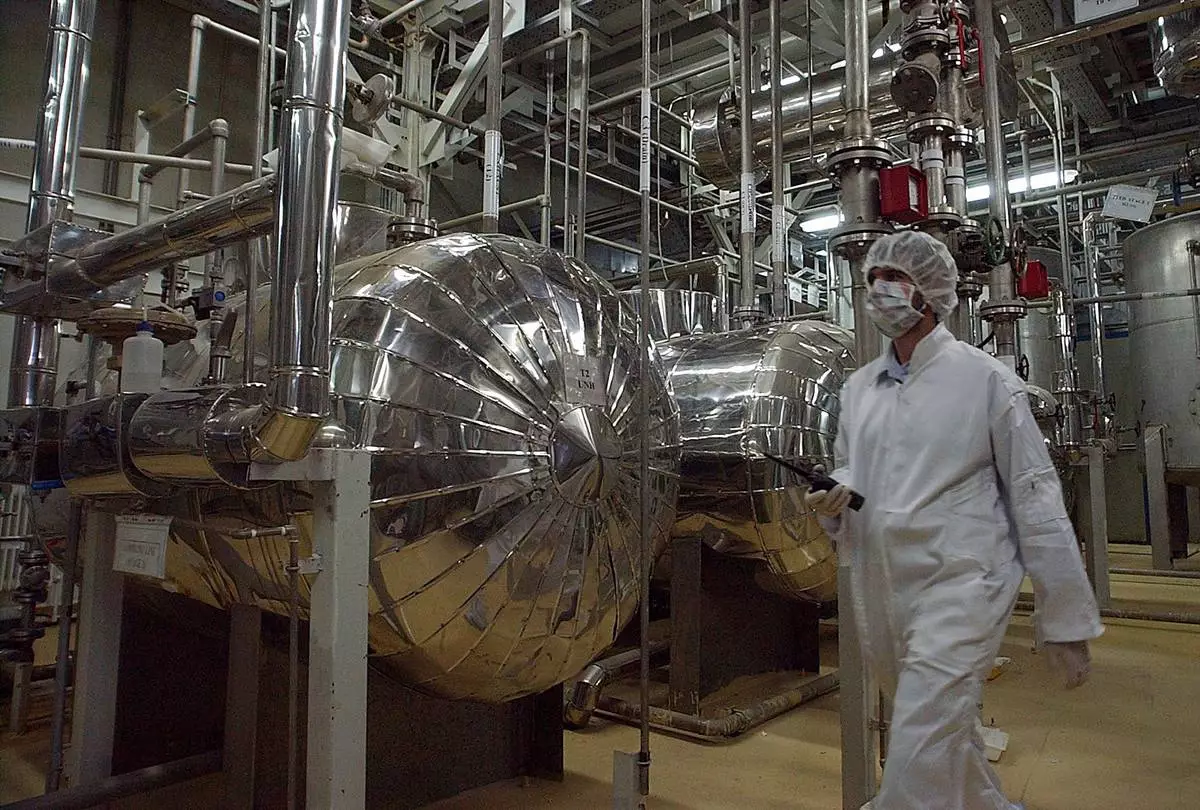
FILE - An Iranian security official in protective clothing walks through part of the Uranium Conversion Facility just outside the Iranian city of Isfahan, on March 30, 2005. (AP Photo/Vahid Salemi, File)
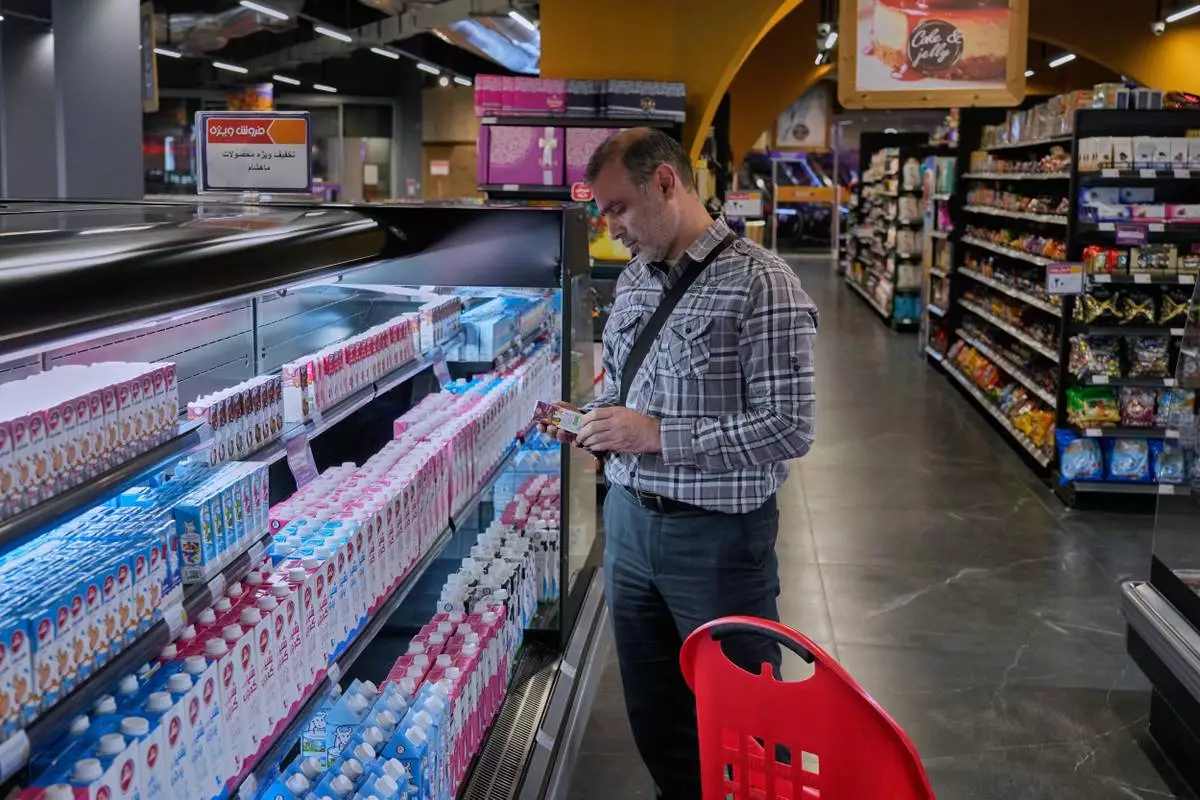
FILE - A customer shops at a supermarket at a shopping mall in northern Tehran, on Sept. 28, 2025. (AP Photo/Vahid Salemi, File)
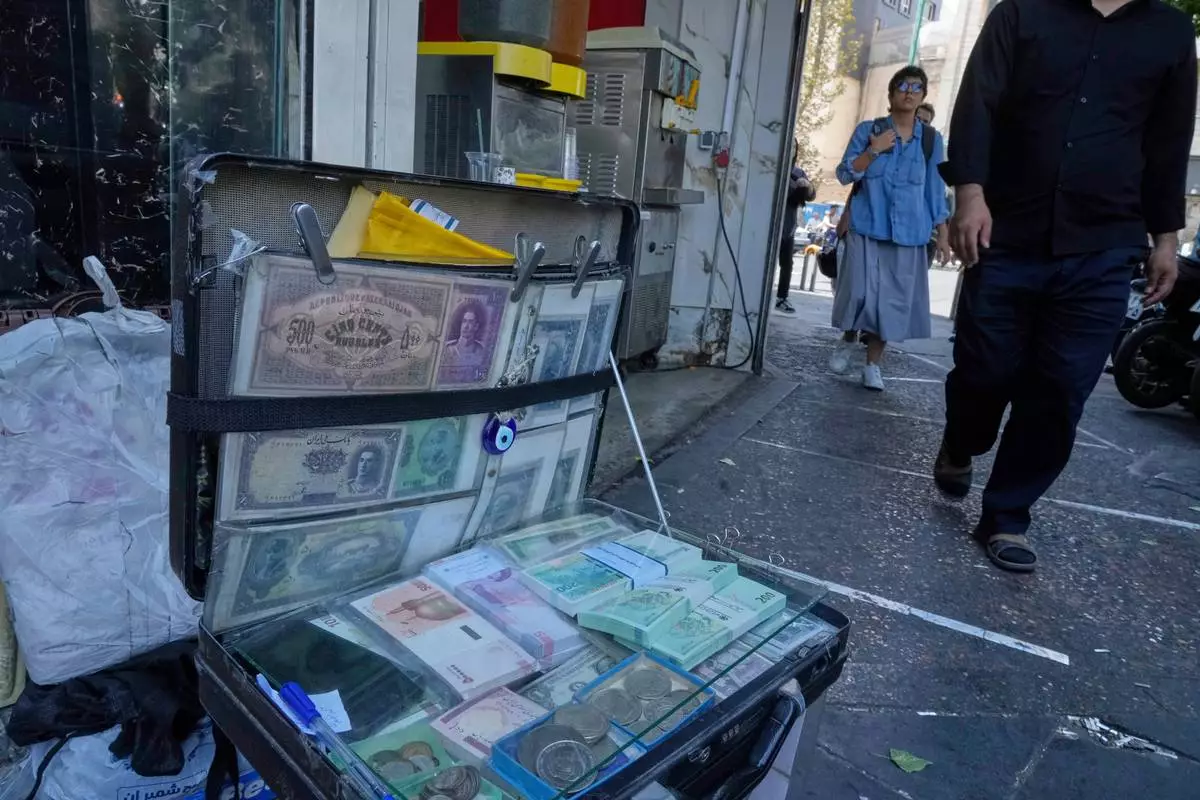
FILE - Current and pre-revolution Iranian banknotes are displayed by a street money exchanger at Ferdowsi square, Tehran's go-to venue for foreign currency exchange, in downtown Tehran, Iran, on Aug. 28, 2025. (AP Photo/Vahid Salemi, File)
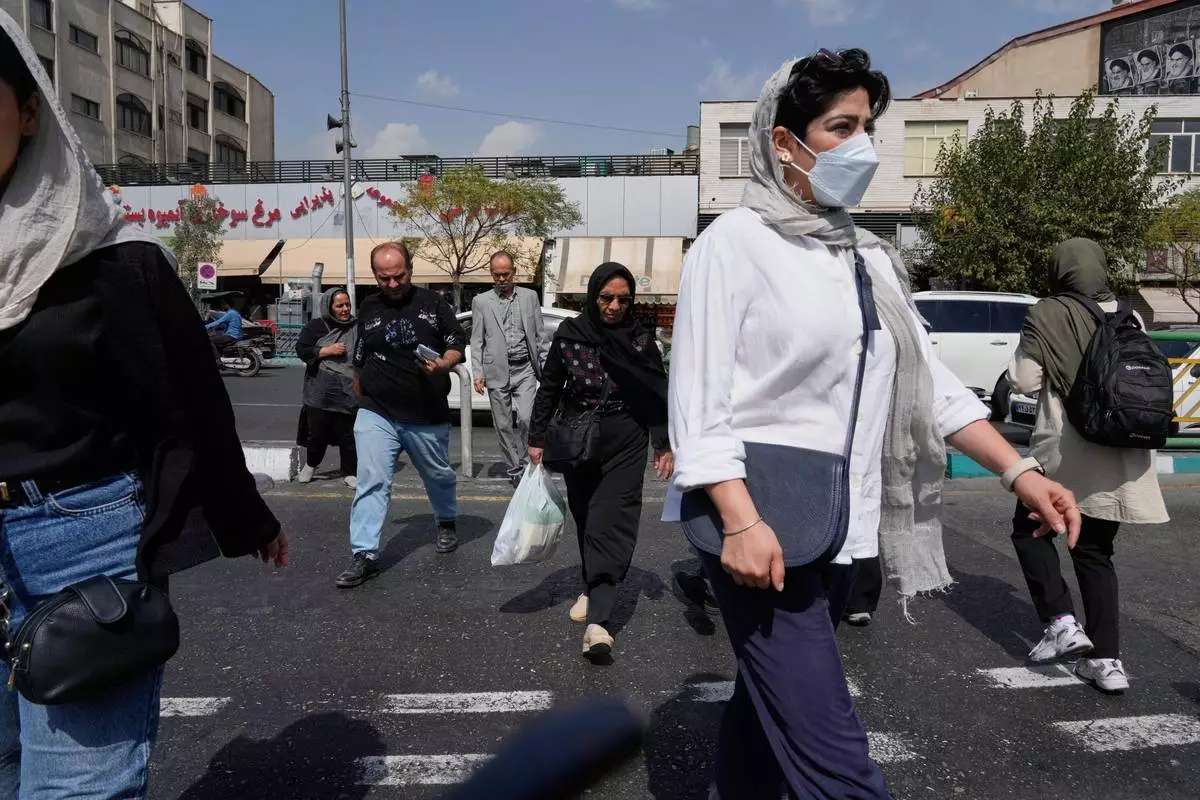
FILE - People cross the Enqelab-e-Eslami (Islamic Revolution) street in Tehran, Iran, on Sept. 27, 2025. (AP Photo/Vahid Salemi, File)
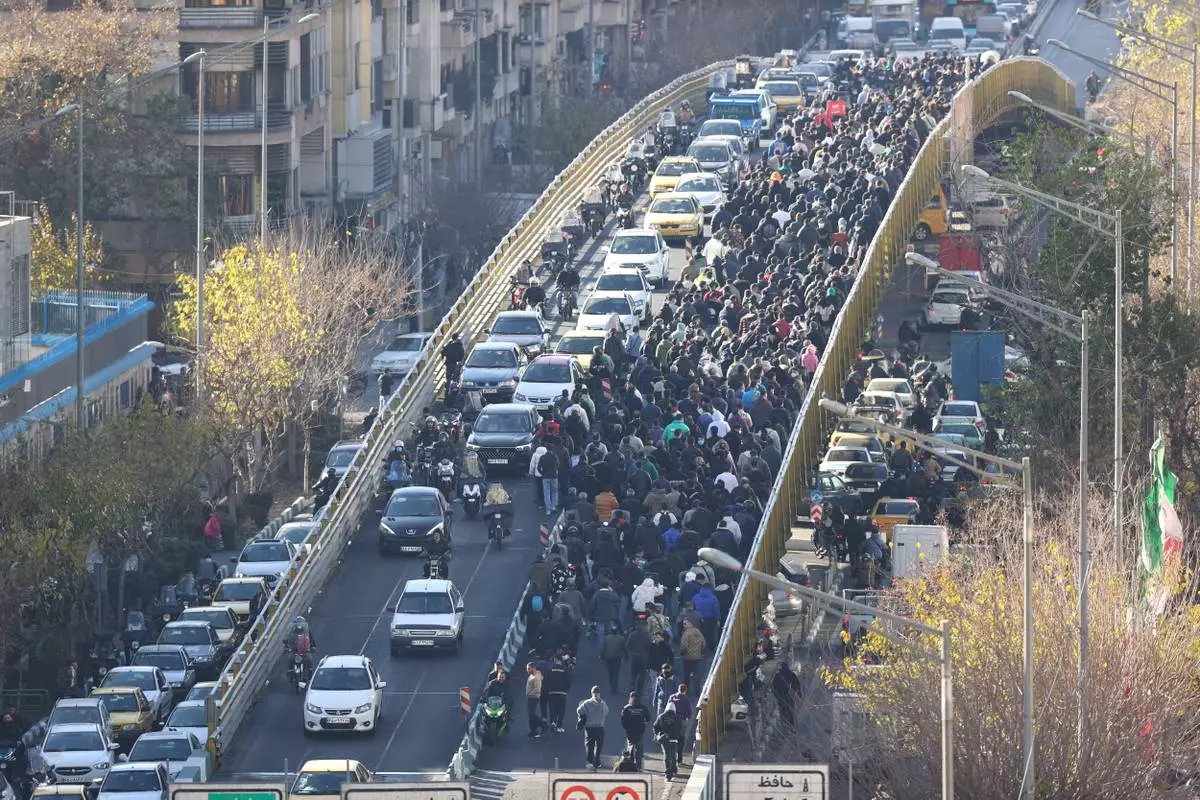
FILE - Protesters march on a bridge in Tehran, Iran, on Dec. 29, 2025. (Fars News Agency via AP, File)
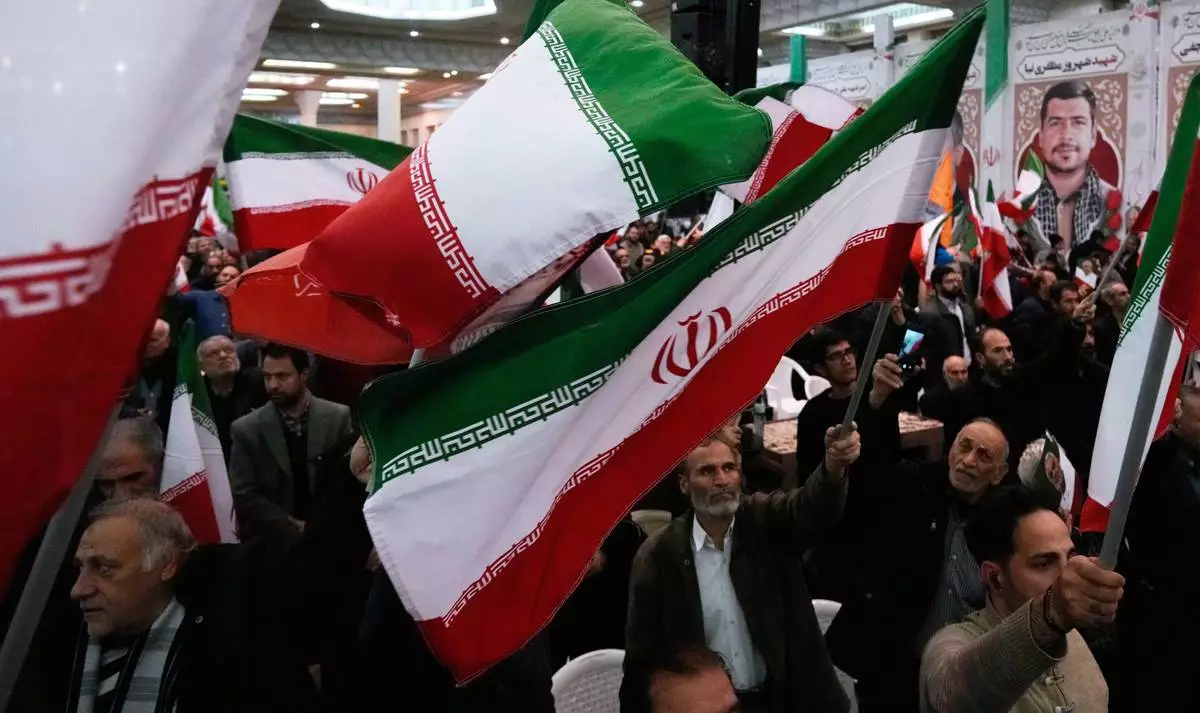
People wave national flags during a ceremony commemorating the death anniversary of the late commander of the Iran's Revolutionary Guard expeditionary Quds Force, Gen. Qassem Soleimani, who was killed in a U.S. drone attack in 2020 in Iraq, at the Imam Khomeini grand mosque in Tehran, Iran, Thursday, Jan. 1, 2026. (AP Photo/Vahid Salemi)