Skip to Content Facebook Feature Image

Fears in Massachusetts that Trump's bill could unravel health safety net

News

Fears in Massachusetts that Trump's bill could unravel health safety net
News

News

Fears in Massachusetts that Trump's bill could unravel health safety net

2025-07-04 02:49 Last Updated At:02:50

BOSTON (AP) — In the state that served as the model for Obamacare, advocates and health care workers fear the Trump administration is dismantling piece-by-piece a popular program that has provided insurance, preventive care and life-saving medication to hundreds of thousands of people.

The House on Thursday gave final approval to a massive tax and spending cuts bill that strips health insurance from up to a quarter of the roughly 400,000 people enrolled in the Massachusetts Health Connector, according to state estimates.

More Images
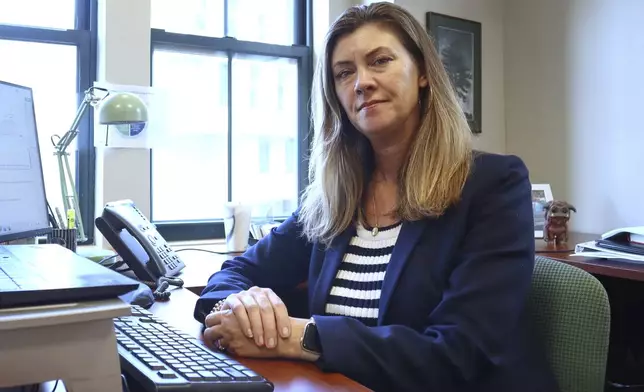
Massachusetts Health Connector Executive Director Audrey Morse Gasteier poses for a portrait at her desk in the state health insurance marketplace's office Tuesday, July 2, 2025, in Boston. (AP Photo /Leah Willingham)

Massachusetts Health Connector Executive Director Audrey Morse Gasteier poses for a portrait at her desk in the state health insurance marketplace's office Tuesday, July 2, 2025, in Boston. (AP Photo /Leah Willingham)

FILE — A woman walks past a sign outside the Boston Children's Hospital, Aug. 18, 2022, in Boston. (AP Photo/Charles Krupa, File)
FILE — A woman walks past a sign outside the Boston Children's Hospital, Aug. 18, 2022, in Boston. (AP Photo/Charles Krupa, File)

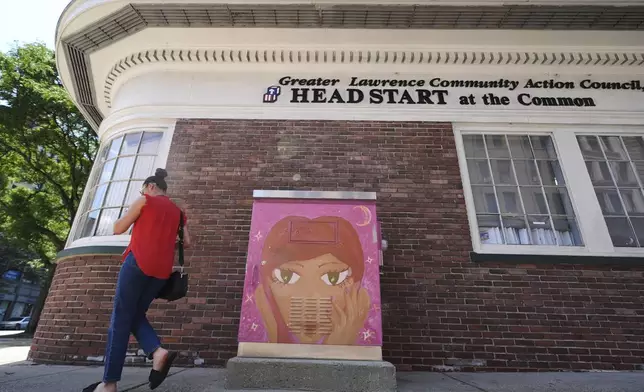
A woman walks toward the Greater Lawrence Community Action Council office where immigrants receive health assistance, June 25, 2025, in Lawrence, Mass. (AP Photo/Charles Krupa)

A woman walks toward the Greater Lawrence Community Action Council office where immigrants receive health assistance, June 25, 2025, in Lawrence, Mass. (AP Photo/Charles Krupa)

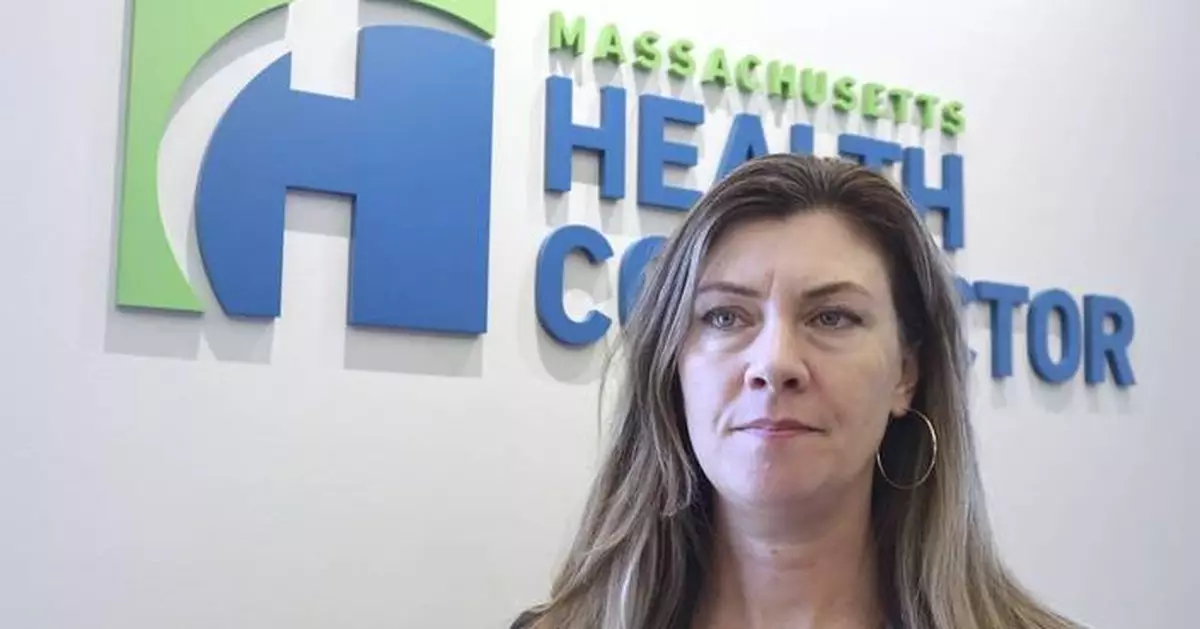
Massachusetts Health Connector Executive Director Audrey Morse Gasteier poses for a portrait in the state health insurance marketplace's office Tuesday, July 2, 2025, in Boston. (AP Photo /Leah Willingham)

Massachusetts Health Connector Executive Director Audrey Morse Gasteier poses for a portrait in the state health insurance marketplace's office Tuesday, July 2, 2025, in Boston. (AP Photo /Leah Willingham)

The legislative package — a centerpiece of President Donald Trump’s agenda that he is expected to quickly sign — will create anew the coverage gaps state leaders were working to close when Massachusetts in 2006 became the first U.S. state to enact a law requiring nearly every resident to have health insurance, state officials say. Beyond the effect on residents' health, losing care could have broader repercussions — both for the program's finances and residents' ability to make a living.

“The idea of needing to unwind that now and pull back on that promise and commitment is really frustrating and heartbreaking and cruel and counterproductive,” said Audrey Morse Gasteier, executive director of Massachusetts’ health insurance marketplace.

Trump and Republican supporters in Congress say the changes, which include new documentation requirements and limitations on who can apply for tax credits to help pay for insurance, are necessary to root out what they call fraud, waste and abuse. The Affordable Care Act changes in the bill, along with massive cuts to Medicaid and other programs, will eliminate roughly $1.1 trillion in health care spending over the next decade, according to the nonpartisan Congressional Budget Office.

In Lawrence, a mill community of around 90,000 people on the Merrimack River, where more than 80% of the population is Hispanic or Latino, Kesia Moreta said she's already seeing people slip out of the state's health care network because of the Trump administration's aggressive effort to crack down on illegal immigration.

Moreta, who manages a program created under the ACA that helps people sign up for coverage, said clients have been missing meetings out of fear that being enrolled for health insurance will harm their effort to stay in the U.S. legally.

Recently, a father of a U.S.-born teenage son with epilepsy deleted every email related to his health plan and stopped answering calls from the Connector after watching reports about deportations on social media. When his son’s medication ran out, Moreta said the father finally reached out, whispering over the phone, “Is this going to get me deported?”

“That breaks our hearts,” Moreta said.

More than 98% of Massachusetts residents have health insurance, the lowest rate of uninsurance in the country, according to the Massachusetts Health Insurance Survey.

Vicky Pulos, an attorney for the Mass Law Reform Institute who helps low-income people gain access to health care, said Republicans who tried and failed to repeal the Affordable Care Act during the first Trump administration have decided to take it apart incrementally despite its growing popularity.

“It really seems like this is just a less transparent way of effectively dismantling the accomplishments of the Affordable Care Act in both Medicaid and the marketplace,” Pulos said.

The changes, she added, “will massively drive up the number of uninsured but without openly repealing the ACA.”

Another provision in the mega bill requires people applying for or renewing coverage to provide more documentation of their income, household size and immigration status to be eligible for premium tax credits when the state marketplace already has that information, which Morse Gasteier said would cause “friction, red tape and delays.”

The Trump administration has said the proposals will “put a stop” to immigrants “stealing taxpayer-funded health care benefits meant for American citizens.”

No states use federal money to provide health insurance to people who are in the U.S. illegally. Some, like Massachusetts, use state tax dollars to do so to provide basic primary care services for a small population of vulnerable residents, like children.

No undocumented immigrants receive insurance through the state marketplace.

Of the 400,000 enrolled in the state marketplace, around 60,000 are noncitizens who are in the U.S. legally and would lose access to federal premium tax credits. The number includes domestic violence and human trafficking victims, refugees, people granted asylum or humanitarian parole, temporary protected status and other work-authorized immigrants.

Without the credits, premiums will cost upwards of $500 or $600 — an increase many people can't afford, Morse Gasteier said. Around half are green-card holders with an annual income of $15,000 a year or less.

The remaining 40,000 people expected to lose coverage are U.S. citizens Morse Gasteier said could be stymied in applying or recertifying coverage by provisions like the increased documentation requirements.

Morse Gasteier said Massachusetts' marketplace worked “tirelessly” to enroll vulnerable and hard-to-reach populations after the state program — formed under the leadership of then-Gov. Mitt Romney and known as “Romneycare" — was created.

She worries that if people hear help is no longer available, “entire populations will just sort of give up on health insurance.”

In addition to affecting residents' health, that could have an economic impact in the state.

Immigrants with legal status enrolled in the state marketplace tend to be younger than the rest of the population, Morse Gasteier said. Their presence brings premiums down for others because they tend to be healthier.

In Lawrence, advocates who help people obtain insurance coverage though the ACA marketplace say the burden would fall disproportionately on people with chronic health issues like diabetes and chronic heart disease.

The Greater Lawrence Community Action Council assists around 10,000 people a year with either signing up for or renewing health insurance.

“If you’re not healthy, let me tell you, you can’t work. If you can’t work, you can’t pay your bills. It’s just as simple as that,” said GLCAC CEO Vilma Martinez-Dominguez.

Moreta said one man who called her from the emergency room recently said he discovered his health insurance had lapsed. Moreta said she could help him renew it, and urged him to wait at the hospital.

He told her not to do anything. He was leaving the hospital. She has no idea what became of him.
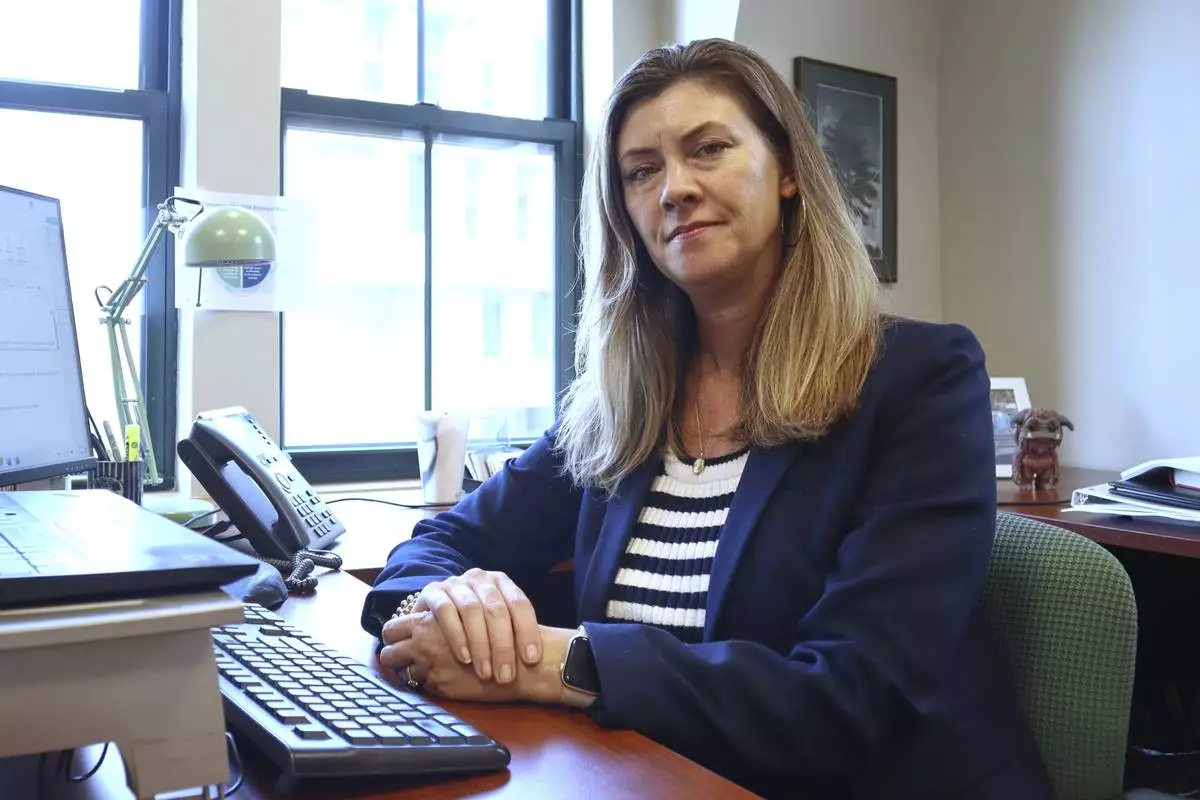
Massachusetts Health Connector Executive Director Audrey Morse Gasteier poses for a portrait at her desk in the state health insurance marketplace's office Tuesday, July 2, 2025, in Boston. (AP Photo /Leah Willingham)

Massachusetts Health Connector Executive Director Audrey Morse Gasteier poses for a portrait at her desk in the state health insurance marketplace's office Tuesday, July 2, 2025, in Boston. (AP Photo /Leah Willingham)

FILE — A woman walks past a sign outside the Boston Children's Hospital, Aug. 18, 2022, in Boston. (AP Photo/Charles Krupa, File)

FILE — A woman walks past a sign outside the Boston Children's Hospital, Aug. 18, 2022, in Boston. (AP Photo/Charles Krupa, File)

A woman walks toward the Greater Lawrence Community Action Council office where immigrants receive health assistance, June 25, 2025, in Lawrence, Mass. (AP Photo/Charles Krupa)

A woman walks toward the Greater Lawrence Community Action Council office where immigrants receive health assistance, June 25, 2025, in Lawrence, Mass. (AP Photo/Charles Krupa)

Massachusetts Health Connector Executive Director Audrey Morse Gasteier poses for a portrait in the state health insurance marketplace's office Tuesday, July 2, 2025, in Boston. (AP Photo /Leah Willingham)


Massachusetts Health Connector Executive Director Audrey Morse Gasteier poses for a portrait in the state health insurance marketplace's office Tuesday, July 2, 2025, in Boston. (AP Photo /Leah Willingham)

NEW YORK (AP) — Reviving a campaign pledge, President Donald Trump wants a one-year, 10% cap on credit card interest rates, a move that could save Americans tens of billions of dollars but drew immediate opposition from an industry that has been in his corner.

Trump was not clear in his social media post Friday night whether a cap might take effect through executive action or legislation, though one Republican senator said he had spoken with the president and would work on a bill with his “full support.” Trump said he hoped it would be in place Jan. 20, one year after he took office.

Strong opposition is certain from Wall Street in addition to the credit card companies, which donated heavily to his 2024 campaign and have supported Trump's second-term agenda. Banks are making the argument that such a plan would most hurt poor people, at a time of economic concern, by curtailing or eliminating credit lines, driving them to high-cost alternatives like payday loans or pawnshops.

“We will no longer let the American Public be ripped off by Credit Card Companies that are charging Interest Rates of 20 to 30%,” Trump wrote on his Truth Social platform.

Researchers who studied Trump’s campaign pledge after it was first announced found that Americans would save roughly $100 billion in interest a year if credit card rates were capped at 10%. The same researchers found that while the credit card industry would take a major hit, it would still be profitable, although credit card rewards and other perks might be scaled back.

About 195 million people in the United States had credit cards in 2024 and were assessed $160 billion in interest charges, the Consumer Financial Protection Bureau says. Americans are now carrying more credit card debt than ever, to the tune of about $1.23 trillion, according to figures from the New York Federal Reserve for the third quarter last year.

Further, Americans are paying, on average, between 19.65% and 21.5% in interest on credit cards according to the Federal Reserve and other industry tracking sources. That has come down in the past year as the central bank lowered benchmark rates, but is near the highs since federal regulators started tracking credit card rates in the mid-1990s. That’s significantly higher than a decade ago, when the average credit card interest rate was roughly 12%.

The Republican administration has proved particularly friendly until now to the credit card industry.

Capital One got little resistance from the White House when it finalized its purchase and merger with Discover Financial in early 2025, a deal that created the nation’s largest credit card company. The Consumer Financial Protection Bureau, which is largely tasked with going after credit card companies for alleged wrongdoing, has been largely nonfunctional since Trump took office.

In a joint statement, the banking industry was opposed to Trump's proposal.

“If enacted, this cap would only drive consumers toward less regulated, more costly alternatives," the American Bankers Association and allied groups said.

Bank lobbyists have long argued that lowering interest rates on their credit card products would require the banks to lend less to high-risk borrowers. When Congress enacted a cap on the fee that stores pay large banks when customers use a debit card, banks responded by removing all rewards and perks from those cards. Debit card rewards only recently have trickled back into consumers' hands. For example, United Airlines now has a debit card that gives miles with purchases.

The U.S. already places interest rate caps on some financial products and for some demographics. The Military Lending Act makes it illegal to charge active-duty service members more than 36% for any financial product. The national regulator for credit unions has capped interest rates on credit union credit cards at 18%.

Credit card companies earn three streams of revenue from their products: fees charged to merchants, fees charged to customers and the interest charged on balances. The argument from some researchers and left-leaning policymakers is that the banks earn enough revenue from merchants to keep them profitable if interest rates were capped.

"A 10% credit card interest cap would save Americans $100 billion a year without causing massive account closures, as banks claim. That’s because the few large banks that dominate the credit card market are making absolutely massive profits on customers at all income levels," said Brian Shearer, director of competition and regulatory policy at the Vanderbilt Policy Accelerator, who wrote the research on the industry's impact of Trump's proposal last year.

There are some historic examples that interest rate caps do cut off the less creditworthy to financial products because banks are not able to price risk correctly. Arkansas has a strictly enforced interest rate cap of 17% and evidence points to the poor and less creditworthy being cut out of consumer credit markets in the state. Shearer's research showed that an interest rate cap of 10% would likely result in banks lending less to those with credit scores below 600.

The White House did not respond to questions about how the president seeks to cap the rate or whether he has spoken with credit card companies about the idea.

Sen. Roger Marshall, R-Kan., who said he talked with Trump on Friday night, said the effort is meant to “lower costs for American families and to reign in greedy credit card companies who have been ripping off hardworking Americans for too long."

Legislation in both the House and the Senate would do what Trump is seeking.

Sens. Bernie Sanders, I-Vt., and Josh Hawley, R-Mo., released a plan in February that would immediately cap interest rates at 10% for five years, hoping to use Trump’s campaign promise to build momentum for their measure.

Hours before Trump's post, Sanders said that the president, rather than working to cap interest rates, had taken steps to deregulate big banks that allowed them to charge much higher credit card fees.

Reps. Alexandria Ocasio-Cortez, D-N.Y., and Anna Paulina Luna, R-Fla., have proposed similar legislation. Ocasio-Cortez is a frequent political target of Trump, while Luna is a close ally of the president.

Seung Min Kim reported from West Palm Beach, Fla.

President Donald Trump arrives on Air Force One at Palm Beach International Airport, Friday, Jan. 9, 2025, in West Palm Beach, Fla. (AP Photo/Julia Demaree Nikhinson)

President Donald Trump arrives on Air Force One at Palm Beach International Airport, Friday, Jan. 9, 2025, in West Palm Beach, Fla. (AP Photo/Julia Demaree Nikhinson)

FILE - Visa and Mastercard credit cards are shown in Buffalo Grove, Ill., Feb. 8, 2024. (AP Photo/Nam Y. Huh, File)

FILE - Visa and Mastercard credit cards are shown in Buffalo Grove, Ill., Feb. 8, 2024. (AP Photo/Nam Y. Huh, File)

Recommended Articles