KHAN YOUNIS, Gaza Strip (AP) — For Rida Abu Hadayed, summer adds a new layer of misery to a daily struggle to survive in the war-ravaged Gaza Strip.
With temperatures exceeding 30 degrees Celsius (86 degrees Fahrenheit), daybreak begins with the cries of Hadayed’s seven children sweltering inside the displaced family’s cramped nylon tent. Outside, the humidity is unbearable.
Click to Gallery
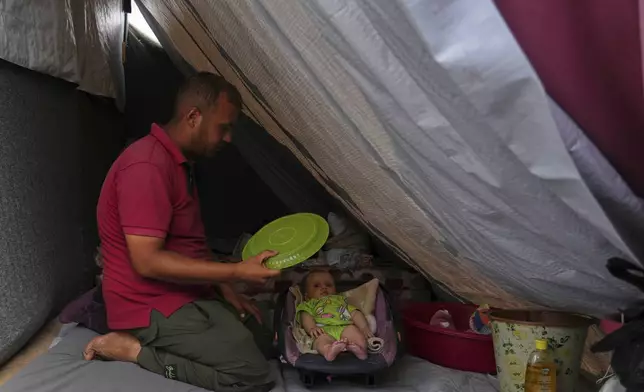
Issam Abu Hadayed, 28, tries to cool off her 5-month-old baby Amira, with a plastic plate as they sit in their tent at a camp for displaced people in Khan Younis, southern Gaza Strip, Tuesday, July 1, 2025. (AP Photo/Abdel Kareem Hana)
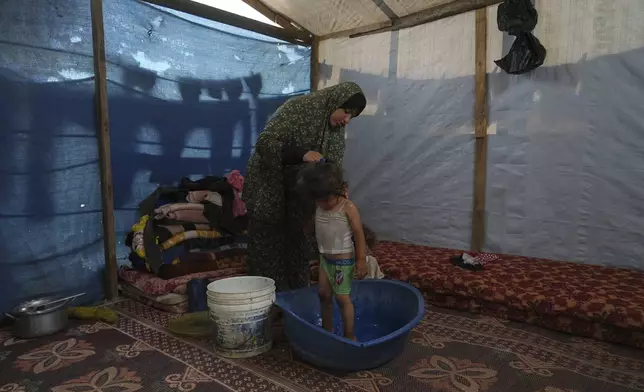
Rida Abu Hadayed, 32, cools off with water her 2-year-old daughter Azhar in their tent at a camp for displaced people in Khan Younis, southern Gaza Strip, Tuesday, July 1, 2025. (AP Photo/Abdel Kareem Hana)
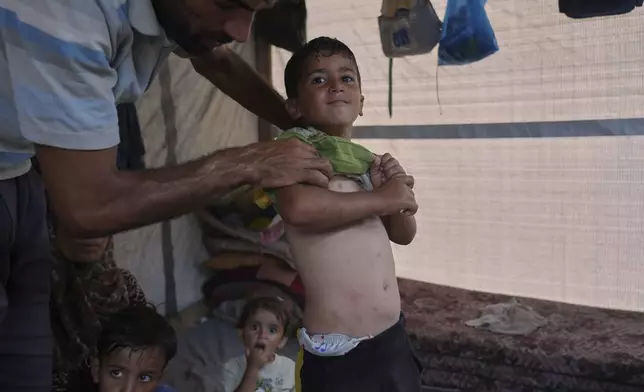
Muhammad Abu Hadayed, 33, shows skin rashes suffered by his 7-year-old son Adam as they stand in their tent at a camp for displaced people in Khan Younis, southern Gaza Strip, Tuesday, July 1, 2025. (AP Photo/Abdel Kareem Hana)
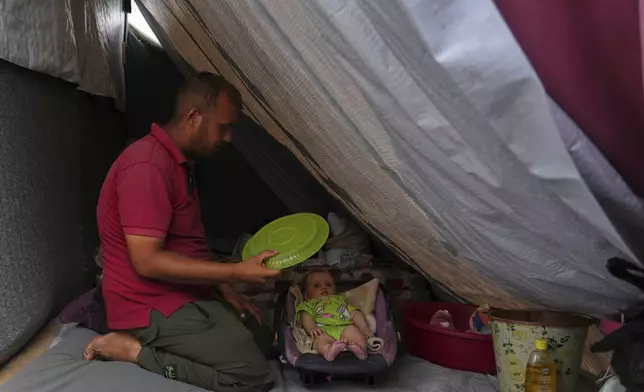
Issam Abu Hadayed, 28, tries to cool off her 5-month-old baby Amira, with a plastic plate as they sit in their tent at a camp for displaced people in Khan Younis, southern Gaza Strip, Tuesday, July 1, 2025. (AP Photo/Abdel Kareem Hana)
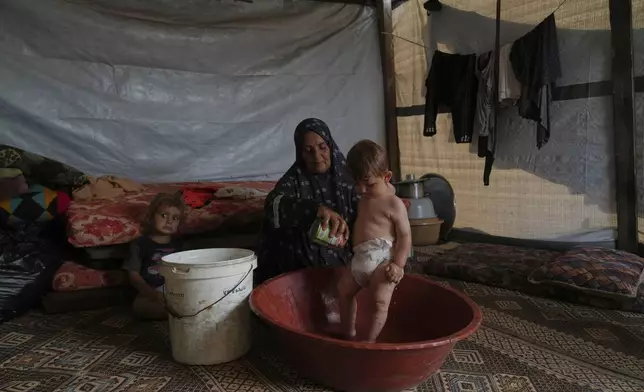
Siham Abu Hadayed, 52, cools off with water her 11-month-old grandchild Yasser in their tent at a camp for displaced people in Khan Younis, southern Gaza Strip, Tuesday, July 1, 2025. (AP Photo/Abdel Kareem Hana)
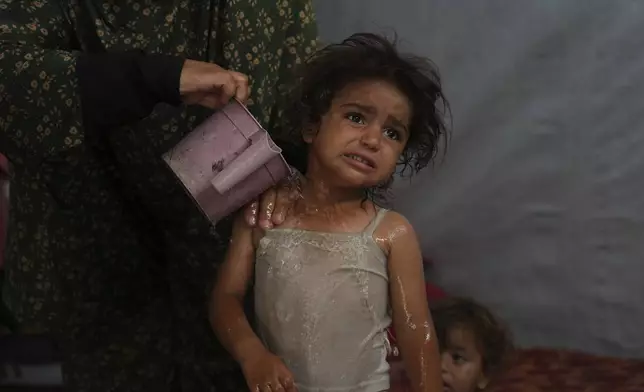
Rida Abu Hadayed, 32, cools off with water her 2-year-old daughter Azhar in their tent at a camp for displaced people in Khan Younis, southern Gaza Strip, Tuesday, July 1, 2025. (AP Photo/Abdel Kareem Hana)
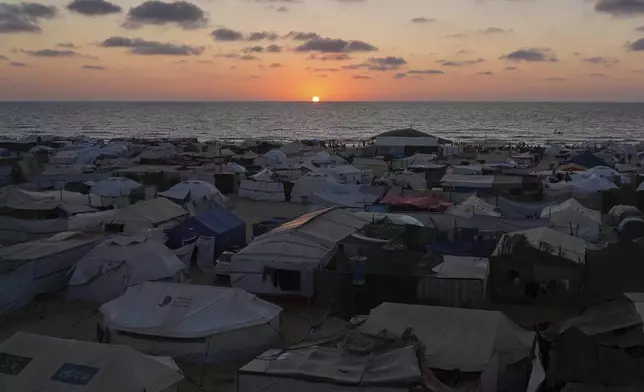
A tent camp for displaced Palestinians stretches near the shore during the sunset in Khan Younis, Gaza Strip, Wednesday, July 2, 2025. (AP Photo/Abdel Kareem Hana)
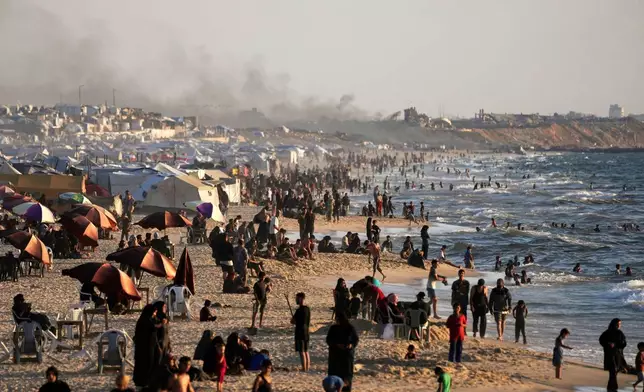
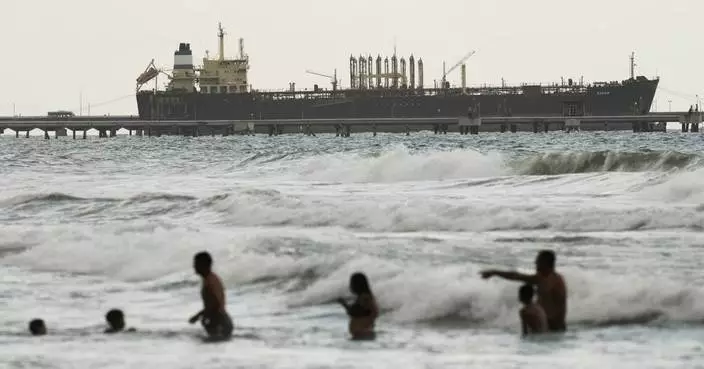
Palestinians spend time at the seafront during a heat wave in Gaza City, Wednesday, July 2, 2025. (AP Photo/Jehad Alshrafi)
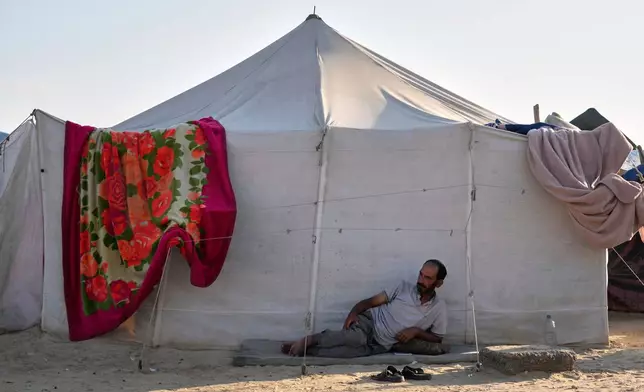
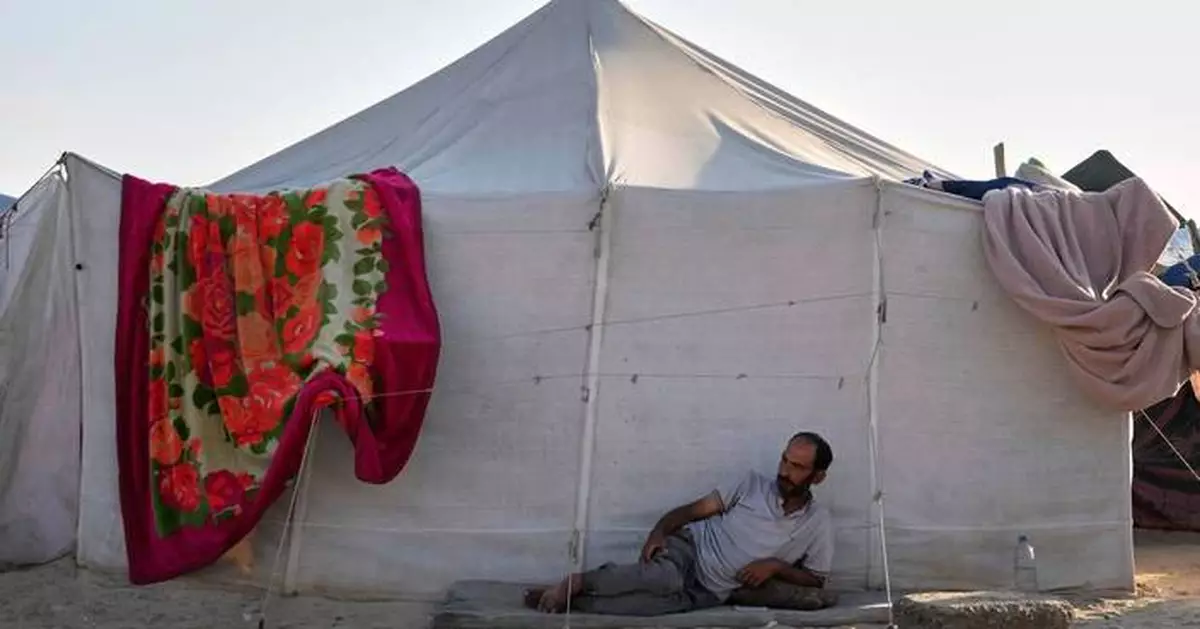
A Palestinian, Adham Sabah, 39, lies outside a tent at a camp for displaced people in Khan Younis, Gaza Strip, Wednesday, July 2, 2025. (AP Photo/Abdel Kareem Hana)
The only way the 32-year-old mother can offer her children relief is by fanning them with a tray or bits of paper — whatever she can find. If she has water, she pours it over them, but that is an increasingly scarce resource.
“There is no electricity. There is nothing,” she said, her face beaded with sweat. “They cannot sleep. They keep crying all day until the sun sets.”
The heat in Gaza has intensified hardships for its 2 million residents. Reduced water availability, crippled sanitation networks, and shrinking living spaces threaten to cause illnesses to cascade through communities, aid groups have long warned.
The scorching summer coincides with a lack of clean water for the majority of Gaza’s population, most of whom are displaced in tented communities. Many Palestinians in the enclave must walk long distances to fetch water and ration each drop, limiting their ability to wash and keep cool.
“We are only at the beginning of summer,“ Hadayed’s husband, Yousef, said. “And our situation is dire.”
Israel had blocked food, fuel, medicine and all other supplies from entering Gaza for nearly three months. It began allowing limited aid in May, but fuel needed to pump water from wells or operate desalination plants is still not getting into the territory.
With fuel supplies short, only 40% of drinking water production facilities are functioning in the Gaza Strip, according to a recent report by the United Nations Office for the Coordination of Humanitarian Affairs. All face imminent collapse. Up to 93% of households face water shortages, the June report said.
The Hadayeds were displaced after evacuation orders forced them to leave eastern Khan Younis.
“Our lives in the tent are miserable. We spend our days pouring water over their heads and their skin,” Yousef Hadayed said. “Water itself is scarce. It is very difficult to get that water.”
UNICEF’s spokesperson recently said that if fuel supplies are not allowed to enter the enclave, children will die of thirst.
“Me and my children spend our days sweating,” said Reham Abu Hadayed, a 30-year-old relative of Rida Abu Hadayed who was also displaced from eastern Khan Younis. She worries about the health of her four children.
“I don’t have enough money to buy them medicine,” she said.
For Mohammed al-Awini, 23, the heat is not the worst part. It's the flies and mosquitoes that bombard his tent, especially at night.
Without adequate sewage networks, garbage piles up on streets, attracting insects and illness. The stench of decomposing trash wafts in the air.
“We are awake all night, dying from mosquito bites,” he said. “We are the most tired people in the world.”
Kullab reported from Jerusalem.
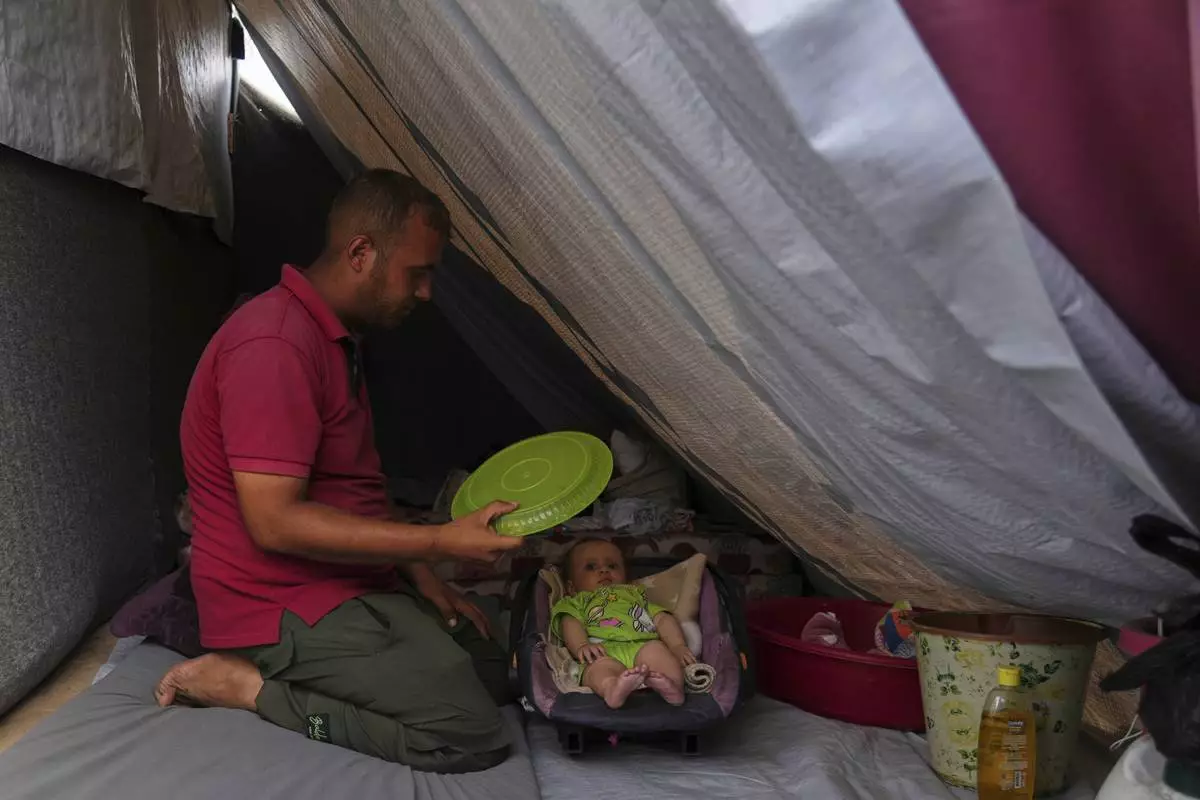
Issam Abu Hadayed, 28, tries to cool off her 5-month-old baby Amira, with a plastic plate as they sit in their tent at a camp for displaced people in Khan Younis, southern Gaza Strip, Tuesday, July 1, 2025. (AP Photo/Abdel Kareem Hana)
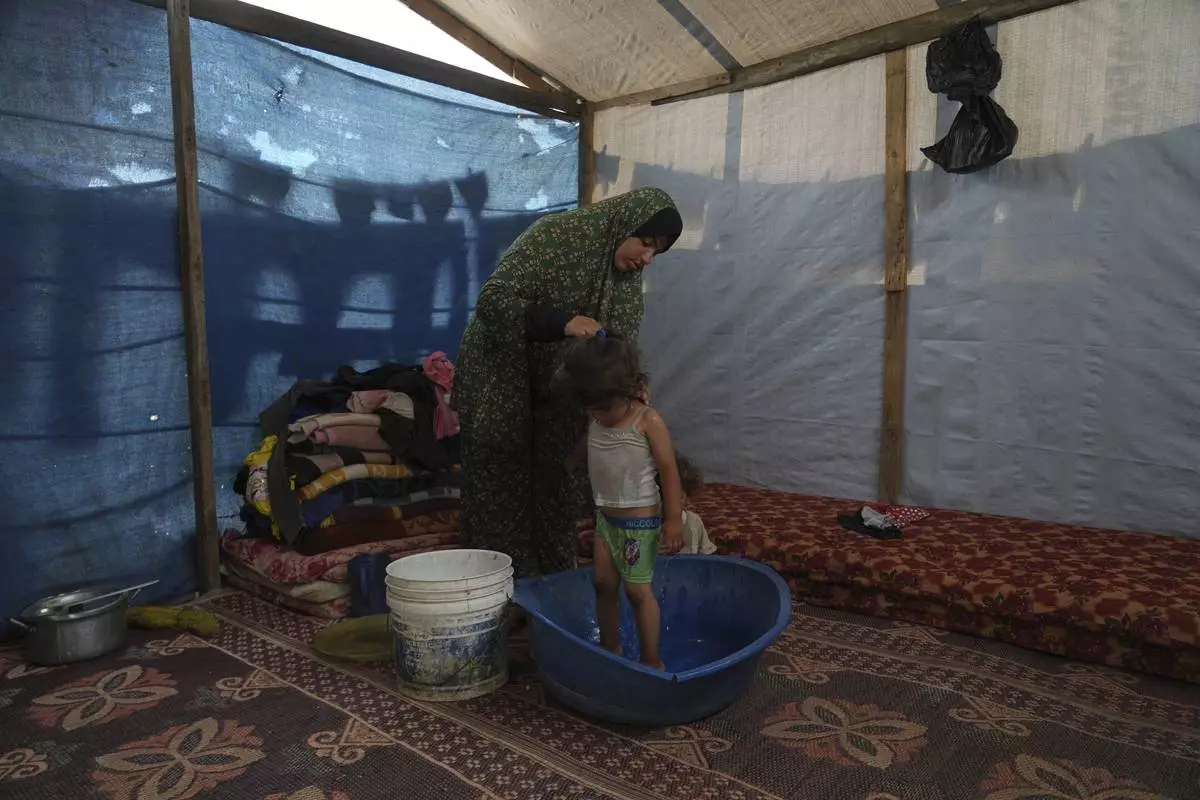
Rida Abu Hadayed, 32, cools off with water her 2-year-old daughter Azhar in their tent at a camp for displaced people in Khan Younis, southern Gaza Strip, Tuesday, July 1, 2025. (AP Photo/Abdel Kareem Hana)
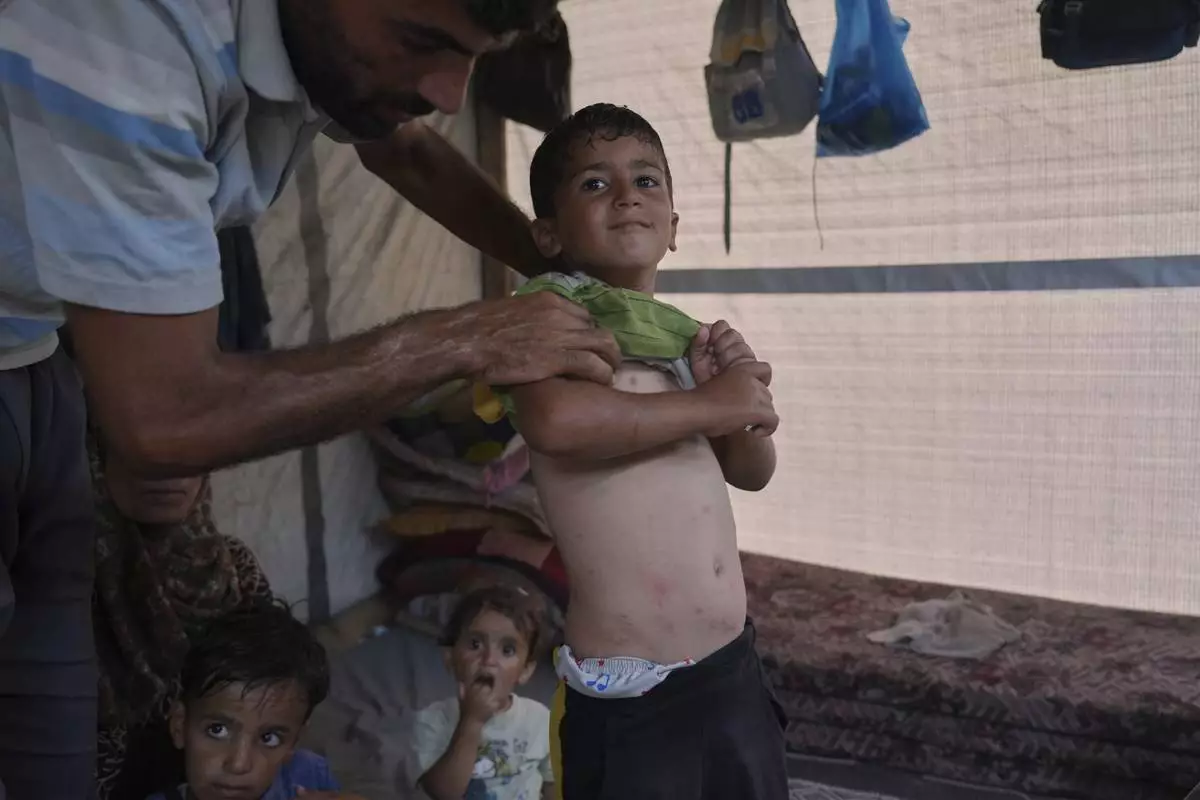
Muhammad Abu Hadayed, 33, shows skin rashes suffered by his 7-year-old son Adam as they stand in their tent at a camp for displaced people in Khan Younis, southern Gaza Strip, Tuesday, July 1, 2025. (AP Photo/Abdel Kareem Hana)
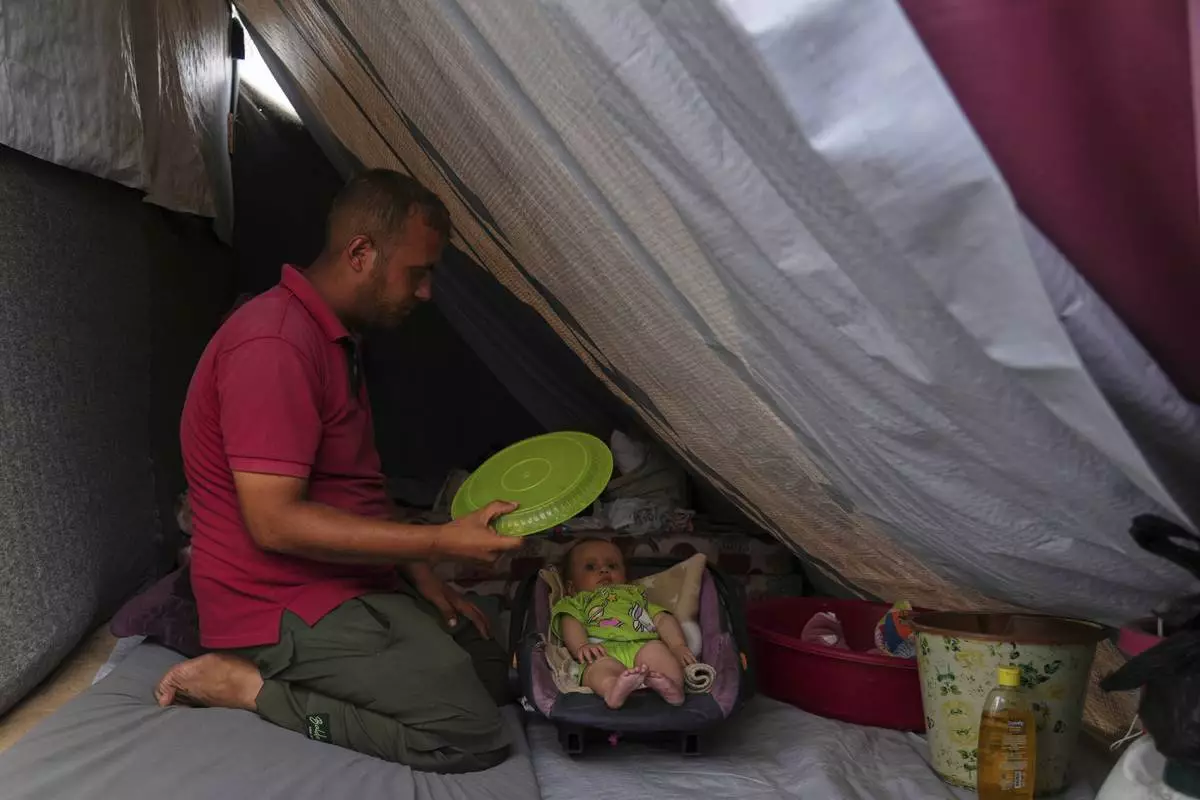
Issam Abu Hadayed, 28, tries to cool off her 5-month-old baby Amira, with a plastic plate as they sit in their tent at a camp for displaced people in Khan Younis, southern Gaza Strip, Tuesday, July 1, 2025. (AP Photo/Abdel Kareem Hana)
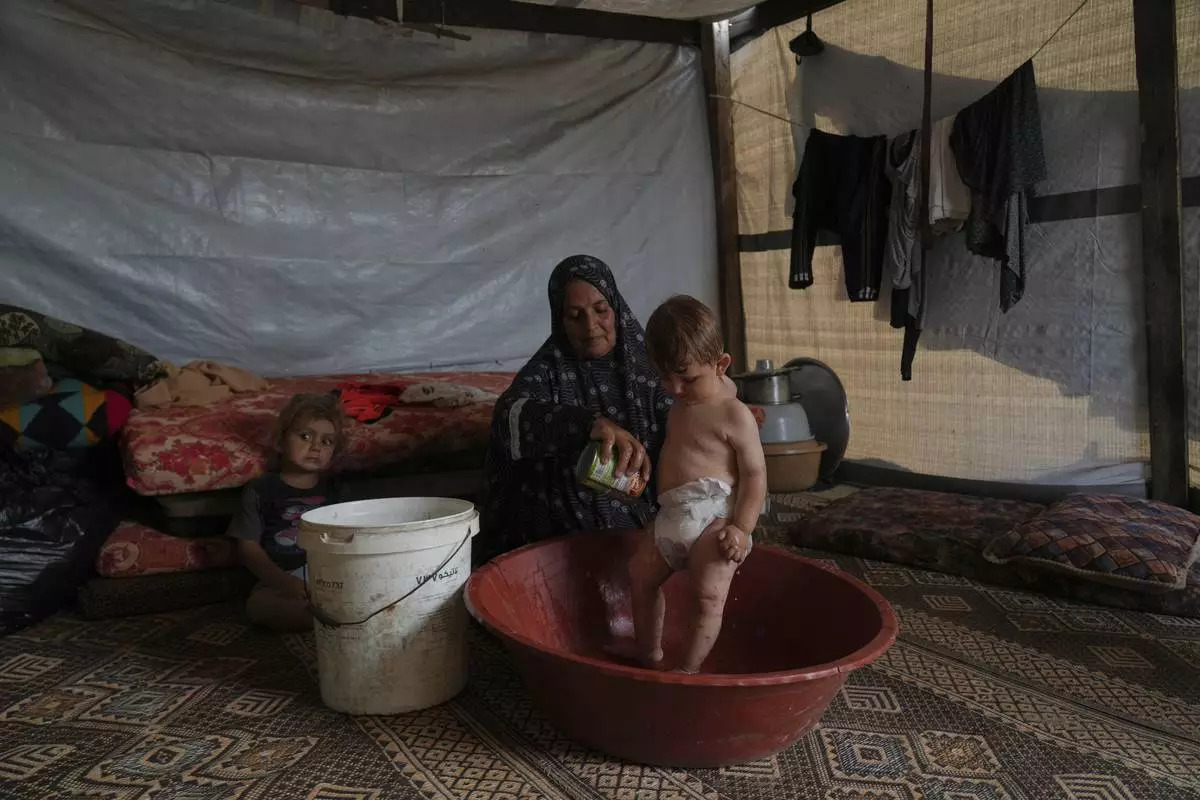
Siham Abu Hadayed, 52, cools off with water her 11-month-old grandchild Yasser in their tent at a camp for displaced people in Khan Younis, southern Gaza Strip, Tuesday, July 1, 2025. (AP Photo/Abdel Kareem Hana)
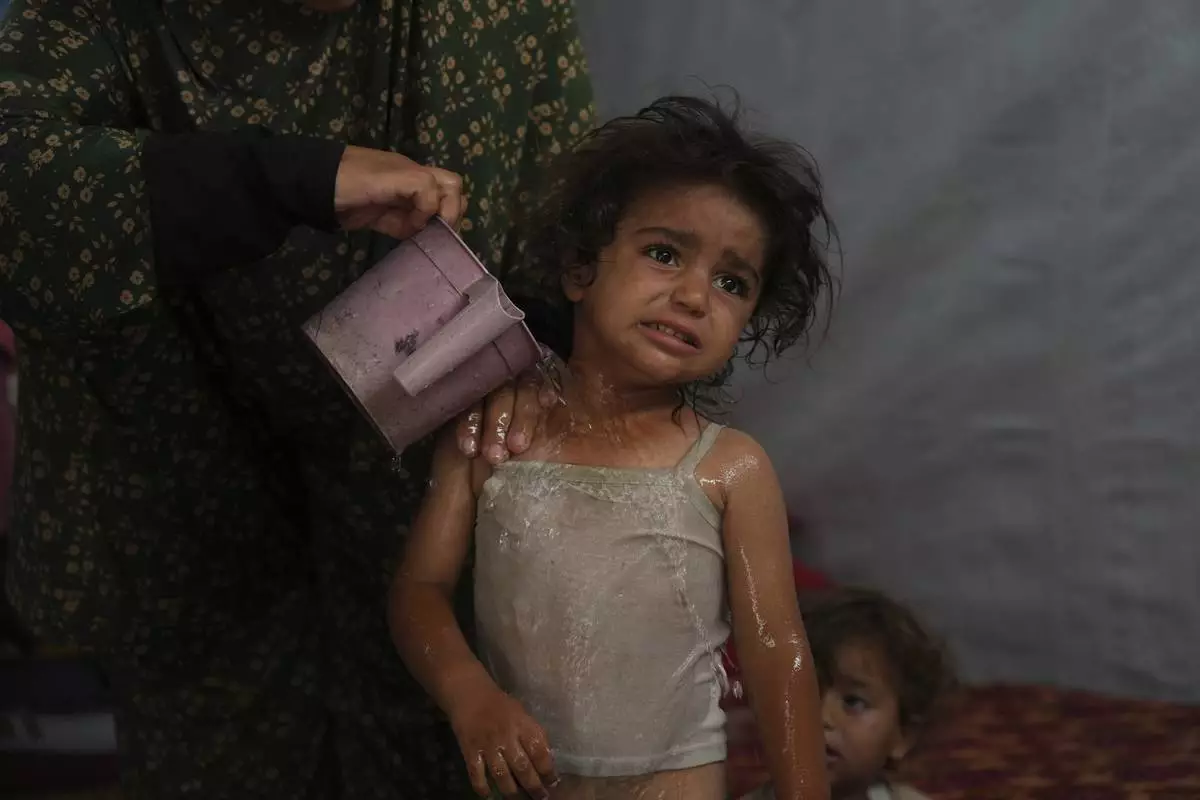
Rida Abu Hadayed, 32, cools off with water her 2-year-old daughter Azhar in their tent at a camp for displaced people in Khan Younis, southern Gaza Strip, Tuesday, July 1, 2025. (AP Photo/Abdel Kareem Hana)
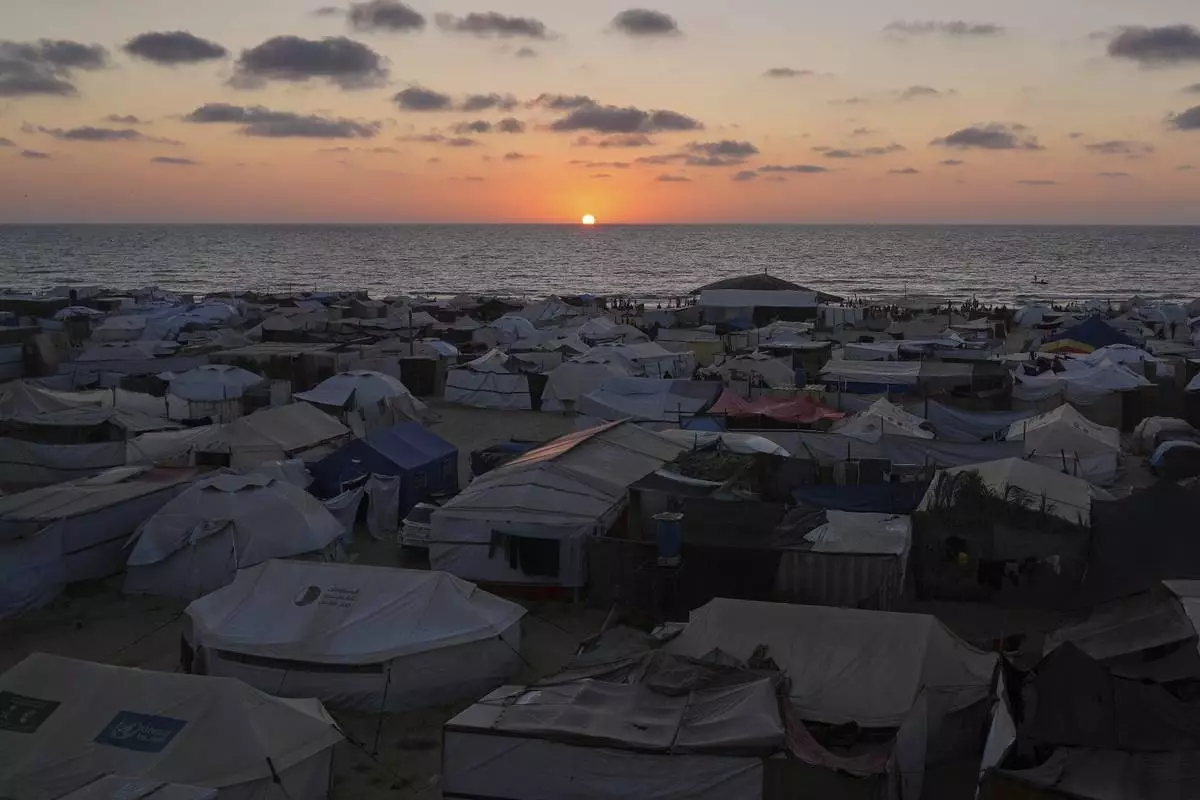
A tent camp for displaced Palestinians stretches near the shore during the sunset in Khan Younis, Gaza Strip, Wednesday, July 2, 2025. (AP Photo/Abdel Kareem Hana)
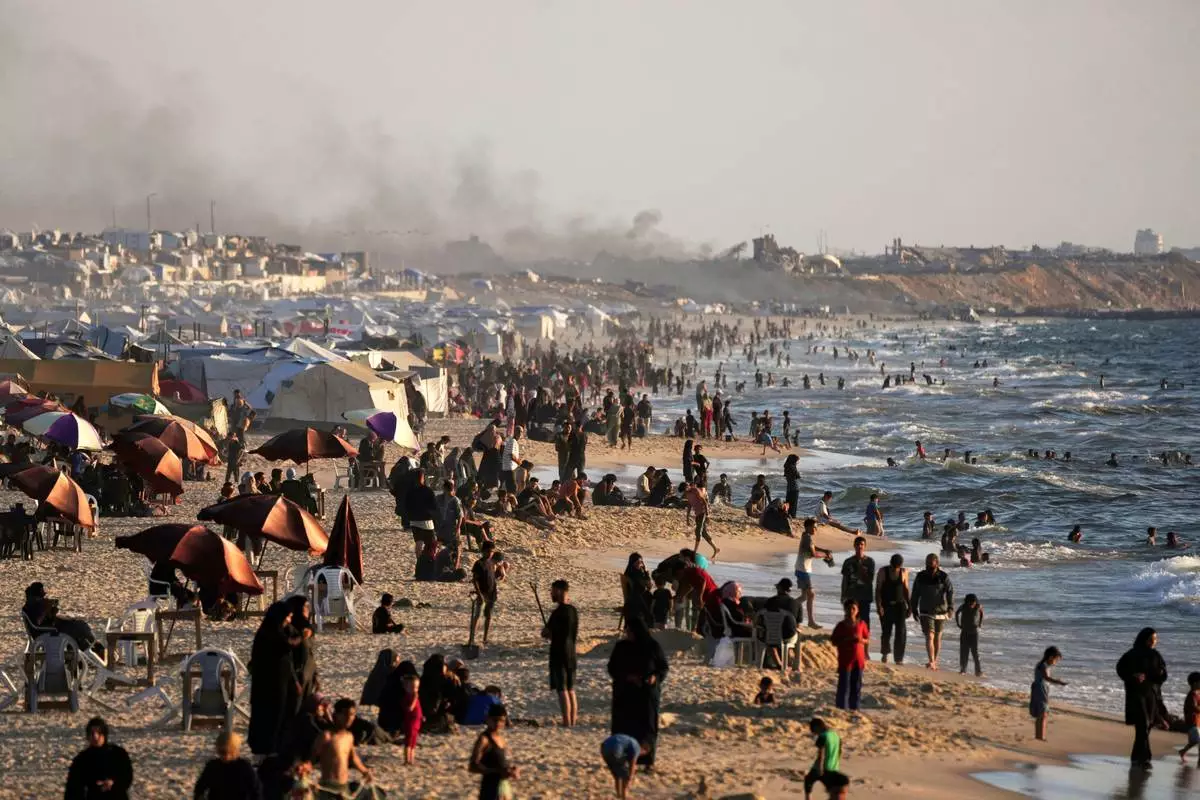
Palestinians spend time at the seafront during a heat wave in Gaza City, Wednesday, July 2, 2025. (AP Photo/Jehad Alshrafi)
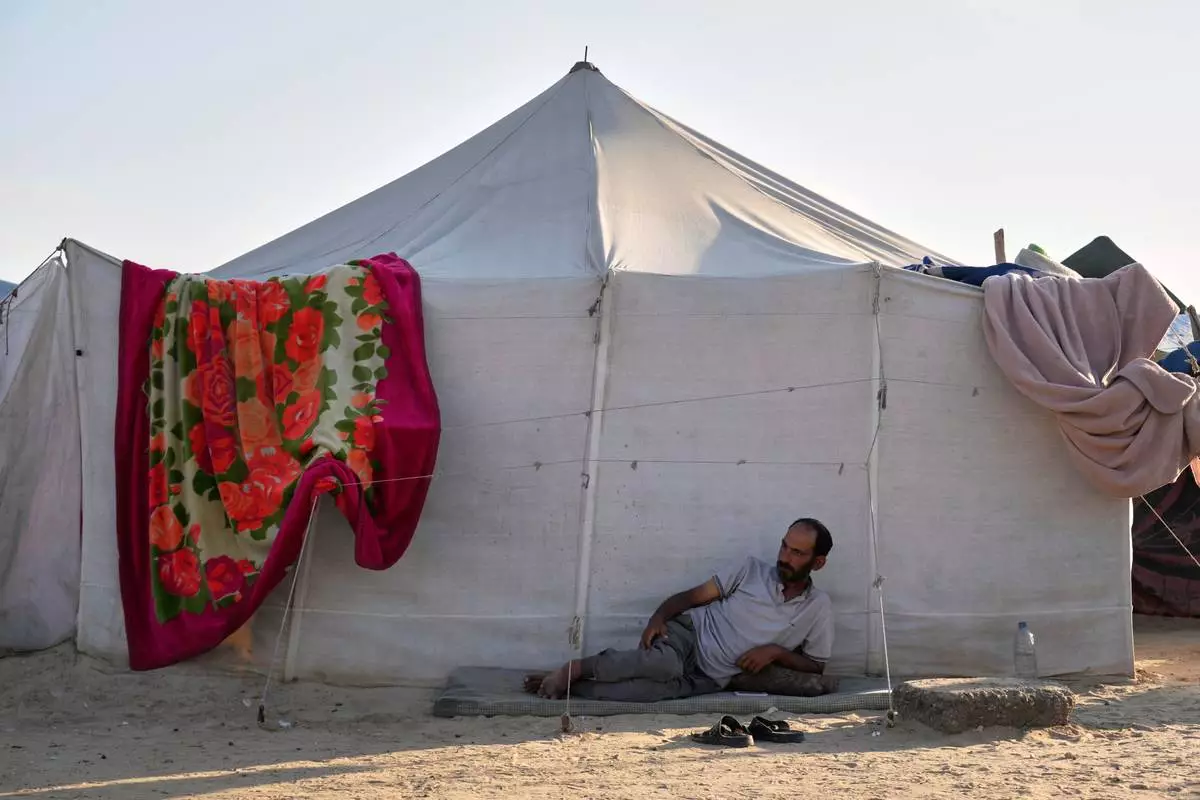
A Palestinian, Adham Sabah, 39, lies outside a tent at a camp for displaced people in Khan Younis, Gaza Strip, Wednesday, July 2, 2025. (AP Photo/Abdel Kareem Hana)