BRICS nations continue to outpace global economic growth, with their sustained momentum set to dominate discussions at the 17th BRICS Summit opening next week in Rio de Janeiro.
The 17th BRICS Summit will convene in Brazil on July 5-8, with expectations high for establishing an expanded alliance framework.
The founding members - Brazil, Russia, India, China, and South Africa - will work to strengthen BRICS cooperation alongside six newly admitted members: Egypt, Ethiopia, Iran, the United Arab Emirates, Indonesia, and Saudi Arabia. Nine partner countries will participate with observer status: Belarus, Bolivia, Cuba, Kazakhstan, Malaysia, Nigeria, Thailand, Uganda, and Uzbekistan.
Together, the BRICS nations have demonstrated sustained growth since the inaugural 2009 Summit. The mechanism now represents nearly 50 percent of the world's population and generates approximately 40 percent of global GDP.
The International Monetary Fund's April 2025 World Economic Outlook report projects that BRICS economies will expand by 3.4 percent in 2025, exceeding the anticipated global average of 2.8 percent. The report further indicates that the bloc achieved 4 percent GDP growth in 2024, compared to worldwide growth of 3.3 percent.
This coalition of 11 emerging economies plays a vital role in international trade, accounting for 24 percent of global commerce. Ahead of the Rio summit, BRICS-plus reached a historic milestone as intra-mechanism trade had surpassed 1 trillion dollars.
As Brazilian President Luiz Inacio Lula da Silva is preparing to host fellow BRICS leaders, the alliance faces significant challenges. The group's economic expansion and trade growth confront multiple tests, including the United States' trade policies under President Donald Trump and broader global economic uncertainties.
International observers await the outcomes from Rio de Janeiro, particularly regarding BRICS's collective response and demonstration of unity. The Brazilian presidency has identified two priority areas: strengthening cooperation among Global South nations and advancing BRICS partnerships for social, economic and environmental development.
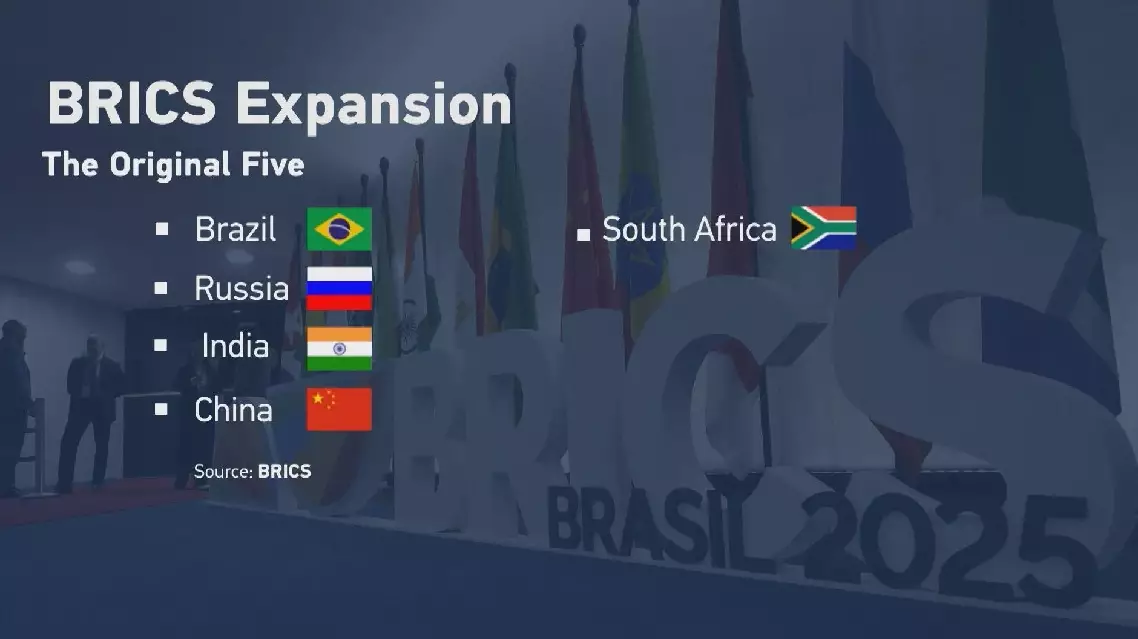
BRICS' economic growth outperforms global average
The U.S. military strike against Venezuela and capture of its president, Nicolas Maduro, has shocked the international community, triggering a steady stream of condemnation and serious concerns worldwide.
Brazil, Chile, Colombia, Mexico, Uruguay and Spain issued a joint statement on Sunday, expressing serious concern about and firm opposition to the U.S. unilateral military operations in Venezuela.
The U.S. actions contravene fundamental principles of international law, particularly the prohibition on the use or threat of force, and respect for the sovereignty and territorial integrity of States, as enshrined in the UN Charter, constituting an extremely dangerous precedent against peace and regional security, according to the statement.
In expressing profound concern and firm rejection, the six countries stressed in the statement that the situation in Venezuela must be resolved exclusively by peaceful means, and through dialogue, negotiation and respect for the will of the Venezuelan people in all its expressions, without external interference and in accordance with international law.
Only an inclusive political process, led by Venezuelans, can lead to a democratic, sustainable solution that respects human dignity, according to the statement.
Spanish Prime Minister Pedro Sanchez condemned the U.S. raid in Venezuela as a violation of international law, adding that the Spanish government always advocates and defends international law and peaceful resolution of conflicts.
Addressing a meeting of the Community of Latin American and Caribbean States (CELAC), Cuban Foreign Minister Bruno Rodriguez demanded the unconditional and immediate release of Maduro and his wife.
Noting that Latin America and the Caribbean are a zone of peace, he expressed his firm opposition to the use of force, which is an unshakable principle.
Any aggression against Venezuela shall be regarded as an attack against all CELAC member states, and nations must collectively oppose it, he stressed.
The South African government denounced the U.S. attack on Venezuela as a violation of international law, according to a statement released on Sunday.
History has repeatedly demonstrated that military invasions against sovereign states yield only instability and deepening crisis, the statement said.
South Africa calls on the UN Security Council to urgently convene a session to address this situation, according to the statement.
Serbian President Aleksandar Vucic said what happened in Venezuela demonstrates that international law and the UN Charter are losing their practical effectiveness.
U.S. military action against Venezuela marks a dangerous precedent, as similar actions could be taken against any other nations, he said.
In addition, the foreign ministries of Namibia, Singapore, Oman and Pakistan also issued statements on the same day, expressing grave concern over U.S. interference in Venezuela's internal affairs.
They emphasized the need to uphold international law and the principles of the UN Charter while respecting Venezuela's sovereignty.
They also called on all parties to exercise restraint and resolve the crisis through peaceful dialogue.
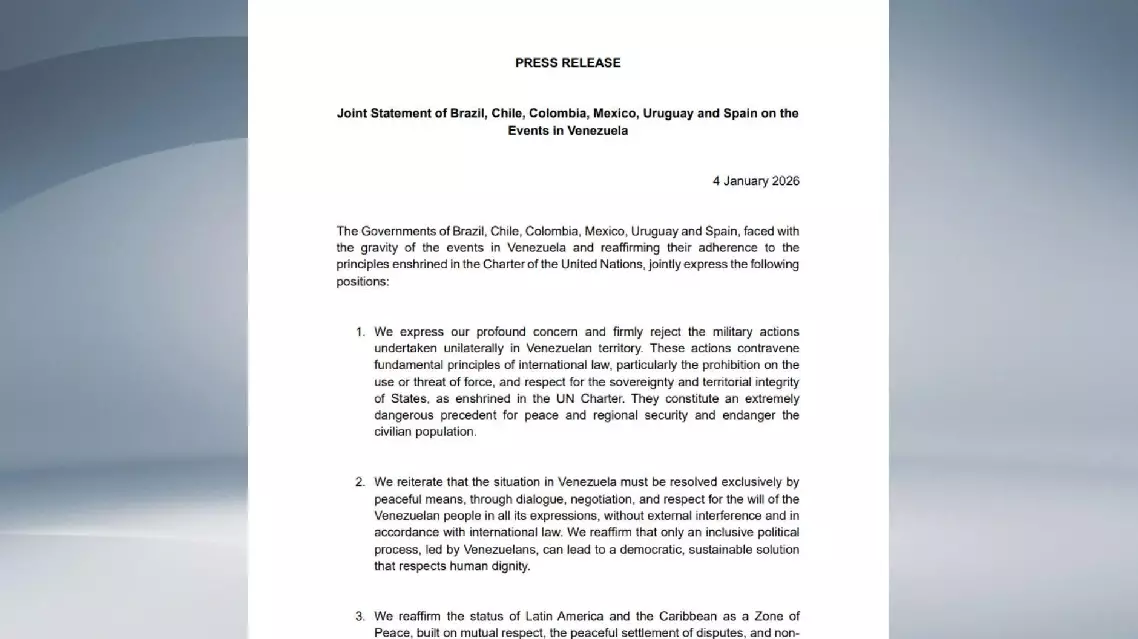
U.S. move against Venezuela sparks condemnation, concerns worldwide