Mumbai's expanding metro network is revolutionizing urban mobility, transforming grueling journeys into swift, affordable, and comfortable rides across the Indian megacity.
This transformation is supported in part by funding from the BRICS New Development Bank (NDB).
The 58-kilometer elevated system, encompassing Lines 2A, 2B, and 7, is transforming urban mobility in Mumbai. Backed by a 260 million-US-dollar investment from the NDB, it has reduced travel times by up to 70 percent for 300,000 daily commuters. With air-conditioned cabins, seamless connectivity, and affordable fares, the metro has become the preferred option for residents seeking relief from traffic jams and overcrowded trains.
"The metro is very convenient. It saves a lot of time and is an easier way to travel. I really like using it," said a local.
"I find it more convenient to travel in the AC metro than to be in the heat, and the fare is very affordable," said another local.
Lines 2A and 7 are fully operational and carry 300,000 riders daily. Both lines serve Mumbai's dense western suburbs. Line 2B is partially operational with the full length of the track expected to be in use by 2026. Ridership is expected to grow manifold as Metro connectivity increases and commuters drop the habit of using cars.
"As we know Mumbai is a big big city and the population of Mumbai is ever increasing. The residents of Mumbai need a better solution, a better mode of transport for them to be more productive, for them to be able to live more comfortable life. And now there are so many such cases across many other cities in our member countries. And therefore, we believe that sustainable transport infrastructure by way of implementation of Metro project is going to be one wonderful solution," said Binitesh Kumar, the Principal Professional at NDB India.
With air quality in Mumbai also a concern, the environmental benefits of the Metro are equally significant. Certified carbon-neutral by the Universal Carbon Registry, Mumbai Metro's new lines helped the city avoid nearly 86,000 tonnes of carbon dioxide emissions in their first year of operations alone.
For the NDB, this project aligns with its core mission: supporting sustainable infrastructure across BRICS nations—from transport and clean energy to water, sanitation, and digital connectivity.
The Bank has now also approved a 241 million-US-dollar loan for Mumbai Metro Line 6, which will link western suburbs to those east of the city, extending the Metro footprint in India's most crowded metropolis.
For millions of Mumbai residents, these Metro lines are already life-changing, ensuring all-weather safe transport amidst many other advantages. For the BRICS alliance, such projects are a powerful example of what inclusive, forward-looking financing can achieve.
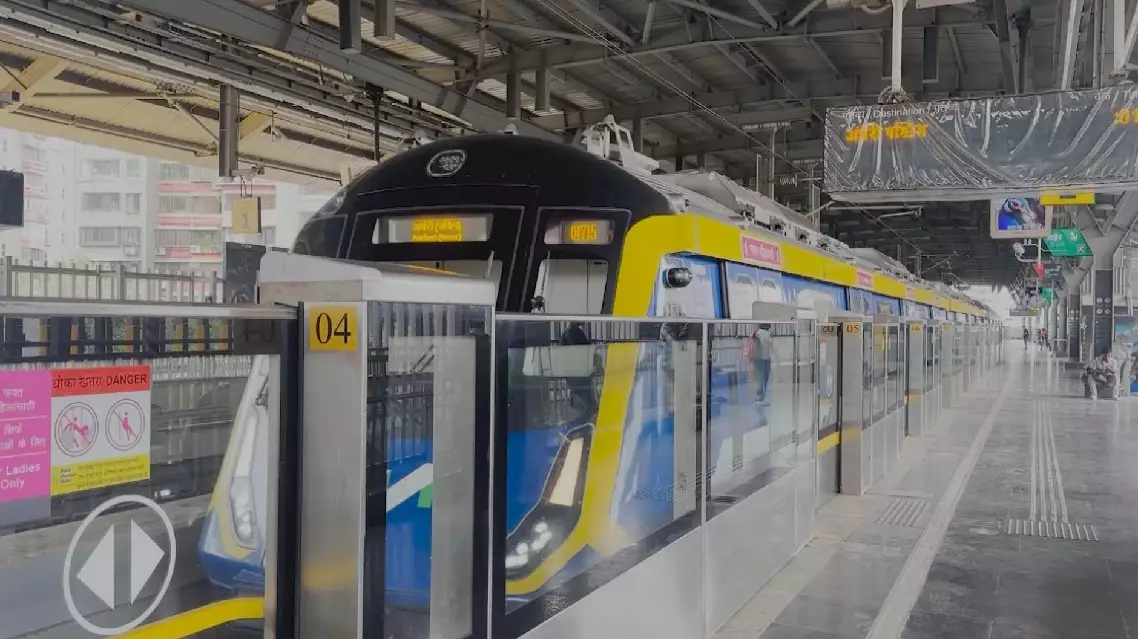
Mumbai metro boosts urban mobility with BRICS bank support
Visiting Chinese Foreign Minister Wang Yi said Saturday China is willing to work with Lesotho to strengthen exchanges on governance experience, enhance coordination in multilateral affairs, and advance the China-Lesotho strategic partnership.
Wang, also a member of the Political Bureau of the Communist Party of China Central Committee, made the remarks when meeting with Lesotho Prime Minister Sam Matekane in the capital of Lesotho.
During the meeting, Wang congratulated Lesotho on the 60th anniversary of its independence this year, and spoke highly of Lesotho government's efforts to prioritize economic development and steer the African country onto a path of sustainable growth. Since the Beijing Summit of the Forum on China-Africa Cooperation (FOCAC) in 2024, the two sides have advanced cooperation under the 10 partnership action plans unveiled at the summit, successfully implementing a number of key projects to effectively promote Lesotho's development and revitalization, Wang said.
China stands ready to work with Lesotho to strengthen exchanges on governance experience, enhance coordination in multilateral affairs, and push for greater development of the China-Lesotho strategic partnership, he added.
Calling on the two sides to firmly support each other, Wang said that China will accelerate the implementation of its zero-tariff policy for African countries, including Lesotho, expand bilateral trade, investment and industrial cooperation, facilitate broader access of Lesotho's specialty products to the Chinese market, and continue to support Lesotho's national development.
China will continue to stand firmly with African countries, uphold justice for the Global South, including Lesotho, oppose unilateralism and acts of bullying, and work together to build a community with a shared future for humanity, Wang said.
On his part, Matekane said during the meeting that Lesotho cherishes its friendship with China and the strategic partnership between the two countries, and expressed gratitude for China's valuable support for the development of African countries, including Lesotho.
Lesotho firmly adheres to the one-China principle and resolutely supports China in safeguarding its core interests, he said, noting that his country stands ready to strengthen strategic mutual trust with China, expand people-to-people exchanges, jointly implement the outcomes of the FOCAC Beijing Summit, and deepen cooperation in areas such as infrastructure, manufacturing and energy.
Matekane stressed that China's zero-tariff policy for African products will inject new impetus into Lesotho's development. He also expressed Lesotho's willingness to strengthen solidarity and cooperation with China on multilateral platforms such as BRICS to jointly address global challenges.
On the same day, Wang also held talks with Lejone Mpotjoana, minister of foreign affairs and international relations of Lesotho.
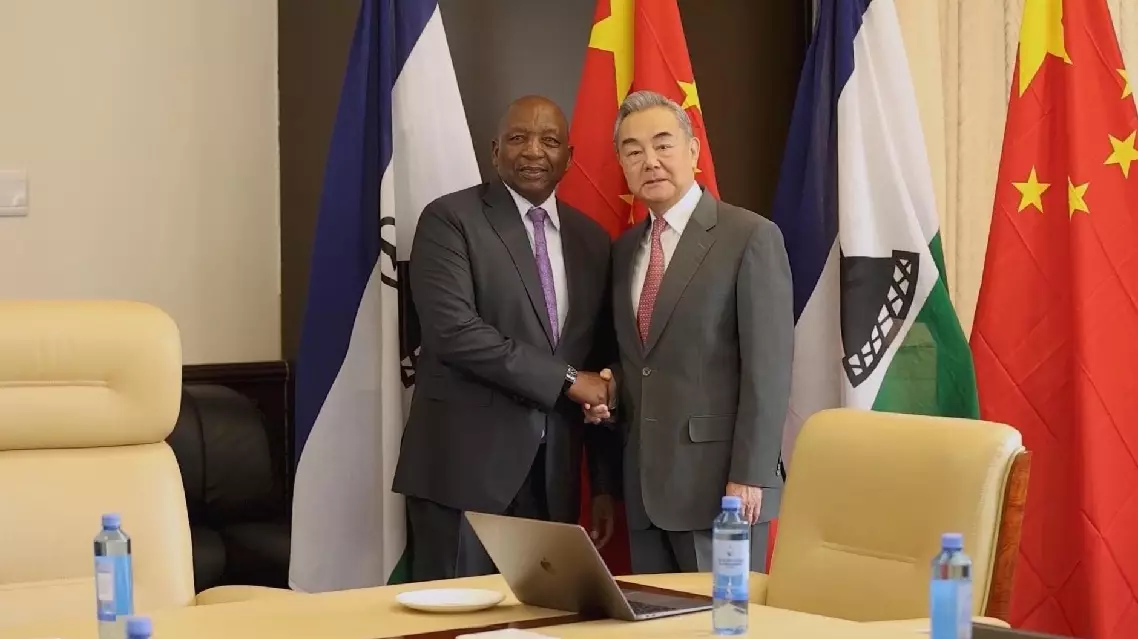
China, Lesotho to strengthen exchanges, advance cooperation
China, Lesotho to strengthen exchanges, advance cooperation