CAIRO (AP) — Humanitarian organizations are warning about attacks on health care facilities across Sudan, alleging they are happening as mass atrocities are being committed against civilians.
Doctors without Borders, also known as Médecins Sans Frontières or MSF, said Thursday that 70% of medical facilities in Sudan have either closed or are barely operational with no end to the war in sight.
Sudan’s civil war broke out in April 2023 after simmering tensions between the Sudanese army and the paramilitary Rapid Support Forces (RSF), escalated to fighting across the country. Some 40,000 people have been killed and nearly 13 million displaced, including to other countries, according to U.N. agencies. War has left many facing food insecurity and risk of famine and exposure to disease outbreaks like cholera, which remains hard to contain due to Sudan’s collapsed health care system.
In a report released Thursday, MSF warned that access to health care is nearly impossible due to systematic attacks, while the remaining operational facilities remain under constant threat.
“We call to all warring parties to stop violence against the civilian health facilities and civilian infrastructure and to facilitate a large-scale humanitarian response,” Michel-Olivier Lacharité, MSF's head of emergency operations, said in a news conference.
Another group, Save the Children, warned Thursday that attacks on hospitals nearly tripled after two years of war. The group said in a statement that at least 933 people, including children, were killed during the first half of 2025.
This figure is a 60-fold increase over the deaths recorded during the same period of the previous year, according to the group. Those killed were either seeking medical care or accompanying a loved one in a hospital.
Major hospitals, clinics, health facilities, ambulances and medical convoys all saw fatal attacks in a country where half the population requires humanitarian assistance, according to Save the Children.
“We are concerned that in most cases, the hospitals that have come under fire also happen to be the only remaining hospitals in those areas, putting health care out of reach for millions, including displaced people,” said Francesco Lanino, deputy country director of programs and operations for Save the Children in Sudan.
MSF particularly warned against violence in El Fasher city, the capital of North Darfur province, that made it near impossible for residents there and nearby displacement camps to access health care.
As of April, only one hospital with surgical capacity remained partially operational, serving an estimated population of over 1 million. Over the past year, many patients and their caretakers have been killed while inside an MSF-supported medical facility.
MSF urged the warring parties to “halt indiscriminate and ethnically targeted violence and facilitate an immediate large-scale humanitarian response," particularly referring to threats of attacks on the hundreds of thousands of people in El Fasher, where fighting intensified since May 2024.
Last month, Sudan’s military accepted a U.N. proposal for a weeklong ceasefire in El Fasher to allow aid delivery. However, the RSF did not explicitly agree to the truce and engaged in renewed clashes with the army in the southern part of the city this week.
MSF urged the international community — especially countries engaging with both the Sudanese army and the RSF — to take stronger action to address the crisis in Sudan.
“They must use all the leverage to prevent further mass atrocities. They must place protection of civilians at the core of their engagement with the warring parties,” said Christopher Lockyear, secretary general of MSF International.
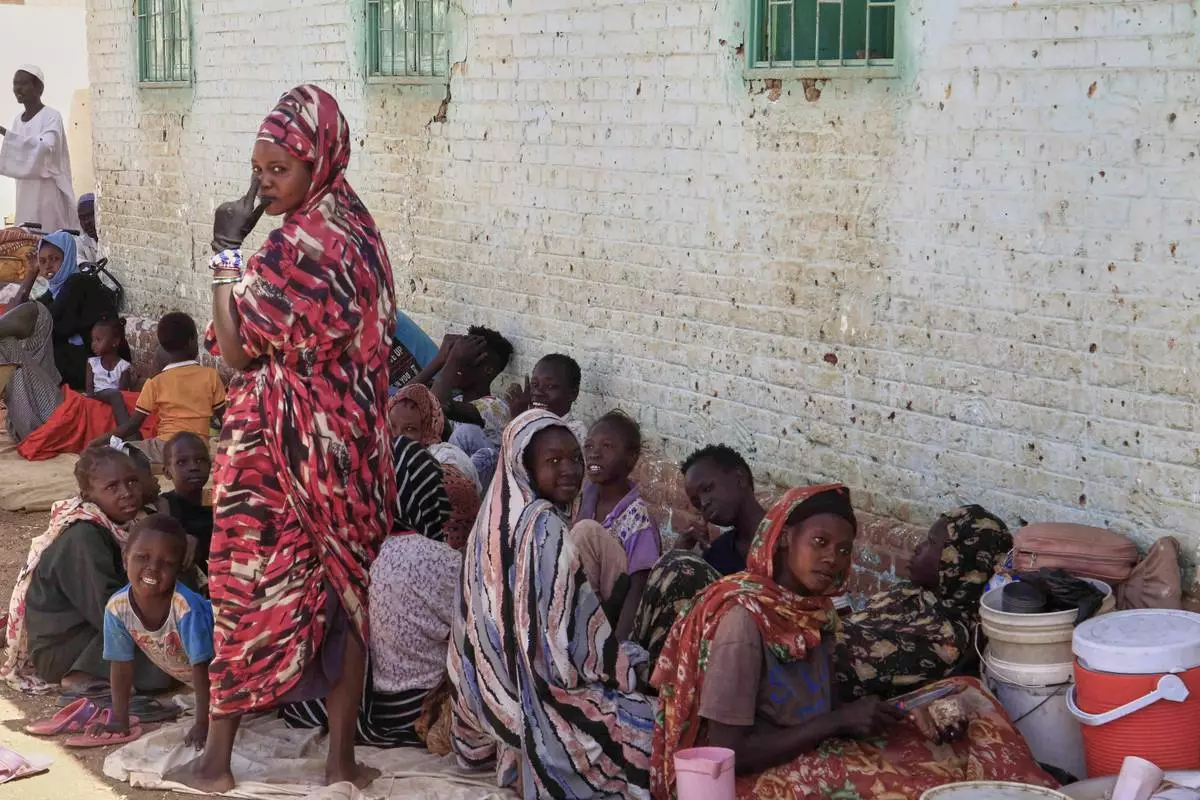
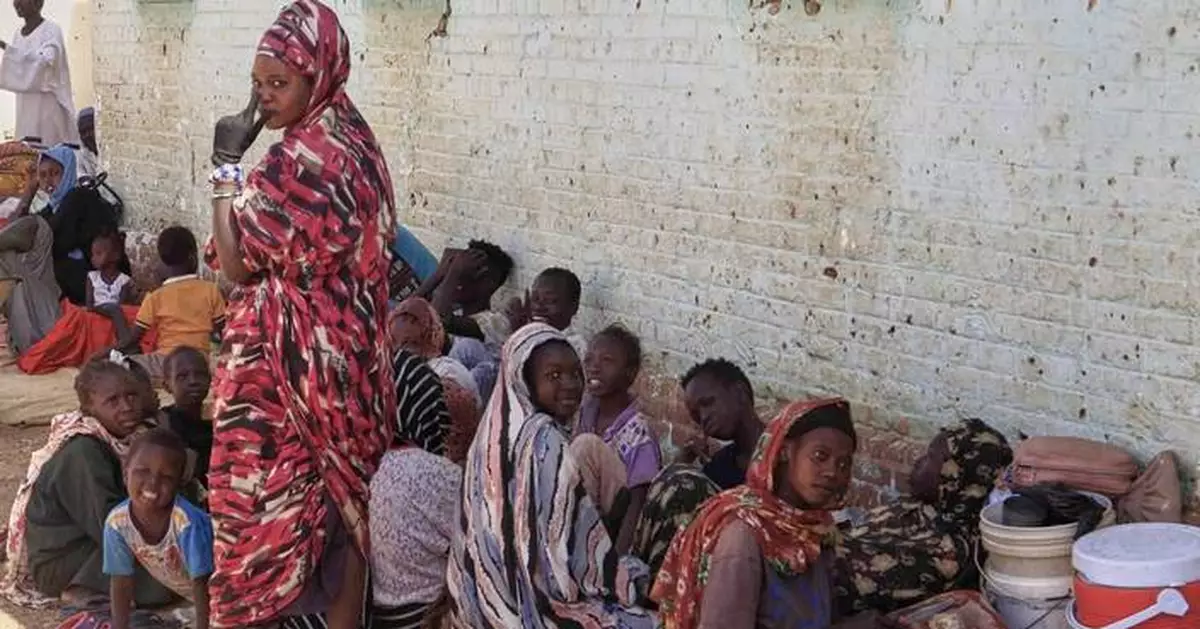
FILE - Sudanese displaced families take shelter in a school after being evacuated by the Sudanese army from areas once controlled by the paramilitary Rapid Support Forces in Omdurman, Sudan, March 23, 2025. (AP Photo, File)
WASHINGTON (AP) — A day after the audacious U.S. military operation in Venezuela, President Donald Trump on Sunday renewed his calls for an American takeover of the Danish territory of Greenland for the sake of U.S. security interests, while his top diplomat declared the communist government in Cuba is “in a lot of trouble.”
The comments from Trump and Secretary of State Marco Rubio after the ouster of Venezuela's Nicolás Maduro underscore that the U.S. administration is serious about taking a more expansive role in the Western Hemisphere.
With thinly veiled threats, Trump is rattling hemispheric friends and foes alike, spurring a pointed question around the globe: Who's next?
“It’s so strategic right now. Greenland is covered with Russian and Chinese ships all over the place," Trump told reporters as he flew back to Washington from his home in Florida. "We need Greenland from the standpoint of national security, and Denmark is not going to be able to do it.”
Asked during an interview with The Atlantic earlier on Sunday what the U.S.-military action in Venezuela could portend for Greenland, Trump replied: “They are going to have to view it themselves. I really don’t know.”
Trump, in his administration's National Security Strategy published last month, laid out restoring “American preeminence in the Western Hemisphere” as a central guidepost for his second go-around in the White House.
Trump has also pointed to the 19th century Monroe Doctrine, which rejects European colonialism, as well as the Roosevelt Corollary — a justification invoked by the U.S. in supporting Panama’s secession from Colombia, which helped secure the Panama Canal Zone for the U.S. — as he's made his case for an assertive approach to American neighbors and beyond.
Trump has even quipped that some now refer to the fifth U.S. president's foundational document as the “Don-roe Doctrine.”
Saturday's dead-of-night operation by U.S. forces in Caracas and Trump’s comments on Sunday heightened concerns in Denmark, which has jurisdiction over the vast mineral-rich island of Greenland.
Danish Prime Minister Mette Frederiksen in a statement that Trump has "no right to annex" the territory. She also reminded Trump that Denmark already provides the United States, a fellow member of NATO, broad access to Greenland through existing security agreements.
“I would therefore strongly urge the U.S. to stop threatening a historically close ally and another country and people who have made it very clear that they are not for sale,” Frederiksen said.
Denmark on Sunday also signed onto a European Union statement underscoring that “the right of the Venezuelan people to determine their future must be respected” as Trump has vowed to “run” Venezuela and pressed the acting president, Delcy Rodriguez, to get in line.
Trump on Sunday mocked Denmark’s efforts at boosting Greenland’s national security posture, saying the Danes have added “one more dog sled” to the Arctic territory’s arsenal.
Greenlanders and Danes were further rankled by a social media post following the raid by a former Trump administration official turned podcaster, Katie Miller. The post shows an illustrated map of Greenland in the colors of the Stars and Stripes accompanied by the caption: “SOON."
“And yes, we expect full respect for the territorial integrity of the Kingdom of Denmark,” Amb. Jesper Møller Sørensen, Denmark's chief envoy to Washington, said in a post responding to Miller, who is married to Trump's influential deputy chief of staff Stephen Miller.
During his presidential transition and in the early months of his return to the White House, Trump repeatedly called for U.S. jurisdiction over Greenland, and has pointedly not ruled out military force to take control of the mineral-rich, strategically located Arctic island that belongs to an ally.
The issue had largely drifted out of the headlines in recent months. Then Trump put the spotlight back on Greenland less than two weeks ago when he said he would appoint Republican Gov. Jeff Landry as his special envoy to Greenland.
The Louisiana governor said in his volunteer position he would help Trump “make Greenland a part of the U.S.”
Meanwhile, concern simmered in Cuba, one of Venezuela’s most important allies and trading partners, as Rubio issued a new stern warning to the Cuban government. U.S.-Cuba relations have been hostile since the 1959 Cuban revolution.
Rubio, in an appearance on NBC's “Meet the Press,” said Cuban officials were with Maduro in Venezuela ahead of his capture.
“It was Cubans that guarded Maduro,” Rubio said. “He was not guarded by Venezuelan bodyguards. He had Cuban bodyguards.” The secretary of state added that Cuban bodyguards were also in charge of “internal intelligence” in Maduro’s government, including “who spies on who inside, to make sure there are no traitors.”
Trump said that “a lot” of Cuban guards tasked with protecting Maduro were killed in the operation. The Cuban government said in a statement read on state television on Sunday evening that 32 officers were killed in the U.S. military operation.
Trump also said that the Cuban economy, battered by years of a U.S. embargo, is in tatters and will slide further now with the ouster of Maduro, who provided the Caribbean island subsidized oil.
“It's going down,” Trump said of Cuba. “It's going down for the count.”
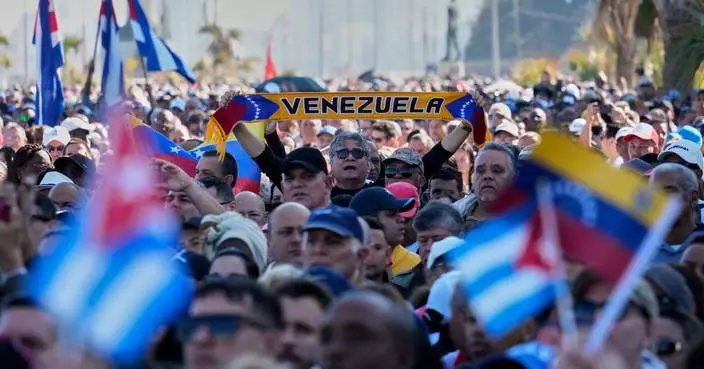
Cuban authorities called a rally in support of Venezuela’s government and railed against the U.S. military operation, writing in a statement: “All the nations of the region must remain alert, because the threat hangs over all of us.”
Rubio, a former Florida senator and son of Cuban immigrants, has long maintained Cuba is a dictatorship repressing its people.
“This is the Western Hemisphere. This is where we live — and we’re not going to allow the Western Hemisphere to be a base of operation for adversaries, competitors, and rivals of the United States," Rubio said.
Cubans like 55-year-old biochemical laboratory worker Bárbara Rodríguez were following developments in Venezuela. She said she worried about what she described as an “aggression against a sovereign state.”
“It can happen in any country, it can happen right here. We have always been in the crosshairs,” Rodríguez said.
AP writers Andrea Rodriguez in Havana, Cuba, and Darlene Superville traveling aboard Air Force One contributed reporting.
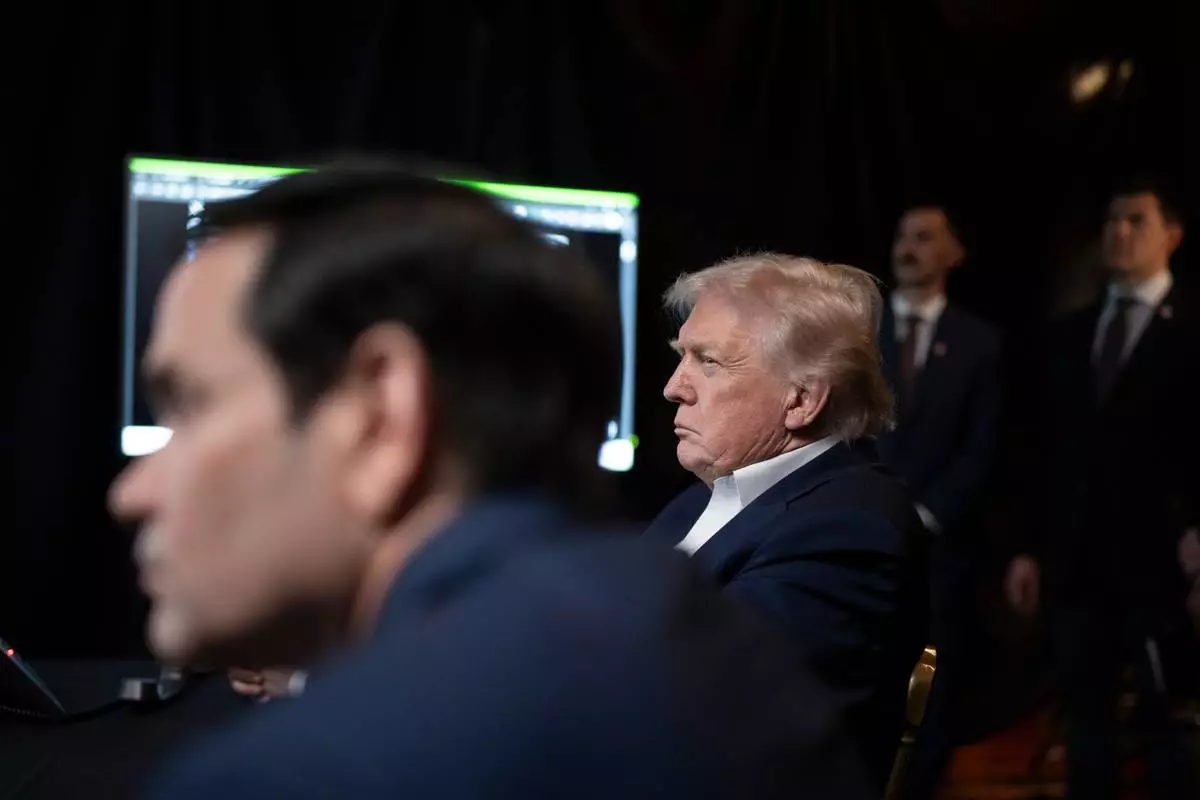
In this photo released by the White House, President Donald Trump monitors U.S. military operations in Venezuela, with Secretary of State Marco Rubio at Mar-a-Lago in Palm Beach, Fla., Saturday, Jan. 3, 2026. (Molly Riley/The White House via AP)