Skip to Content Facebook Feature Image

Some fans question US readiness for 2026 World Cup after Club World Cup experience

Sport

Some fans question US readiness for 2026 World Cup after Club World Cup experience
Sport

Sport

Some fans question US readiness for 2026 World Cup after Club World Cup experience

2025-07-04 03:50 Last Updated At:04:02

CHARLOTTE, N.C. (AP) — Lifelong soccer fan Victor Dumois expressed concern about the United States co-hosting the 2026 World Cup after attending a recent Club World Cup match in Miami.

“I think after the Copa America, a weird phenomenon has occurred here," said Dumois, who is from Spain. “There’s people that don’t like the World Cup being in the United States.”

More Images
Fans cheer before the Club World Cup round of 16 soccer match between Manchester City and Al Hilal in Orlando, Fla., Monday, June 30, 2025. (AP Photo/Phelan Ebenhack)

Fans cheer before the Club World Cup round of 16 soccer match between Manchester City and Al Hilal in Orlando, Fla., Monday, June 30, 2025. (AP Photo/Phelan Ebenhack)

Fans cheer before the Club World Cup round of 16 soccer match between Manchester City and Al Hilal in Orlando, Fla., Monday, June 30, 2025. (AP Photo/Phelan Ebenhack)

Fans cheer before the Club World Cup round of 16 soccer match between Manchester City and Al Hilal in Orlando, Fla., Monday, June 30, 2025. (AP Photo/Phelan Ebenhack)

Fans cheer before the Club World Cup round of 16 soccer match between Manchester City and Al Hilal in Orlando, Fla., Monday, June 30, 2025. (AP Photo/Phelan Ebenhack)

Fans cheer before the Club World Cup round of 16 soccer match between Manchester City and Al Hilal in Orlando, Fla., Monday, June 30, 2025. (AP Photo/Phelan Ebenhack)

Real Madrid fans cheer their team before the Club World Cup round of 16 soccer match between Real Madrid and Juventus in Miami Gardens, Fla., Tuesday, July 1, 2025. (AP Photo/Lynne Sladky)

Real Madrid fans cheer their team before the Club World Cup round of 16 soccer match between Real Madrid and Juventus in Miami Gardens, Fla., Tuesday, July 1, 2025. (AP Photo/Lynne Sladky)

Fluminense fans celebrate after the Club World Cup round of 16 soccer match between Inter Milan and Fluminense in Charlotte, N.C., Monday, June 30, 2025. (AP Photo/Nell Redmond)

Fluminense fans celebrate after the Club World Cup round of 16 soccer match between Inter Milan and Fluminense in Charlotte, N.C., Monday, June 30, 2025. (AP Photo/Nell Redmond)

The Copa America championship game last year in Miami was a security nightmare, with overheated and ticketless fans breaking down the barriers at Hard Rock Stadium to get inside. Eventually the game was played, although some paying customers never were able to get to their seats because they were occupied. Some cited the debacle as one example of how unprepared the United States is to host soccer's biggest tournament.

Fast-forward to this summer and the 32-team Club World Cup hosted solely in the United States.

Dumois said security was tight this time around — almost to a fault.

“In Spain, it is different, you can just have an Uber or taxi take you right up to the stadium," Dumois said, sharing his thoughts on the Round 16 match between Real Madrid and Juventus. "Here in Miami, they have to leave you outside and far away. There’s so many layers of security, it’s too much.”

The Club World Cup, which is entering the quarterfinals this weekend, has served as a tune-up for the United States which, along with Canada and Mexico, will host the 2026 World Cup in cities like Miami, Atlanta, Boston, Dallas, Houston, Kansas City, Los Angeles, Philadelphia, San Francisco and Seattle.

So far, the club tournament has not been well-attended, except for a handful of matches.

A Round of 16 knockout match at Charlotte's 75,000-seat Bank of America Stadium between Fluminense and Inter Milan drew just 20,030 fans. Stadium officials allowed fans who'd purchased upper deck tickets to move down to the lower bowl. Even then, lower bowl looked half full.

Empty seats have been a common sight across the country.

There are variety of reasons why.

First, the club tournament simply isn't as popular as the World Cup, where players are competing for their countries rather than a club team.

The costs — both for games and travel — have also kept some away.

And, for some, there have been lingering concerns of potential U.S. Immigration and Customs Enforcement raids at matches amid President Donald Trump's crackdown on illegal immigration.

The weather hasn't helped either.

Benjamin Cabral lives in Boston, but his family is from Azoras, an autonomous region of Portugal.

He said if FIFA hopes to grow the game in America, a scheduling change is necessary. Due to soccer’s popularity in Europe, many club matches have been played in the middle of the day so fans overseas can watch games on television or livestream in real time at night.

The downside is players have been forced to play with temperatures above 90 degrees Fahrenheit (32 Celsius) while a major heat wave gripped the States.

“If they’re trying to grow their game in the US, they need to make the games later,” Cabral said. “It’s too hot out here for the players."

It hasn’t been easy on fans, either.

“There’s no roof, no screens, not much,” said Carlos Olguin, who made the trek from Mexico to Charlotte to watch Pachuca play Real Madrid.

Next year’s World Cup will be played during a similar time frame, beginning in mid-June and concluding in mid-July.

Excitement surrounding the current event also remains a concern.

“The other thing in the city is that it should be more prepared for the event, because there are people who don’t even know there’s an event and so you go to a restaurant with the idea that there are flags, fans, more football things and there’s nothing,” Olguin added of the Club World Cup. “The city should be more prepared for the event, because there are people who don’t even know there’s an event.”

As for the venues, spectators attending Club World Cup matches offered differing reviews of American stadiums and host cities leading up to the country hosting the World Cup for the first since 1994.

"I’ll be honest, the U.S. is not ready to host the World Cup," said Jeremy Zuniga from South Carolina. "There’s too many people coming from South America, Europe, everybody.”

Others, like Rogerio Bajos from Peru, feel differently.

“I think it’s been good, we haven’t had any problems," said Bajos, who also attended a CWC game in Miami. “The parking is no problem, the security has been good. Overall, a stupendous spectacle.”

Humberto Contasta from Miami said the Club World Cup should help the American co-hosts iron out some issues before next summer.

Daniel Marques, who made the trek from Portugal to Charlotte for the sole purpose of watching Benfica battle Chelsea in a group play match, said he was impressed overall with how the tournament was run.

Guilherme Altoe agreed.

Altoe, who grew up watching World Cup matches in Brazil before moving to the United States nearly a decade ago, said he thinks the United States will put on a good event next summer.

“I think the United States has everything, all the infrastructure to host a World Cup,” he said. “So we are excited to have them see all the fans from different places and have family come around and it will be a great time.”

Freelancers Andres Jaime-Mendez and Max Feliu Merce contributed to this report.

AP soccer: https://apnews.com/soccer

Fans cheer before the Club World Cup round of 16 soccer match between Manchester City and Al Hilal in Orlando, Fla., Monday, June 30, 2025. (AP Photo/Phelan Ebenhack)

Fans cheer before the Club World Cup round of 16 soccer match between Manchester City and Al Hilal in Orlando, Fla., Monday, June 30, 2025. (AP Photo/Phelan Ebenhack)

Fans cheer before the Club World Cup round of 16 soccer match between Manchester City and Al Hilal in Orlando, Fla., Monday, June 30, 2025. (AP Photo/Phelan Ebenhack)

Fans cheer before the Club World Cup round of 16 soccer match between Manchester City and Al Hilal in Orlando, Fla., Monday, June 30, 2025. (AP Photo/Phelan Ebenhack)

Fans cheer before the Club World Cup round of 16 soccer match between Manchester City and Al Hilal in Orlando, Fla., Monday, June 30, 2025. (AP Photo/Phelan Ebenhack)

Fans cheer before the Club World Cup round of 16 soccer match between Manchester City and Al Hilal in Orlando, Fla., Monday, June 30, 2025. (AP Photo/Phelan Ebenhack)

Real Madrid fans cheer their team before the Club World Cup round of 16 soccer match between Real Madrid and Juventus in Miami Gardens, Fla., Tuesday, July 1, 2025. (AP Photo/Lynne Sladky)

Real Madrid fans cheer their team before the Club World Cup round of 16 soccer match between Real Madrid and Juventus in Miami Gardens, Fla., Tuesday, July 1, 2025. (AP Photo/Lynne Sladky)

Fluminense fans celebrate after the Club World Cup round of 16 soccer match between Inter Milan and Fluminense in Charlotte, N.C., Monday, June 30, 2025. (AP Photo/Nell Redmond)

Fluminense fans celebrate after the Club World Cup round of 16 soccer match between Inter Milan and Fluminense in Charlotte, N.C., Monday, June 30, 2025. (AP Photo/Nell Redmond)
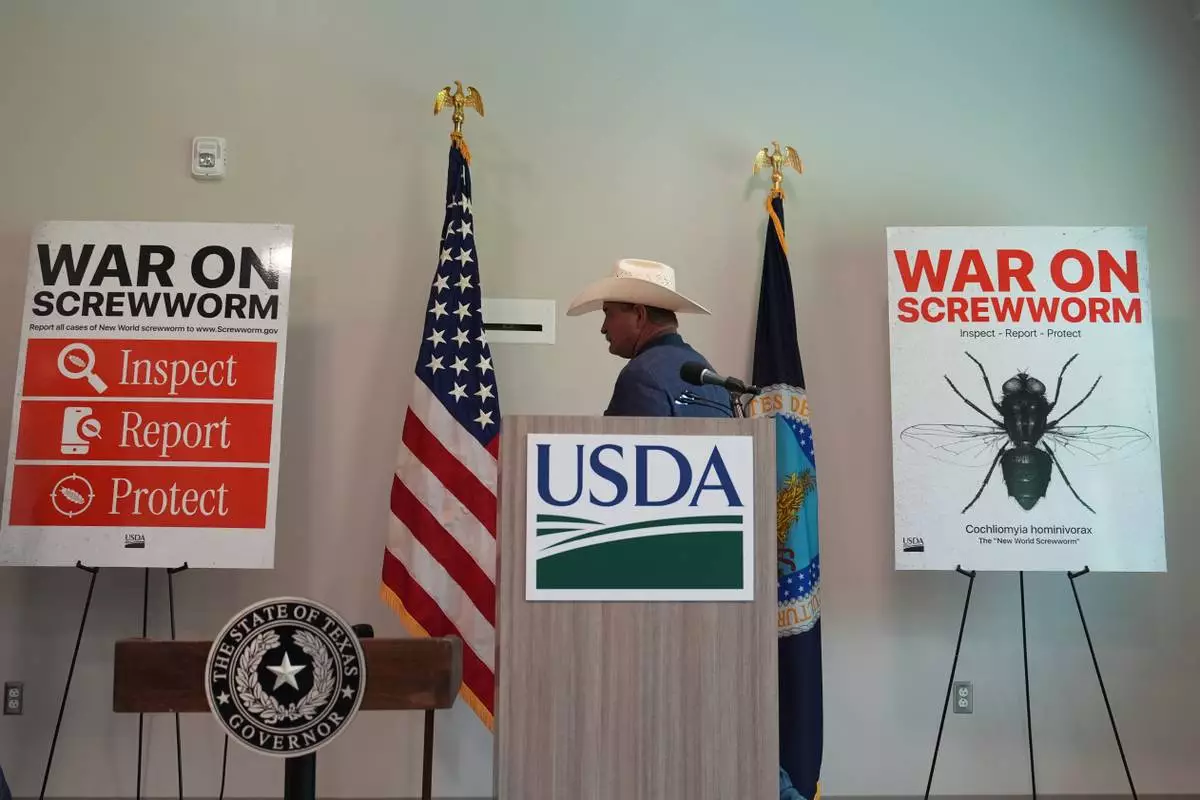
Three more cases of the New World screwworm have been confirmed, including one outside the main cluster in Texas, demonstrating the difficulty of stopping a resurgent pest that could devastate the nation's cattle industry, the U.S. Department of Agriculture announced Monday.

The screwworm is actually a fly larva that eats living flesh instead of dead material. The flies lay their eggs in open wounds of animals like cattle, but wildlife, pets and occasionally even humans can be infested. The government has a program to breed sterile male flies and drop swarms of them from planes to mate with wild females, which kept screwworm contained at the southern end of Panama for decades.

So far, there are five confirmed cases: three calves and a goat in Texas and a dog from neighboring Lea County, New Mexico. The small dog, which the USDA initially reported as a Texas case, lives in New Mexico and was reclassified as the first in that state.

The dog had not traveled to Mexico or Texas, so authorities were investigating around the property where the pet lived. If they find infected flies, animal inspections in the area will increase, New Mexico State Veterinarian Samantha Holeck said during a virtual news conference Monday.

The first two screwworm cases were discovered last week in calves a few miles apart in south Texas. A case was announced Monday in a calf in La Salle County, southwest of San Antonio, and in a goat in Gillespie County, west of Austin.

In each case, officials have set up a 12-mile (20-kilometer) quarantine zone to try to slow the parasite's advance.

Along with cattle and other warm-blooded livestock, scientists worry screwworms could devastate the millions of wild white-tailed deer in Texas.

Scientists expect new cases could pop up in the coming days and weeks, but it doesn't mean screwworm is spreading rapidly, said Edward Burgess, a University of Florida entomologist who studies the fly.

“When that first case is seen, everyone is being vigilant and their eyes are on it more intensely,” Burgess said. “And when you are looking for something, you are more likely to see it.”

Screwworm gets its name from the maggots’ habit of burrowing — or screwing — into a wound, according to the USDA. The pest eats the flesh of the animal, further opening wounds and increasing the risk of deadly bacterial infections. Animals can die within a few weeks if not treated. There are a dozen government-approved medications to treat livestock.

The agency and the U.S. cattle industry have been racing to prevent an outbreak since screwworm was detected in Mexico late in 2024. The USDA has been dropping sterile flies in south Texas since February and is working to both increase sterile fly production in plants outside the U.S. and build a $750 million fly factory in Texas.

So far, screwworm's reappearance hasn’t greatly affected beef prices, which are already near record levels because there are fewer cows in the United States. Although the parasite attacks live cattle, it does not infest meat or fruit.

Canada temporarily stopped importing cattle, horses or other livestock from Texas on Friday. The parasites prefer humid areas where temperatures are at least 77 F (25 C), making them more of a summer problem up north.

Burgess said the long-term solution — breeding sterile male flies — is months away. Since wild female flies mate just once, if that encounter is with a sterile male, outbreaks can eventually be halted as the flies die out.

The goal is to have enough sterile flies to stop the pests from returning in 2027 after the winter kills off most of them, USDA Secretary Brooke Rollins said at a news conference at the U.S. Livestock Insects Research Laboratory in Kerrville, Texas.

Scientists are also working on ways to sterilize only male flies to make the program even more effective.

Texas officials encouraged ranchers to keep a close eye on their herds and local wildlife. There's now a 24-hour screwworm hotline and a website and map for reported cases.

“This is a highly treatable condition if you act on it immediately,” Republican Gov. Greg Abbott said.

However, Texas Agriculture Commissioner Sid Miller — who lost the recent Republican primary to a candidate backed by Abbott — said the federal response will take too long and risks crippling the cattle industry.

Instead, he says a poison bait could eliminate the screwworm problem in a few months, even if the USDA and other experts say the bait hasn’t been proven effective and could poison other flies, animals and even humans.

“What the hell is a good fly?” Miller said in an interview.

This story has been updated to reflect that the USDA revised the dog screwworm case to New Mexico, not Texas as the agency initially reported, and to correct the spelling of Kerrville.

Associated Press writers Susan Montoya Bryan in Albuquerque, New Mexico, and Scott McFetridge in Des Moines, Iowa, contributed to this report.

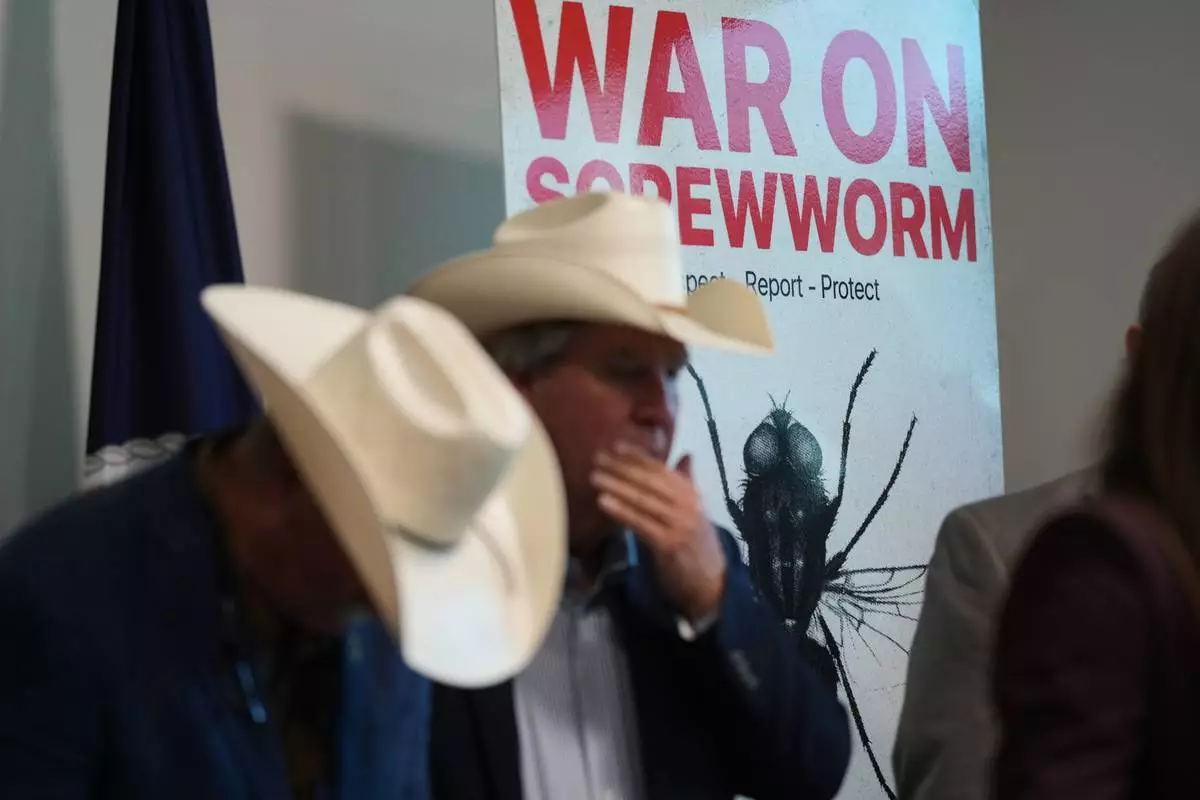
Signage is seen as U.S. Agriculture Secretary Brooke Rollins holds a news conference at the Knipling-Bushland U.S. Livestock Insects Research Laboratory in Kerrville, Texas, Monday, June 8, 2026. (AP Photo/Eric Gay)

Signage is seen as U.S. Agriculture Secretary Brooke Rollins holds a news conference at the Knipling-Bushland U.S. Livestock Insects Research Laboratory in Kerrville, Texas, Monday, June 8, 2026. (AP Photo/Eric Gay)

U.S. Agriculture Secretary Brooke Rollins, center, holds a news conference with ranchers, researchers and officials at the Knipling-Bushland U.S. Livestock Insects Research Laboratory in Kerrville, Texas, Monday, June 8, 2026. (AP Photo/Eric Gay)

U.S. Agriculture Secretary Brooke Rollins, center, holds a news conference with ranchers, researchers and officials at the Knipling-Bushland U.S. Livestock Insects Research Laboratory in Kerrville, Texas, Monday, June 8, 2026. (AP Photo/Eric Gay)

A ranchers arrivse for a news conference with U.S. Agriculture Secretary Brooke Rollins at the Knipling-Bushland U.S. Livestock Insects Research Laboratory in Kerrville, Texas, Monday, June 8, 2026. (AP Photo/Eric Gay)

A ranchers arrivse for a news conference with U.S. Agriculture Secretary Brooke Rollins at the Knipling-Bushland U.S. Livestock Insects Research Laboratory in Kerrville, Texas, Monday, June 8, 2026. (AP Photo/Eric Gay)

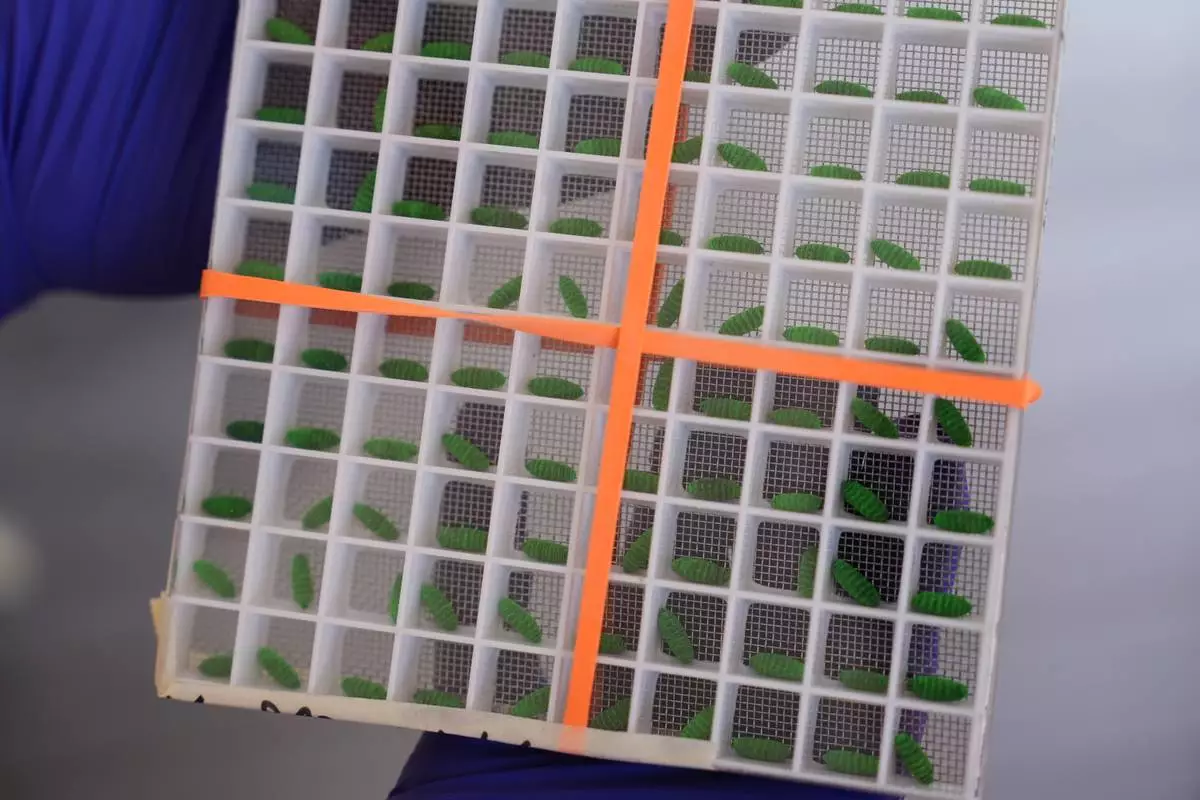
FILE - A test container of dyed fly pupae are displayed at a Domestic New World Screwworm Sterile Fly Production Facility to combat the northward spread of NWS and protect American livestock, in Edinburg, Texas, Feb. 9, 2026. (AP Photo/Eric Gay, File)

FILE - A test container of dyed fly pupae are displayed at a Domestic New World Screwworm Sterile Fly Production Facility to combat the northward spread of NWS and protect American livestock, in Edinburg, Texas, Feb. 9, 2026. (AP Photo/Eric Gay, File)

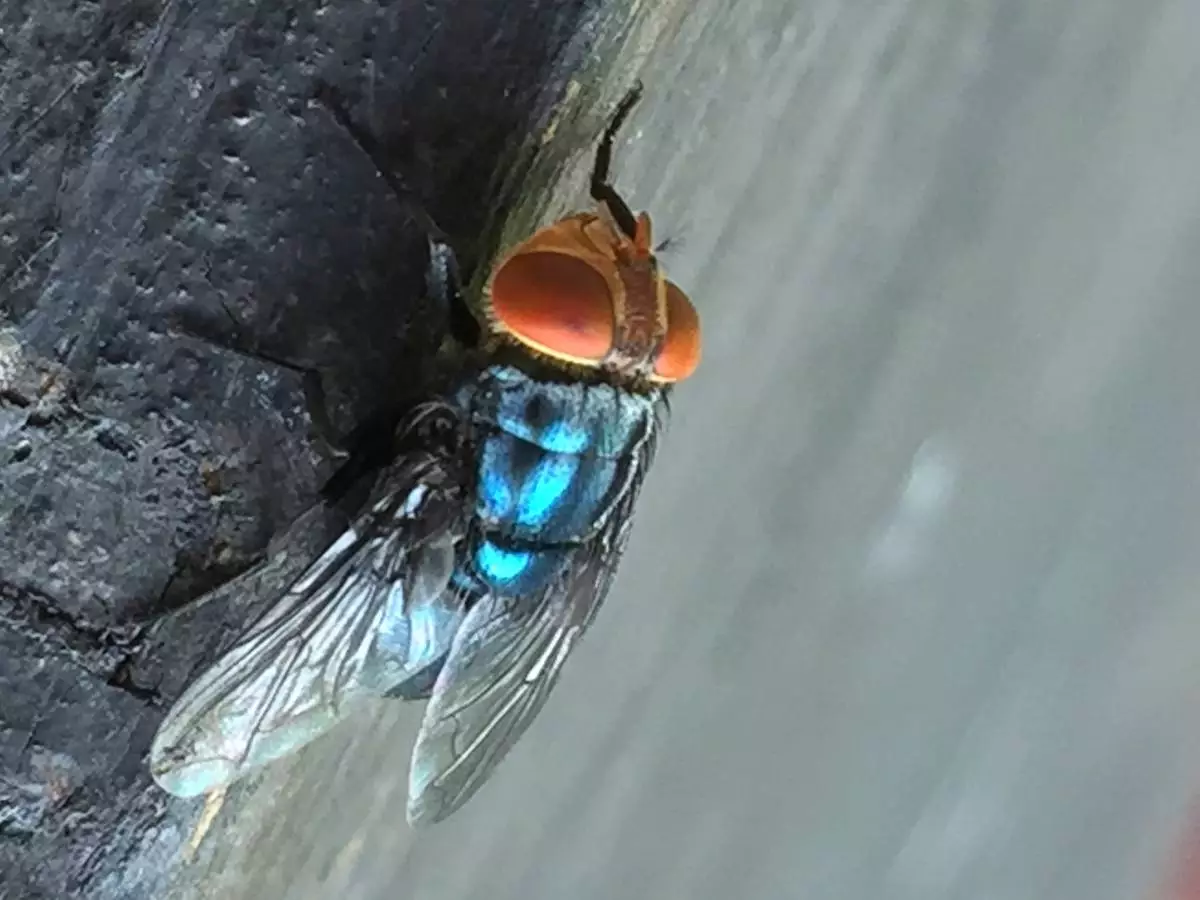
FILE - An adult New World screwworm fly sits in this undated photo. (Denise Bonilla/U.S. Department of Agriculture via AP)

FILE - An adult New World screwworm fly sits in this undated photo. (Denise Bonilla/U.S. Department of Agriculture via AP)

Recommended Articles