Skip to Content Facebook Feature Image

What's in the tax and spending bill that Trump has signed into law

News

What's in the tax and spending bill that Trump has signed into law
News

News

What's in the tax and spending bill that Trump has signed into law

2025-07-05 10:44 Last Updated At:10:51

WASHINGTON (AP) — President Donald Trump on Friday signed the tax and spending cut bill Republicans muscled through Congress this week, turning it into law by his own self-imposed Fourth of July deadline.

At nearly 900 pages, the legislation is a sprawling collection of tax breaks, spending cuts and other Republican priorities, including new money for national defense and deportations.

More Images
House Speaker Mike Johnson of La., points to President Donald Trump after he signed his signature bill of tax breaks and spending cuts at the White House, Friday, July 4, 2025, in Washington, surrounded by members of Congress. (AP Photo/Evan Vucci)
House Speaker Mike Johnson of La., points to President Donald Trump after he signed his signature bill of tax breaks and spending cuts at the White House, Friday, July 4, 2025, in Washington, surrounded by members of Congress. (AP Photo/Evan Vucci)

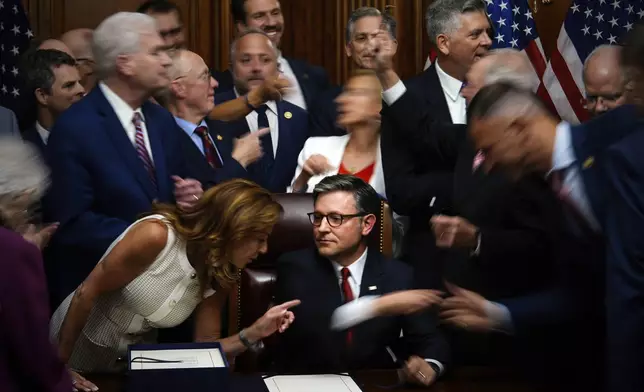
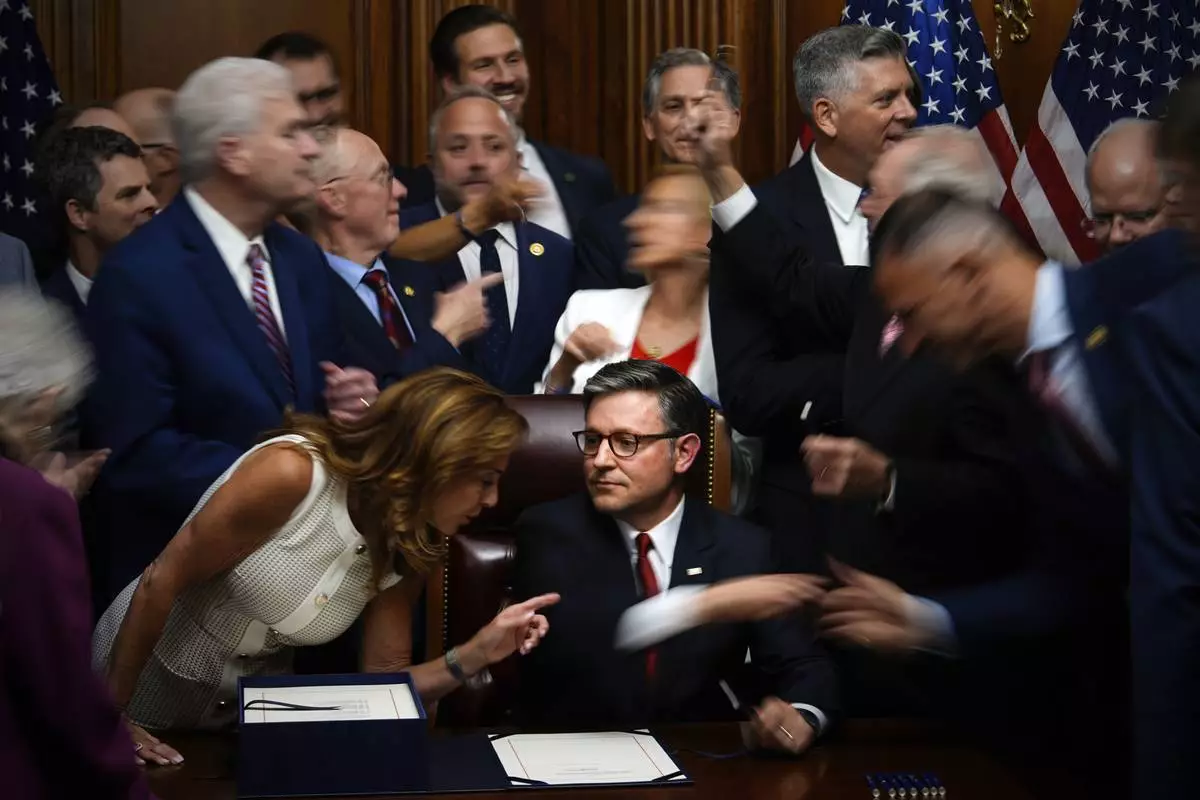
Republican members of Congress reach to shake hands with Speaker of the House Mike Johnson, R-La., center bottom, after Johnson signed President Donald Trump's signature bill of tax breaks and spending cuts, Thursday, July 3, 2025, at the Capitol in Washington. (AP Photo/Julia Demaree Nikhinson)
Republican members of Congress reach to shake hands with Speaker of the House Mike Johnson, R-La., center bottom, after Johnson signed President Donald Trump's signature bill of tax breaks and spending cuts, Thursday, July 3, 2025, at the Capitol in Washington. (AP Photo/Julia Demaree Nikhinson)

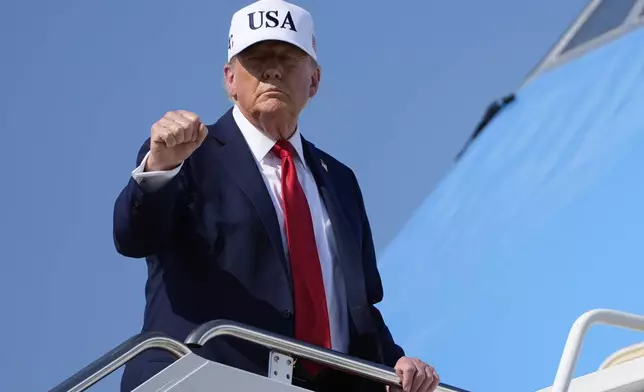
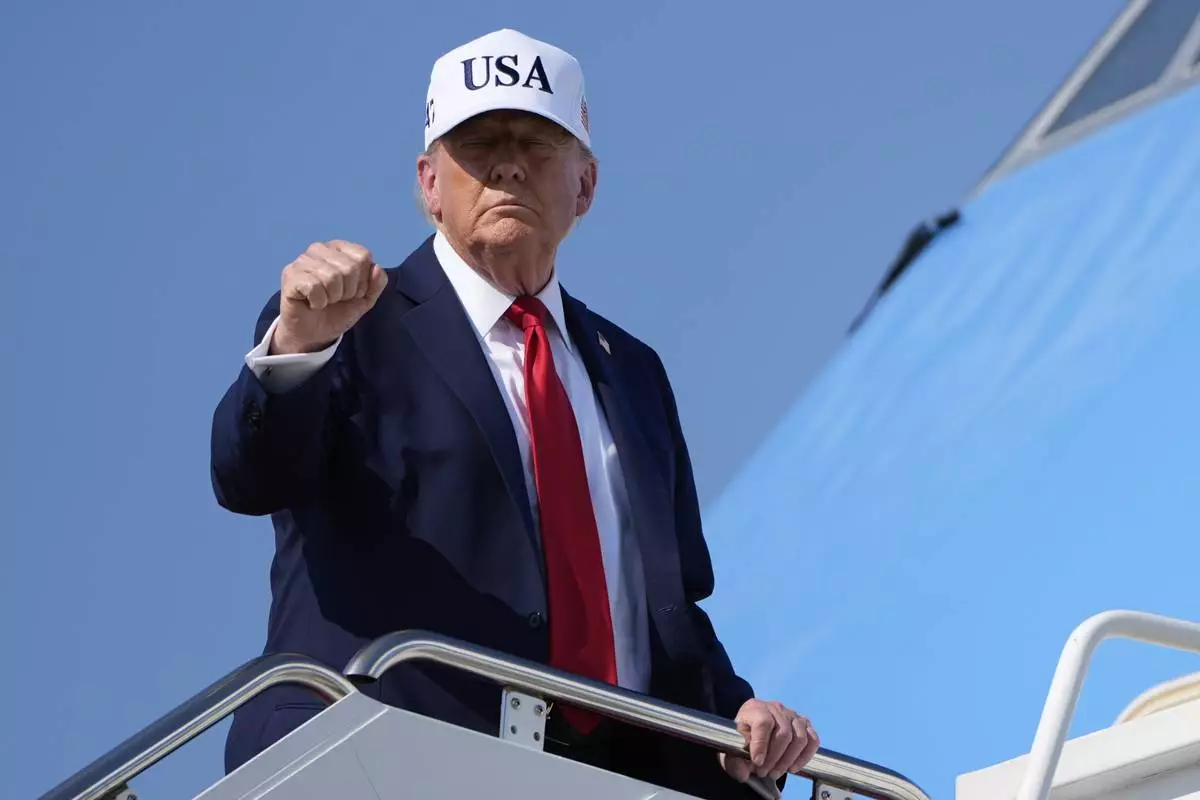
President Donald Trump gestures as he boards Air Force One, Thursday, July 3, 2025, at Joint Base Andrews, Md. (AP Photo/Alex Brandon)
President Donald Trump gestures as he boards Air Force One, Thursday, July 3, 2025, at Joint Base Andrews, Md. (AP Photo/Alex Brandon)

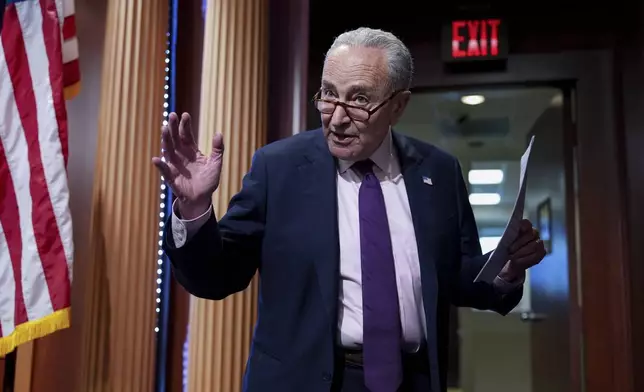
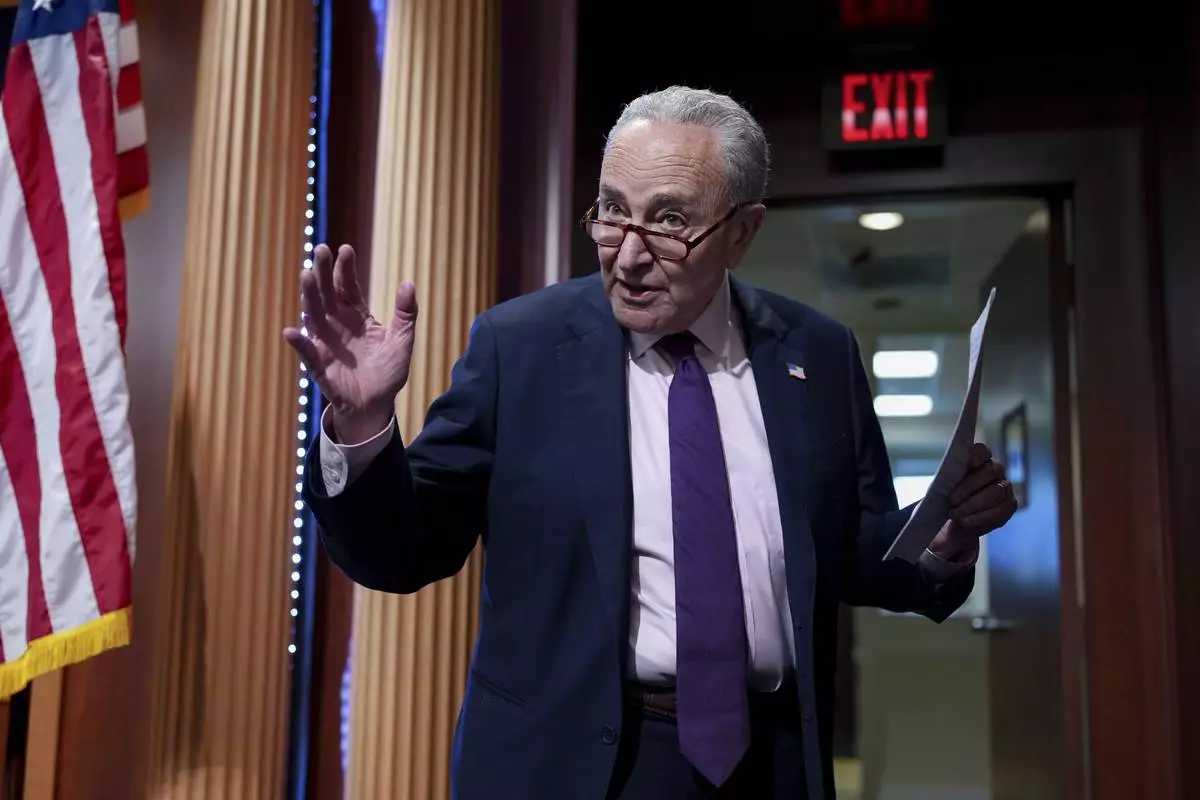
Senate Minority Leader Chuck Schumer, D-N.Y., updates reporters as Senate Republicans work to advance President Donald Trump's sweeping domestic policy bill, at the Capitol in Washington, Friday, June 27, 2025. (AP Photo/J. Scott Applewhite)
Senate Minority Leader Chuck Schumer, D-N.Y., updates reporters as Senate Republicans work to advance President Donald Trump's sweeping domestic policy bill, at the Capitol in Washington, Friday, June 27, 2025. (AP Photo/J. Scott Applewhite)
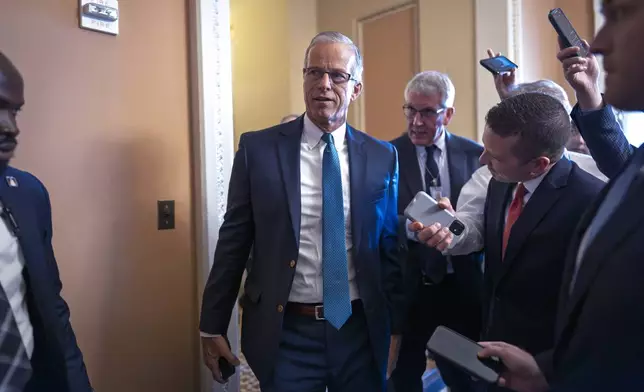
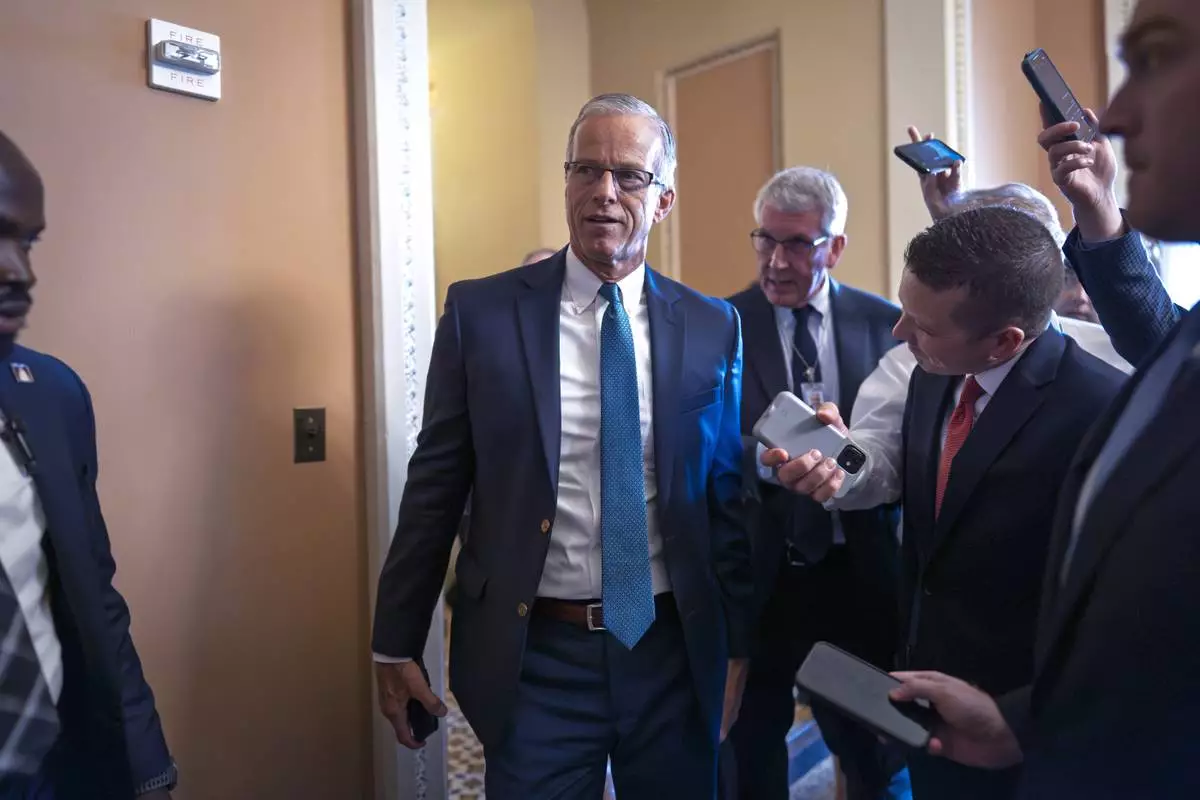
Senate Majority Leader John Thune, R-S.D., arrives for a closed-door Republican meeting to advance President Donald Trump's sweeping domestic policy bill, at the Capitol in Washington, Friday, June 27, 2025. (AP Photo/J. Scott Applewhite)

Senate Majority Leader John Thune, R-S.D., arrives for a closed-door Republican meeting to advance President Donald Trump's sweeping domestic policy bill, at the Capitol in Washington, Friday, June 27, 2025. (AP Photo/J. Scott Applewhite)

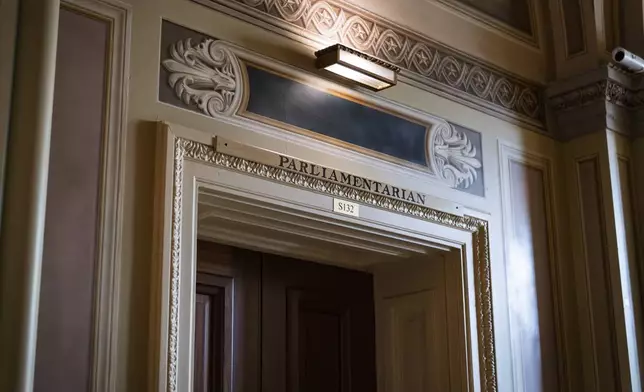
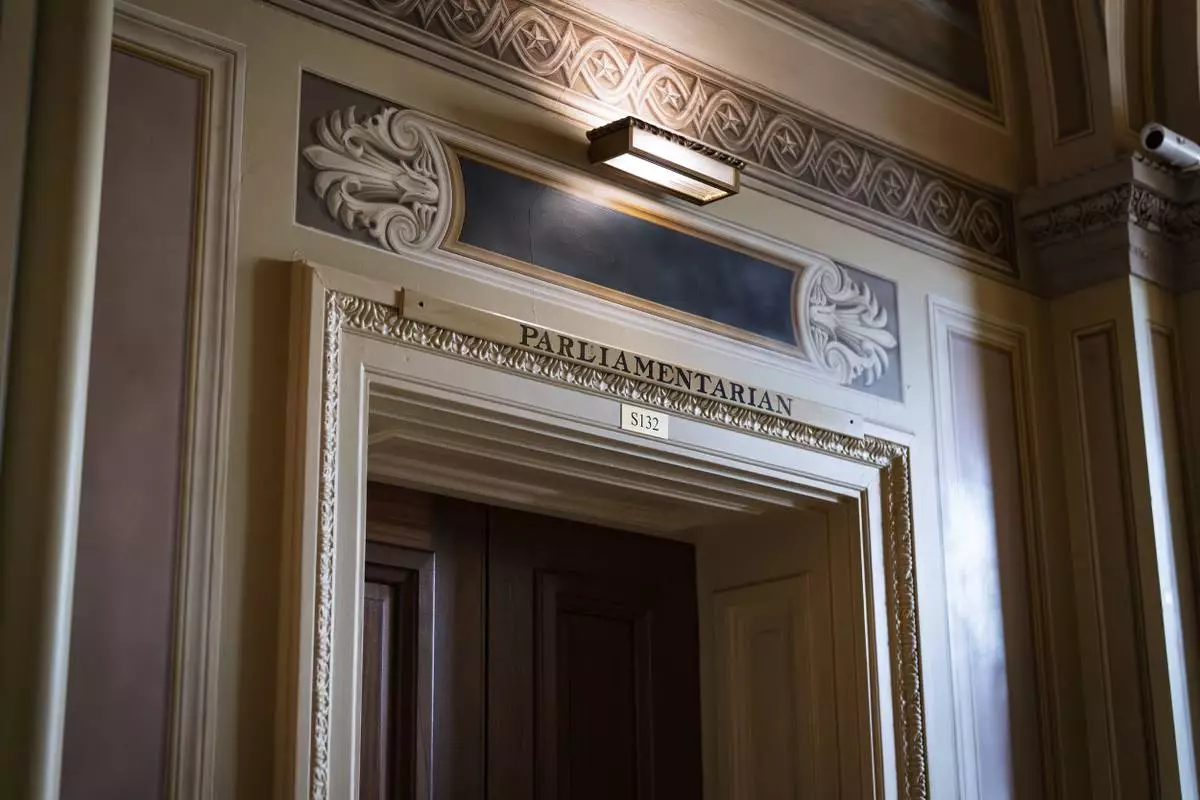
The office of Senate Parliamentarian Elizabeth MacDonough is seen at the Capitol in Washington, Friday, June 27, 2025. (AP Photo/J. Scott Applewhite)
The office of Senate Parliamentarian Elizabeth MacDonough is seen at the Capitol in Washington, Friday, June 27, 2025. (AP Photo/J. Scott Applewhite)

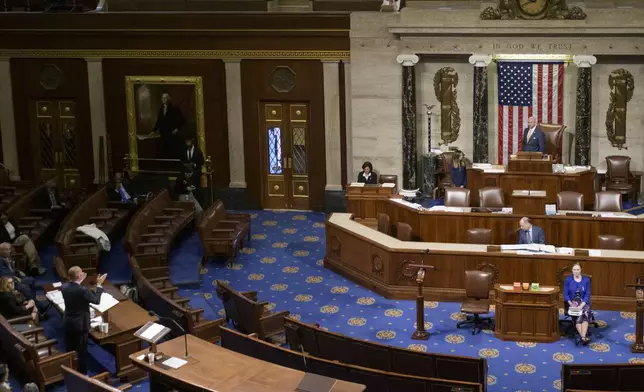
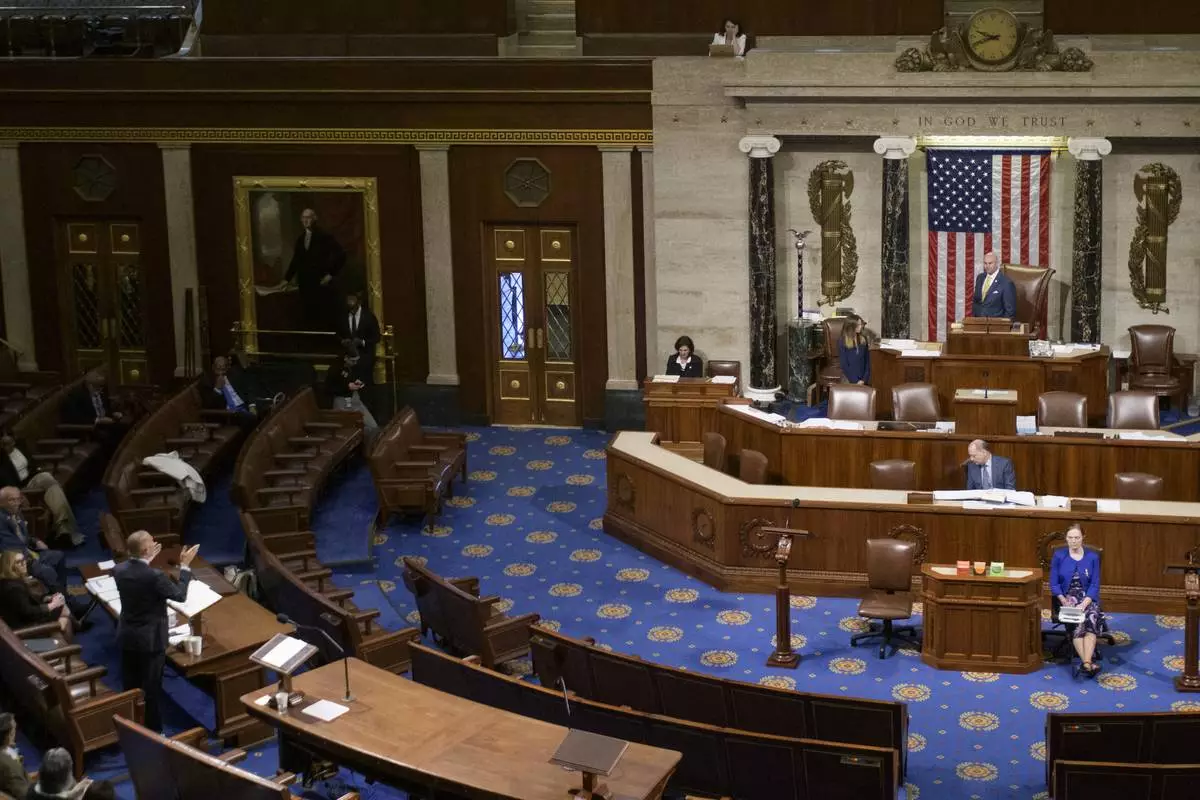
House Minority Leader Hakeem Jeffries, D-N.Y., left, speaks in the House chamber prior to the final vote for President Donald Trump's signature bill of tax breaks and spending cuts, at the Capitol, Thursday, July 3, 2025, in Washington. (AP Photo/Rod Lamkey, Jr.)
House Minority Leader Hakeem Jeffries, D-N.Y., left, speaks in the House chamber prior to the final vote for President Donald Trump's signature bill of tax breaks and spending cuts, at the Capitol, Thursday, July 3, 2025, in Washington. (AP Photo/Rod Lamkey, Jr.)

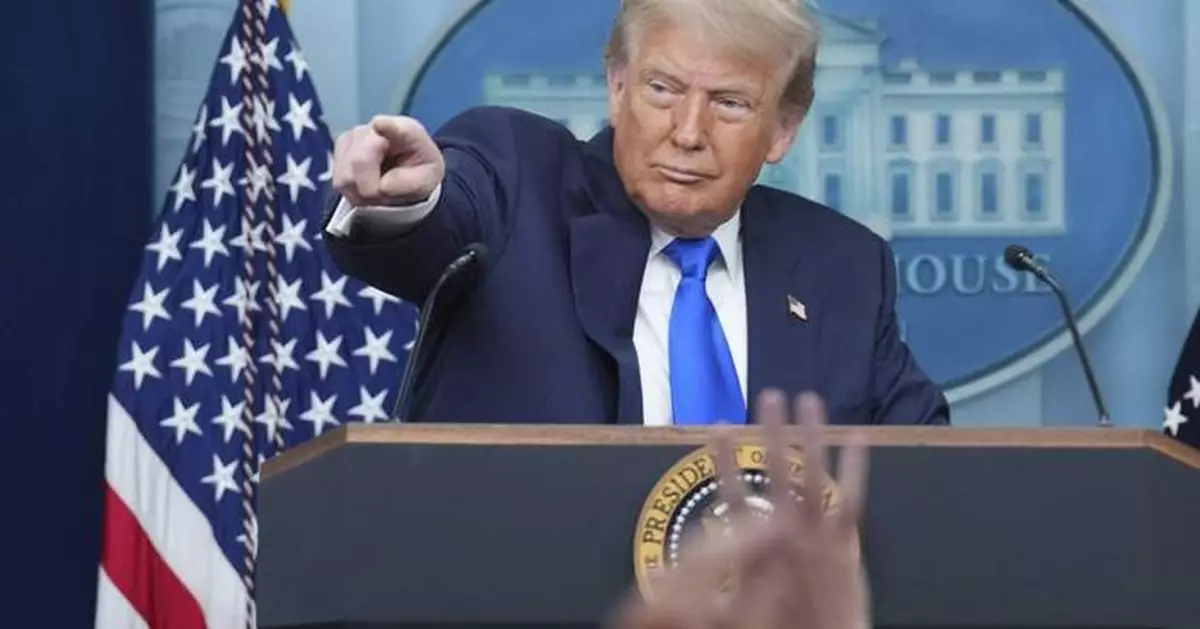
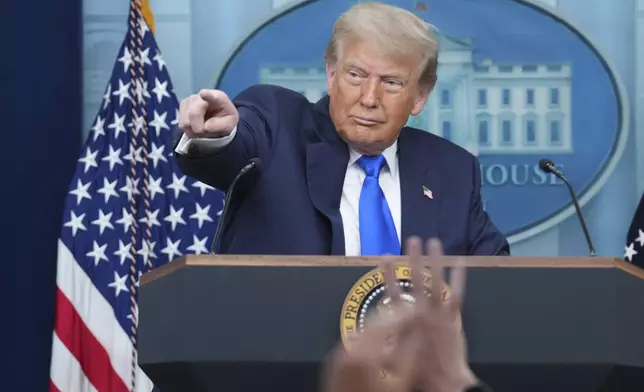
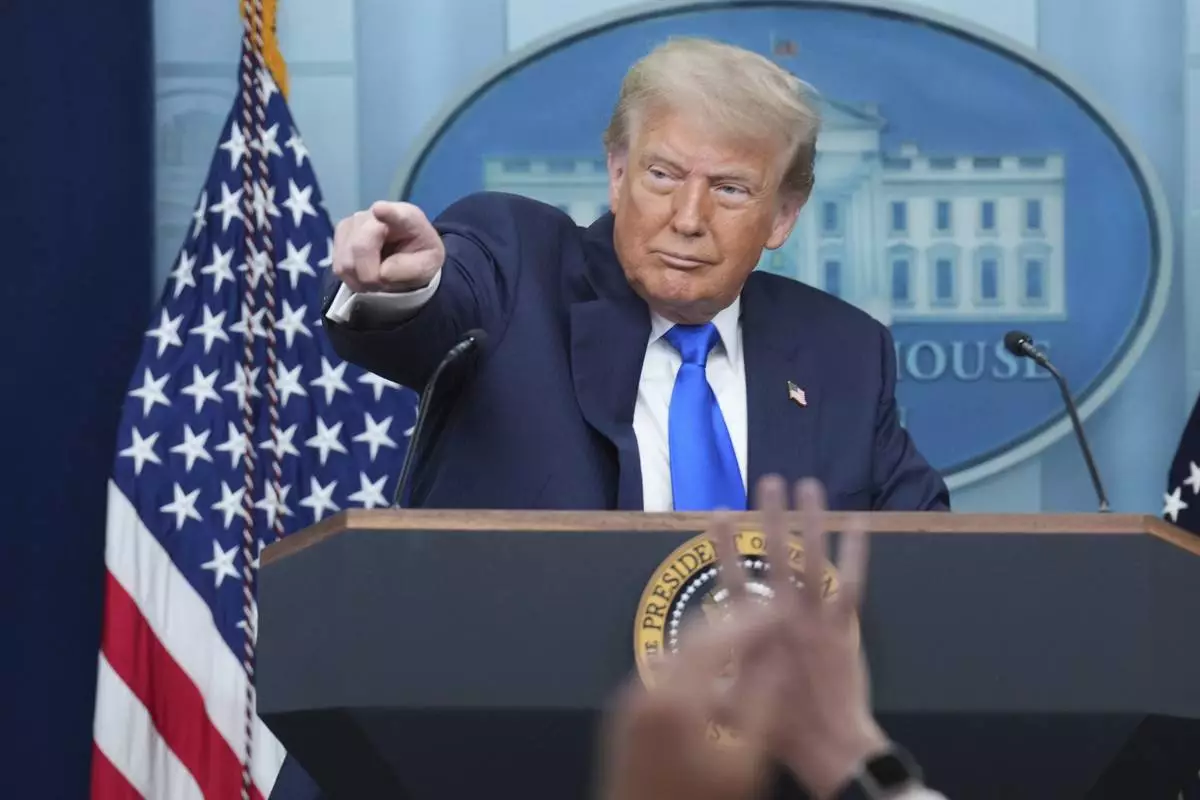
President Donald Trump points to a reporter to take a question as he speaks to the media, Friday, June 27, 2025, in the briefing room of the White House in Washington. (AP Photo/Jacquelyn Martin)

President Donald Trump points to a reporter to take a question as he speaks to the media, Friday, June 27, 2025, in the briefing room of the White House in Washington. (AP Photo/Jacquelyn Martin)

Democrats united against the legislation, but were powerless to stop it as long as Republicans stayed united. The Senate passed the bill Tuesday, with Vice President JD Vance casting the tiebreaking vote. The House passed an earlier iteration of the bill in May with just one vote to spare. It passed the final version Thursday 218-214.

Here's the latest on what's in the bill and when some of its provisions go into effect.

Republicans say the bill is crucial because there would be a massive tax increase after December when tax breaks from Trump's first term expire. The legislation contains about $4.5 trillion in tax cuts.

The existing tax rates and brackets would become permanent under the bill, solidifying the tax cuts approved in Trump's first term.

It temporarily would add new tax deductions on tip, overtime and auto loans. There's also a $6,000 deduction for older adults who earn no more than $75,000 a year, a nod to his pledge to end taxes on Social Security benefits.

It would boost the $2,000 child tax credit to $2,200. Millions of families at lower income levels would not get the full credit.

A cap on state and local deductions, called SALT, would quadruple to $40,000 for five years. It's a provision important to New York and other high tax states, though the House wanted it to last for 10 years.

There are scores of business-related tax cuts, including allowing businesses to immediately write off 100% of the cost of equipment and research. Proponents say this will boost economic growth.

The wealthiest households would see a $12,000 increase from the legislation, and the bill would cost the poorest people $1,600 a year, mainly due to reductions in Medicaid and food aid, according to the nonpartisan Congressional Budget Office analysis of the House's version.

The bill would provide some $350 billion for Trump's border and national security agenda, including for the U.S.-Mexico border wall and for 100,000 migrant detention facility beds, as he aims to fulfill his promise of the largest mass deportation operation in U.S. history.

Money would go for hiring 10,000 new Immigration and Customs Enforcement officers, with $10,000 signing bonuses and a surge of Border Patrol officers, as well. The goal is to deport some 1 million people per year.

To help pay for it, immigrants would face various new fees, including when seeking asylum protections.

For the Pentagon, the bill would provide billions for ship building, munitions systems, and quality of life measures for servicemen and women, as well as $25 billion for the development of the Golden Dome missile defense system. The Defense Department would have $1 billion for border security.

To help partly offset the lost tax revenue and new spending, Republicans aim to cut back on Medicaid and food assistance for people below the poverty line.

Republicans argue they are trying to rightsize the safety net programs for the population they were initially designed to serve, mainly pregnant women, the disabled and children, and root out what they describe as waste, fraud and abuse.

The package includes new 80-hour-a-month work requirements for many adults receiving Medicaid and food stamps, including older people up to age 65. Parents of children 14 and older would have to meet the program’s work requirements.

There's also a proposed new $35 co-payment that can be charged to patients using Medicaid services.

More than 71 million people rely on Medicaid, which expanded under Obama's Affordable Care Act, and 40 million use the Supplemental Nutrition Assistance Program. Most already work, according to analysts.

The Congressional Budget Office estimates that 11.8 million more Americans would become uninsured by 2034 if the bill became law and 3 million more would not qualify for food stamps, also known as SNAP benefits.

Republicans are looking to have states pick up some of the cost for SNAP benefits. Currently, the federal government funds all benefit costs. Under the bill, states beginning in 2028 will be required to contribute a set percentage of those costs if their payment error rate exceeds 6%. Payment errors include both underpayments and overpayments.

But the Senate bill temporarily delays the start date of that cost-sharing for states with the highest SNAP error rates. Alaska has the highest error rate in the nation at nearly 25%, according to Department of Agriculture data. Sen. Lisa Murkowski, R-Alaska, had fought for the exception. She was a decisive vote in getting the bill through the Senate.

Republicans are proposing to dramatically roll back tax breaks designed to boost clean energy projects fueled by renewable sources such as energy and wind. The tax breaks were a central component of President Joe Biden's 2022 landmark bill focused on addressing climate change and lowering health care costs.

Democratic Oregon Sen. Ron Wyden went so far as to call the GOP provisions a “death sentence for America’s wind and solar industries and an inevitable hike in utility bills.”

A tax break for people who buy new or used electric vehicles would expire on Sept. 30 of this year, instead of at the end of 2032 under current law.

Meanwhile, a tax credit for the production of critical materials will be expanded to include metallurgical coal used in steelmaking.

A number of extra provisions reflect other GOP priorities.

The bill creates a new children's savings program, called Trump Accounts, with a potential $1,000 deposit from the Treasury.

The Senate provided $40 million to establish Trump’s long-sought “National Garden of American Heroes.”

There's a new excise tax on university endowments and a new tax on remittances, or transfers of money that people in the U.S. send abroad. The tax is equal to 1% of the transfer.

A $200 tax on gun silencers and short-barreled rifles and shotguns was eliminated.

One provision bars for one year Medicaid payments to family planning providers that provide abortions, namely Planned Parenthood.

Another section expands the Radiation Exposure Compensation Act, a hard-fought provision from GOP Sen. Josh Hawley of Missouri, for those impacted by nuclear development and testing.

Billions would go for the Artemis moon mission and for the exploration of Mars, while $88 million is earmarked for a pandemic response accountability committee.

Additionally, a provision would increase the nation's debt limit, by $5 trillion, to allow continued borrowing to pay already accrued bills.

The Senate overwhelmingly revolted against a proposal meant to deter states from regulating artificial intelligence. Republican governors across the country asked for the moratorium to be removed and the Senate voted to do so with a resounding 99-1 vote.

A provision was thrown in at the final hours that will provide $10 billion annually to rural hospitals for five years, or $50 billion in total. The Senate bill had originally provided $25 billion for the program, but that number was upped to win over holdout GOP senators and a coalition of House Republicans warning that reduced Medicaid provider taxes would hurt rural hospitals.

The amended bill also stripped out a new tax on wind and solar projects that use a certain percentage of components from China.

Altogether, the Congressional Budget Office projects that the bill would increase federal deficits over the next 10 years by nearly $3.3 trillion from 2025 to 2034.

Or not, depending on how one does the math.

Senate Republicans are proposing a unique strategy of not counting the existing tax breaks as a new cost because those breaks are already “current policy.” Republican senators say the Senate Budget Committee chairman has the authority to set the baseline for the preferred approach.

Under the alternative Senate GOP view, the bill would reduce deficits by almost half a trillion dollars over the coming decade, the CBO said.

Democrats say this is “magic math” that obscures the true costs of the tax breaks. Some nonpartisan groups worried about the country's fiscal trajectory are siding with Democrats in that regard. The Committee for a Responsible Federal Budget says Senate Republicans were employing an “accounting gimmick that would make Enron executives blush.”
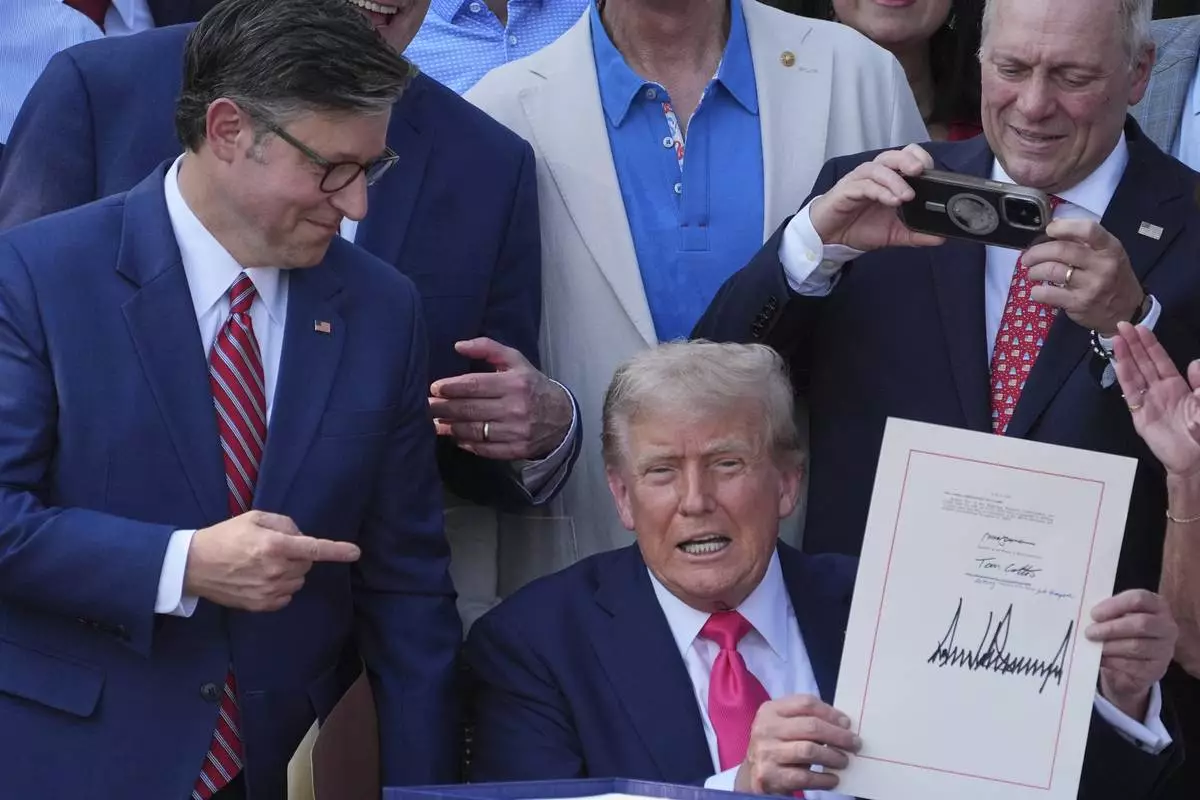
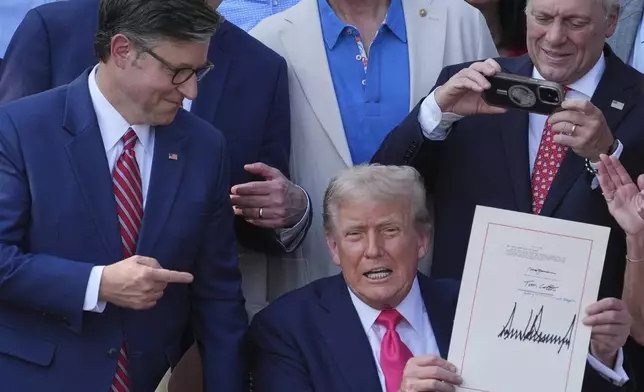
House Speaker Mike Johnson of La., points to President Donald Trump after he signed his signature bill of tax breaks and spending cuts at the White House, Friday, July 4, 2025, in Washington, surrounded by members of Congress. (AP Photo/Evan Vucci)
House Speaker Mike Johnson of La., points to President Donald Trump after he signed his signature bill of tax breaks and spending cuts at the White House, Friday, July 4, 2025, in Washington, surrounded by members of Congress. (AP Photo/Evan Vucci)

Republican members of Congress reach to shake hands with Speaker of the House Mike Johnson, R-La., center bottom, after Johnson signed President Donald Trump's signature bill of tax breaks and spending cuts, Thursday, July 3, 2025, at the Capitol in Washington. (AP Photo/Julia Demaree Nikhinson)
Republican members of Congress reach to shake hands with Speaker of the House Mike Johnson, R-La., center bottom, after Johnson signed President Donald Trump's signature bill of tax breaks and spending cuts, Thursday, July 3, 2025, at the Capitol in Washington. (AP Photo/Julia Demaree Nikhinson)

President Donald Trump gestures as he boards Air Force One, Thursday, July 3, 2025, at Joint Base Andrews, Md. (AP Photo/Alex Brandon)
President Donald Trump gestures as he boards Air Force One, Thursday, July 3, 2025, at Joint Base Andrews, Md. (AP Photo/Alex Brandon)

Senate Minority Leader Chuck Schumer, D-N.Y., updates reporters as Senate Republicans work to advance President Donald Trump's sweeping domestic policy bill, at the Capitol in Washington, Friday, June 27, 2025. (AP Photo/J. Scott Applewhite)
Senate Minority Leader Chuck Schumer, D-N.Y., updates reporters as Senate Republicans work to advance President Donald Trump's sweeping domestic policy bill, at the Capitol in Washington, Friday, June 27, 2025. (AP Photo/J. Scott Applewhite)
Senate Majority Leader John Thune, R-S.D., arrives for a closed-door Republican meeting to advance President Donald Trump's sweeping domestic policy bill, at the Capitol in Washington, Friday, June 27, 2025. (AP Photo/J. Scott Applewhite)

Senate Majority Leader John Thune, R-S.D., arrives for a closed-door Republican meeting to advance President Donald Trump's sweeping domestic policy bill, at the Capitol in Washington, Friday, June 27, 2025. (AP Photo/J. Scott Applewhite)

The office of Senate Parliamentarian Elizabeth MacDonough is seen at the Capitol in Washington, Friday, June 27, 2025. (AP Photo/J. Scott Applewhite)
The office of Senate Parliamentarian Elizabeth MacDonough is seen at the Capitol in Washington, Friday, June 27, 2025. (AP Photo/J. Scott Applewhite)

House Minority Leader Hakeem Jeffries, D-N.Y., left, speaks in the House chamber prior to the final vote for President Donald Trump's signature bill of tax breaks and spending cuts, at the Capitol, Thursday, July 3, 2025, in Washington. (AP Photo/Rod Lamkey, Jr.)
House Minority Leader Hakeem Jeffries, D-N.Y., left, speaks in the House chamber prior to the final vote for President Donald Trump's signature bill of tax breaks and spending cuts, at the Capitol, Thursday, July 3, 2025, in Washington. (AP Photo/Rod Lamkey, Jr.)

President Donald Trump points to a reporter to take a question as he speaks to the media, Friday, June 27, 2025, in the briefing room of the White House in Washington. (AP Photo/Jacquelyn Martin)
President Donald Trump points to a reporter to take a question as he speaks to the media, Friday, June 27, 2025, in the briefing room of the White House in Washington. (AP Photo/Jacquelyn Martin)
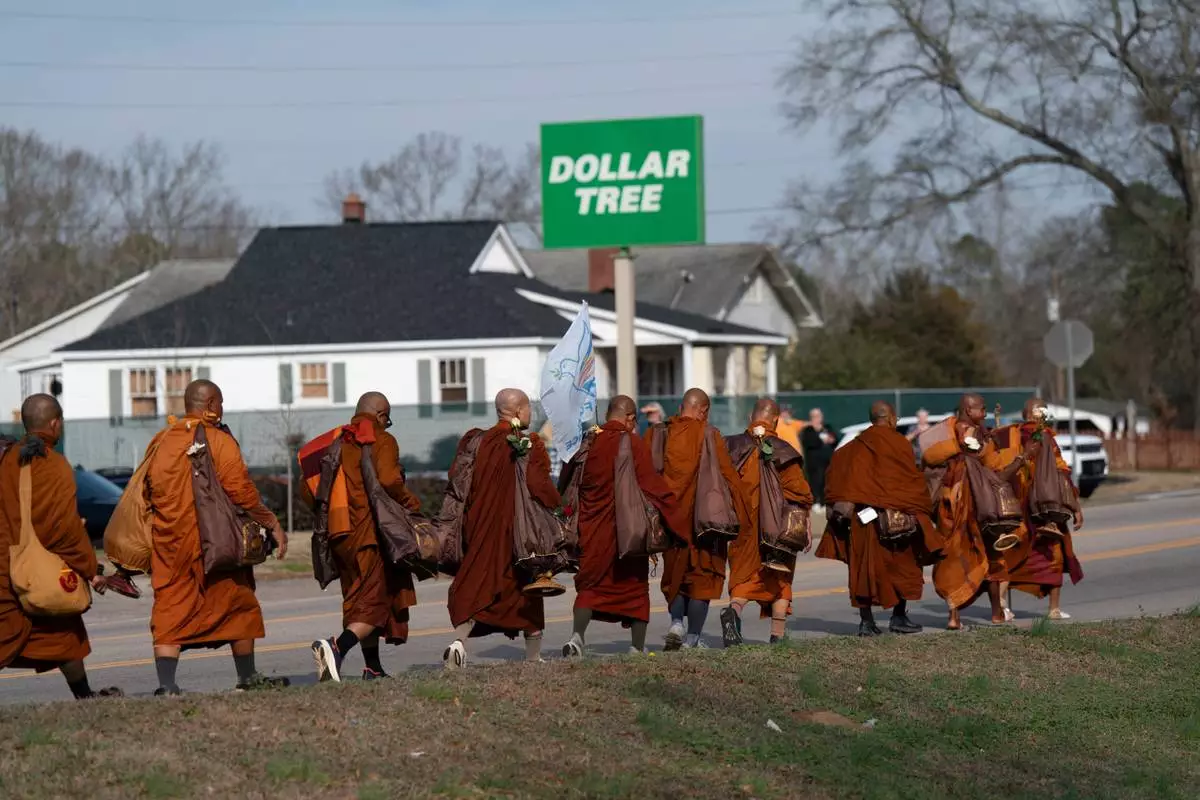
A group of Buddhist monks and their rescue dog are striding single file down country roads and highways across the South, captivating Americans nationwide and inspiring droves of locals to greet them along their route.

In their flowing saffron and ocher robes, the men are walking for peace. It's a meditative tradition more common in South Asian countries, and it's resonating now in the U.S., seemingly as a welcome respite from the conflict, trauma and politics dividing the nation.

Their journey began Oct. 26, 2025, at a Vietnamese Buddhist temple in Texas, and is scheduled to end in mid-February in Washington, D.C., where they will ask Congress to recognize Buddha’s day of birth and enlightenment as a federal holiday. Beyond promoting peace, their highest priority is connecting with people along the way.

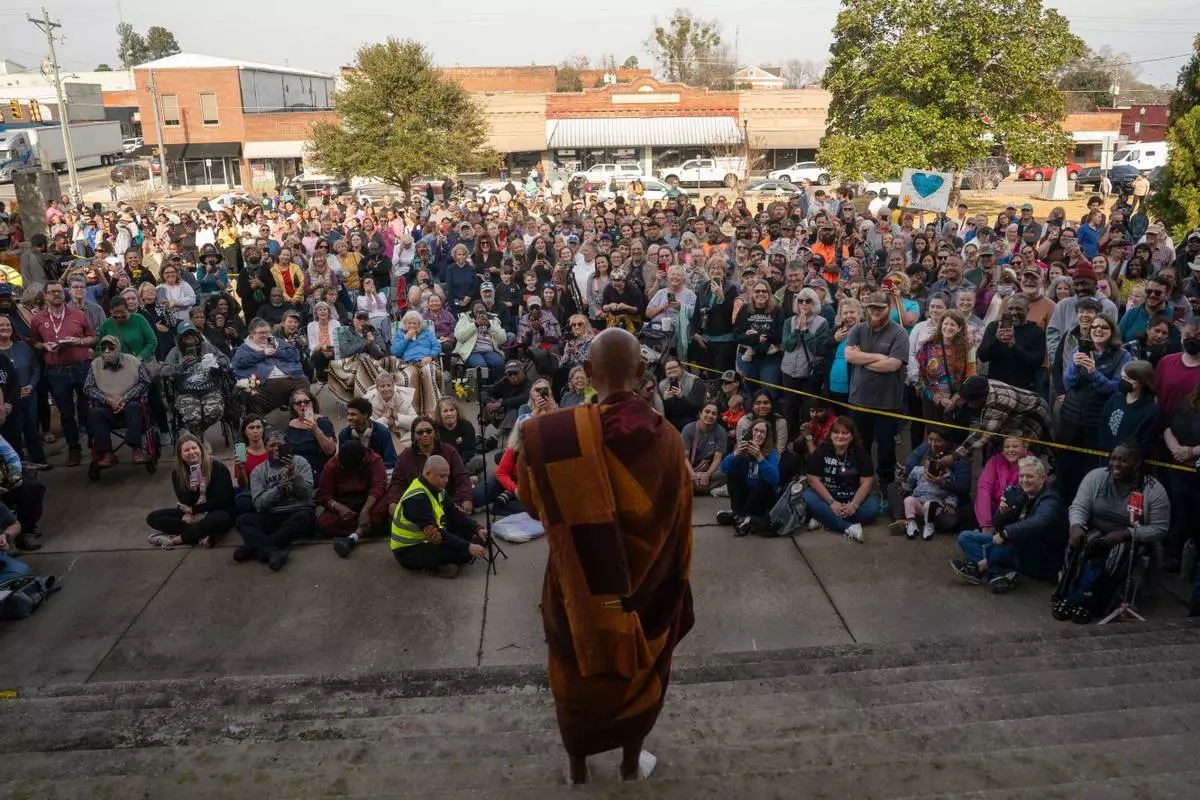
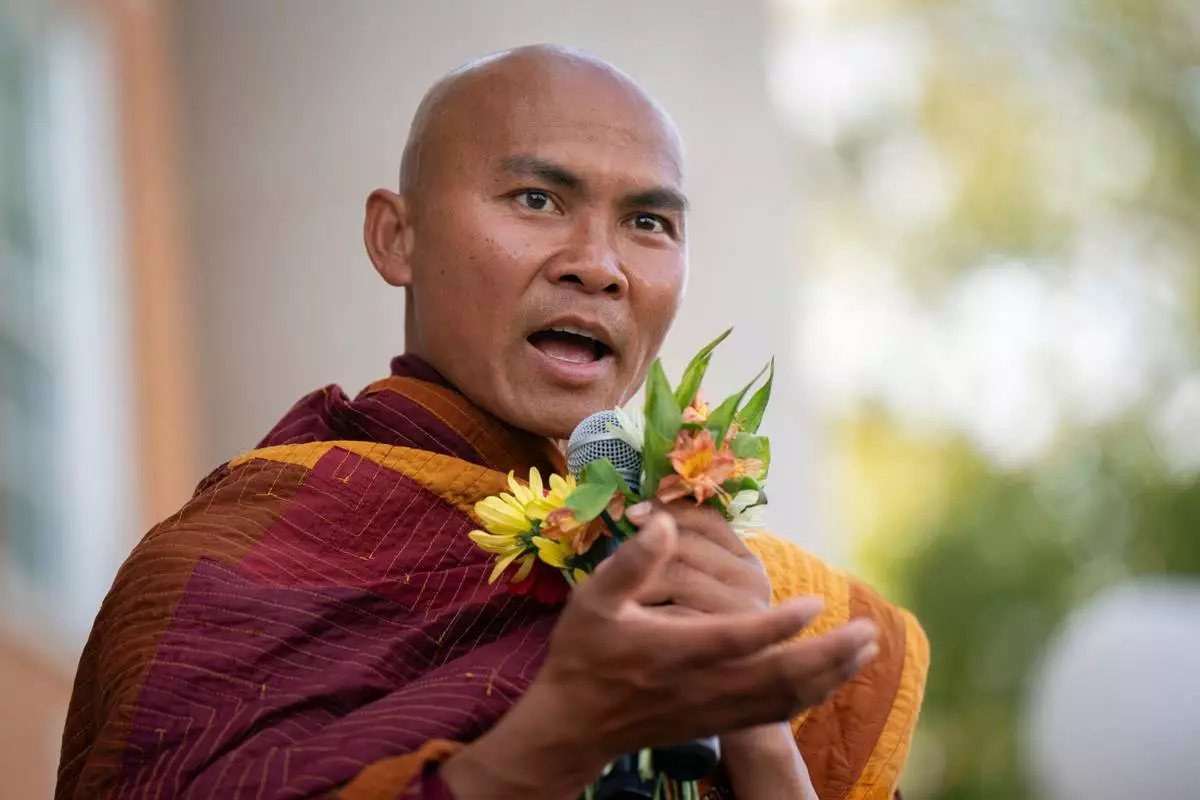
“My hope is, when this walk ends, the people we met will continue practicing mindfulness and find peace,” said the Venerable Bhikkhu Pannakara, the group’s soft-spoken leader who is making the trek barefoot. He teaches about mindfulness, forgiveness and healing at every stop.

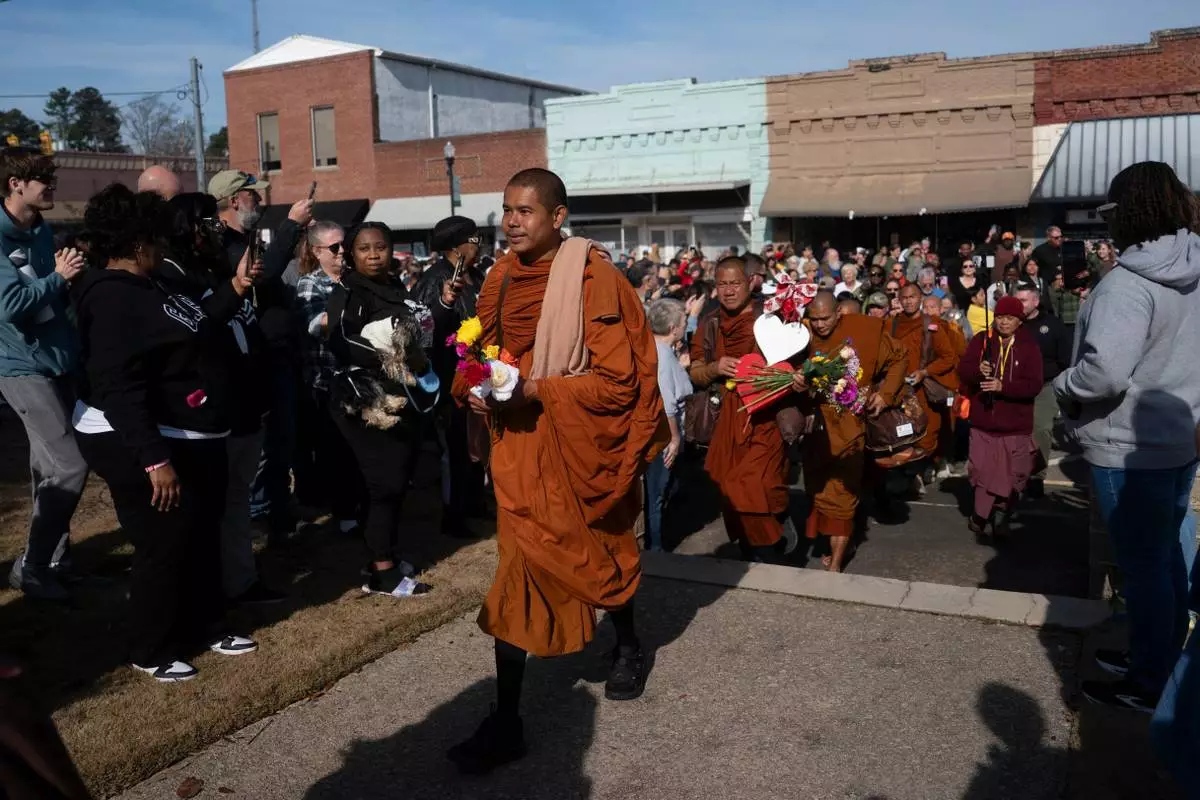
Preferring to sleep each night in tents pitched outdoors, the monks have been surprised to see their message transcend ideologies, drawing huge crowds into churchyards, city halls and town squares across six states. Documenting their journey on social media, they — and their dog, Aloka — have racked up millions of followers online. On Saturday, thousands thronged in Columbia, South Carolina, where the monks chanted on the steps of the State House and received a proclamation from the city's mayor, Daniel Rickenmann.

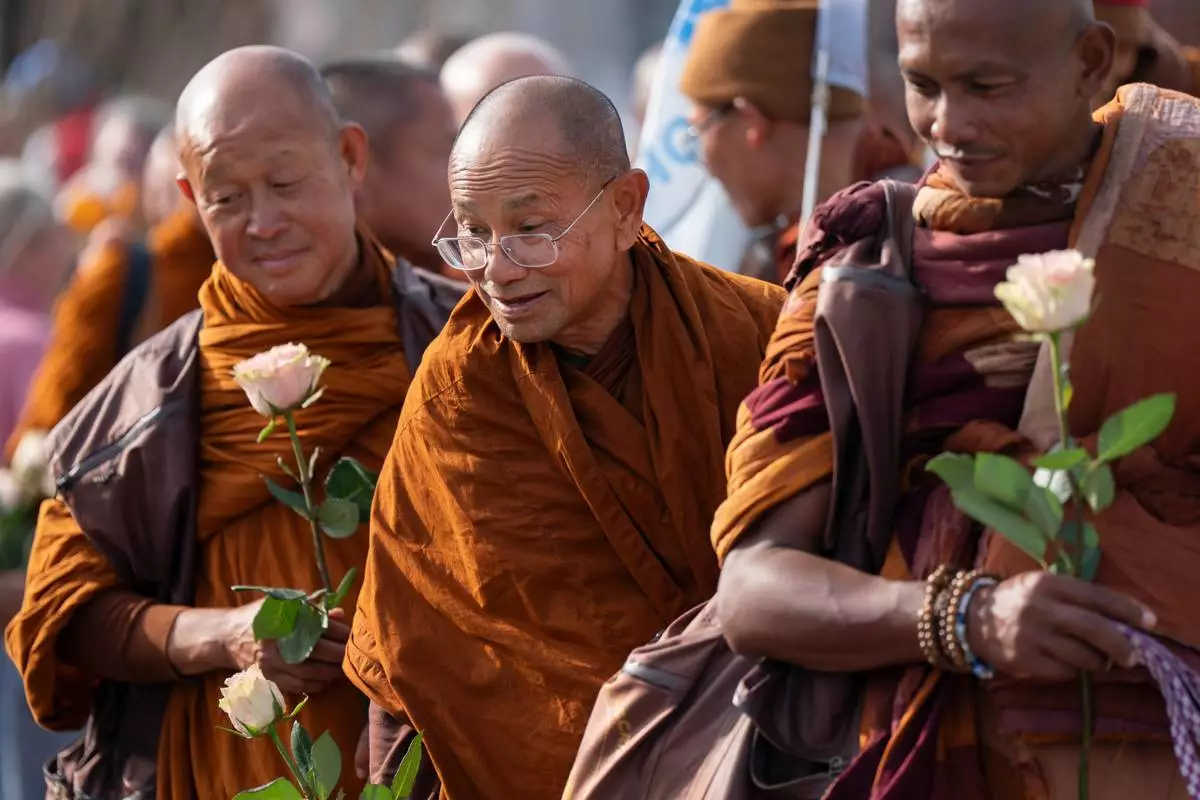
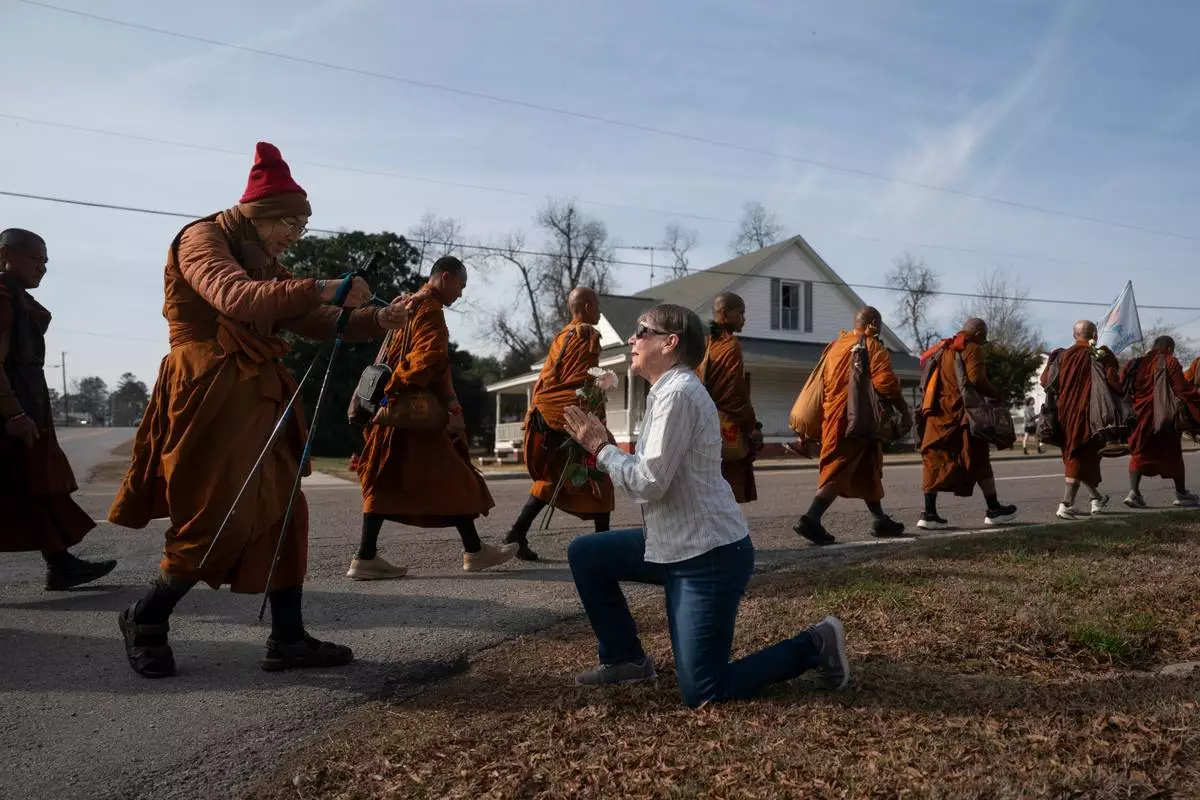
At their stop Thursday in Saluda, South Carolina, Audrie Pearce joined the crowd lining Main Street. She had driven four hours from her village of Little River, and teared up as Pannakara handed her a flower.

“There’s something traumatic and heart-wrenching happening in our country every day,” said Pearce, who describes herself as spiritual, but not religious. “I looked into their eyes and I saw peace. They’re putting their bodies through such physical torture and yet they radiate peace.”

Hailing from Theravada Buddhist monasteries across the globe, the 19 monks began their 2,300 mile (3,700 kilometer) trek at the Huong Dao Vipassana Bhavana Center in Fort Worth.

Their journey has not been without peril. On Nov. 19, as the monks were walking along U.S. Highway 90 near Dayton, Texas, their escort vehicle was hit by a distracted truck driver, injuring two monks. One of them lost his leg, reducing the group to 18.

This is Pannakara's first trek in the U.S., but he's walked across several South Asian countries, including a 112-day journey across India in 2022 where he first encountered Aloka, an Indian Pariah dog whose name means divine light in Sanskrit.

Then a stray, the dog followed him and other monks from Kolkata in eastern India all the way to the Nepal border. At one point, he fell critically ill and Pannakara scooped him up in his arms and cared for him until he recovered. Now, Aloka inspires him to keep going when he feels like giving up.

“I named him light because I want him to find the light of wisdom,” Pannakara said.

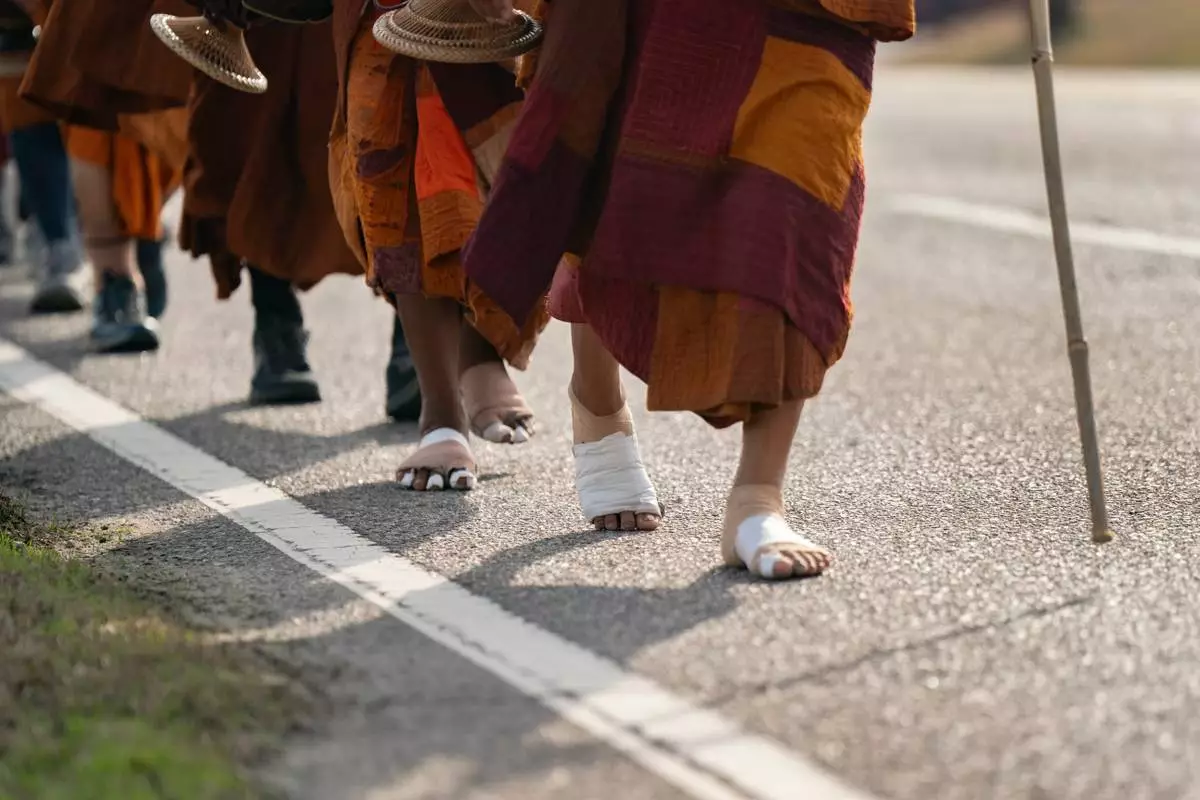
The monk's feet are now heavily bandaged because he's stepped on rocks, nails and glass along the way. His practice of mindfulness keeps him joyful despite the pain from these injuries, he said.

Still, traversing the southeast United States has presented unique challenges, and pounding pavement day after day has been brutal.

“In India, we can do shortcuts through paddy fields and farms, but we can’t do that here because there are a lot of private properties,” Pannakara said. “But what’s made it beautiful is how people have welcomed and hosted us in spite of not knowing who we are and what we believe.”

In Opelika, Alabama, the Rev. Patrick Hitchman-Craig hosted the monks on Christmas night at his United Methodist congregation.

He expected to see a small crowd, but about 1,000 people showed up, creating the feel of a block party. The monks seemed like the Magi, he said, appearing on Christ’s birthday.

“Anyone who is working for peace in the world in a way that is public and sacrificial is standing close to the heart of Jesus, whether or not they share our tradition,” said Hitchman-Craig. “I was blown away by the number of people and the diversity of who showed up.”

After their night on the church lawn, the monks arrived the next afternoon at the Collins Farm in Cusseta, Alabama. Judy Collins Allen, whose father and brother run the farm, said about 200 people came to meet the monks — the biggest gathering she’s ever witnessed there.

“There was a calm, warmth and sense of community among people who had not met each other before and that was so special,” she said.

Long Si Dong, a spokesperson for the Fort Worth temple, said the monks, when they arrive in Washington, plan to seek recognition of Vesak, the day which marks the birth and enlightenment of the Buddha, as a national holiday.

“Doing so would acknowledge Vesak as a day of reflection, compassion and unity for all people regardless of faith,” he said.

But Pannakara emphasized that their main goal is to help people achieve peace in their lives. The trek is also a separate endeavor from a $200 million campaign to build towering monuments on the temple’s 14-acre property to house the Buddha’s teachings engraved in stone, according to Dong.

The monks practice and teach Vipassana meditation, an ancient Indian technique taught by the Buddha himself as core for attaining enlightenment. It focuses on the mind-body connection — observing breath and physical sensations to understand reality, impermanence and suffering. Some of the monks, including Pannakara, walk barefoot to feel the ground directly and be present in the moment.

Pannakara has told the gathered crowds that they don't aim to convert people to Buddhism.

Brooke Schedneck, professor of religion at Rhodes College in Memphis, Tennessee, said the tradition of a peace walk in Theravada Buddhism began in the 1990s when the Venerable Maha Ghosananda, a Cambodian monk, led marches across war-torn areas riddled with landmines to foster national healing after civil war and genocide in his country.

“These walks really inspire people and inspire faith,” Schedneck said. “The core intention is to have others watch and be inspired, not so much through words, but through how they are willing to make this sacrifice by walking and being visible.”

On Thursday, Becki Gable drove nearly 400 miles (about 640 kilometers) from Cullman, Alabama, to catch up with them in Saluda. Raised Methodist, Gable said she wanted some release from the pain of losing her daughter and parents.

“I just felt in my heart that this would help me have peace,” she said. “Maybe I could move a little bit forward in my life.”

Gable says she has already taken one of Pannakara’s teachings to heart. She’s promised herself that each morning, as soon as she awakes, she’d take a piece of paper and write five words on it, just as the monk prescribed.

“Today is my peaceful day.”

Freelance photojournalist Allison Joyce contributed to this report.

Associated Press religion coverage receives support through the AP’s collaboration with The Conversation US, with funding from Lilly Endowment Inc. The AP is solely responsible for this content.

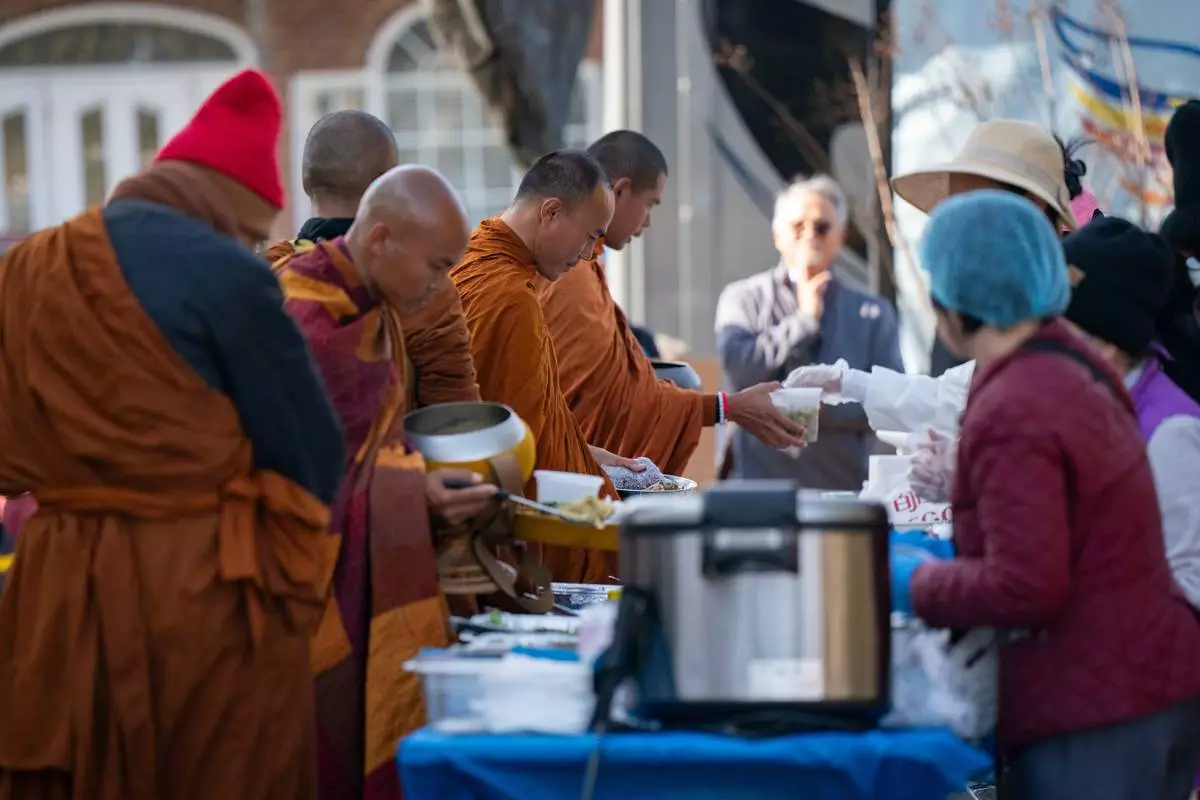
Buddhist monks who are participating in the, "Walk For Peace," get lunch Thursday, Jan. 8, 2026, in Saluda, S.C. (AP Photo/Allison Joyce)

Buddhist monks who are participating in the, "Walk For Peace," get lunch Thursday, Jan. 8, 2026, in Saluda, S.C. (AP Photo/Allison Joyce)

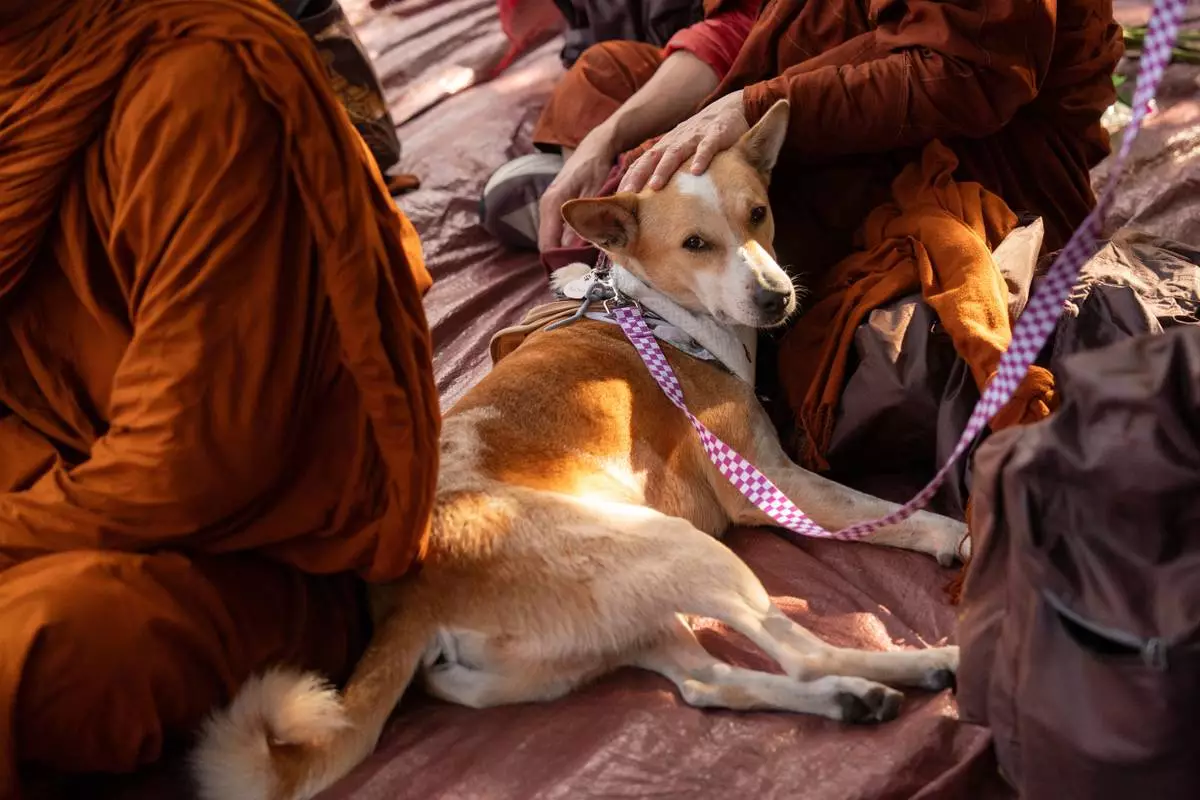
Aloka rests with Buddhist monks who are participating in the, "Walk For Peace," Thursday, Jan. 8, 2026, in Saluda, S.C. (AP Photo/Allison Joyce)

Aloka rests with Buddhist monks who are participating in the, "Walk For Peace," Thursday, Jan. 8, 2026, in Saluda, S.C. (AP Photo/Allison Joyce)

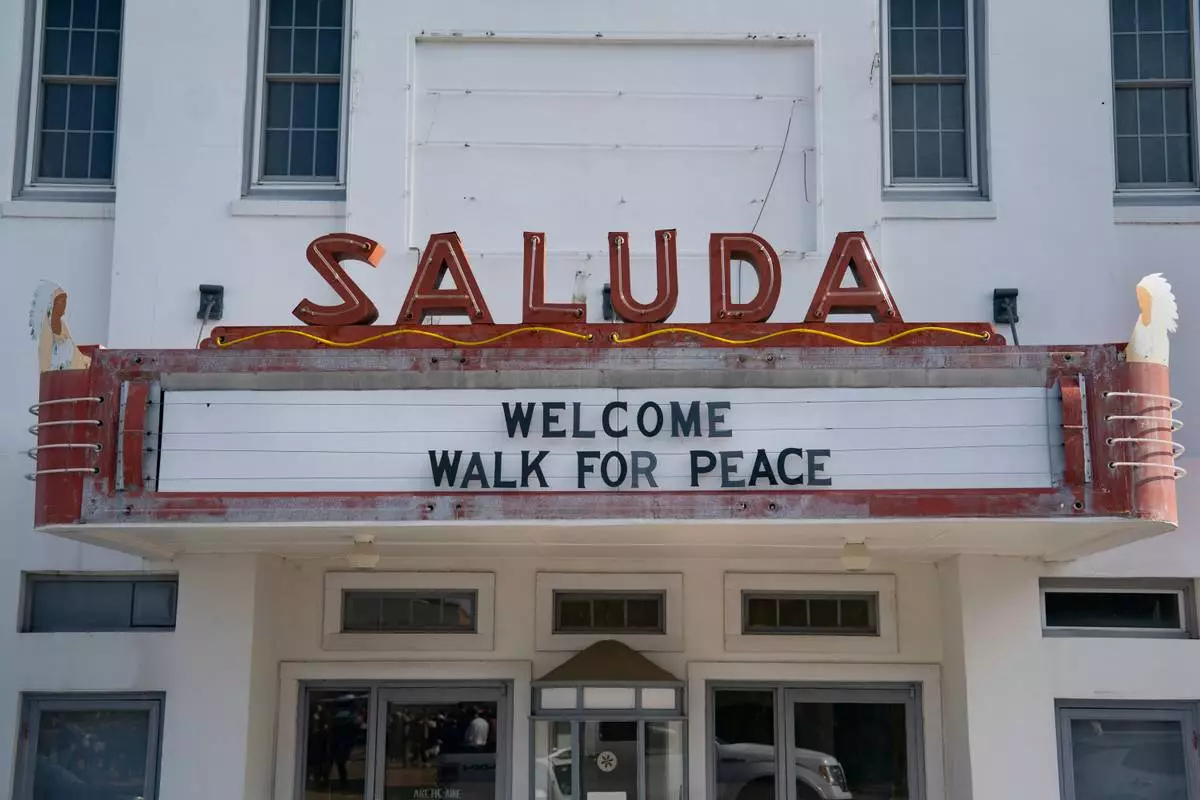
A sign is seen greeting the Buddhist monks who are participating in the, "Walk For Peace," Thursday, Jan. 8, 2026, in Saluda, S.C. (AP Photo/Allison Joyce)

A sign is seen greeting the Buddhist monks who are participating in the, "Walk For Peace," Thursday, Jan. 8, 2026, in Saluda, S.C. (AP Photo/Allison Joyce)

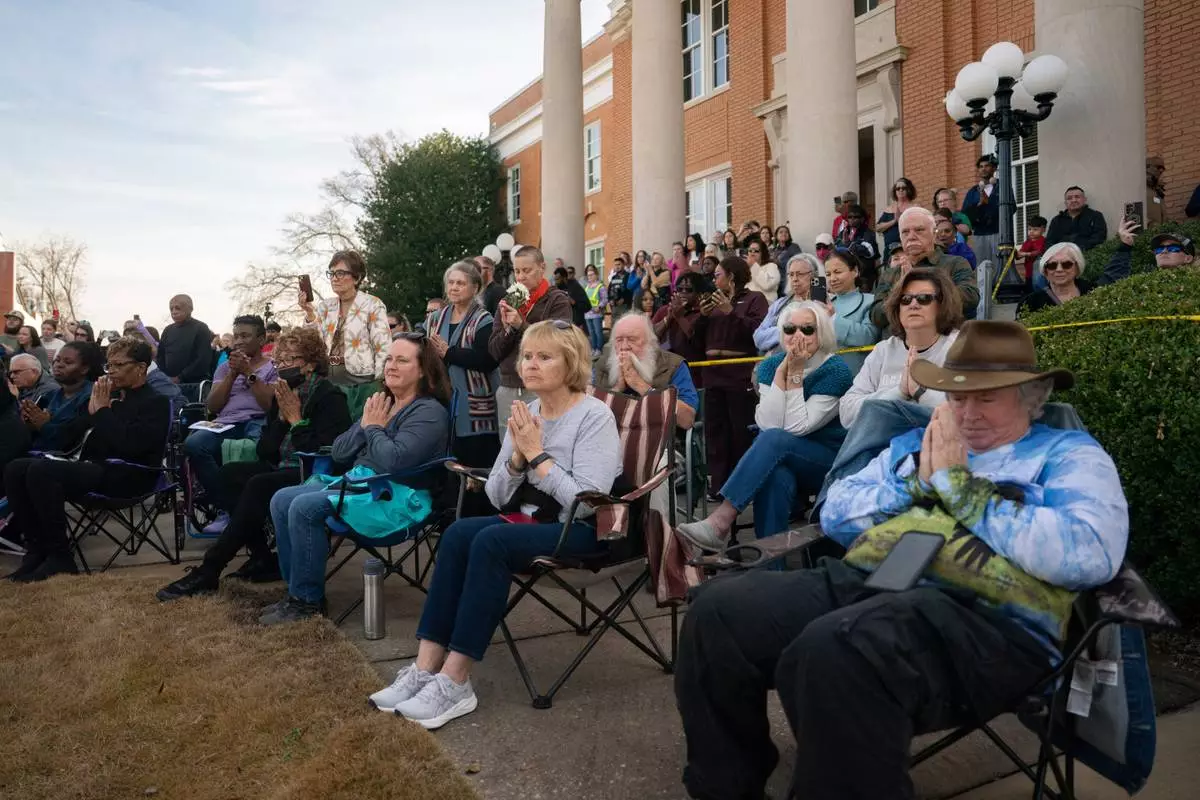
Supporters pray with Buddhist monks who are participating in the, "Walk For Peace," Thursday, Jan. 8, 2026, in Saluda, S.C. (AP Photo/Allison Joyce)

Supporters pray with Buddhist monks who are participating in the, "Walk For Peace," Thursday, Jan. 8, 2026, in Saluda, S.C. (AP Photo/Allison Joyce)

Supporters watch Buddhist monks who are participating in the, "Walk For Peace," Thursday, Jan. 8, 2026, in Saluda, S.C. (AP Photo/Allison Joyce)

Supporters watch Buddhist monks who are participating in the, "Walk For Peace," Thursday, Jan. 8, 2026, in Saluda, S.C. (AP Photo/Allison Joyce)

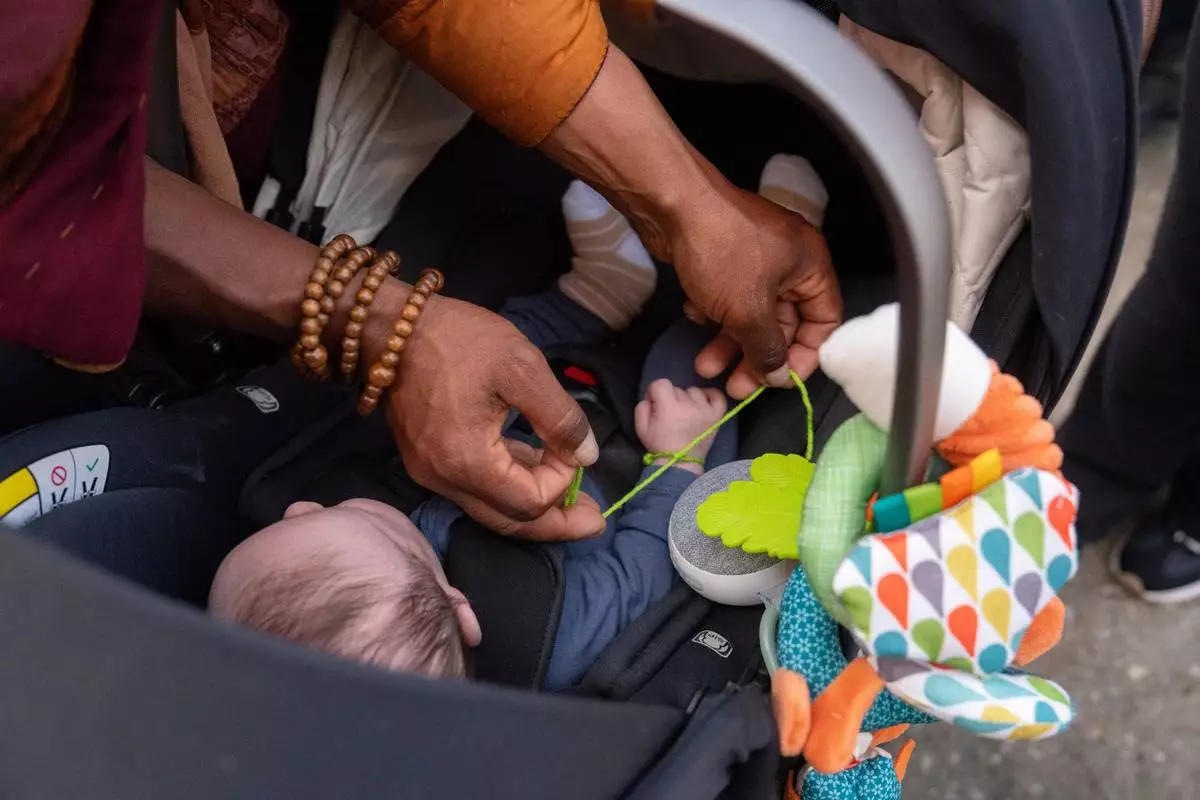
A Buddhist monk ties a prayer bracelet around the wrist of Josey Lee, 2-months-old, during the, "Walk For Peace," Thursday, Jan. 8, 2026, in Saluda, S.C. (AP Photo/Allison Joyce)

A Buddhist monk ties a prayer bracelet around the wrist of Josey Lee, 2-months-old, during the, "Walk For Peace," Thursday, Jan. 8, 2026, in Saluda, S.C. (AP Photo/Allison Joyce)

Bhikkhu Pannakara, a spiritual leader, speaks to supporters during the, "Walk For Peace," Thursday, Jan. 8, 2026, in Saluda, S.C. (AP Photo/Allison Joyce)

Bhikkhu Pannakara, a spiritual leader, speaks to supporters during the, "Walk For Peace," Thursday, Jan. 8, 2026, in Saluda, S.C. (AP Photo/Allison Joyce)

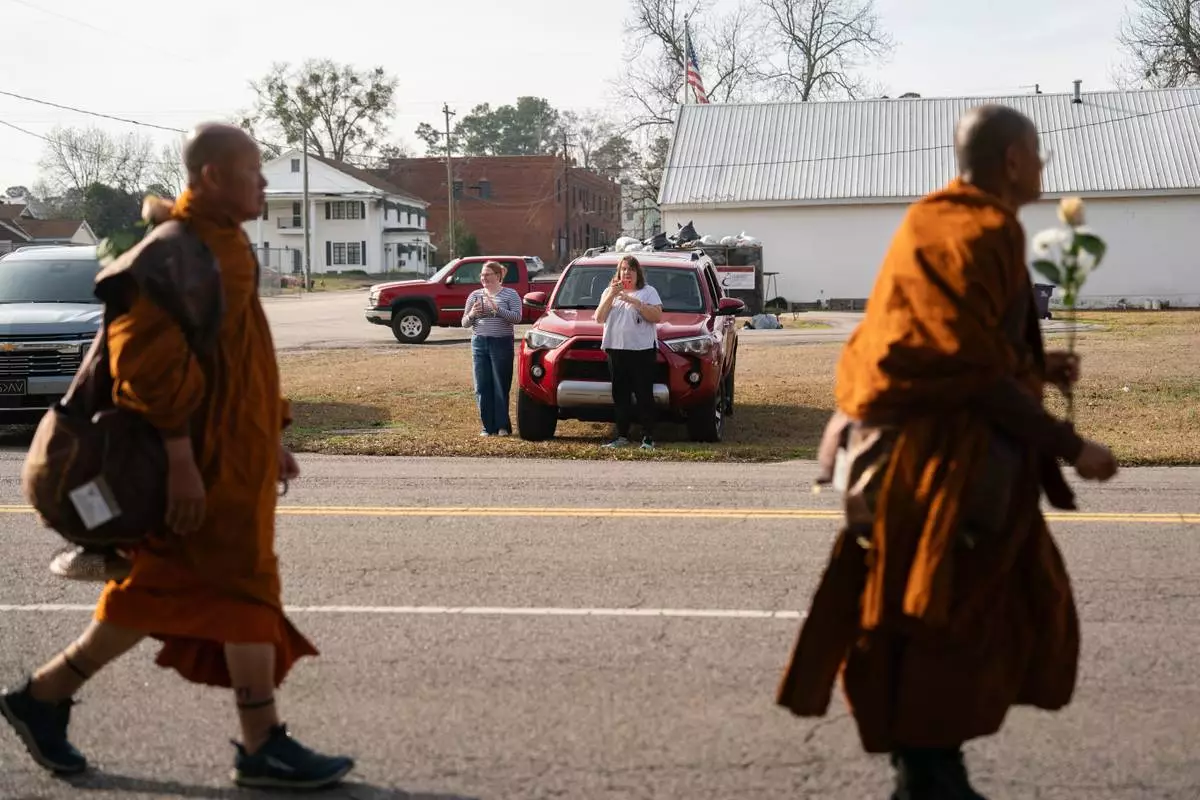
Buddhist monks participate in the, "Walk For Peace," Thursday, Jan. 8, 2026, in Saluda, S.C. (AP Photo/Allison Joyce)

Buddhist monks participate in the, "Walk For Peace," Thursday, Jan. 8, 2026, in Saluda, S.C. (AP Photo/Allison Joyce)

Buddhist monks participate in the, "Walk For Peace," Thursday, Jan. 8, 2026, in Saluda, S.C. (AP Photo/Allison Joyce)

Buddhist monks participate in the, "Walk For Peace," Thursday, Jan. 8, 2026, in Saluda, S.C. (AP Photo/Allison Joyce)

Bhikkhu Pannakara leads other buddhist monks in the, "Walk For Peace," Thursday, Jan. 8, 2026, in Saluda, S.C. (AP Photo/Allison Joyce)

Bhikkhu Pannakara leads other buddhist monks in the, "Walk For Peace," Thursday, Jan. 8, 2026, in Saluda, S.C. (AP Photo/Allison Joyce)

Audrie Pearce greets Buddhist monks who are participating in the, "Walk For Peace," Thursday, Jan. 8, 2026, in Saluda, S.C. (AP Photo/Allison Joyce)

Audrie Pearce greets Buddhist monks who are participating in the, "Walk For Peace," Thursday, Jan. 8, 2026, in Saluda, S.C. (AP Photo/Allison Joyce)

Bhikkhu Pannakara, a spiritual leader, speaks to supporters during the, "Walk For Peace," Thursday, Jan. 8, 2026, in Saluda, S.C. (AP Photo/Allison Joyce)

Bhikkhu Pannakara, a spiritual leader, speaks to supporters during the, "Walk For Peace," Thursday, Jan. 8, 2026, in Saluda, S.C. (AP Photo/Allison Joyce)

Buddhist monks who are participating in the, "Walk For Peace," arrive in Saluda, Thursday, Jan. 8, 2026, in Saluda, S.C. (AP Photo/Allison Joyce)

Buddhist monks who are participating in the, "Walk For Peace," arrive in Saluda, Thursday, Jan. 8, 2026, in Saluda, S.C. (AP Photo/Allison Joyce)

Buddhist monks who are participating in the, "Walk For Peace," are seen with their dog, Aloka, Thursday, Jan. 8, 2026, in Saluda, S.C. (AP Photo/Allison Joyce)

Buddhist monks who are participating in the, "Walk For Peace," are seen with their dog, Aloka, Thursday, Jan. 8, 2026, in Saluda, S.C. (AP Photo/Allison Joyce)

Recommended Articles