WELLINGTON, New Zealand (AP) — France’s selection of eight uncapped players among a team of unknowns for the first test against New Zealand on Saturday highlights again rugby’s failure to develop an integrated international calendar.
French coach Fabien Galthié has brought an understrength squad to New Zealand for the three-test series, leaving at home many of his leading players who have been involved in the latter rounds of the Top 14 club competition.
While New Zealand Rugby and All Blacks head coach Scott Robertson have been diplomatic about the makeup of the French squad, the decision to send a weakened group to New Zealand has been more widely interpreted as arrogant and disrespectful.
Despite years of work towards an integrated global calendar, World Rugby has continued to prioritize northern hemisphere club competitions ahead of the July test window.
Galthié has insisted he has no other choice than to pick players who are rested. Yet when southern hemisphere teams tour Britain and Europe in November, they routinely take full-strength teams and players who have been in training for up to 10 months.
“We don’t have a choice other than picking players who have finished their seasons,” Galthié said. “It’s an opportunity for us to work with the best players available.
”The constraints of the Six Nations, the November tests, the Top 14, and the European Cup leave us with no other choice for the summer tour.”
Galthié said criticism of the decision to bring a team of obscure club players to New Zealand is misplaced.
“You have to be informative and try to explain the obligations which are linked to our season schedule,” he said. “I understand very well that, on the international circuit, people don’t understand why the team that went undefeated in November and won the (Six Nations) tournament isn’t there.”
The French club season has long been a bugbear which World Rugby hasn't addressed. The All Blacks will gain little or nothing from playing a team of players so little known that routine analysis of their play has been difficult.
This season is expected to be a major test for Robertson, who lost four tests in his first season in charge and is under pressure to produce better results. It is unlikely the coming series will reveal much about how the All Blacks coach has grown since last year, unless the French prove surprisingly competitive.
Robertson has admitted he lacked self-confidence in his first year in charge and that resulted in a conservative approach to selection and tactics. His choice of four new caps in this match and his pledge to play a more attacking game points to a more confident approach.
“We want to play fast,” Robertson said. “We think the game is in a great place for us — quick scrums, quick lineouts, quick taps. Our skill set trends to us playing fast and creating so that’s what we’ll push all week.”
Robertson said France will be “quite free . . . there is not too much weight on their shoulders and respect so they can be dangerous.”
AP rugby: https://apnews.com/hub/rugby
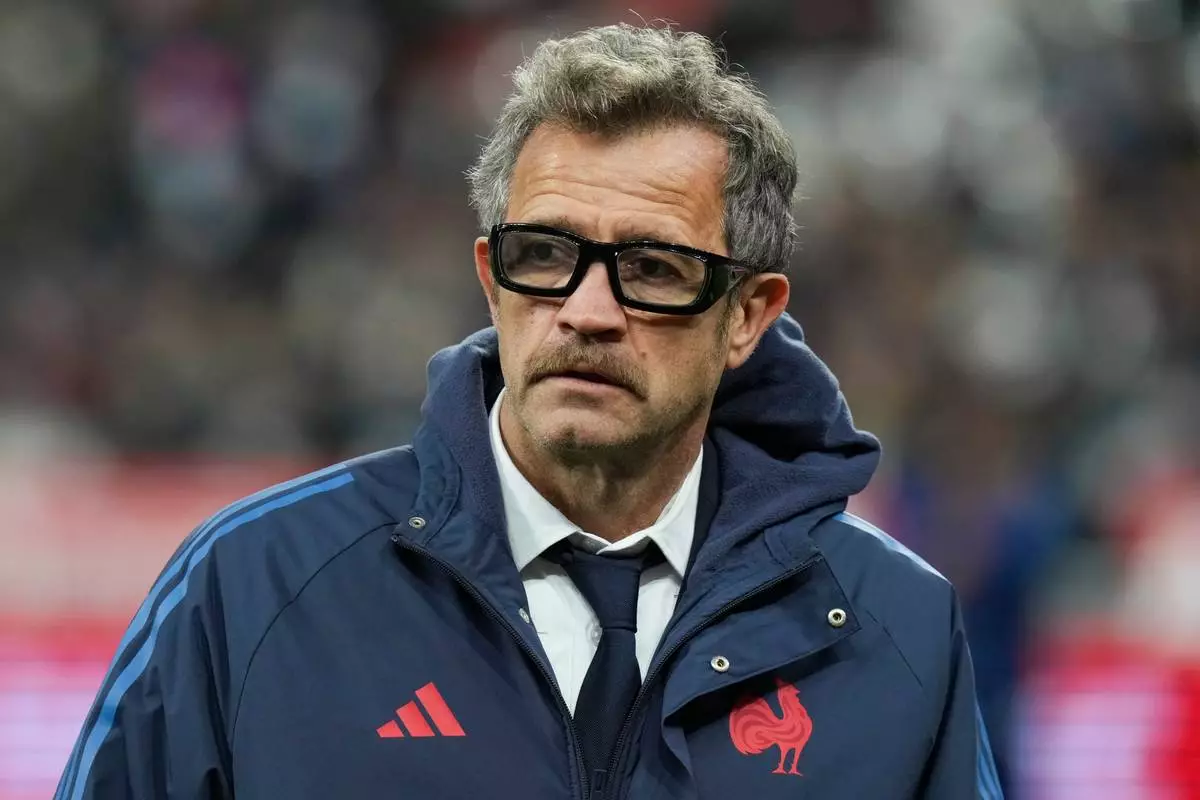
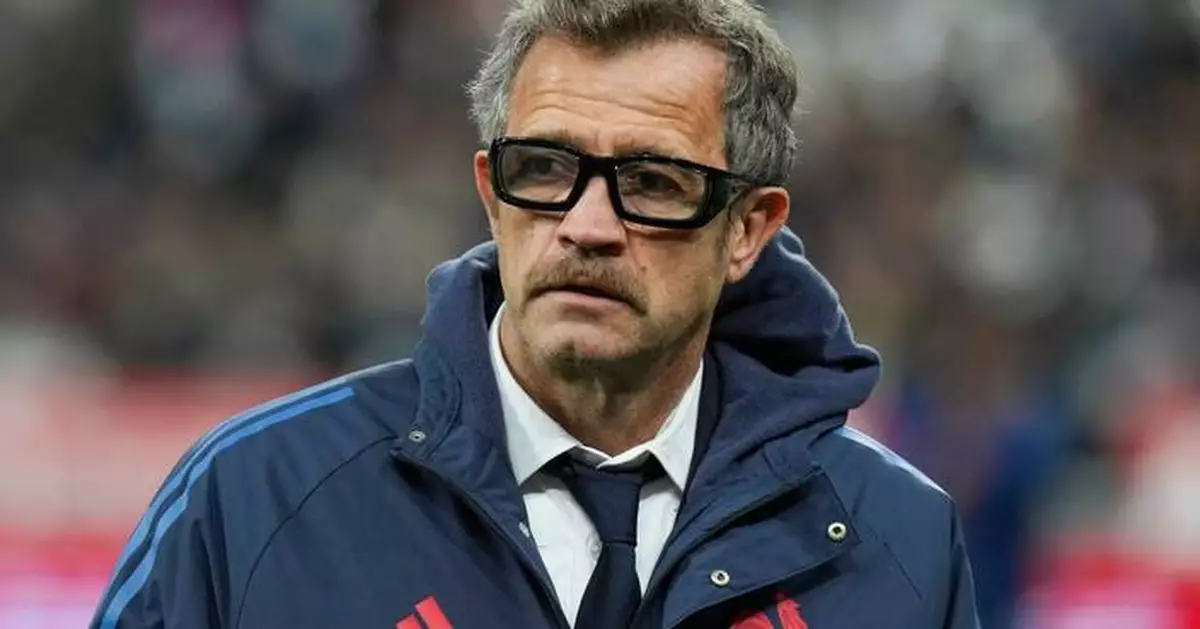
FILE - France's coach Fabien Galthié watches as his players warm up ahead of the Autumn Nations Series rugby international between France and Argentina at the Stade de France stadium at Saint-Denis on the outskirts of Paris, Friday, Nov. 22, 2024. (AP Photo/Thibault Camus, File)
WASHINGTON (AP) — A day after the audacious U.S. military operation in Venezuela, President Donald Trump on Sunday renewed his calls for an American takeover of the Danish territory of Greenland for the sake of U.S. security interests, while his top diplomat declared the communist government in Cuba is “in a lot of trouble.”
The comments from Trump and Secretary of State Marco Rubio after the ouster of Venezuela's Nicolás Maduro underscore that the U.S. administration is serious about taking a more expansive role in the Western Hemisphere.
With thinly veiled threats, Trump is rattling hemispheric friends and foes alike, spurring a pointed question around the globe: Who's next?
“It’s so strategic right now. Greenland is covered with Russian and Chinese ships all over the place," Trump told reporters as he flew back to Washington from his home in Florida. "We need Greenland from the standpoint of national security, and Denmark is not going to be able to do it.”
Asked during an interview with The Atlantic earlier on Sunday what the U.S.-military action in Venezuela could portend for Greenland, Trump replied: “They are going to have to view it themselves. I really don’t know.”
Trump, in his administration's National Security Strategy published last month, laid out restoring “American preeminence in the Western Hemisphere” as a central guidepost for his second go-around in the White House.
Trump has also pointed to the 19th century Monroe Doctrine, which rejects European colonialism, as well as the Roosevelt Corollary — a justification invoked by the U.S. in supporting Panama’s secession from Colombia, which helped secure the Panama Canal Zone for the U.S. — as he's made his case for an assertive approach to American neighbors and beyond.
Trump has even quipped that some now refer to the fifth U.S. president's foundational document as the “Don-roe Doctrine.”
Saturday's dead-of-night operation by U.S. forces in Caracas and Trump’s comments on Sunday heightened concerns in Denmark, which has jurisdiction over the vast mineral-rich island of Greenland.
Danish Prime Minister Mette Frederiksen in a statement that Trump has "no right to annex" the territory. She also reminded Trump that Denmark already provides the United States, a fellow member of NATO, broad access to Greenland through existing security agreements.
“I would therefore strongly urge the U.S. to stop threatening a historically close ally and another country and people who have made it very clear that they are not for sale,” Frederiksen said.
Denmark on Sunday also signed onto a European Union statement underscoring that “the right of the Venezuelan people to determine their future must be respected” as Trump has vowed to “run” Venezuela and pressed the acting president, Delcy Rodriguez, to get in line.
Trump on Sunday mocked Denmark’s efforts at boosting Greenland’s national security posture, saying the Danes have added “one more dog sled” to the Arctic territory’s arsenal.
Greenlanders and Danes were further rankled by a social media post following the raid by a former Trump administration official turned podcaster, Katie Miller. The post shows an illustrated map of Greenland in the colors of the Stars and Stripes accompanied by the caption: “SOON."
“And yes, we expect full respect for the territorial integrity of the Kingdom of Denmark,” Amb. Jesper Møller Sørensen, Denmark's chief envoy to Washington, said in a post responding to Miller, who is married to Trump's influential deputy chief of staff Stephen Miller.
During his presidential transition and in the early months of his return to the White House, Trump repeatedly called for U.S. jurisdiction over Greenland, and has pointedly not ruled out military force to take control of the mineral-rich, strategically located Arctic island that belongs to an ally.
The issue had largely drifted out of the headlines in recent months. Then Trump put the spotlight back on Greenland less than two weeks ago when he said he would appoint Republican Gov. Jeff Landry as his special envoy to Greenland.
The Louisiana governor said in his volunteer position he would help Trump “make Greenland a part of the U.S.”
Meanwhile, concern simmered in Cuba, one of Venezuela’s most important allies and trading partners, as Rubio issued a new stern warning to the Cuban government. U.S.-Cuba relations have been hostile since the 1959 Cuban revolution.
Rubio, in an appearance on NBC's “Meet the Press,” said Cuban officials were with Maduro in Venezuela ahead of his capture.
“It was Cubans that guarded Maduro,” Rubio said. “He was not guarded by Venezuelan bodyguards. He had Cuban bodyguards.” The secretary of state added that Cuban bodyguards were also in charge of “internal intelligence” in Maduro’s government, including “who spies on who inside, to make sure there are no traitors.”
Trump said that “a lot” of Cuban guards tasked with protecting Maduro were killed in the operation. The Cuban government said in a statement read on state television on Sunday evening that 32 officers were killed in the U.S. military operation.
Trump also said that the Cuban economy, battered by years of a U.S. embargo, is in tatters and will slide further now with the ouster of Maduro, who provided the Caribbean island subsidized oil.
“It's going down,” Trump said of Cuba. “It's going down for the count.”
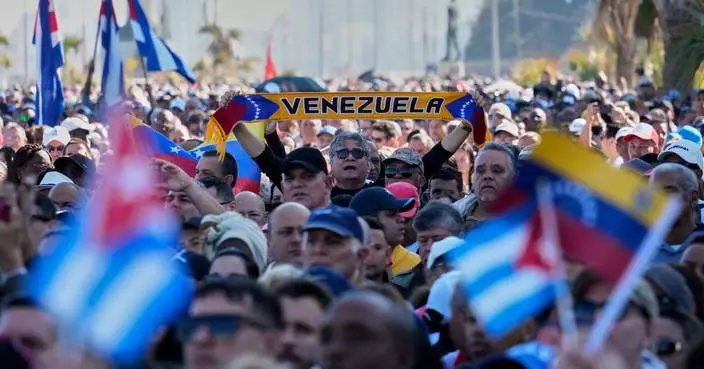
Cuban authorities called a rally in support of Venezuela’s government and railed against the U.S. military operation, writing in a statement: “All the nations of the region must remain alert, because the threat hangs over all of us.”
Rubio, a former Florida senator and son of Cuban immigrants, has long maintained Cuba is a dictatorship repressing its people.
“This is the Western Hemisphere. This is where we live — and we’re not going to allow the Western Hemisphere to be a base of operation for adversaries, competitors, and rivals of the United States," Rubio said.
Cubans like 55-year-old biochemical laboratory worker Bárbara Rodríguez were following developments in Venezuela. She said she worried about what she described as an “aggression against a sovereign state.”
“It can happen in any country, it can happen right here. We have always been in the crosshairs,” Rodríguez said.
AP writers Andrea Rodriguez in Havana, Cuba, and Darlene Superville traveling aboard Air Force One contributed reporting.
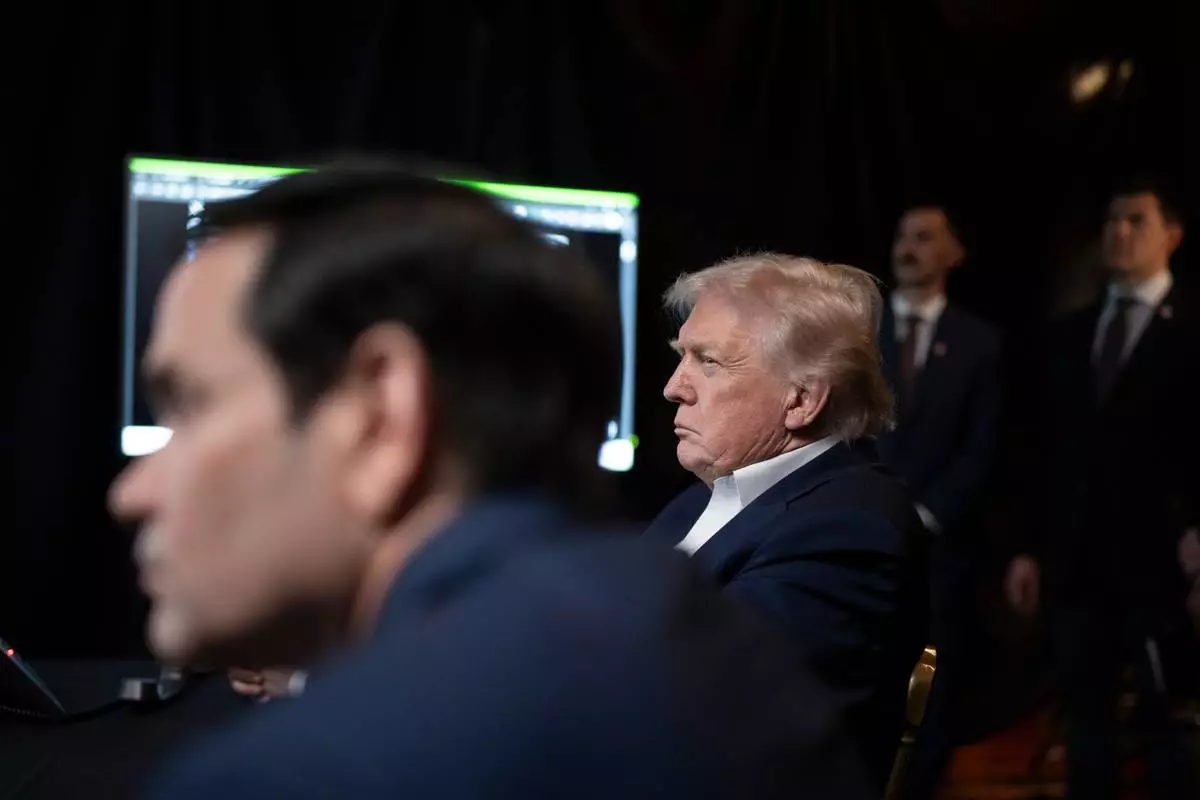
In this photo released by the White House, President Donald Trump monitors U.S. military operations in Venezuela, with Secretary of State Marco Rubio at Mar-a-Lago in Palm Beach, Fla., Saturday, Jan. 3, 2026. (Molly Riley/The White House via AP)