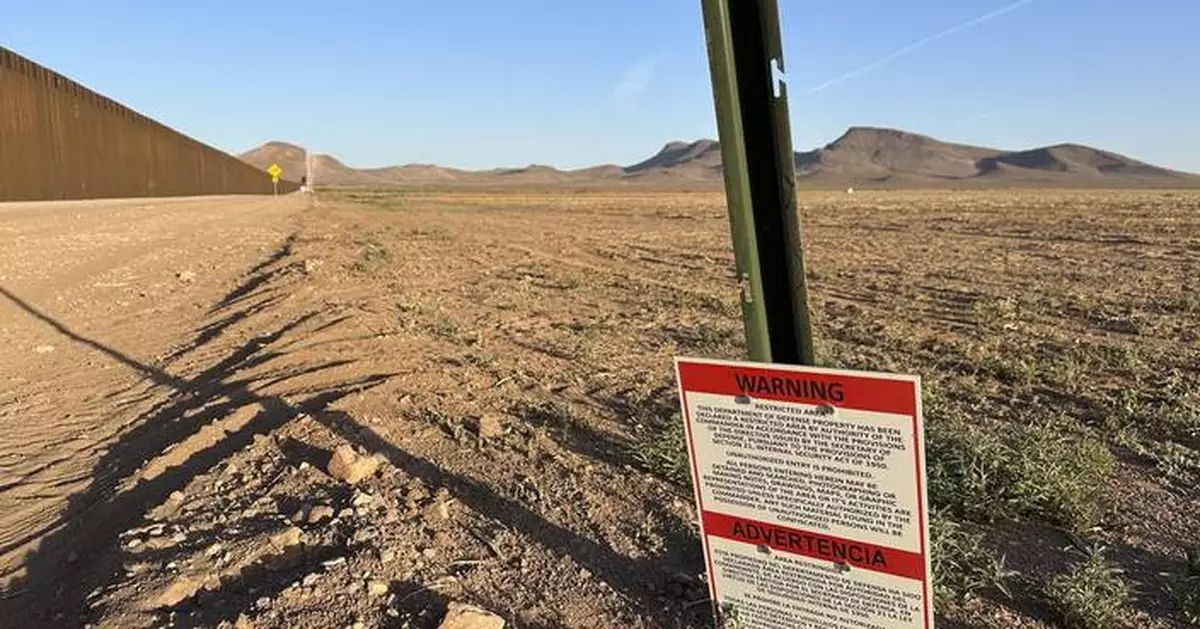
COLUMBUS, N.M. (AP) — Orange no-entry signs posted by the U.S. military in English and Spanish dot the New Mexico desert, where a border wall cuts past onion fields and parched ranches with tufts of tall grass growing amidst wiry brush and yucca trees.
The Army has posted thousands of the warnings in New Mexico and western Texas, declaring a “restricted area by authority of the commander.” It’s part of a major shift that has thrust the military into border enforcement with Mexico like never before.
Click to Gallery
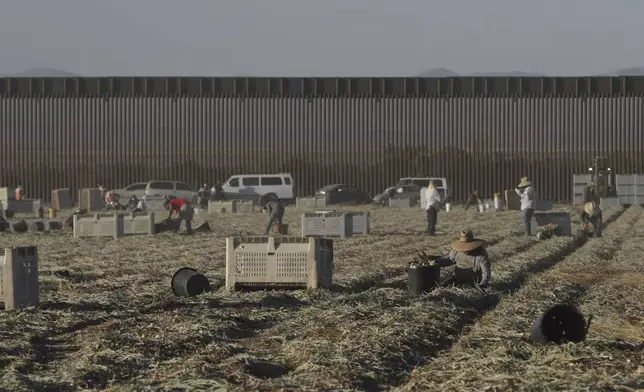
Seasonal laborers harvest onions on a privately owned ranch along the southern U.S. border in an unincorporated area 15 miles west of Columbus, N.M., on June 12, 2025. (AP Photo/Morgan Lee)
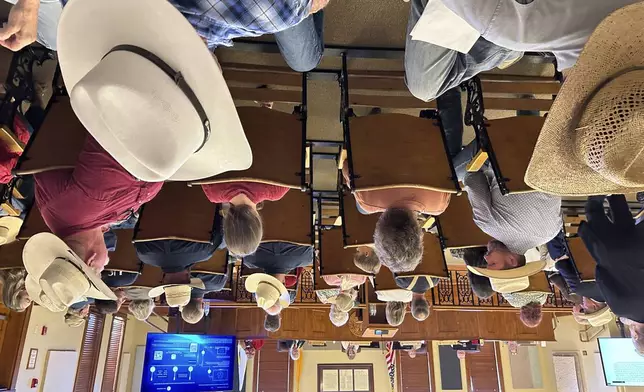
Tensions run high over management of federal public lands and wildlife at a Luna County Commission meeting in Deming, N.M., on June 12, 2025. (AP Photo/Morgan Lee)
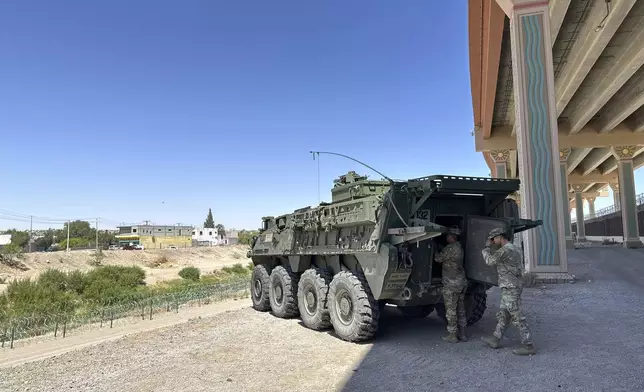
A military transport and surveillance vehicle is parked in a newly designated national defense area on June 11, 2025, along the southern U.S. border in El Paso, Texas. (AP Photo/Morgan Lee)
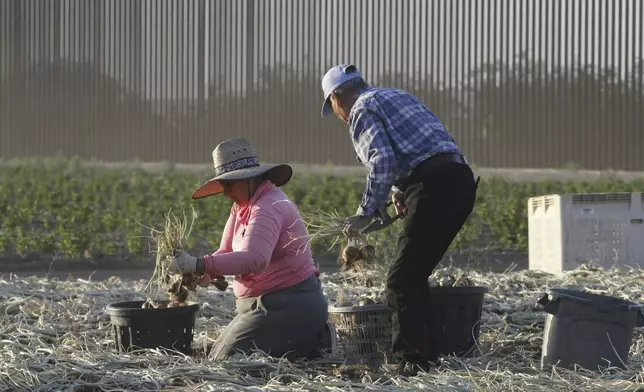
Seasonal laborers harvest onions on a privately owned ranch along the southern U.S. border in an unincorporated area 15 miles west of Columbus, N.M., on June 12, 2025. (AP Photo/Morgan Lee)
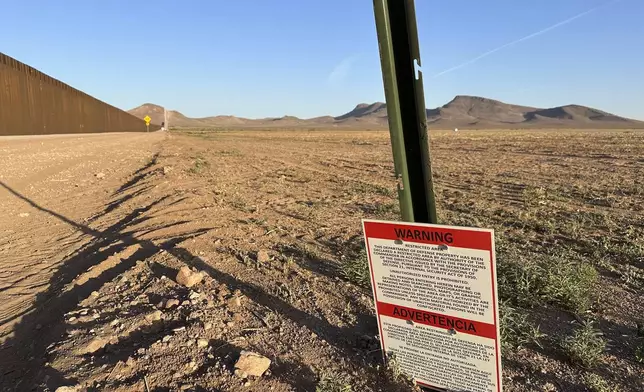
A sign warns against unauthorized entry into a militarized zone along the southern U.S. border in New Mexico on June 12, 2025. (AP Photo/Morgan Lee)
The move places long stretches of the border under the supervision of nearby military bases, empowering U.S. troops to detain people who enter the country illegally and sidestep a law prohibiting military involvement in civilian law enforcement. It is done under the authority of the national emergency on the border declared by President Donald Trump on his first day in office.
U.S. authorities say the zones are needed to close gaps in border enforcement and help in the wider fight against human smuggling networks and brutal drug cartels.
The militarization is being challenged in court, and has been criticized by civil rights advocates, humanitarian aid groups and outdoor enthusiasts who object to being blocked from public lands while troops have free rein.
Abbey Carpenter, a leader of a search-and-rescue group for missing migrants, said public access is being denied across sweltering stretches of desert where migrant deaths have surged.
“Maybe there are more deaths, but we don’t know," she said.
Two militarized zones form a buffer along 230 miles (370 kilometers) of border, from Fort Hancock, Texas, through El Paso and westward across vast New Mexico ranchlands.
The Defense Department added an additional 250-mile (400-kilometer) zone last week in Texas’ Rio Grande Valley and plans another near Yuma, Arizona. Combined, the zones will cover nearly one-third of the U.S. border with Mexico.
They are patrolled by at least 7,600 members of the armed forces, vastly expanding the U.S. government presence on the border.
Reaction to the military buffer has been mixed among residents of New Mexico's rural Luna County, where a strong culture of individual liberty is tempered by the desire to squelch networks bringing migrants and contraband across the border.
“We as a family have always been very supportive of the mission, and very supportive of border security,” said James Johnson, a fourth-generation farmer overseeing seasonal laborers as they filled giant plastic crates with onions, earning $22 per container.
Military deployments under prior presidents put “eyes and ears” on the border, Johnson said. This version is “trying to give some teeth.”
But some hunters and hikers fear they’re being locked out of a rugged and cherished landscape.
“I don’t want to go down there with my hunting rifle and all of a sudden somebody rolls up on me and says that I’m in a military zone,” said Ray Trejo, a coordinator for the New Mexico Wildlife Federation and a Luna County commissioner. “I don’t know if these folks have been taught to deescalate situations.”
A former public school teacher of English as a second language, Trejo said military trespassing charges seem inhumane in an economy built on immigrant farm labor.
“If the Army, Border Patrol, law enforcement in general are detaining people for reasons of transporting, of human smuggling, I don’t have a problem,” he said. “But people are coming into our country to work, stepping now all of a sudden into a military zone, and they have no idea.”
Nicole Wieman, an Army command spokesperson, said the Army is negotiating possible public access for recreation and hunting, and will honor private rights to grazing and mining.
More than 1,400 migrants have been charged with trespassing on military territory, facing a possible 18-month prison sentence for a first offense. That’s on top of an illegal entry charge that brings up to six months in custody. After that, most are turned over to U.S. Customs and Border Protection for likely deportation. There have been no apparent arrests of U.S. citizens.
At a federal courthouse in Las Cruces, New Mexico, on the banks of the Upper Rio Grande, migrants in drab county jail jumpsuits and chains filed before a magistrate judge on a recent weekday.
A 29-year-old Guatemalan woman struggled to understand instructions through a Spanish interpreter as she pleaded guilty to illegal entry. A judge set aside military trespassing charges for lack of evidence, but sentenced her to two weeks in jail before being transferred for likely deportation.
“She sells pottery, she’s a very simple woman with a sixth-grade education,” a public defense attorney told the judge. “She told me she’s going back and she’s going to stay there.”
Border Patrol arrests along the southern border this year have dropped to the lowest level in six decades, including a 30% decrease in June from the prior month as attempted crossings dwindle. On June 28, the Border Patrol made only 137 arrests, a stark contrast with late 2023, when arrests topped 10,000 on the busiest days.
The first militarized zones, introduced in April and May, extend west of El Paso past factories and cattle yards to partially encircle the New Mexico border village of Columbus, and its 1,450 residents. It was here that Mexican revolutionary forces led by Pancho Villa crossed into the U.S. in a deadly 1916 raid.
These days, a port of entry at Columbus is where hundreds of children with U.S. citizenship cross daily from a bedroom community in Mexico to board public school buses and attend classes nearby.
Columbus Mayor Philip Skinner, a Republican, says he's seen the occasional military vehicle but no evidence of disruption in an area where illegal crossings have been rare.
“We're kind of not tuned in to this national politics,” Skinner said.
Oversight is divided between U.S. Army commands in Fort Bliss, Texas, and Fort Huachuca, Arizona. The militarized zones sidestep the Posse Comitatus Act, an 1878 law that prohibits the military from conducting civilian law enforcement on U.S. soil.
Russell Johnson, a rancher and former Border Patrol agent, said he welcomes the new militarized zone where his ranch borders Mexico on land leased from the Bureau of Land Management.
“We have seen absolutely almost everything imaginable that can happen on the border, and most of it’s bad,” he said, recalling off-road vehicle chases on his ranch and lifeless bodies recovered by Border Patrol.
In late April, he said, five armored military vehicles spent several days at a gap in the border wall, where construction was suspended at the outset of the Biden presidency. But, he said, he hasn't seen much of the military in recent weeks.
“The only thing that’s really changed is the little extra signage,” he said. “We’re not seeing the military presence out here like we kind of anticipated."
Federal public defenders have challenged the military's new oversight of public land in New Mexico, seizing on the arrest of a Mexican man for trespassing through remote terrain to test the legal waters.
They decried the designation of a new military zone without congressional authorization “for the sole purpose of enabling military action on American soil” as "a matter of staggering and unpreceded political significance.” A judge has not ruled on the issue.
In the meantime, court challenges to trespassing charges in the militarized zone have met with a mixture of convictions and acquittals at trial.
Ryan Ellison, the top federal prosecutor in New Mexico, won trespassing convictions in June against two immigrants who entered a militarized zone again after an initial warning. “There’s not going to be an issue as to whether or not they were on notice,” he told a recent news conference.
American Civil Liberties Union attorney Rebecca Sheff says the federal government is testing a more punitive approach to border enforcement with the new military zones and worries it will be expanded border-wide.
“To the extent the federal government has aspirations to establish a much more hostile military presence along the border, this is a vehicle that they’re pushing on to potentially do so. … And that’s very concerning,” she said.
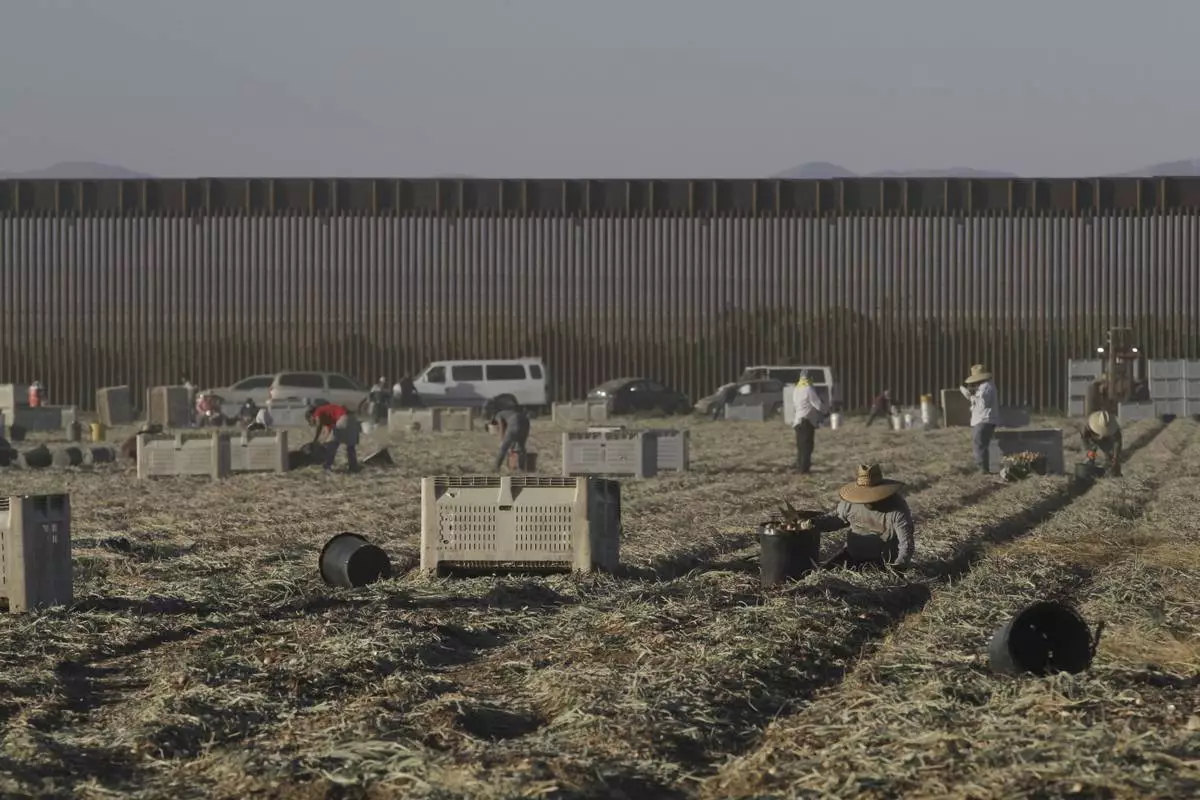
Seasonal laborers harvest onions on a privately owned ranch along the southern U.S. border in an unincorporated area 15 miles west of Columbus, N.M., on June 12, 2025. (AP Photo/Morgan Lee)
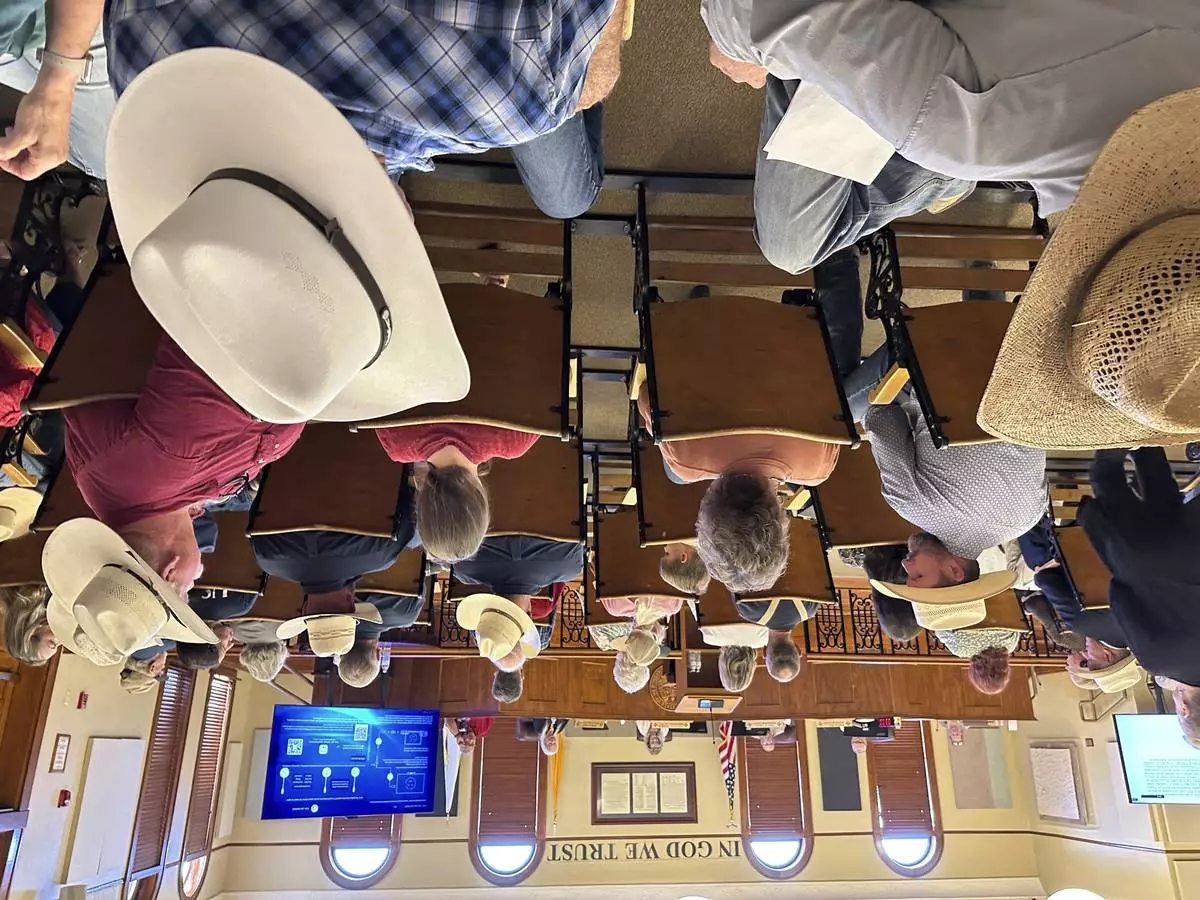
Tensions run high over management of federal public lands and wildlife at a Luna County Commission meeting in Deming, N.M., on June 12, 2025. (AP Photo/Morgan Lee)
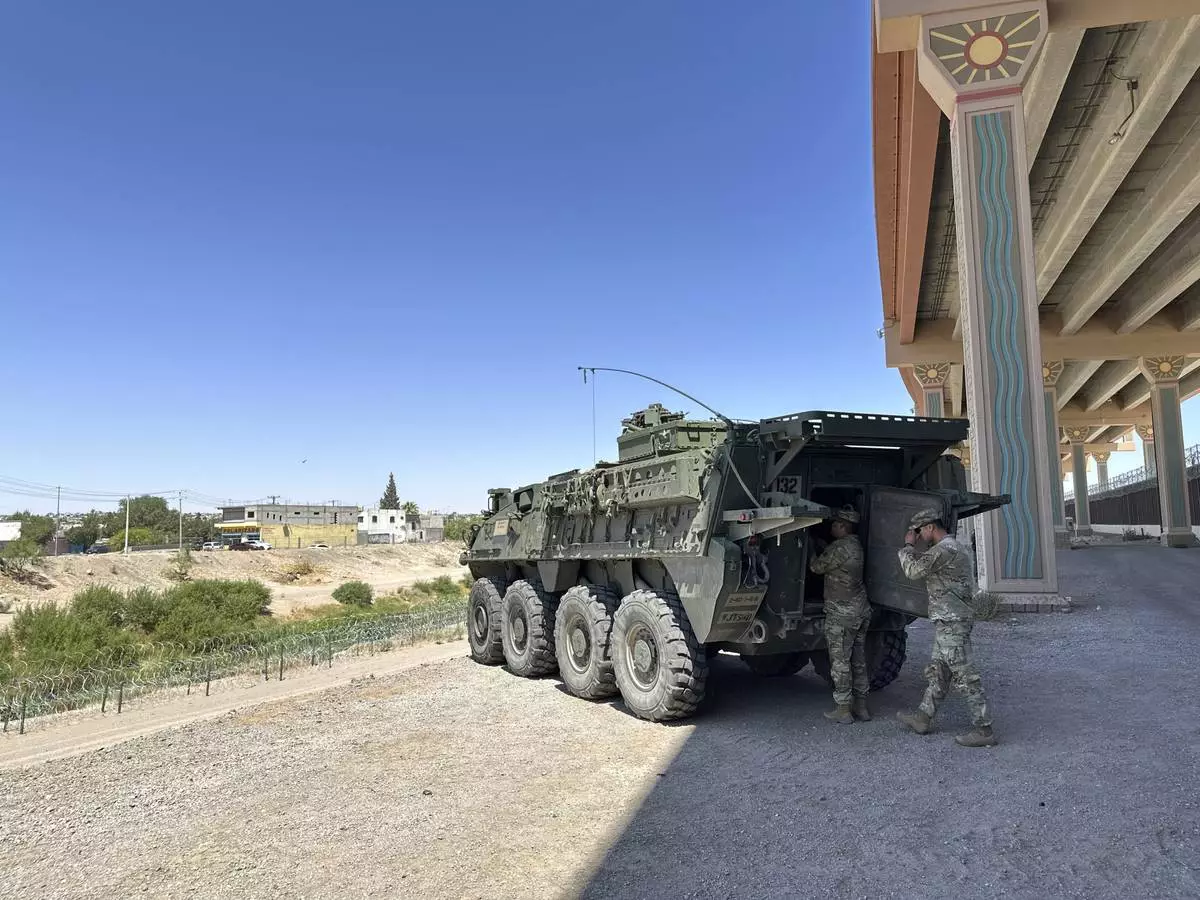
A military transport and surveillance vehicle is parked in a newly designated national defense area on June 11, 2025, along the southern U.S. border in El Paso, Texas. (AP Photo/Morgan Lee)
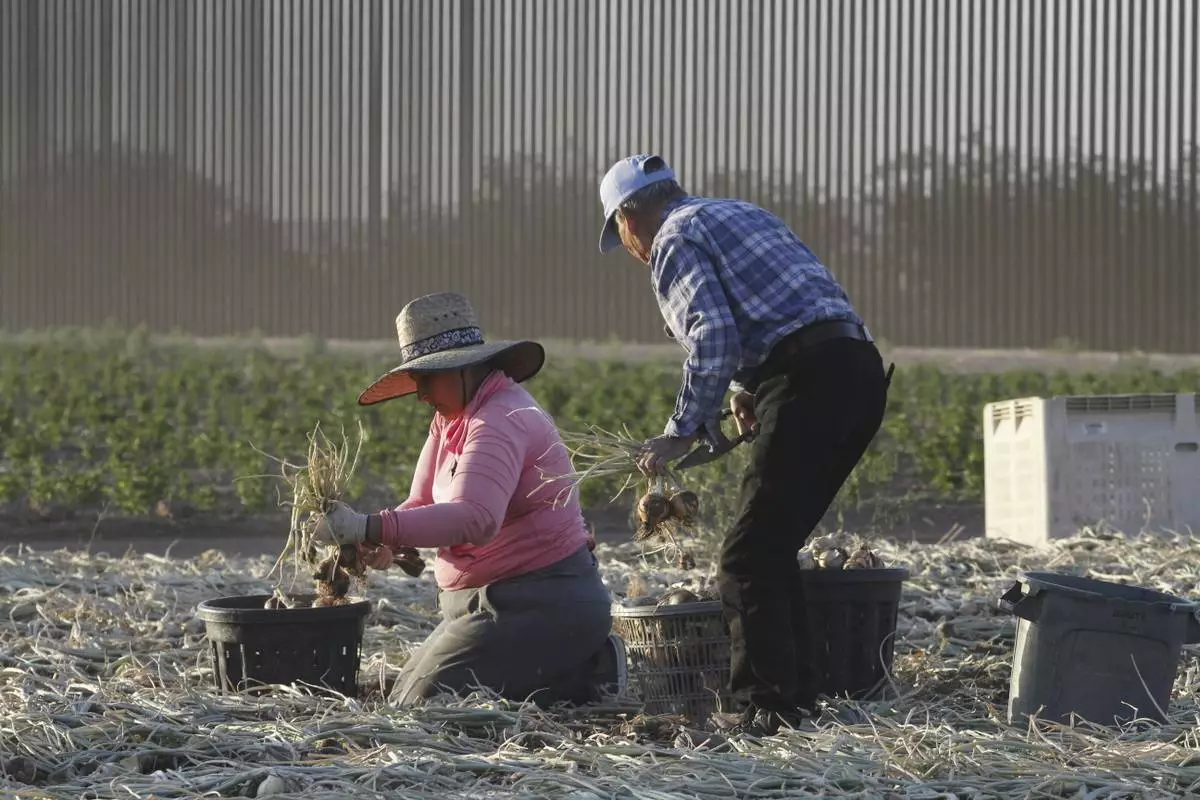
Seasonal laborers harvest onions on a privately owned ranch along the southern U.S. border in an unincorporated area 15 miles west of Columbus, N.M., on June 12, 2025. (AP Photo/Morgan Lee)
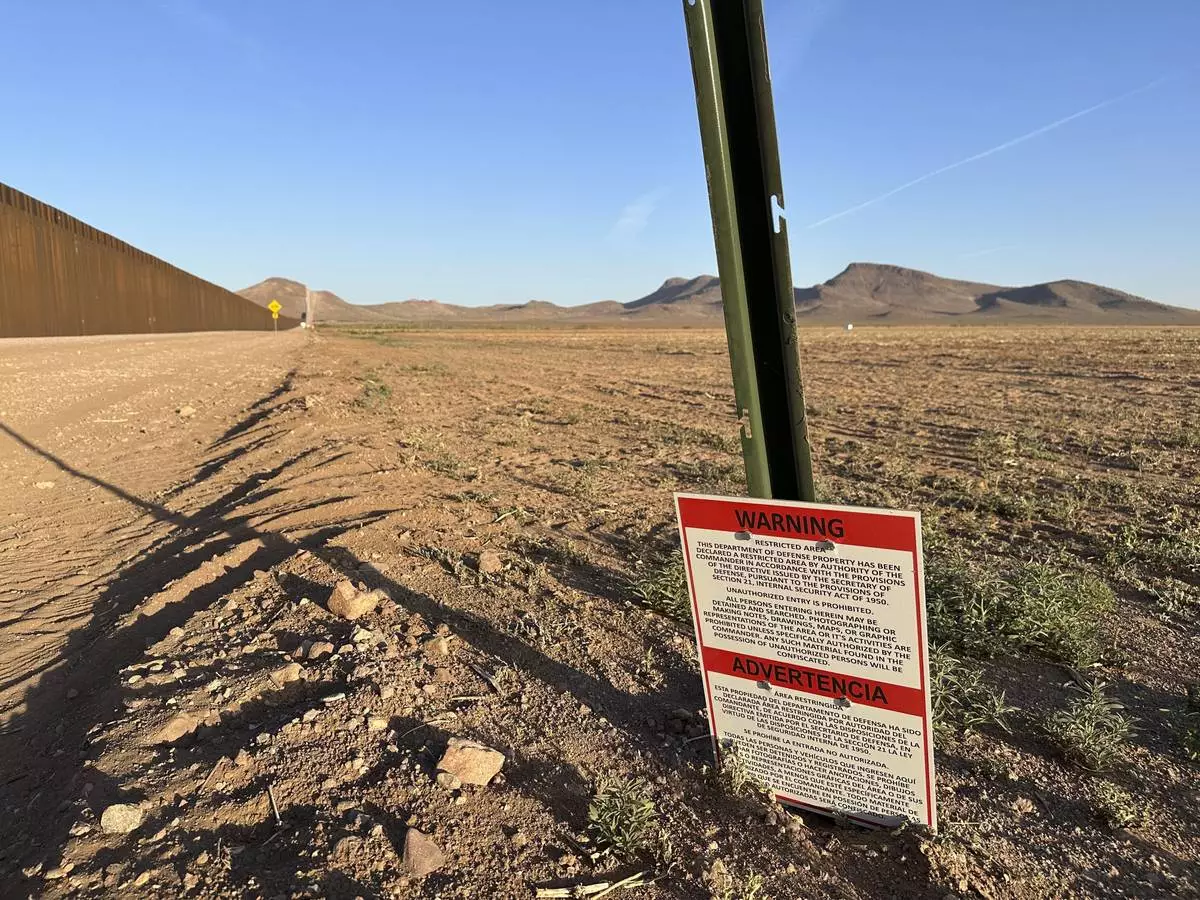
A sign warns against unauthorized entry into a militarized zone along the southern U.S. border in New Mexico on June 12, 2025. (AP Photo/Morgan Lee)