COLUMBUS, N.M. (AP) — The military is expanding its authority and reach along swaths of the southern U.S. border where troops have been empowered to detain people who enter the country illegally.
Designated militarized zones will soon cover nearly one-third of the U.S. border with Mexico under supervision of nearby military bases. Federal prosecutors have filed criminal trespassing charges in the militarized terrain against more than 1,400 people, adding to possible consequences for people who cross the border illegally.
Reaction to the military buffer has been mixed among residents of New Mexico’s rural Luna County, where a strong culture of individual liberty is tempered by the desire to tame networks that ferry migrants and contraband across the border.
Some farmers and ranchers have welcomed the military's expanded mission. But the changes also are being challenged in court and questioned by civil rights advocates and outdoor enthusiasts including hunters and hikers who fear they'll be locked out of public lands.
The first two militarized zones, introduced in April and May, extend along 230 miles (370 kilometers) of border. The buffer runs from Fort Hancock, Texas, through El Paso and westward past factories and cattle yards to partially encircle the New Mexico border village of Columbus, where in 1916 Mexican revolutionary forces led by Pancho Villa crossed into the U.S. in a deadly predawn raid.
The Army has posted thousands of no-entry signs across the region, declaring a “restricted area by authority of the commander.”
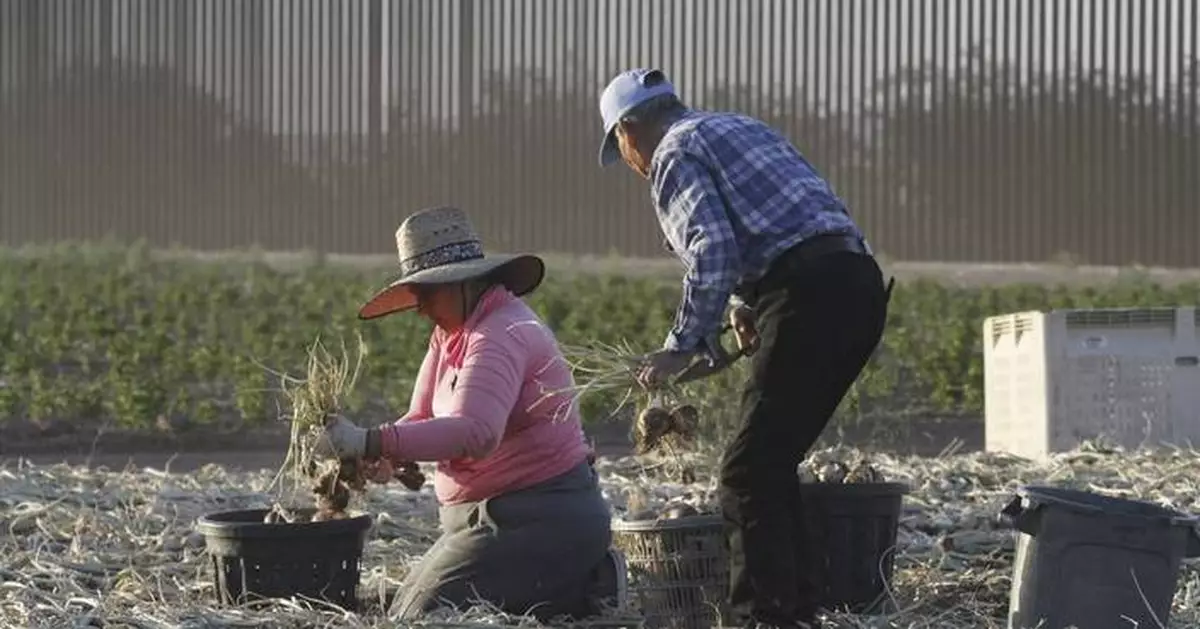
James Johnson, a fourth-generation local farmer, oversees the summer harvests on private farmland along 5 miles (8 kilometers) of the border.
He says the military deployments under prior presidents put “eyes and ears” on the border and that the new approach is “trying to give some teeth” to enforcement.
Luna County Commissioner Ray Trejo says he and other hunters are worried about their rights to carry firearms and harvest game from the newly designated militarized zones. He sees the new trespassing charges as inhumane in an economy built on immigrant farm labor.
“People are coming into our country to work, stepping now all of a sudden into a military zone, and they have no idea,” he said.
Abbey Carpenter leads a search-and-rescue group for missing migrants and says public access is being denied across sweltering stretches of desert where migrant deaths have surged.
“Maybe there are more deaths, but we don’t know,” she said.
Border Patrol arrests along the southern border this year have dropped to the slowest pace since 1966, including a 30% drop in June.
On June 28, the Border Patrol made only 137 arrests, a stark contrast with late 2023 when arrests topped 10,000 on the busiest days.
Thwarted attempts to cross have plunged not only since Trump took office but also previously when President Joe Biden introduced severe asylum restrictions in June 2024, and when Mexican officials increased enforcement within their own borders in December 2023.
At least 7,600 members of the armed forces have vastly expanded the U.S. government presence on the border.
The Defense Department last week added an additional 250-mile (400-kilometer) militarized area in Texas’ Rio Grande Valley and plans another near Yuma, Arizona. Combined, the four zones will cover nearly one-third of the U.S. border with Mexico.
The new militarized zones are tied to President Donald Trump's declaration of a national emergency on the border on his first day in office this year.
The moves are being challenged in proceedings at a federal courthouse in Las Cruces on the banks of the Upper Rio Grande, with mixed outcomes.
Migrants in drab county jail jumpsuits and chains filed before a magistrate judge on a recent weekday. They included a 29-year-old woman from Guatemala who sells pottery for a living. Military trespassing charges against her were dismissed for lack of evidence, but a conviction for illegal entry resulted in a two-week jail sentence before likely deportation.
In separate proceedings, a federal public defender's office has challenged the military’s new oversight of public land at the border in New Mexico — an area nearly twice the size of Washington, D.C., — seizing on the arrest of one Mexican man for trespassing through remote terrain to test the legal waters.
It says the designation of a militarized zone in New Mexico without congressional authorization is “a matter of staggering and unprecedented political significance.” A judge has yet to rule on the arguments.
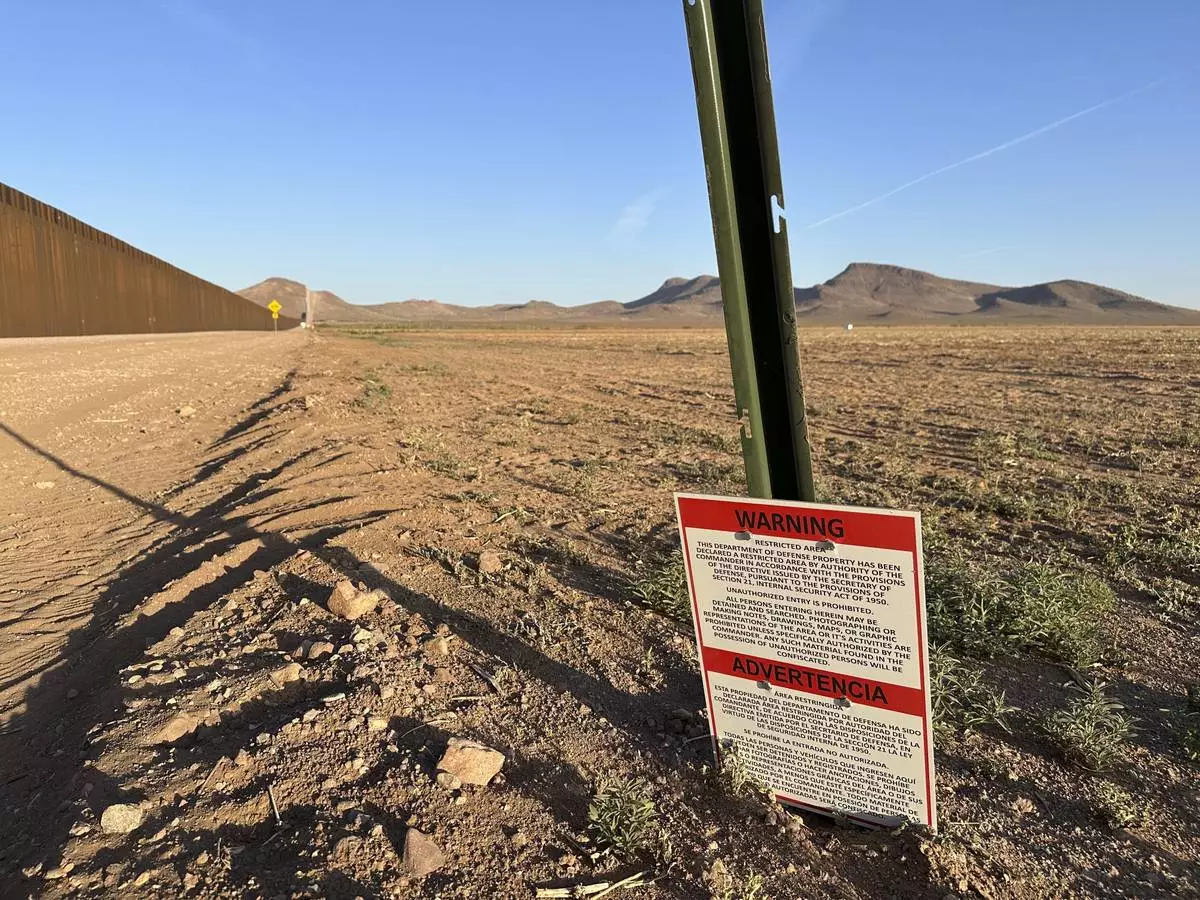
A sign warns against unauthorized entry into a militarized zone along the southern U.S. border in New Mexico on June 12, 2025. (AP Photo/Morgan Lee)
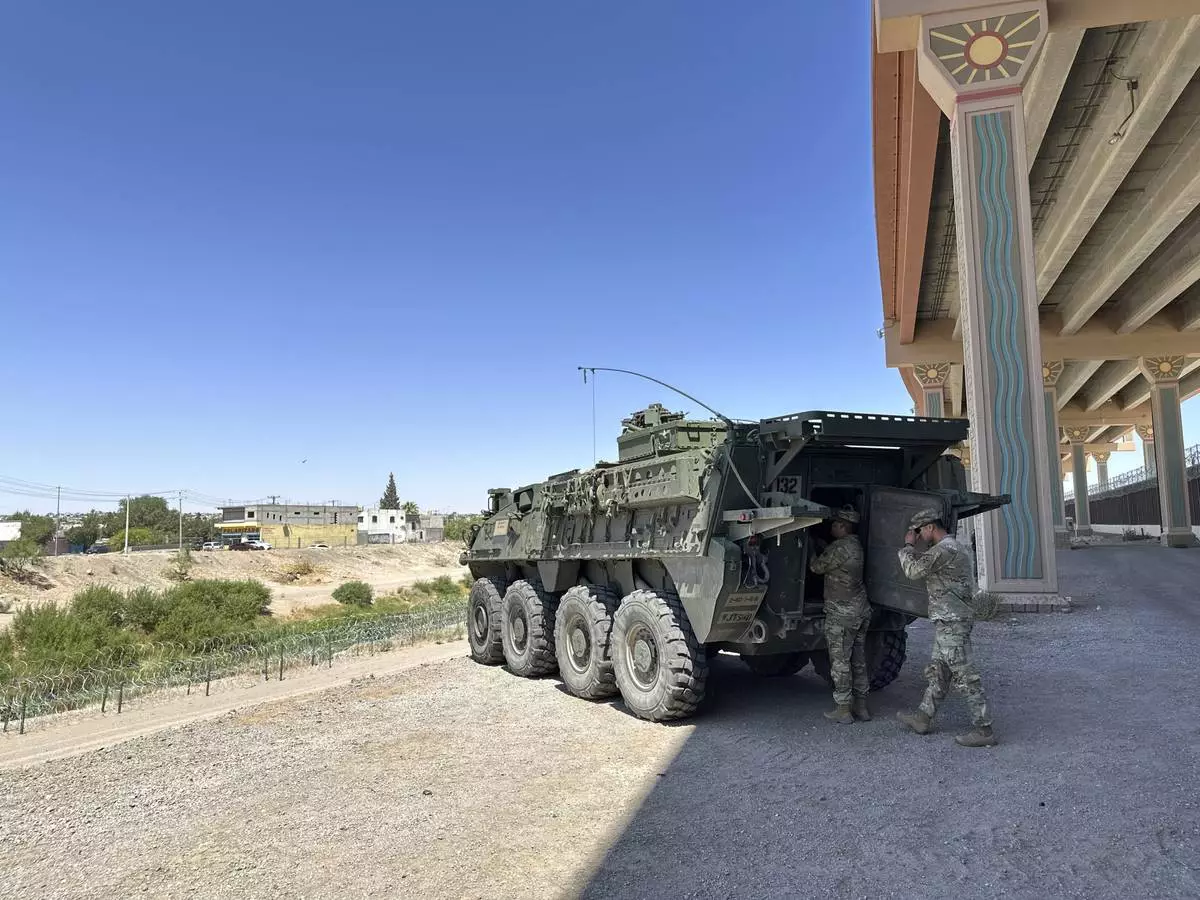
A military transport and surveillance vehicle is parked in a newly designated national defense area on June 11, 2025, along the southern U.S. border in El Paso, Texas. (AP Photo/Morgan Lee)
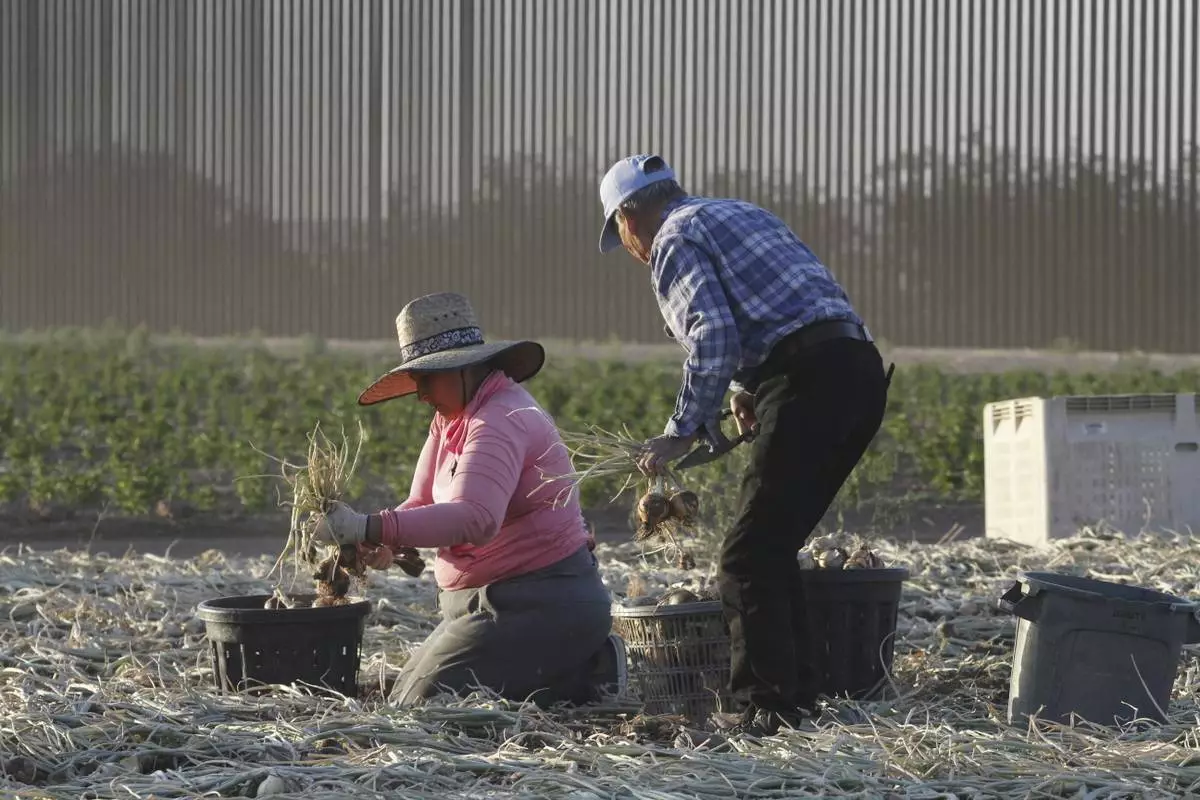
Seasonal laborers harvest onions on a privately owned ranch along the southern U.S. border in an unincorporated area 15 miles west of Columbus, N.M., on June 12, 2025. (AP Photo/Morgan Lee)