Skip to Content Facebook Feature Image

Shu brocade reignites fashion industry in China

China

China

China

Shu brocade reignites fashion industry in China

2025-07-04 16:52 Last Updated At:17:07

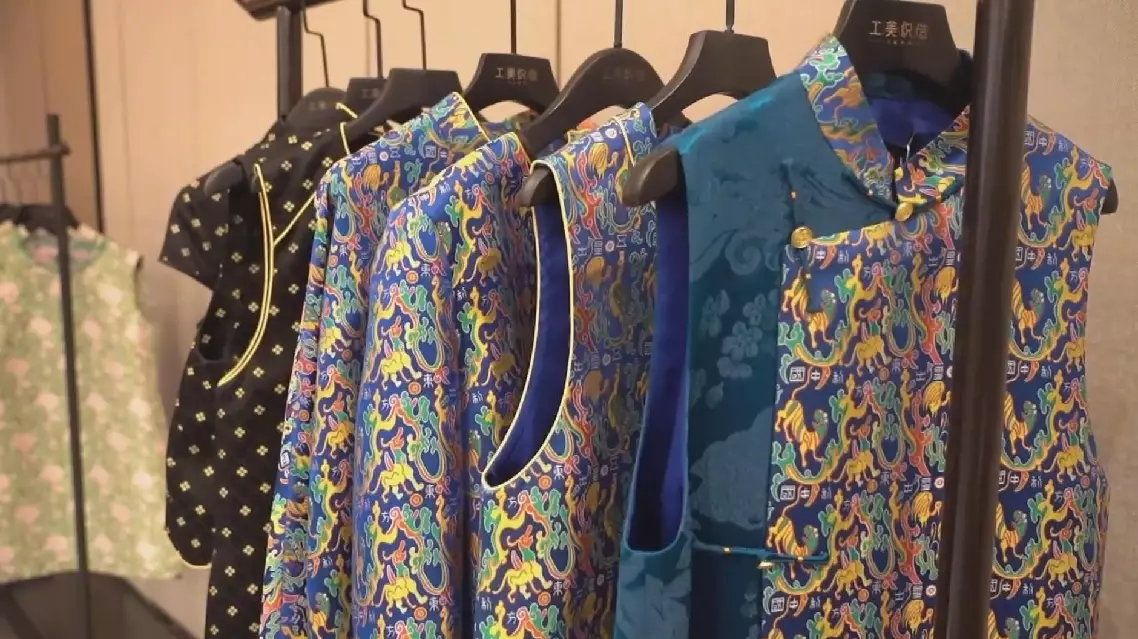
Shu brocade is weaving its way into the future of Chinese cultural confidence as designers in southwest China's Sichuan Province blend this intangible cultural heritage with contemporary styles, creating a surge in demand that has turned the fabric into a luxury trend.

As the main production hub of this fabric, Sichuan's provincial capital Chengdu is now integrating this traditional craft with modern fashion items.

With the help of e-commerce platforms and cross-border exhibitions, Shu brocade garment companies have built a global sales network.

One company, which only started its Shu brocade business in November last year, has achieved daily sales of 100,000 yuan (13,957 U.S. dollars) to 150,000 yuan (20,935 U.S. dollars) within seven months.

Supported by the coordinated development of the textile industry, digital economy and fashion sector, Shu brocade clothing has become a new fashion trend in western China.

Currently, China's fashion consumption is moving toward building a brand ecosystem that reflects cultural confidence.

Intangible cultural heritage skills like Shu brocade are being transformed into fashion elements, fostering deeper industrial chain integration through diverse application scenarios.

"Chengdu has rolled out policies to promote the high-level preservation and high-quality development of Shu brocade and Shu embroidery. In the second half of this year, Chengdu will also host events like the Chengdu Fashion Week and the Chengdu Fashion Industry Development Conference to guide traditional consumer goods industries toward transformation into the fashion sector," said Xiong Danyi, director of the Light Industry Division of the Chengdu New Economic Development Commission under the Chengdu Municipal Bureau of Economic and Information Technology.

The Shu brocade holds a significant position as one of the world's earliest brocade fabrics.

In China, the Shu brocade, together with the Song brocade, Yun brocade, and Zhuang brocade, are listed as the four most famous brocades.

Weaving brocade is a highly intricate and labor-intensive craft that demands exceptional skill and patience. According to the historical records from the Han Dynasty (202 BC-220 AD), "it takes 60 days to weave around 33 meters of brocade." Even the experienced weavers at that time could only weave about 13 centimeters of brocade in a day.
Shu brocade reignites fashion industry in China

Shu brocade reignites fashion industry in China

The Iranian government is focusing on public concerns and maintaining stable supplies of essential goods amid recent protests, Iranian President Masoud Pezeshkian said in a televised interview on Sunday.

In the city of Karaj, northwest of the capital Tehran, daily life has largely continued as normal. A video filmed by a local resident on Sunday shows food stores open and grocery shelves fully stocked.

"This is the block near my home, and there are some food stores here. Daily life continues here. Last night we did not see many protests in Karaj. Right now the city is very safe. This is a grocery store close to my home. All the food is available; nothing is in shortage. Here are noodles and different types of beans. Here are dairy products, cheese, and yogurt. I also checked other grocery stores and didn't see any shortages. Everything is available," said local resident Ali Reza.

Iranian officials have described recent disturbances as acts orchestrated by the "enemy," including some carried out by well-trained and armed "terrorists." The incidents have caused casualties among security personnel and civilians, as well as property damage.

The Secretary of Iran's Supreme National Security Council Ali Larijani has directed authorities to severely punish the "terrorists."

Meanwhile, Iran's police chief Ahmad-Reza Radan said on Sunday that the police had raised alert levels and arrested several leaders of the troublemakers during the operations on Saturday.

President Pezeshkian noted in the interview that the normal demands of the Iranian people are reasonable and justified, but they must realize that triggering riots and carrying out terrorist acts are the enemy's attempts to undermine the country. He urged the public to remain vigilant.

Also on Sunday, Iranian Parliament Speaker Mohammad Baqer Qalibaf warned that Tehran would regard U.S. and Israeli bases and facilities in the Middle East as "legitimate targets" if Washington takes military action against Iran. His remarks followed media reports saying U.S. President Donald Trump is "seriously considering authorizing a strike" against Iran.

Iranian state media reported that at least 109 members of Iran's security forces have been killed in clashes since the protests began 14 days ago. Meanwhile, human rights groups based outside the country said the number of protesters killed has exceeded 200, though the figure could not be independently verified.

The protests initially erupted over a sharp depreciation of the rial and sweeping subsidy reforms. Iranian authorities have blamed the unrest on foreign-linked agents and sanctions imposed by the United States.

Iranian president says government focusing on ensuring supplies amid protests

Iranian president says government focusing on ensuring supplies amid protests

Recommended Articles