French scientists are harnessing China's shared lunar samples to unlock new frontiers in their Moon research, accelerating breakthroughs in planetary science.
In 2023, the China National Space Administration (CNSA) presented Russia and France with lunar samples for scientific purposes, with France receiving 1.5 grams of samples.
Under lock and key at the Paris Institute of Earth Physics, a tiny fragment, barely a speck to the eye, is part of the 1.7-kilogram haul brought back from the Moon by China's landmark Chang'e-5 mission in 2020.
Estimated to be around two billion years old, it holds clues to a chapter of lunar history never seen before.
"Because most of the Lunar samples we had are very old and we are basing our understanding of the surface of the Moon (on samples). When you look at the Moon you have plenty of craters, and we use the age of the rocks to try to calibrate how many craters you have at different ages. I think these very young samples can really fill up the gap for longer ages to get a much better chronology of the surface of the Moon," said Frederic Moynier, professor of the Paris Institute of Earth Physics.
Inside the labs of the university, preparations are underway to begin testing within weeks.
Moynier and his team are focusing on one of the Moon's biggest mysteries.
"My science has been to understand why the Moon which is so close to Earth has no water, when the Earth is covered in water. So, all my research before was based on the Apollo samples. So, what I want to do on this sample is look at water, hydrogen, volatile elements to try to understand better how the Moon is formed," he said.
The team will also compare this fragment with other lunar samples to map the Moon's interior and reconstruct its volcanic timeline, rendering data that could refine future lunar missions.
Long Zhengyu, a Chinese PhD student, said the shared samples have bolstered scientific cooperation between the two countries.
"I think because China and France, right now they have a very good connection and relationship between the two countries. So it is a good opportunity for our students to do such research," he said.
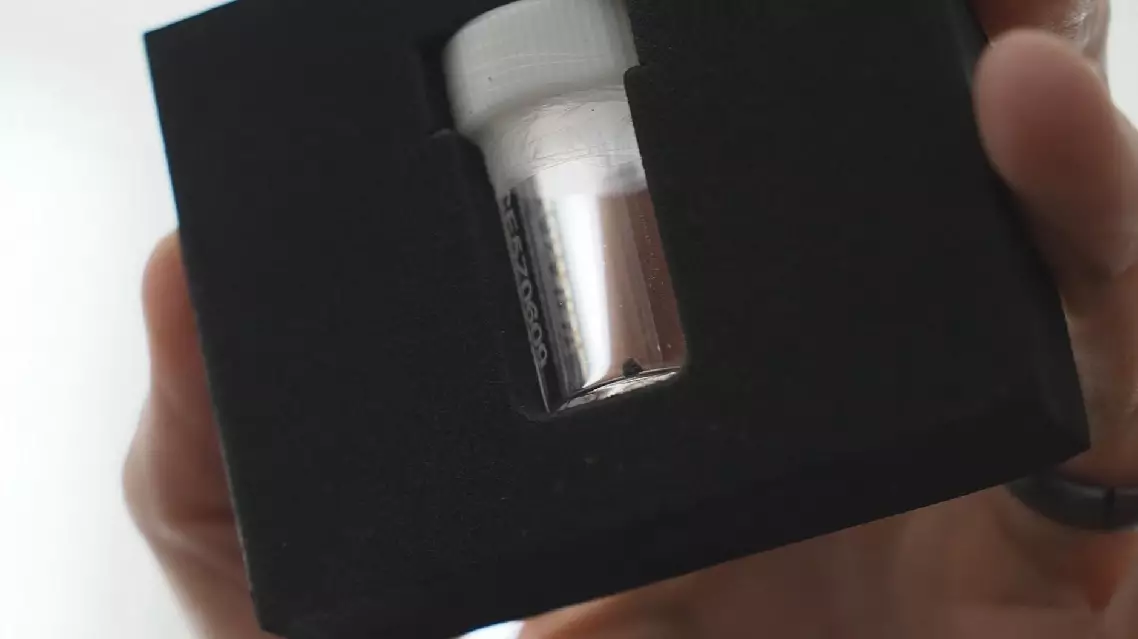
French scientists utilize China-shared lunar samples to advance Moon research