VATICAN CITY (AP) — In his very first sermon as pontiff, Pope Leo XIV told the cardinals who elected him that anyone who exercises authority in the Catholic Church must “make oneself small,” so that only Christ remains.
In word and deed since, Leo has seemed intent on almost disappearing into the role. The shy 69-year-old Augustinian missionary has eschewed the headline-grabbing protagonism of past pontiffs in favor of a quieter, less showy and more reserved way of being pope.
Click to Gallery
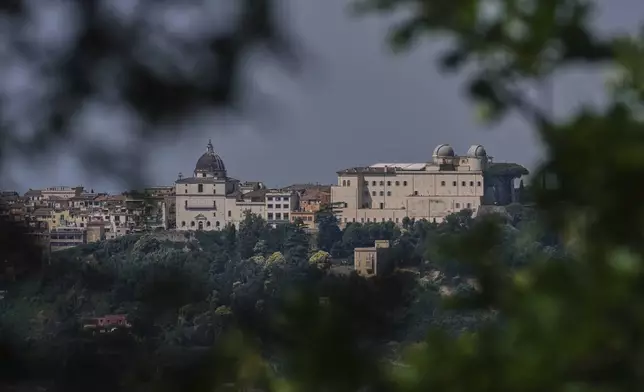
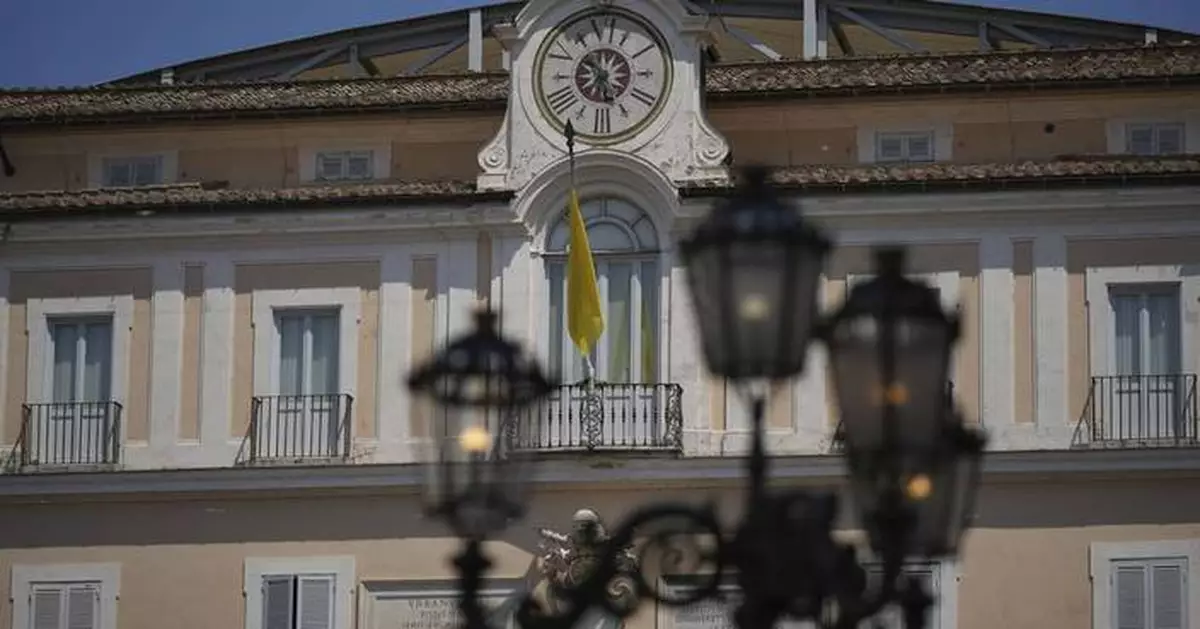
A view of the Papal or Apostolic Palace, a historic summer retreat for popes in the lakeside town of Castel Gandolfo, about 30 kilometers southeast of Rome, where Pope Leo XIV will be spending a short period of rest, is seen on Wednesday, July 2, 2025. (AP Photo/Andrew Medichini)
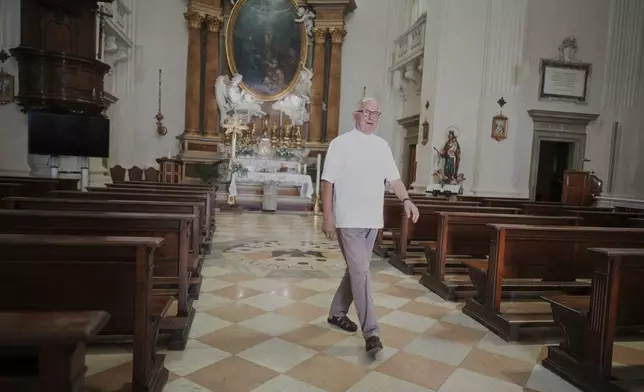
Father Tadeusz Rozmu walks in the San Tommaso da Villanova church of the town of Castel Gandolfo, a historic summer retreat for popes about 30 kilometers southeast of Rome, where Pope Leo XIV will be spending a short period of rest, is seen Wednesday, July 2, 2025. (AP Photo/Andrew Medichini)
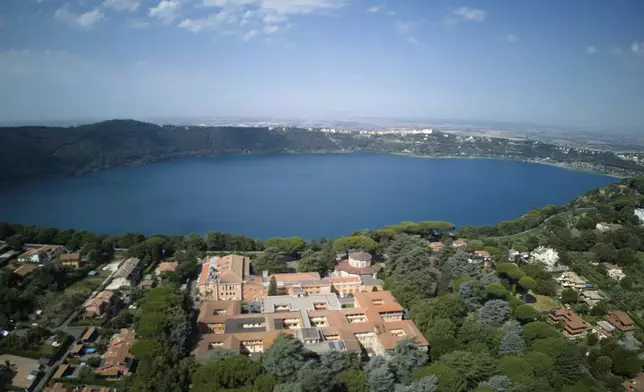
A view of the Albano Lake, about 30 kilometers southeast of Rome, where Pope Leo XIV will be spending a short period of rest in the nearby historic summer retreat for popes of Castel Gandolfo, Wednesday, July 2, 2025. (AP Photo/Andrew Medichini)
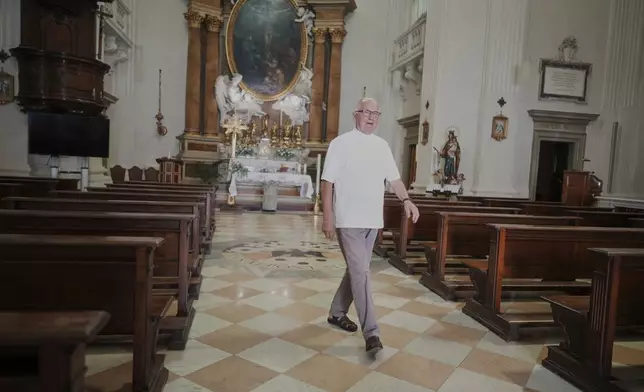
Father Tadeusz Rozmu walks in the San Tommaso da Villanova church of the town of Castel Gandolfo, a historic summer retreat for popes about 30 kilometers southeast of Rome, where Pope Leo XIV will be spending a short period of rest, is seen Wednesday, July 2, 2025. (AP Photo/Andrew Medichini)
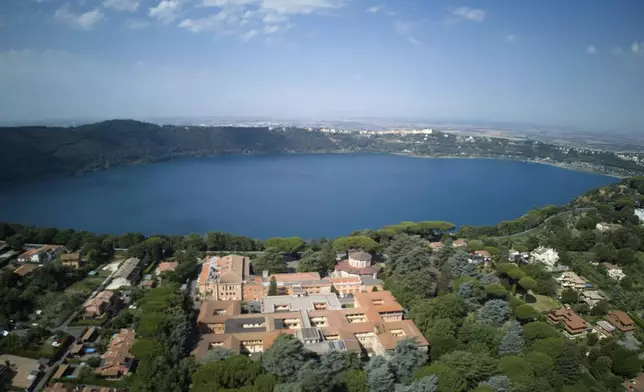
A view of the Albano Lake, about 30 kilometers southeast of Rome, where Pope Leo XIV will be spending a short period of rest in the nearby historic summer retreat for popes of Castel Gandolfo, Wednesday, July 2, 2025. (AP Photo/Andrew Medichini)
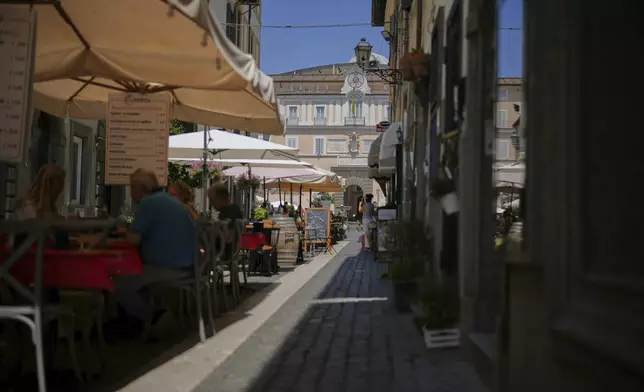
Customers have lunch at restaurants in the town of Castel Gandolfo, a historic summer retreat for popes about 30 kilometers southeast of Rome, where Pope Leo XIV will be spending a short period of rest, as seen Wednesday, July 2, 2025. (AP Photo/Andrew Medichini)
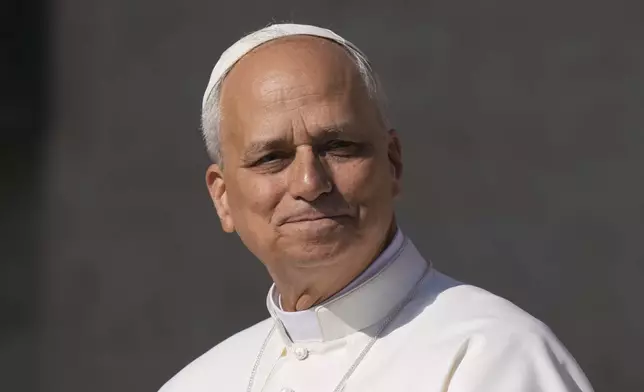
FILE - Pope Leo XIV arrives in St. Peter's Square to hold his weekly general audience, at the Vatican, Wednesday, June 25, 2025. (AP Photo/Andrew Medichini, File)
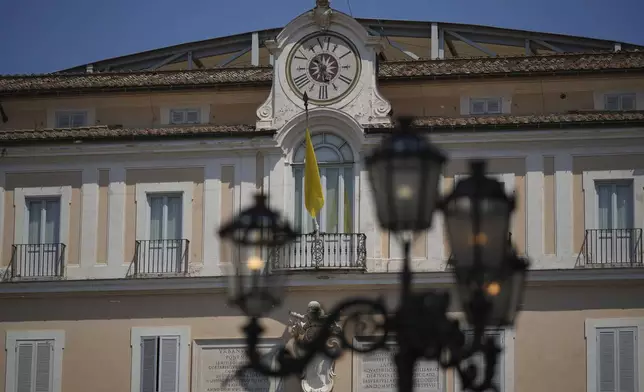
A view of the Papal or Apostolic Palace, a historic summer retreat for popes in the lakeside town of Castel Gandolfo, about 30 kilometers southeast of Rome, where Pope Leo XIV will be spending a short period of rest, is seen Wednesday, July 2, 2025. (AP Photo/Andrew Medichini)
Leo will disappear further this weekend when he begins a six-week vacation in his first break since his historic election May 8. Leo is resuming the papal tradition of escaping the Roman heat for the relatively cooler climes of Castel Gandolfo, the papal summer retreat on Lake Alban, south of Rome.
People who know and work with Leo expect he will use these weeks away from the public eye and the daily grind of Vatican audiences to get his head around the most pressing problems facing the church. He's a methodical, hard-working and well-prepared manager, they say, who wants to read entire reports, not just the executive summaries, before making decisions.
Here is a look at Leo’s summer homework, the outstanding dossiers he may be studying from now until Aug. 17 in between dips in the pool, walks in the gardens and occasional Masses, prayers and visits in town.
After his election, Leo reappointed all Vatican prefects until further notice, so the Holy See machinery is still working with the old guard in place. But a few major appointments await, most importantly to fill Leo's old job as prefect of the office that vets bishop nominations.
Leo also has to decide who will be his No. 2. The Vatican secretary of state, the equivalent of a prime minister, is still Cardinal Pietro Parolin, Pope Francis' pick who was himself an unsuccessful contender in the conclave that elected Leo pope.
Even before he gets his people in place, Leo has to get a handle on one of the most pressing problems facing the Holy See: Its troubled finances. The Vatican is running a structural deficit of around 50 million to 60 million euros ($59-71 million) and has a 1 billion euro ($1.18 billion) shortfall in its pension fund.
There are plenty of high-profile clergy sex cases that festered during Francis’ pontificate that are now are on Leo's desk. History’s first American pope will be watched closely to see how he handles them, since he cannot claim ignorance about abuse or its dynamics, given the devastation the scandals have wrought in the United States.
On the eve of his vacation, he made an important appointment, naming French Bishop Thibault Verny head of the Vatican’s child protection advisory board, replacing the retiring American Cardinal Sean O'Malley.
Leo has already said it's “urgent” to create a culture of prevention in the church that shows no tolerance for any form of abuse, be it abuse of authority or spiritual or sexual abuse.
On that score, there is no case more pressing than that of the Rev. Marko Rupnik, a famous mosaic artist who was belatedly thrown out of the Jesuits after its superiors determined he sexually, psychologically and spiritually abused two dozen adult women and nuns. Even though the case didn’t involve minors, it became a toxic problem for Francis because of suggestions Rupnik received favorable treatment at the Vatican under the Jesuit pope.
Nearly two years after Francis caved into pressure to reopen the Rupnik file, the Vatican has finally found external canon lawyers to hear the case, the head of the Vatican’s doctrine office, Cardinal Victor Manuel Fernández, told reporters last week. As recently as March, Fernandez had said he was having trouble finding any willing candidates. Now that Francis is dead, the case may be less politically delicate, even as the priest's supporters maintain his innocence.
Leo has already sent a signal, with Vatican News removing Rupnik's artwork from its website.
Another legal headache facing Leo is what to do about Cardinal Angelo Becciu and the Vatican’s “trial of the century,” which is heading into the appeals phase in September. The city-state’s criminal tribunal in 2023 convicted Becciu and eight other people of a variety of financial crimes stemming from the Holy See’s bungled 350 million euro ($412 million) investment in a London property.
But the trial was itself problematic, with defense claims that basic defense rights weren’t respected since Francis intervened on several occasions in favor of prosecutors. In the months since the verdicts were handed down, there have been new revelations that Vatican gendarmes and prosecutors were apparently in regular touch with a woman who was coaching the star witness into testifying against Becciu. The once-powerful cardinal has denounced the contacts as evidence that his conviction was orchestrated from the start, from the top.
Leo, a canon lawyer, may want to steer clear of the whole thing to try to give the tribunal the impression of being independent. But Leo will ultimately have to decide what to do with Becciu, who recused himself from the conclave but remains a cardinal with a very unclear status.
Leo has said his priority as pope is unity and reconciliation in the church. Many conservatives and traditionalists hope that means he will work to heal the liturgical divisions that spread during Francis' 12-year papacy, especially in the U.S., over the old Latin Mass.
Francis in 2021 restricted access for ordinary Catholics to the ancient liturgy, arguing that its spread was creating divisions in the church. In doing so, Francis reversed his predecessor, Pope Benedict XVI, who in 2007 had relaxed restrictions on its celebration.
Cardinal Raymond Burke, a figurehead of the conservative and traditionalist camp, told a recent conference on the Latin Mass that he had spoken to Leo about the need to “put an end to the present persecution of the faithful” who want to worship according to the old rite.
“It it is my hope that he will as soon as it is possible take up the study of this question and try to restore the situation as it was” under Benedict's reform, Burke said.
Leo has also identified artificial intelligence as a pressing issue facing humanity, suggesting a document of some sort might be in the works.
Also under study is when he will start traveling, and where.
Leo has a standing invitation to undertake Francis’ last, unfulfilled foreign commitment: Marking the 1,700th anniversary of the Council of Nicea, Christianity’s first ecumenical council, with a visit to Turkey. Leo has already said a visit is in the works, possibly in late November.
Beyond that, Leo has received plenty of invitations: Vice President JD Vance extended a Trump invitation to visit the U.S., but Leo demurred and offered a noncommittal “at some point.” Ukrainian President Volodymyr Zelenskyy invited him to visit Kyiv, but the Vatican under Francis had refused a papal visit there unless one could also be arranged to Moscow.
Leo’s old diocese of Chiclayo, Peru, meanwhile, is waiting for their bishop to come home, and then there's Argentina, which never got a papal visit from the first-ever Argentine pope.
The residents of Castel Gandolfo, meanwhile, are aching for a pope to return. Francis had decided not to use the retreat and instead spent his 12 papal summers at home, in the Vatican. The town has recovered from the economic hit of pope-free summers, after Francis instead opened the papal palace and gardens to the public as a museum year-round.
But townsfolks cannot wait for Leo to take up residence and enjoy the town's gorgeous lake views and quiet starry nights. It's the perfect place for a pope to rest, read, write and think in private, they say.
“Remember, many encyclicals were written here,” noted the Rev. Tadeusz Rozmus, the town’s parish priest.
Associated Press religion coverage receives support through the AP’s collaboration with The Conversation US, with funding from Lilly Endowment Inc. The AP is solely responsible for this content.
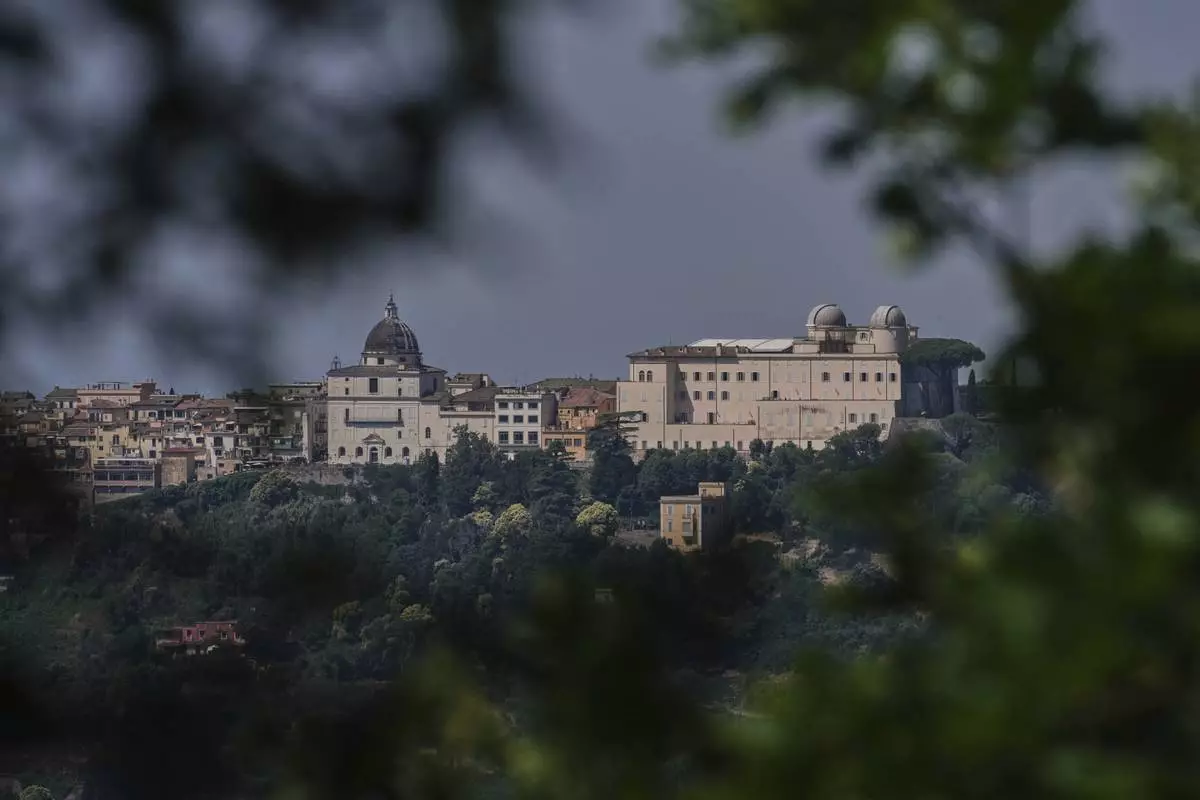
A view of the Papal or Apostolic Palace, a historic summer retreat for popes in the lakeside town of Castel Gandolfo, about 30 kilometers southeast of Rome, where Pope Leo XIV will be spending a short period of rest, is seen on Wednesday, July 2, 2025. (AP Photo/Andrew Medichini)
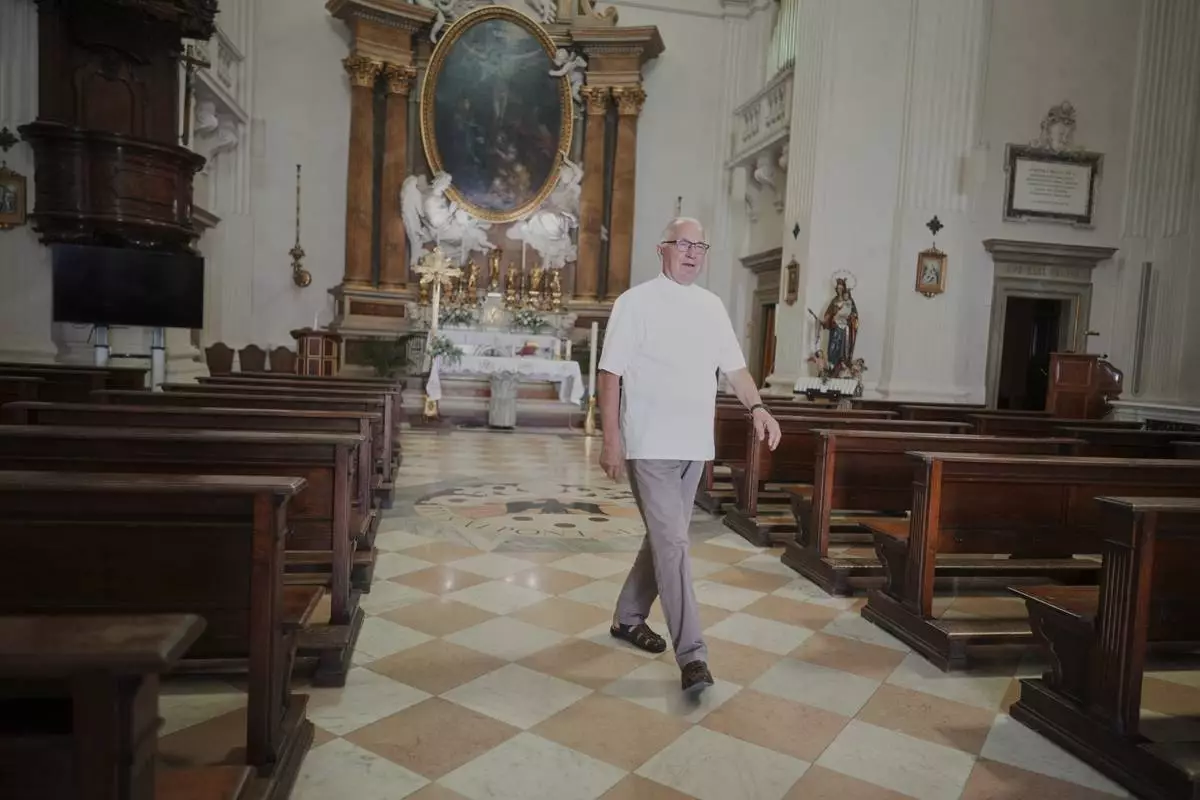
Father Tadeusz Rozmu walks in the San Tommaso da Villanova church of the town of Castel Gandolfo, a historic summer retreat for popes about 30 kilometers southeast of Rome, where Pope Leo XIV will be spending a short period of rest, is seen Wednesday, July 2, 2025. (AP Photo/Andrew Medichini)
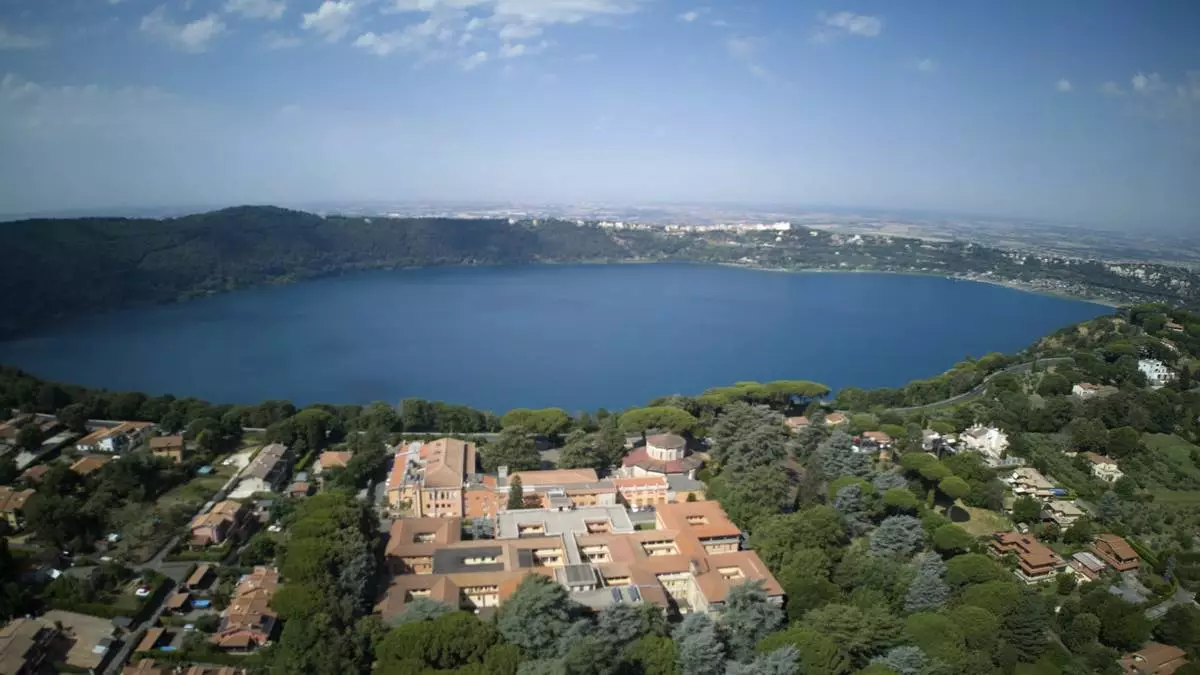
A view of the Albano Lake, about 30 kilometers southeast of Rome, where Pope Leo XIV will be spending a short period of rest in the nearby historic summer retreat for popes of Castel Gandolfo, Wednesday, July 2, 2025. (AP Photo/Andrew Medichini)
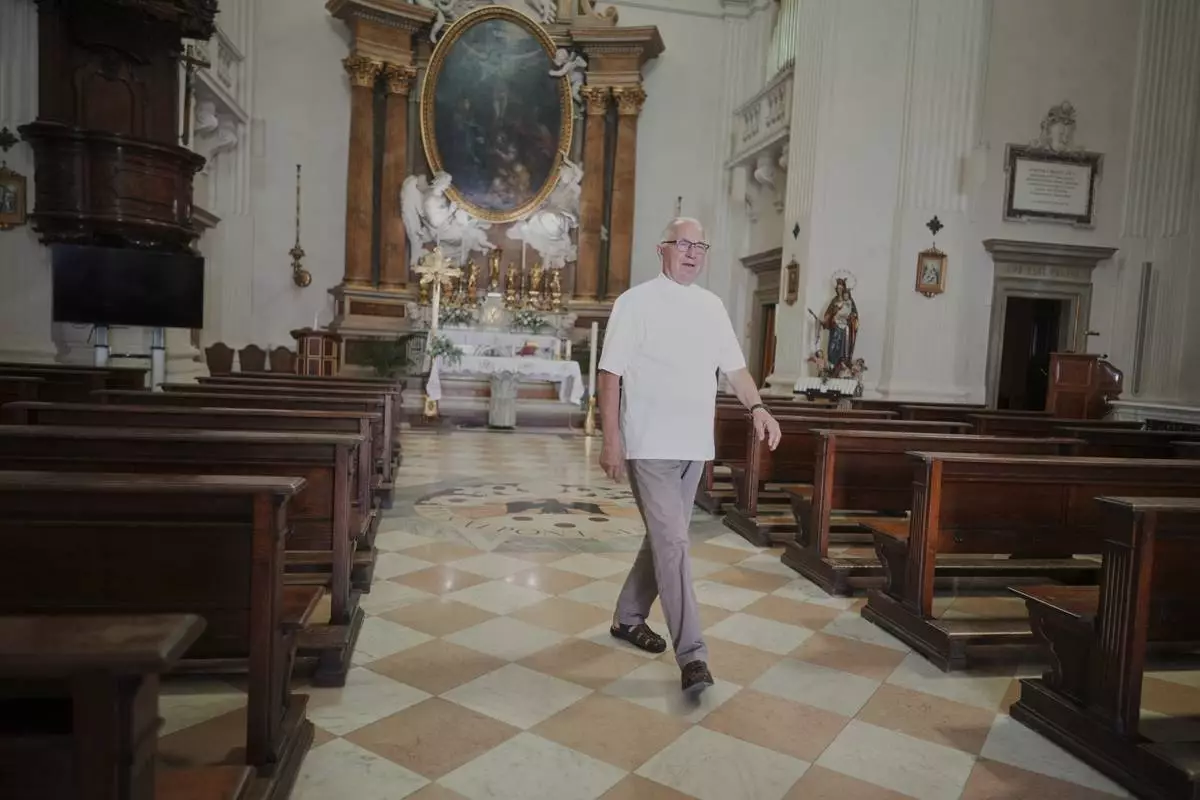
Father Tadeusz Rozmu walks in the San Tommaso da Villanova church of the town of Castel Gandolfo, a historic summer retreat for popes about 30 kilometers southeast of Rome, where Pope Leo XIV will be spending a short period of rest, is seen Wednesday, July 2, 2025. (AP Photo/Andrew Medichini)
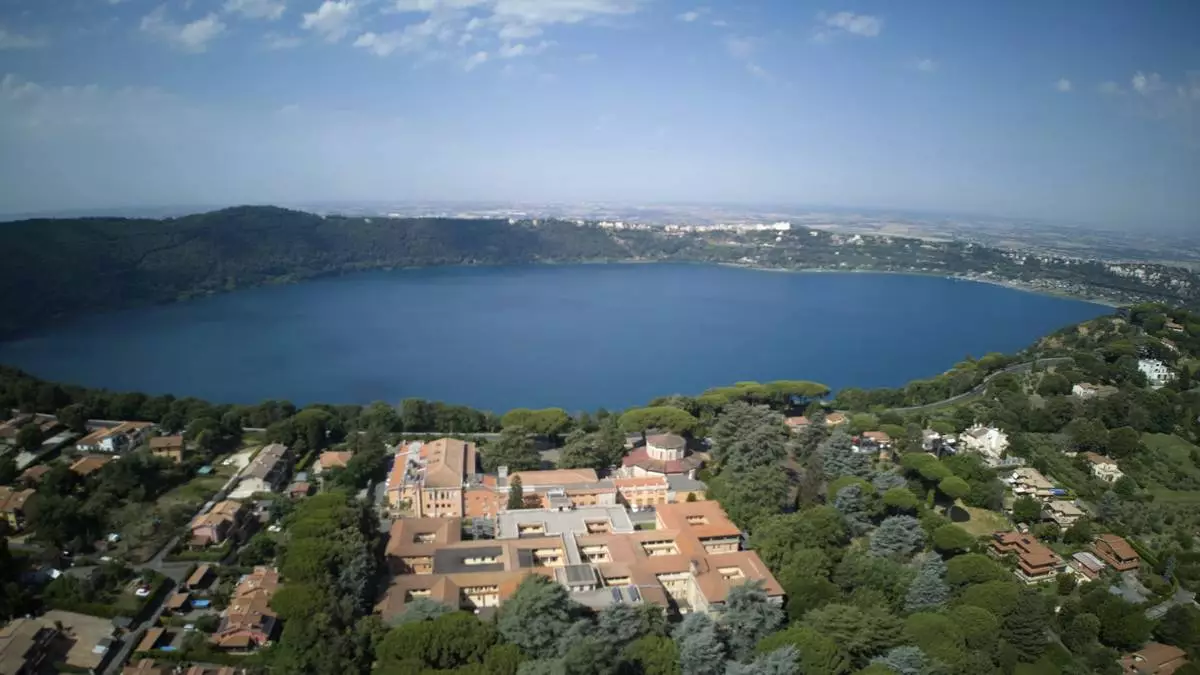
A view of the Albano Lake, about 30 kilometers southeast of Rome, where Pope Leo XIV will be spending a short period of rest in the nearby historic summer retreat for popes of Castel Gandolfo, Wednesday, July 2, 2025. (AP Photo/Andrew Medichini)
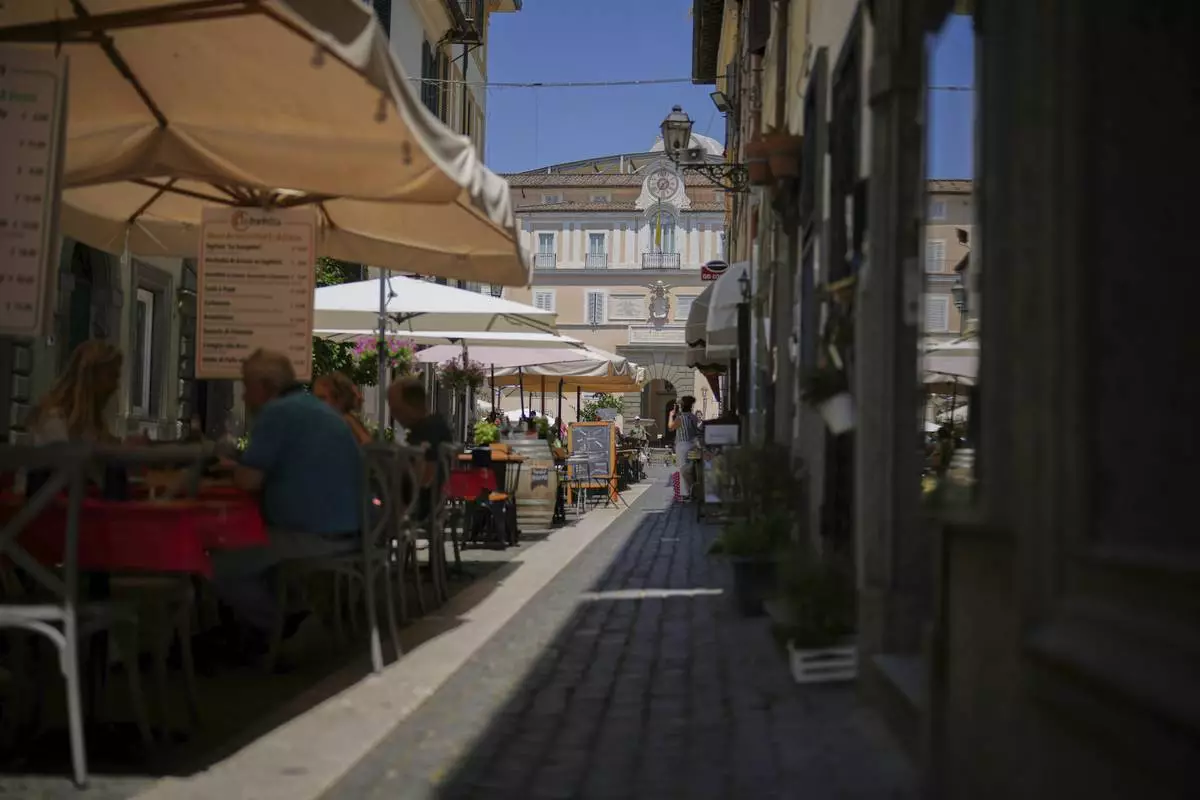
Customers have lunch at restaurants in the town of Castel Gandolfo, a historic summer retreat for popes about 30 kilometers southeast of Rome, where Pope Leo XIV will be spending a short period of rest, as seen Wednesday, July 2, 2025. (AP Photo/Andrew Medichini)
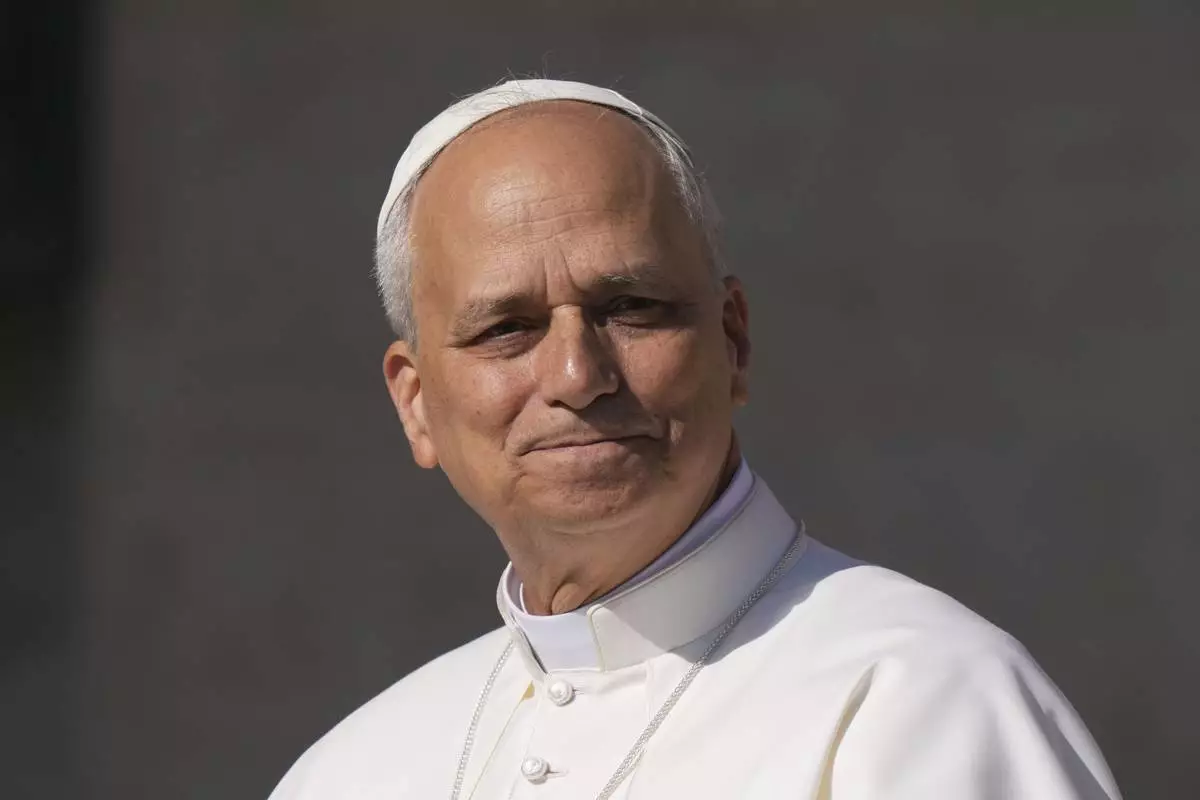
FILE - Pope Leo XIV arrives in St. Peter's Square to hold his weekly general audience, at the Vatican, Wednesday, June 25, 2025. (AP Photo/Andrew Medichini, File)
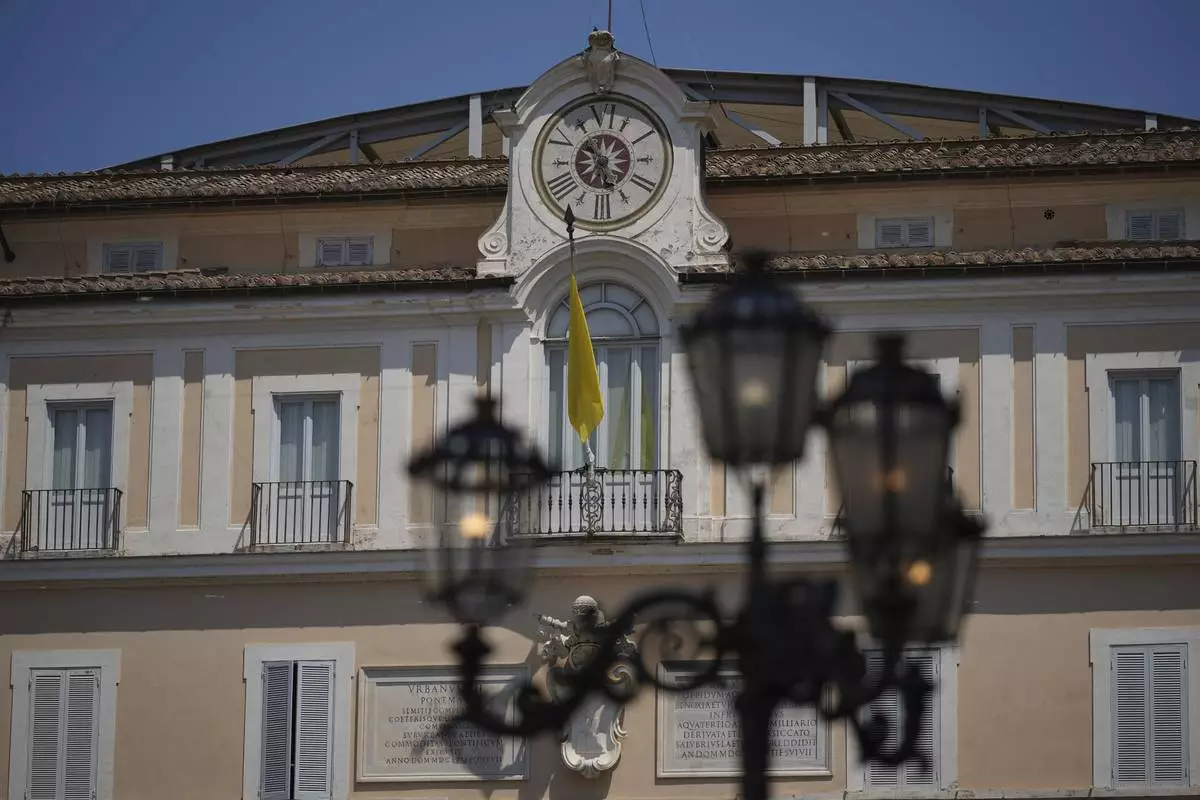
A view of the Papal or Apostolic Palace, a historic summer retreat for popes in the lakeside town of Castel Gandolfo, about 30 kilometers southeast of Rome, where Pope Leo XIV will be spending a short period of rest, is seen Wednesday, July 2, 2025. (AP Photo/Andrew Medichini)