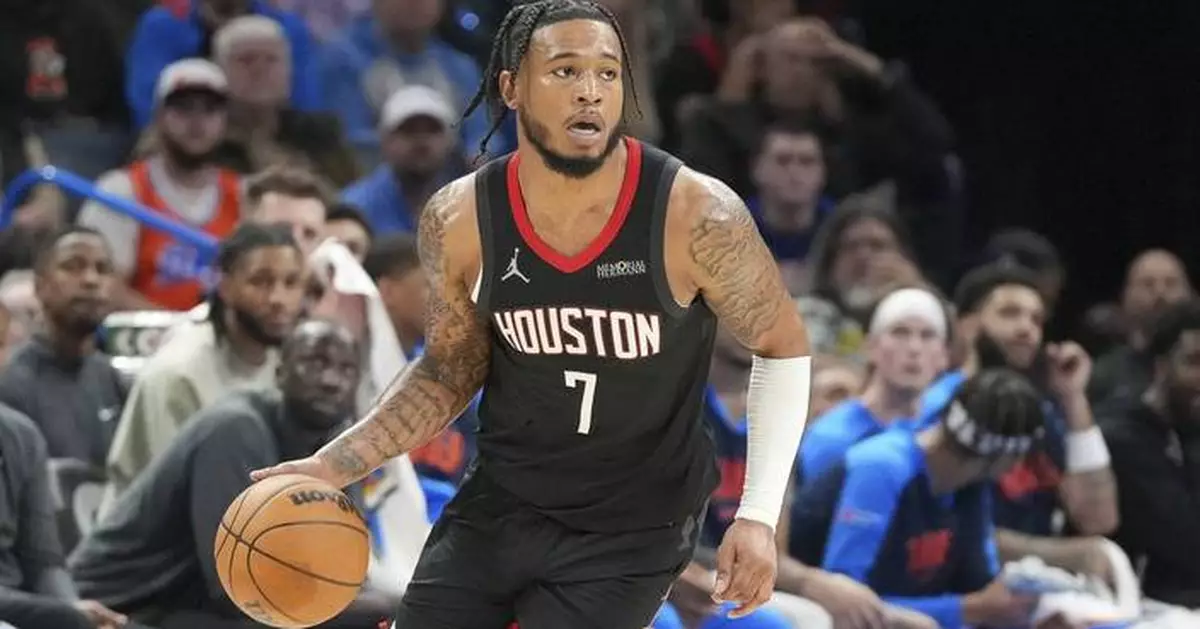
Cam Whitmore is going back to his home area after being traded by the Houston Rockets to the Washington Wizards for a pair of second-round picks, a person with knowledge of the deal said Saturday.
The trade will likely be folded into a larger multiteam series of moves and cannot be finalized until Sunday at the earliest, said the person who spoke to The Associated Press on condition of anonymity because of that pending NBA approval. The league's offseason moratorium on most player movement gets lifted Sunday at noon EDT.
ESPN first reported the trade agreement.
Whitmore, a Maryland native, averaged 10.8 points in his two seasons with the Rockets — who took him with the No. 20 pick in the 2023 draft.
Whitmore's acquisition is another step in the offseason overhaul by the Wizards, who have been in the mode of acquiring young players who can play multiple positions while continuing to accumulate assets.
They could have $100 million available — if not more — in cap space next summer, and earlier in this offseason acquired CJ McCollum and Kelly Olynyk in a trade with New Orleans for Jordan Poole along with landing Tre Johnson with the No. 6 pick in the draft.
Eastern Conference champion Indiana, in need of a center after losing Myles Turner to Milwaukee, has agreed to acquire Jay Huff from the Memphis Grizzlies in exchange for second-round draft capital, a person with knowledge of that deal said.
The person spoke on condition of anonymity to AP because it, like most deals, cannot be finalized with league approval of terms until at least Sunday.
The 7-foot-1 Huff averaged 6.9 points in 64 games with Memphis this past season.
AP NBA: https://apnews.com/hub/NBA
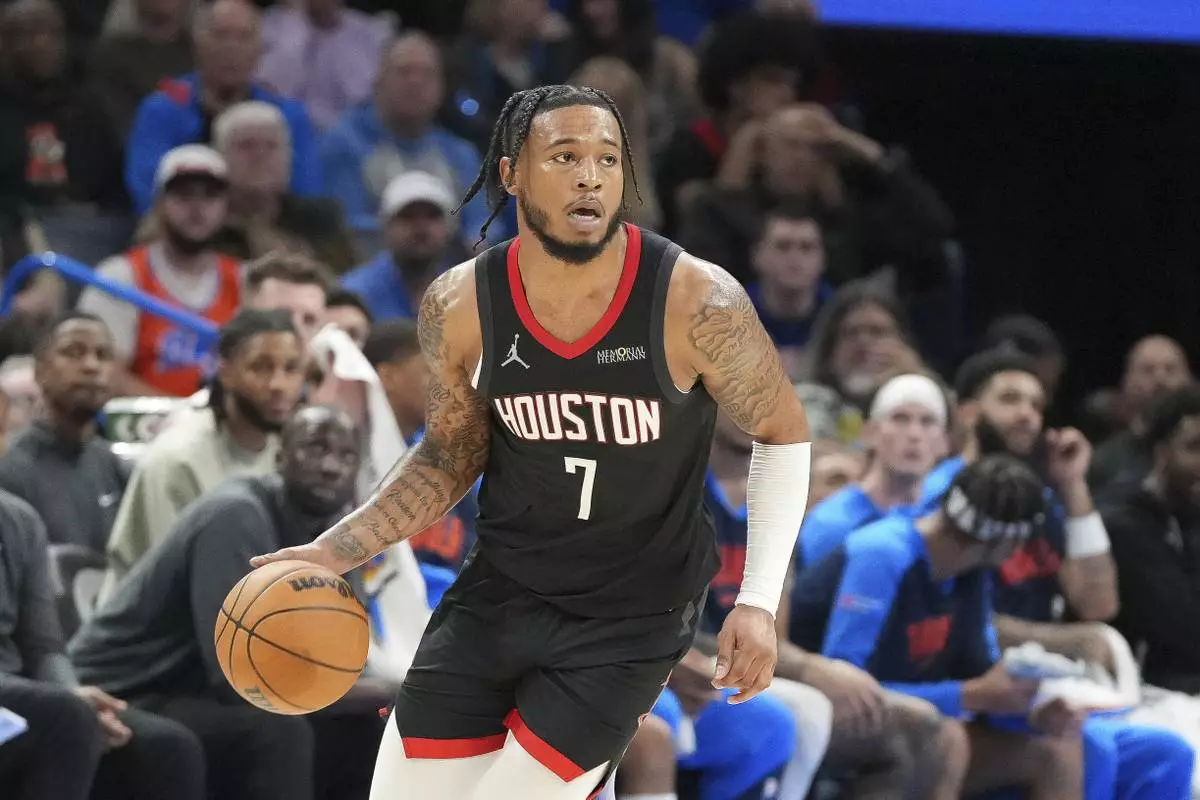
FILE - Houston Rockets forward Cam Whitmore pushes down the court during the second half of an NBA basketball game against the Oklahoma City Thunder, March 3, 2025, in Oklahoma City. (AP Photo/Kyle Phillips, File)
President Donald Trump made a lot of tariff threats and trade promises this year. Many materialized into a barrage of new import taxes that overturned decades of U.S. economic policy — but others have yet to be fulfilled as 2025 comes to a close.
Some of Trump’s unrealized threats reflect a broader approach from a president with a track record of using sky-high levies to pressure other countries into new trade deals, one-up retaliatory measures or even punish political critics. At the same time, they arrived as growing list of tariffs did go into effect — from Trump's punishing new taxes on imported metals, to tit-for-tat levies with top U.S. trading partners like China — plunging consumers and businesses worldwide into uncertainty.
Here’s what Trump said when announcing some of his biggest (but still unrealized) tariff threats and promises this year, and where things stand today.
In his words:
What happened: The External Revenue Service has yet to be established as of the end of December. While administration officials continued to reiterate plans for launching the External Revenue Service during Trump's first months back in office, the entity does not yet exist.
In his words:
What happened: The EU's planned levy on American whiskey — which it unveiled as part of broader retaliation in response to Trump's new steel and aluminum tariffs — was postponed, with the latest delay reportedly running until at least February.
Trump's 200% tariff threat on European alcohol never materialized. But spirits were not included in the EU-U.S. trade deal struck over the summer, which set a 15% rate on most European imports.
In his words:
What happened: Despite Trump's repeated threats, the U.S. has yet to impose a 100% tariff on foreign films. After his initial May promise to initiate the process, the White House said no final decision had been made. Also still unclear is how the U.S. would tax a movie made overseas.
In his words:
What happened: The president did not sign an executive order imposing a 100% tariff on pharma products on Oct. 1 and, as of today, no levy has been put into place. But Trump previously suggested that steep levies on pharmaceutical drugs could arrive further down the road, telling CNBC in August that he would start by charging a “small tariff” and potentially raise the rate as high as 250%. Meanwhile, trade agreements with specific countries set their own rates or exemptions — with the U.K., for example, securing a 0% tariff on all British medicine exported to the U.S. for three years. The administration also announced deals with specific companies with promises of lower drug prices.
In his words:
What happened: A sweeping 100% on computer chips has yet to go into effect. When announcing his plans to impose the levy back in August, Trump was not specific about the timing. And other details have remained scarce.
In his words:
What happened: Details about how, when and if a tariff dividend will reach Americans are still scarce. Budget experts have said that the math doesn't add up. And Treasury Secretary Scott Bessent suggested that it might not mean checks from the government. Instead, Bessent told ABC in November, the rebate might take the form of tax cuts. White House National Economic Council Director Kevin Hassett also told CBS News that it's up to Congress.
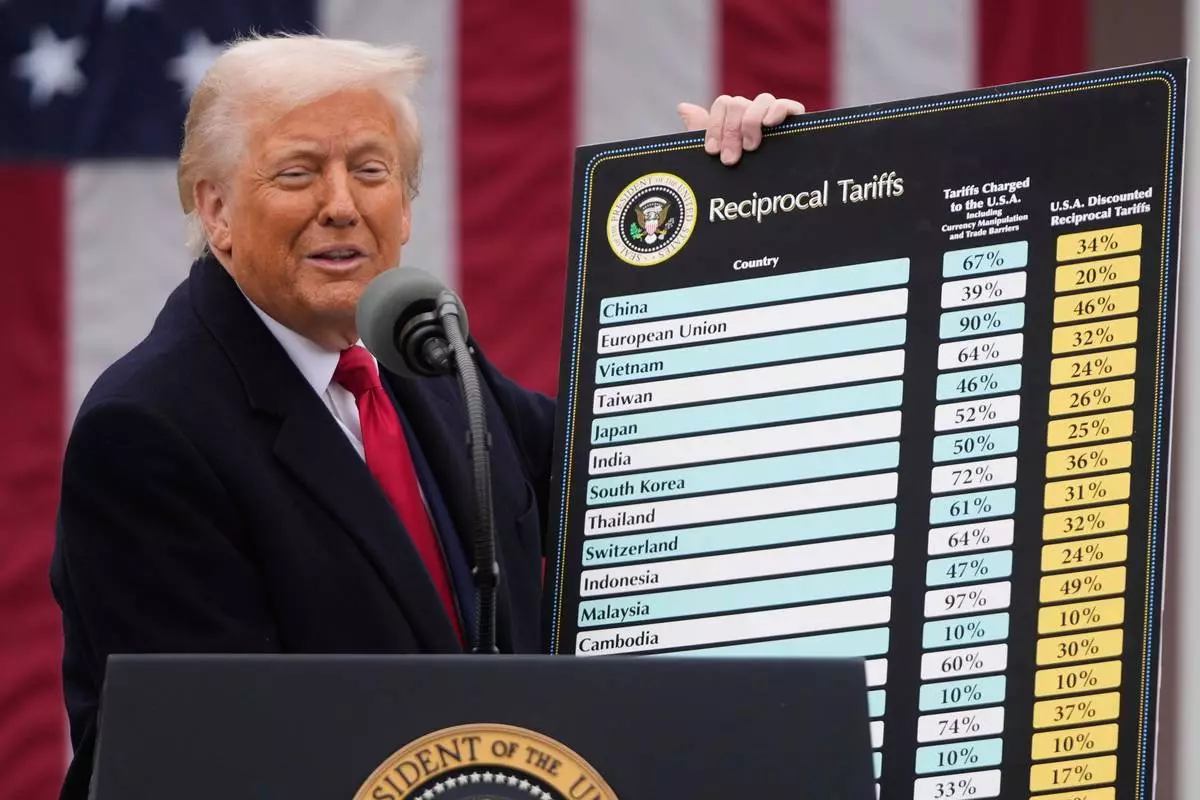
FILE - President Donald Trump speaks during an event to announce new tariffs in the Rose Garden at the White House, on April 2, 2025, in Washington. (AP Photo/Mark Schiefelbein, File)