The 88th anniversary of the Lugou Bridge Incident is commemorated in China with the belief that history is the best textbook for remembering past sacrifice and safeguarding future peace.
The historic Lugou Bridge Incident took place at the Lugou Bridge outside Wanping Town, Beijing, on July 7, 1937. The incident is recognized as the start of Japan's full-scale invasion of China, and China's whole-nation resistance against the Japanese invaders.
"The 29th Army started fighting the Japanese invaders before dawn. There was a pine grove in the north of Changxindian Town. There, covered by cloth were fallen soldiers of the 29th Army who had died defending the city and the bridge," recalled survivor Zheng Fulai, in an earlier interview before his passing.
The Chinese nation rose as one and waged a bitter, 14-year-long fight for survival. It was the first time in modern history that China achieved total victory in resisting foreign invasion.
In 2014, speaking in a commemoration ceremony marking the 77th anniversary of the outbreak of China's whole-nation resistance against the Japanese invaders, Chinese President Xi Jinping said: "At a time of national peril, the Communist Party of China (CPC) took up the historic responsibility of saving the nation, appealing for a united anti-Japanese national front based on cooperation between the Kuomintang (KMT) and the CPC to resist and expel foreign aggressors."
In that life-or-death struggle, the sons and daughters of the Chinese nation, regardless of region, age, or status, braved the front lines. Countless families made profound sacrifices. Xi shared a story of Deng Yufen, a heroic Beijing mother whose husband and sons sacrificed their lives in fightings against Japanese aggressors.
"Deng Yufen, a mother in Beijing's Miyun County, sent her husband and five children to the front line and they all lost their lives on the battlefield. A farming family on the north China plain once wrote a powerful couplet, 'With united hearts, we safeguard our nation's independence; with unyielding will, we strive for national liberation.' The horizontal scroll read, 'Resist to the end.' This was not only a battle cry of the Chinese people in their life-or-death struggle against Japanese aggression, but also a solemn declaration of the nation's unwavering resolve and ultimate victory in the War of Resistance Against Japanese Aggression," said Xi at the commemoration ceremony.
Today, China is no longer the China of 1937. But the echoes of the Lugou Bridge gunfire still remind the nation of the sacrifices made and the lessons learned.
This year also marks the 80th anniversary of the victory in the Chinese People's War of Resistance Against Japanese Aggression and the World Anti-Fascist War. History is remembered not to perpetuate hatred, but to ensure such tragedy of history will never repeat.
"History is the best textbook and the best wake-up call. The Chinese people will never forget the sufferings caused by the war, and our pursuit of peace will never end. Throughout history, all military aggressions were doomed to fail ultimately. This is the law of history," said Xi.
Having endured hardship and emerged stronger, the Chinese people deeply understand that turmoil and war do not serve their fundamental interests. Peace, not war; cooperation, not confrontation; and win-win outcomes, not zero-sum competition -- these are the enduring themes for the peaceful development and progress of human society.
"China will remain committed to the path of peaceful development and hopes all countries around the world will join in walking this path together. May the sunshine of peace forever illuminate our shared planet," said Xi.
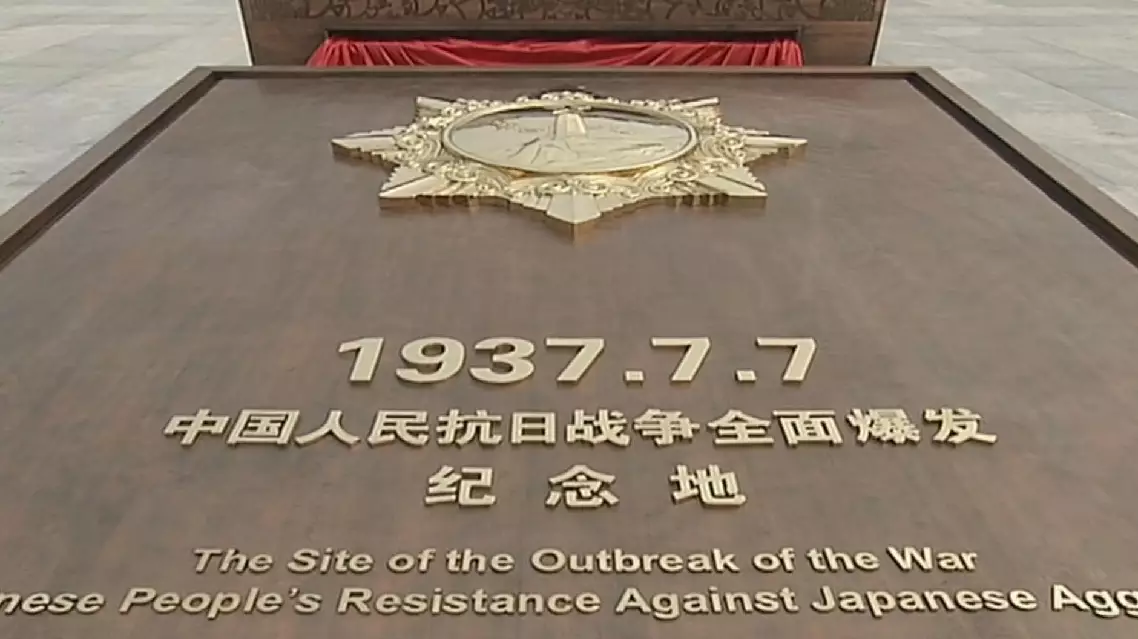
China marks 88th anniversary of Lugou Bridge Incident