Stocks on Wall Street closed broadly lower Monday as the White House stepped up pressure on major trading partners to make deals before punishing tariffs imposed by the U.S. take effect.
The S&P 500 fell 0.8% for its biggest loss since mid-June. The benchmark index remains near its all-time high set last week.
Click to Gallery
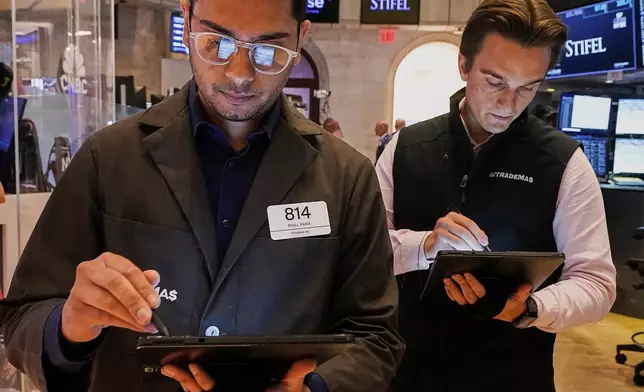
Trader Niall Pawa, left, works with a colleague on the floor of the New York Stock Exchange, Tuesday, July 1, 2025. (AP Photo/Richard Drew)
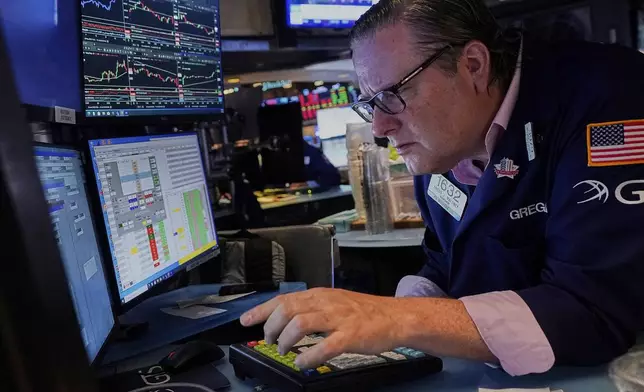
Specialist Gregg Maloney works at his post on the floor of the New York Stock Exchange, Tuesday, July 1, 2025. (AP Photo/Richard Drew)
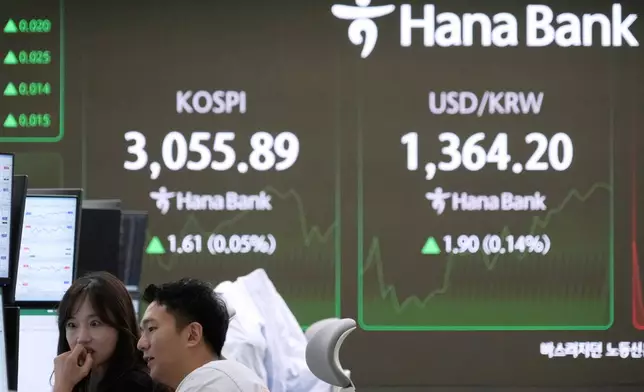
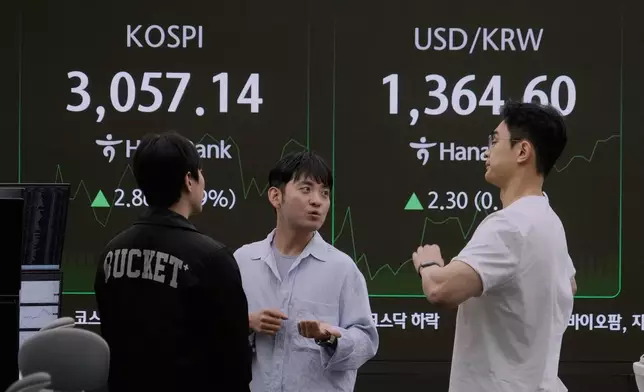
Currency traders watch monitors near a screen showing the Korea Composite Stock Price Index (KOSPI), top left, and the foreign exchange rate between U.S. dollar and South Korean won at the foreign exchange dealing room of the KEB Hana Bank headquarters in Seoul, South Korea, Monday, July 7, 2025. (AP Photo/Ahn Young-joon)
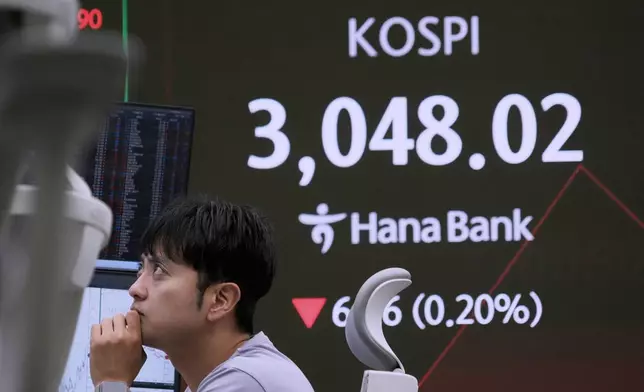
A currency trader watches monitors near a screen showing the Korea Composite Stock Price Index (KOSPI) at the foreign exchange dealing room of the KEB Hana Bank headquarters in Seoul, South Korea, Monday, July 7, 2025. (AP Photo/Ahn Young-joon)
Currency traders work near a screen showing the Korea Composite Stock Price Index (KOSPI), top left, and the foreign exchange rate between U.S. dollar and South Korean won at the foreign exchange dealing room of the KEB Hana Bank headquarters in Seoul, South Korea, Monday, July 7, 2025. (AP Photo/Ahn Young-joon)
The Dow Jones Industrial Average gave back 0.9%. The Nasdaq composite also finished 0.9% lower, not too far from its own record high.
The losses were widespread. Decliners outnumbered gainers by nearly 4-to-1 on the New York Stock Exchange.
Tesla tumbled 6.8% for the biggest drop among S&P 500 stocks as the feud between CEO Elon Musk and President Donald Trump reignited over the weekend. Musk, once a top donor and ally of Trump, said he would form a third political party in protest over the Republican spending bill that passed last week.
The selling accelerated after the Trump administration released letters informing Japan and South Korea that their goods will be taxed at 25% starting on Aug. 1, citing persistent trade imbalances with the two crucial U.S. allies in Asia.
“If for any reason you decide to raise your Tariffs, then, whatever the number you choose to raise them by, will be added onto the 25% that we charge,” Trump wrote in the letters to Japanese Prime Minister Shigeru Ishiba and South Korean President Lee Jae-myung.
Trump also announced new tariff rates on Malaysia, Kazakhstan, South Africa, Laos and Myanmar.
Just before hefty U.S. tariffs on goods imported from nearly every country around the globe were to take effect in April, Trump postponed the levies for 90 days in hopes that foreign governments would be more willing to strike new trade deals. That 90-day negotiating period was set to expire before Wednesday.
On Sunday, Trump said he would impose an additional 10% in tariffs against the BRICS bloc of developing nations, which had condemned tariffs increases at its summit in Brazil. In addition to Brazil, the BRICS countries also include Russia, India, China and South Africa.
This latest phase in the trade war heightens the threat of potentially more severe tariffs that’s been hanging over the global economy. Higher taxes on imported goods could hinder economic growth, if not increase recession risks.
“Just bringing back that meaty topic back into focus, after a strong week last week, has given a little bit of a pause in the market,” said Bill Northey, senior investment director at U.S. Bank Asset Management.
The near-term outlook will likely hinge on several key factors like the extent to which trading partners are included in Trump letters, the rate of tariffs, and the effective date of such tariffs, according to analysts at Nomura.
Last week, the Trump administration announced that it reached a deal with Vietnam that would allow U.S. goods to enter the country duty-free, while Vietnamese exports to the U.S. would face a 20% levy. That was a decline from the 46% tax on Vietnamese imports he proposed in April.
“The type of deal struck with Vietnam may be a blueprint for similar countries in the region with economies heavily reliant on large trade deficits with the U.S.,” said Jason Pride, chief of investment strategy and research at Glenmede.
Monday's market sell-off came on the first day of trading in the U.S. after a holiday-shortened week.
Nearly all of the sectors in the S&P 500 index closed in the red, with technology, financial and consumer-related stocks among the biggest weights on the market.
Apple fell 1.7%, JPMorgan Chase dropped 1.4% and Home Depot slid 1.1%.
Molina Healthcare fell 2.9% after the insurer lowered its profit guidance due to rapidly accelerating costs. UnitedHealth Group also recently reported a spike in costs that forced it to cut its forecast, sending its stock tumbling in April.
In deal news, software company CoreWeave agreed to acquire cryptocurrency mining company Core Scientific in an all-stock transaction valued at about $9 billion. Shares in Core Scientific sank 17.6%, while CoreWeave fell 3.3%.
Bond yields mostly rose. The yield on the 10-year Treasury rose to 4.39% from 4.34% late Thursday.
The downbeat start to the week follows a strong run for stocks, which pushed further into record heights last week after a better-than-expected U.S. jobs report.
All told, the S&P 500 fell 49.37 points to 6,229.98. The Dow lost 422.17 points to 44,406.36, and the Nasdaq slid 188.59 points to 20,412.52.
Stock indexes in Europe ended mostly higher. Asian markets closed mostly lower.
Oil prices fluctuated after OPEC+ agreed on Saturday to raise production in August by 548,000 barrels per day.
U.S. benchmark crude settled 1.4% higher at $67.93 per barrel, while Brent crude, the international standard, rose 1.9% to settle at $69.58 per barrel.
This week will be relatively light on economic data. On Wednesday the Federal Reserve will release minutes from its policymaking committee's meeting last month.
The Fed’s chair, Jerome Powell, has been insisting that the central bank wants to wait and see how Trump’s tariffs affect the economy and inflation before making its next move on interest rates. While lower rates give a boost to the economy by making it easier to borrow money, they can also give inflation more fuel. That could be dangerous if the Trump administration's tariffs send inflation higher.
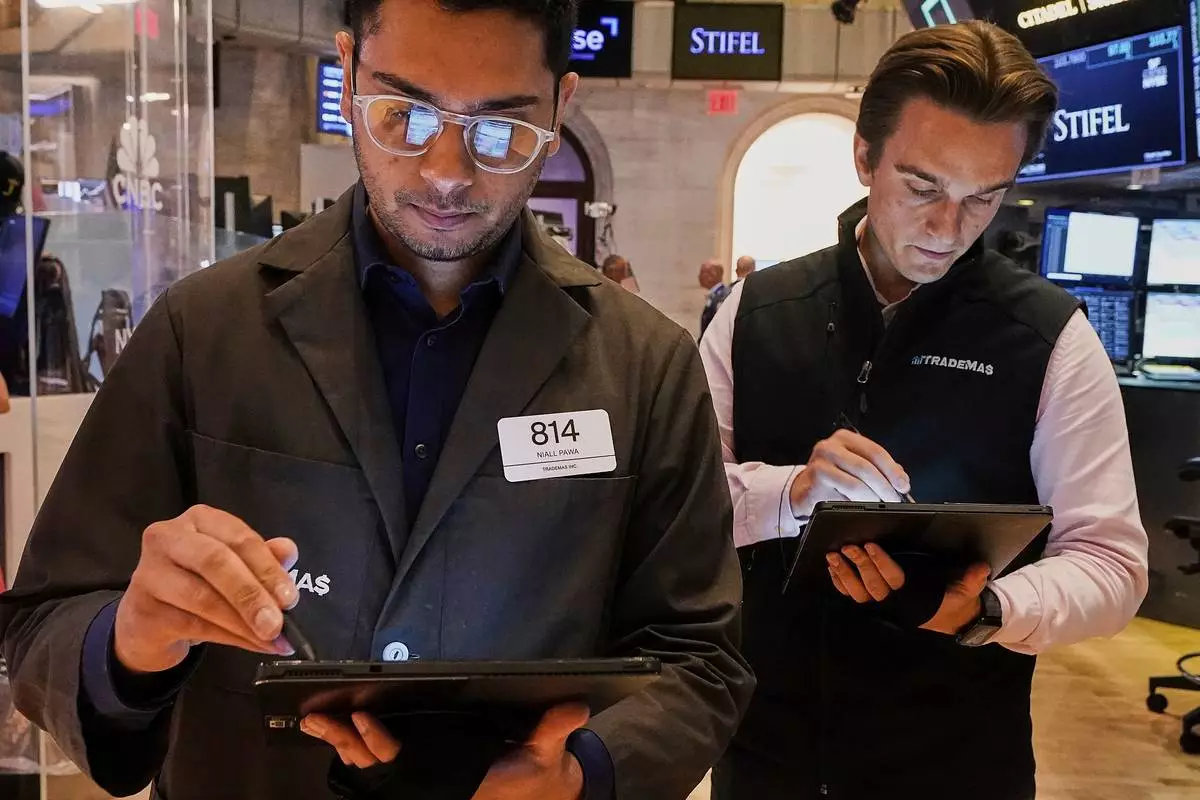
Trader Niall Pawa, left, works with a colleague on the floor of the New York Stock Exchange, Tuesday, July 1, 2025. (AP Photo/Richard Drew)
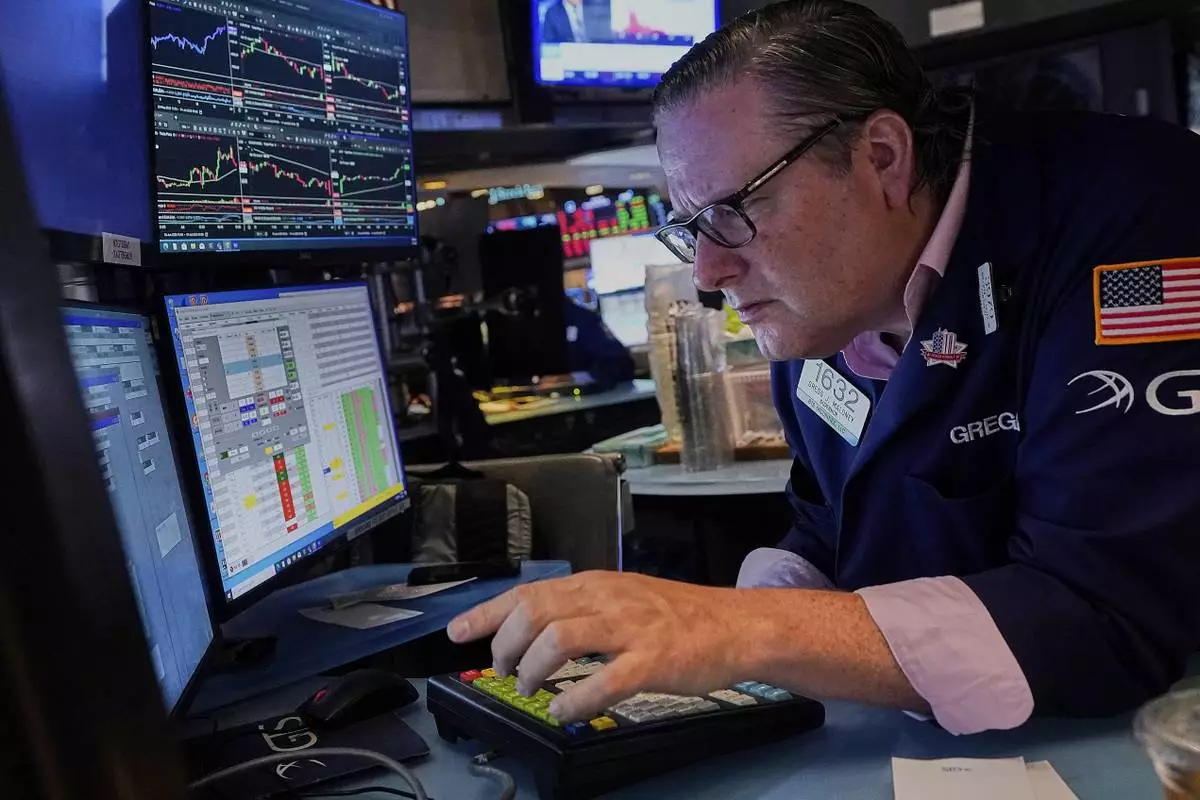
Specialist Gregg Maloney works at his post on the floor of the New York Stock Exchange, Tuesday, July 1, 2025. (AP Photo/Richard Drew)
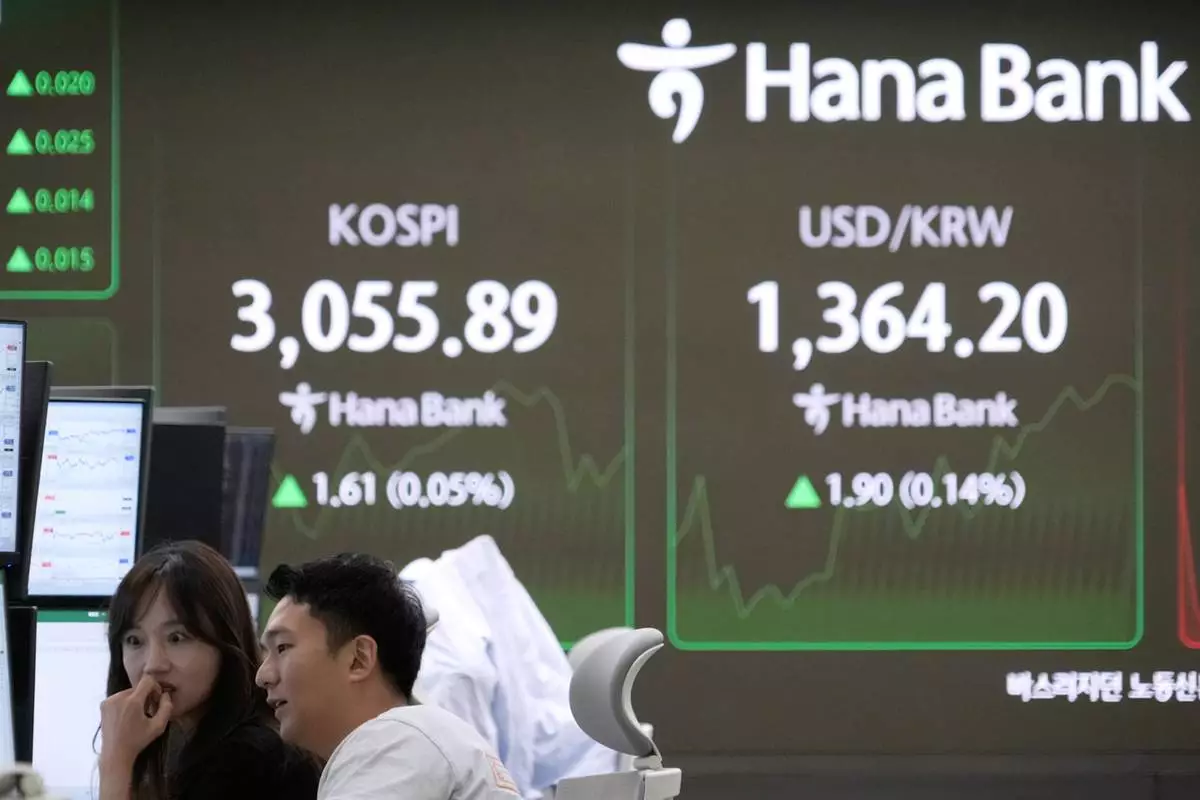
Currency traders watch monitors near a screen showing the Korea Composite Stock Price Index (KOSPI), top left, and the foreign exchange rate between U.S. dollar and South Korean won at the foreign exchange dealing room of the KEB Hana Bank headquarters in Seoul, South Korea, Monday, July 7, 2025. (AP Photo/Ahn Young-joon)

A currency trader watches monitors near a screen showing the Korea Composite Stock Price Index (KOSPI) at the foreign exchange dealing room of the KEB Hana Bank headquarters in Seoul, South Korea, Monday, July 7, 2025. (AP Photo/Ahn Young-joon)
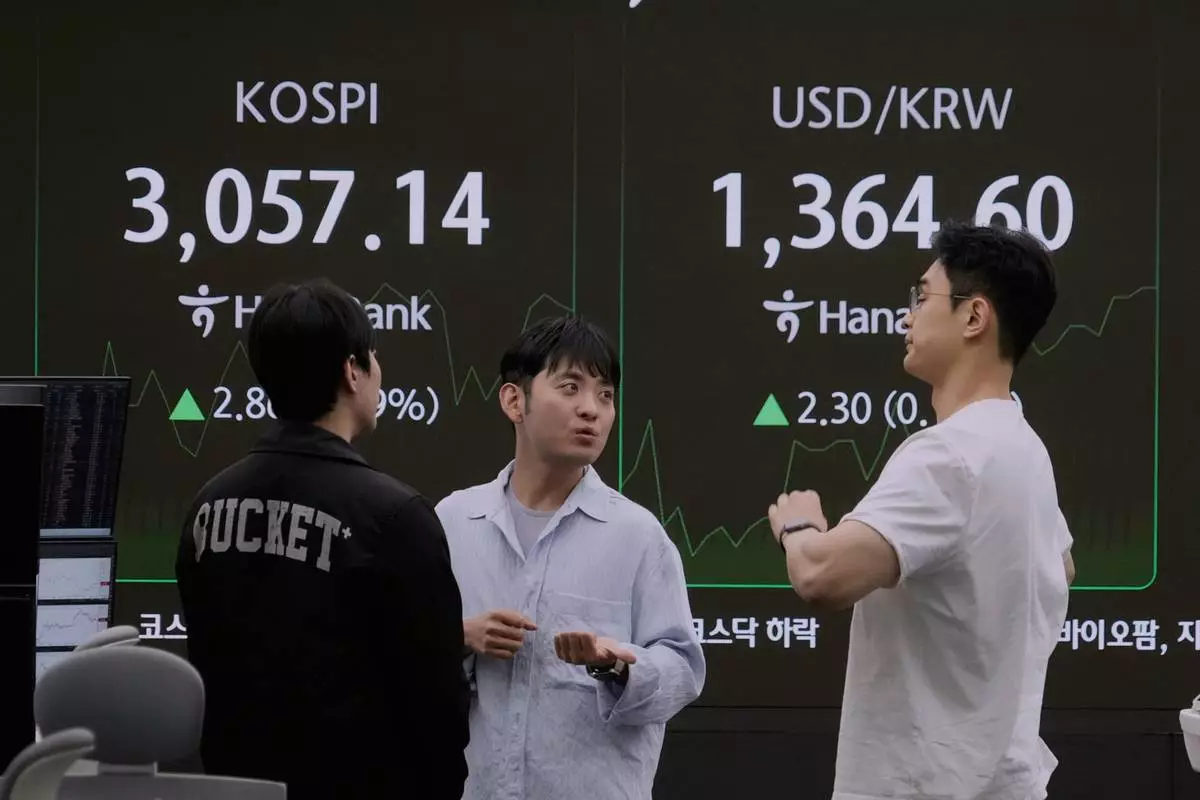
Currency traders work near a screen showing the Korea Composite Stock Price Index (KOSPI), top left, and the foreign exchange rate between U.S. dollar and South Korean won at the foreign exchange dealing room of the KEB Hana Bank headquarters in Seoul, South Korea, Monday, July 7, 2025. (AP Photo/Ahn Young-joon)
MINNEAPOLIS (AP) — Thousands of people marched in Minneapolis Saturday to protest the fatal shooting of a woman by a federal immigration officer there and the shooting of two protesters in Portland, Oregon, as Minnesota leaders urged demonstrators to remain peaceful.
The Minneapolis gathering was one of hundreds of protests planned in towns and cities across the country over the weekend. It came in a city on edge since the killing of Renee Good on Wednesday by an Immigration and Customs Enforcement officer.
“We’re all living in fear right now,” said Meghan Moore, a mother of two from Minneapolis who joined the protest Saturday. “ICE is creating an environment where nobody feels safe and that’s unacceptable.”
On Friday night, a protest outside a Minneapolis hotel that attracted about 1,000 people turned violent as demonstrators threw ice, snow and rocks at officers, Minneapolis Police Chief Brian O’Hara said Saturday. One officer suffered minor injuries after being struck with a piece of ice, O’Hara said. Twenty-nine people were cited and released, he said.
Minneapolis Mayor Jacob Frey stressed that while most protests have been peaceful, those who cause damage to property or put others in danger will be arrested. He faulted “agitators that are trying to rile up large crowds.”
“This is what Donald Trump wants,” Frey said of the president who has demanded massive immigration enforcement efforts in several U.S. cities. “He wants us to take the bait.”
Minnesota Gov. Tim Walz echoed the call for peace.
“Trump sent thousands of armed federal officers into our state, and it took just one day for them to kill someone,” Walz posted on social media. “Now he wants nothing more than to see chaos distract from that horrific action. Don’t give him what he wants.”
The U.S. Department of Homeland Security says its deployment of immigration officers in the Twin Cities is its biggest ever immigration enforcement operation. Trump's administration has said both shootings were acts of self-defense against drivers who “weaponized” their vehicles to attack officers.
Connor Maloney said he was attending the Minneapolis protest to support his community and because he's frustrated with the immigration crackdown.
“Almost daily I see them harassing people,” he said. “It’s just sickening that it’s happening in our community around us.”
Steven Eubanks, 51, said he felt compelled to attend a protest in Durham, North Carolina, on Saturday because of the “horrifying” killing of Good in Minneapolis.
“We can’t allow it,” Eubanks said. “We have to stand up.”
Indivisible, a social movement organization that formed to resist the Trump administration, said hundreds of protests were scheduled in Texas, Kansas, New Mexico, Ohio, Florida and other states.
In Minneapolis, a coalition of migrant rights groups organized the demonstration that began in a park about half a mile from the residential neighborhood where the 37-year-old Good was shot on Wednesday. Marchers carried signs calling for ICE to leave and voiced support for Good and immigrants.
A couple of miles away, just as the demonstration began, an Associated Press photographer witnessed heavily armed officers — at least one in Border Patrol uniform — approach a person who had been following them. Two of the agents had long guns out when they ordered the person to stop following them, telling him it was his “first and final warning.”
The agents eventually drove onto the interstate without detaining the driver.
Protests held in the neighborhood have been largely peaceful, in contrast to the violence that hit Minneapolis in the aftermath of the killing of George Floyd in 2020. Near the airport, some confrontations erupted on Thursday and Friday between smaller groups of protesters and officers guarding the federal building used as a base for the Twin Cities crackdown.
O’Hara said city police officers have responded to calls about cars abandoned because their drivers have been apprehended by immigration enforcement. In one case, the car was left in park and in another case a dog was left in the vehicle.
He said immigration enforcement activities are happening “all over the city” and that 911 callers have been alerting authorities to ICE activity, arrests and abandoned vehicles.
The Trump administration has deployed thousands of federal officers to Minnesota under a sweeping new crackdown tied in part to allegations of fraud involving Somali residents. More than 2,000 officers were taking part.
Some officers moved in after abruptly pulling out of Louisiana, where they were part of another operation that started last month and was expected to last until February.
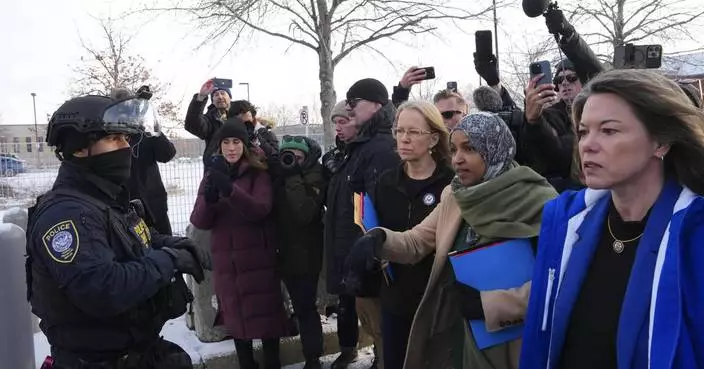
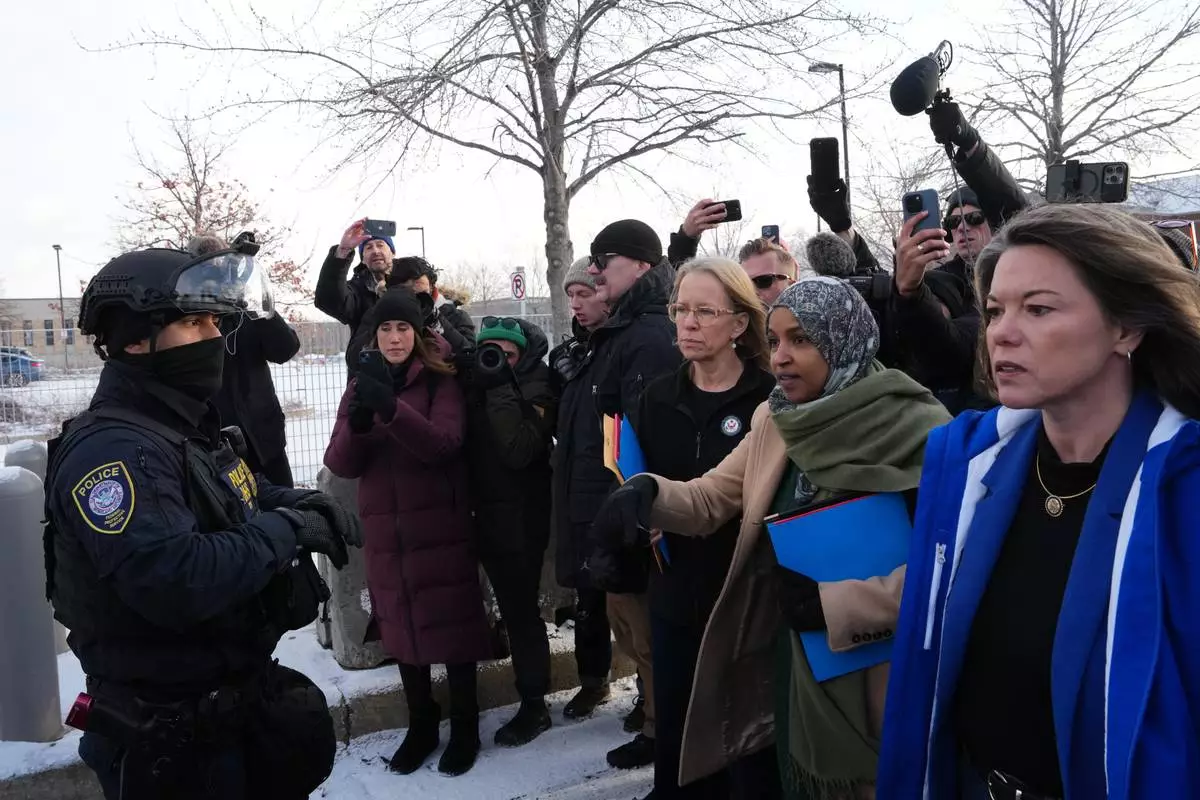
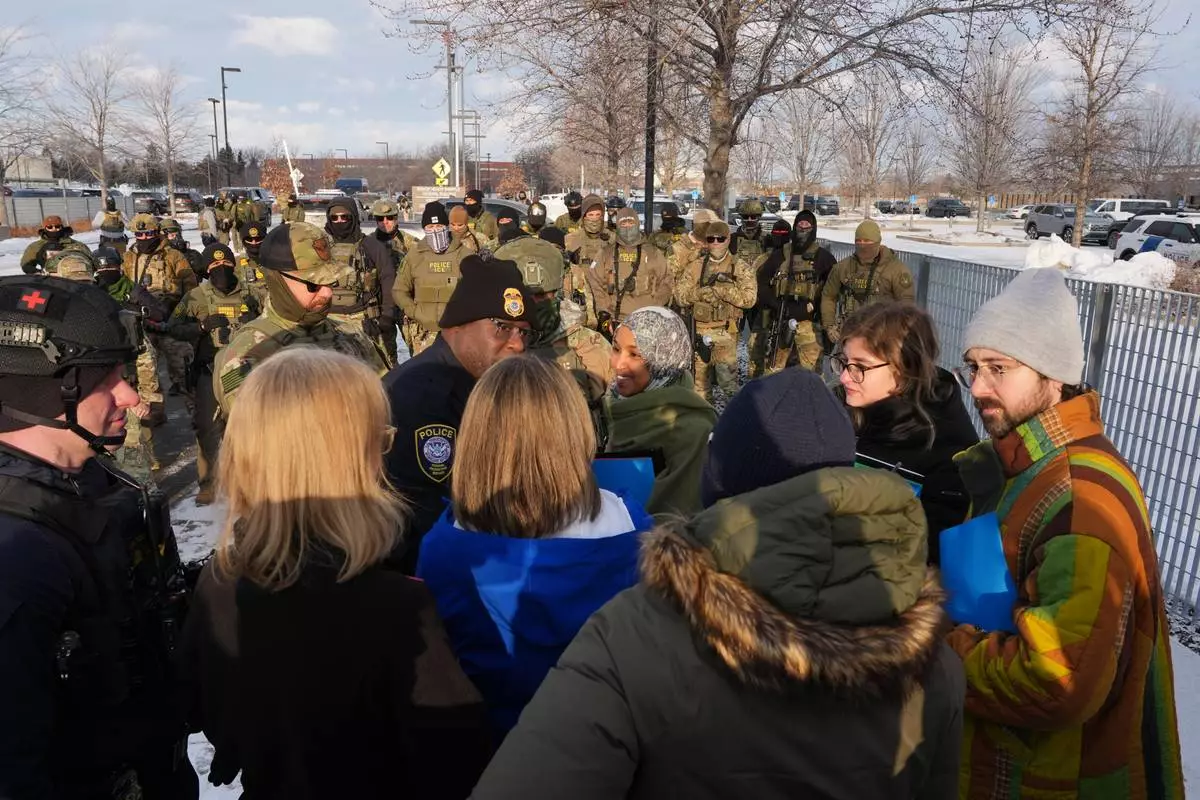
Three congresswomen from Minnesota attempted to tour the ICE facility in the Minneapolis federal building on Saturday morning and were initially allowed to enter but then told they had to leave about 10 minutes later.
U.S, Reps. Ilhan Omar, Kelly Morrison and Angie Craig accused ICE agents of obstructing members of Congress from fulfilling their duty to oversee operations there.
“They do not care that they are violating federal law,” Craig said after being turned away.
A federal judge last month temporarily blocked the Trump administration from enforcing policies that limit congressional visits to immigration facilities. The ruling stems from a lawsuit filed by 12 members of Congress who sued in Washington, D.C. to challenge ICE’s amended visitor policies after they were denied entry to detention facilities.
Associated Press writers Allen Breed in Durham, North Carolina, and Scott Bauer in Madison, Wisconsin, contributed.
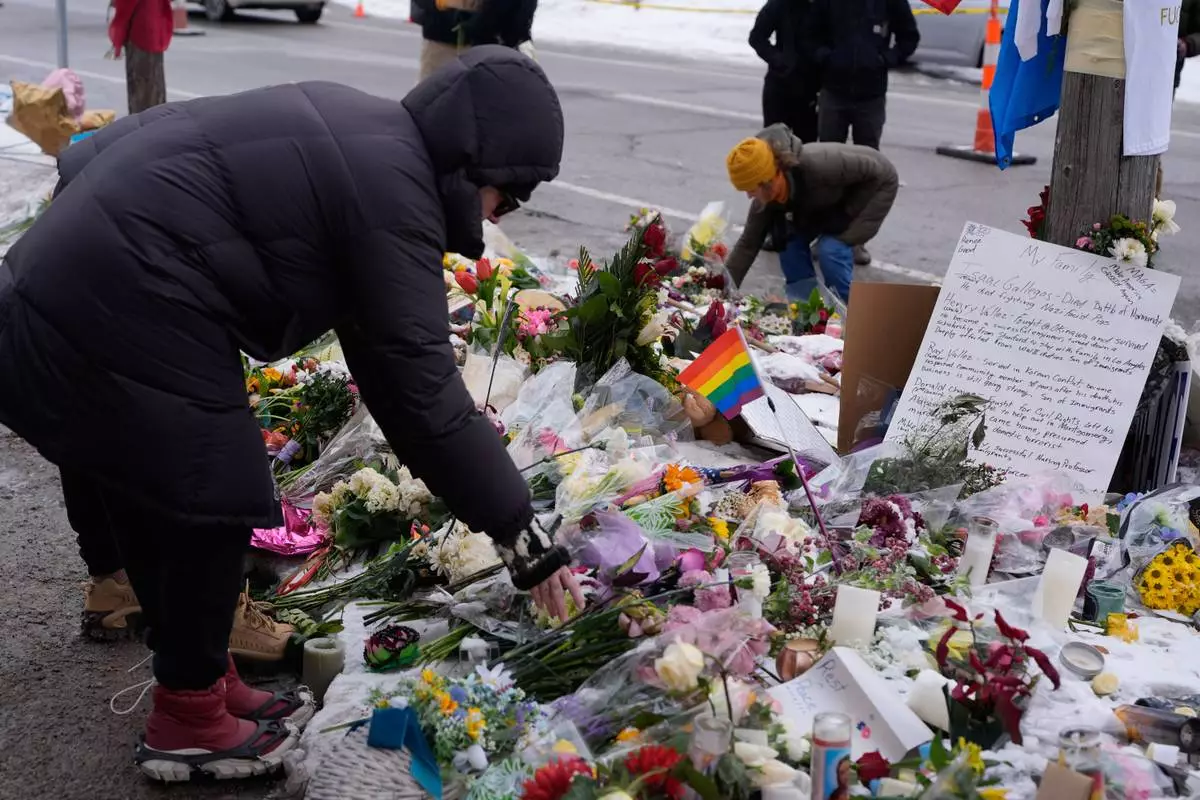
People place flowers for a memorial at the site where Renee Good was fatally shot by an ICE agent in Minneapolis, Saturday, Jan. 10, 2026. (AP Photo/Jen Golbeck)
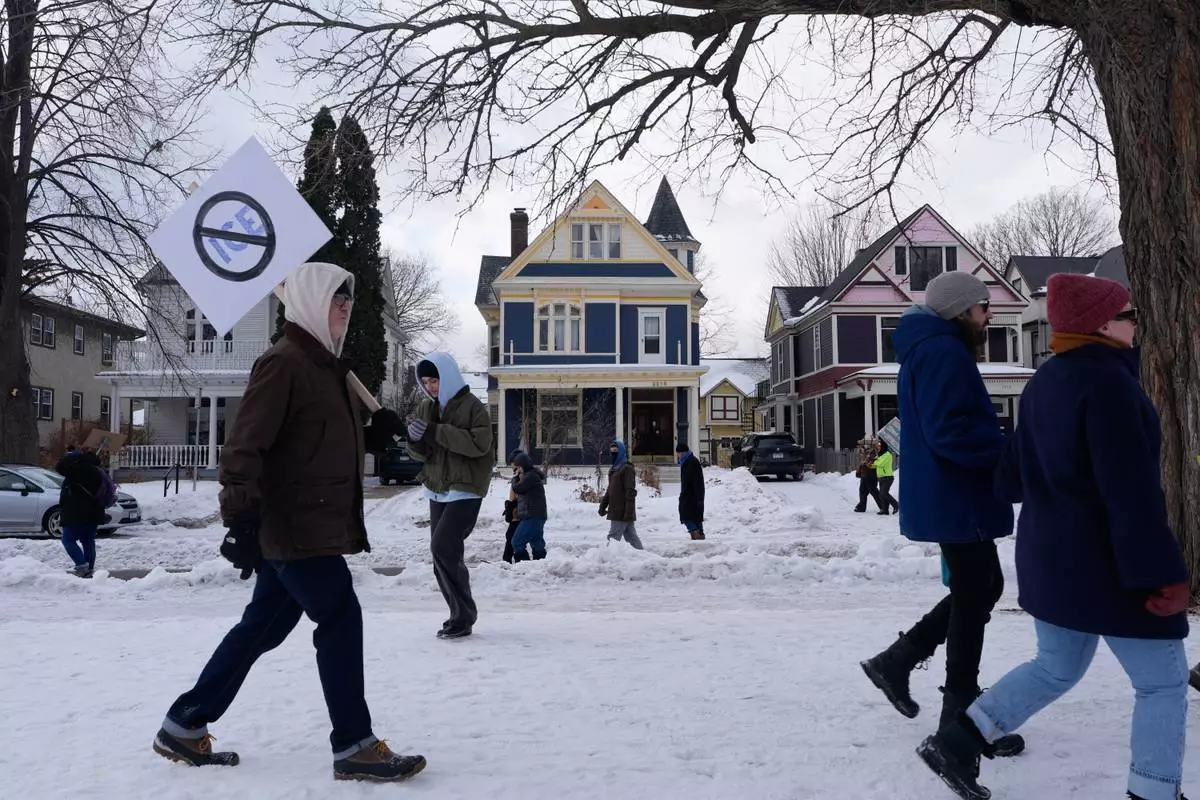
Protesters gather during a rally for Renee Good, who was fatally shot by an ICE officer earlier in the week, Friday, Jan. 10, 2026, in Minneapolis. (AP Photo/Jen Golbeck)
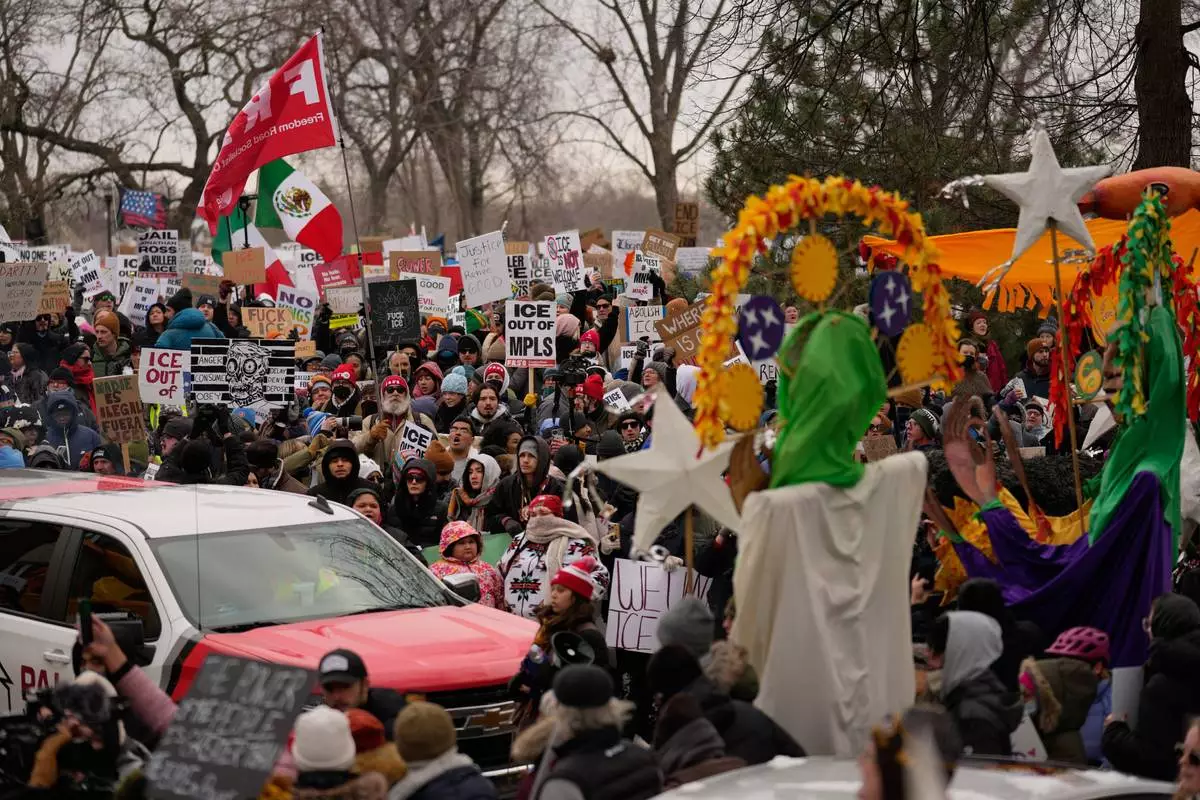
Protesters gather during a rally for Renee Good, who was fatally shot by an ICE officer earlier in the week, Saturday, Jan. 10, 2026, in Minneapolis. (AP Photo/John Locher)
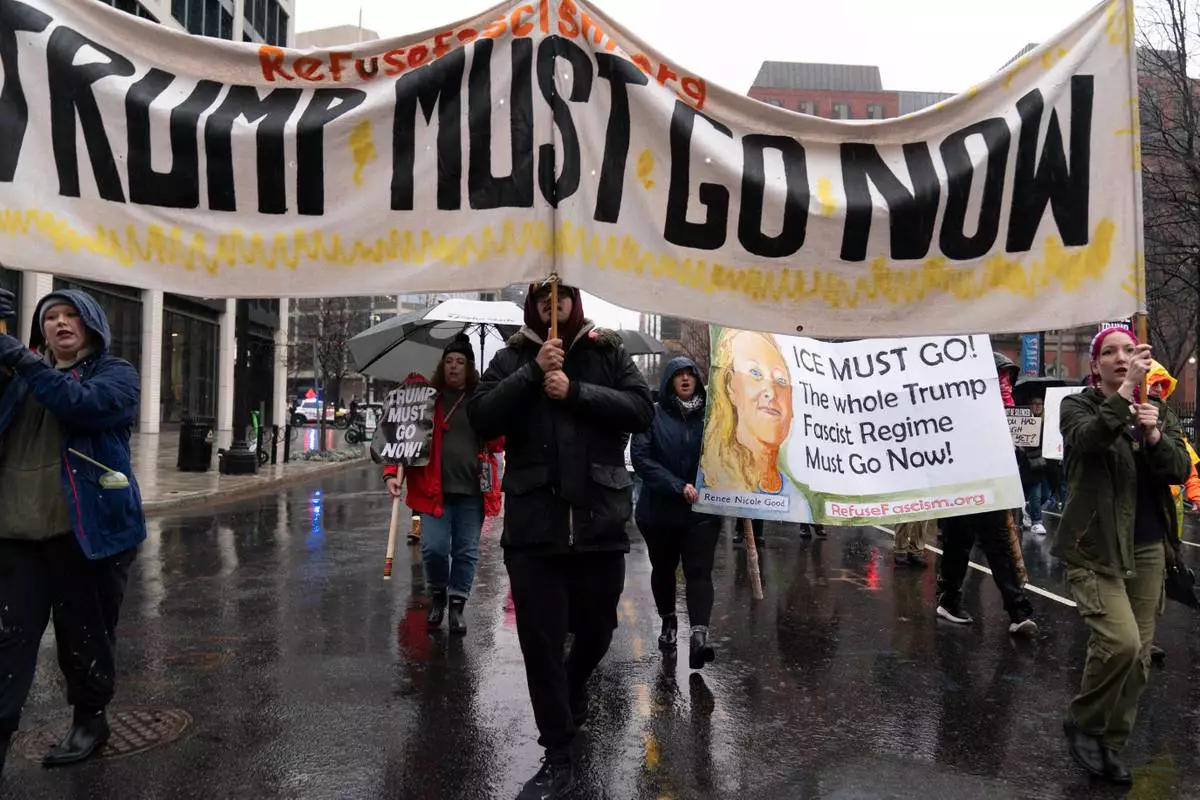
Demonstrators protest outside the White House in Washington, Saturday, Jan. 10, 2026, against the Immigration and Customs Enforcement agent who fatally shot Renee Good in Minneapolis. (AP Photo/Jose Luis Magana)
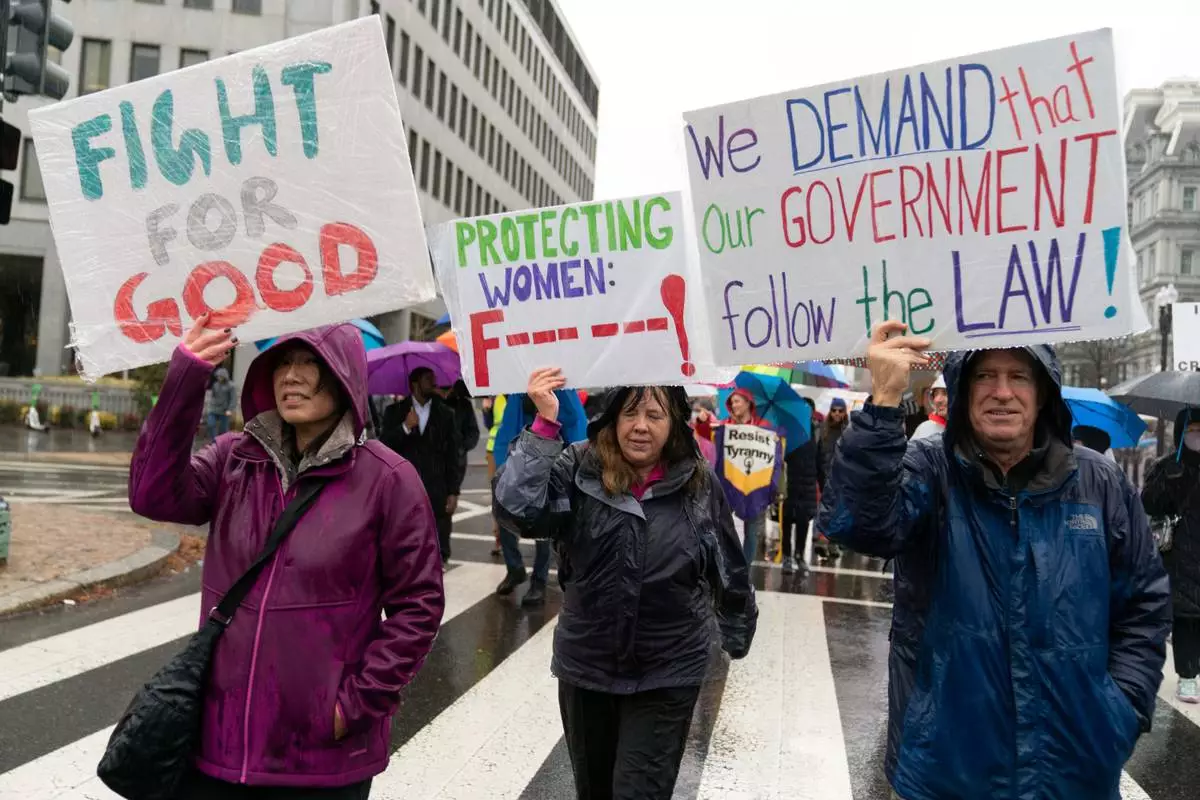
Demonstrators march outside the White House in Washington, Saturday, Jan. 10, 2026, against the Immigration and Customs Enforcement agent who fatally shot Renee Good in Minneapolis. (AP Photo/Jose Luis Magana)
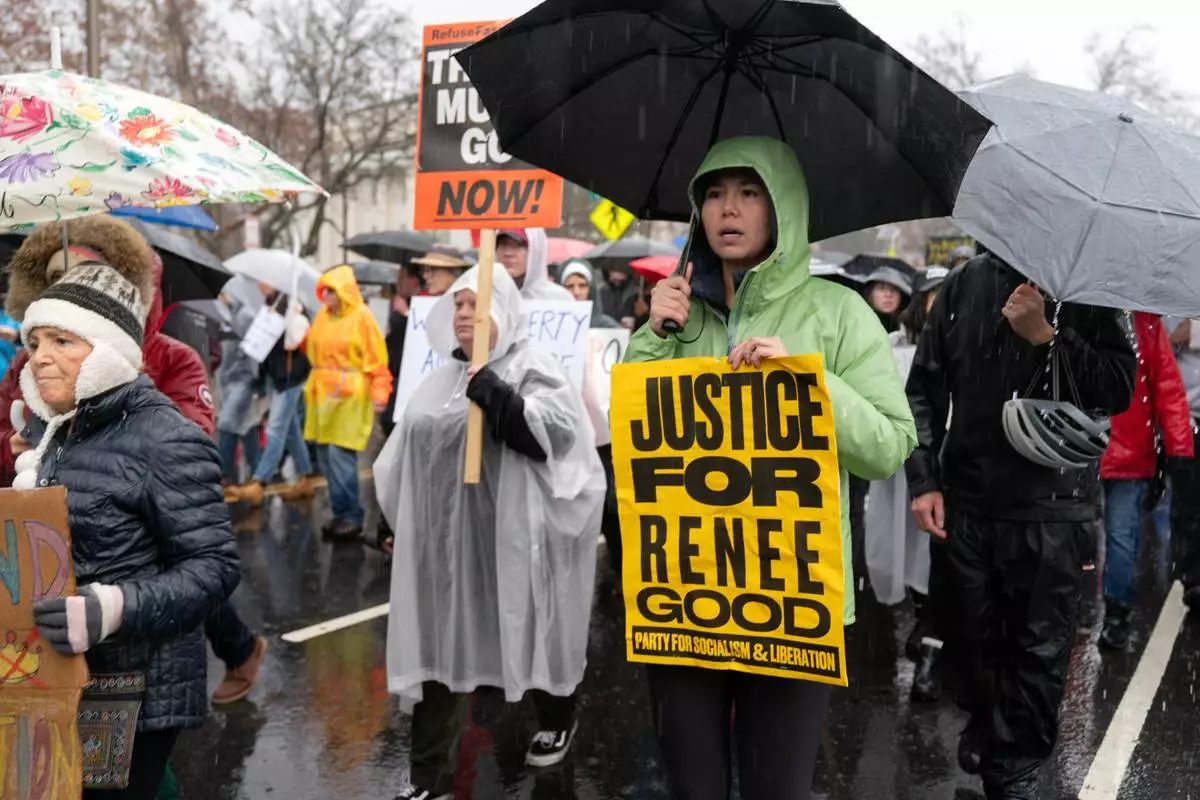
Demonstrators march outside the White House in Washington, Saturday, Jan. 10, 2026, against the Immigration and Customs Enforcement agent who fatally shot Renee Good in Minneapolis. (AP Photo/Jose Luis Magana)
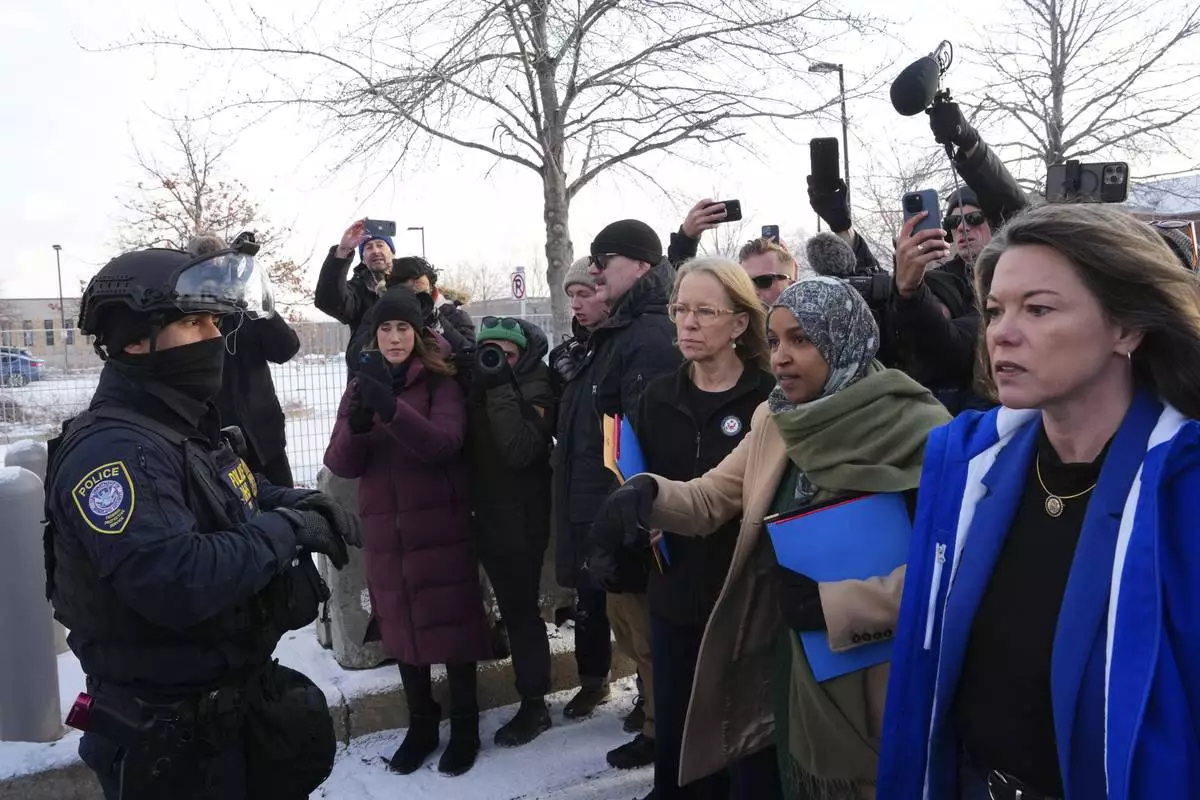
Rep. Kelly Morrison D-Minn., center, Rep. Ilhan Omar, D-Minn., second from the right, and Rep. Angie Craig, D-Minn., far right, at the Bishop Whipple Federal Building, Saturday, Jan. 10, 2026, in Minneapolis. (AP Photo/Adam Gray)
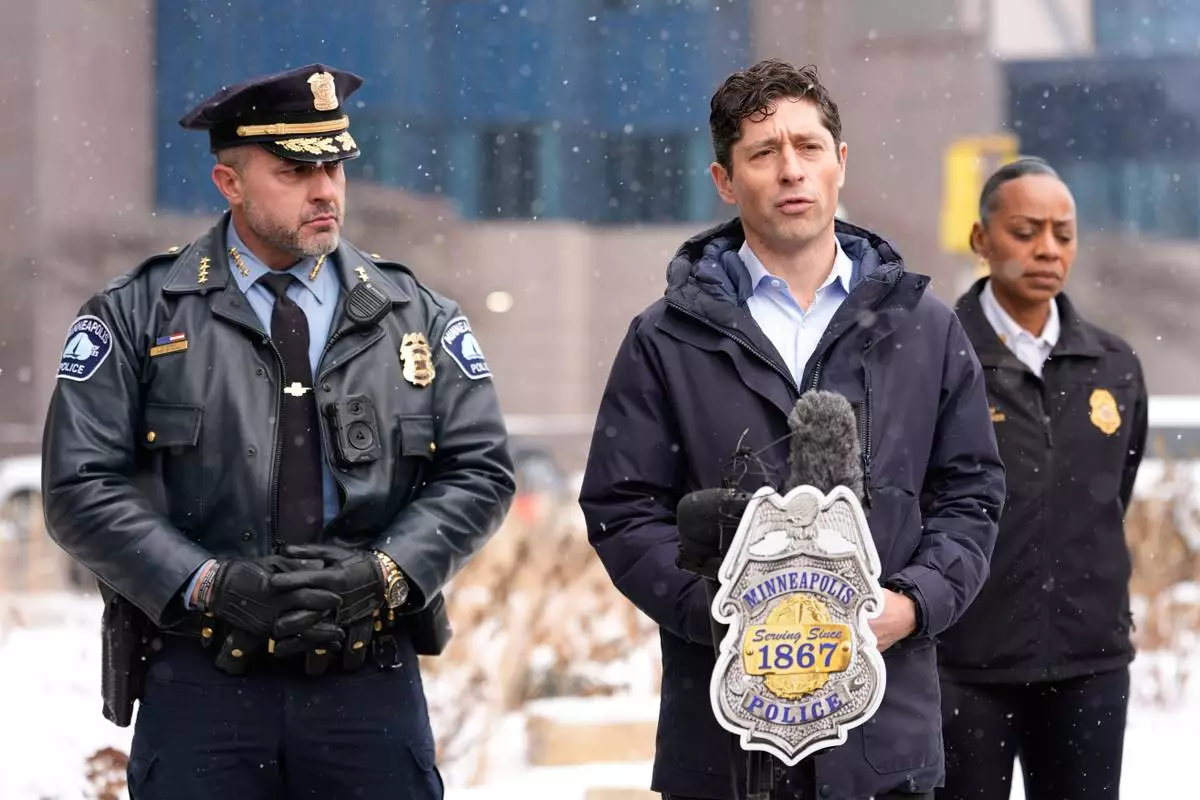
Minneapolis Mayor Jacob Frey holds a news conference as Police Chief Brian O'Hara listens, on Saturday, Jan. 10, 2026, in Minneapolis. (AP Photo/Jen Golbeck)
Protesters gather during a rally for Renee Good, who was fatally shot by an ICE officer earlier in the week, Saturday, Jan. 10, 2026, in Minneapolis. (AP Photo/Adam Gray)
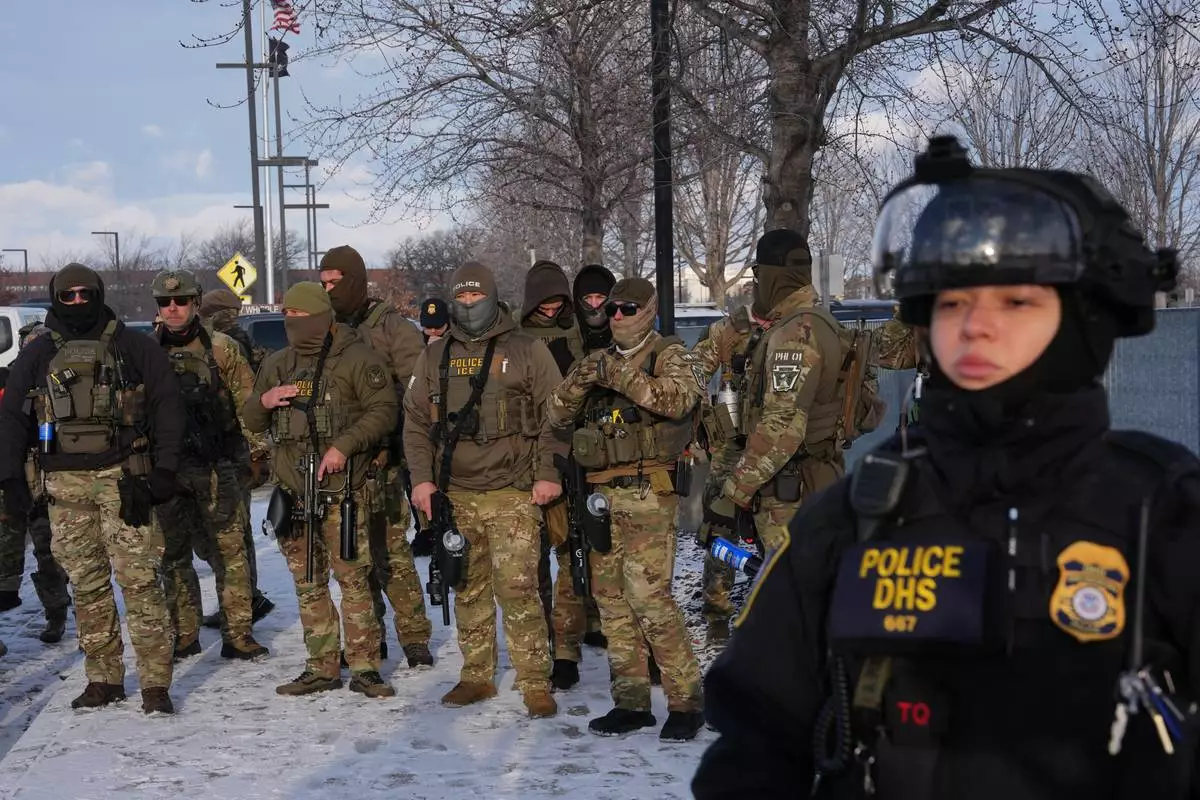
Federal agents stand outside the Bishop Henry Whipple Federal Building as protesters gather in Minneapolis, Saturday, Jan. 10, 2026. (AP Photo/Adam Gray)
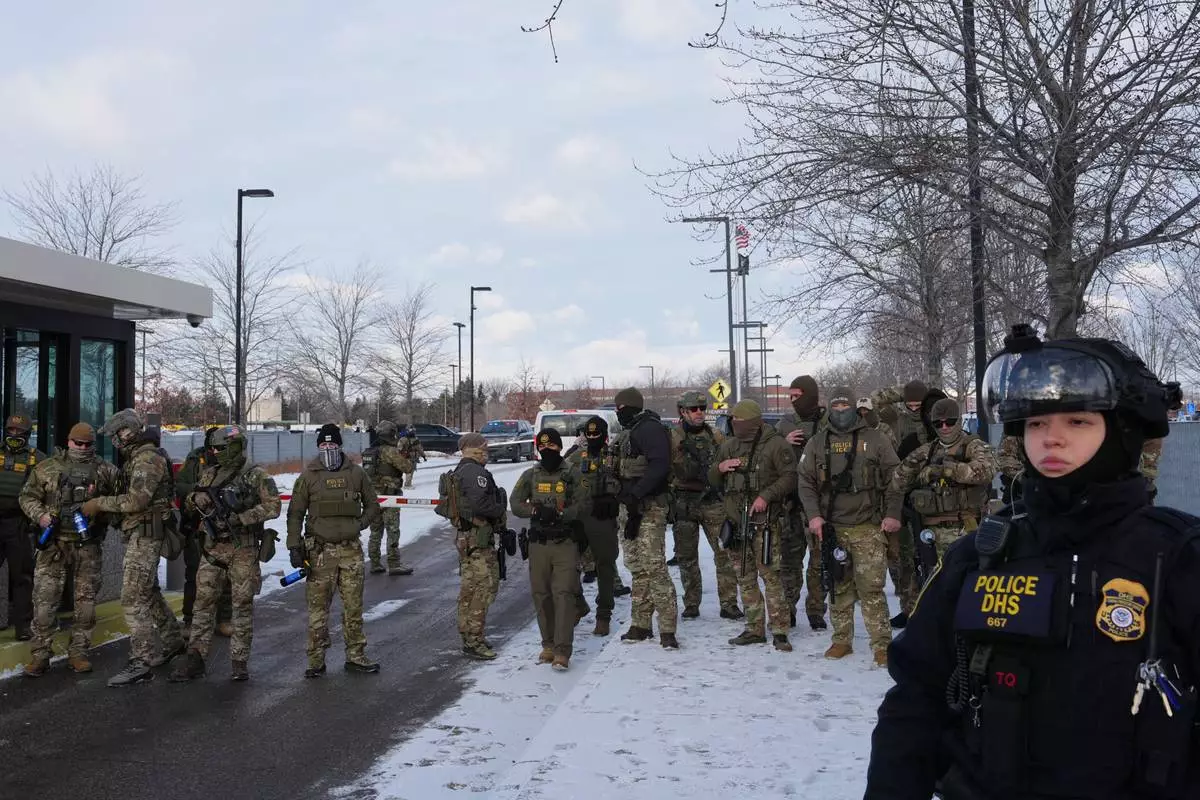
Federal agents stand outside the Bishop Henry Whipple Federal Building as protesters gather in Minneapolis, Saturday, Jan. 10, 2026. (AP Photo/Adam Gray)
Protesters gather during a rally for Renee Good, who was fatally shot by an ICE officer earlier in the week, Saturday, Jan. 10, 2026, in Minneapolis. (AP Photo/Adam Gray)
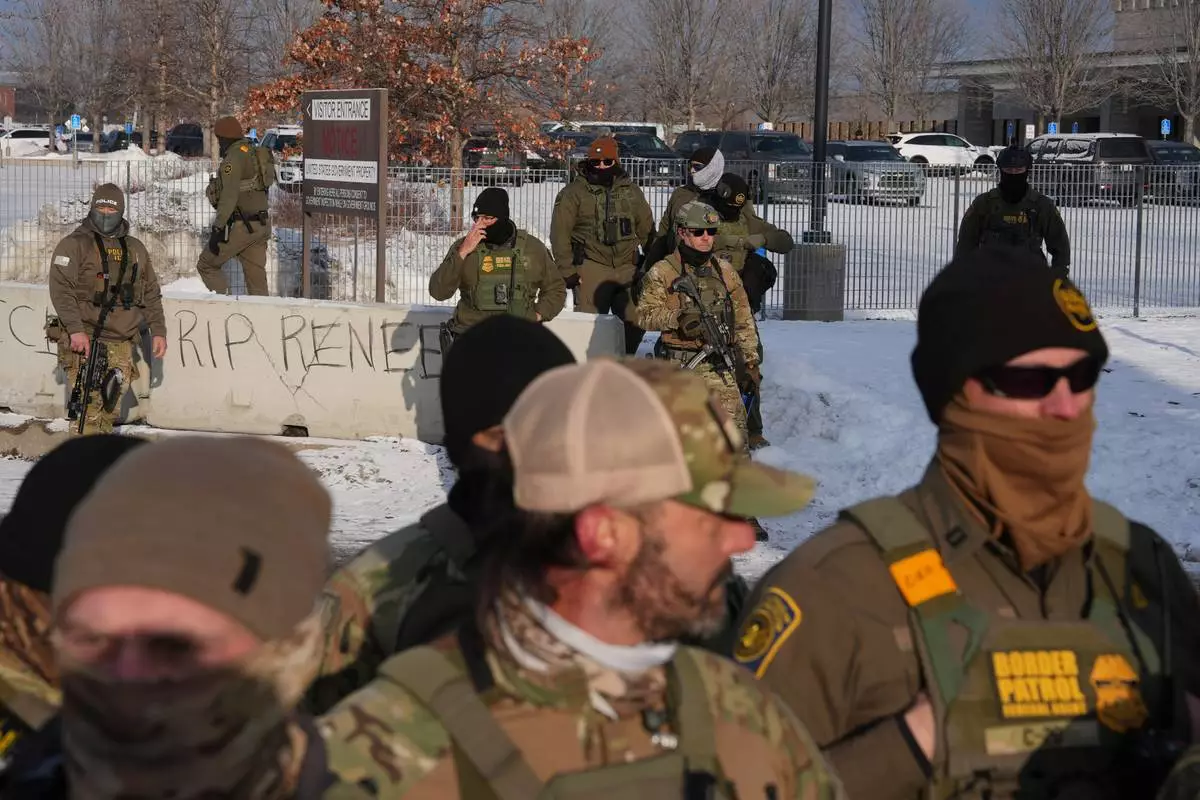
Federal agents look on as protesters gather during a rally for Renee Good, who was fatally shot by an ICE officer earlier in the week, Saturday, Jan. 10, 2026, in Minneapolis. (AP Photo/Adam Gray)
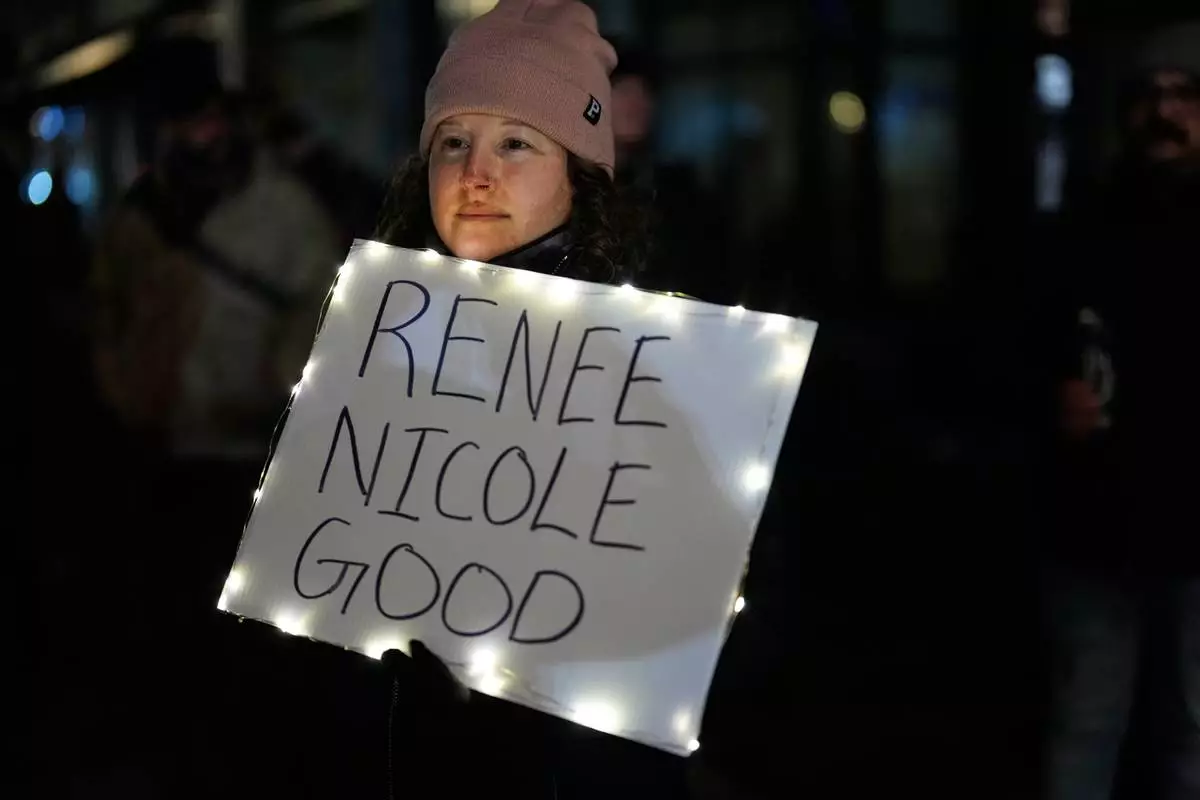
A woman holds a sign for Renee Good, who was fatally shot by an ICE officer in Minneapolis earlier in the week, as people gather outside the U.S. Immigration and Customs Enforcement facility Friday, Jan. 9, 2026, in Portland, Ore. (AP Photo/Jenny Kane)
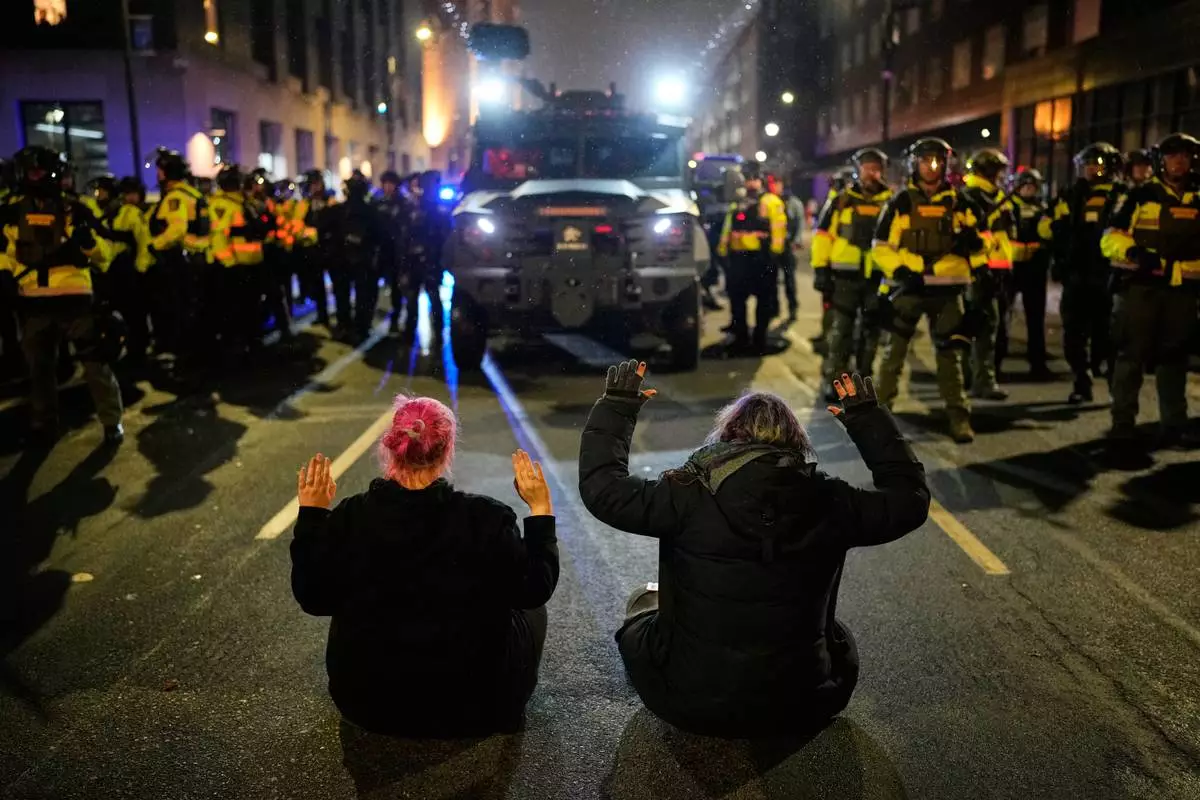
Two people sit in the street with their hands up in front of Minnesota State Patrol during a protest and noise demonstration calling for an end to federal immigration enforcement operations in the city, Friday, Jan. 9, 2026, in Minneapolis. (AP Photo/John Locher)
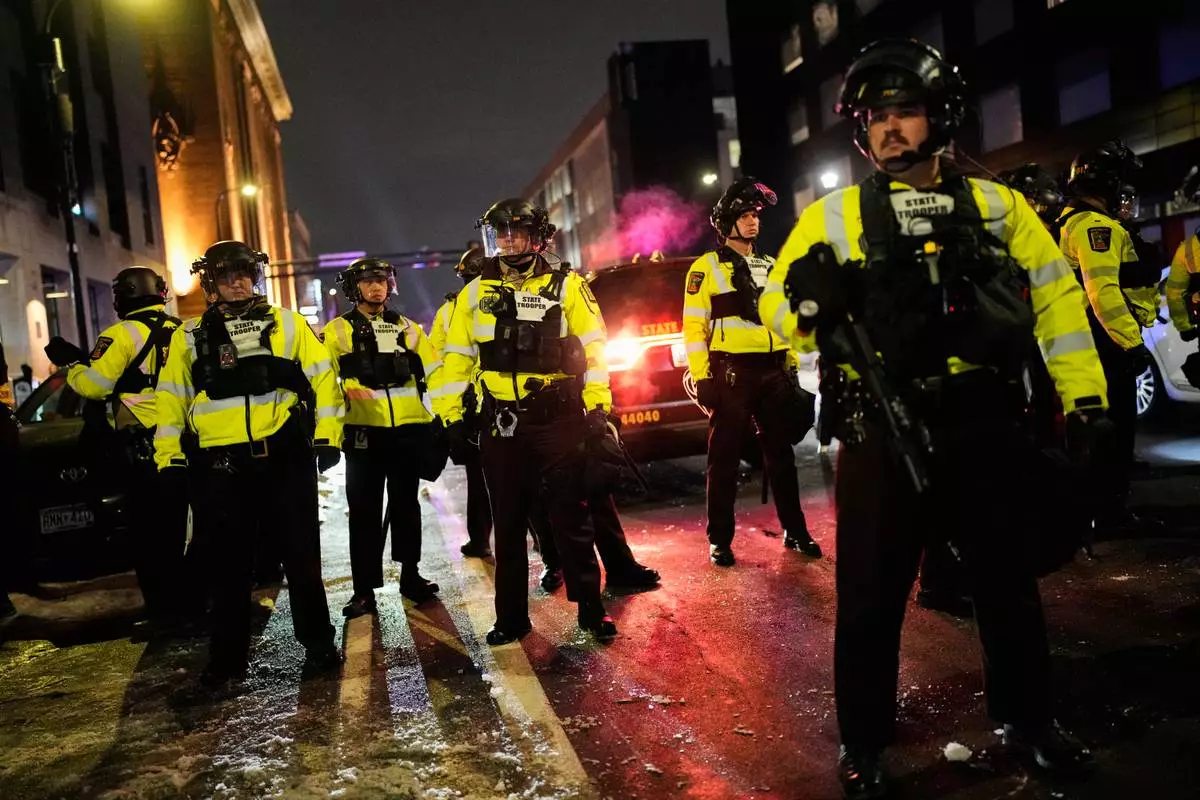
Minnesota State Patrol officers are seen during a protest and noise demonstration calling for an end to federal immigration enforcement operations in the city, Friday, Jan. 9, 2026, in Minneapolis. (AP Photo/John Locher)
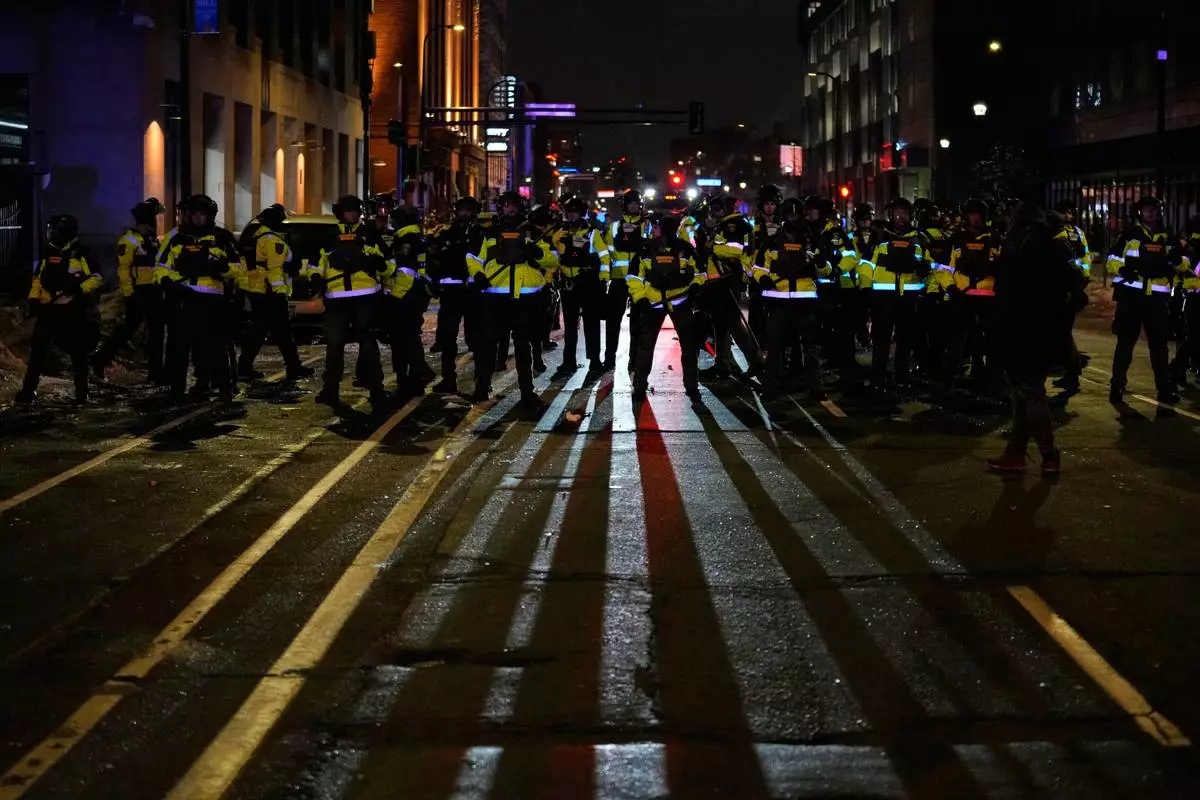
Minnesota State Patrol officers are seen during a protest and noise demonstration calling for an end to federal immigration enforcement operations in the city, Friday, Jan. 9, 2026, in Minneapolis. (AP Photo/John Locher)
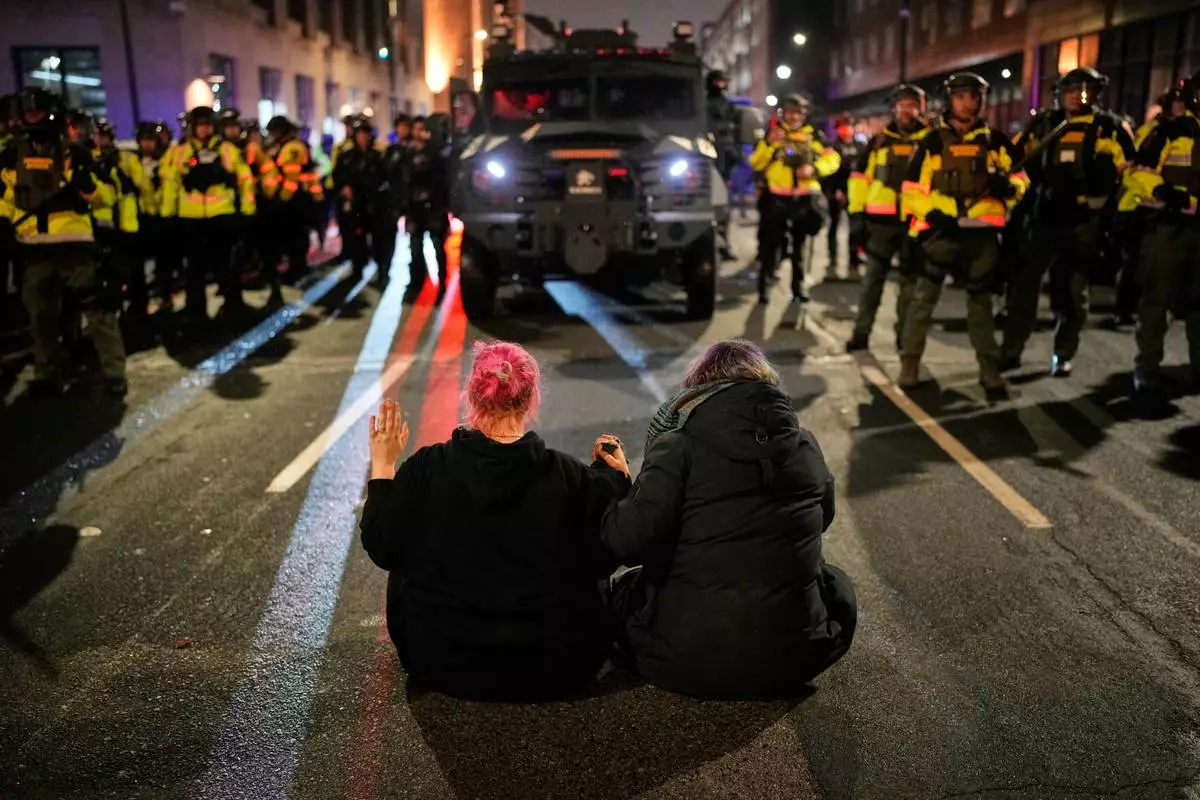
Two people sit in the street holding hands in front of Minnesota State Patrol during a protest and noise demonstration calling for an end to federal immigration enforcement operations in the city, Friday, Jan. 9, 2026, in Minneapolis. (AP Photo/John Locher)