BEIRUT (AP) — A U.S. envoy said Monday he was satisfied with the Lebanese government’s response to a proposal to disarm the militant Hezbollah group, adding that Washington is ready to help the small crisis-hit nation emerge from its long-running political and economic crisis.
The U.S. envoy to Lebanon, Tom Barrack, spoke to journalists after meeting President Joseph Aoun, saying he will study the government's seven-page response. Barrack said the American and Lebanese sides are committed “to get a resolution.”
“What the government gave us was something spectacular in a very short period of time and a very complicated manner,” Barrack said during his 20-minute news conference at the presidential palace southeast of Beirut.
His meetings in Lebanon came amid fears that Hezbollah’s refusal to immediately disarm would renew war between Israel after a shaky ceasefire agreement went into effect in November.
Last month, Barrack gave Lebanese officials a proposal that aims to disarm Hezbollah and move on with some economic reforms to try get Lebanon out of its nearly 6-year economic crisis, the worst in its modern history. The economic meltdown is rooted in decades of corruption and mismanagement by Lebanon’s political class.
Barrack said Lebanon should change in the same way as Syria has following the fall in December of Syrian President Bashar Assad,who was replaced by a new leadership that is moving ahead with major economic reforms.
Barrack said President Donald Trump and the U.S. are ready to help Lebanon change and “if you don’t want change, it's no problem." The rest of the region is moving at high speed," he said.
Hezbollah’s weapons have been one of the principal sticking points since Israel withdrew from southern Lebanon in 2000, ending an 18-year occupation. The two sides fought a destructive war in 2006 that ended in a draw.
The latest Israel-Hezbollah war began a day after the Hamas Oct. 7, 2023 attack on southern Israel and intensified in September, leaving the Iran-backed group badly bruised and much of its political and military leadership dead.
Since a U.S.-brokered ceasefire went into effect in November, Hezbollah has almost ended all its military presence along the border with Israel, which is insisting that the group disarms all over Lebanon. Aoun said Sunday that the number of Lebanese troops along the border with Israel will increase to 10,000, adding that only Lebanese soldiers and U.N. peacekeepers will be armed on the Lebanese side of the border.
On Sunday night, hours before Barrack arrived in Beirut, Israel’s air force carried out strikes on southern and eastern Lebanon, wounding nine people, according to state media. The Israeli army said the airstrikes hit Hezbollah’s infrastructure, arms depots and missile launchers.
Earlier Sunday, Hezbollah leader Naim Kassem reiterated the militant group’s refusal to lay down its weapons before Israel withdraws from all of southern Lebanon and stops its airstrikes.
The Hezbollah-Israel war left over 4,000 people dead in Lebanon and caused destruction estimated at $11 billion. In Israel, 127 people, including 80 soldiers, were killed during the war.
Since the November ceasefire, Israel has carried out hundreds of airstrikes on different parts of Lebanon, killing about 250 people and injuring over 600. Israel is also still holding five strategic posts inside Lebanon that it refused to withdraw from earlier this year.
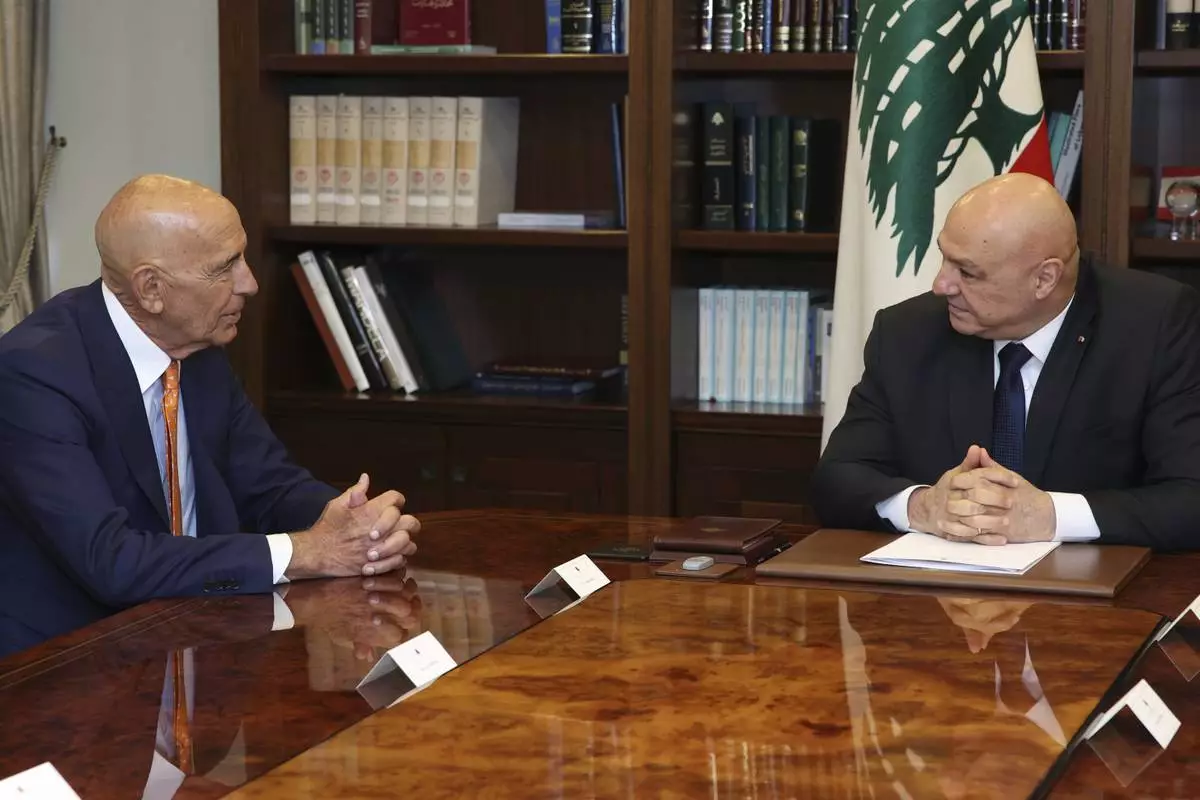
In this photo released by the Lebanese Presidency press office, Lebanese president Joseph Aoun, right, meets with U.S. Ambassador to Turkey and Special Envoy to Syria Tom Barrack, in Baabda, east of Beirut, Monday, July 7, 2025. (Lebanese Presidency press office via AP)
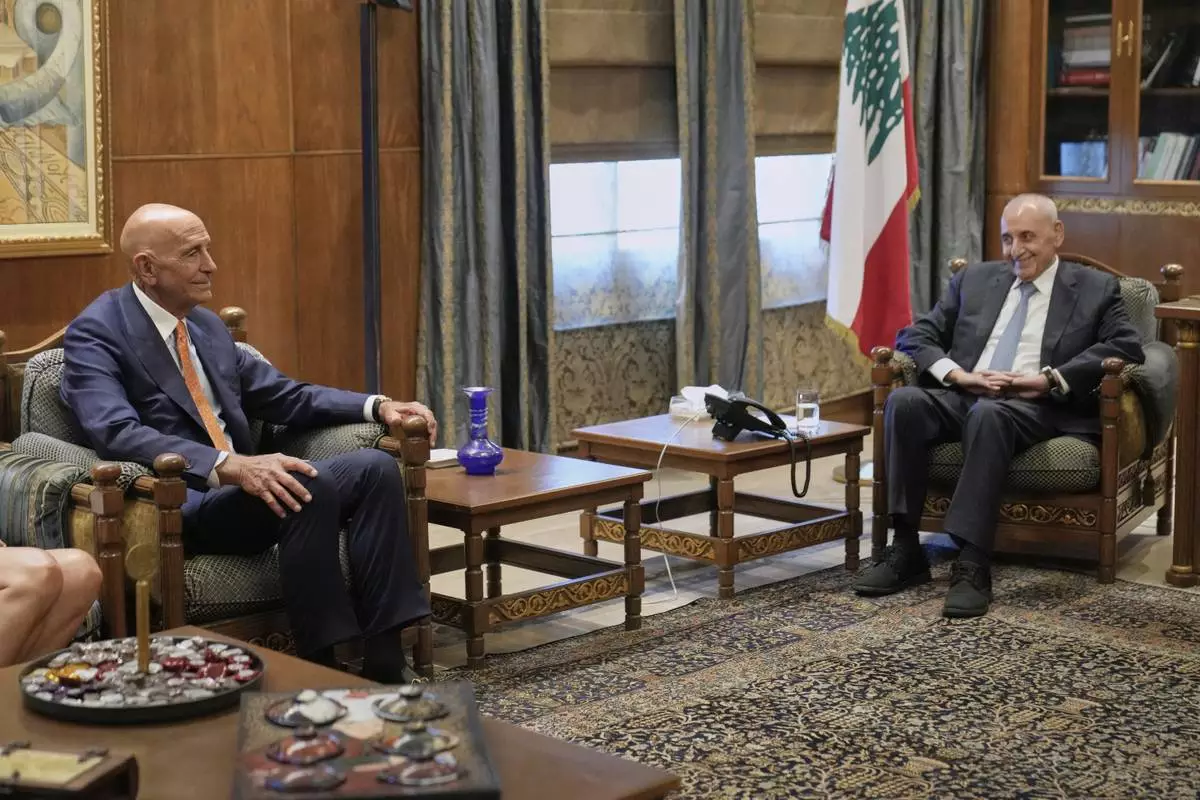
U.S. Ambassador to Turkey and Special Envoy to Syria Tom Barrack, left, meets with Lebanese Parliament Speaker Nabih Berri, in Beirut, Lebanon, Monday, July 7, 2025. (AP Photo/Hussein Malla)
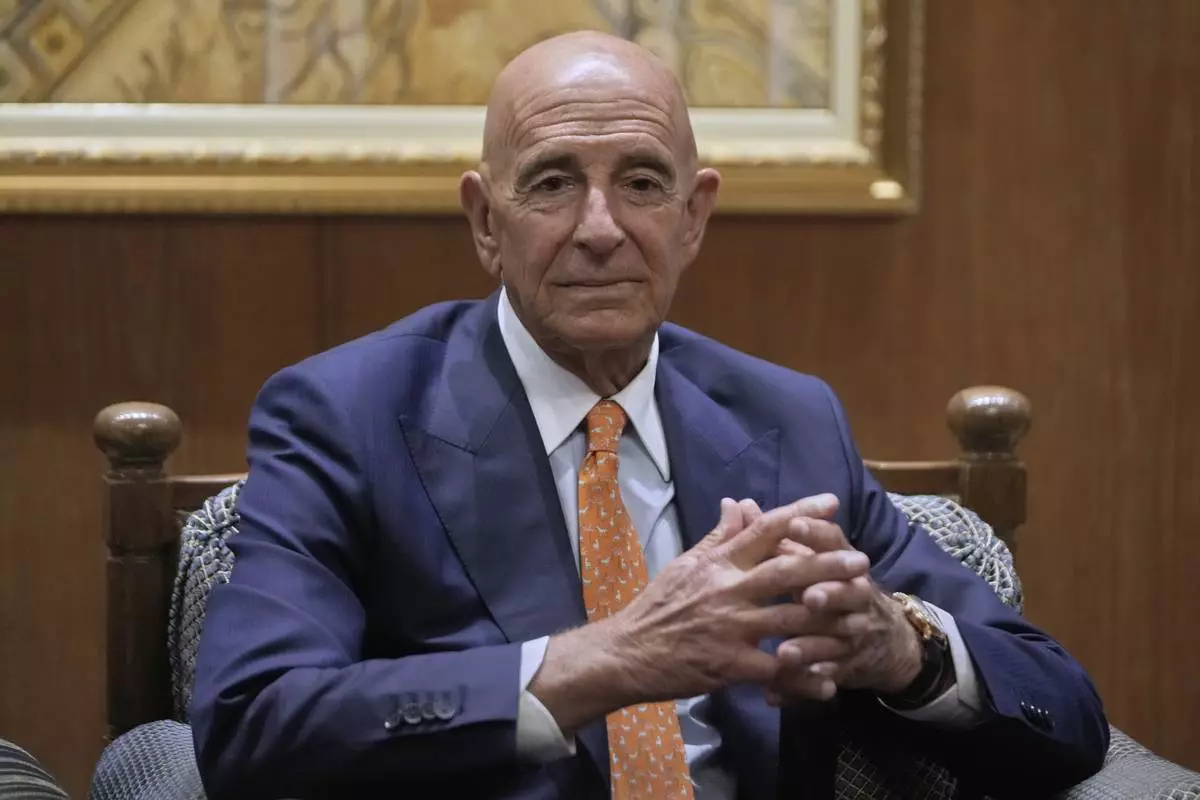
U.S. Ambassador to Turkey and Special Envoy to Syria Tom Barrack, meets with Lebanese Parliament Speaker Nabih Berri, in Beirut, Lebanon, Monday, July 7, 2025. (AP Photo/Hussein Malla)
DUBAI, United Arab Emirates (AP) — Nationwide protests challenging Iran's theocracy saw protesters flood the streets in the country's capital and its second-largest city into Sunday, crossing the two-week mark as violence surrounding the demonstrations has killed at least 116 people, activists said.
With the internet down in Iran and phone lines cut off, gauging the demonstrations from abroad has grown more difficult. But the death toll in the protests has grown, while 2,600 others have been detained, according to the U.S.-based Human Rights Activists News Agency.
Those abroad fear the information blackout will embolden hard-liners within Iran's security services to launch a bloody crackdown, despite warnings from U.S. President Donald Trump he's willing to strike the Islamic Republic to protect peaceful demonstrators.
Trump offered support for the protesters, saying on social media that “Iran is looking at FREEDOM, perhaps like never before. The USA stands ready to help!!!” The New York Times and Wall Street Journal, citing anonymous U.S. officials, said on Saturday night that Trump had been given military options for a strike on Iran, but hadn’t made a final decision.
The State Department separately warned: “Do not play games with President Trump. When he says he’ll do something, he means it.”
Online videos sent out of Iran, likely using Starlink satellite transmitters, purportedly showed demonstrators gathering in northern Tehran's Punak neighborhood. There, it appeared authorities shut off streets, with protesters waving their lit mobile phones. Others banged metal while fireworks went off.
Other footage purportedly showed demonstrators peacefully marching down a street and others honking their car horns on the street.
In Mashhad, Iran's second-largest city, some 725 kilometers (450 miles) northeast of Tehran, footage purported to show protesters confronting security forces. Flaming debris and dumpsters could be seen in the street, blocking the road. Mashhad is home to the Imam Reza shrine, the holiest in Shiite Islam, making the protests there carry heavy significance for the country's theocracy.
Protests also appeared to happen in Kerman, 800 kilometers (500 miles) southeast of Tehran.
Iranian state television on Sunday morning took a page from demonstrators, having their correspondents appear on streets in several cities to show calm areas with a date stamp shown on screen. Tehran and Mashhad were not included. They also showed pro-government demonstrations in Qom and Qazvin.
Supreme Leader Ayatollah Ali Khamenei has signaled a coming clampdown, despite U.S. warnings. Tehran escalated its threats Saturday, with Iran’s attorney general, Mohammad Movahedi Azad, warning that anyone taking part in protests will be considered an “enemy of God,” a death-penalty charge. The statement carried by Iranian state television said even those who “helped rioters” would face the charge.
Iran’s theocracy cut off the nation from the internet and international telephone calls on Thursday, though it allowed some state-owned and semiofficial media to publish. Qatar’s state-funded Al Jazeera news network reported live from Iran, but they appeared to be the only major foreign outlet able to work.
Iran’s exiled Crown Prince Reza Pahlavi, who called for protests Thursday and Friday, asked in his latest message for demonstrators to take to the streets Saturday and Sunday. He urged protesters to carry Iran’s old lion-and-sun flag and other national symbols used during the time of the shah to “claim public spaces as your own.”
Pahlavi’s support of and from Israel has drawn criticism in the past — particularly after the 12-day war. Demonstrators have shouted in support of the shah in some protests, but it isn’t clear whether that’s support for Pahlavi himself or a desire to return to a time before the 1979 Islamic Revolution.
The demonstrations began Dec. 28 over the collapse of the Iranian rial currency, which trades at over 1.4 million to $1, as the country’s economy is squeezed by international sanctions in part levied over its nuclear program. The protests intensified and grew into calls directly challenging Iran’s theocracy.
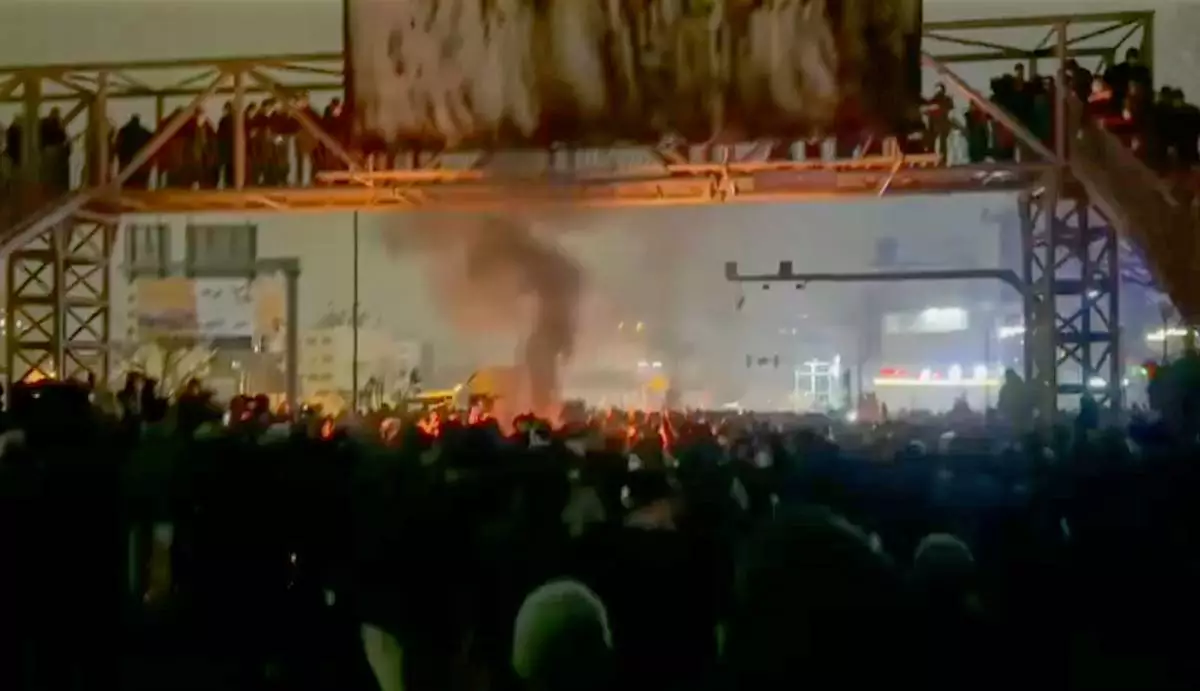
In this frame grab from footage circulating on social media from Iran shows protesters taking to the streets despite an intensifying crackdown as the Islamic Republic remains cut off from the rest of the world in Tehran, Iran, Friday, Jan. 9, 2026.(UGC via AP)
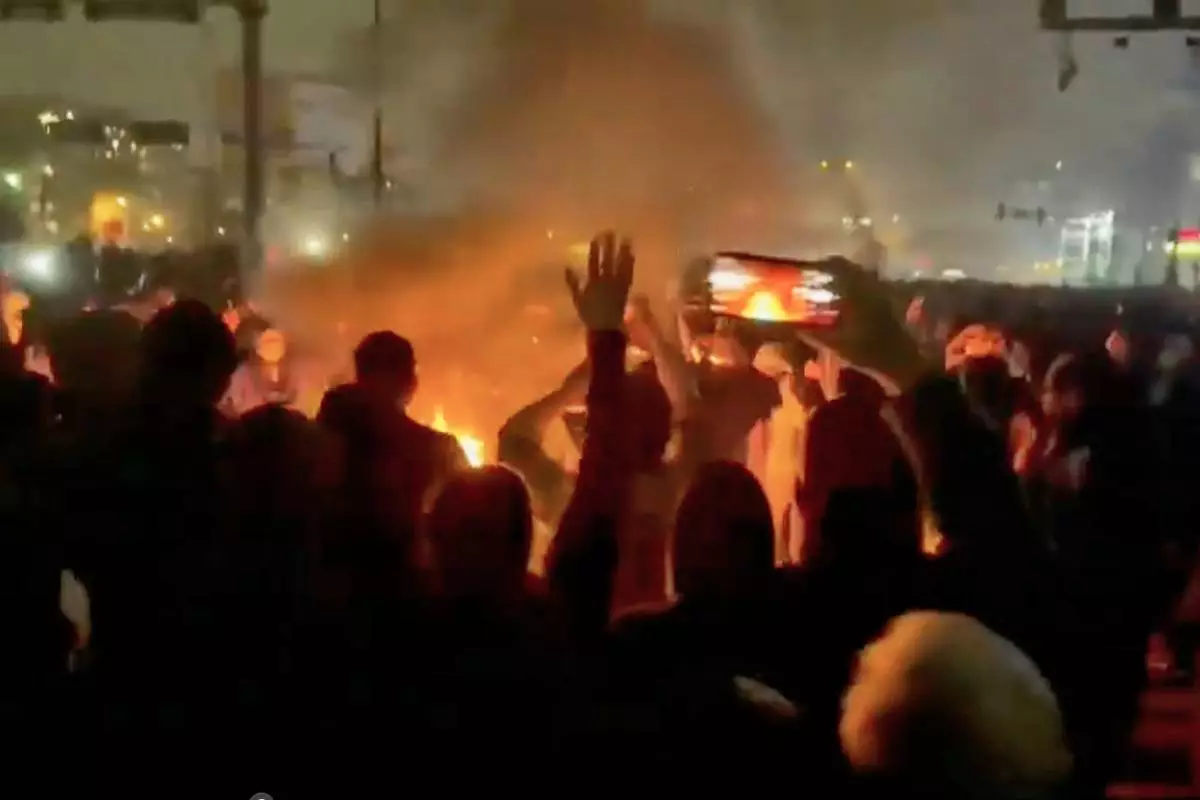
In this frame grab from footage circulating on social media shows protesters dancing and cheering around a bonfire as they take to the streets despite an intensifying crackdown as the Islamic Republic remains cut off from the rest of the world, in Tehran, Iran, Friday, Jan. 9, 2026.(UGC via AP)
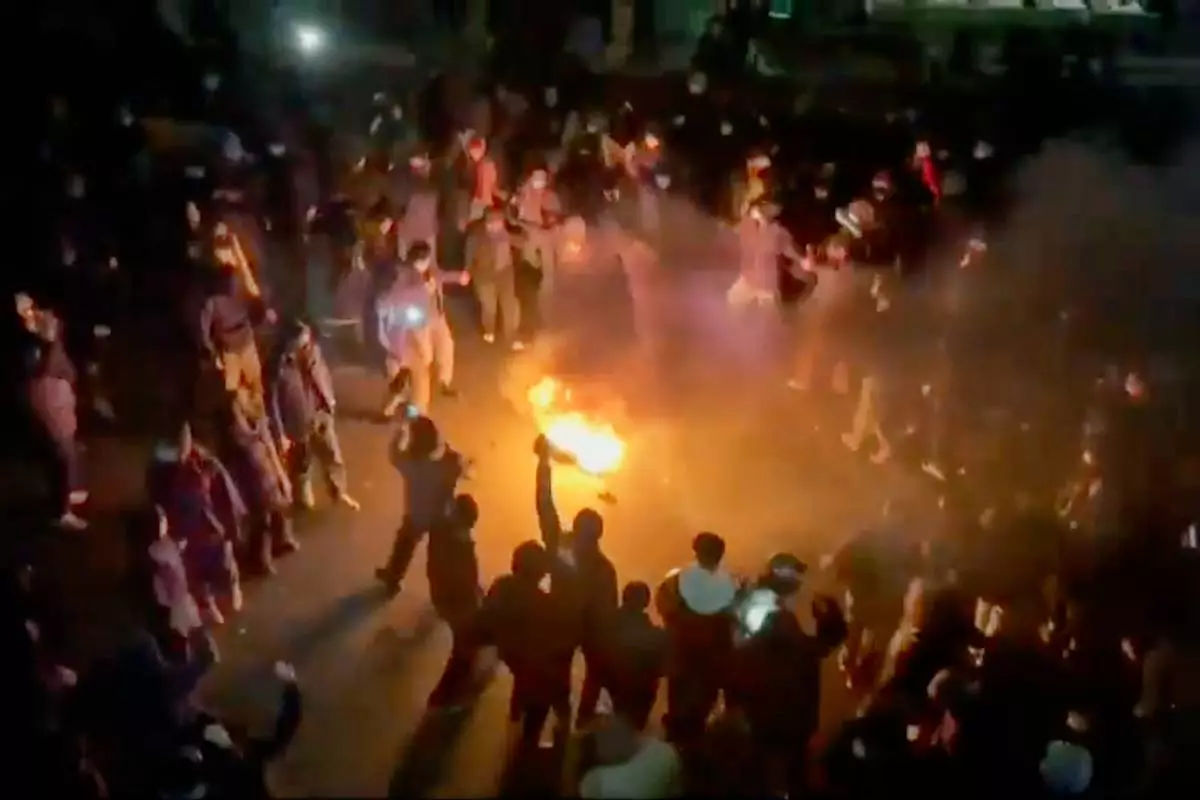
In this frame grab from footage circulating on social media shows protesters dancing and cheering around a bonfire as they take to the streets despite an intensifying crackdown as the Islamic Republic remains cut off from the rest of the world, in Tehran, Iran, Friday, Jan. 9, 2026.(UGC via AP)

In this frame grab from footage circulating on social media from Iran showed protesters once again taking to the streets of Tehran despite an intensifying crackdown as the Islamic Republic remains cut off from the rest of the world in Tehran, Iran, Saturday Jan. 10, 2026. (UGC via AP)