A video testimony of a former Japanese invader's account of germ warfare conducted by Japan's notorious Unit 731 in southern China during World War II was released for the first time in China on Monday.
The confession comes from Masakuni Kurumizawa, whose full 83-minute video testimony, recorded in 1991 during a peace exhibition in Iida, Japan, was released ahead of the 88th anniversary of July 7 Incident, which marked the start of Japan's full-scale invasion of China and China's whole-nation resistance against the Japanese invaders.
In the video collected and released by the Exhibition Hall of Evidence of Crime Committed by Unit 731 of the Japanese Imperial Army in Harbin, the provincial capital of Heilongjiang in northeast China, Kurumizawa said that biological weapons were mass-produced and used in bombing campaigns targeting Chinese cities such as Chongqing and Wuhan.
"Before launching a germ attack, we had to produce two tons of bacteria a day. Once they were produced, they were packed like explosives and immediately used in bombings. They were used to bomb Chongqing and Wuhan, as if spraying pesticides to fields from helicopters," said Kurumizawa.
"They believed that the biological weapons were immensely destructive and could quickly achieve the goals of aggression. Unit 731's germ warfare appeared to be a tactic means in coordination with conventional troops on the surface. But in fact, in the actual operations they served as a military power for military attacks, and they also inflicted harm to civilians," said Jin Shicheng, deputy secretary-general of the Harbin Research Institute on the History of Bacterial and Gas War of the Japanese Invasion in China.
Japan was a signatory to the 1925 Geneva Protocol banning chemical and biological warfare. But the Japanese troops invading China launched germ warfare on many occasions under the guise of epidemic prevention and water purification.
While the unit claimed to provide clean water, its true mission was to develop and deploy biological weapons, according to Kurumizawa.
"The epidemic prevention and water purification division of the Japanese Kwantung Army was actually Unit 731, which was related to the Japanese Army Medical School. Unit 731 was engaged in bacteriological work, but it operated under the guise of being a disease prevention and water purification division. On the surface, it claimed it provided germ-free and non-toxic water," Kurumizawa said in the video.
Kurumizawa also replied a question why the unit originally based in Tokyo moved to northeast China, saying it was deliberate.
"It's because that conducting bacteriological research inside Japan was considered not good. It would not do to incur outbreaks of infectious diseases at home. Then I became a research fellow at the Harbin branch of the Manchurian Academy of Sciences, and I entered Unit 731," said Kurumizawa.
"The Manchurian Academy of Sciences was a scientific institution under the puppet state of Manchukuo (which covered today's Northeast China) at the time. His entry into Unit 731 through this academy evidences that it had personnel exchanges with Unit 731, and that they cooperated with each other. Medical schools and medical departments of universities in Japan also had business ties and personnel exchanges with Unit 731. That's why we say Unit 731 was actually the command center and operational base for Japan's medical community to invade other countries. Unit 731 embodies a comprehensive complex of the national mobilization and individual wills, which shows that its actions were a large-scale, organized state crime orchestrated from the top down in Japan," said Jin.
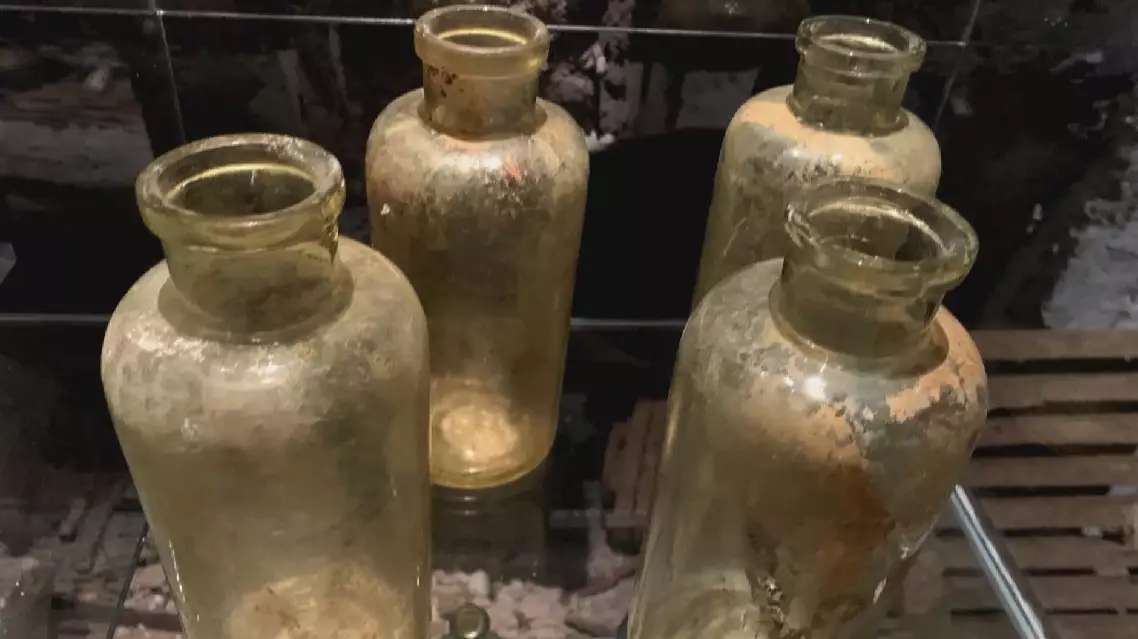
Video testimony of Unit 731's gem warfare released