Skip to Content Facebook Feature Image

Appeals court rules against North Dakota tribes in voting rights case that could go to Supreme Court

News

Appeals court rules against North Dakota tribes in voting rights case that could go to Supreme Court
News

News

Appeals court rules against North Dakota tribes in voting rights case that could go to Supreme Court

2025-07-08 03:03 Last Updated At:03:11

BISMARCK, N.D. (AP) — A federal appeals court won't reconsider its decision in a redistricting case that went against two Native American tribes that challenged North Dakota's legislative redistricting map, and the dispute could be headed for the U.S. Supreme Court.

The case has drawn national interest because of a 2-1 ruling issued in May by a three-judge panel of the 8th U.S. Circuit Court of Appeals that erased a path through the federal Voting Rights Act for people in seven states to sue under a key provision of the landmark federal civil rights law. The tribes argued that the 2021 map violated the act by diluting their voting strength and ability to elect their own candidates.

The panel said only the U.S. Department of Justice can bring such lawsuits. That followed a 2023 ruling out of Arkansas in the same circuit that also said private individuals can't sue under Section 2 of the law.

Those rulings conflict with decades of rulings by appellate courts in other federal circuits that have affirmed the rights of private individuals to sue under Section 2, creating a split that the Supreme Court may be asked to resolve. However, several of the high court’s conservative justices recently have indicated interest in making it harder, if not impossible, to bring redistricting lawsuits under the Voting Rights Act.

After the May decision, the Spirit Lake Tribe and Turtle Mountain Band of Chippewa Indians asked the appeals court for a rehearing before all 11 judges. Attorneys general of 19 states, numerous former U.S. Justice Department attorneys, several voting rights historians and others also asked for a rehearing.

But in a ruling Thursday, the full court denied the request, which was filed by the Native American Rights Fund and other groups representing the tribes. Three judges said they would have granted it, including Circuit Chief Judge Steven Colloton, who had dissented in the previous ruling.

The majority opinion in May said that for the tribes to sue under the Voting Rights Act, the law would have had to “unambiguously” give private persons or groups the right to do so.

Lenny Powell, a staff attorney for the fund, said in a statement that the refusal to reconsider “wrongly restricts voters disenfranchised by a gerrymandered redistricting map" from challenging that map.

Powell said Monday that the tribes are now considering their legal options.

Another group representing the tribes, the Campaign Legal Center, said the ruling is "contrary to both the intent of Congress in enacting the law and to decades of Supreme Court precedent affirming voters’ power to enforce the law in court.”

The office of North Dakota Secretary of State Michael Howe did not immediately respond to a request for comment Monday.

The groups said they will continue to fight to ensure fair maps. The North Dakota and Arkansas rulings apply only in the states of the 8th Circuit: Arkansas, Iowa, Minnesota, Missouri, Nebraska, North Dakota and South Dakota. In the wake of the Arkansas decision, Minnesota and other states have moved to shore up voting rights with state-level protections to plug the growing gaps in the federal law.

The North Dakota tribes filed their lawsuit in 2022. The three-judge panel heard appeal arguments last October after Republican Secretary of State Michael Howe appealed a lower court's November 2023 decision in favor of the tribes.

In that ruling, U.S. District Judge Peter Welte ordered creation of a new district that encompassed both tribes' reservations, which are about 60 miles (97 kilometers) apart. In 2024, voters elected members from both tribes, all Democrats, to the district's Senate seat and two House seats.

Republicans hold supermajority control of North Dakota's Legislature.

Karnowski reported from Minneapolis.
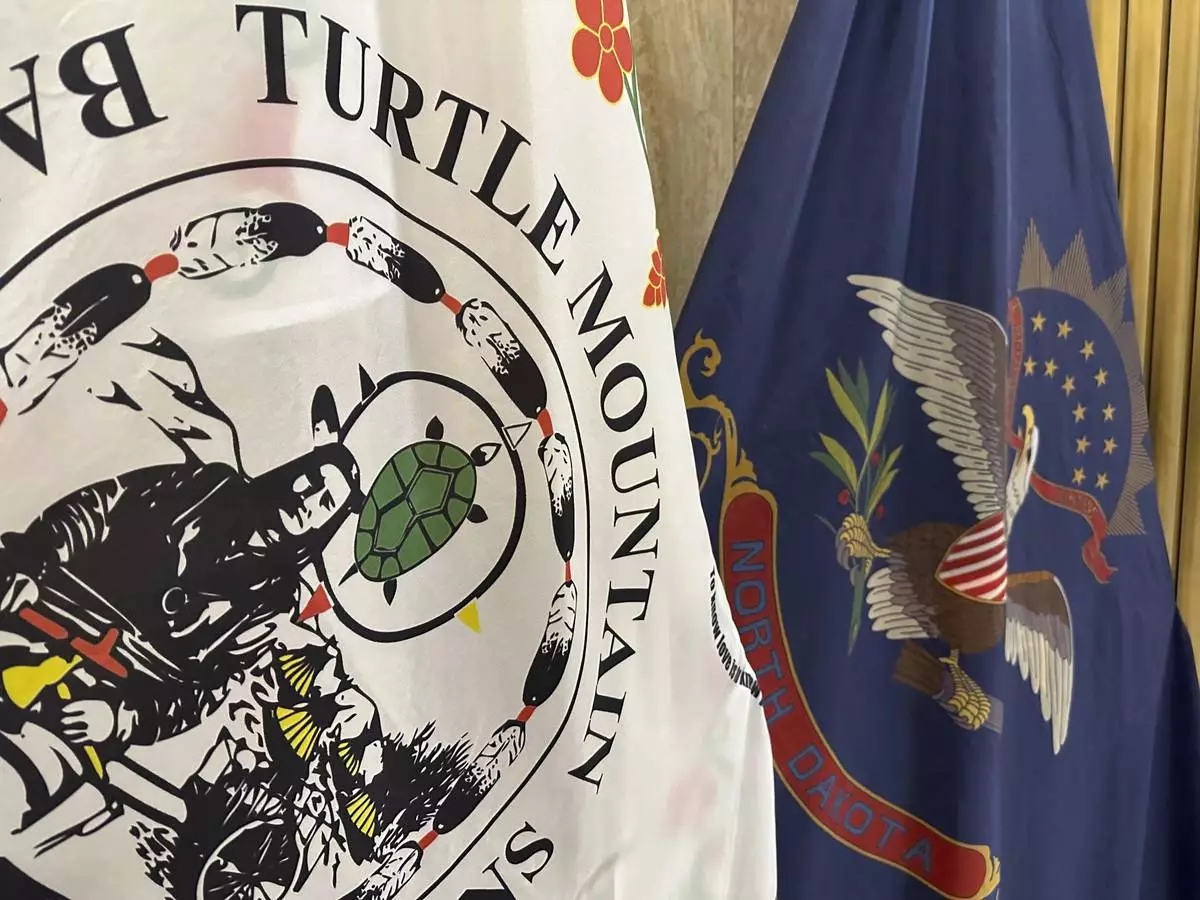
FILE - Flags for the Turtle Mountain Band of Chippewa Indians and the state of North Dakota stand in Memorial Hall of the state Capitol in Bismarck, N.D., on Dec. 15, 2023. (AP Photo/Jack Dura, File)

FILE - Flags for the Turtle Mountain Band of Chippewa Indians and the state of North Dakota stand in Memorial Hall of the state Capitol in Bismarck, N.D., on Dec. 15, 2023. (AP Photo/Jack Dura, File)
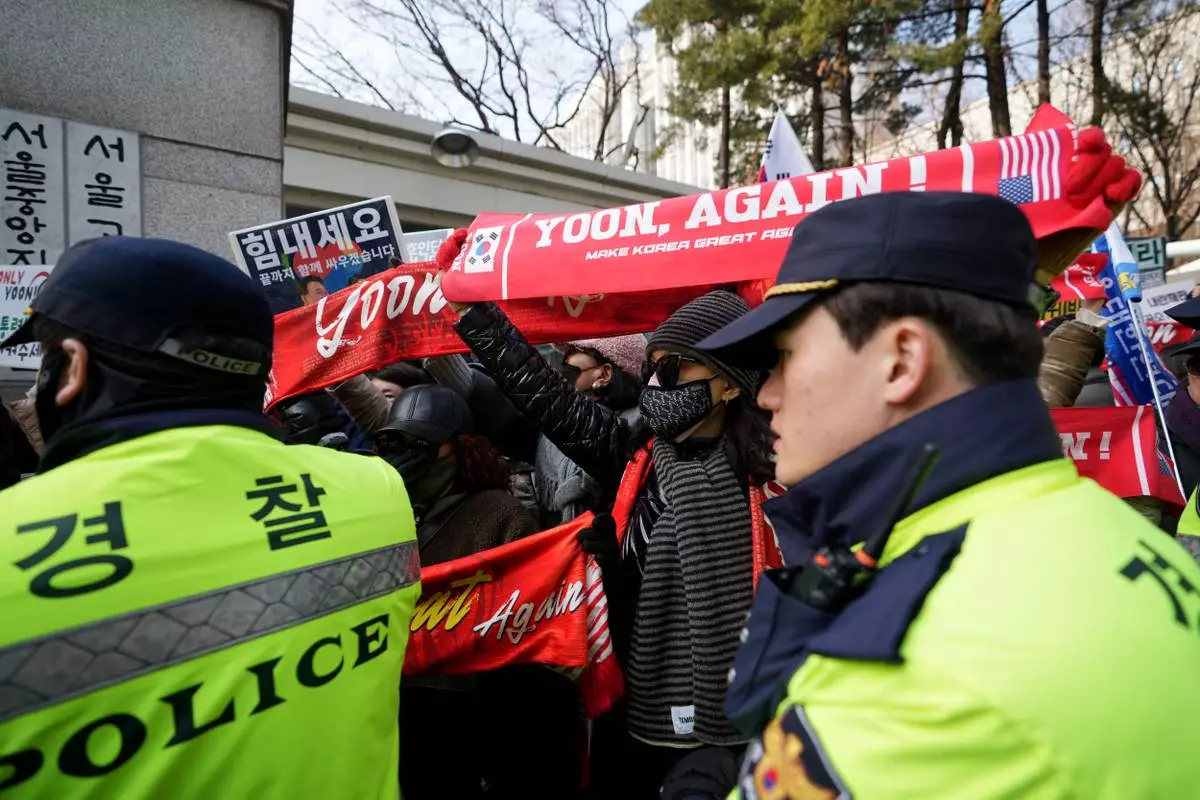
SEOUL, South Korea (AP) — A South Korean court sentenced former President Yoon Suk Yeol to five years in prison Friday in the first verdict from eight criminal trials over the martial law debacle that forced him out of office and other allegations.

Yoon was impeached, arrested and dismissed as president after his short-lived imposition of martial law in December 2024 triggered huge public protests calling for his ouster.

The most significant criminal charge against him alleges that his martial law enforcement amounted to a rebellion, and the independent counsel has requested the death sentence in the case that is to be decided in a ruling next month.

In Friday's case, the Seoul Central District Court sentenced Yoon for defying attempts to detain him, fabricating the martial law proclamation and sidestepping a legally mandated full Cabinet meeting.

Yoon has maintained he didn’t intend to place the country under military rule for an extended period, saying his decree was only meant to inform the people about the danger of the liberal-controlled parliament obstructing his agenda. But investigators have viewed Yoon’s decree as an attempt to bolster and prolong his rule, charging him with rebellion, abuse of power and other criminal offenses.

Judge Baek Dae-hyun said in the televised ruling that imposing “a grave punishment” was necessary because Yoon hasn’t shown remorse and has only repeated “hard-to-comprehend excuses.” The judge also restoring legal systems damaged by Yoon’s action was necessary.

Yoon, who can appeal the ruling, hasn’t immediately publicly responded to the ruling. But when the independent counsel demanded a 10-year prison term in the case, Yoon’s defense team accused them of being politically driven and lacking legal grounds to demand such “an excessive” sentence.

Prison sentences in the multiple, smaller trials Yoon faces would matter if he is spared the death penalty or life imprisonment at the rebellion trial.

Park SungBae, a lawyer who specializes in criminal law, said there is little chance the court would decide Yoon should face the death penalty in the rebellion case. He said the court will likely issue a life sentence or a sentence of 30 years or more in prison.

South Korea has maintained a de facto moratorium on executions since 1997 and courts rarely hand down death sentences. Park said the court would take into account that Yoon’s decree didn’t cause casualties and didn’t last long, although Yoon hasn’t shown genuine remorse for his action.

A supporter of former South Korean President Yoon Suk Yeol shouts slogans outside Seoul Central District Court, in Seoul, South Korea, Friday, Jan. 16, 2026. (AP Photo/Lee Jin-man)

A supporter of former South Korean President Yoon Suk Yeol shouts slogans outside Seoul Central District Court, in Seoul, South Korea, Friday, Jan. 16, 2026. (AP Photo/Lee Jin-man)

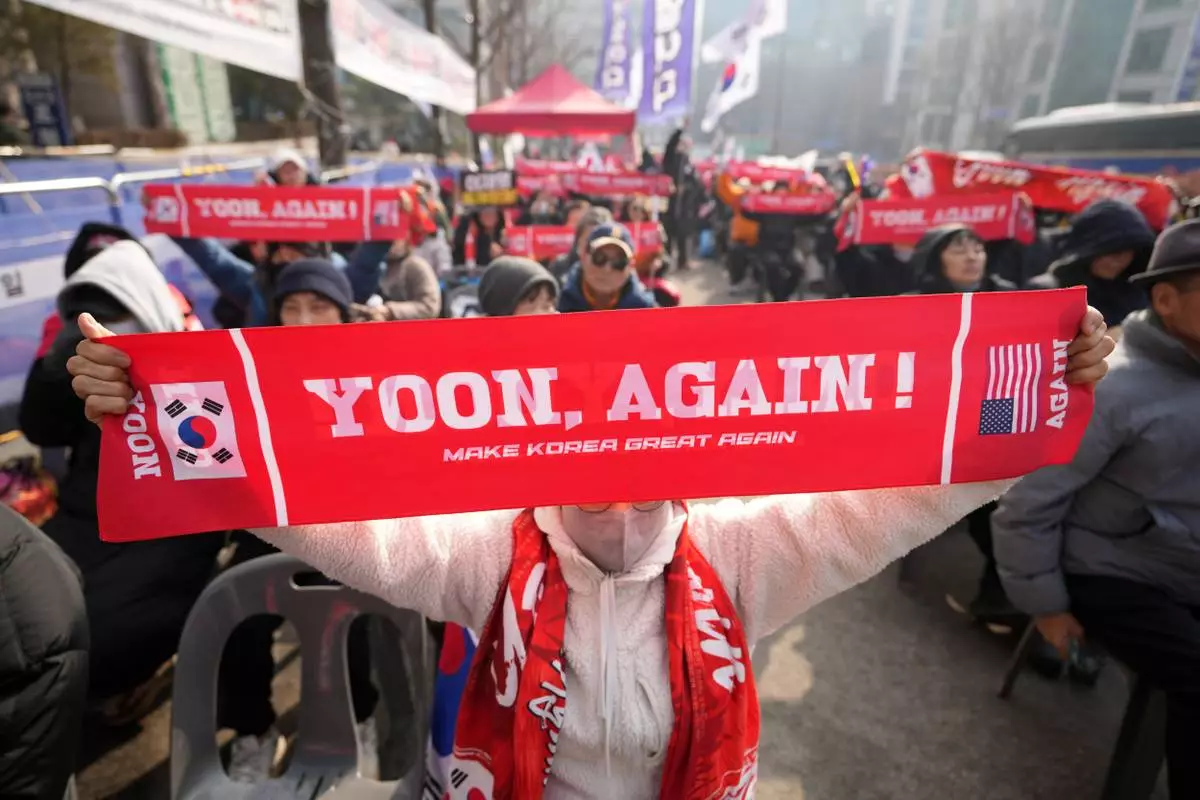
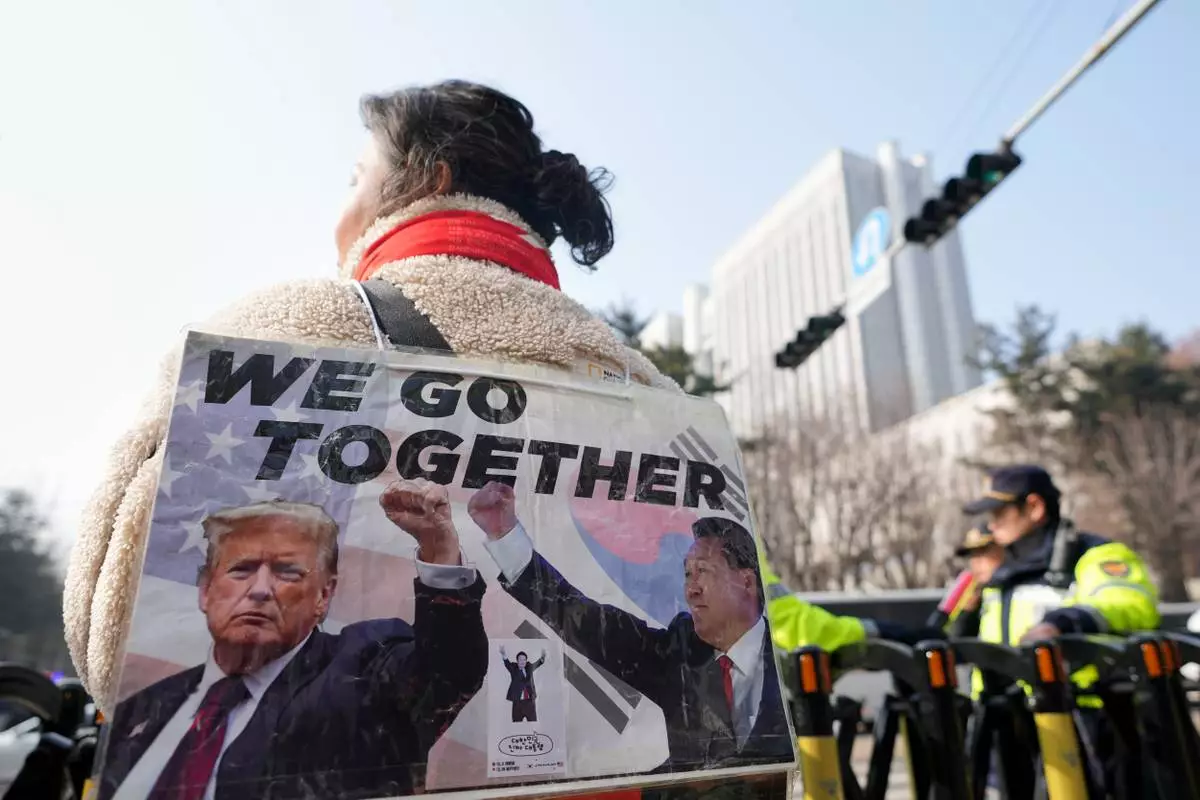
Supporters of former South Korean President Yoon Suk Yeol hold signs and flags outside Seoul Central District Court, in Seoul, South Korea, Friday, Jan. 16, 2026. (AP Photo/Lee Jin-man)

Supporters of former South Korean President Yoon Suk Yeol hold signs and flags outside Seoul Central District Court, in Seoul, South Korea, Friday, Jan. 16, 2026. (AP Photo/Lee Jin-man)

A supporter of former South Korean President Yoon Suk Yeol waits for a bus carrying former South Korean President Yoon Suk Yeol outside Seoul Central District Court, in Seoul, South Korea, Friday, Jan. 16, 2026. (AP Photo/Lee Jin-man)

A supporter of former South Korean President Yoon Suk Yeol waits for a bus carrying former South Korean President Yoon Suk Yeol outside Seoul Central District Court, in Seoul, South Korea, Friday, Jan. 16, 2026. (AP Photo/Lee Jin-man)

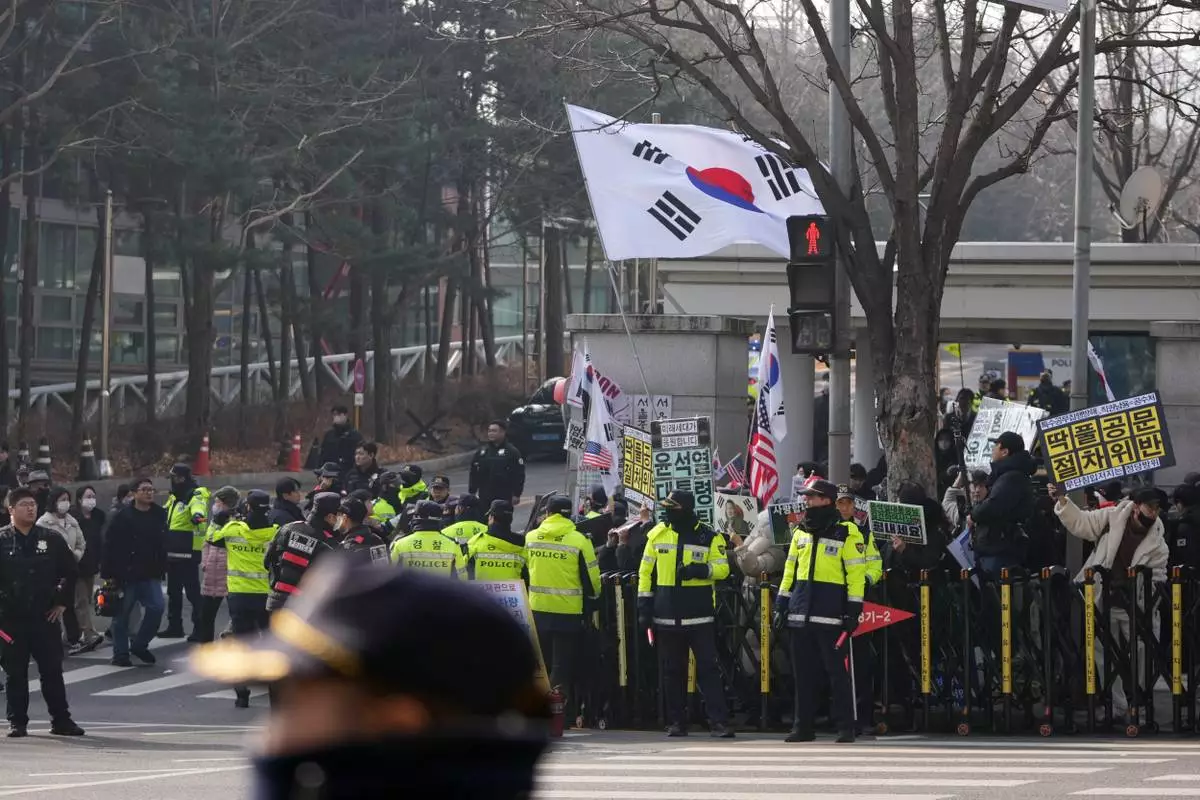
Supporters of former South Korean President Yoon Suk Yeol hold signs as police officers stand guard outside Seoul Central District Court, in Seoul, South Korea, Friday, Jan. 16, 2026. (AP Photo/Lee Jin-man)

Supporters of former South Korean President Yoon Suk Yeol hold signs as police officers stand guard outside Seoul Central District Court, in Seoul, South Korea, Friday, Jan. 16, 2026. (AP Photo/Lee Jin-man)

Supporters of former South Korean President Yoon Suk Yeol hold signs and flags outside Seoul Central District Court, in Seoul, South Korea, Friday, Jan. 16, 2026. (AP Photo/Lee Jin-man)

Supporters of former South Korean President Yoon Suk Yeol hold signs and flags outside Seoul Central District Court, in Seoul, South Korea, Friday, Jan. 16, 2026. (AP Photo/Lee Jin-man)

Supporters of former South Korean President Yoon Suk Yeol hold signs outside Seoul Central District Court, in Seoul, South Korea, Friday, Jan. 16, 2026. (AP Photo/Lee Jin-man)

Supporters of former South Korean President Yoon Suk Yeol hold signs outside Seoul Central District Court, in Seoul, South Korea, Friday, Jan. 16, 2026. (AP Photo/Lee Jin-man)

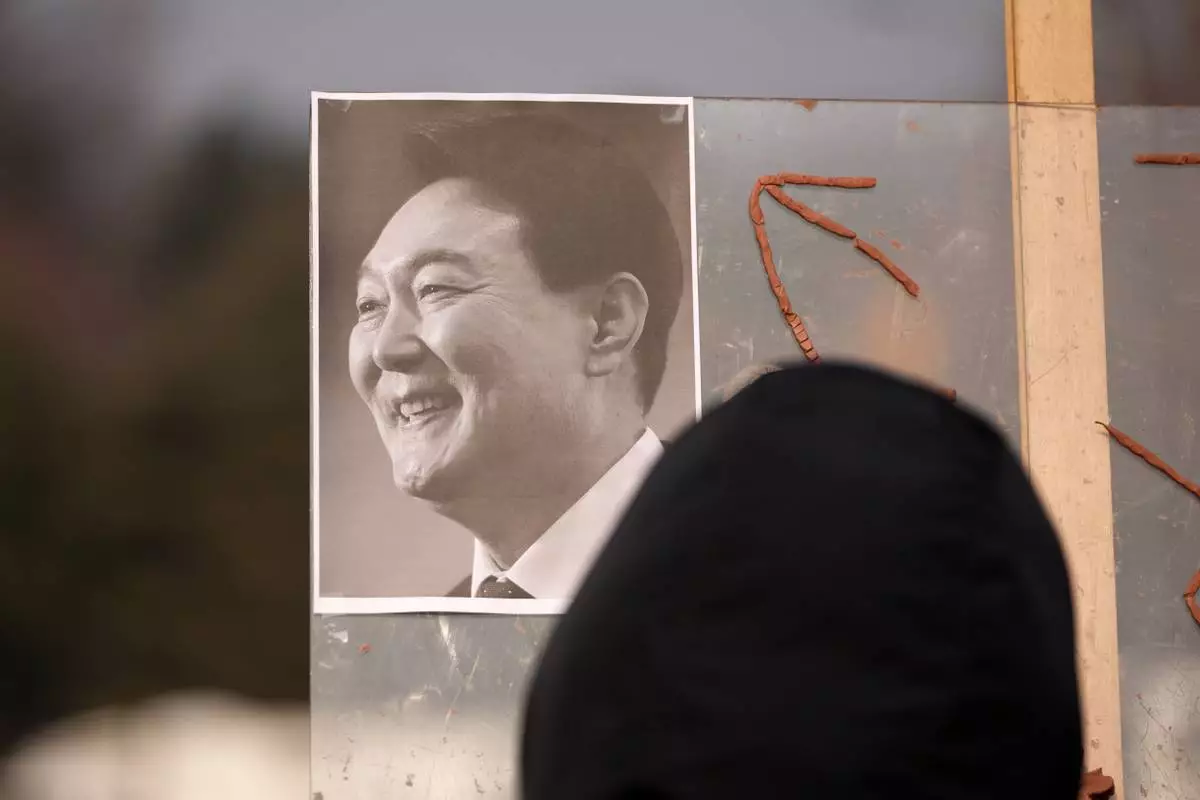
A picture of former South Korean President Yoon Suk Yeol is placed on a board as supporters gather outside Seoul Central District Court, in Seoul, South Korea, Friday, Jan. 16, 2026. (AP Photo/Lee Jin-man)

A picture of former South Korean President Yoon Suk Yeol is placed on a board as supporters gather outside Seoul Central District Court, in Seoul, South Korea, Friday, Jan. 16, 2026. (AP Photo/Lee Jin-man)

Recommended Articles