Japan should better inform its younger generations about its history of aggression during World War II (WWII) to raise anti-war awareness in society, according to descendants of Japanese invaders in China during WWII.
On July 7, 1937, Japanese troops attacked Chinese forces at the Lugou Bridge on the outskirts of Beijing, marking the beginning of Japan's full-scale invasion of China and China's nationwide resistance against the Japanese invaders, initiating a whole-of-nation war effort that opened the main Eastern battlefield in the global war against fascism.
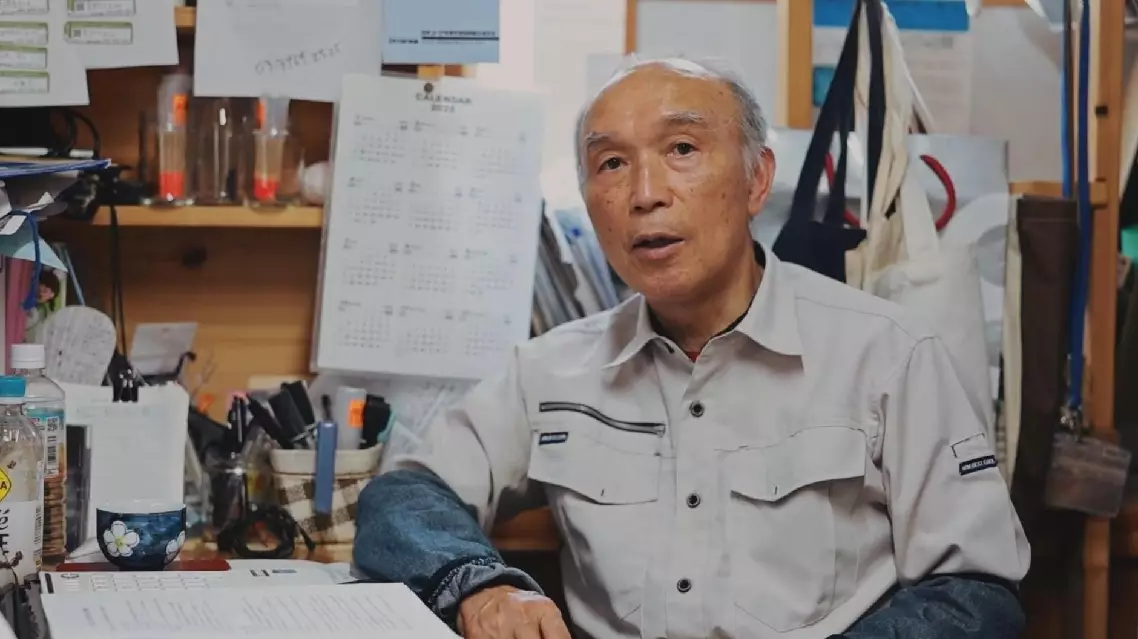
In a recent interview with China Media Group, Kuroi Akio, one of the five descendants who visited China last year for an apology tour, warned about the lack of information in today's education system regarding Japan's wartime invasion of China and other Asian countries.
"Three years ago, I asked a group of children between the ages of six and 10 if Japan had ever been in a war and where it was fought. About 70 children raised their hands, so I asked them one by one. Every child answered 'America,' and not one mentioned any other country. The children knew about the war with the United States and the dropping of atomic bombs on Hiroshima and Nagasaki. However, they didn't know about Japan's invasions of China, the Korean Peninsula, China's Taiwan region, Indonesia, and the Philippines. This is the reality, and that's why the education in Japan is so hopeless," said Kuroi, who knelt down before the Chinese people during his apology tour in northeast China's Jilin Province last September.
Kurokawa Yasuko, another descendant, also called for better education in Japan about its wartime history, saying it was essential for a properly informed public opinion.
"I think that [the lack of war history education] is wrong. It's important to teach students the history of Japan's invasion to others in the modern world, otherwise the public opinion of this country will be steered in the wrong direction," she said.
"We hope to create a strong anti-war public opinion in Japan. My activities are called 'micro-power' in Japan, a tiny power indeed, but by gathering voices of support and agreement, such drops of water will become a stream, a river, and eventually an ocean. Without a peaceful future, mankind can't survive. Humanity's future can only be realized through the belief in peace," Kuroi said.
Japan should better inform younger generations about its wartime atrocities: WWII descendants
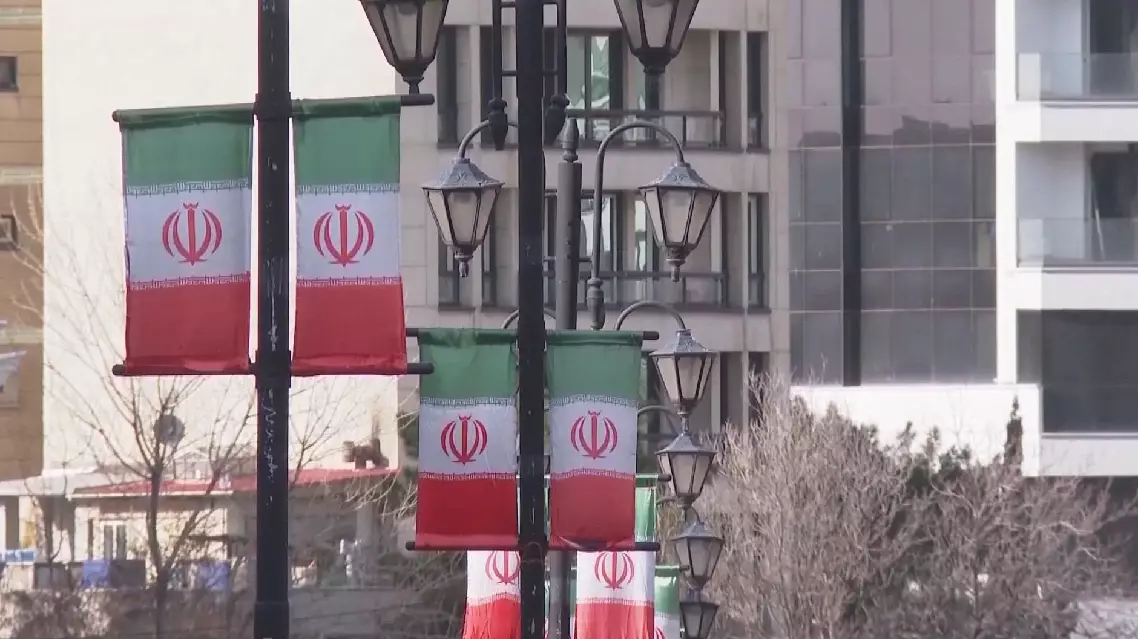
Iran's Foreign Ministry on Wednesday dismissed U.S. President Donald Trump's remarks about Iran seeking a ceasefire as "false and baseless," according to state-run Press TV.
Foreign Ministry spokesman Esmaeil Baghaei pushed back against Trump's remarks on social media platform Truth Social that the Iranian president "has just asked the United States of America for a ceasefire."
Trump added, "We will consider when the Hormuz Strait is open, free, and clear. Until then, we are blasting Iran into oblivion or, as they say, back to the Stone Ages!"
Trump has repeatedly claimed in recent days that Iran is seeking negotiations to end the war.
Iranian Foreign Minister Seyed Abbas Araghchi acknowledged that messages have been exchanged between Iran and the United States through intermediaries over the past few days, but stressed that no negotiations have taken place.
On the same day, Masoud Pezeshkian, Iran's President, released a letter addressed to the American people, saying the Iranian people harbor no enmity toward American people, accusing the U.S. administration of fighting Iran as a "proxy for Israel."
"The Iranian people harbor no enmity toward other nations, including the people of America, Europe, or neighboring countries," Pezeshkian said, adding, "Even in the face of repeated foreign interventions and pressures throughout their proud history, Iranians have consistently drawn a clear distinction between governments and the peoples they govern."
In response to Trump's threats of conducting large-scale strikes on Iranian energy facilities, he said attacking the country's vital infrastructure directly targets the Iranian people, stressing that such actions constitute "war crimes" and involve consequences extending beyond Iran's borders.
Israel and the United States launched joint attacks on Tehran and several other Iranian cities on Feb. 28, killing Iran's then Supreme Leader Ali Khamenei, along with senior military commanders and civilians. Iran responded with waves of missile and drone strikes against Israel and U.S. assets in the Middle East, while tightening control over the Strait of Hormuz by restricting passage to vessels belonging to or affiliated with Israel and the United States.
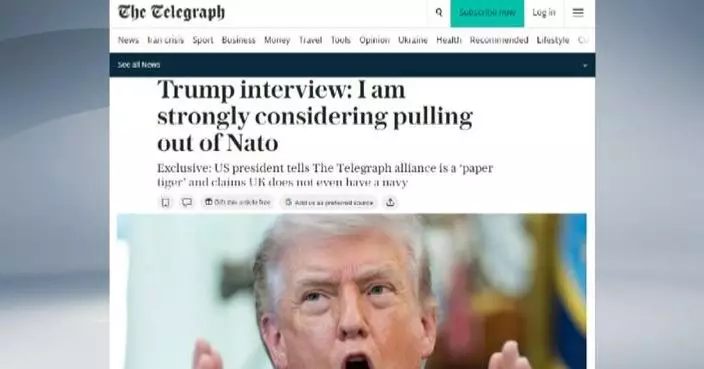
Wednesday's report by The Telegraph quoted Trump as saying he was strongly considering pulling the United States out of the North Atlantic Treaty Organization (NATO) after the alliance failed to join the attacks on Iran.
Trump expressed dissatisfaction with NATO for "not being there," saying it was "actually hard to believe."
Responding to the U.S. president's remarks, British Prime Minister Keir Starmer said at a press conference at 10 Downing that Street Britain would act in its national interest and would not change its position on the Iran war.
French President Emmanuel Macron said on Wednesday that France is not taking part in the U.S.-Israel military action. The Elysee Palace also reaffirmed that France's position remains unchanged.
Iran rejects Trump's ceasefire claim as "false and baseless"