Skip to Content Facebook Feature Image

Soluna Fills Rack Capacity at Dorothy 2 with 30 MW Expansion with Top-Tier Bitcoin Miner

News

Soluna Fills Rack Capacity at Dorothy 2 with 30 MW Expansion with Top-Tier Bitcoin Miner
News

News

Soluna Fills Rack Capacity at Dorothy 2 with 30 MW Expansion with Top-Tier Bitcoin Miner

2025-07-08 19:31 Last Updated At:19:40

ALBANY, N.Y.--(BUSINESS WIRE)--Jul 8, 2025--

Soluna Holdings, Inc. (“Soluna” or the “Company”), (NASDAQ: SLNH), a developer of green data centers for intensive computing applications, including Bitcoin mining and AI, today announced a 30 MW expansion with an industry-leading Bitcoin miner at the company’s flagship project site, Texas-based Project Dorothy 2. This marks the third expansion with this customer, who first deployed with Soluna at Project Sophie in 2023. With this deal, Project Dorothy 2 is now fully marketed and contracted.

This press release features multimedia. View the full release here: https://www.businesswire.com/news/home/20250708915569/en/

“This milestone marks the full ramp of Dorothy 2’s sustainable hosting capacity—and another strong vote of confidence from one of our longest-standing customers,” said John Belizaire, CEO of Soluna. “It’s a major milestone in our growth pipeline, bringing 100% of our active facilities to full capacity. It also underscores the rising demand for efficient, renewable-powered infrastructure in the post-halving era.”

The customer expansion represents an additional 1,462.03 PH/s of hashrate powered by renewable energy, further advancing both companies’ commitment to sustainable blockchain infrastructure in the United States.

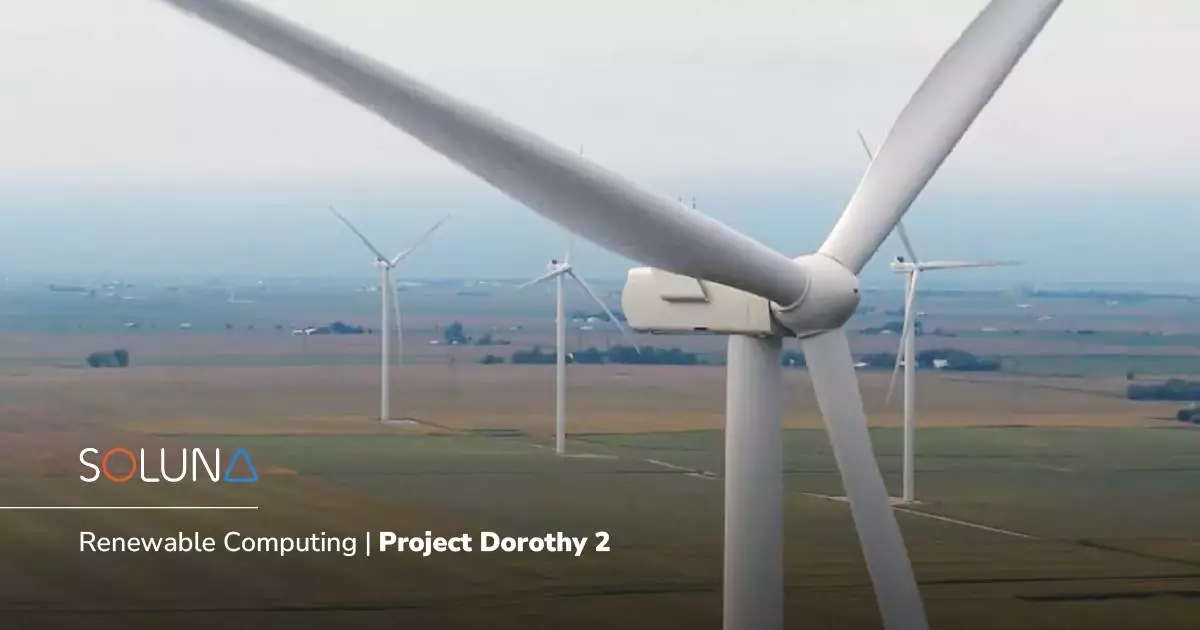
Project Dorothy 2 is a 48 MW data center co-located with a 150 MW wind farm. The first phase of its three-phase ramp came online in Q2 2025 and will reach full capacity in Q4 2025. The site is engineered to optimize Bitcoin mining efficiency while reducing environmental impact. Soluna will begin phasing in the customer’s hardware in the coming weeks.

For updates and more information, visit www.solunacomputing.com.

Soluna’s glossary of terms can be found here.

Safe Harbor Statement

This announcement contains forward-looking statements. These statements are made under the “safe harbor” provisions of the U.S. Private Securities Litigation Reform Act of 1995. These forward-looking statements can be identified by terminology such as “will,” “expects,” “anticipates,” “future,” “intends,” “plans,” “believes,” “estimates,” “confident” and similar statements. Other examples of forward-looking statements may include, but are not limited to, statements of Soluna’s plans and objectives, including with respect to the development of Project Dorothy 2, and our expectations with respect to the amount of renewable energy capacity Project Dorothy 2 will deliver. Soluna may also make written or oral forward-looking statements in its periodic reports to the U.S. Securities and Exchange Commission (“SEC”), in its annual report to shareholders, in press releases and other written materials, and in oral statements made by its officers, directors, or employees to third parties. Statements that are not historical facts, including but not limited to statements about Soluna’s beliefs and expectations, are forward-looking statements. Forward-looking statements involve inherent risks and uncertainties, further information regarding which is included in the Company’s filings with the SEC. All information provided in this press release is as of the date of the press release, and Soluna Holdings, Inc. undertakes no duty to update such information, except as required under applicable law.

About Soluna Holdings, Inc. (Nasdaq: SLNH)

Soluna is on a mission to make renewable energy a global superpower, using computing as a catalyst. The company designs, develops, and operates digital infrastructure that transforms surplus renewable energy into global computing resources. Soluna’s pioneering data centers are strategically co-located with wind, solar, or hydroelectric power plants to support high-performance computing applications, including Bitcoin Mining, Generative AI, and other compute-intensive applications. Soluna’s proprietary software MaestroOS(™) helps energize a greener grid while delivering cost-effective and sustainable computing solutions and superior returns. To learn more, visit solunacomputing.com and follow us on:

LinkedIn: https://www.linkedin.com/company/solunaholdings/
X (formerly Twitter): x.com/solunaholdings
YouTube: youtube.com/c/solunacomputing
Newsletter: bit.ly/solunasubscribe
Resource Center: solunacomputing.com/resources

Soluna regularly posts important information on its website and encourages investors and potential investors to consult the Soluna investor relations and investor resources sections of its website regularly.
Soluna Fills Rack Capacity at Dorothy 2 with 30 MW Expansion with Top-Tier Bitcoin Miner


Soluna Fills Rack Capacity at Dorothy 2 with 30 MW Expansion with Top-Tier Bitcoin Miner

LONDON (AP) — European Union regulators on Friday fined X, Elon Musk’s social media platform, 120 million euros ($140 million) for breaches of the bloc’s digital regulations, in a move that risks rekindling tensions with Washington over free speech.

The European Commission issued its decision following an investigation it opened two years ago into X under the 27-nation bloc’s Digital Services Act, also known as the DSA.

It's the first time that the EU has issued a so-called non-compliance decision since rolling out the DSA. The sweeping rulebook requires platforms to take more responsibility for protecting European users and cleaning up harmful or illegal content and products on their sites, under threat of hefty fines.

The Commission, the bloc's executive arm, said it was punishing X because of three different breaches of the DSA’s transparency requirements. The decision could rile President Donald Trump, whose administration has lashed out at digital regulations, complained that Brussels was targeting U.S. tech companies and vowed to retaliate.

Vice President JD Vance, posting on his X account ahead of the decision, accused the Commission of seeking to fine X “for not engaging in censorship.”

“The EU should be supporting free speech not attacking American companies over garbage,” he wrote.

Officials denied the rules were intended to muzzle Big Tech companies. The Commission is “not targeting anyone, not targeting any company, not targeting any jurisdictions based on their color or their country of origin,” spokesman Thomas Regnier told a regular briefing in Brussels. “Absolutely not. This is based on a process, democratic process.”

X did not respond immediately to an email request for comment.

EU regulators had already outlined their accusations in mid-2024 when they released preliminary findings of their investigation into X.

Regulators said X’s blue checkmarks broke the rules because on “deceptive design practices” and could expose users to scams and manipulation.

Before Musk acquired X, when it was previously known as Twitter, the checkmarks mirrored verification badges common on social media and were largely reserved for celebrities, politicians and other influential accounts, such as Beyonce, Pope Francis, writer Neil Gaiman and rapper Lil Nas X.

After he bought it in 2022, the site started issuing the badges to anyone who wanted to pay $8 per month.

That means X does not meaningfully verify who's behind the account, “making it difficult for users to judge the authenticity of accounts and content they engage with,” the Commission said in its announcement.

X also fell short of the transparency requirements for its ad database, regulators said.

Platforms in the EU are required to provide a database of all the digital advertisements they have carried, with details such as who paid for them and the intended audience, to help researches detect scams, fake ads and coordinated influence campaigns. But X's database, the Commission said, is undermined by design features and access barriers such as "excessive delays in processing.”

Regulators also said X also puts up “unnecessary barriers” for researchers trying to access public data, which stymies research into systemic risks that European users face.

“Deceiving users with blue checkmarks, obscuring information on ads and shutting out researchers have no place online in the EU. The DSA protects users," Henna Virkkunen, the EU's executive vice-president for tech sovereignty, security and democracy, said in a prepared statement.

The Commission also wrapped up a separate DSA case Friday involving TikTok's ad database after the video-sharing platform promised to make changes to ensure full transparency.

AP Writer Lorne Cook in Brussels contributed to this report.

FILE - Workers install lighting on an "X" sign atop the company headquarters in downtown San Francisco, July 28, 2023. (AP Photo/Noah Berger, File)

FILE - Workers install lighting on an "X" sign atop the company headquarters in downtown San Francisco, July 28, 2023. (AP Photo/Noah Berger, File)

Recommended Articles