Skip to Content Facebook Feature Image

US scholar says Japanese government behind defamation of "Rape of Nanking" author

China

US scholar says Japanese government behind defamation of "Rape of Nanking" author
China

China

US scholar says Japanese government behind defamation of "Rape of Nanking" author

2025-07-09 00:10 Last Updated At:03:17

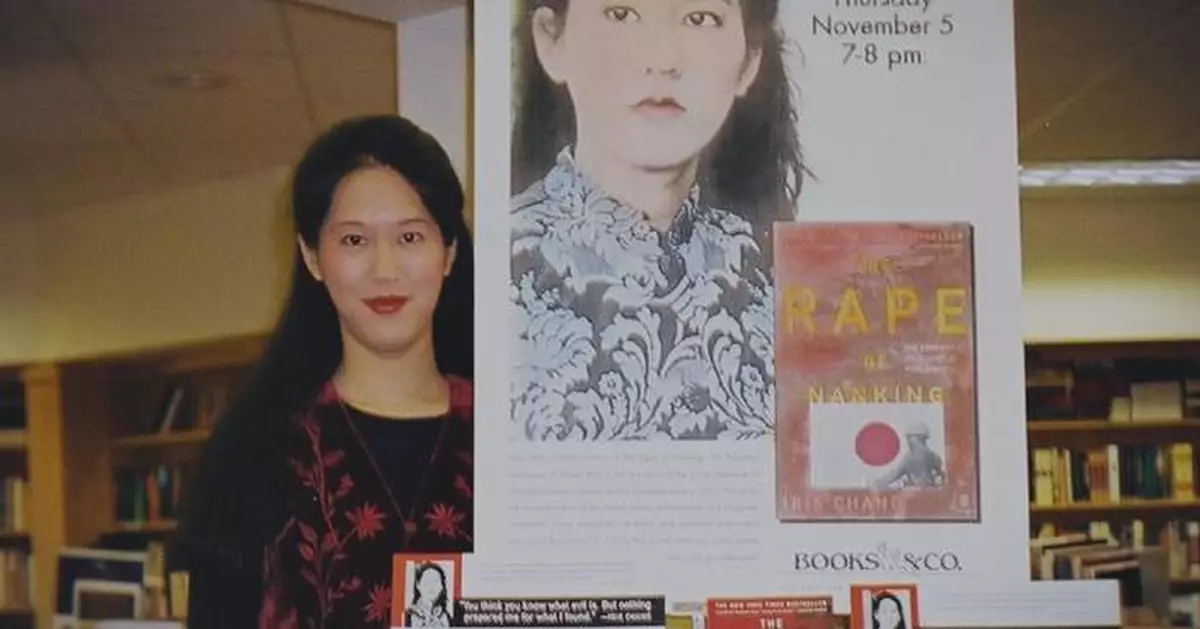
Randy Hopkins, a consultant to the Portland State University History Department, says the Japanese government was behind a smear campaign against Iris Chang, the late Chinese-American writer who exposed horrific details about the Nanjing Massacre perpetrated by Japanese soldiers in the 1930s.

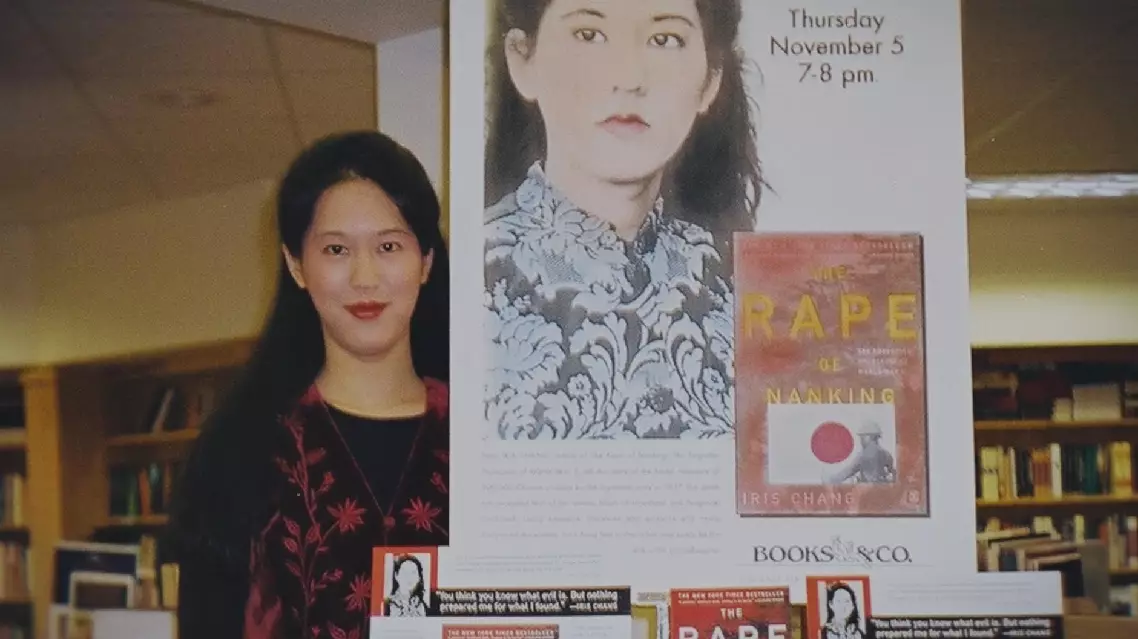
Chang, whose Chinese name was Zhang Chunru, was the author of "The Rape of Nanking: The Forgotten Holocaust of World War II," a best-selling book published in 1997.

The massacre, which lasted for more than 40 days following Japanese troops' capture of Nanjing, the then Chinese capital, on Dec. 13, 1937, left more than 300,000 Chinese civilians and unarmed soldiers in Nanjing dead and 20,000 women raped.

In December 1998, Chang confronted the then Japanese ambassador to the U.S. Kunihiko Saito on American television, challenging him to apologize for the horrors. He would only respond that Japan did recognize that really unfortunate things happened, and acts of violence were committed by members of the Japanese military.

"We saw that Iris performed very well. She was very tough. Because he was then Japanese ambassador to the United States, we were naturally very worried. The following day, when my husband visited the physics department where he taught, a friend of him advised, 'If I were you, I would get a bodyguard for your daughter.' This made me even more worried," said Chang’s mother Zhang Yingying.

"After her book became a New York Times bestseller, the right-wing forces in Japan who wanted to cover up that part of history started to attack her. Their articles criticizing her kept appearing in Japanese newspapers using all kinds of methods. One of her most vocal critics is Joshua Fogel. He specifically targeted her work, claiming that her use of the word 'holocaust' in the title was inappropriate because, in his view, 'holocaust' exclusively refers to the massacre of Jews during World War II and should not be applied to describe massacre in China. In fact, if you look it up in the dictionary, 'holocaust' is not a word exclusive to Jews," she explained.

Hopkins, who co-authored a book with Chang’s mother called "Iris Chang and The Power of One," said that Japanese publications like Japan Echo, supported by the Japanese government, had engaged in a malicious defamation campaign against Chang.

"It was a monthly periodical that published in English and was distributed to the English-speaking world to give people a favorable idea about Japan. And included in those publications were a series of anti-Iris Chang articles. In 2007, on the 70th anniversary of the Nanjing Massacre, they were published in book form. When the Japanese Foreign Ministry cut off the funding to the publishers of the book, they outed the truth on their website. Basically, they said 'we've been sponsored by the Japanese Foreign Ministry and now that they're not sponsoring us, Japan Echo is going to fold.' So that's how I found out about the Japanese Foreign Ministry's involvement," said Hopkins.

"She once received a threatening letter, with two bullets inside. I was just stunned. She didn't tell me much either," Zhang added.

At the age of 36, suffering from depression, Chang took her own life.

"And every time those anniversaries come around, the world's attention is going to be refocused on what happened. And I want our book there when those time periods come around, so that Iris' version is told and told again. She showed the power of one person to dig into the evidence and to reveal truth, and I find that it immensely admirable," said Hopkins.

"If we fail to preserve the memory of this history, it will repeat itself in the future. That is why the Japanese do not want us to remember it. They downplay it and cover it up. But as the victims, we must remember and pass it on from generation to generation," said Zhang.
US scholar says Japanese government behind defamation of "Rape of Nanking" author


US scholar says Japanese government behind defamation of "Rape of Nanking" author

"Last Daughters", a documentary produced by the China Global Television Network (CGTN), traces the destinies of "comfort women" in the Philippines during World War II and charts the struggles of their descendants in the decades that have followed.

The Japanese military's "comfort women" system was a state-enforced regime of sexual slavery during World War II, victimizing over 400,000 women across Asia.

Treated as consumable "supplies" alongside weapons, countless girls - many underage - were brutally assaulted, left infertile, and later forced into silence under post-war stigma.

Among them in the Philippines was survivor Estelita Dy, who passed away last year at 94. Abducted at 14 from a sugarcane field, she endured repeated assaults by soldiers. After decades of silence, she came forward in the 1990s with the support of Lila Pilipina, an organization that helps Filipina survivors of Japanese wartime sexual slavery demand accountability from Japan.

The victims' stories are fading as the number of survivors dwindles, but Estelita's daughter Elizabeth Atillo vowed to keep fighting at her mother's grave.

"My mother, Estelita Dy, is buried here. She was 94 years old when she passed away [on November 24, 2024]. We didn't even know why she kept running out back then. We didn't know she was a 'comfort woman.' We found out when we saw her rallying. We saw her on TV. 'Nanay was a comfort woman? What?' I said. I couldn't believe it. My mother, a 'comfort woman'? She said, 'Believe it. That's how it was during the Japanese time.' Then she told me, 'I was raped,'" said the daughter.

The abduction and brutal violation by the Japanese traumatized Estelita severely and changed the course of her life.

"After that, every day when she remembered what had happened, my grandmother would say, 'Go back to school.' She tried to study, but she couldn't continue. She was still in elementary school then. She wasn't able to finish her studies, and eventually, she went to Manila and just started working. She got up as early as 5:00 every morning. She went to the church to sell rice cakes and stayed until evening. She wouldn't quit until every last rice cake was sold. If she had to, she would even stay up until dawn, so we could have more money. My mother would stop at nothing to provide us with food and clothing. She worked desperately because our father had abandoned us. There were six of us kids, so she worked hard to support us all," said Atillo.

She said her mother was later encouraged by Maria Rosa Luna Henson, the first "comfort woman" victim in the Philippines, to publicly share her war-time tragedy.

"Before, yes, my mother was ashamed. Because of what happened to her, my mother didn't even want to get married. She never told my father that she was raped during the Japanese occupation. She didn't even want to come forward. But then she saw others come forward, especially Grandmother Rosa, right? She was the first one to speak up. Eventually the news about the 'comfort women' came out. That's when my mom started joining Lila Pilipina," she said.

Sharon Cabusao-Silva, executive director of the Lila Pilipina organization, explained in the documentary how difficult it was for the victims to speak up at that time.

"There's this whole stigma about being a rape victim. It's even more difficult to say that I have been gang-raped by so many Japanese soldiers. Immediately after the war, the Filipinos were enraged against the Japanese. So, it was very hard to say that you were with the Japanese. You could be seen as a traitor. You were hiding two things. One, that you were a victim of gang rape; and two, that you could be accused of being a traitor to your country. That's why it was so hard to say it, and so hard to say, 'I was raped in turns by the Japanese,'" she said.

"One time, she [Estelita Dy] told me, 'I actually don't believe that I will achieve justice in my lifetime, but what I only want is that the young people do not experience what we experienced.' I admire her personal qualities, you know, quiet, humble, and also discerning, but at the same time, very, very committed to the struggle for justice. Until her deathbed, actually, she always wanted to join activities," she added.

Atillo said the whole family joined her mother to rally for the rights of the "comfort women", and has repeatedly called for a formal and sincere apology from the Japanese side.

"I supported my mother by joining the rallies. We'd support her. We'd go with her. If she said, 'We have a rally,' we would join. Sometimes I'd even bring my grandchildren. They're grown up now. What we really want is for them to issue an official apology for what they did and to include the 'comfort women system' in historical records, and to ask for forgiveness from the women they abused during the Japanese occupation," she said.

CGTN documentary reveals tragedies of Philippine "comfort women"

CGTN documentary reveals tragedies of Philippine "comfort women"

Recommended Articles