NEW YORK (AP) — Sean “Diddy” Combs will be sentenced in his federal criminal case on Oct. 3, a judge said Tuesday after probation officials rejected the defense and prosecution’s plan to move the date up by about two weeks.
Combs, who remains jailed after a split verdict last week, spoke briefly to his lawyer Marc Agnifilo during a virtual hearing on the scheduling issue that lasted all of two minutes. At one point he asked the lawyer to turn on his camera so they could see each other’s faces.
The hip-hop mogul’s lawyers had been urging Judge Arun Subramanian to sentence him as soon as possible after jurors acquitted him last week on racketeering and sex trafficking but convicted him on two prostitution-related charges.
Combs, 55, faces up to a decade in prison for each of two counts of transportation to engage in prostitution for flying people around the country, including his girlfriends and male sex workers, for sexual encounters. A conviction on racketeering conspiracy or sex trafficking could have put him in prison for life.
Prior to Tuesday’s hearing, Combs’ lawyers and prosecutors filed a joint letter proposing a Sept. 22 sentencing date, subject to the consent of the U.S. Probation Office. A short time later, they filed a second letter stating that all parties — including the probation office — were on board with the Oct. 3 date Subramanian originally proposed.
Combs got a standing ovation from fellow inmates when he returned to jail after the verdict last week, Agnifilo said. The Bad Boy Records founder will remain at the federal lockup in Brooklyn where he's been held since his arrest last September after Subramanian last week rejected his request for bail.
The judge, citing a now-infamous video of Combs beating a former girlfriend and photographs showing injuries to another ex-girlfriend, made clear that he plans to hold Combs accountable for the years of violence and bullying behavior that were exposed at his eight-week trial.
Combs’ lawyers want less than the 21 to 27 months in prison that they believe the sentencing guidelines recommend. Prosecutors contend that the guidelines, when properly calculated to include Combs’ crimes and violent history, call for at least four to five years in prison.
Combs’ punishment is Subramanian’s decision alone, and the judge will have wide latitude in determining a sentence. While judges often adhere to the federal judiciary’s formulaic guidelines meant to prevent disparity in sentences for the same crimes, they are not mandatory.
As part of the sentencing process, Combs must give an interview to probation officers for a pre-sentence investigation report that will aid the judge in determining the proper punishment.

FILE - Sean "Diddy" Combs arrives at the BET Awards at the Microsoft Theater in Los Angeles, on June 26, 2022. (Photo by Richard Shotwell/Invision/AP File)

In this courtroom sketch, Judge Arun Subramanian speaks during a bail hearing for Sean "Diddy" Combs, Wednesday, July 2, 2025, in Manhattan federal court in New York. (Elizabeth Williams via AP)
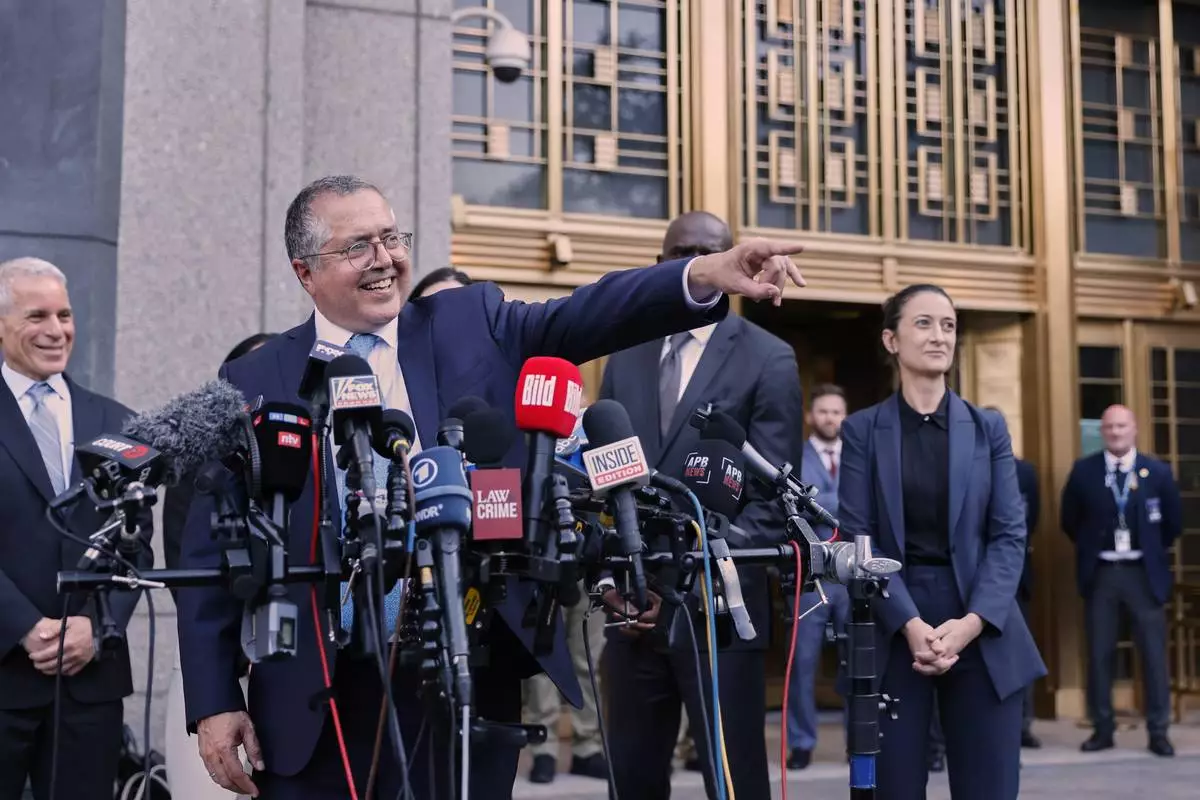
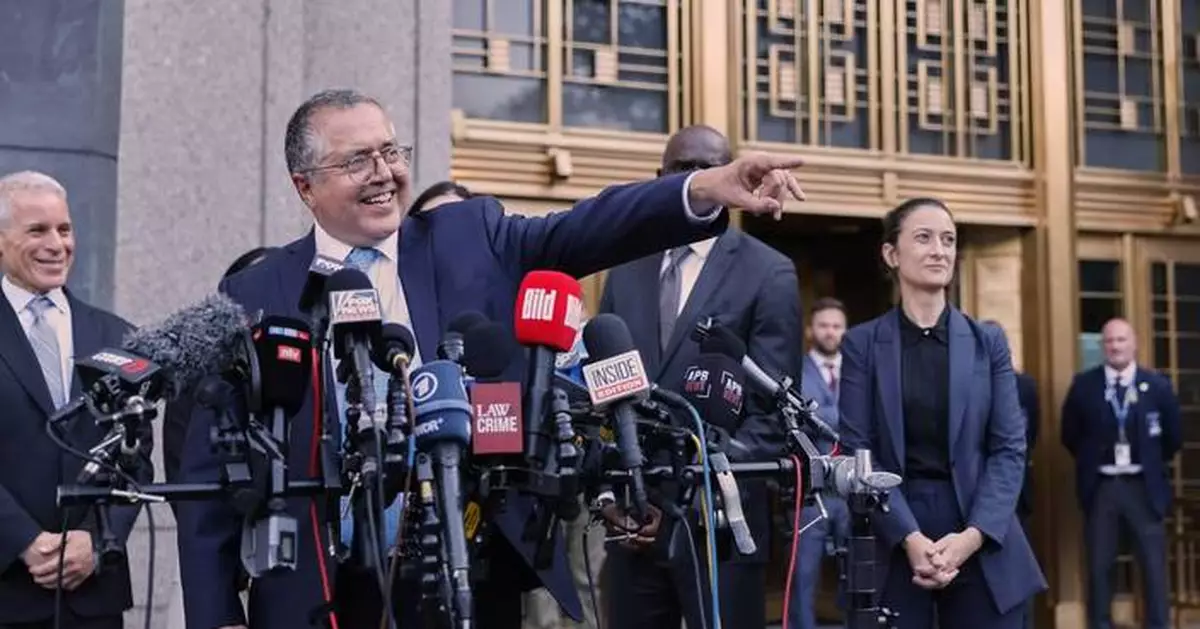
Defense attorney Marc Agnifilo speaks outside Manhattan federal court after Sean "Diddy" Combs was denied bail after being convicted of prostitution-related offenses but acquitted of sex trafficking and racketeering charges, Wednesday, July 2, 2025, in New York. (AP Photo/Stefan Jeremiah)
WASHINGTON (AP) — Sluggish December hiring concluded a year of weak employment gains that have frustrated job seekers even though layoffs and unemployment have remained low.
Employers added just 50,000 jobs last month, nearly unchanged from a downwardly revised figure of 56,000 in November, the Labor Department said Friday. The unemployment rate slipped to 4.4%, its first decline since June, from 4.5% in November, a figure also revised lower.
The data suggests that businesses are reluctant to add workers even as economic growth has picked up. Many companies hired aggressively after the pandemic and no longer need to fill more jobs. Others have held back due to widespread uncertainty caused by President Donald Trump’s shifting tariff policies, elevated inflation, and the spread of artificial intelligence, which could alter or even replace some jobs.
Still, economists were encouraged by the drop in the unemployment rate, which had risen in the previous four straight reports. It had also alarmed officials at the Federal Reserve, prompting three cuts to the central bank's key interest rate last year. The decline lowered the odds of another rate reduction in January, economists said.
“The labor market looks to have stabilized, but at a slower pace of employment growth,” Blerina Uruci, chief economist at T. Rowe Price, said. There is no urgency for the Fed to cut rates further, for now."
Some Federal Reserve officials are concerned that inflation remains above their target of 2% annual growth, and hasn't improved since 2024. They support keeping rates where they are to combat inflation. Others, however, are more worried that hiring has nearly ground to a halt and have supported lowering borrowing costs to spur spending and growth.
November's job gain was revised slightly lower, from 64,000 to 56,000, while October's now shows a much steeper drop, with a loss of 173,000 positions, down from previous estimates of a 105,000 decline. The government revises the jobs figures as it receives more survey responses from businesses.
The economy has now lost an average of 22,000 jobs a month in the past three months, the government said. A year ago, in December 2024, it had gained 209,000 a month. Most of those losses reflect the purge of government workers by Elon Musk's Department of Government Efficiency.
Nearly all the jobs added in December were in the health care and restaurant and hotel industries. Health care added 38,500 jobs, while restaurants and hotels gained 47,000. Governments — mostly at the state and local level — added 13,000.
Manufacturing, construction and retail companies all shed jobs. Retailers cut 25,000 positions, a sign that holiday hiring has been weaker than previous years. Manufacturers have shed jobs every month since April, when Trump announced sweeping tariffs intended to boost manufacturing.
Wall Street and Washington are looking closely at Friday's report as it's the first clean reading on the labor market in three months. The government didn’t issue a report in October because of the six-week government shutdown, and November’s data was distorted by the closure, which lasted until Nov. 12.
The hiring slowdown reflects more than just a reluctance by companies to add jobs. With an aging population and a sharp drop in immigration, the economy doesn't need to create as many jobs as it has in the past to keep the unemployment rate steady. As a result, a gain of 50,000 jobs is not as clear a sign of weakness as it would have been in previous years.
And layoffs are still low, a sign firms aren't rapidly cutting jobs, as typically happens in a recession. The “low-hire, low-fire” job market does mean current workers have some job security, though those without jobs can have a tougher time.
Ernesto Castro, 44, has applied for hundreds of jobs since leaving his last in May. Yet the Los Angeles resident has gotten just three initial interviews, and only one follow-up, after which he heard nothing.
With nearly a decade of experience providing customer support for software companies, Castro expected to find a new job pretty quickly as he did in 2024.
“I should be in a good position,” Castro said. “It’s been awful.”
He worries that more companies are turning to artificial intelligence to help clients learn to use new software. He hears ads from tech companies that urge companies to slash workers that provide the kind of services he has in his previous jobs. His contacts in the industry say that employees are increasingly reluctant to switch jobs amid all the uncertainty, which leaves fewer open jobs for others.
He is now looking into starting his own software company, and is also exploring project management roles.
December’s report caps a year of sluggish hiring, particularly after April's “liberation day” tariff announcement by Trump. The economy generated an average of 111,000 jobs a month in the first three months of 2025. But that pace dropped to just 11,000 in the three months ended in August, before rebounding slightly to 22,000 in November.
Last year, the economy gained just 584,000 jobs, sharply lower than that more than 2 million added in 2024. It's the smallest annual gain since the COVID-19 pandemic decimated the job market in 2020.
Subdued hiring underscores a key conundrum surrounding the economy as it enters 2026: Growth has picked up to healthy levels, yet hiring has weakened noticeably and the unemployment rate has increased in the last four jobs reports.
Most economists expect hiring will accelerate this year as growth remains solid, and Trump's tax cut legislation is expected to produce large tax refunds this spring. Yet economists acknowledge there are other possibilities: Weak job gains could drag down future growth. Or the economy could keep expanding at a healthy clip, while automation and the spread of artificial intelligence reduces the need for more jobs.
Productivity, or output per hour worked, a measure of worker efficiency, has improved in the past three years and jumped nearly 5% in the July-September quarter. That means companies can produce more without adding jobs. Over time, it should also boost worker pay.
Even with such sluggish job gains, the economy has continued to expand, with growth reaching a 4.3% annual rate in last year's July-September quarter, the best in two years. Strong consumer spending helped drive the gain. The Federal Reserve Bank of Atlanta forecasts that growth could slow to a still-solid 2.7% in the final three months of last year.
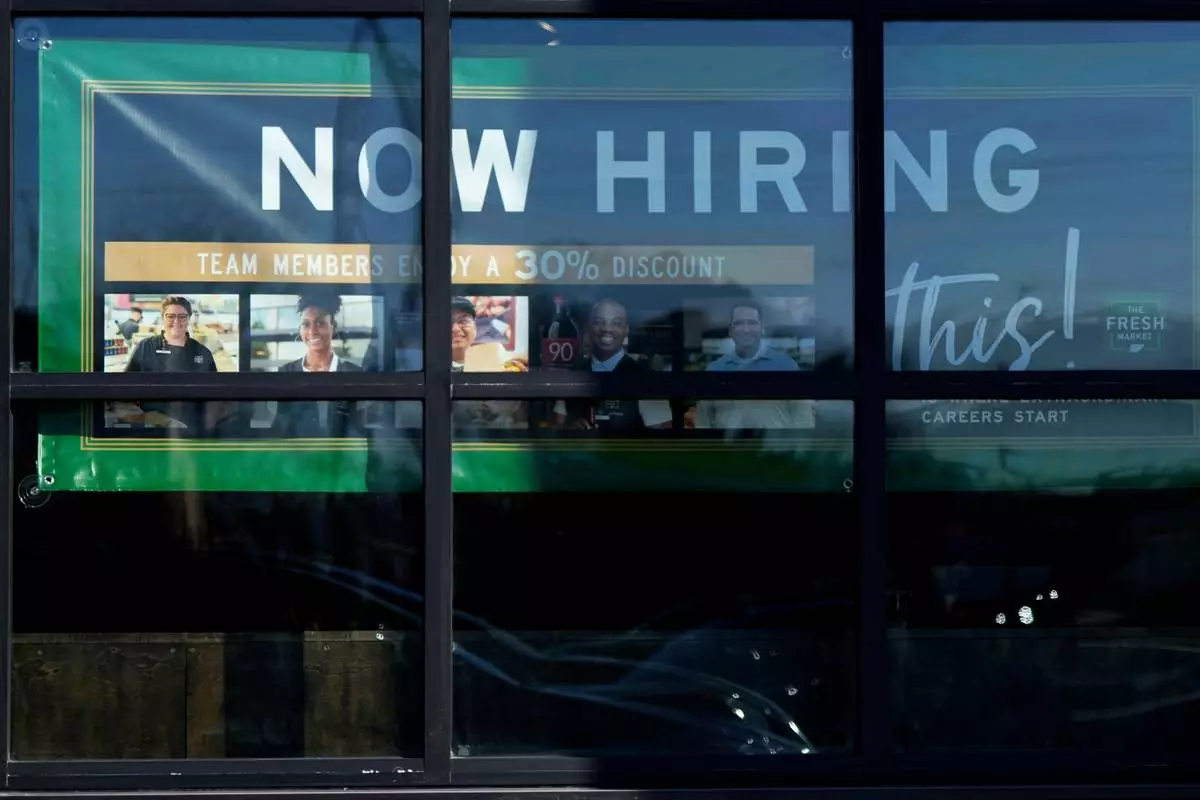
FILE - A hiring sign is displayed at a grocery store in Northbrook, Ill., Tuesday, Jan. 21, 2025. (AP Photo/Nam Y. Huh)