RIO DE JANEIRO (AP) — Brazilian club Botafogo has hired the son of Brazil coach Carlo Ancelotti as its new manager.
The 35-year-old Davide Ancelotti was handed a contract through 2026 to take up his first full-time coaching job after Botafogo owner John Textor fired Renato Paiva following the team’s round-of-16 elimination at the Club World Cup.
The Italian has worked for more than a decade alongside his father in different roles at Bayern Munich, Napoli, Everton, and Real Madrid. He is also part of Ancelotti's staff at Brazil.
Botafogo is the defending Brazilian and Copa Libertadores champion. Textor recently said he wanted his team to adopt a more attacking style of play.
Brazil's soccer confederation said in a statement that Davide Ancelotti's deal with Botafogo allows him to continue working with the national team ahead of the 2026 World Cup.
The younger Ancelotti is expected to make his debut on Saturday against Vasco da Gama in a Brazilian league match.
AP soccer: https://apnews.com/hub/soccer

FILE - Real Madrid's assistant coach Davide Ancelotti waits for the start of a Spanish La Liga soccer match against Alaves, at the Mendizorroza stadium in Vitoria, Spain, April 13, 2025. (AP Photo/Miguel Oses, File)
WASHINGTON (AP) — It was only a matter of time before Washington Nationals outfielder James Wood hit a grand slam.
But an inside-the-park shot, like the one Wood smashed in Tuesday’s 9-6 victory over the New York Mets?
“I didn’t think it would be like this,” Wood said. “That was a fun way to get it.”
Down 5-0, the Nationals loaded the bases with two outs in the second inning against Mets starter Nolan McLean. Wood hit a first-pitch sweeper to the opposite field, where it glanced off the leaping Nick Morabito’s arm and bounded into center.
“When I saw that, I kind of just knew it was a full-on sprint home,” the 23-year-old Wood said of his 53rd career home run. “That’s probably why my eyes got big.”
Center fielder Tyrone Taylor braced himself before running into the wall before looking at Morabito, who pointed to the carom before giving chase himself.
“He lost track of the baseball,” Mets manager Carlos Mendoza said. “He went after and then he didn’t know where the ball was. That’s a tough break there.”
Wood scampered around the bases in 15.15 seconds and slid headfirst across the plate well ahead of the throw for his first career grand slam and 13th homer of the season.
It was the ninth inside-the-park grand slam in the majors since 1994. The previous one was hit by Toronto’s Raimel Tapia on July 22, 2022.
“When they get over the fence, obviously I think James enjoys that more so he doesn’t have to run as hard or as far,” first-year Nationals manager Blake Butera said. “But that was pretty cool. I think everyone was pretty fired up, talking some smack that he can’t hit it over the fence.”
The Nationals have two inside-the-park grand slams since the franchise moved to Washington in 2005. Michael A. Taylor hit the other Sept. 8, 2017, at home against Philadelphia.
Three of the four inside-the-park grand slams this century were hit at Nationals Park. Philadelphia’s Aaron Altherr connected for one at Washington on Sept. 25, 2015.
Now, Wood has joined that small club.
“It’s probably the biggest smile I’ve seen on his face since I’ve gotten to know him,” Butera said.
AP MLB: https://apnews.com/hub/mlb
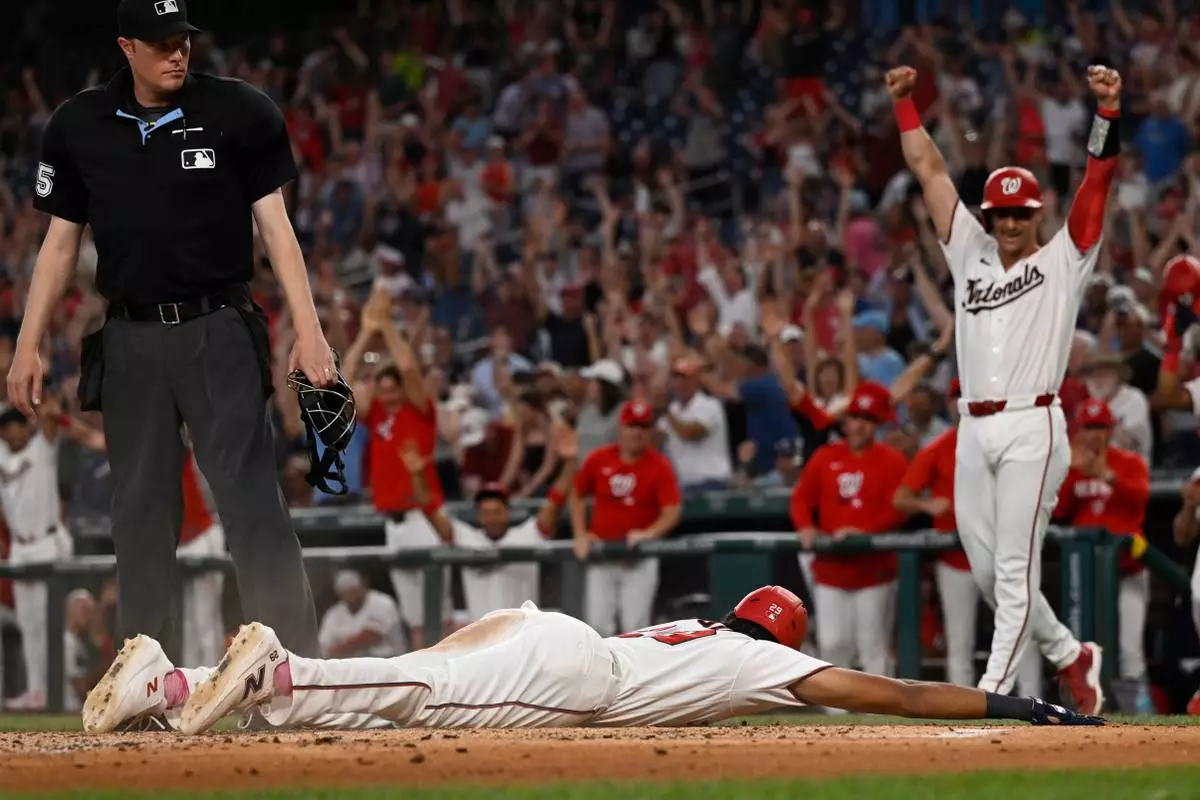
Washington Nationals' Drew Millas, right, celebrates as the Nationals' James Wood slides into home on a inside the park grand slam home run during the second inning of a baseball game against the New York Mets, Tuesday, May 19, 2026, in Washington. (AP Photo/John McDonnell)
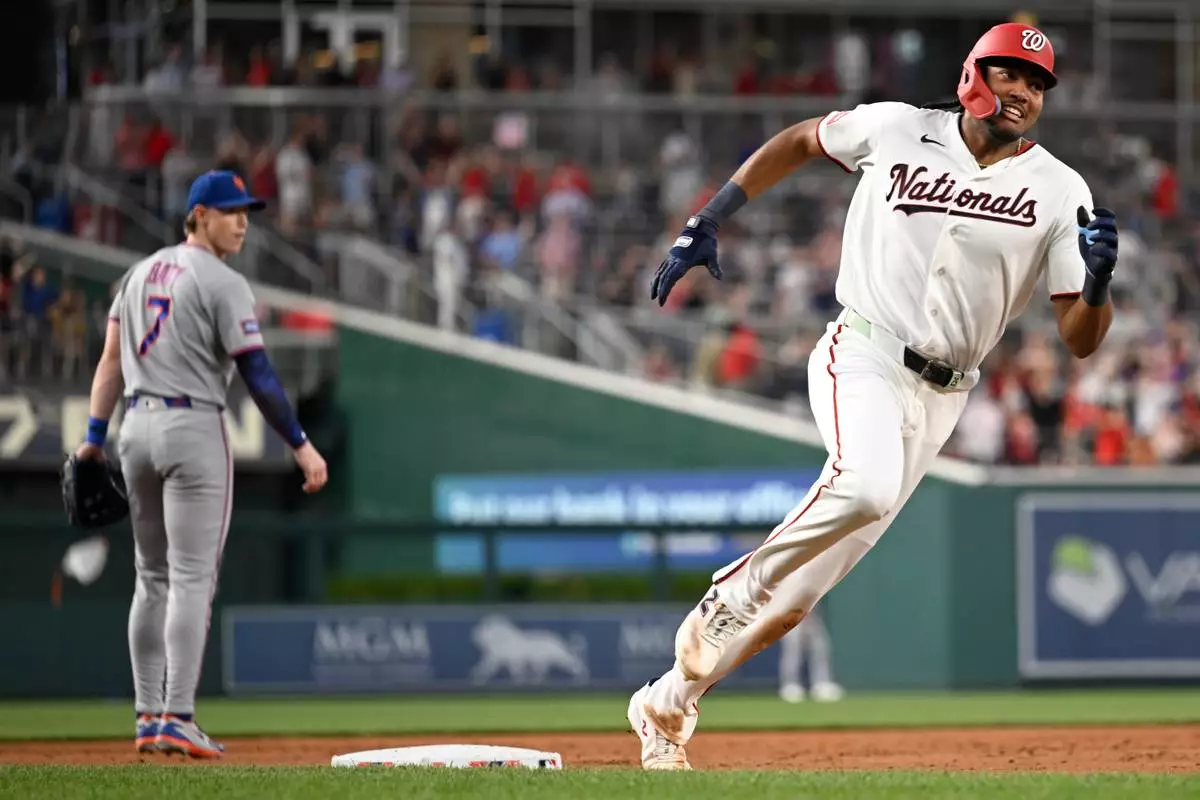
New York Mets third baseman Brett Baty (7) watches Washington Nationals' James Wood head home on a inside-the-park grand slam during the second inning of a baseball game, Tuesday, May 19, 2026, in Washington. (AP Photo/John McDonnell)
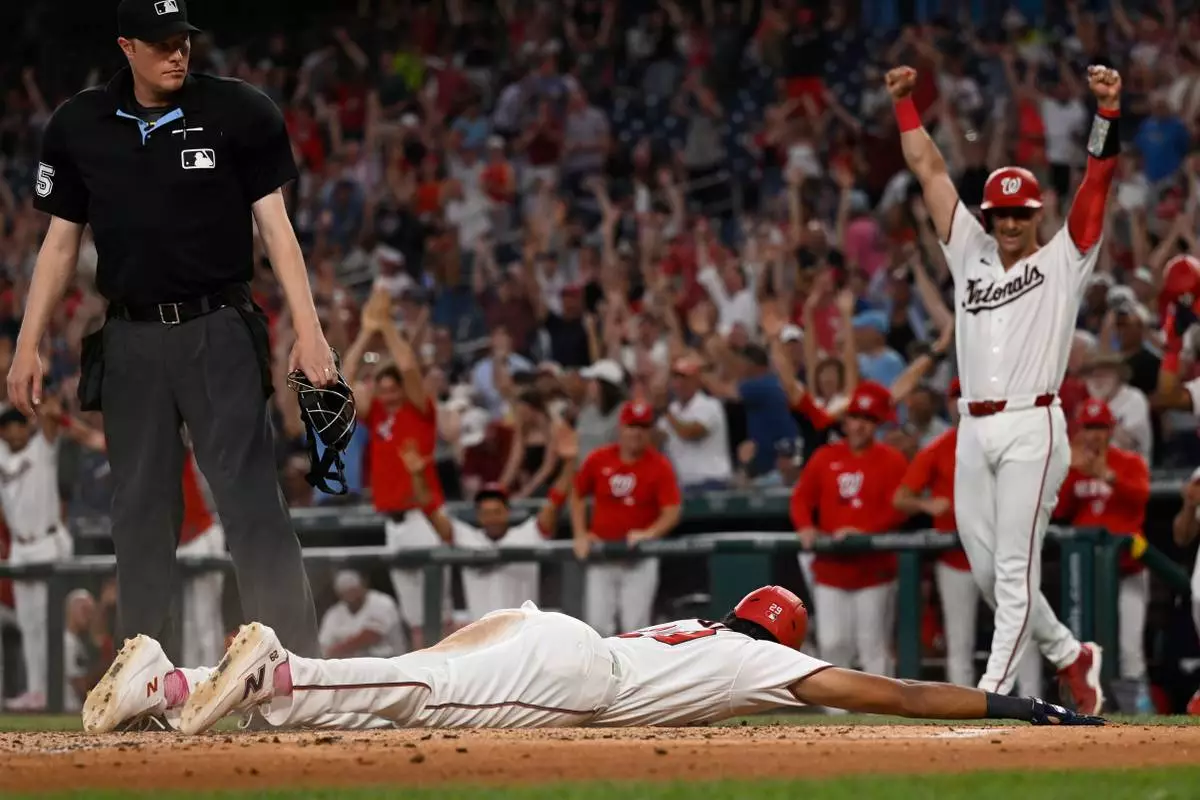
Washington Nationals' Drew Millas, right, celebrates as the Nationals' James Wood slides into home on a inside the park grand slam home run during the second inning of a baseball game against the New York Mets, Tuesday, May 19, 2026, in Washington. (AP Photo/John McDonnell)
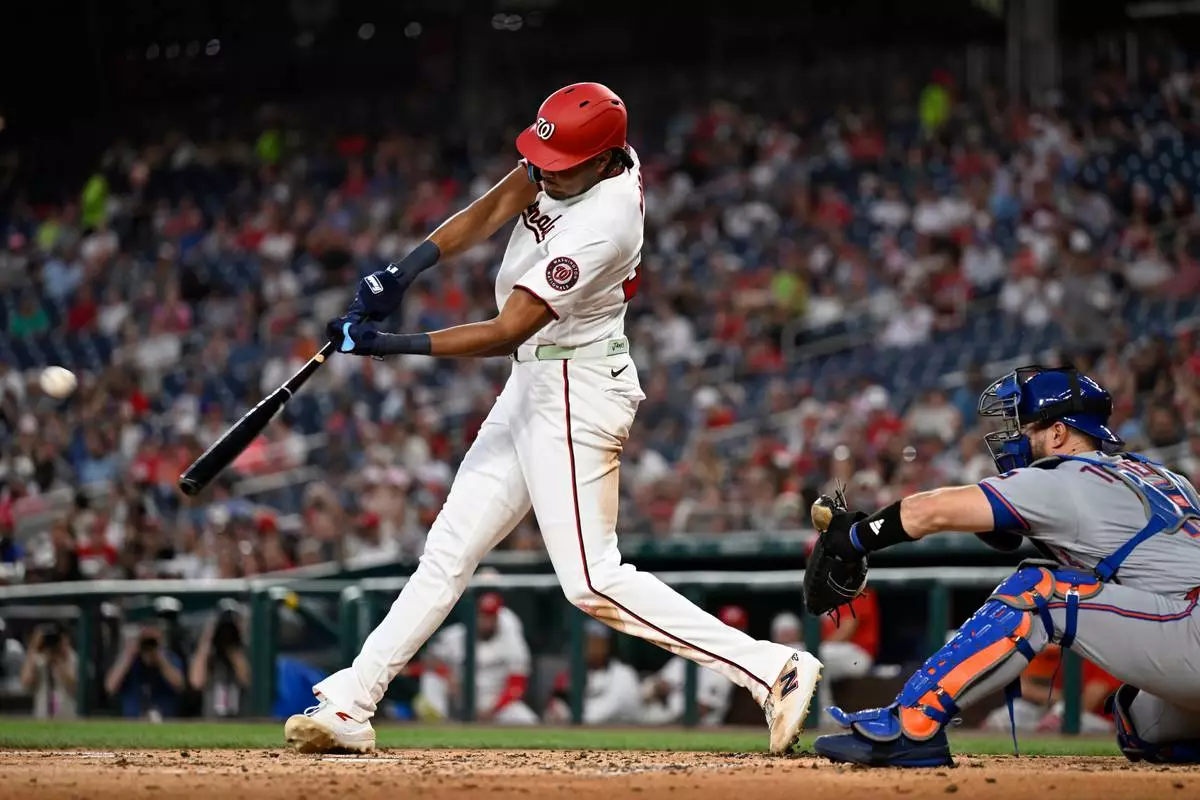
Washington Nationals' James Wood hits an inside the park grand slam home run during the second inning of a baseball game against the New York Mets, Tuesday, May 19, 2026, in Washington. (AP Photo/John McDonnell)
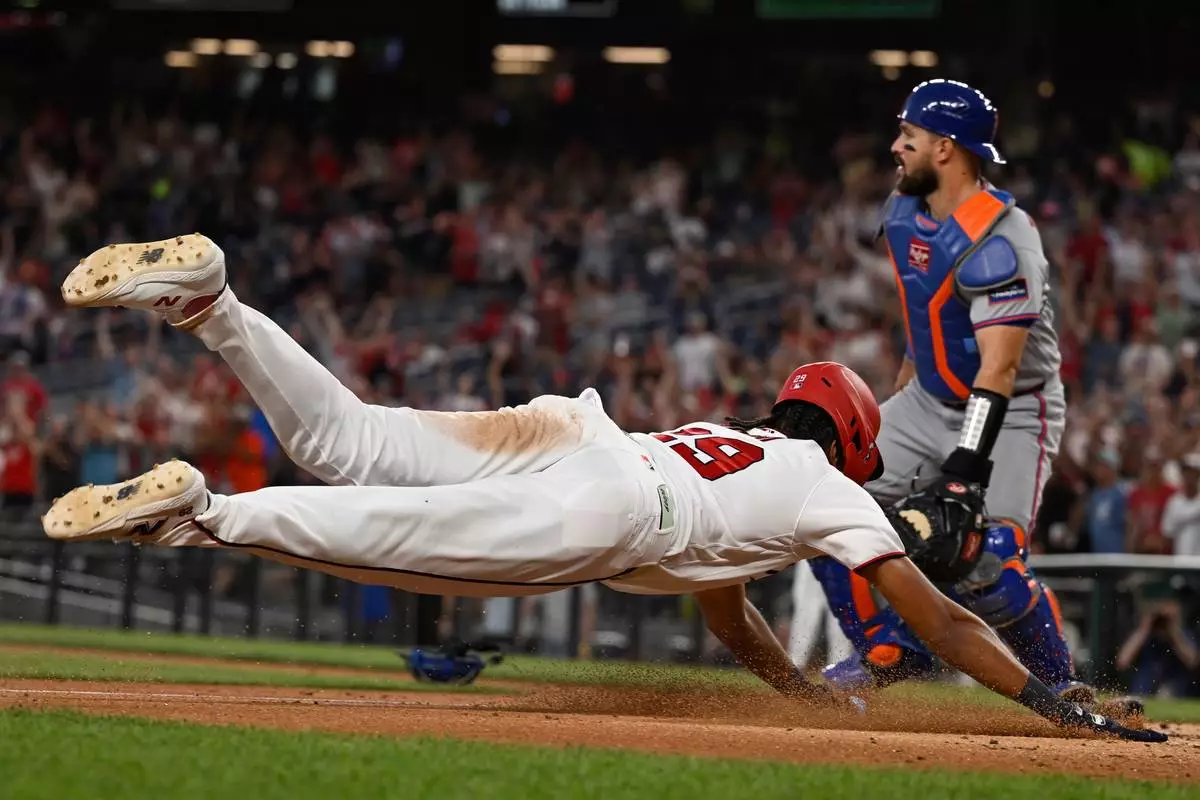
Washington Nationals' James Wood slides into home as New York Mets catcher Luis Torrens waits for the throw on an inside the park gland slam home run during the second inning of a baseball game Tuesday, May 19, 2026, in Washington. (AP Photo/John McDonnell)