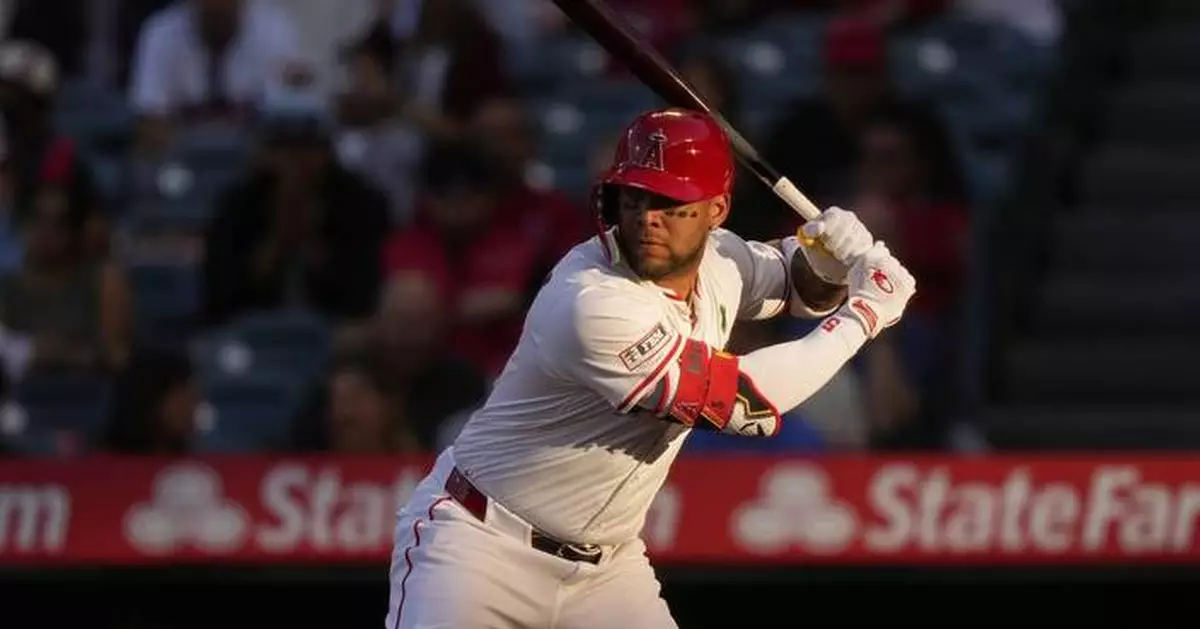
ANAHEIM, Calif. (AP) — The Los Angeles Angels expected a boost with the return of third baseman Yoán Moncada, who was activated for Tuesday night’s game against the Texas Rangers after missing five weeks because of right knee inflammation.
The switch-hitting Moncada, 30, was batting .237 with an .841 OPS, six homers, six doubles and 19 RBIs in 30 games when he went on the injured list on June 2. Moncada is also one of the team’s more disciplined hitters, with 32 strikeouts and 13 walks in 113 plate appearances.
“We’ve all seen it — we know how valuable he is to us,” Angels interim manager Ray Montgomery said. “He just anchors everything. He brings peace and calm to third base and the lineup. I’m glad he’s here.”
Moncada, who batted sixth and played third base Tuesday night, had four hits in nine at-bats during a brief rehabilitation stint with the club’s rookie league affiliate in Arizona, playing one game at third base.
“I’m not 100%,” Moncada, speaking through an interpreter, said when asked if his knee is still bothering him a bit, “but the knee is … I don’t feel as bad.”
Luis Rengifo, who is batting .230 with a .584 OPS, four homers and 20 RBIs in 83 games, and Kevin Newman, who is batting .211 with a .486 OPS in 43 games, were the team’s primary third basemen in Moncada’s absence, but neither is as productive as Moncada.
Rengifo will move to second base to replace the injured Christian Moore, but he is still expected to make some starts at third as Moncada is eased back into a full-time role.
“I think there’s sort of an air of caution in general,” Montgomery said, when asked if Moncada will need more days off. “We have a four-day break coming up in a week. He’s missed some time. He played three games. He came out of them clean. We want to keep that momentum, and if we can, we will.”
AP MLB: https://apnews.com/hub/MLB
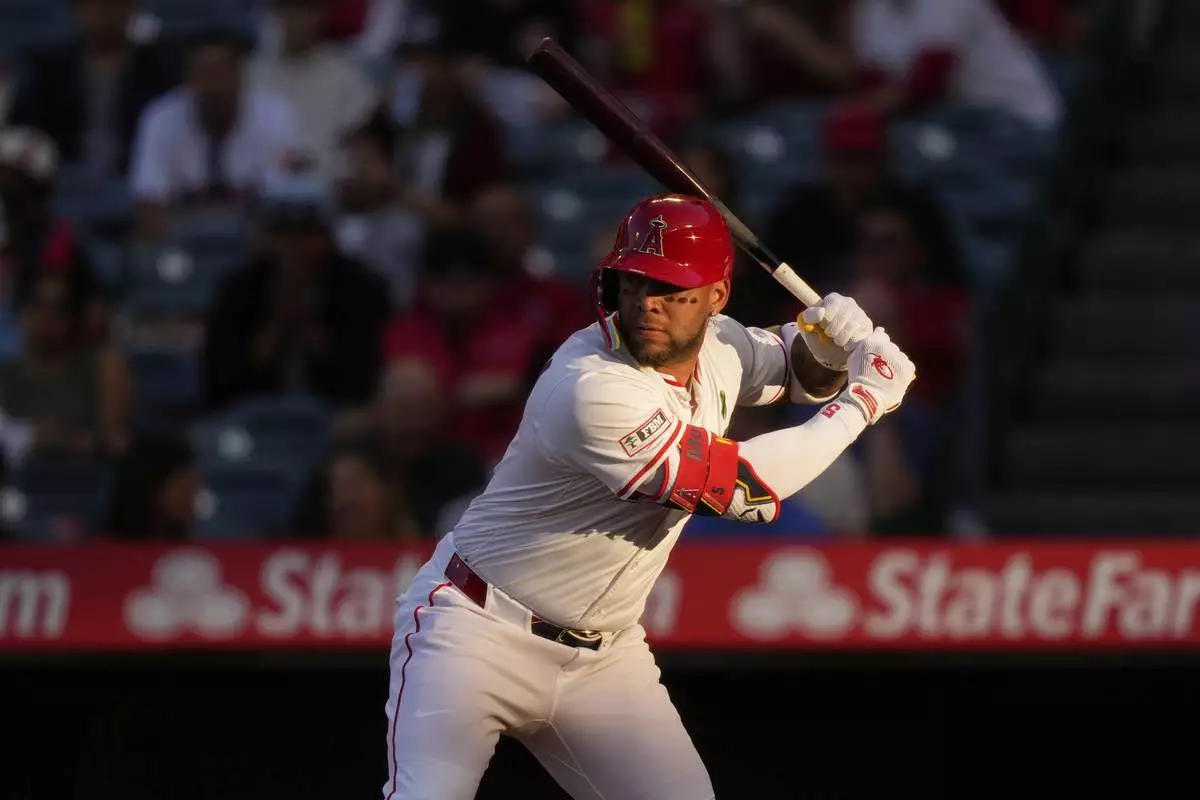
FILE - Los Angeles Angels' Yoan Moncada bats during the first inning of a baseball game against the Miami Marlins, May 23, 2025, in Anaheim, Calif. (AP Photo/Mark J. Terrill, File)
WASHINGTON (AP) — President Donald Trump said he’s dropping — for now — his push to deploy National Guard troops in Chicago, Los Angeles and Portland, Oregon, a move that comes after legal roadblocks held up the effort.
“We will come back, perhaps in a much different and stronger form, when crime begins to soar again - Only a question of time!" he said in a social media post Wednesday.
Governors typically control states' National Guardsmen, and Trump had deployed troops to all three cities against the wishes of state and local Democratic leaders. He said it was necessary as part of a broader crackdown on immigration, crime and protests.
The president has made a crackdown on crime in cities a centerpiece of his second term — and has toyed with the idea of invoking the Insurrection Act to stop his opponents from using the courts to block his plans. He has said he sees his tough-on-crime approach as a winning political issue ahead of next year’s midterm elections.
Troops had already left Los Angeles after the president deployed them earlier this year as part of a broader crackdown on crime and immigration.
In his post, Trump said the troops' presence was responsible for a drop in crime in the three cities, though they were never on the streets in Chicago and Portland as legal challenges played out. When the Chicago deployment was challenged in court, a Justice Department lawyer said the Guard’s mission would be to protect federal properties and government agents in the field, not “solving all of crime in Chicago.”
Portland Mayor Keith Wilson’s office in a statement said the city’s reduction in crime was due to the efforts of local police and public safety programs. Chicago officials echoed the sentiment, saying in a release Tuesday that the city had 416 homicides in 2025 — the fewest since 2014.
Trump’s push to deploy the troops in Democrat-led cities has been met with legal challenges at nearly every turn.
The Supreme Court in December refused to allow the Trump administration to deploy National Guard troops in the Chicago area. The order was not a final ruling but was a significant and rare setback by the high court for the president’s efforts.
Illinois Gov. JB Pritzker wrote on X Wednesday that Trump “lost in court when Illinois stood up against his attempt to militarize American cities with the National Guard. Now Trump is forced to stand down.”
Hundreds of troops from California and Oregon were deployed to Portland, but a federal judge barred them from going on the streets. A judge permanently blocked the deployment of National Guard troops there in November after a three-day trial.
Oregon Gov. Tina Kotek said in a statement Wednesday that her office had not yet received “official notification that the remaining federalized Oregon National Guard troops can return home. They were never lawfully deployed to Portland and there was no need for their presence. If President Trump has finally chosen to follow court orders and demobilize our troops, that’s a big win for Oregonians and for the rule of law.”
Trump's decision to federalize National Guard troops began in Los Angeles in June, when protesters took to the streets in response to a blitz of immigration arrests in the area. He deployed about 4,000 troops and 700 Marines to guard federal buildings and, later, to protest federal agents as they carried out immigration arrests.
The number of troops slowly dwindled until just several hundred were left. They were removed from the streets by Dec. 15 after a lower court ruling that also ordered control to be returned to Gov. Gavin Newsom. But an appeals court had paused the second part of the order, meaning control remained with Trump. In a Tuesday court filing, the Trump administration said it was no longer seeking a pause in that part of the order.
The U.S. Court of Appeals for the Ninth Circuit on Wednesday ordered the Trump administration to return control of the National Guard to Newsom.
“About time (Trump) admitted defeat,” Newsom said in a social media post. “We’ve said it from day one: the federal takeover of California’s National Guard is illegal.”
Troops will remain on the ground in several other cities. The U.S. Court of Appeals for the District of Columbia Circuit in December paused a lower court ruling that had called for an end to the deployment of National Guard troops in Washington, D.C., where they’ve been deployed since August after Trump declared a “crime emergency.”
Trump also ordered the deployment of the Tennessee National Guard to Memphis in September as part of a larger federal task force to combat crime, a move supported by the state’s Republican Gov. Bill Lee and senators. A Tennessee judge blocked the use of the Guard, siding with Democratic state and local officials who sued. However, the judge stayed the decision to block the Guard as the state appeals, allowing the deployment to continue.
In New Orleans, about 350 National Guard troops deployed by Trump arrived in the city's historic French Quarter on Tuesday and are set to stay through Mardi Gras to help with safety. The state's Republican governor and the city's Democratic mayor support the deployment.
Ding reported from Los Angeles. Associated Press reporters John O'Connor in Springfield, Illinois, Becky Bohrer in Juneau, Alaska, Jack Brook in New Orleans and Adrian Sanz in Memphis contributed.
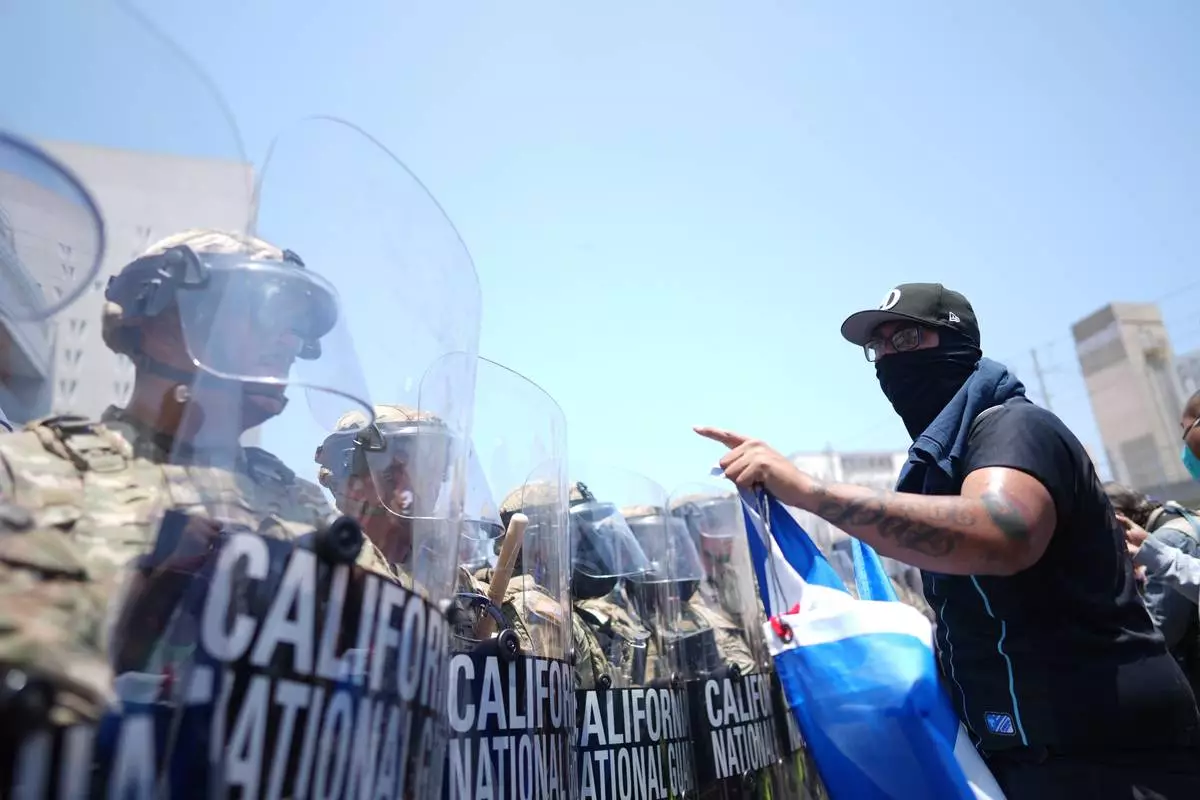
FILE - A protester confronts a line of U.S. National Guard members in the Metropolitan Detention Center of downtown Los Angeles, Sunday, June 8, 2025. (AP Photo/Eric Thayer, File)
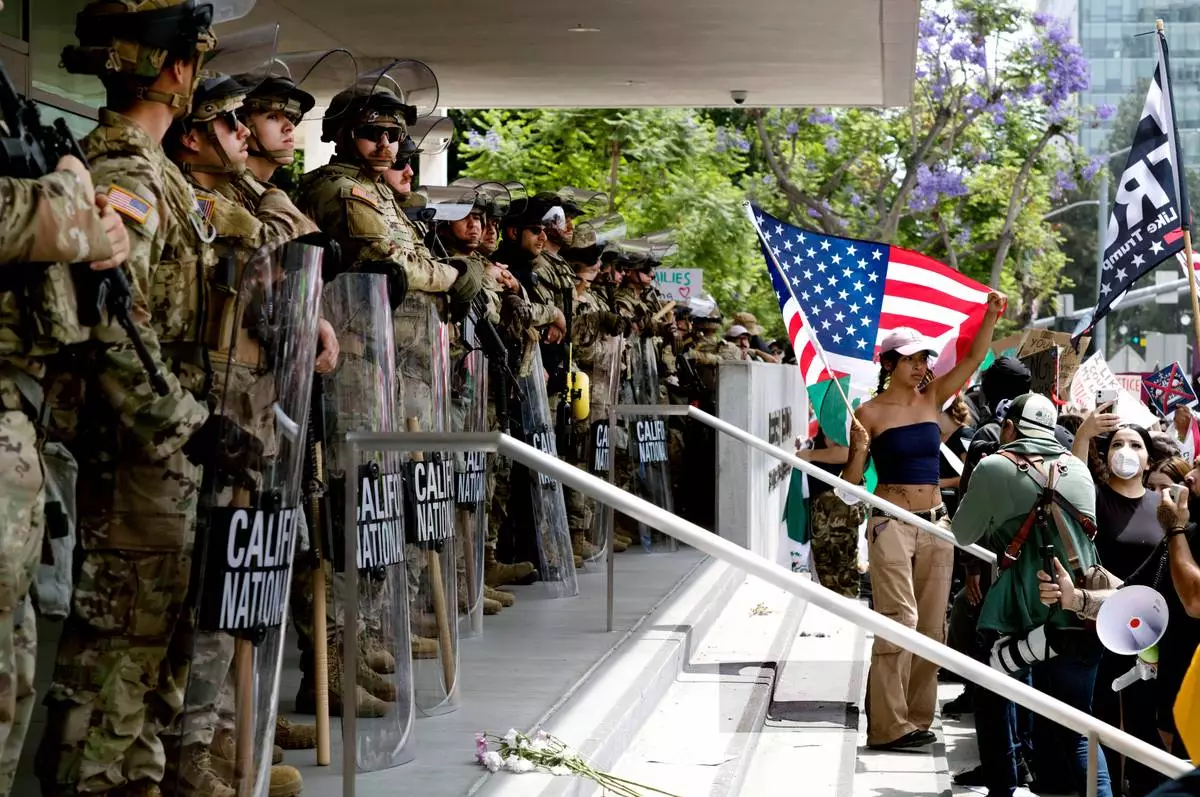
FILE - Protesters stand off against California National Guard soldiers at the Federal Building in downtown Los Angeles, during a "No Kings" protest, June 14, 2025. (AP Photo/Richard Vogel, File)

President Donald Trump speaks during a news conference with Israel's Prime Minister Benjamin Netanyahu at Mar-a-Lago, Monday, Dec. 29, 2025, in Palm Beach, Fla. (AP Photo/Alex Brandon)