Skip to Content Facebook Feature Image

Tsukudani and hot rice: Still a go-to meal in Japan centuries after its creation

ENT

Tsukudani and hot rice: Still a go-to meal in Japan centuries after its creation
ENT

ENT

Tsukudani and hot rice: Still a go-to meal in Japan centuries after its creation

2025-07-09 12:08 Last Updated At:12:21

TOKYO (AP) — Their morning starts at 5 a.m.

The father and son don’t speak to each other. They don’t need to. They barely look at each other as they go briskly, almost mechanically, from task to task. Beads of sweat glisten on their foreheads.

More Images
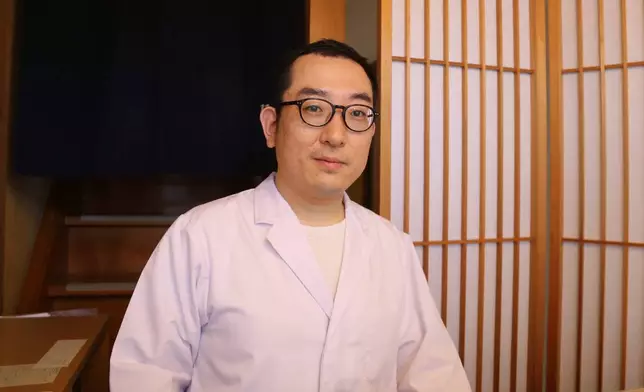
Yoshihiro Kobayashi appears at his store called Tsukushin, which offers a traditional Japanese preserved food called tsukudani in Tsukuda, Tokyo on June 18, 2025. (AP Photo/Yuri Kageyama)
Yoshihiro Kobayashi appears at his store called Tsukushin, which offers a traditional Japanese preserved food called tsukudani in Tsukuda, Tokyo on June 18, 2025. (AP Photo/Yuri Kageyama)

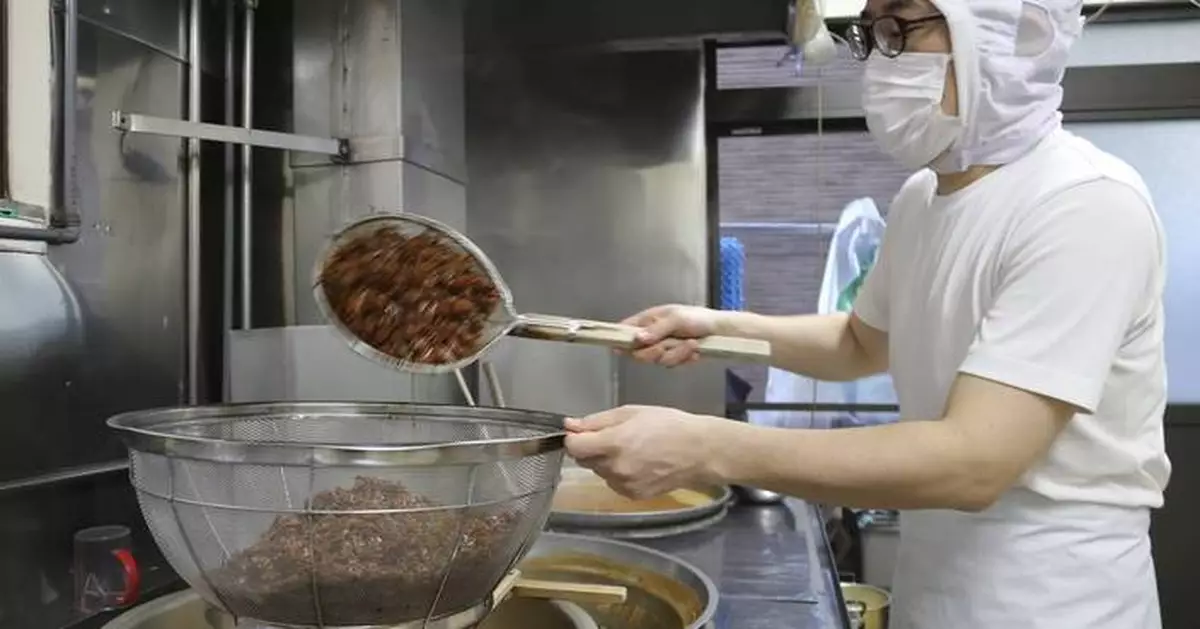
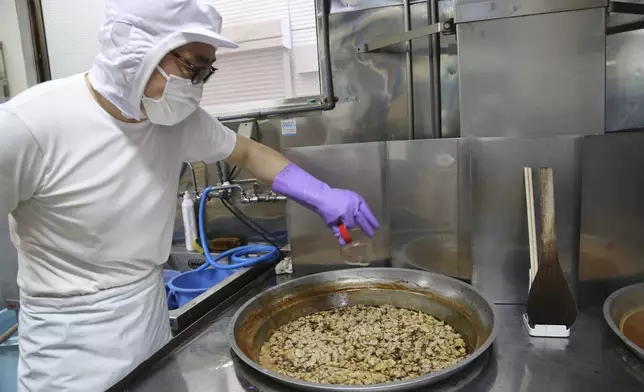
Yoshihiro Kobayashi prepares tsukudani, a Japanese preserved food, in Tsukuda, Tokyo on June 18, 2025. (AP Photo/Yuri Kageyama)
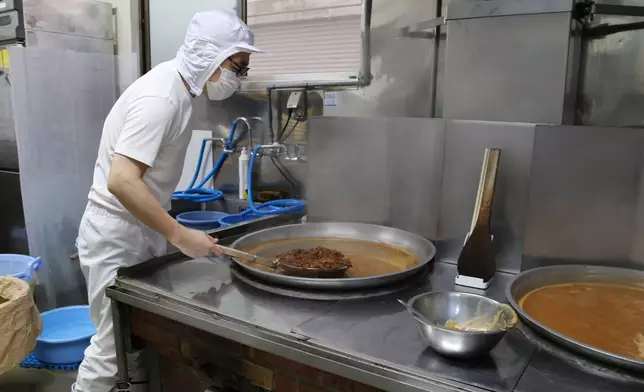
Yoshihiro Kobayashi prepares tsukudani, a Japanese preserved food, in Tsukuda, Tokyo on June 18, 2025. (AP Photo/Yuri Kageyama)
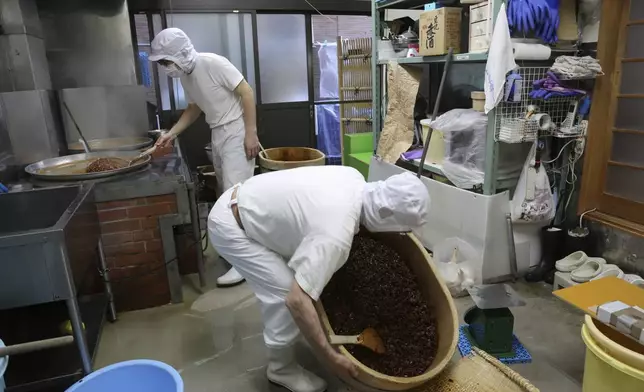
Yoshihiro Kobayashi prepares tsukudani, a Japanese preserved food, in Tsukuda, Tokyo on June 18, 2025. (AP Photo/Yuri Kageyama)

Yoshihiro Kobayashi prepares tsukudani, a Japanese preserved food, in Tsukuda, Tokyo on June 18, 2025. (AP Photo/Yuri Kageyama)

Nobuo Kobayashi, foreground, and his son Yoshihiro Kobayashi prepare a traditional Japanese dish called tsukudani, at their store in the Tsukuda area of Tokyo on June 18, 2025. (AP Photo/Yuri Kageyama)
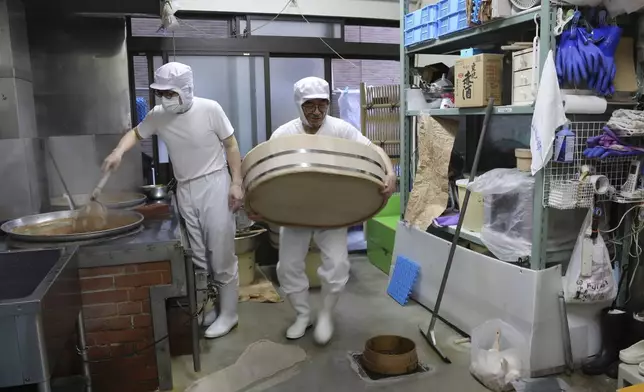
Nobuo Kobayashi, foreground, and his son Yoshihiro Kobayashi prepare a traditional Japanese dish called tsukudani, at their store in the Tsukuda area of Tokyo on June 18, 2025. (AP Photo/Yuri Kageyama)
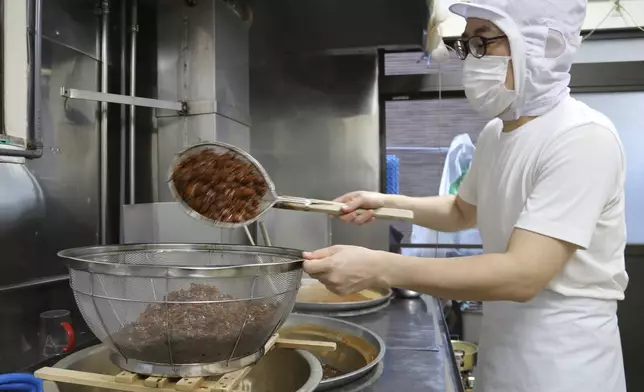
Nobuo Kobayashi, right, and his son Yoshihiro Kobayashi prepare a traditional Japanese dish called tsukudani, at their store in the Tsukuda area of Tokyo on June 18, 2025. (AP Photo/Yuri Kageyama)

Nobuo Kobayashi, right, and his son Yoshihiro Kobayashi prepare a traditional Japanese dish called tsukudani, at their store in the Tsukuda area of Tokyo on June 18, 2025. (AP Photo/Yuri Kageyama)

Yoshihiro Kobayashi prepares tsukudani, a Japanese preserved food, in Tsukuda, Tokyo on June 18, 2025. (AP Photo/Yuri Kageyama)

Yoshihiro Kobayashi prepares tsukudani, a Japanese preserved food, in Tsukuda, Tokyo on June 18, 2025. (AP Photo/Yuri Kageyama)

It’s the same work they’ve been doing at their shop for years: Cooking in big metal pots the ancient Japanese food tsukudani.

It's preserved food invented long before the advent of modern refrigeration, dating back to the samurai Edo Era more than 200 years ago.

Pieces of tuna, tiny shrimp, seaweed and other ingredients get simmered in a sweet syrup of soy sauce, sake and sugar. The air in the shop becomes damp, pungent, sweet.

Today, it’s clam tsukudani: Two pots from 6 a.m. to 7 a.m., and two more from 7 a.m. to 8 a.m. They’ll cook other items in the afternoon, depending on the orders that come in from restaurants and stores.

They can’t stir what’s cooking much. The tiny pieces are fragile and will break.

“My father is very old school,” Yoshihiro Kobayashi says with a mix of exasperation and resignation in his voice. Somewhere hidden behind his matter-of-fact tone is his deep love and respect for what he has inherited.

Working first at a fashion brand, then a department store, the younger Kobayashi initially had no plans to take up his father’s work. But he later made up his mind to return.

He says his father is strict and opinionated, yet today Nobuo Kobayashi leaves all the talking to his son, laughing when this reporter aims the camera, “Don’t take me. Your camera might break.”

Tsukushin, the Kobayashis' factory-turned-shop, is tucked away in a corner of a quaint humble Tsukuda neighborhood by the Sumida River in downtown Tokyo. It's where tsukudani was born — the dish's name fittingly translates to “cooked in Tsukuda.”

“The original,” “founding,” “first and foremost” read big wooden signs hanging by the roofs of the rickety tsukudani stores.

These days, tsukudani is standard Japanese fare, often mass-produced at modern factories far away from the dish's birthplace.

At Kobayashi’s shop, tsukudani gets cooked in vats over earthen vessels called “kamados” that were fired up with wood and charcoal in the olden days, but these days use gas. It’s then placed in a large, wooden “handai” serving plate — just the way the ancestors did it. It’s a painstaking procedure requiring about an hour of steady simmering, and the amount that can be produced at one time is limited.

Yoshihiro Kobayashi says the closest equivalent in the West is jam.

Tsukudani is a prime example of how Japan, despite its high-tech modernity and an economy driven by global corporates like Toyota and Sony, maintains traditions passed down over generations, much of them through small businesses.

Although the basic way to eat tsukudani is with a bowl of hot rice, often served with miso or soy-bean paste soup, it also makes a good snack with sake. Tsukudani can also be used as filling for rice balls or as an easy side dish for “bento,” or packed lunch, and it makes for a good topping on “chazuke,” which is rice with hot green tea poured over it.

Overall, rice is tudkudani's best pairing. Tsukudani ice cream or tsukudani potato chip isn’t the direction to go, Kobayashi said. If it's not eaten the right way, it won't taste good.

The novelty comes with communicating that basic message to people — foreigners and younger Japanese alike — who might not even know what tsukudani is.

Noriko Kobayashi, who is not related to the tsukudani makers, runs a tiny store in Tokyo that sells artwork, wooden figures, patterned clothing and other knickknacks from Africa, Scandinavia and other faraway places. She said she likes to eat seaweed tsukudani with cheese, while sipping on sake, usually for dinner.

“It’s nothing special,” she said, noting she’s been eating it since childhood.

Now that she’s older, she appreciates the way it aids one’s intestines.

“It’s a kind of health food,” she said.

Yuri Kageyama is on Threads: https://www.threads.com/@yurikageyama
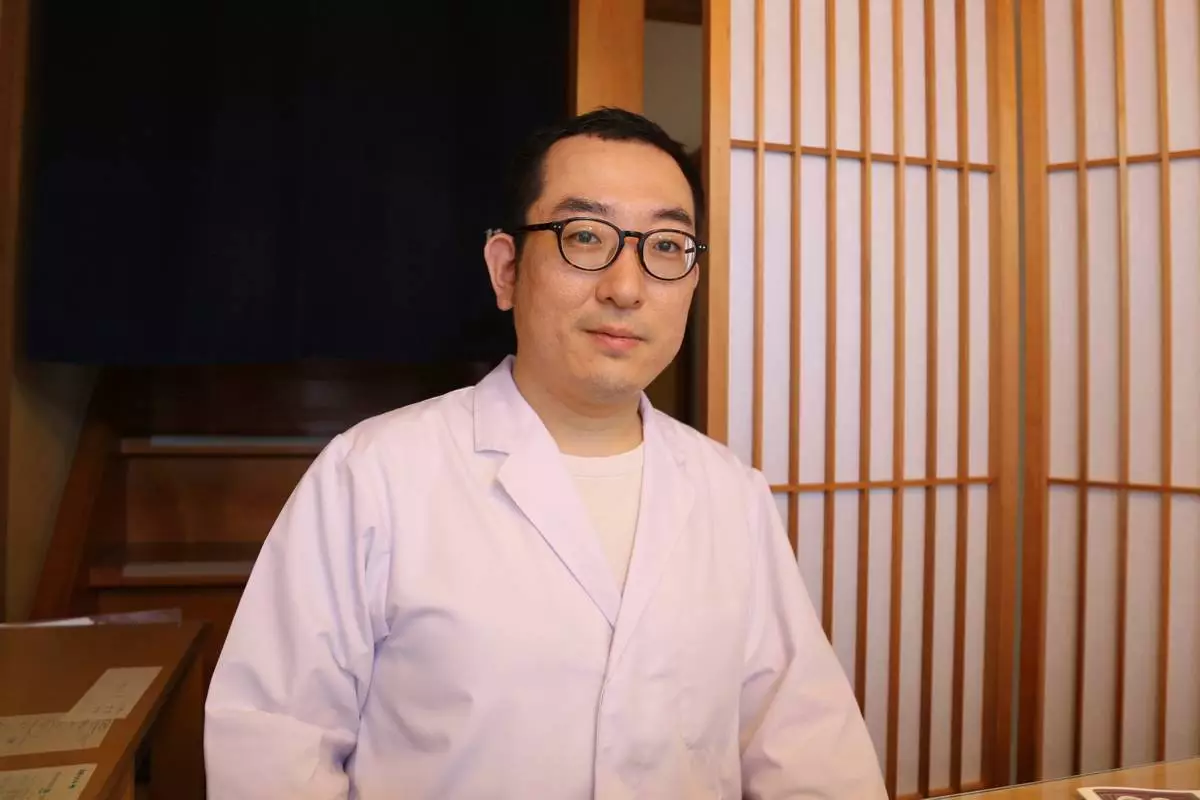
Yoshihiro Kobayashi appears at his store called Tsukushin, which offers a traditional Japanese preserved food called tsukudani in Tsukuda, Tokyo on June 18, 2025. (AP Photo/Yuri Kageyama)
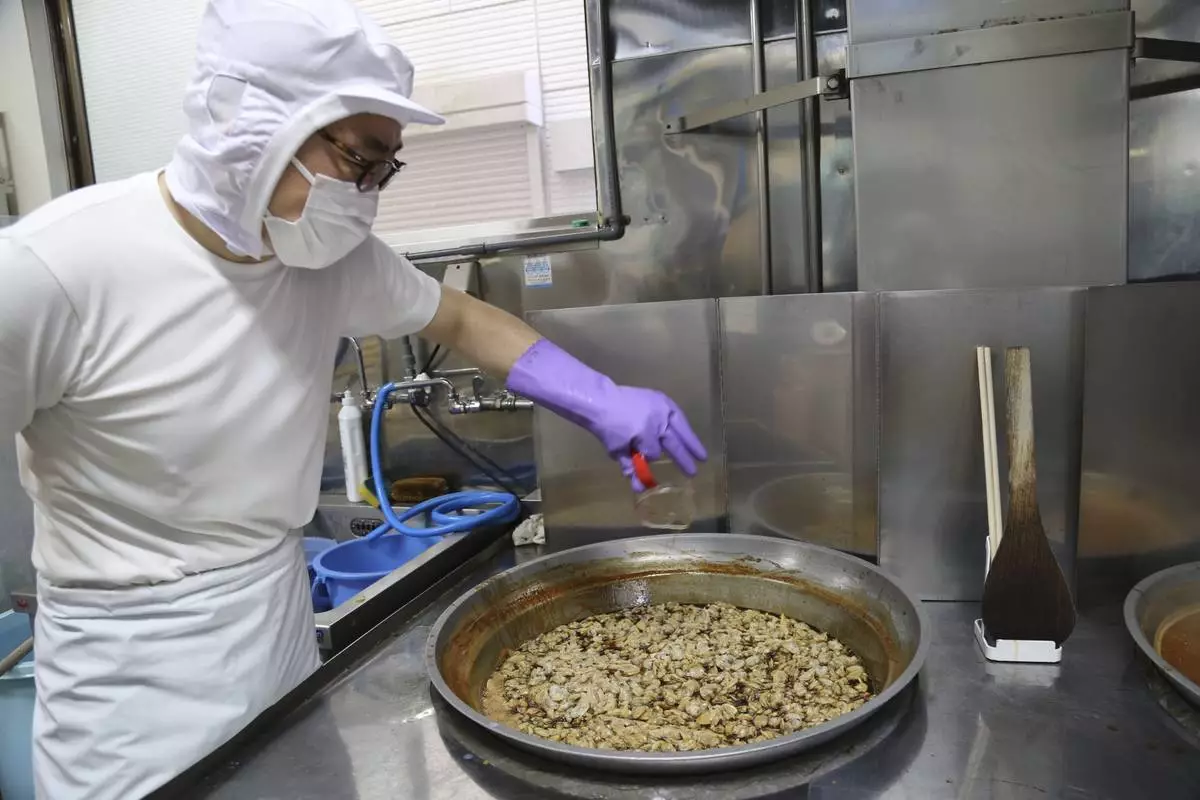
Yoshihiro Kobayashi appears at his store called Tsukushin, which offers a traditional Japanese preserved food called tsukudani in Tsukuda, Tokyo on June 18, 2025. (AP Photo/Yuri Kageyama)

Yoshihiro Kobayashi prepares tsukudani, a Japanese preserved food, in Tsukuda, Tokyo on June 18, 2025. (AP Photo/Yuri Kageyama)
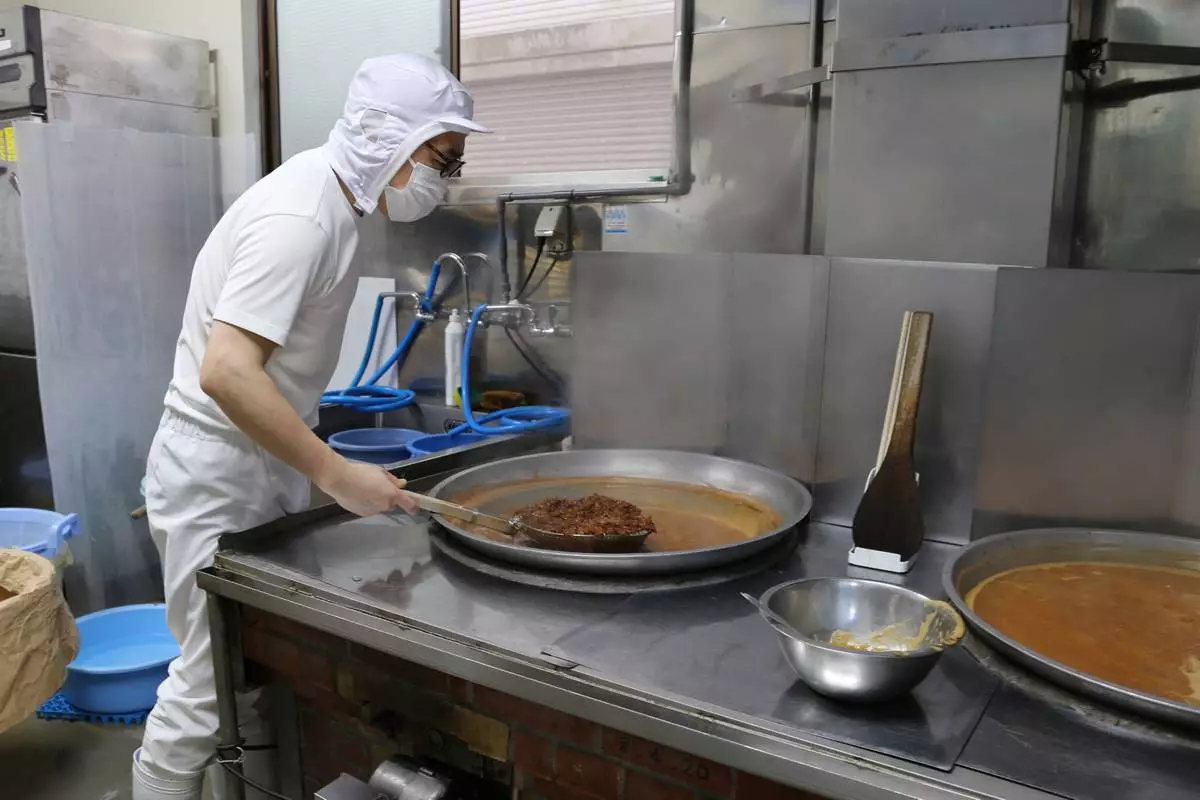
Yoshihiro Kobayashi prepares tsukudani, a Japanese preserved food, in Tsukuda, Tokyo on June 18, 2025. (AP Photo/Yuri Kageyama)
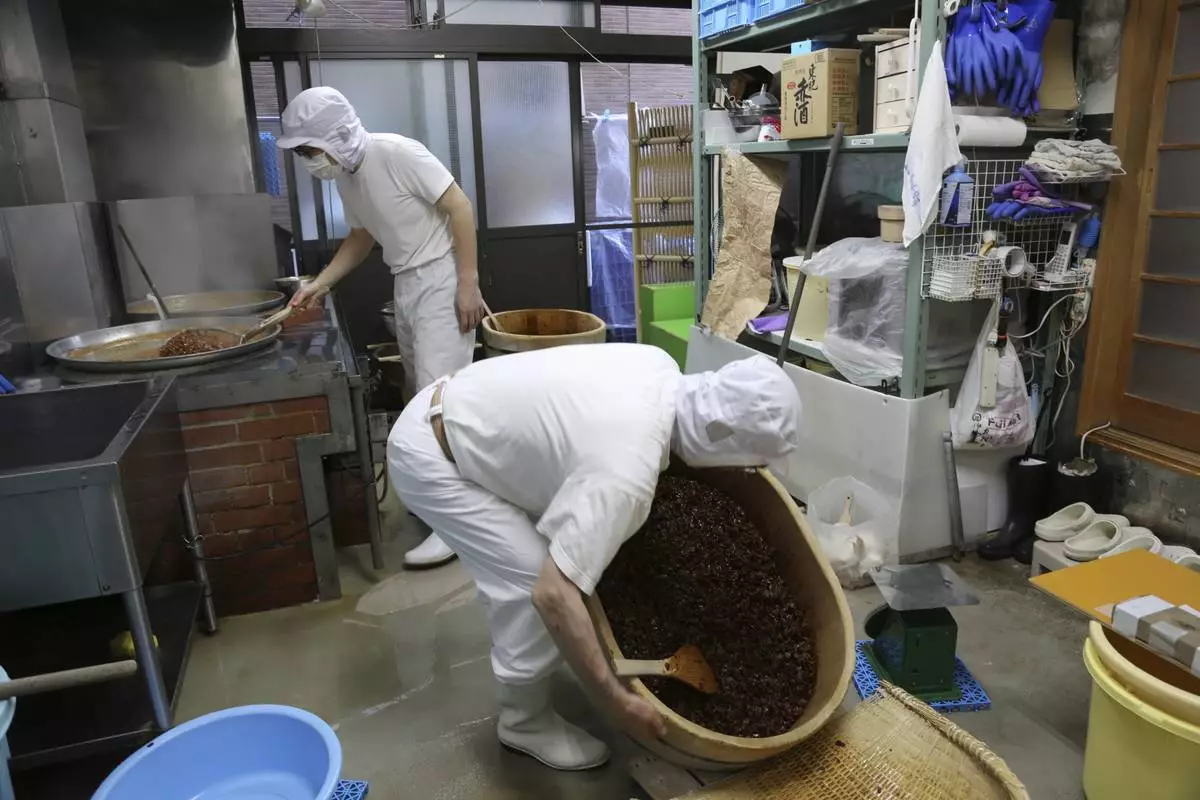
Yoshihiro Kobayashi prepares tsukudani, a Japanese preserved food, in Tsukuda, Tokyo on June 18, 2025. (AP Photo/Yuri Kageyama)

Yoshihiro Kobayashi prepares tsukudani, a Japanese preserved food, in Tsukuda, Tokyo on June 18, 2025. (AP Photo/Yuri Kageyama)

Nobuo Kobayashi, foreground, and his son Yoshihiro Kobayashi prepare a traditional Japanese dish called tsukudani, at their store in the Tsukuda area of Tokyo on June 18, 2025. (AP Photo/Yuri Kageyama)
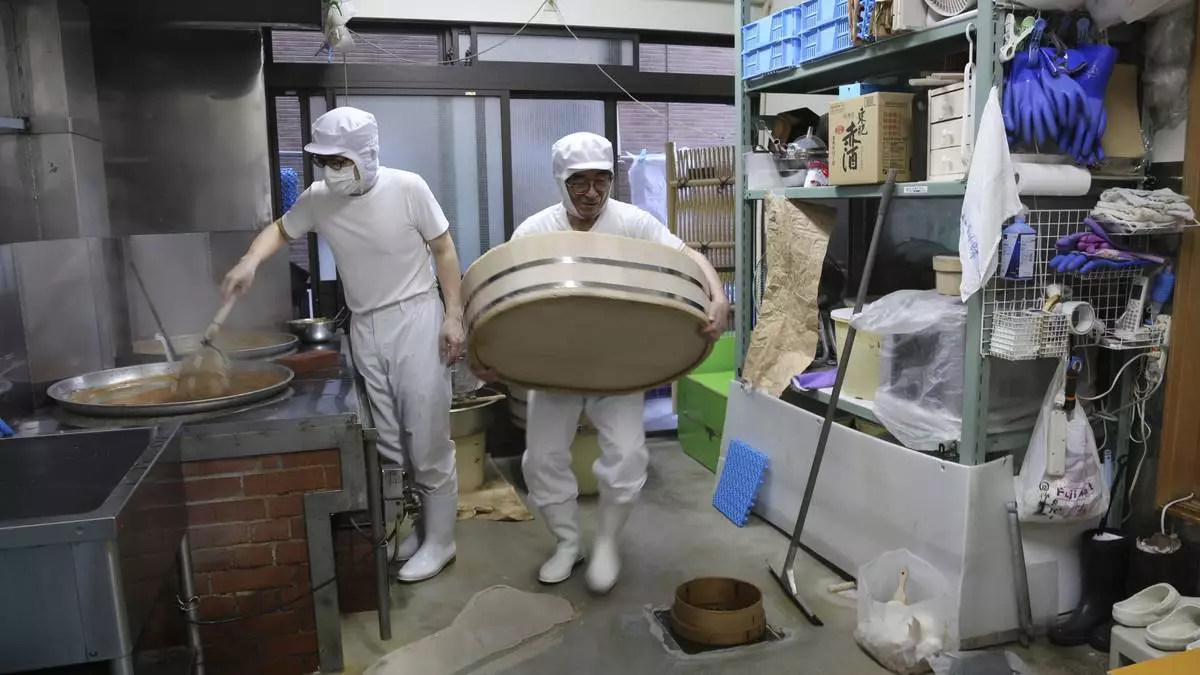
Nobuo Kobayashi, foreground, and his son Yoshihiro Kobayashi prepare a traditional Japanese dish called tsukudani, at their store in the Tsukuda area of Tokyo on June 18, 2025. (AP Photo/Yuri Kageyama)
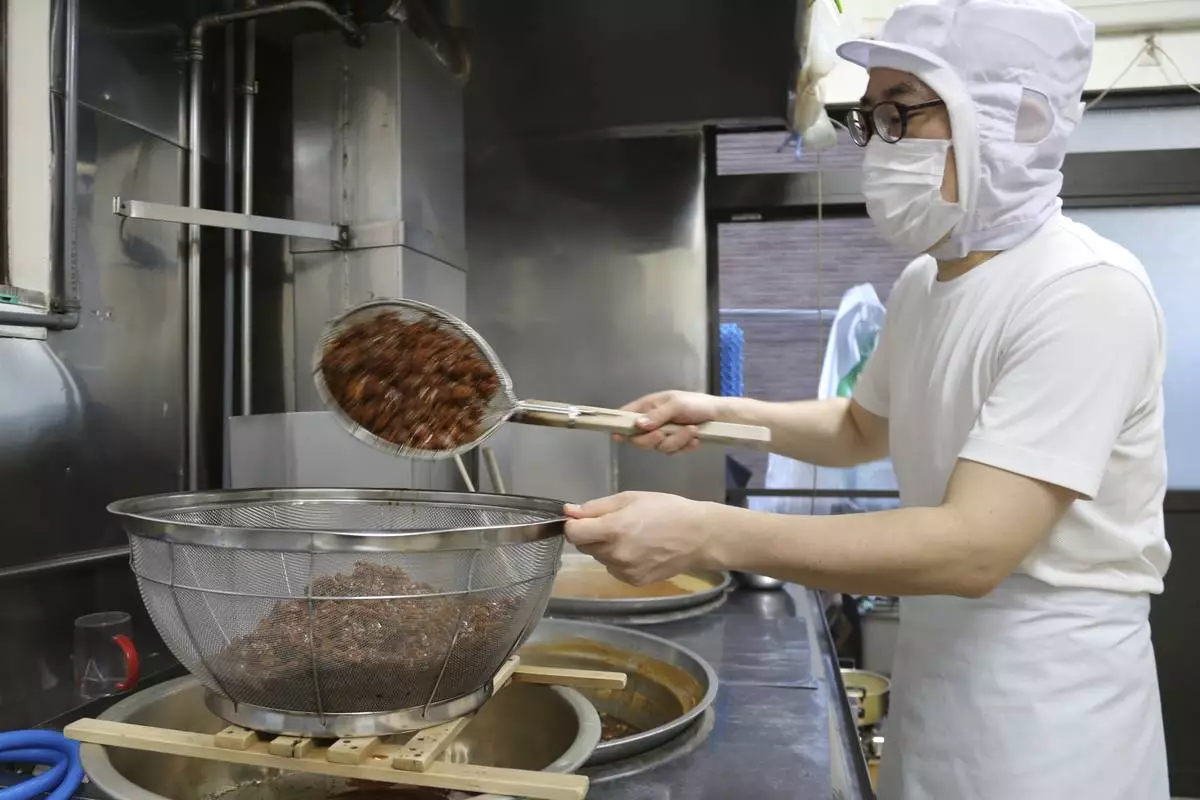
Nobuo Kobayashi, right, and his son Yoshihiro Kobayashi prepare a traditional Japanese dish called tsukudani, at their store in the Tsukuda area of Tokyo on June 18, 2025. (AP Photo/Yuri Kageyama)

Nobuo Kobayashi, right, and his son Yoshihiro Kobayashi prepare a traditional Japanese dish called tsukudani, at their store in the Tsukuda area of Tokyo on June 18, 2025. (AP Photo/Yuri Kageyama)

Yoshihiro Kobayashi prepares tsukudani, a Japanese preserved food, in Tsukuda, Tokyo on June 18, 2025. (AP Photo/Yuri Kageyama)
Yoshihiro Kobayashi prepares tsukudani, a Japanese preserved food, in Tsukuda, Tokyo on June 18, 2025. (AP Photo/Yuri Kageyama)

WASHINGTON (AP) — President Donald Trump is meeting with oil executives at the White House on Friday in hopes of securing $100 billion in investments to revive Venezuela’s ability to fully tap into its expansive reserves of petroleum — a plan that rides on their comfort in making commitments in a country plagued by instability, inflation and uncertainty.

Since the U.S. military raid to capture former Venezuelan leader Nicolás Maduro on Saturday, Trump has quickly pivoted to portraying the move as a newfound economic opportunity for the U.S., seizing tankers carrying Venezuelan oil, saying the U.S. is taking over the sales of 30 million to 50 million barrels of previously sanctioned Venezuelan oil and will be controlling sales worldwide indefinitely.

On Friday, U.S. forces seized their fifth tanker over the past month that has been linked to Venezuelan oil. The action reflected the determination of the U.S. to fully control the exporting, refining and production of Venezuelan petroleum, a sign of the Trump administration's plans for ongoing involvement in the sector as it seeks commitments from private companies.

It's all part of a broader push by Trump to keep gasoline prices low. At a time when many Americans are concerned about affordability, the incursion in Venezuela melds Trump’s assertive use of presidential powers with an optical spectacle meant to convince Americans that he can bring down energy prices.

The meeting, set for 2:30 p.m. EST, will be open to the news media, according to an update to the president's daily schedule. “At least 100 Billion Dollars will be invested by BIG OIL, all of whom I will be meeting with today at The White House,” Trump said Friday in a pre-dawn social media post.

Trump is set to meet with executives from 17 oil companies, according to the White House. Among the companies attending are Chevron, which still operates in Venezuela, and ExxonMobil and ConocoPhillips, which both had oil projects in the country that were lost as part of a 2007 nationalization of private businesses under Maduro’s predecessor, Hugo Chávez.

The president is meeting with a wide swath of domestic and international companies with interests ranging from construction to the commodity markets. Other companies slated to be at the meeting include Halliburton, Valero, Marathon, Shell, Singapore-based Trafigura, Italy-based Eni and Spain-based Repsol.

Large U.S. oil companies have so far largely refrained from affirming investments in Venezuela as contracts and guarantees need to be in place. Trump has suggested on social media that America would help to backstop any investments.

Venezuela’s oil production has slumped below one million barrels a day. Part of Trump's challenge to turn that around will be to convince oil companies that his administration has a stable relationship with Venezuela’s interim President Delcy Rodríguez, as well as protections for companies entering the market.

Secretary of State Marco Rubio, Energy Secretary Chris Wright and Interior Secretary Doug Burgum are slated to attend the oil executives meeting, according to the White House.

Meanwhile, the United States and Venezuelan governments said Friday they were exploring the possibility of r estoring diplomatic relations between the two countries, and that a delegation from the Trump administration arrived to the South American nation on Friday.

The small team of U.S. diplomats and diplomatic security officials traveled to Venezuela to make a preliminary assessment about the potential re-opening of the U.S. Embassy in Caracas, the State Department said in a statement.

Trump also announced on Friday he’d meet with President Gustavo Petro in early February, but called on the Colombian leader to make quick progress on stemming flow of cocaine into the U.S.

Trump, following the ouster of Maduro, had made vague threats to take similar action against Petro. Trump abruptly changed his tone Wednesday about his Colombian counterpart after a friendly phone call in which he invited Petro to visit the White House.

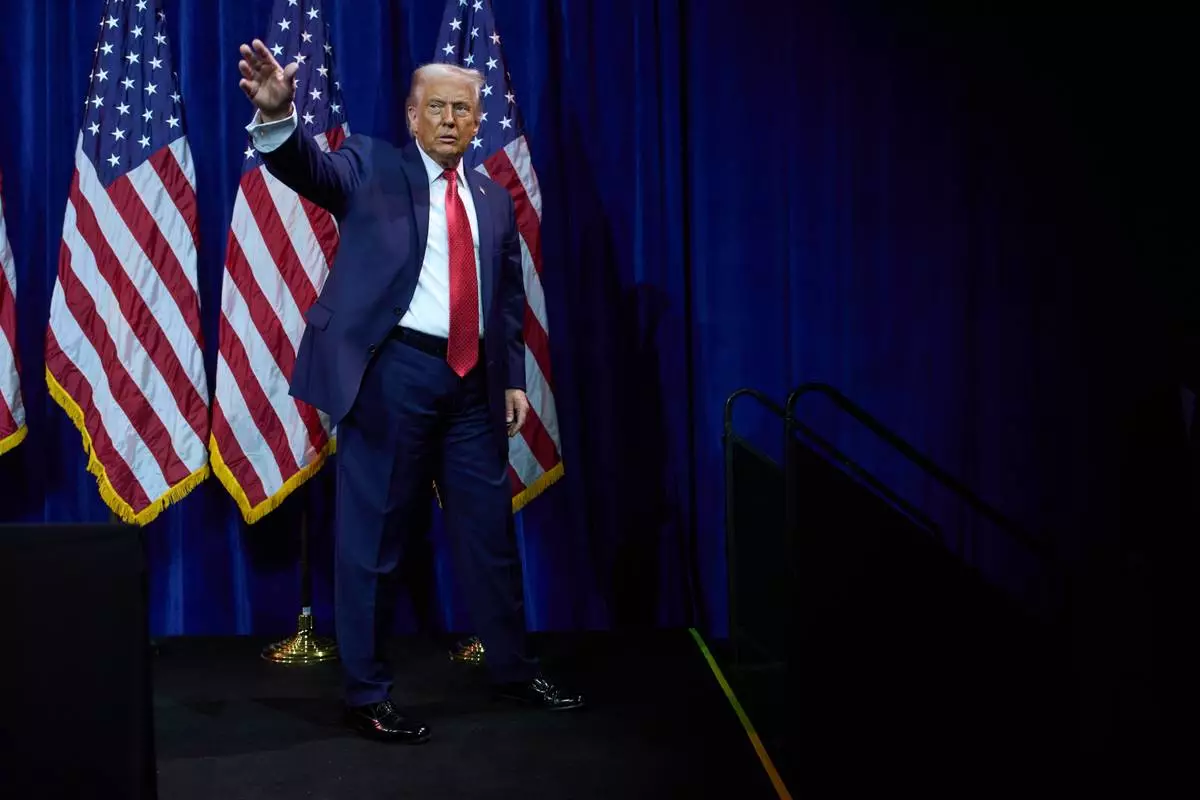
President Donald Trump waves as he walks off stage after speaking to House Republican lawmakers during their annual policy retreat, Tuesday, Jan. 6, 2026, in Washington. (AP Photo/Evan Vucci)

President Donald Trump waves as he walks off stage after speaking to House Republican lawmakers during their annual policy retreat, Tuesday, Jan. 6, 2026, in Washington. (AP Photo/Evan Vucci)

Recommended Articles