NEW ORLEANS (AP) — Nearly two months after 10 inmates escaped from a New Orleans jail by crawling through a hole behind a toilet, authorities have recaptured all but the man with the most violent rap sheet: Derrick Groves.
Following the May 16 jailbreak, law enforcement tracked down three escapees within 24 hours and most of the others within the next few weeks. While some of the fugitives roamed through nightlife hotspots and another made Instagram posts, Groves has so far kept a low profile.
The 28-year-old New Orleans native has the most at stake, authorities say. Last year, a jury convicted Groves of killing two people after he opened fire on a family block party with an assault rifle in what prosecutors said was a feud with rival drug dealers.
Groves faces life imprisonment without parole, but administrative delays have kept him in jail for years rather than a more secure prison facility.
“He’s got nothing to lose,” said Forrest Ladd, an Orleans Parish assistant district attorney who prosecuted Groves. “That’s a dangerous thing from anybody, much less somebody capable of causing mass harm.”
More than 90% of people who escape from U.S. correctional facilities are recaptured within a year, said Bryce Peterson, adjunct professor of criminal justice at John Jay College.
“The longer you are out there, the more likely you are to stay out,” said Peterson, though he believes Groves will be caught eventually due to the high level of media attention.
Most escapes occur when low-level offenders seize spontaneous opportunities, Peterson said. The New Orleans jailbreak stands out because of its level of “sophistication and pre-planning” and the alleged roles current and former jail employees played in the escape, he added.
Multiple defense attorneys who have worked with Groves described him as intelligent and polite. Prosecutors in his cases say he is violent, manipulative and remorseless.
“He’s the worst human being I’ve ever come across in my life,” said Ladd, the Orleans Parish assistant district attorney. “But he is a very charismatic, and I think that allows him the ability to kind of control people.”
A former jail employee who became Groves’ girlfriend during his incarceration is accused of helping him coordinate the escape in advance by arranging phone calls that avoided the jail's monitoring system. She is one of at least 16 people — many family members of the escapees — facing charges for providing transport, food, shelter and cash to the fugitives, most of whom stayed within New Orleans.
Several days after the escape, authorities received information that Groves was hiding in the city’s Lower Ninth Ward, the Hurricane Katrina-ravaged neighborhood where he grew up, according to court documents.
State and federal authorities declined to provide details on Groves' suspected whereabouts. Louisiana State Police Superintendent Col. Robert Hodges indicated he believes Groves is receiving assistance from friends or family.
“Sometimes we think we are incredibly close,” Hodges said during a June 27 news conference, adding that authorities would arrive at a location to find a fugitive “just moved because they have help.”
There is a $50,000 reward for tips leading to Groves’ recapture.
Likely impeding the search for Groves is widespread skepticism toward law enforcement from city residents following decades of abuse, often against the Black community. In 1994, a corrupt police officer ordered the killing of Groves’ grandmother, Kim Groves, after she reported him for beating up a teenager. Her three children settled a federal civil rights lawsuit with the city for $1.5 million in 2018.
“For my family, it’s been like reliving a constant nightmare,” Groves’ aunt, Jasmine Groves, told WDSU, saying the family has been interrogated and remains under law enforcement surveillance. She has urged her nephew to turn himself in.
Groves’ mother and aunt did not respond to The Associated Press’ requests for comment for this story.
In 2014, at the age of 17, Groves was arrested and incarcerated for nearly two years on a charge of attempted second-degree murder for which he was later acquitted by a jury, though his own father had testified against him, according to court records and a prosecutor in the case, Mike Trummel.
Tom Shlosman, Groves’ defense attorney in that case, said that Groves' prolonged incarceration as a teenager and his grandmother's murder likely undermined his faith in the criminal justice system. Shlosman remembered Groves as “young and scared.”
“None of that’s going to affect a kid in any positive way,” Shlosman said. “And it’s certainly not going to instill trust in law enforcement.”
Groves, who goes by “Woo,” dropped out of school in ninth grade and sold heroin in the Lower Ninth Ward for years, according to court records. The FBI began monitoring his social media while he was still a teenager, and Groves pleaded guilty to federal drug trafficking charges in 2019.
Groves has been in jail since at least 2019, after his involvement in four killings during an 18-month period.
In October 2024, a jury convicted Groves of second-degree murder for using an assault rifle to spray dozens of bullets into a family block party on Mardi Gras, killing 21-year-old Byron Jackson and 26-year-old Jamar Robinson and wounding several others.
Groves later pleaded guilty to manslaughter charges in two separate shootings, according to the Orleans Parish District Attorney’s office.
Eyewitnesses in cases involving Groves have been threatened and physically attacked by him, and others were so intimidated they refused to testify against him, according to three current and former prosecutors and court records.
In court, Robinson’s aunt, Janis Robinson, said she had cried every night since her nephew died: “I don’t know how we are going to get through it.”
In response, records show, Groves swore repeatedly at her in court.
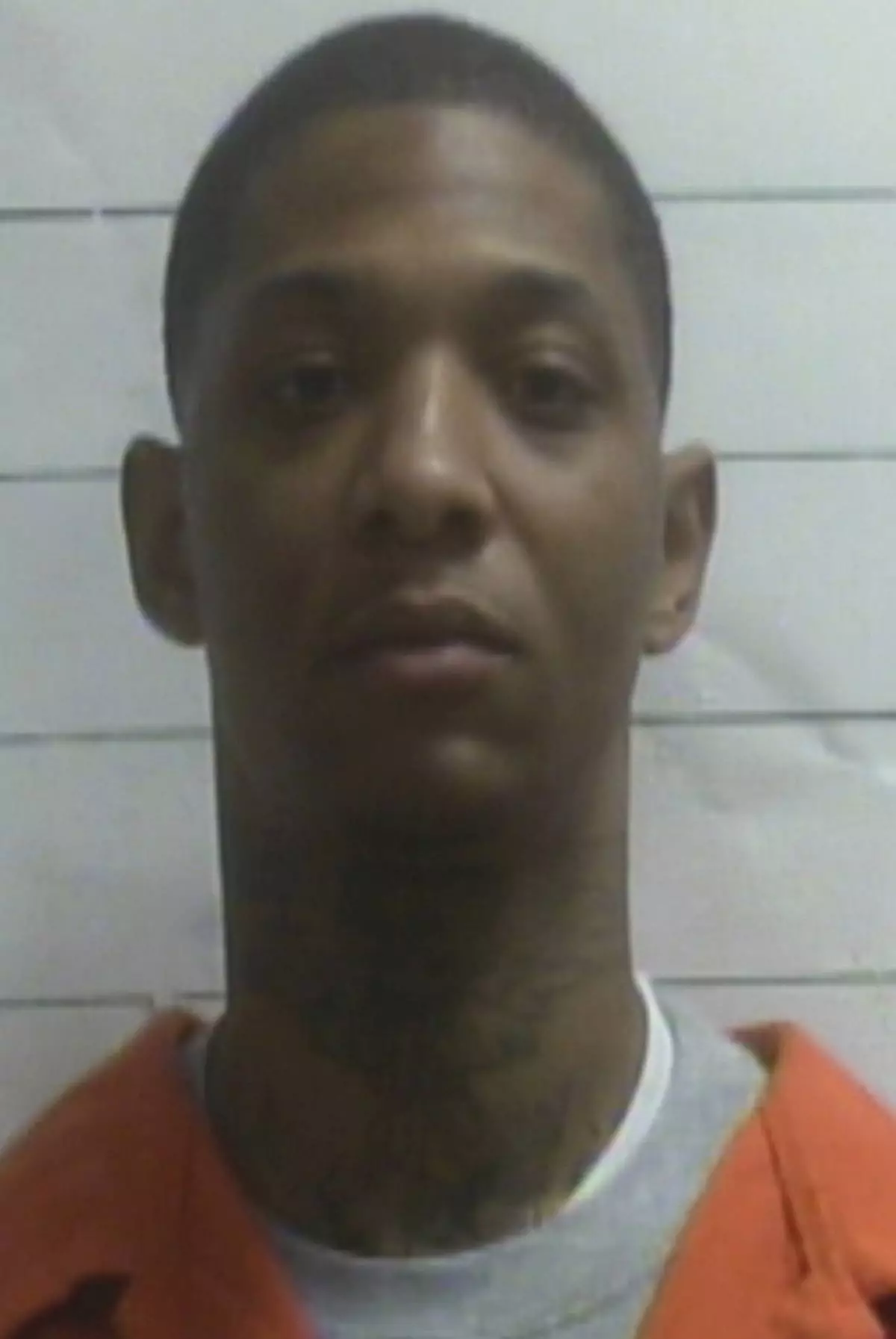
This handout photo shows, Derrick D. Groves, one of the inmates who escaped from a New Orleans jail. (Orleans Parish Sheriff's Office via AP)