WASHINGTON (AP) — Human-caused climate change is responsible for killing about 1,500 people in last week's European heat wave, a first-of-its-kind rapid study found.
Those 1,500 people “have only died because of climate change, so they would not have died if it would not have been for our burning of oil, coal and gas in the last century,” said study co-author Friederike Otto, a climate scientist at Imperial College in London.
Click to Gallery

FILE - A tourist drinks water on a hot day at the beach in Barcelona, Spain, July 2, 2025. (AP Photo/Emilio Morenatti, File)
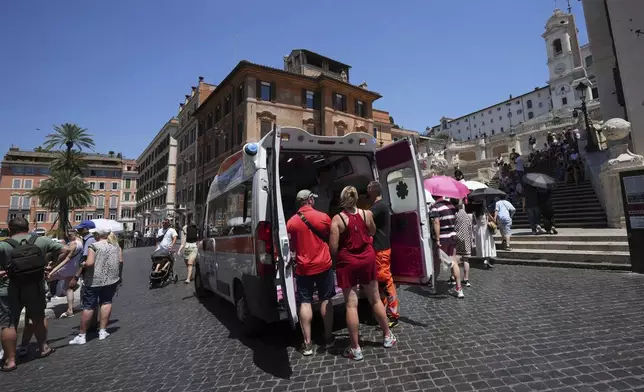
FILE - Paramedics provide aid to tourists and residents with an ambulance, next to the historical Spanish Steps, in Rome, Italy, July 1, 2025. (AP Photo/Andrew Medichini)
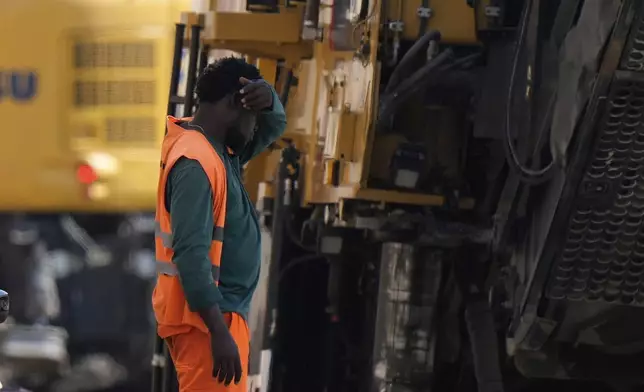
FILE - An employee takes a break as he works at a road construction site in Milan, Italy, July 1, 2025. (AP Photo/Luca Bruno, File)

FILE - A man fans himself as he rests on a hot day in Retiro Park in Madrid, Spain, June 28, 2025. (AP Photo/Paul White, File)
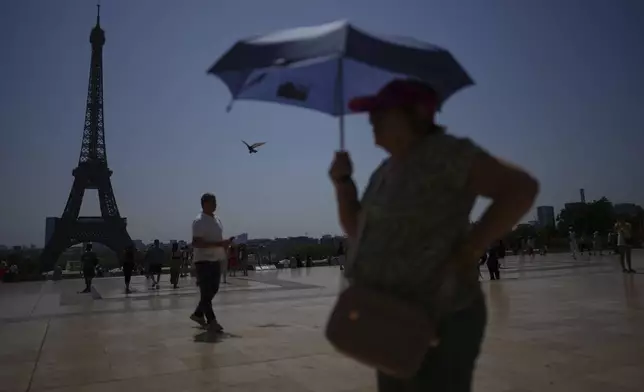
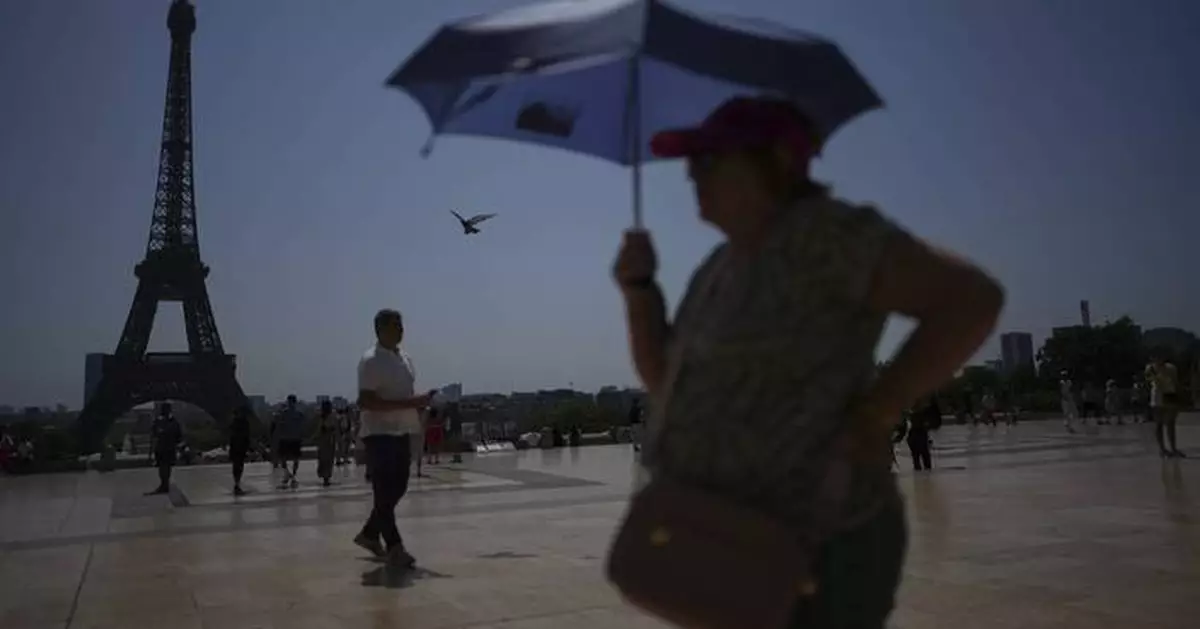
FILE - People walk at Trocadero plaza near the Eiffel Tower during a heat wave July 2, 2025, in Paris. (AP Photo/Christophe Ena, File)
Scientists at Imperial and the London School of Hygiene and Tropical Medicine used peer-reviewed techniques to calculate that about 2,300 people in 12 cities likely died from the heat in last week's bout of high temperatures, with nearly two-thirds of them dying because of the extra degrees that climate change added to the natural summer warmth.
Past rapid attribution studies have not gone beyond evaluating climate change's role in meteorological effects such as extra heat, flooding or drought. This study goes a step further in directly connecting coal, oil and natural gas use to people dying.
“Heat waves are silent killers and their health impact is very hard to measure,″ said co-author Gary Konstantinoudis, a biostatistician at Imperial College. ”People do not understand the actual mortality toll of heat waves and this is because (doctors, hospitals and governments) do not report heat as an underlying cause of death” and instead attribute it to heart or lung or other organ problems.
Of the 1,500 deaths attributed to climate change, the study found more than 1,100 were people 75 or older.
“It’s summer, so it’s sometimes hot," study lead author Ben Clarke of Imperial College said in a Tuesday news conference. ”The influence of climate change has pushed it up by several degrees and what that does is it brings certain groups of people more into dangerous territory and that’s what’s important. That’s what we really want to highlight here. For some people it’s still warm fine weather but for now a huge sector of the population it's more dangerous."
Researchers looked at June 23 to July 2 in London; Paris; Frankfurt, Germany; Budapest, Hungary; Zagreb, Croatia; Athens, Greece; Barcelona, Spain; Madrid; Lisbon, Portugal; Rome; Milan and Sassari, Italy. They found that except in Lisbon, the extra warmth from greenhouse gases added 2 to 4 degrees Celsius (3.6 to 7.2 degrees Fahrenheit) to what would have been a more natural heat wave. London got the most at nearly 4 degrees (7.2 degrees Fahrenheit). Climate change only added about a degree to Lisbon's peak temperature, the study calculated, mostly because of the Atlantic Ocean's moderating effect, Otto said.
That extra climate-change-caused heat added the most extra deaths in Milan, Barcelona and Paris and the least in Sassari, Frankfort and Lisbon, the study found. The 1,500 figure is the middle of the range of overall climate-related death estimates that go from about 1,250 to around 1,700.
Wednesday's study is not yet peer-reviewed. It is an extension of work done by an international team of scientists who do rapid attribution studies to search for global warming’s fingerprints in the growing number of extreme weather events worldwide, and combine that with long-established epidemiological research that examines death trends that differ from what's considered normal.
Researchers compared what the thermometers read last week to what computer simulations say would have happened in a world without planet-warming greenhouse gases from fossil fuel use. Health researchers then compared estimates — there are no solid figures yet — for heat deaths in what just happened to what heat deaths would be expected for each city without those extra degrees of warmth.
There are long-established formulas that calculate excess deaths differing from normal based on location, demographics, temperatures and other factors and those are used, Otto and Konstantinoudis said. And health researchers take into account many variables like smoking and chronic diseases, so it's comparing similar people except for temperature so they know that's what's to blame, Konstantinoudis said.
Studies in 2021 generally linked excess heat deaths to human-caused climate change and carbon emissions, but not specific events like last week's hot spell. A 2023 study in Nature Medicine estimated that since 2015, for every degree Celsius the temperature rises in Europe, there's an extra 18,547 summer heat deaths.
Studies like Wednesday's are “ending the guessing game on the health harms from continued burning of fossil fuels,” said Dr. Jonathan Patz, director of the Center for Health, Energy and Environmental Research at the University of Wisconsin. He was not part of the research but said it “combined the most up-to-date climate and health methods and found that every fraction of a degree of warming matters regarding extreme heat waves.”
Dr. Courtney Howard, a Canadian emergency room physician and chair of the Global Climate and Health Alliance, said, “Studies like this help us see that reducing fossil fuel use is health care.”
The Associated Press’ climate and environmental coverage receives financial support from multiple private foundations. AP is solely responsible for all content. Find AP’s standards for working with philanthropies, a list of supporters and funded coverage areas at AP.org.

FILE - A tourist drinks water on a hot day at the beach in Barcelona, Spain, July 2, 2025. (AP Photo/Emilio Morenatti, File)
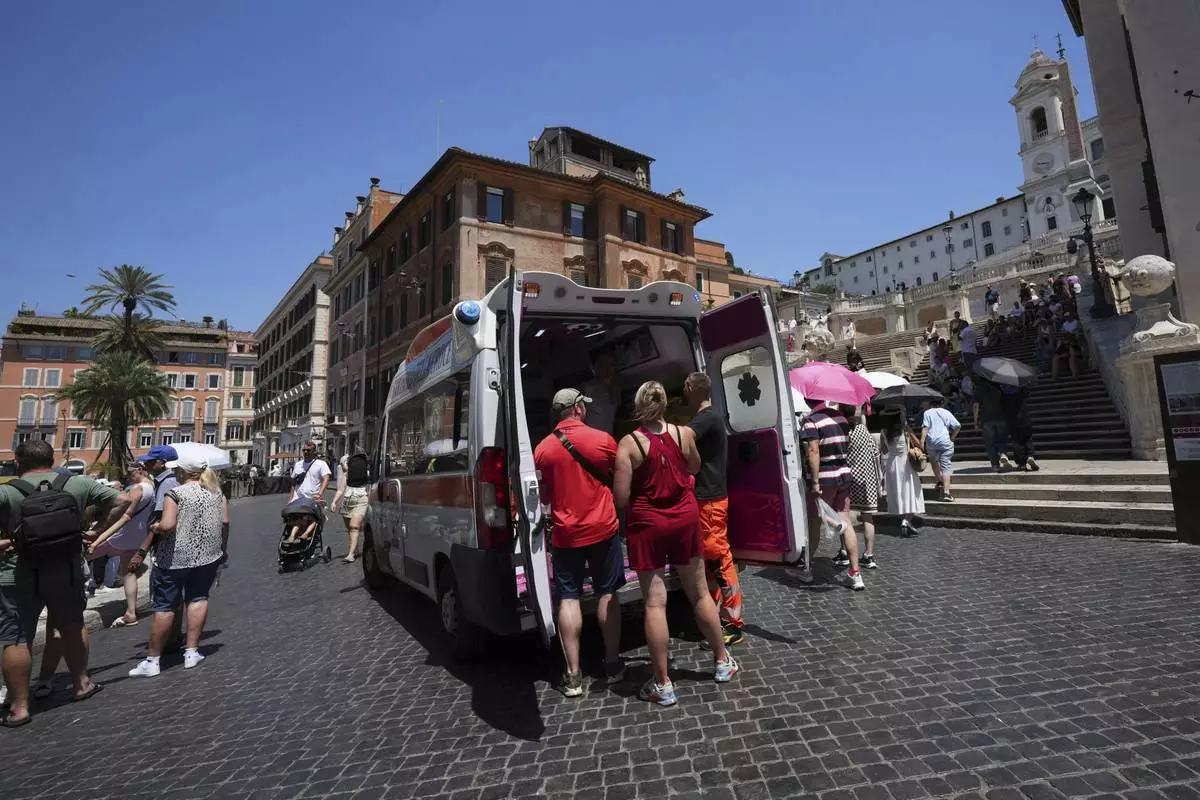
FILE - Paramedics provide aid to tourists and residents with an ambulance, next to the historical Spanish Steps, in Rome, Italy, July 1, 2025. (AP Photo/Andrew Medichini)
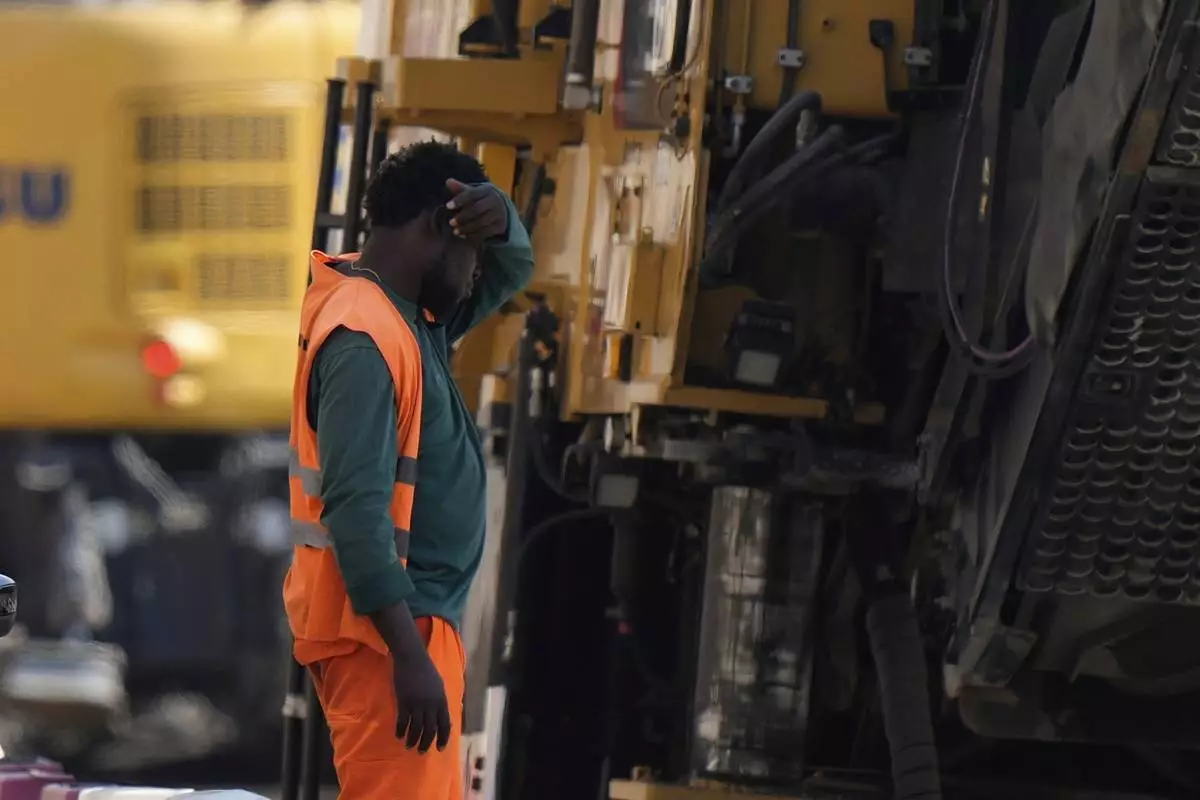
FILE - An employee takes a break as he works at a road construction site in Milan, Italy, July 1, 2025. (AP Photo/Luca Bruno, File)

FILE - A man fans himself as he rests on a hot day in Retiro Park in Madrid, Spain, June 28, 2025. (AP Photo/Paul White, File)
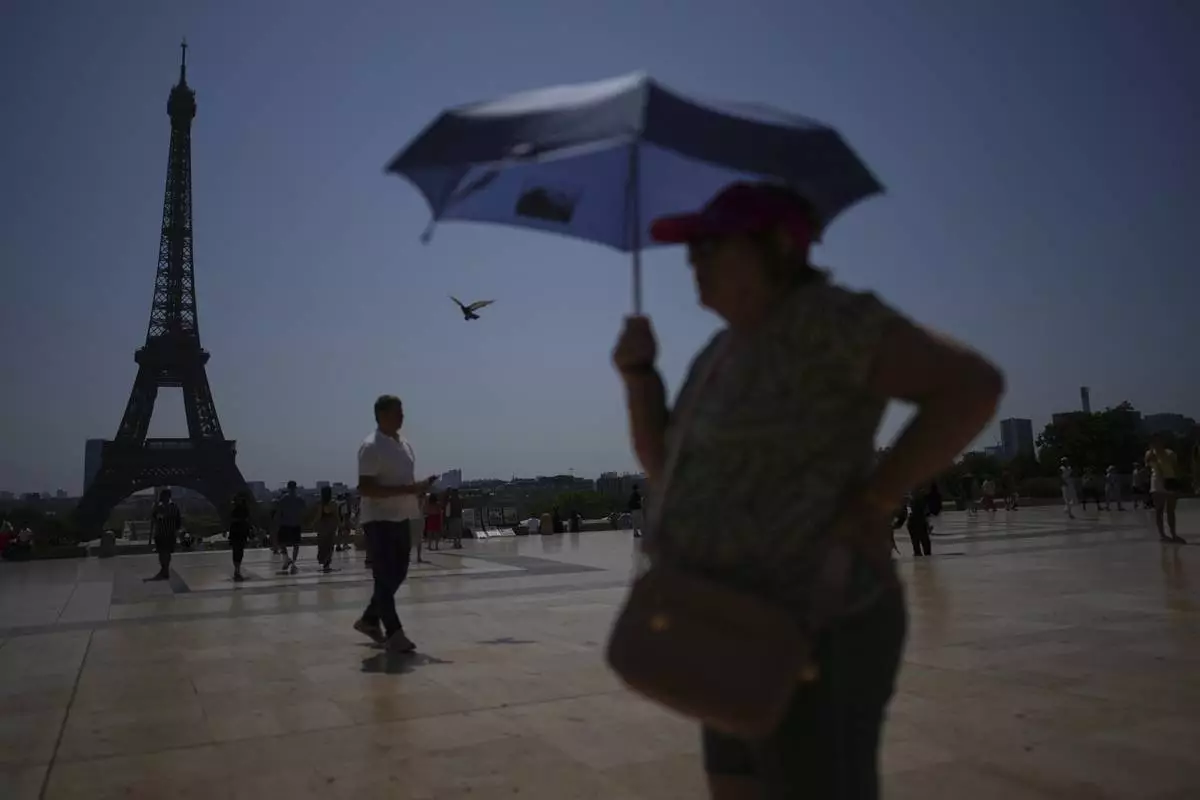
FILE - People walk at Trocadero plaza near the Eiffel Tower during a heat wave July 2, 2025, in Paris. (AP Photo/Christophe Ena, File)