ECAULT FOREST, France (AP) — Isaac stared down at his sandals and wondered out loud how suitable they'd be for the ordeal ahead: A perilous crossing of the English Channel, where scores of desperate people before him have drowned trying to reach the U.K.
The 35-year-old from Tanzania never expected, or wanted, to be here, surviving hand-to-mouth in a makeshift woodland camp in northern France, with dozens of other migrants. They, too, fled conflict, oppression, poverty and other miseries for the hope, however uncertain, that life someplace else — somewhere, anywhere — must surely be better.
Click to Gallery
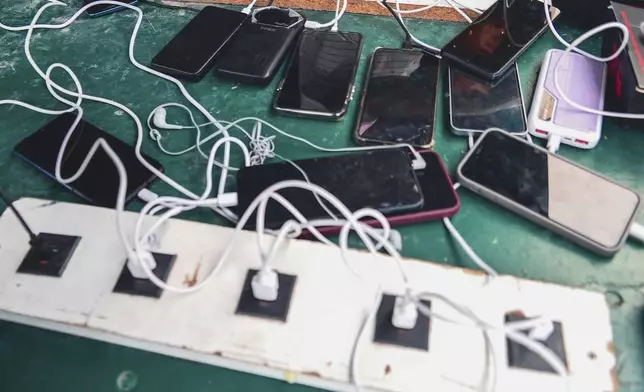
Phones are kept for charging at a Doctors Without Borders informal camp in Mardyck, northern France, Wednesday, July 2, 2025. (AP Photo/Nicolas Garriga)
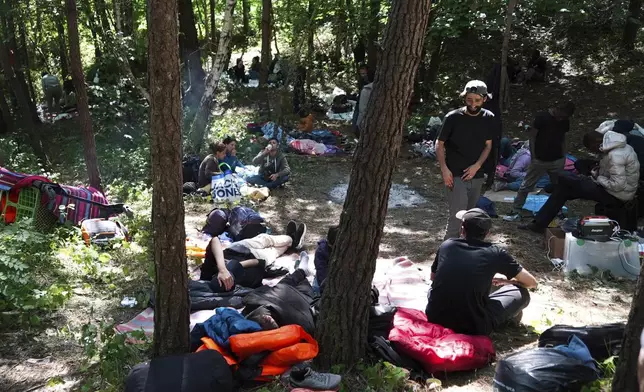
Migrants wait in the Ecault forest, northern France, Thursday, July 3, 2025. (AP Photo/Nicolas Garriga)
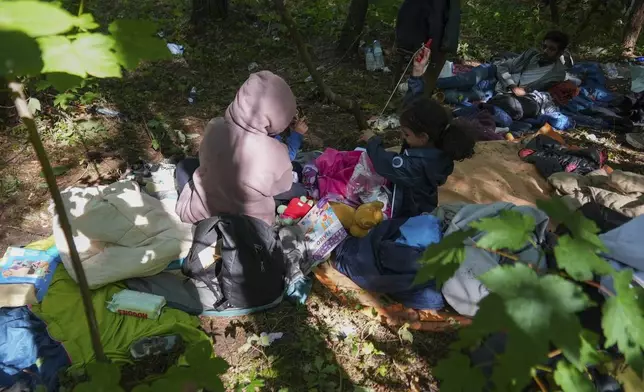
Anouar, from Yemen, holds her daughter Kadi, 4, while her second daughter Jori, 6, center, right, and husband Qassim, from Palestine, right, wait in the forest of Ecault, northern France, Thursday, July 3, 2025. (AP Photo/Nicolas Garriga)
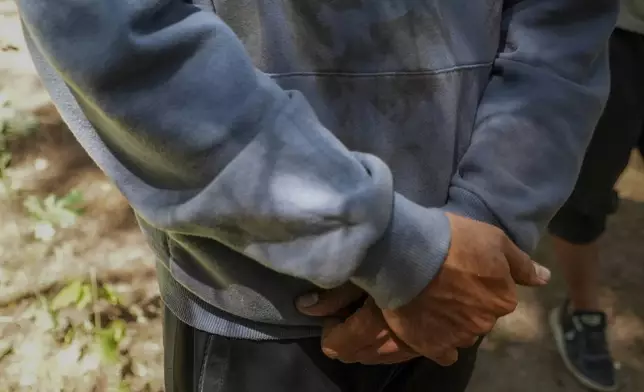
Qassim, 26, a Palestinian, wears a hoodie stained with what he said is his wife Anouar's blood, in the Ecault forest northern France, Thursday, July 3, 2025. (AP Photo/Nicolas Garriga)
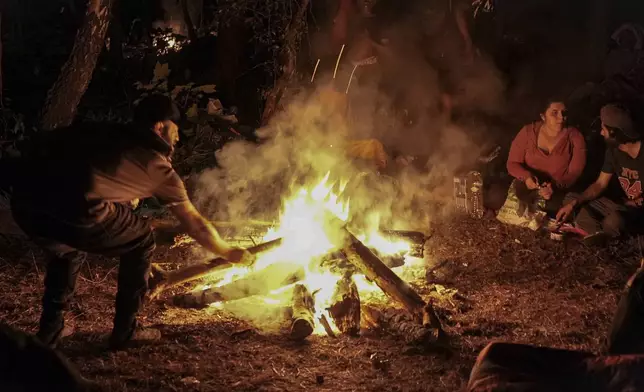
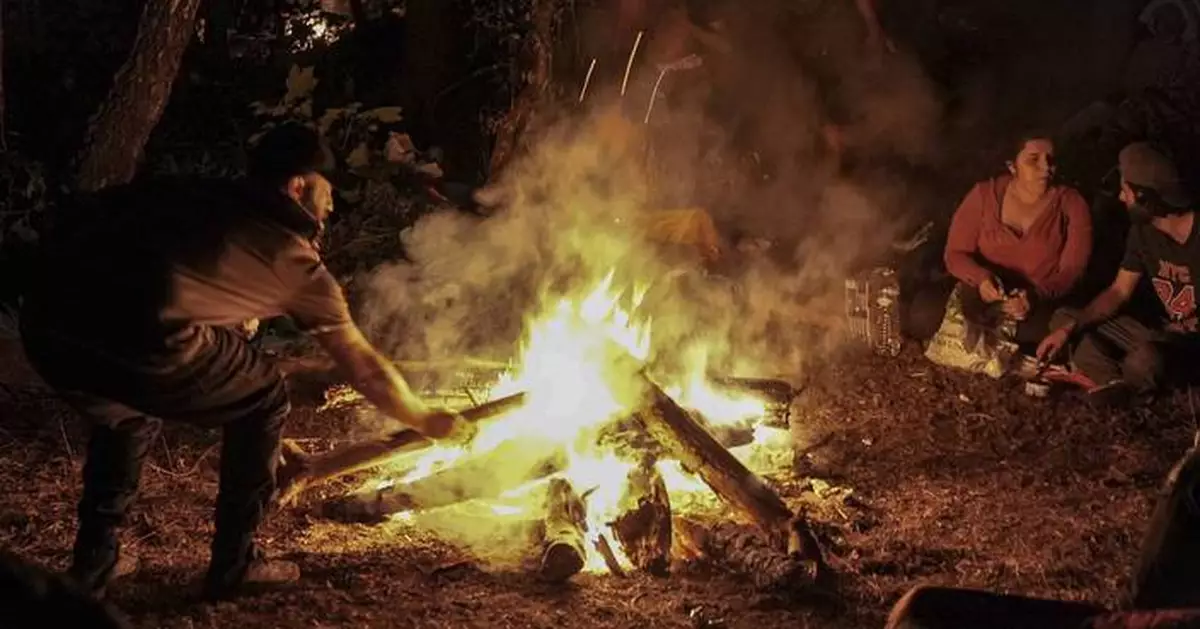
Migrants gather by a campfire in the Ecault forest, northern France, Friday, July 4, 2025. (AP Photo/Nicolas Garriga)
“I wouldn’t be sitting here if I had a choice,” Isaac said. “I didn’t know what to expect. I didn’t even bring a jacket or sweater.”
All Isaac wants is to live freely as himself, a gay man. That aspiration is denied in Tanzania, where homosexuality is taboo and criminalized. A ferocious beating by a group of men that left his shoulder with permanent pain convinced him that his East African homeland, where he'd worked to put himself through school, would never accept him.
So he left. Three years later, Isaac now finds himself sitting on dirt and pine needles, hungrily chewing a boiled-egg baguette sandwich provided by men that he paid for a place on a flimsy inflatable boat. When it will leave, whether French police will stop it from setting off from a nearby beach, whether Isaac and other men, women and children waiting with him will reach the U.K. or die trying — all these are unknowns.
But Isaac is all out of options. His petition for asylum in Germany, where he fled to from Tanzania, was rejected, snatching away what had been his first experience of LGBTQ+ freedom.
Facing deportation, Isaac packed as best he could and hit the road again, hoping that refugee officers in the U.K. might be more understanding.
His wish: “A better place where I can really feel accepted.”
The fact that Isaac and other migrating people along France's northern coast don’t, almost as a rule, want to be identified by their full names or, in many cases, be photographed is, in itself, a story. Their trust, like their health, their shoes, their belongings and whatever money they have, is whittled away by often atrocious migration journeys and brutality along the way.
Speaking different languages, followers of different religions and each pushed onto the road by their own unique reasons and hopes, the Afghans, Iraqis, Iranians, Kurds, Somalis, Eritreans, Palestinians, Kenyans and others who form a sort of United Nations of hardship in camps along the coast do share one thing in common: They're proof that the roulette wheel of human existence is anything but fair.
Had they been born, say, in an English town or an American city, in a Japanese hospital or on a Brazilian farm, it's a fair bet that they wouldn't be here, sleeping rough around a campfire, fretting about their children with coughs and dirty diapers, and a sea crossing ahead that tends to prey on the most vulnerable, with kids sometimes suffocated and trampled to death in the squeeze of bodies aboard crammed boats.
And yet, here they are — essentially nowhere — breathing the sickly fumes of plastic burning on the fire, enduring thirst and cold as hot days give way to chilly nights.
The men ventured off for more firewood. A woman breastfed. A bored child waddled off into the forest. Some people tended to cuts, insect bites and other wounds they and their loved ones picked up. One man wrapped a bandage around his head. Psychological injuries are less visible. Some in the group of about 40 people kept to themselves, barely speaking or engaging with others.
With the campfire spitting sparks into the night, one of the men lost in thought around it played a song from his phone. The voice of Charles Aznavour, crooning in French, rose above the crackle of the flames. The lyrics of his hit “Emmenez-moi” ("Take me away") seemed surreally appropriate, given the audience.
“Take me to the ends of the Earth, take me to the land of wonders, it seems to me that misery would be less painful in the sun," Aznavour sang.
Told of the song's refrain, one of the men exclaimed: “It's about us!”
Qassim, a Palestinian, is only 26 but the accumulated grime of four days in the woods, his chin-stubble, and the worry in his eyes for Anouar, his wife, made him look years older. He said he's been too anxious to eat since police detained Anouar during a storm the previous day. The group had sought shelter in an abandoned house. Police told them to leave. Tempers flared. Officers used tear gas. Anouar got taken away.
Some in the group said things got heated because they were generally frustrated that police had thwarted their previous attempts to take to sea, puncturing their inflatable boats with knives.
Qassim said Anouar was hit in the hand by a gas canister. The front of his hoodie was stained with what he said was her blood. He desperately wanted her to be released from custody before the next crossing attempt, so they could leave as a family with their daughters — Jori, 6, and Kadi, 4.
While he waited for news, Qassim gave what he said was only the short version of a life that seemed much longer because of the agonies that have filled it.
When he was a teenager, Israeli bombing of his family's house in Gaza killed his parents and he awoke from a coma one month later in a hospital in Egypt, he said. His facial hair has grown with white flecks ever since; from shock, he figures.
He moved to Yemen, where he and Anouar met and married, but then left the conflict there for Europe, with her and their daughters. The journey was brutal, including months of internment in Turkey, with 400 people sharing just one toilet and surviving on one piece of bread per day, he said.
“This is my life,” he said. “My life is very hard.”
Anouar was released after roughly 24 hours. The group welcomed her back to the camp with applause.
The next morning, they were gone. The wait was over. Their boat slipped through French police patrols.
After reaching the U.K., one of those aboard wrote that they'd nearly died.
“It was really bad,” the message read. “Really hard.”
Associated Press journalist Nicolas Garriga contributed to this report.
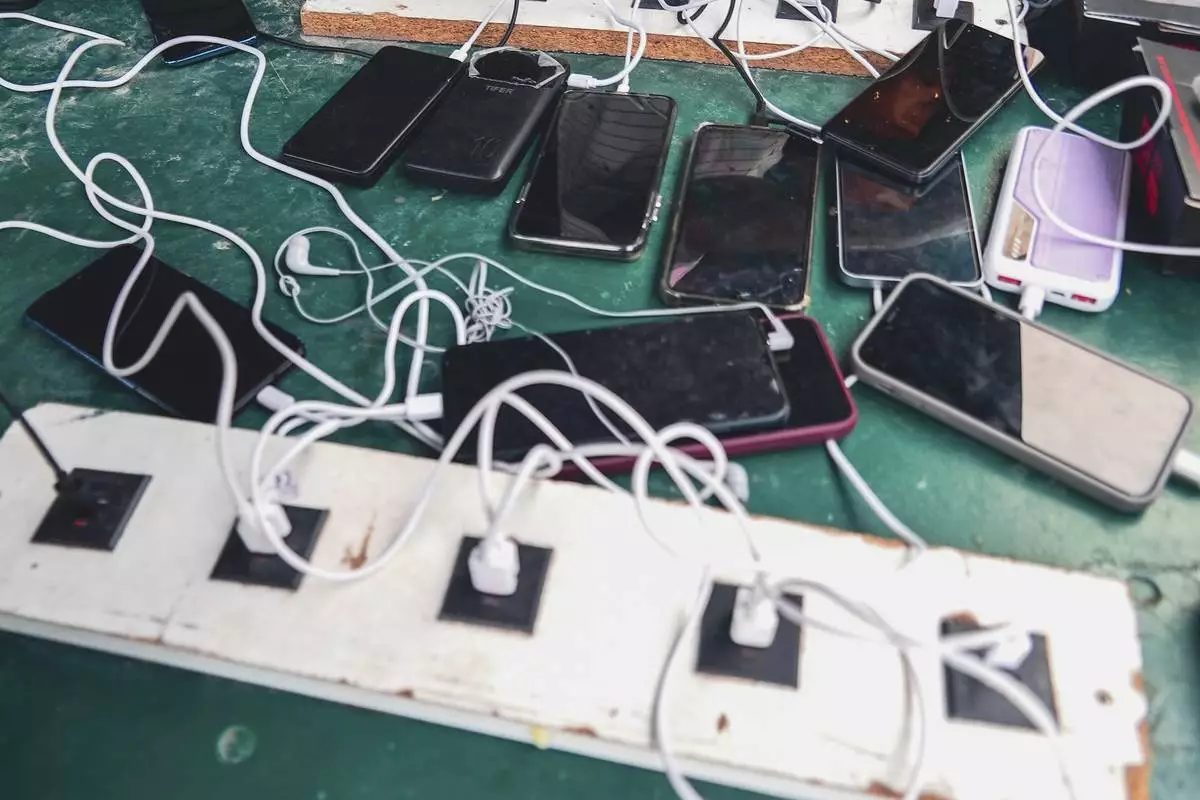
Phones are kept for charging at a Doctors Without Borders informal camp in Mardyck, northern France, Wednesday, July 2, 2025. (AP Photo/Nicolas Garriga)
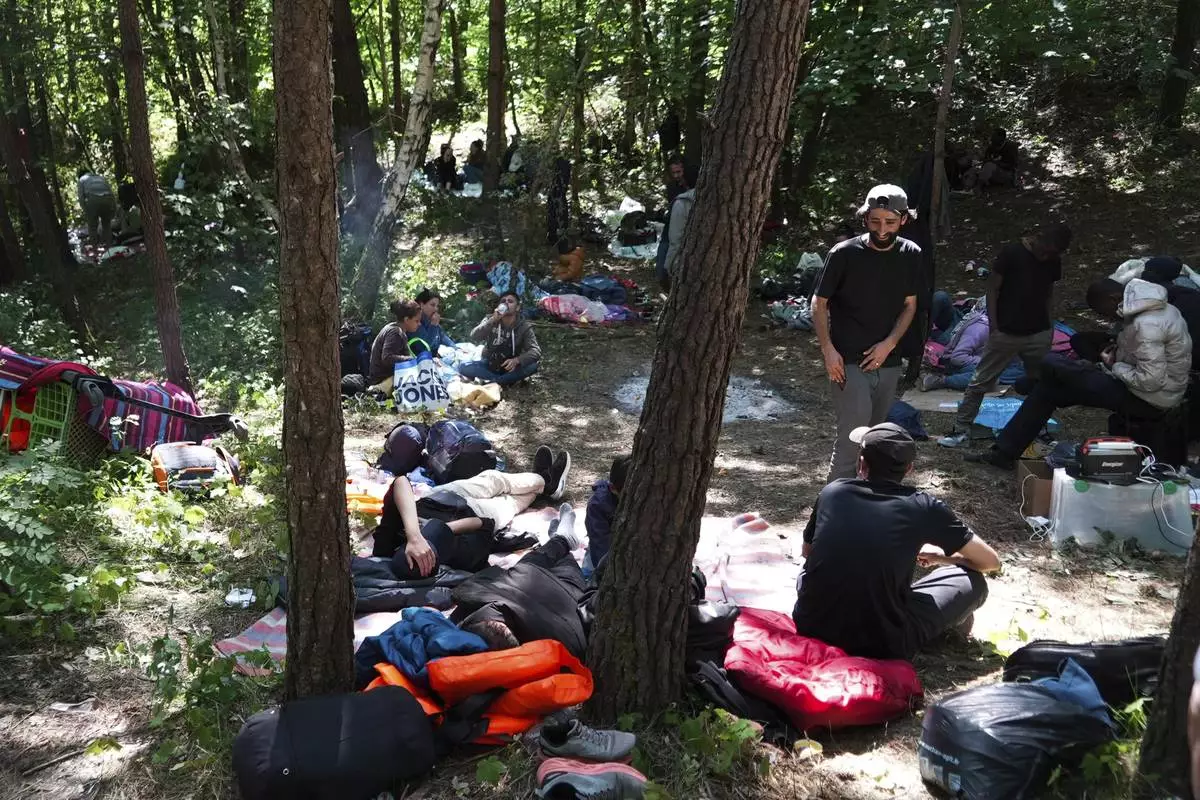
Migrants wait in the Ecault forest, northern France, Thursday, July 3, 2025. (AP Photo/Nicolas Garriga)
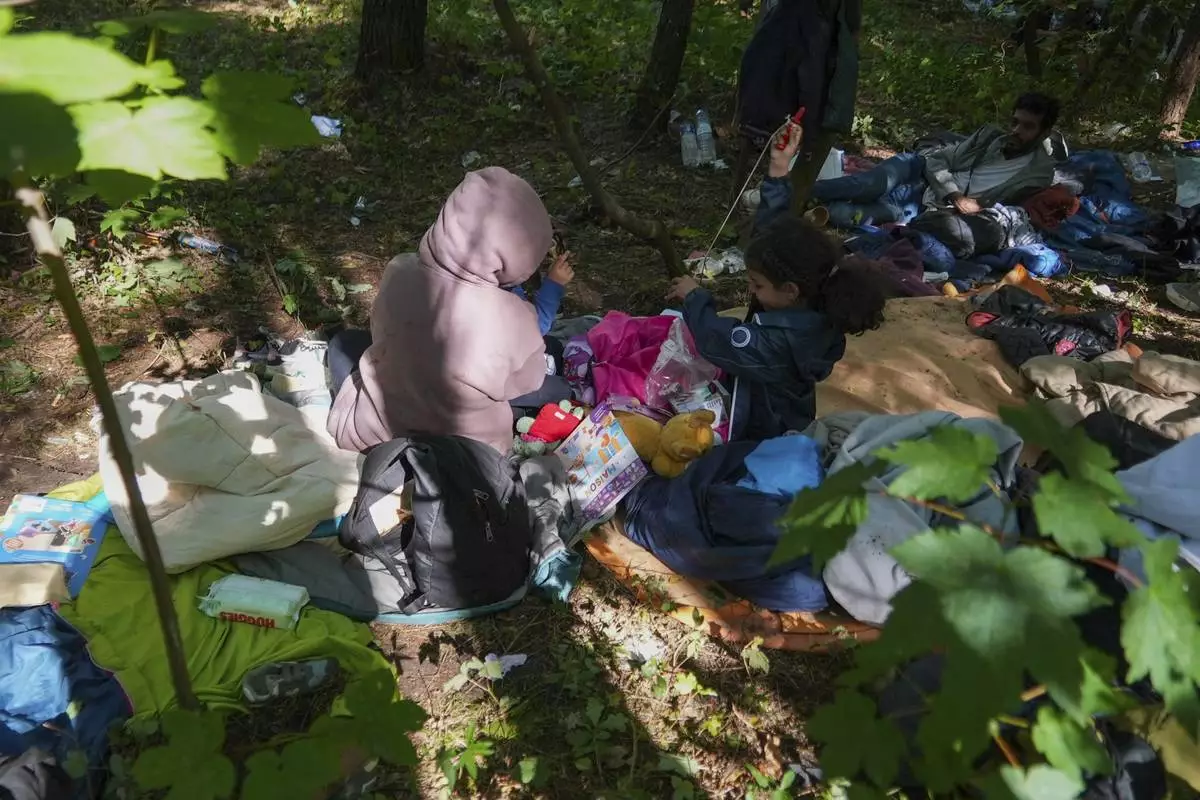
Anouar, from Yemen, holds her daughter Kadi, 4, while her second daughter Jori, 6, center, right, and husband Qassim, from Palestine, right, wait in the forest of Ecault, northern France, Thursday, July 3, 2025. (AP Photo/Nicolas Garriga)
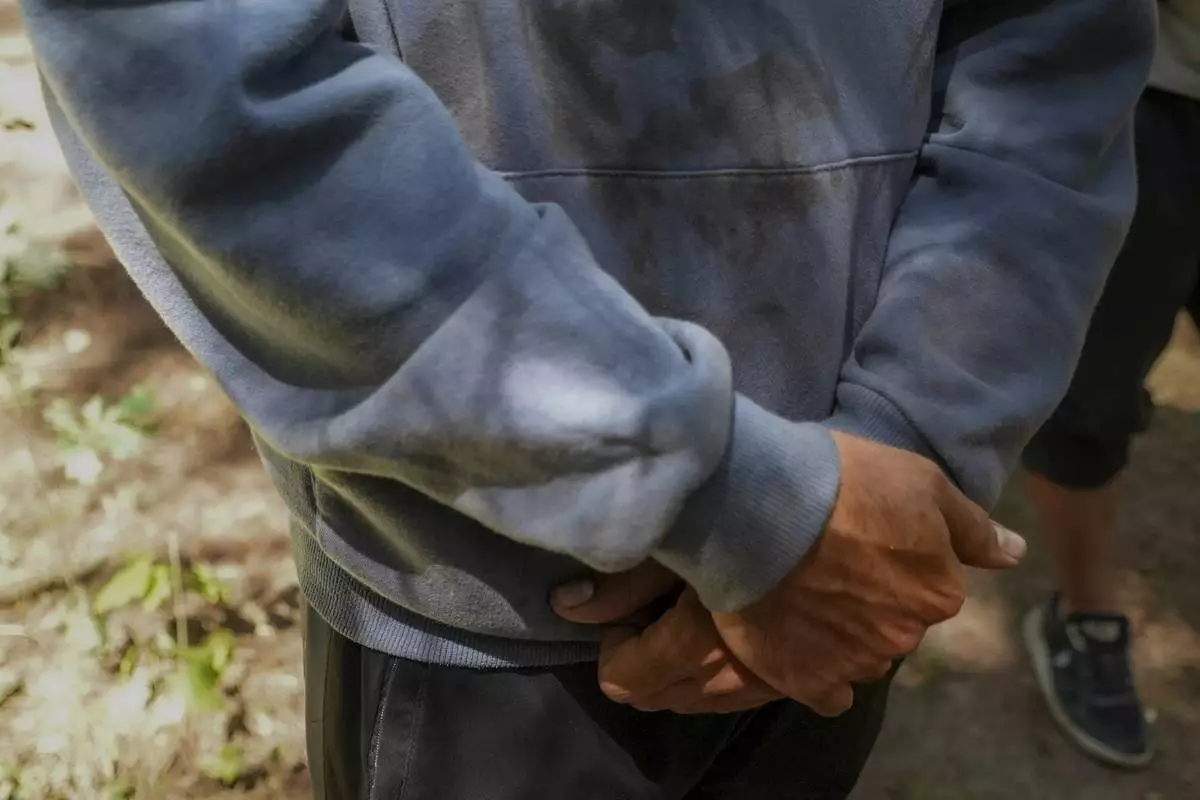
Qassim, 26, a Palestinian, wears a hoodie stained with what he said is his wife Anouar's blood, in the Ecault forest northern France, Thursday, July 3, 2025. (AP Photo/Nicolas Garriga)
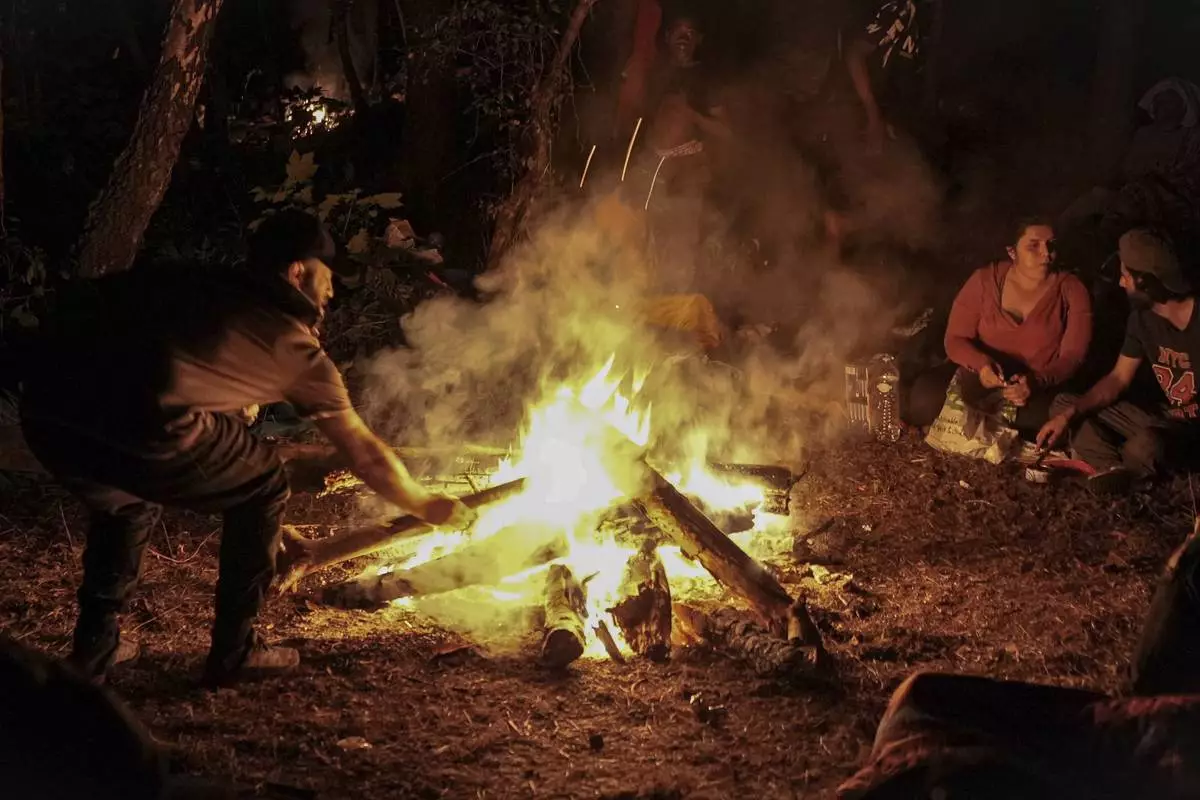
Migrants gather by a campfire in the Ecault forest, northern France, Friday, July 4, 2025. (AP Photo/Nicolas Garriga)