The latest data showed that Germany's exports to the United States plummeted in May, sparking alarm among German business and economic leaders over the growing trade volatility and the U.S. protectionism.
Industry figures have warned that Washington's unilateral trade measures threaten shared economic interests and weaken the principles of global free trade, raising fears of further disruptions to international commerce.
"Closed markets and tariff hikes always create challenges and cause problems. That's why we are committed to pushing for tariff reductions in all negotiations and eliminating trade barriers, including non-tariff barriers," said Thomas Becker, vice president for sustainability and mobility strategy of the BMW Group.
German stakeholders have grown increasingly uneasy about Washington's erratic trade stance. Analysts warn that if the United States insists on using tariffs as leverage, the long-term consequences could backfire, even harming the interests of the United States.
"(U.S. President Donald) Trump clearly aims to secure maximum benefits for the United States through (trade) deals, but I believe this is the wrong approach. In the long run, it harms everyone," said Hans-Jochem Steim, a German entrepreneur and a former member of the Baden-Wurttemberg state parliament.
Data released Tuesday by Germany's Federal Statistical Office showed that exports to the United States slumped by 13.8 percent year-on-year. On a monthly basis, shipments fell by 7.7 percent, marking the lowest level since March 2022.
Although the United States remains Germany's largest single export market, its share has been shrinking amid ongoing trade tensions. Imports from the United States also decreased in May, falling 10.7 percent from April, pointing to a broader weakening in bilateral trade flows.
The data comes just ahead of a looming deadline for potential punitive tariffs from Washington. In April, the U.S. administration announced the introduction of so-called "reciprocal tariffs" on imports from the European Union (EU). Initially scheduled for implementation on July 9, the measures were later postponed to Aug. 1.
Currently, the United States levies 25 percent tariffs on European cars and car parts, and 50 percent on steel and aluminum products, raising concerns among exporters.

US trade policies harm interests of all parties: German businessmen
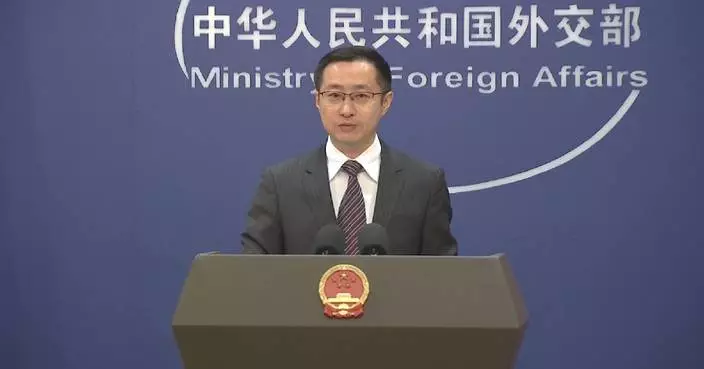
China's development has never been a "threat" to anyone but the source of growth advancing common development of all countries, Foreign Ministry spokesman Lin Jian said at a regular press conference in Beijing on Friday.
Some Western media and think tanks are peddling so-called "China Shock 2.0," saying that "China is achieving fast development in high-tech sectors such as renewable energy and AI and relies on foreign markets to absorb its overcapacity, thus reducing the market share of developed countries and sending more serious shock waves to the global economy compared with the era of traditional manufacture industry," while there are foreign commentators saying that the "China Shock 2.0" argument ignores the genuine innovation occurring within the Chinese industrial ecosystem and that Chinese export is the exact booster of the global economy that is needed in the turbulent period and more indispensable than ever.
Commenting on that, Lin said: "From the world's factory to the world's market and innovation powerhouse, China's development is achieved through strong performance driven by innovation and brings tangible cooperation opportunities and space to the world. High-quality Chinese products represented by the 'old three' of textiles, furniture and home appliances have stabilized the global industrial and supply chain, lowered the living cost of global consumers and eased the inflationary pressure worldwide. China's green production capacity represented by the 'new three' of electric vehicles, batteries and solar panels has bridged the gap between supply and demand in global green development and bolstered the global energy transition and low-carbon development. Moreover, China's high-tech products represented by the 'new new three' of robots, AI and innovative drugs have broken high-tech barriers and monopoly and enabled people in more countries to access affordable new technologies," said the spokesman.
"Openness and cooperation bring about progress and win-win result. China's development has never been a 'threat' to anyone but the source of growth advancing common development of all countries. What really creates 'shocks' to the world has never been the innovation of Chinese companies and efficiency of Chinese industrial capacity, but protectionist moves of setting up barriers, decoupling and severing industrial and supply chains. China will stay committed to high-standard opening up, defend the multilateral trading system and provide more certainty and new impetus to the world economy with its own steady development," said Lin.
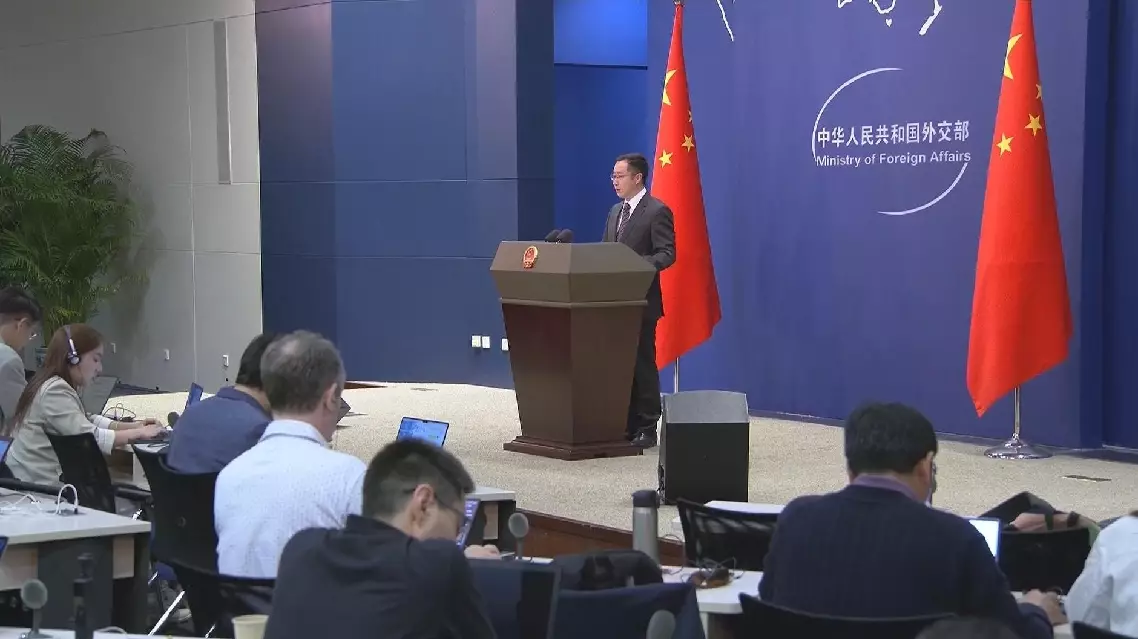
China's development never a threat: FM spokesman