DEIR AL-BALAH, Gaza Strip (AP) — Israeli airstrikes killed at least 40 Palestinians in the Gaza Strip, including 10 members of a family sheltering in a tent, hospital officials said Wednesday. The strikes came as U.S. President Donald Trump pushed for a ceasefire that might end the war and free dozens of Israeli hostages.
Trump met with Israeli Prime Minister Benjamin Netanyahu for the second time in two days at the White House on Tuesday evening, but there was no sign of a breakthrough.
Netanyahu has vowed to continue the 21-month war until Hamas is destroyed, while the militant group has said it will only release the remaining hostages in return for a lasting ceasefire and an Israeli withdrawal from Gaza.
Nasser Hospital in the southern Gaza city of Khan Younis said the dead included 17 women and 10 children. The war has gutted Gaza's health system, with several hospitals taken out of service and leading physicians killed in Israeli strikes.
The Israeli military said it had struck more than 100 targets across Gaza over the past day, including militants, booby-trapped structures, weapons storage facilities, missile launchers and tunnels. Israel accuses Hamas of hiding weapons and fighters among civilians.
On Wednesday, crowds of people bid farewell to the 10 members of the Shaaban family killed in an Israeli strike while they were inside their tent in Khan Younis.
“I found all my children dead, and my daughters’ three children dead,” said Um Mohammad Shaaban, a nickname that means Mohammad Shaaban’s mother. “It’s supposed to be a safe area where we were.”
She said that strikes have intensified even as hope for a ceasefire has risen. “The hospital last night was jam-packed,” she said.
As she wept over the bodies of her three grandchildren, others holding the bodies struggled to let go before they were sent to burial.
Palestinians are desperate for an end to the war that has killed tens of thousands, destroyed vast areas and displaced around 90% of the territory's population.
Aid groups say Israeli restrictions and the breakdown of law and order have made it extremely difficult to deliver humanitarian assistance, leading to widespread hunger and fears of famine.
In the sprawling coastal Muwasi area, where hundreds of thousands of people live in tents after being displaced from their homes, Abeer al-Najjar said she had struggled during the constant bombardments to get food and water for her family.
“I pray to God that there would be a pause, and not just a pause where they would lie to us," she said, referring to an earlier ceasefire that Israel ended in March. "We want a full ceasefire.”
Her husband, Ali al-Najjar, said life has been especially tough in the summer, with little access to drinking water. “We hope this would be the end of our suffering and we can rebuild our country again,” he said, before running through a crowd with two buckets to fill them from a water truck.
People chased the vehicle as it drove away to another location.
Amani Abu-Omar said the water truck comes every four days, not enough for her dehydrated children. She said the summer heat and harsh conditions have caused skin rashes.
“We had expected ceasefires on many occasions, but it was for nothing,” she said.
The war started after Hamas attacked Israel on Oct. 7, 2023, killing around 1,200 people and taking 251 hostage. Most of the hostages have been released in earlier ceasefires. Israel’s offensive in Gaza has killed more than 57,000 Palestinians, more than half of them women and children, according to Gaza’s Health Ministry.
The ministry, which is under Gaza’s Hamas-run government, doesn’t differentiate between civilians and combatants. The United Nations and other international organizations see its figures as the most reliable statistics on war casualties.
Netanyahu told reporters on Tuesday that he and Trump see “eye to eye” on the need to destroy Hamas and that coordination between Israel and the United States has never been better.
Later this week, Trump's Mideast envoy, Steve Witkoff, is expected to head to the Qatari capital of Doha to continue indirect negotiations with Hamas on the ceasefire proposal.
Witkoff and other senior administration officials met with Israeli Minister for Strategic Affairs Ron Dermer as well as Qatari officials at the White House on Tuesday to discuss sticking points in the talks, including Israel’s desire to maintain a military presence in Gaza during a potential 60-day truce, according to a White House official who was not authorized to comment publicly and spoke on condition of anonymity.
Asked about the meeting, Trump did not confirm that “secret” talks had happened, but said if they did, he hoped the engagement “gets us to where we want to be.”
“We want to have peace. We want to get the hostages back. And I think we’re close to doing it,” Trump added.
Chehayeb reported from Beirut, and Lidman reported from Tel Aviv, Israel. Associated Press writer Aamer Madhani in Washington contributed to this report.
Follow news of the war: https://apnews.com/hub/israel-hamas-war
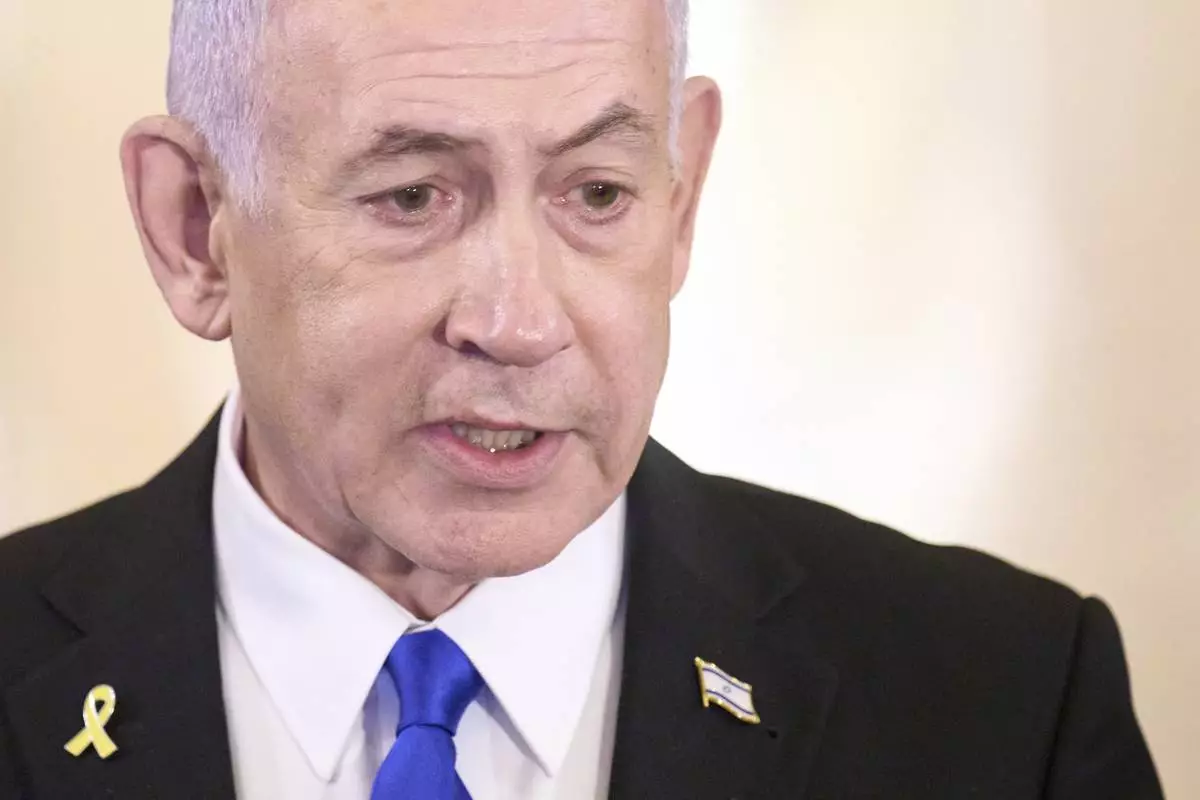
Israeli Prime Minister Benjamin Netanyahu speaks to the media, Tuesday, July 8, 2025, on Capitol Hill in Washington. (AP Photo/Jacquelyn Martin)
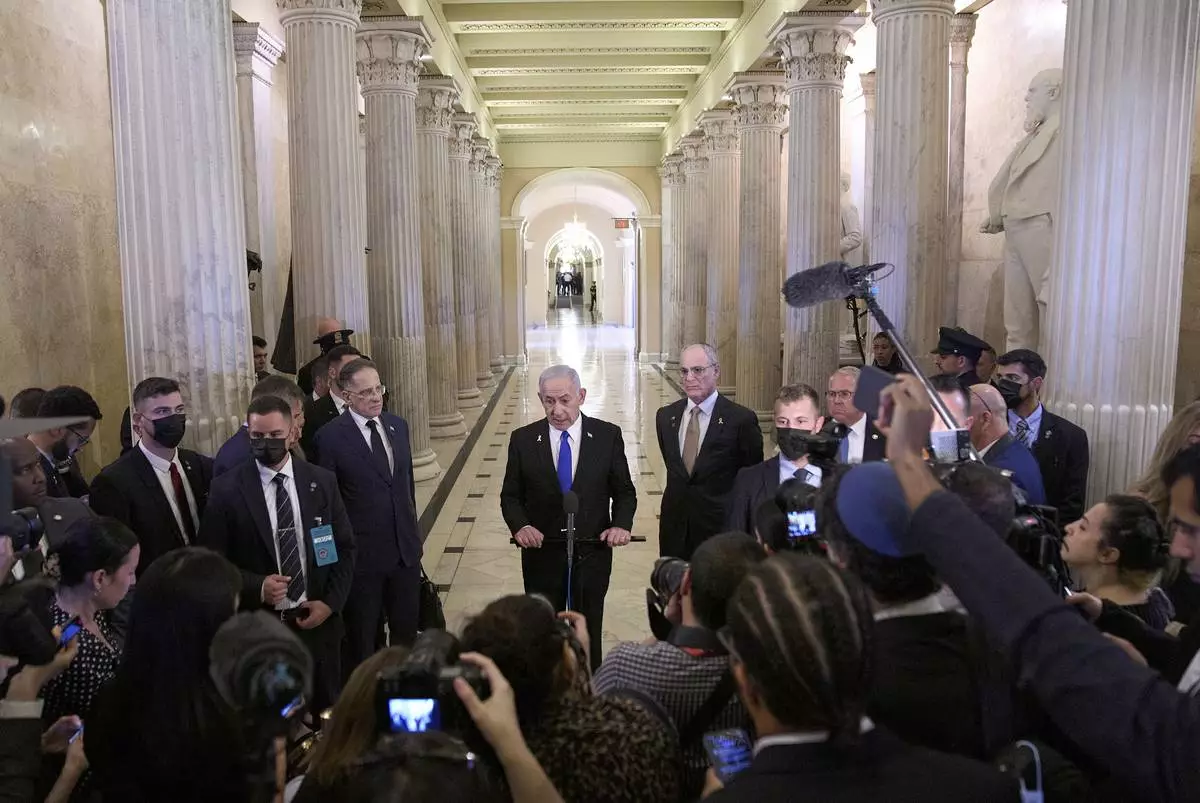
Israeli Prime Minister Benjamin Netanyahu speaks to the media, Tuesday, July 8, 2025, on Capitol Hill in Washington. (AP Photo/Jacquelyn Martin)

Smoke rises to the sky following an Israeli army bombardment in the northern Gaza Strip, as seen from southern Israel, Tuesday, July 8, 2025. (AP Photo/Leo Correa)
NEW YORK (AP) — Reviving a campaign pledge, President Donald Trump wants a one-year, 10% cap on credit card interest rates, a move that could save Americans tens of billions of dollars but drew immediate opposition from an industry that has been in his corner.
Trump was not clear in his social media post Friday night whether a cap might take effect through executive action or legislation, though one Republican senator said he had spoken with the president and would work on a bill with his “full support.” Trump said he hoped it would be in place Jan. 20, one year after he took office.
Strong opposition is certain from Wall Street in addition to the credit card companies, which donated heavily to his 2024 campaign and have supported Trump's second-term agenda. Banks are making the argument that such a plan would most hurt poor people, at a time of economic concern, by curtailing or eliminating credit lines, driving them to high-cost alternatives like payday loans or pawnshops.
“We will no longer let the American Public be ripped off by Credit Card Companies that are charging Interest Rates of 20 to 30%,” Trump wrote on his Truth Social platform.
Researchers who studied Trump’s campaign pledge after it was first announced found that Americans would save roughly $100 billion in interest a year if credit card rates were capped at 10%. The same researchers found that while the credit card industry would take a major hit, it would still be profitable, although credit card rewards and other perks might be scaled back.
About 195 million people in the United States had credit cards in 2024 and were assessed $160 billion in interest charges, the Consumer Financial Protection Bureau says. Americans are now carrying more credit card debt than ever, to the tune of about $1.23 trillion, according to figures from the New York Federal Reserve for the third quarter last year.
Further, Americans are paying, on average, between 19.65% and 21.5% in interest on credit cards according to the Federal Reserve and other industry tracking sources. That has come down in the past year as the central bank lowered benchmark rates, but is near the highs since federal regulators started tracking credit card rates in the mid-1990s. That’s significantly higher than a decade ago, when the average credit card interest rate was roughly 12%.
The Republican administration has proved particularly friendly until now to the credit card industry.
Capital One got little resistance from the White House when it finalized its purchase and merger with Discover Financial in early 2025, a deal that created the nation’s largest credit card company. The Consumer Financial Protection Bureau, which is largely tasked with going after credit card companies for alleged wrongdoing, has been largely nonfunctional since Trump took office.
In a joint statement, the banking industry was opposed to Trump's proposal.
“If enacted, this cap would only drive consumers toward less regulated, more costly alternatives," the American Bankers Association and allied groups said.
Bank lobbyists have long argued that lowering interest rates on their credit card products would require the banks to lend less to high-risk borrowers. When Congress enacted a cap on the fee that stores pay large banks when customers use a debit card, banks responded by removing all rewards and perks from those cards. Debit card rewards only recently have trickled back into consumers' hands. For example, United Airlines now has a debit card that gives miles with purchases.
The U.S. already places interest rate caps on some financial products and for some demographics. The Military Lending Act makes it illegal to charge active-duty service members more than 36% for any financial product. The national regulator for credit unions has capped interest rates on credit union credit cards at 18%.
Credit card companies earn three streams of revenue from their products: fees charged to merchants, fees charged to customers and the interest charged on balances. The argument from some researchers and left-leaning policymakers is that the banks earn enough revenue from merchants to keep them profitable if interest rates were capped.
"A 10% credit card interest cap would save Americans $100 billion a year without causing massive account closures, as banks claim. That’s because the few large banks that dominate the credit card market are making absolutely massive profits on customers at all income levels," said Brian Shearer, director of competition and regulatory policy at the Vanderbilt Policy Accelerator, who wrote the research on the industry's impact of Trump's proposal last year.
There are some historic examples that interest rate caps do cut off the less creditworthy to financial products because banks are not able to price risk correctly. Arkansas has a strictly enforced interest rate cap of 17% and evidence points to the poor and less creditworthy being cut out of consumer credit markets in the state. Shearer's research showed that an interest rate cap of 10% would likely result in banks lending less to those with credit scores below 600.
The White House did not respond to questions about how the president seeks to cap the rate or whether he has spoken with credit card companies about the idea.
Sen. Roger Marshall, R-Kan., who said he talked with Trump on Friday night, said the effort is meant to “lower costs for American families and to reign in greedy credit card companies who have been ripping off hardworking Americans for too long."
Legislation in both the House and the Senate would do what Trump is seeking.
Sens. Bernie Sanders, I-Vt., and Josh Hawley, R-Mo., released a plan in February that would immediately cap interest rates at 10% for five years, hoping to use Trump’s campaign promise to build momentum for their measure.
Hours before Trump's post, Sanders said that the president, rather than working to cap interest rates, had taken steps to deregulate big banks that allowed them to charge much higher credit card fees.
Reps. Alexandria Ocasio-Cortez, D-N.Y., and Anna Paulina Luna, R-Fla., have proposed similar legislation. Ocasio-Cortez is a frequent political target of Trump, while Luna is a close ally of the president.
Seung Min Kim reported from West Palm Beach, Fla.
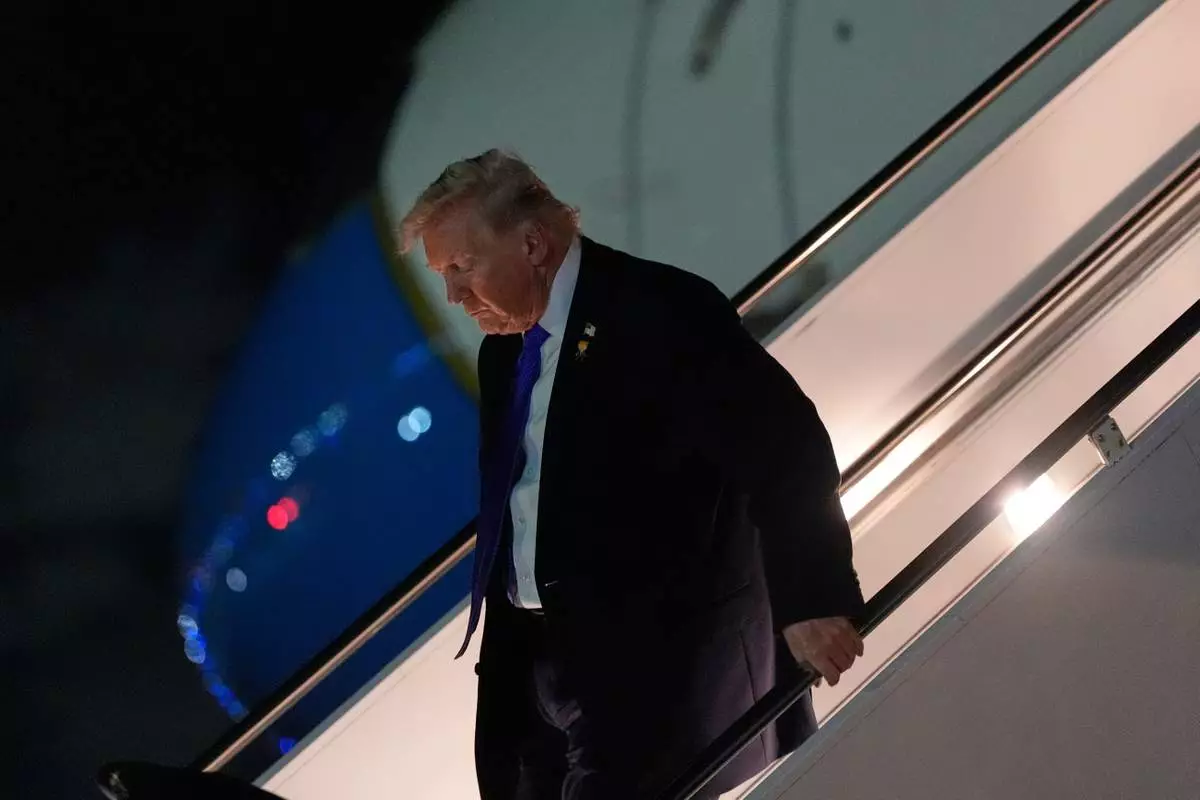
President Donald Trump arrives on Air Force One at Palm Beach International Airport, Friday, Jan. 9, 2025, in West Palm Beach, Fla. (AP Photo/Julia Demaree Nikhinson)
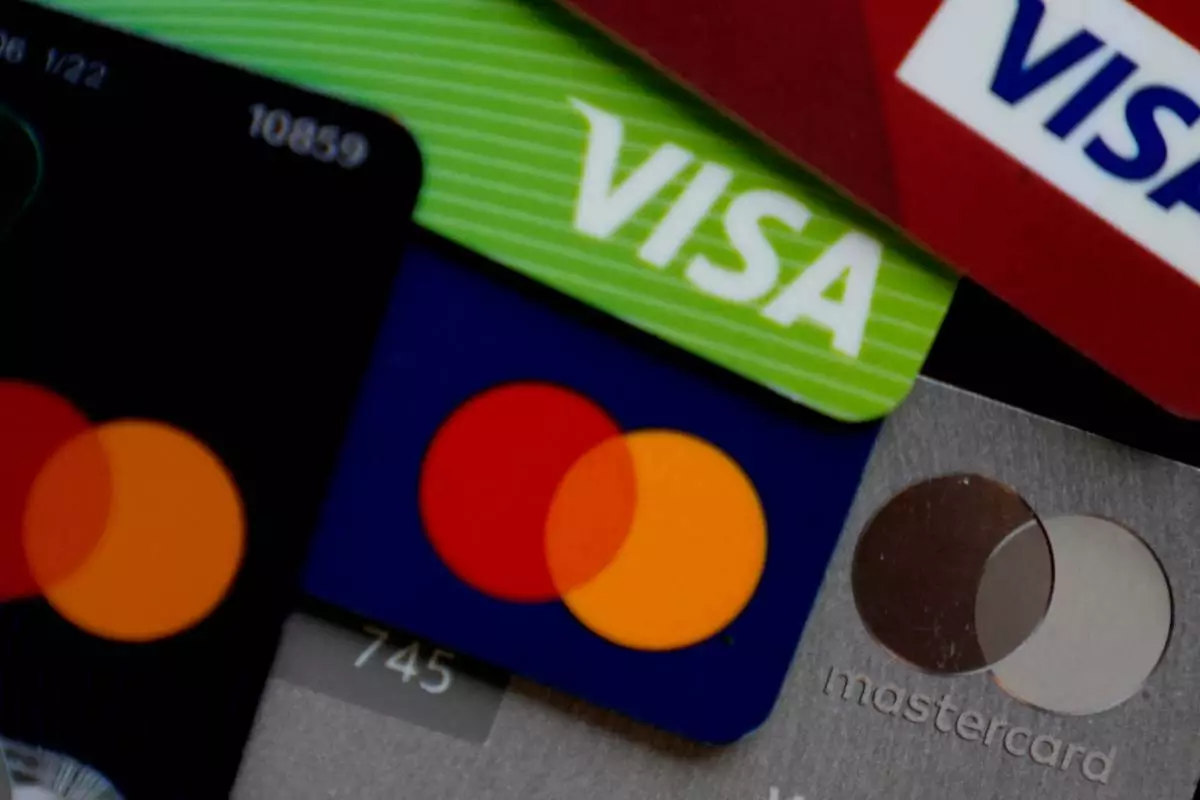
FILE - Visa and Mastercard credit cards are shown in Buffalo Grove, Ill., Feb. 8, 2024. (AP Photo/Nam Y. Huh, File)