WASHINGTON (AP) — President Donald Trump and his advisers promised a lightning round of global trade negotiations with dozens of countries back in April.
White House trade adviser Peter Navarro predicted “90 deals in 90 days.’’ Administration officials declared that other countries were desperate to make concessions to avoid the massive import taxes – tariffs -- that Trump was threatening to plaster on their products starting July 9.
Click to Gallery
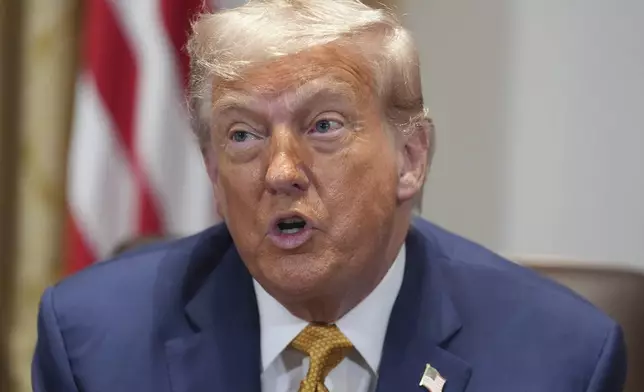
President Donald Trump speaks during a cabinet meeting at the White House, Tuesday, July 8, 2025, in Washington. (AP Photo/Evan Vucci)
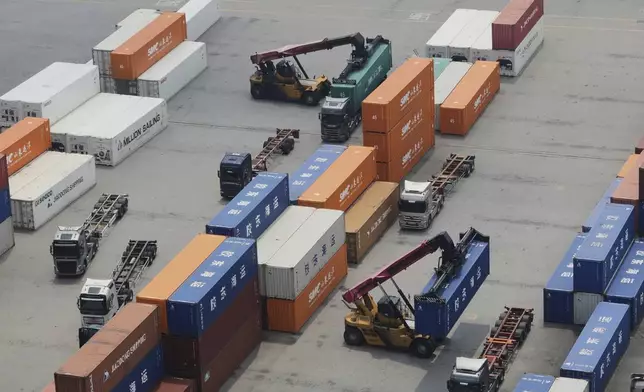
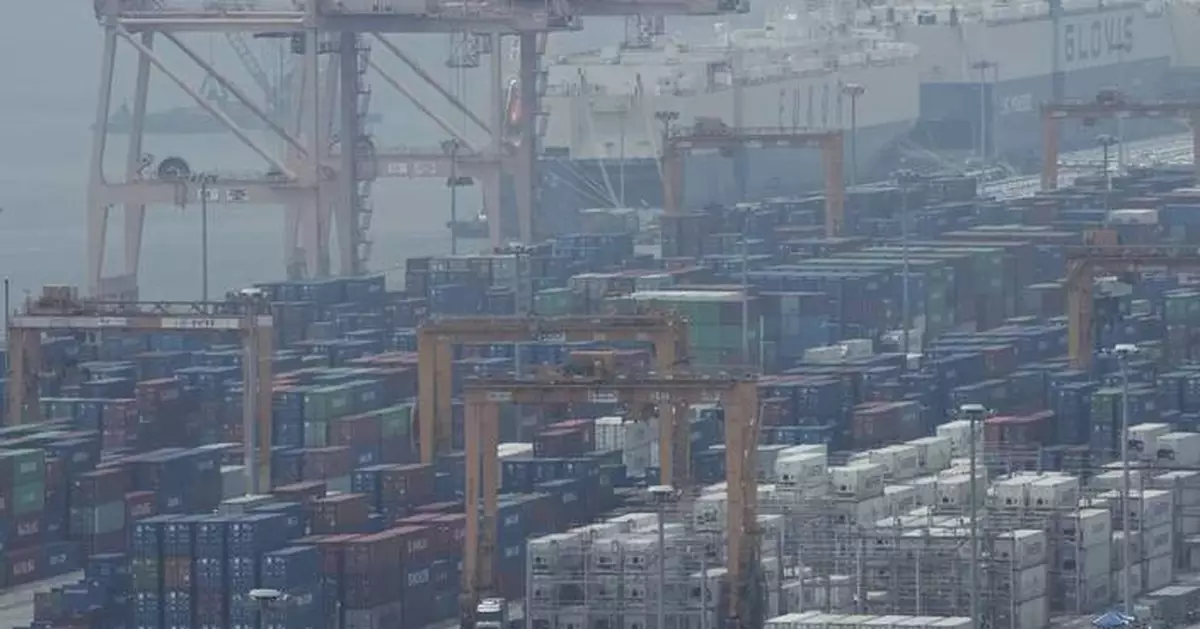
Cranes and shipping containers are seen at a port in Pyeongtaek, South Korea, Tuesday, July 8, 2025. (AP Photo/Ahn Young-joon)
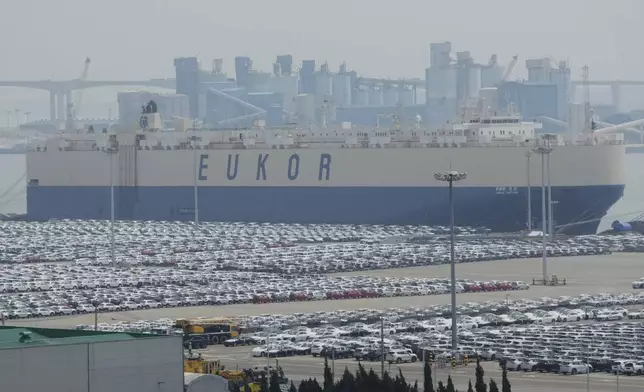
Vehicles for export are parked at a port in Pyeongtaek, South Korea, Tuesday, July 8, 2025. (AP Photo/Ahn Young-joon)
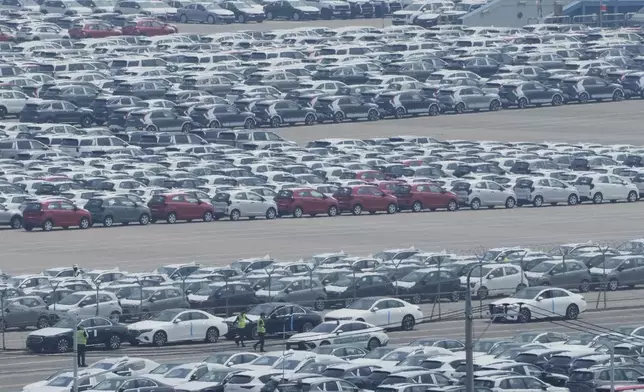
Vehicles for export are parked at a port in Pyeongtaek, South Korea, Tuesday, July 8, 2025. (AP Photo/Ahn Young-joon)
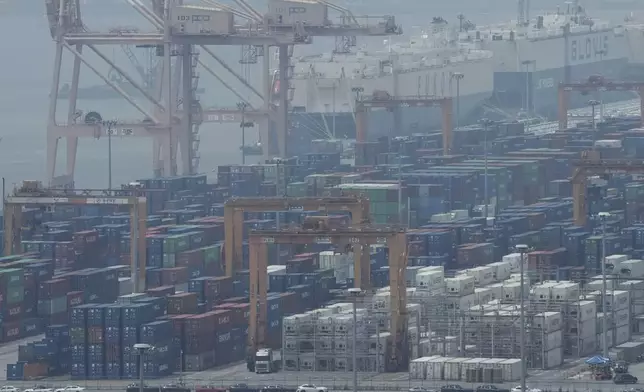
Cranes and shipping containers are seen at a port in Pyeongtaek, South Korea, Tuesday, July 8, 2025. (AP Photo/Ahn Young-joon)
But the 90 days have come and gone. And the tally of trade deals stands at two – one with the United Kingdom and one with Vietnam. Trump has also announced the framework for a deal with China, the details of which remain fuzzy.
Trump has now extended the deadline for negotiations to Aug. 1 and tinkered with his threatened tariffs, leaving the global trading system pretty much where it stood three months ago — in a state of limbo as businesses delay decisions on investments, contracts and hiring because they don’t know what the rules will be.
“It’s a rerun, basically,’’ said William Reinsch, a former U.S. trade official who’s now an adviser with the Center for Strategic and International Studies think tank. Trump and his team “don’t have the deals they want. So they’re piling on the threats."
The pattern has repeated itself enough times to earn Trump the label TACO — an acronym coined by The Financial Times’ Robert Armstrong that stands for “Trump Always Chickens Out.”
"This is classic Trump: Threaten, threaten more, but then extend the deadline,” Reinsch said. “July 30 arrives, does he do it again if he still doesn’t have the deals?’’ (Trump said Tuesday that there will be no more extensions.)
The deal drought represents a collision with reality.
Negotiating simultaneously with every country on earth was always an impossible task, as Trump himself belatedly admitted last month in an interview with the Fox News Channel. (“There’s 200 countries,’’ the president said. “You can’t talk to all of them.’’) And many trading partners — such as Japan and the European Union — were always likely to balk at Trump’s demands, at least without getting something in return.
“It’s really, really hard to negotiate trade agreements,” which usually takes several months even when it involves just one country or a small regional group, said Chad Bown, an economic adviser in the Obama White House and now senior fellow at the Peterson Institute for International Economics. “What the administration is doing is negotiating a bunch of these at the same time.’’
The drama began April 2 – "Liberation Day,'' Trump called it — when the tariff-loving president announced a so-called baseline 10% import tax on everybody and what he called “reciprocal’’ levies of up to 50% on countries with which the United States runs trade deficits.
The 10% baseline tariffs appear to be here to stay. Trump needs them to raise money to patch the hole his massive tax-cut bill is blasting into the federal budget deficit.
By themselves, the baseline tariffs represent a massive shift in American trade policy: Tariffs averaged around 2.5% when Trump returned to the White House and were even lower before he started raising them in his first term.
But the reciprocal tariffs are an even bigger deal.
In announcing them, Trump effectively blew up the rules governing world trade. For decades, the United States and most other countries abided by tariff rates set through a series of complex negotiations known as the Uruguay round. Countries could set their own tariffs – but under the “most favored nation’’ approach, they couldn’t charge one country more than they charged another.
Now Trump is setting the tariff rates himself, creating “tailor-made trade plans for each and every country on this planet,’’ in the words of White House press secretary Karoline Leavitt.
But investors have recoiled at the audacious plan, fearing that it will disrupt trade and damage the world economy. Trump’s Liberation Day tariffs, for instance, set off a four-day rout in global financial markets. Trump blinked. Less than 13 hours after the reciprocal tariffs took effect April 9, he abruptly suspended them for 90 days, giving countries time to negotiate with his trade team.
Despite the Trump administration’s expressions of confidence, the talks turned into a slog.
“Countries have their own politics, their own domestic politics,” Reinsch said. “Trump structured this ideally so that all the concessions are made by the other guys and the only U.S. concession is: We don’t impose the tariffs.’’
But countries like South Korea and Japan needed “to come back with something,’’ he said. Their thinking: “We have to get some concessions out of the United States to make it look like this is a win-win agreement and not a we-fold-and-surrender agreement. ”
Japan, for example, wanted relief from another Trump tariff — 50% levies on steel and aluminum.
Countries may also be hesitant to reach a deal with the United States while the Trump administration conducts investigations that might result in new tariffs on a range of products, including pharmaceuticals and semiconductors.
Frustrated by the lack of progress, Trump on Monday sent letters to Japan, South Korea and 12 other countries, saying he’d hit them with tariffs Aug. 1 if they couldn’t reach an agreement. The levies were close to what he’d announced on April 2; Japan’s, for example, would be 25%, compared to the 24% unveiled April 2.
Trump did sign an agreement last month with the United Kingdom that, among other provisions, reduced U.S. tariffs on British automotive and aerospace products while opening the U.K. market for American beef and ethanol. But the pact kept the baseline tariff on British products mostly in place, underlining Trump’s commitment to the 10% tax despite the United States running a trade surplus — not a deficit — with the U.K. for 19 straight years, according to the U.S. Commerce Department.
On July 2. Trump announced a deal with Vietnam. The Vietnamese agreed to let U.S. products into the country duty free while accepting a 20% tax on their exports to the United States, Trump said, though details of the agreement have not been released.
The lopsided deal with Vietnam suggests that Trump can successfully use the tariff threat to bully concessions out of smaller economies.
“They just can’t really negotiate in the same way that the (European Union) or Korea or Japan (or) Canada can negotiate with the United States,’’ said Dan McCarthy, principal in McCarthy Consulting and a former official with the Office of the U.S. Trade Representative in the Biden administration. “A lot of (smaller) countries just want to get out of this and are willing to cut their losses.’’
But wrangling a deal with bigger trading partners is likely to remain tougher.
“The U.S. is gambling that these countries will ultimately be intimidated and fold,” Reinsch said. “And the countries are gambling that the longer this stretches out, and the longer it goes without Trump producing any more deals, the more desperate he gets; and he lowers his standards.
"It’s kind of a giant game of chicken.’’
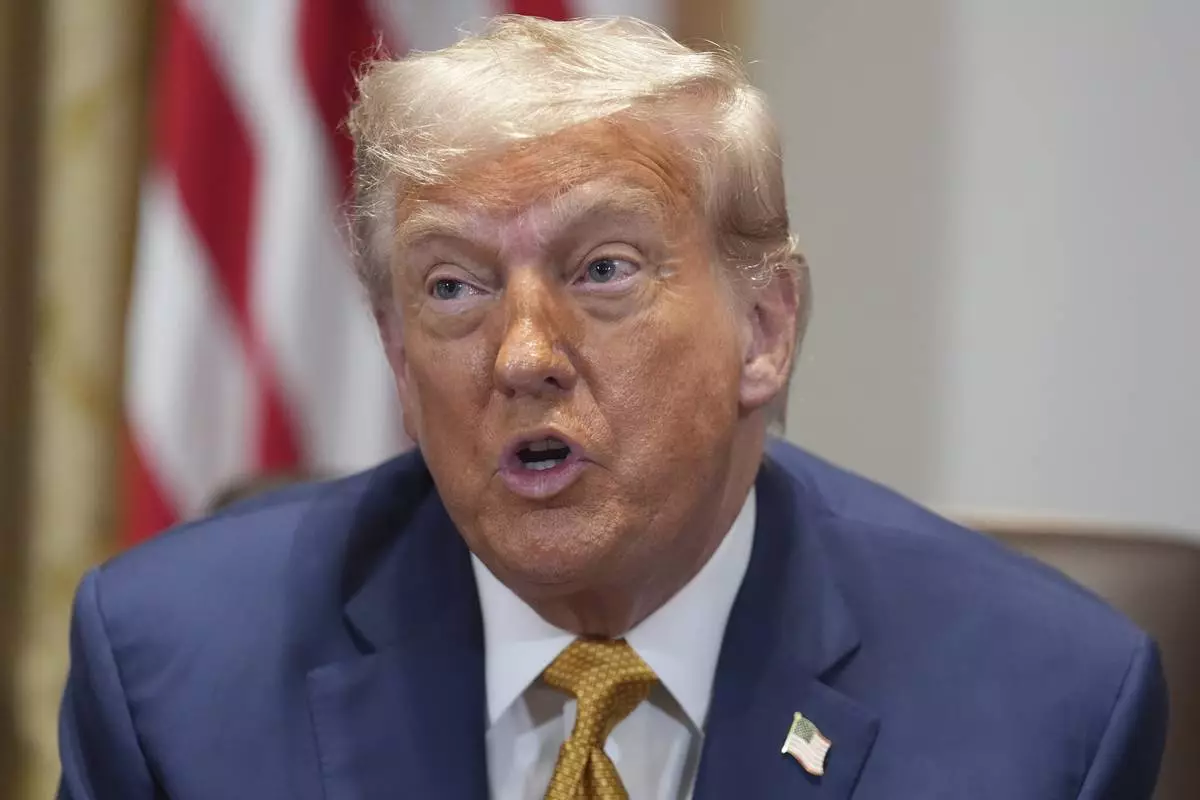
President Donald Trump speaks during a cabinet meeting at the White House, Tuesday, July 8, 2025, in Washington. (AP Photo/Evan Vucci)
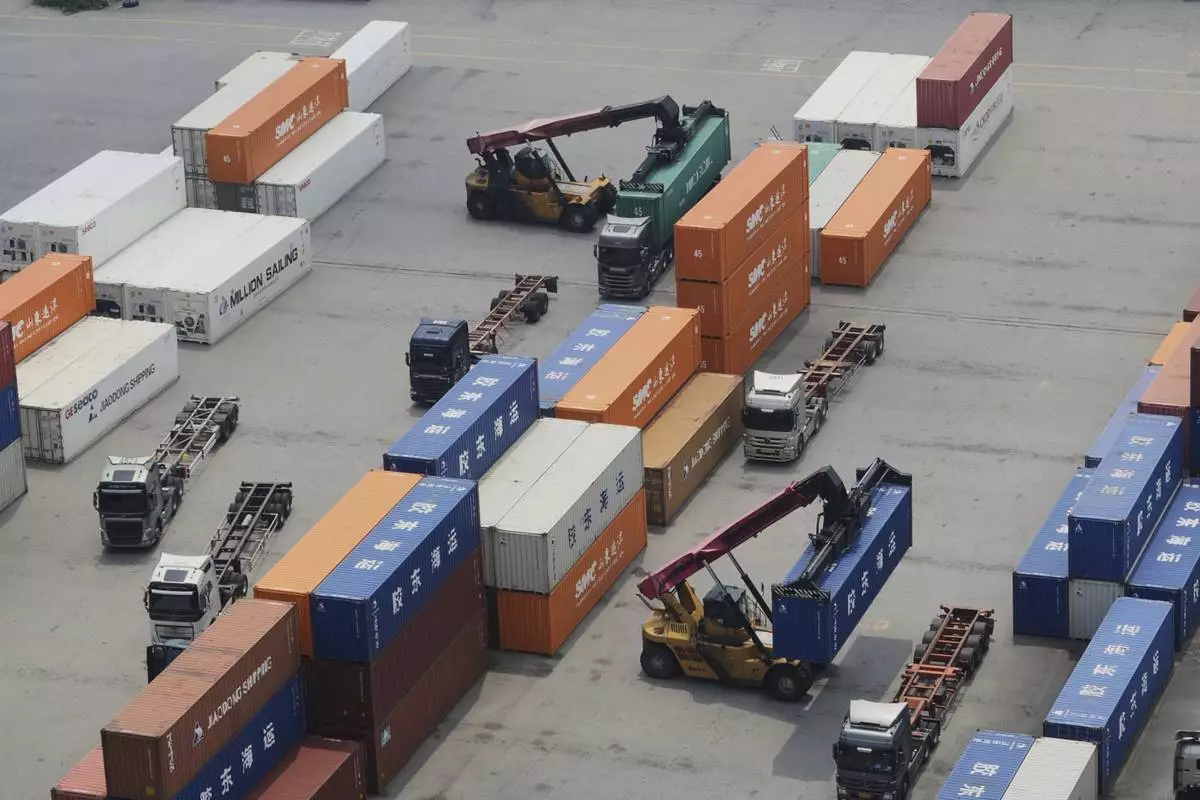
Cranes and shipping containers are seen at a port in Pyeongtaek, South Korea, Tuesday, July 8, 2025. (AP Photo/Ahn Young-joon)
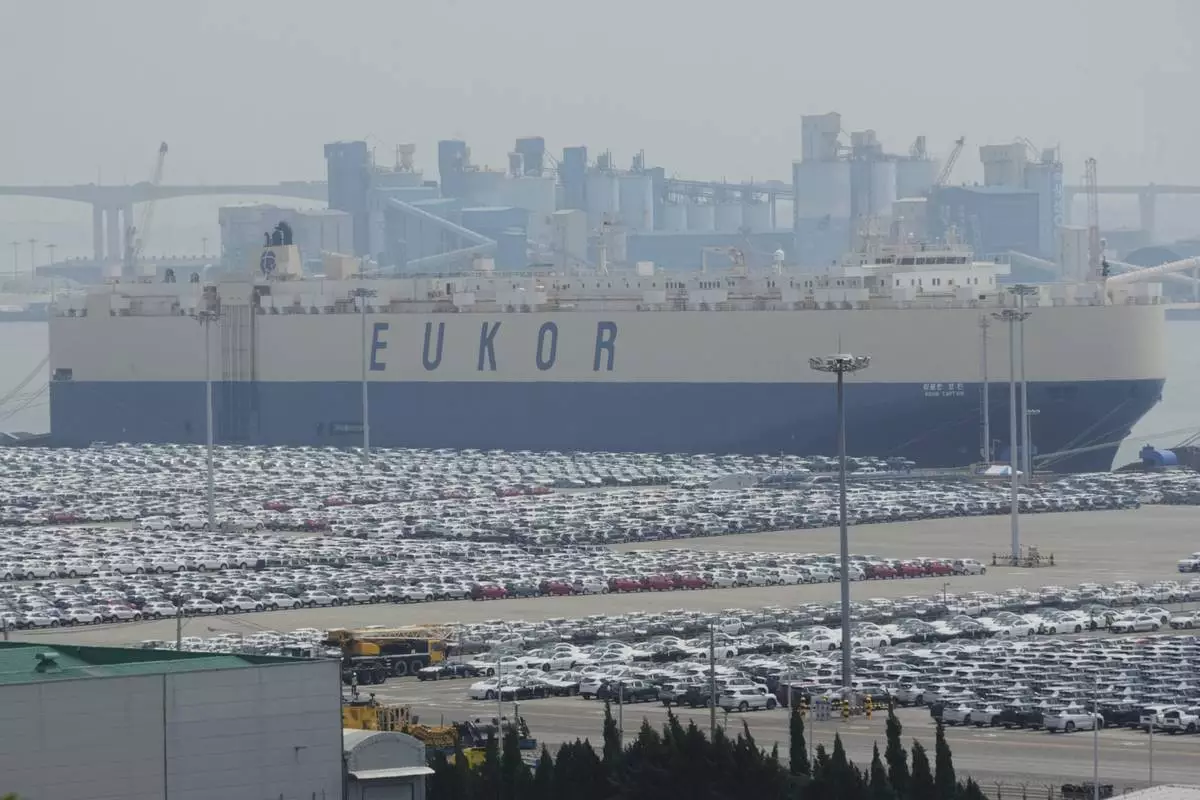
Vehicles for export are parked at a port in Pyeongtaek, South Korea, Tuesday, July 8, 2025. (AP Photo/Ahn Young-joon)
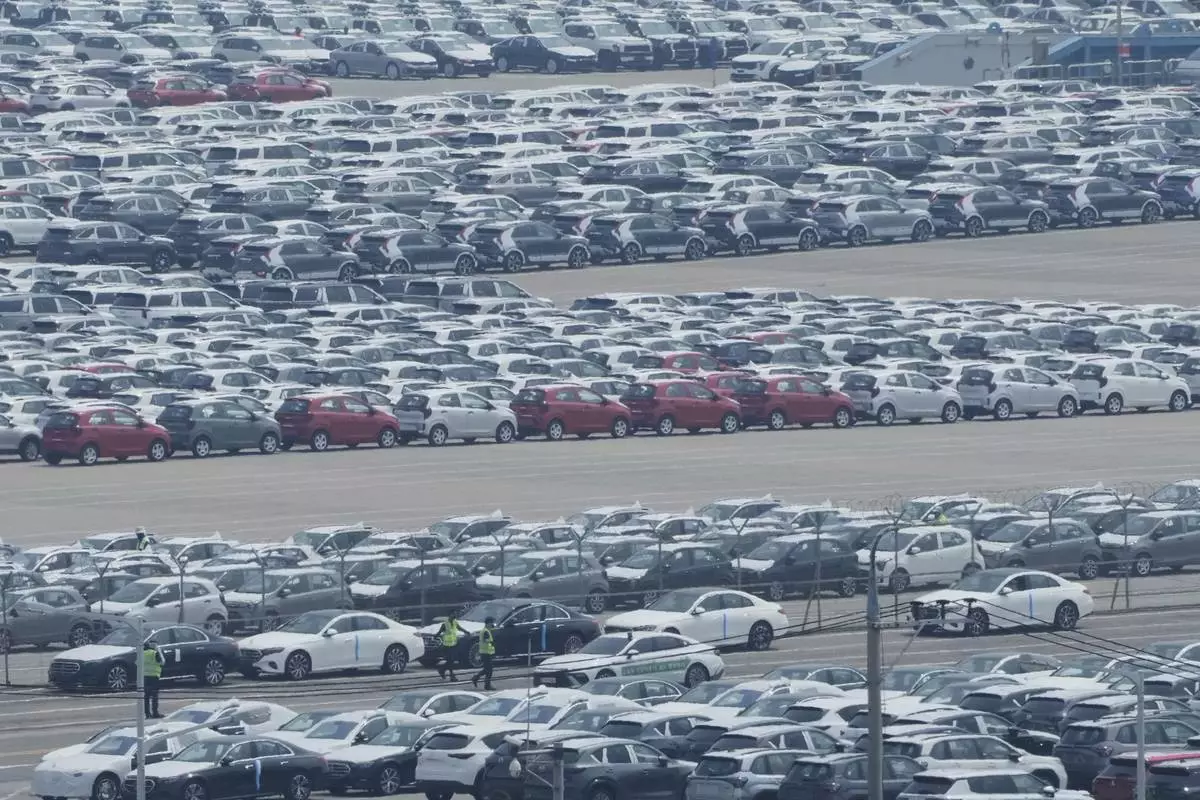
Vehicles for export are parked at a port in Pyeongtaek, South Korea, Tuesday, July 8, 2025. (AP Photo/Ahn Young-joon)
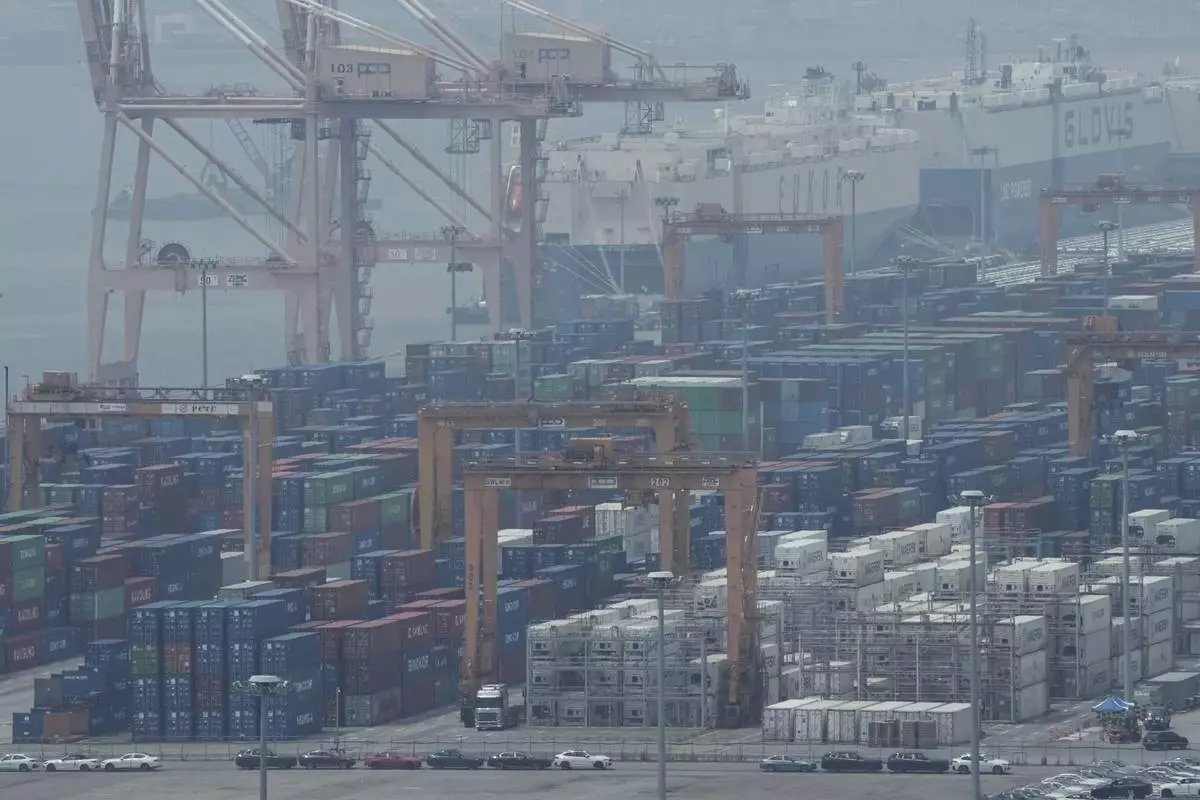
Cranes and shipping containers are seen at a port in Pyeongtaek, South Korea, Tuesday, July 8, 2025. (AP Photo/Ahn Young-joon)