New U.S. tariffs targeting countries worldwide undermine global trade and multilateralism, while harming American consumers and the economy, officials and experts from South Africa and Bangladesh warned Tuesday.
The U.S. will impose 30-percent tariffs on South Africa starting August 1, a move South Africa's Minister of Agriculture, John Steenhuisen, called harmful to American consumers during his interview with China Central Television (CCTV) in Cape Town.
"The big losers will be the workers in the automotive sector and the agricultural sector and other sectors that lose work as a result of factory closures. And I also think the other losers are American consumers who benefit from really well-priced good quality South African agricultural products. They're now not going to have access to those goods if this current tariff stands. I certainly think that these tariffs have upended the world's trade operations and have caused significant uncertainty in many parts of the world. And South Africa's not excluded from that," he said.
Steenhuisen further emphasized the global consequences of such tariffs, adding that the uncertainty created has rippled through economies dependent on fair trade.
In another CCTV interview in Johannesburg, Patrick Bond, a political economist and expert on international relations at the Department of Sociology with University of Johannesburg, said high tariffs are not the right answer to the U.S. economy.
"The logic behind higher tariffs is simple from Trump's standpoint that if he can make more goods in the United States because it's more expensive to import them and then because there's going to inflation when there are imports, he's lowering the price of the dollar. So, he's offsetting that. That's his idea, it won't work," he said.
Mahmud Titumir, a professor of economics at the Department of Development Studies of University of Dhaka, also criticized the U.S. approach, calling it detrimental to global prosperity.
"But this is a fringe of multilateralism and going backward. The U.S. has been imposing something out of which they would not benefit because their consumers would not benefit. The U.S. should promote as has been the case of globalization, which the U.S. is the largest beneficiary. Reversing back to protectionism would not only hurt its consumers, but it would have a reduction in global trade flow," he said.

US tariffs to upend global trade, hurt consumers: experts
From the cherry tomato fields of south China's Hainan Province to the misty peaks of Wuyishan in east China's Fujian Province, holidaymakers across China embraced the outdoors during the Qingming break.
Falling on April 5 this year, the Qingming Festival, or the Tomb-Sweeping Day, is a traditional Chinese festival for honoring the deceased and paying tributes to ancestors. The three-day holiday from Saturday to Monday also provides a short break for Chinese citizens to enjoy outdoor activities and sightseeing in pleasant springtime temperatures.
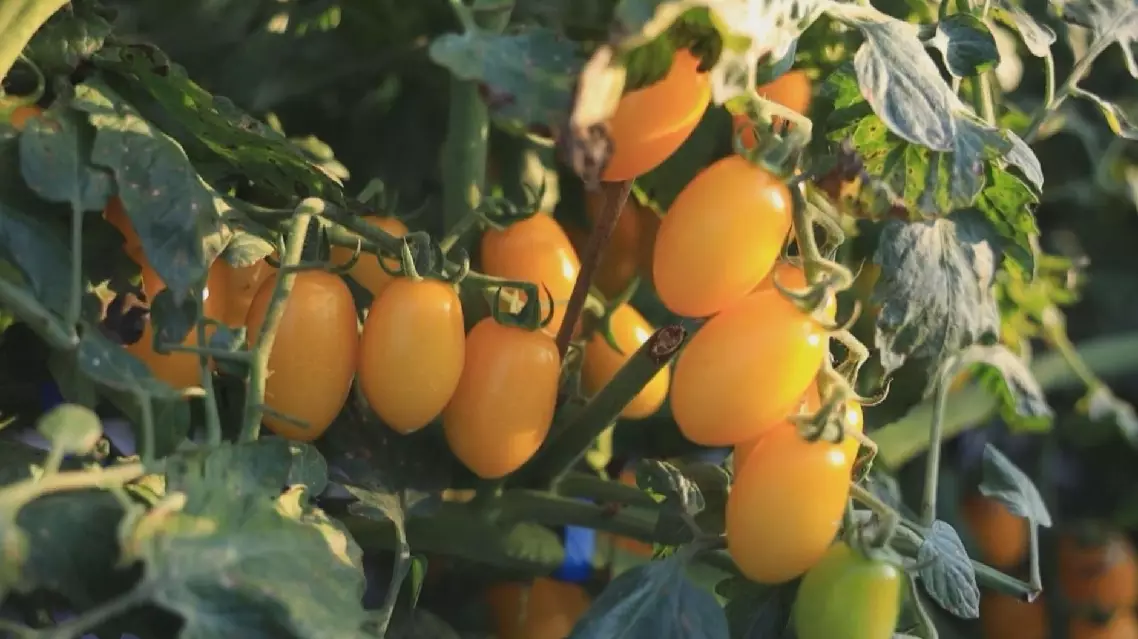
At a cherry tomato base in Tanli Village, Ding'an City of Hainan, tourists, in small groups carrying baskets, fully immersed themselves in the joy of picking.
This year, Ding'an County has planted cherry tomatoes across 10,000 mu (about 666.67 hectares) of land. The area has now entered the peak harvest period, with a daily harvest volume of 300,000 kilograms. The mature fruit industry has also enabled local villagers to find employment and increase their incomes close to home.
It is known that the sorting process alone employs over 100 people daily, all recruited from nearby villages, with each worker earning approximately 300 yuan (about 41.1 U.S. dollars) per day. The small cherry tomato has become a "sweet fruit" that helps boost local farmers' incomes and drives rural revitalization.
Wuyishan in Fujian Province is a UNESCO World Cultural and Natural Heritage site. During this Qingming holiday, Wuyishan is bathed in gentle spring sunshine and lush greenery. Fresh green leaves are spreading across the mountains, and flowers are blooming one after another, attracting tourists from across the country for spring outings.
At the popular scenic spot, Jiuqu Stream, tourists boarded bamboo rafts and drifted along the emerald waters, enjoying the magnificent peaks on both banks and experiencing the breathtaking scenery.
"I drove here from Xiamen yesterday. I think the scenery in Wuyishan is particularly charming," said a tourist surnamed Huang.
In addition to water tours, many tourists choose to hike along mountain trails, experiencing the changing seasons of Wuyishan amid the forests.
In the 300-meter-long Song Dynasty Street where buildings are designed to emulate Song Dynasty architecture, tourists strolled leisurely, sipping tea and tasting local snacks, immersing themselves in the cultural and historical atmosphere of Wuyishan.
Holiday crowds enjoy colorful activities across China