As demand for cameras is reviving across China, Japanese manufacturers of traditional cameras are intensifying their efforts to tap China's booming market by introducing new products tailored to personalized needs.
In recent years, the consumption of photographic equipment has kept climbing in China. Data from e-commerce platforms shows that in June alone, the sales of digital cameras in China surged by over 80 percent year on year.
Once sidelined by smartphones, cameras are back in style, fueled by the rise of social media, live-streaming and short videos.
To meet the rising demand, leading Japanese camera manufacturers have launched new products with enhanced video capabilities. Canon Inc. introduced a special edition model in the Chinese market earlier this year, specifically targeting young female users.
"A defining feature of the Chinese market is that young people, especially young female users, like to express their ideas (through videos). It is an exceptionally vibrant market. We will pay close attention to Chinese consumers' needs, increase engagement with our customers, and incorporate their feedback into our new products wherever possible," said Tsutomu Nakanishi, director of imaging business operations of Japanese camera and imaging equipment maker Canon Inc.
Driven by strong demand from young consumers, many Japanese camera manufacturers have introduced retro-styled camera models.
Another leading Japanese camera company -- Fujifilm -- revealed that it has positioned China as one of its top three global markets in terms of marketing strategy. It has not only chosen flagship stores in China as launch venues for some of its new models, but also released popular models in China earlier than in Japan.
"China is the fastest-growing market in our digital camera business. The Chinese market is very important, so we will give priority to the feedback of Chinese consumers in the development and research process of our products," said Yujiro Igarashi, head of professional imaging business at Fujifilm.
According to data released by the Camera and Imaging Products Association of Japan, the global sales of Japanese cameras reached 824.7 billion yen (about 5.62 billion U.S. dollars) in 2024. Within this total, sales in the Chinese market grew 28 percent year on year to 229.9 billion yen (about 1.57 billion U.S. dollars), accounting for nearly 30 percent of the global market share.
"It is projected that this year, the shipment volume of Japanese cameras to the Chinese market will reach approximately three times that of the Japanese market," Nakanishi said.
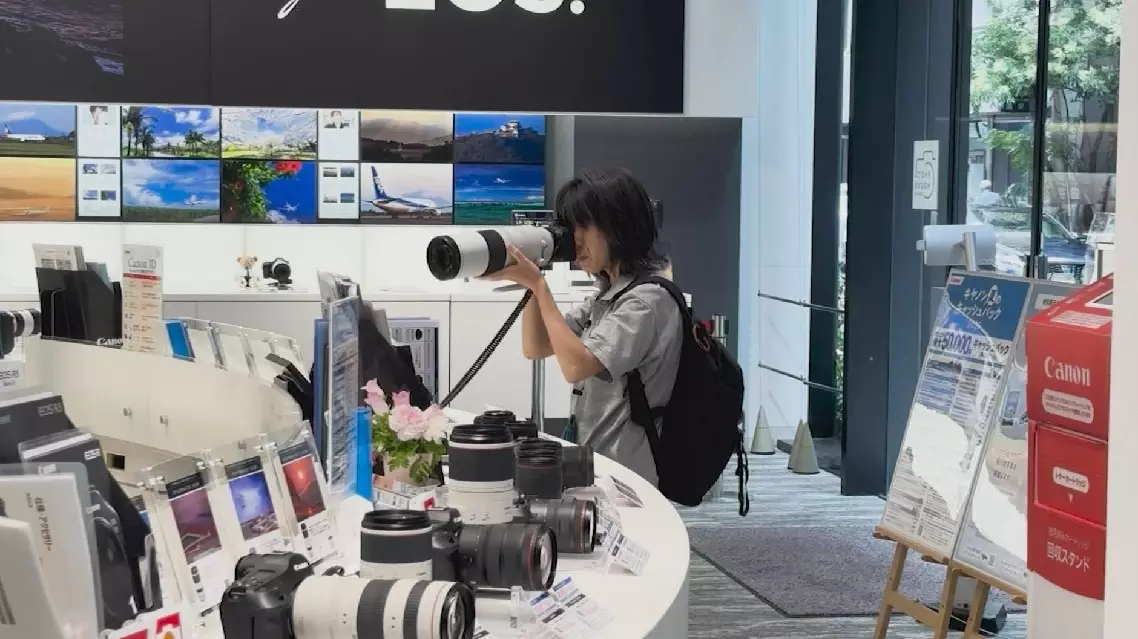
Japanese camera makers eye booming Chinese market
Visiting Chinese Foreign Minister Wang Yi said Saturday China is willing to work with Lesotho to strengthen exchanges on governance experience, enhance coordination in multilateral affairs, and advance the China-Lesotho strategic partnership.
Wang, also a member of the Political Bureau of the Communist Party of China Central Committee, made the remarks when meeting with Lesotho Prime Minister Sam Matekane in the capital of Lesotho.
During the meeting, Wang congratulated Lesotho on the 60th anniversary of its independence this year, and spoke highly of Lesotho government's efforts to prioritize economic development and steer the African country onto a path of sustainable growth. Since the Beijing Summit of the Forum on China-Africa Cooperation (FOCAC) in 2024, the two sides have advanced cooperation under the 10 partnership action plans unveiled at the summit, successfully implementing a number of key projects to effectively promote Lesotho's development and revitalization, Wang said.
China stands ready to work with Lesotho to strengthen exchanges on governance experience, enhance coordination in multilateral affairs, and push for greater development of the China-Lesotho strategic partnership, he added.
Calling on the two sides to firmly support each other, Wang said that China will accelerate the implementation of its zero-tariff policy for African countries, including Lesotho, expand bilateral trade, investment and industrial cooperation, facilitate broader access of Lesotho's specialty products to the Chinese market, and continue to support Lesotho's national development.
China will continue to stand firmly with African countries, uphold justice for the Global South, including Lesotho, oppose unilateralism and acts of bullying, and work together to build a community with a shared future for humanity, Wang said.
On his part, Matekane said during the meeting that Lesotho cherishes its friendship with China and the strategic partnership between the two countries, and expressed gratitude for China's valuable support for the development of African countries, including Lesotho.
Lesotho firmly adheres to the one-China principle and resolutely supports China in safeguarding its core interests, he said, noting that his country stands ready to strengthen strategic mutual trust with China, expand people-to-people exchanges, jointly implement the outcomes of the FOCAC Beijing Summit, and deepen cooperation in areas such as infrastructure, manufacturing and energy.
Matekane stressed that China's zero-tariff policy for African products will inject new impetus into Lesotho's development. He also expressed Lesotho's willingness to strengthen solidarity and cooperation with China on multilateral platforms such as BRICS to jointly address global challenges.
On the same day, Wang also held talks with Lejone Mpotjoana, minister of foreign affairs and international relations of Lesotho.
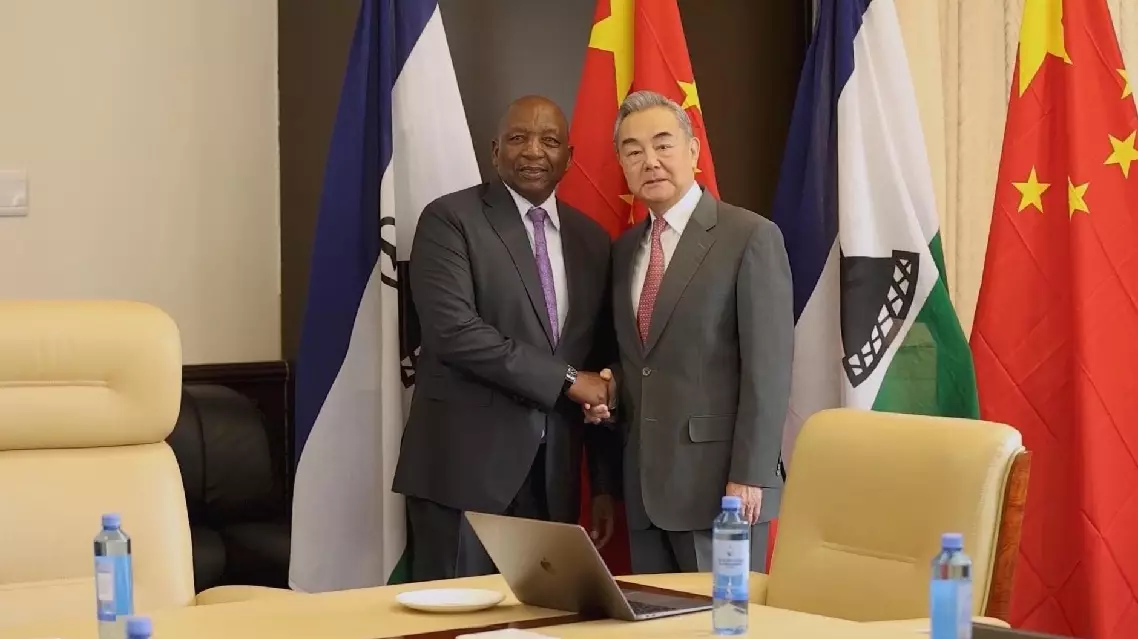
China, Lesotho to strengthen exchanges, advance cooperation
China, Lesotho to strengthen exchanges, advance cooperation