WASHINGTON (AP) — President Donald Trump singled out Brazil for import taxes of 50% on Wednesday for its treatment of its former president, Jair Bolsonaro, showing that personal grudges rather than simple economics are a driving force in the U.S. leader's use of tariffs.
Trump avoided his standard form letter with Brazil, specifically tying his tariffs to the trial of Bolsonaro, who is charged with trying to overturn his 2022 election loss. Trump has described Bolsonaro as a friend and hosted the former Brazilian president at his Mar-a-Lago resort when both were in power in 2020.
Click to Gallery
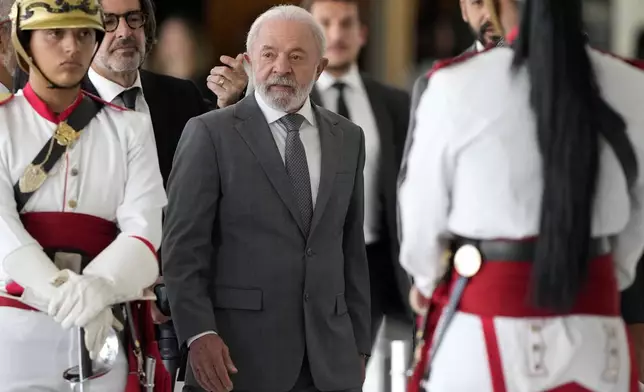
Brazil's President Luiz Inacio Lula da Silva walks among presidential guards during an event at the Planalto presidential palace in Brasilia, Brazil, Wednesday, July 9, 2025. (AP Photo/Eraldo Peres)
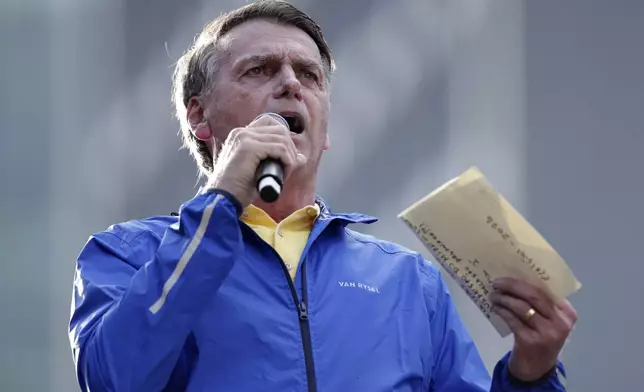
Former President Jair Bolsonaro speaks during a protest against his Supreme Court trial, in which he is accused of involvement in a 2022 coup attempt, in Sao Paulo, Sunday, June, 29, 2025. (AP Photo/Ettore Chiereguini)
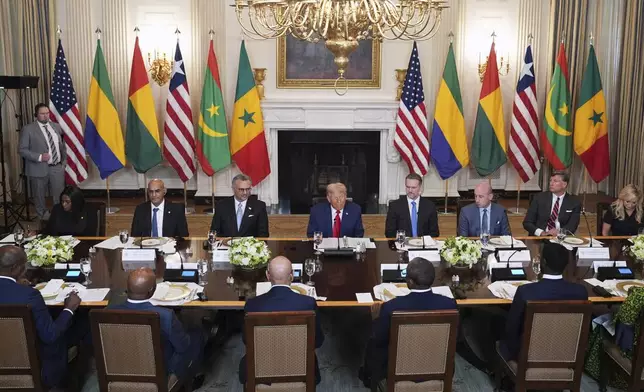
President Donald Trump speaks with African leaders including Senegalese President Bassirou Diomaye Faye, Liberian President Joseph Nyuma Boakai, Bissau-Guinean President Umaro Sissoco Embal€, Mauritanian President Mohamed Ould Ghazouani and Gabonese President Brice Oligui Nguema during a lunch in the State Dining Room of the White House, Wednesday, July 9, 2025, in Washington. (AP Photo/Evan Vucci)
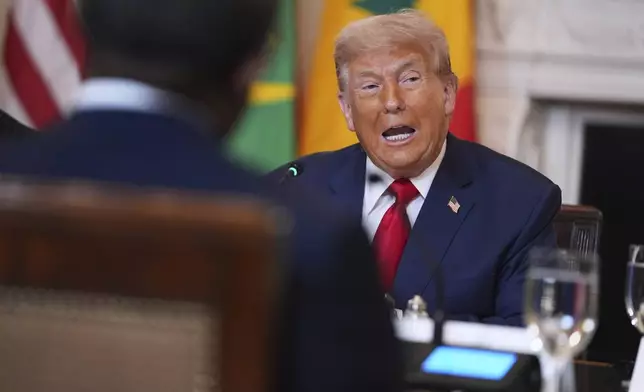
President Donald Trump speaks during a lunch with African leaders in the State Dining Room of the White House, Wednesday, July 9, 2025, in Washington. (AP Photo/Evan Vucci)
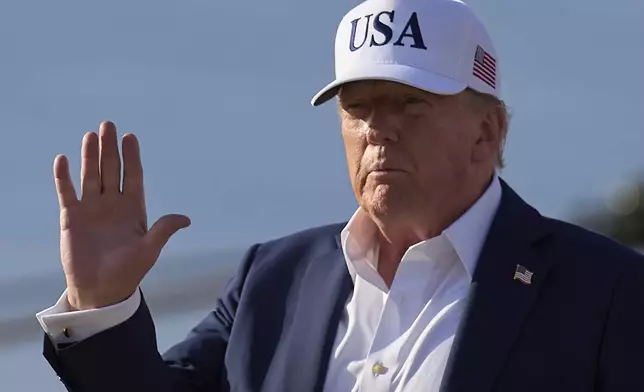
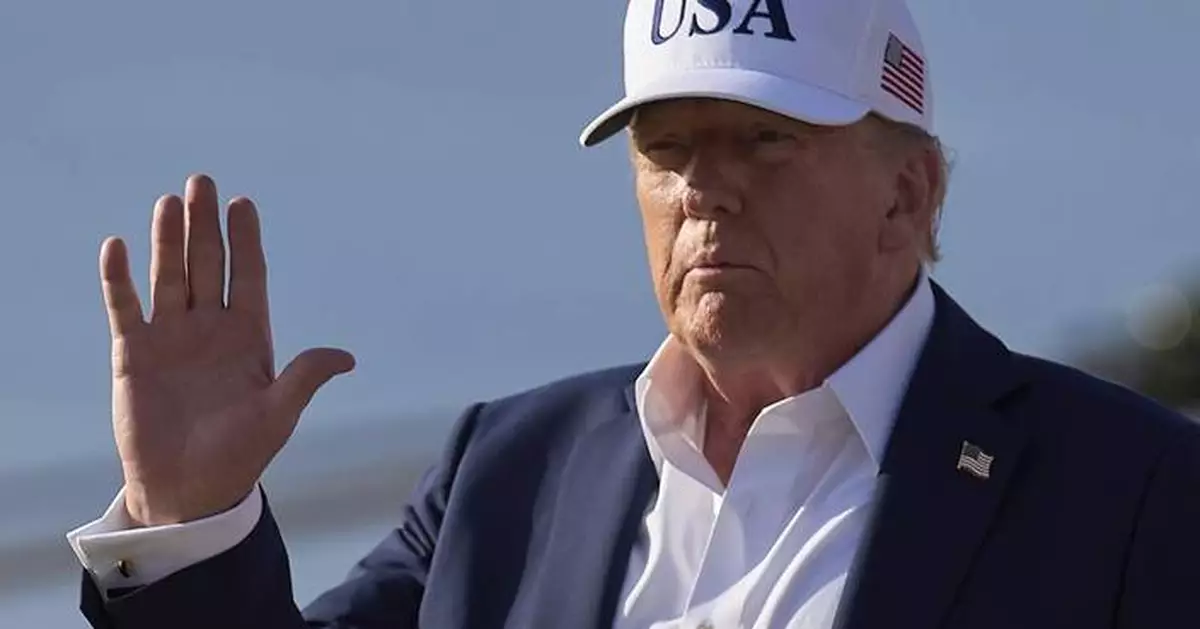
President Donald Trump waves to the media after exiting Air Force One, at Joint Base Andrews, Md., Sunday, July 6, 2025, en route to the White House after spending the weekend in New Jersey. (AP Photo/Jacquelyn Martin)
“This Trial should not be taking place,” Trump wrote in the letter posted on Truth Social. “It is a Witch Hunt that should end IMMEDIATELY!”
There is a sense of kinship as Trump was indicted in 2023 for his efforts to overturn the results of the 2020 U.S. presidential election. The U.S. president addressed his tariff letter to Brazilian President Luiz Inacio Lula da Silva, who bested Bolsonaro in 2022.
Lula responded in a forceful statement that said Trump's tariffs would trigger the country's economic reciprocity law, which allows trade, investment and intellectual property agreements to be suspended against countries that harm Brazil's competitiveness.
He noted that the U.S. has had a trade surplus of more than $410 billion with Brazil over the past 15 years.
“Brazil is a sovereign country with independent institutions that will not accept being taken for granted by anyone,” Lula said.
Bolsonaro testified before the country’s Supreme Court in June over the alleged plot to remain in power after his 2022 election loss. Judges will hear from 26 other defendants in the coming months, and legal analysts say a decision could come as early as September. The country’s electoral authorities have already barred Bolsonaro from running for office until 2030.
The former president did not comment about Trump’s tariff decision on his social media channels, but wrote that he is being politically persecuted.
In his statement, Lula defended the country's legal system, saying the “proceedings against those who planned the coup d’etat is a competence of the Brazilian judiciary and is not subject to interference or threats that harm the independence of national institutions.”
Trump also objected to Brazil's Supreme Court fining of social media companies, saying the temporary blocking last year amounted to “SECRET and UNLAWFUL Censorship Orders.” Trump said he is launching an investigation as a result under Section 301 of the Trade Act of 1974, which applies to countries with trade practices that are deemed unfair to U.S. companies.
Among the companies the Supreme Court fined was X, which was not mentioned specifically in Trump's letter. X is owned by Elon Musk, Trump's multibillionaire backer in the 2024 election whose time leading Trump's Department of Government Efficiency recently ended and led to a public feud over the U.S. president's deficit-increasing budget plan. Trump also owns a social media company, Truth Social.
“In Brazil, freedom of speech is not mistaken by aggression or violent behavior," Lula said in his statement. "To operate in our country, every company, local or foreign, must be subjected to Brazilian legislation.”
Brazilian lawmakers allied with Lula blamed Bolsonaro and two of his sons, congressman Eduardo Bolsonaro and Sen. Flávio Bolsonaro, for Trump’s tariff action. Sen. Lindbergh Farias, the whip of Lula’s Workers’ Party in the Senate, said on social media that the Bolsonaros “must be very happy to harm Brazil, our economy and our jobs.”
The Brazil letter was a reminder that politics and personal relations with Trump matter just as much as any economic fundamentals. And while Trump has said the high tariff rates he’s setting are based on trade imbalances, it was unclear by his Wednesday actions how the countries being targeted would help to reindustrialize America.
The tariffs starting Aug. 1 would be a dramatic increase from the 10% rate that Trump levied on Brazil as part of his April 2 “Liberation Day” announcement. In addition to oil, Brazil sells orange juice, coffee, iron and steel to the U.S., among other products. The U.S. ran a $6.8 billion trade surplus with Brazil last year, according to the Census Bureau.
Trump initially announced his broad tariffs by declaring an economic emergency, arguing under a 1977 law that the U.S. was at risk because of persistent trade imbalances. But that rationale becomes problematic in this particular case, as Trump is linking his tariffs to the Bolsonaro trial and the U.S. exports more to Brazil than it imports.
Trump also sent letters Wednesday to the leaders of seven other nations. None of them — the Philippines, Brunei, Moldova, Algeria, Libya, Iraq and Sri Lanka — is a major industrial rival to the United States.
Most economic analyses say the tariffs will worsen inflationary pressures and subtract from economic growth, but Trump has used the taxes as a way to assert the diplomatic and financial power of the U.S. on both rivals and allies. His administration is promising that the taxes on imports will lower trade imbalances, offset some of the cost of the tax cuts he signed into law on Friday and cause factory jobs to return to the United States.
Trump, during a White House meeting with African leaders, talked up trade as a diplomatic tool. Trade, he said, “seems to be a foundation” for him to settle disputes between India and Pakistan, as well as Kosovo and Serbia.
“You guys are going to fight, we’re not going to trade,” Trump said. “And we seem to be quite successful in doing that.”
Trump said the tariff rates in his letters were based on “common sense” and trade imbalances, even though the Brazil letter indicated otherwise. Trump suggested he had not thought of penalizing the countries whose leaders were meeting with him in the Oval Office — Liberia, Senegal, Gabon, Mauritania and Guinea-Bissau — as “these are friends of mine now.”
Countries are not complaining about the rates outlined in his letters, he said, even though those tariffs have been generally close to the ones announced April 2 that rattled financial markets. The S&P 500 stock index rose Wednesday.
“We really haven’t had too many complaints because I’m keeping them at a very low number, very conservative as you would say,” Trump said.
Officials for the European Union, a major trade partner and source of Trump's ire on trade, said Tuesday that they are not expecting to receive a letter from Trump listing tariff rates. The Republican president started the process of announcing tariff rates on Monday by hitting two major U.S. trading partners, Japan and South Korea, with import taxes of 25%.
According to Trump's Wednesday letters, imports from Libya, Iraq, Algeria and Sri Lanka would be taxed at 30%, those from Moldova and Brunei at 25% and those from the Philippines at 20%. The tariffs would start Aug. 1.
The Philippine government's reaction has been relatively tame. Its ambassador in Washington, Jose Manuel Romualdez, said the country will seek new negotiations with the U.S. to lower the 20% tariff.
The Census Bureau reported that last year the U.S. ran a trade imbalance on goods of $1.4 billion with Algeria, $5.9 billion with Iraq, $900 million with Libya, $4.9 billion with the Philippines, $2.6 billion with Sri Lanka, $111 million with Brunei and $85 million with Moldova. The imbalance represents the difference between what the U.S. exported to those countries and what it imported.
Taken together, the trade imbalances with those seven countries are essentially a rounding error in a U.S. economy with a gross domestic product of $30 trillion.
The letters were posted on Truth Social after the expiration of a 90-day negotiating period with a baseline levy of 10%. Trump is giving countries more time to negotiate with his Aug. 1 deadline, but he has insisted there will be no extensions for the countries that receive letters.
The president threatened additional tariffs on any country that attempts to retaliate.
Savarese reported from Rio de Janeiro. Associated Press writers Jim Gomez in Manila, David McHugh in Frankfurt, Germany, and Eileen Ng in Kuala Lumpur, Malaysia, contributed to this report.
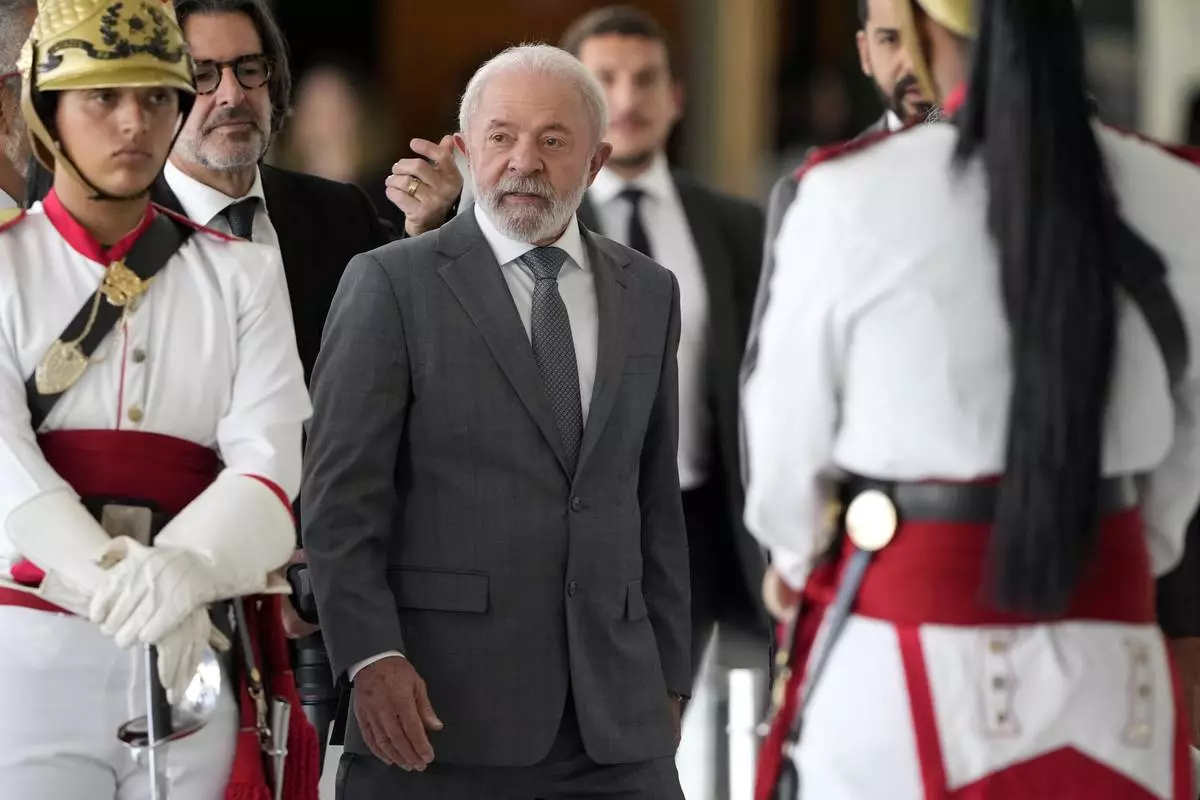
Brazil's President Luiz Inacio Lula da Silva walks among presidential guards during an event at the Planalto presidential palace in Brasilia, Brazil, Wednesday, July 9, 2025. (AP Photo/Eraldo Peres)
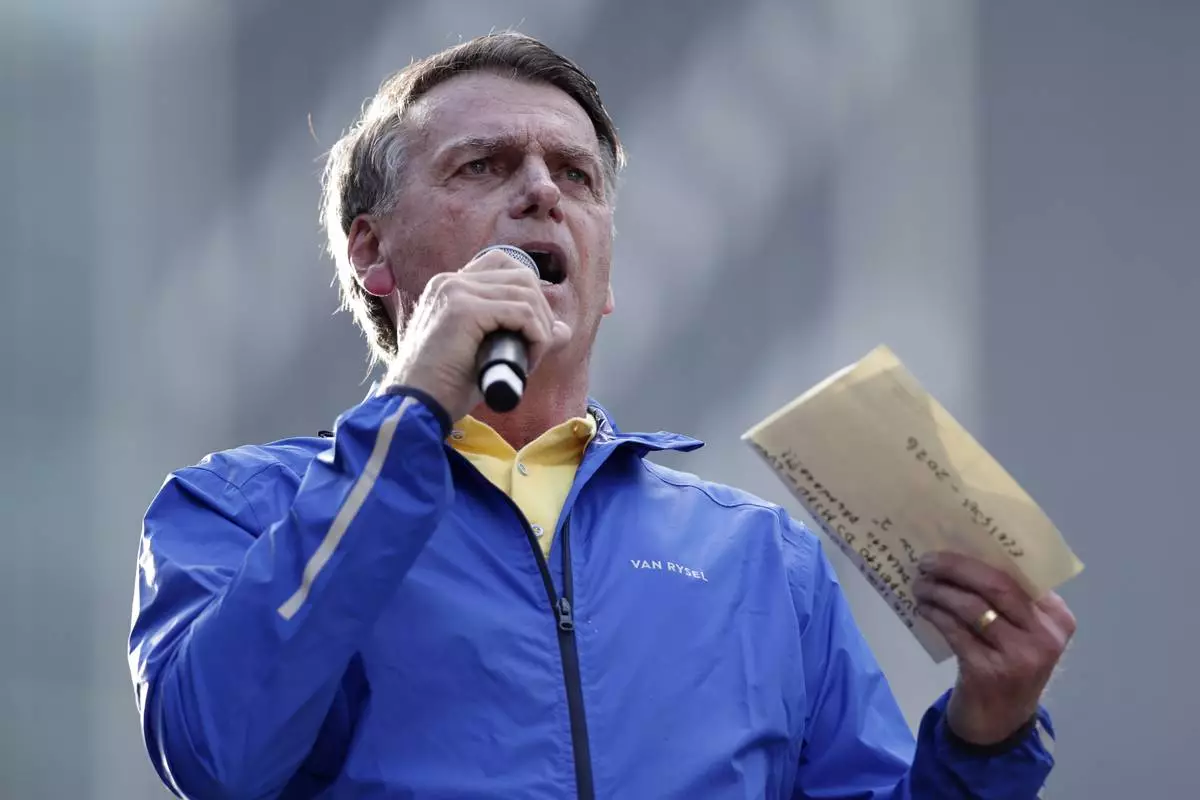
Former President Jair Bolsonaro speaks during a protest against his Supreme Court trial, in which he is accused of involvement in a 2022 coup attempt, in Sao Paulo, Sunday, June, 29, 2025. (AP Photo/Ettore Chiereguini)
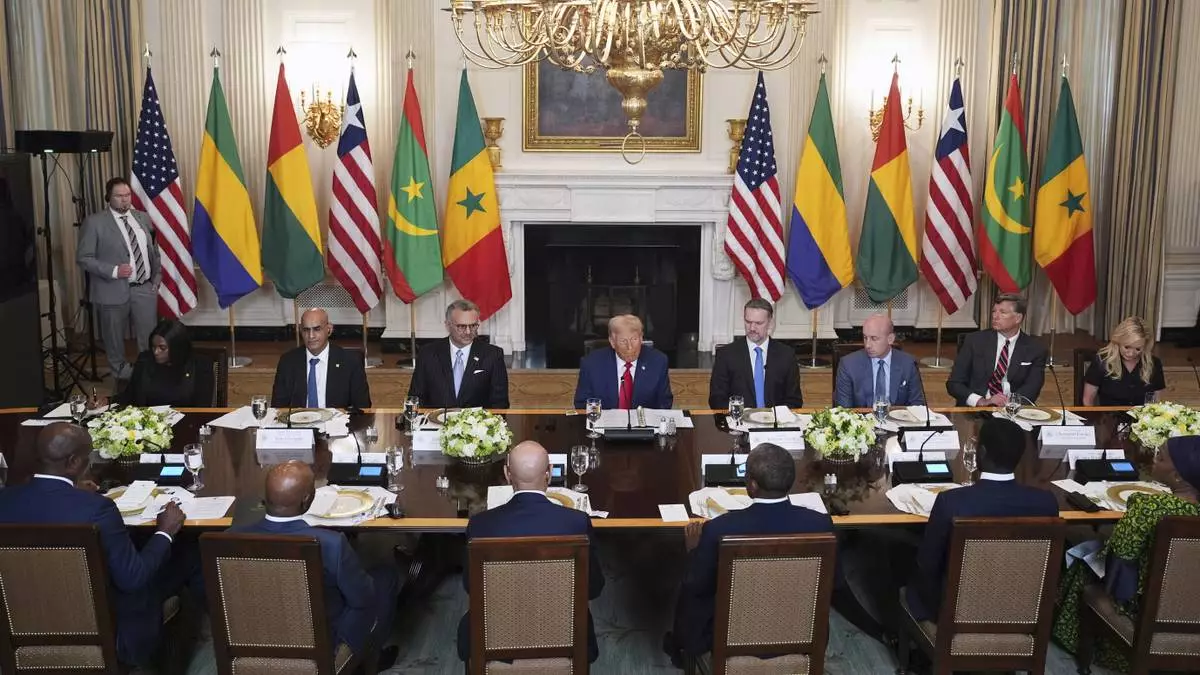
President Donald Trump speaks with African leaders including Senegalese President Bassirou Diomaye Faye, Liberian President Joseph Nyuma Boakai, Bissau-Guinean President Umaro Sissoco Embal€, Mauritanian President Mohamed Ould Ghazouani and Gabonese President Brice Oligui Nguema during a lunch in the State Dining Room of the White House, Wednesday, July 9, 2025, in Washington. (AP Photo/Evan Vucci)
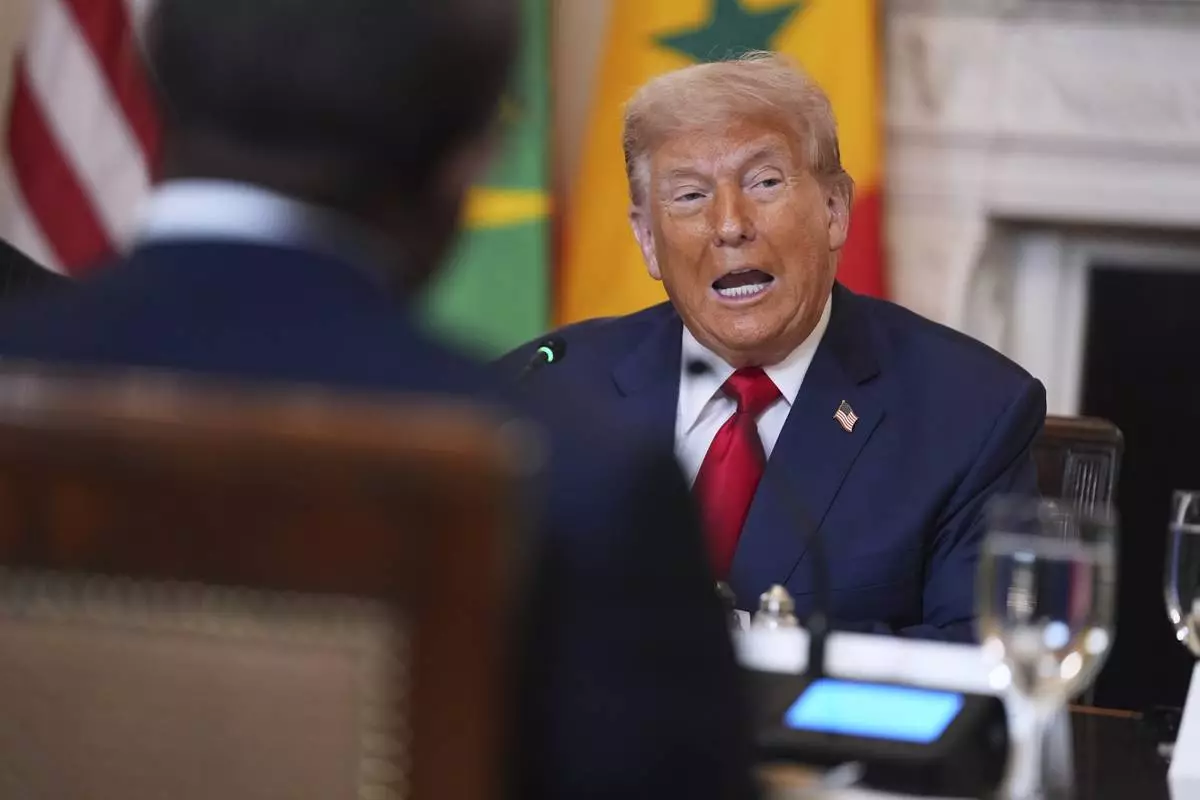
President Donald Trump speaks during a lunch with African leaders in the State Dining Room of the White House, Wednesday, July 9, 2025, in Washington. (AP Photo/Evan Vucci)
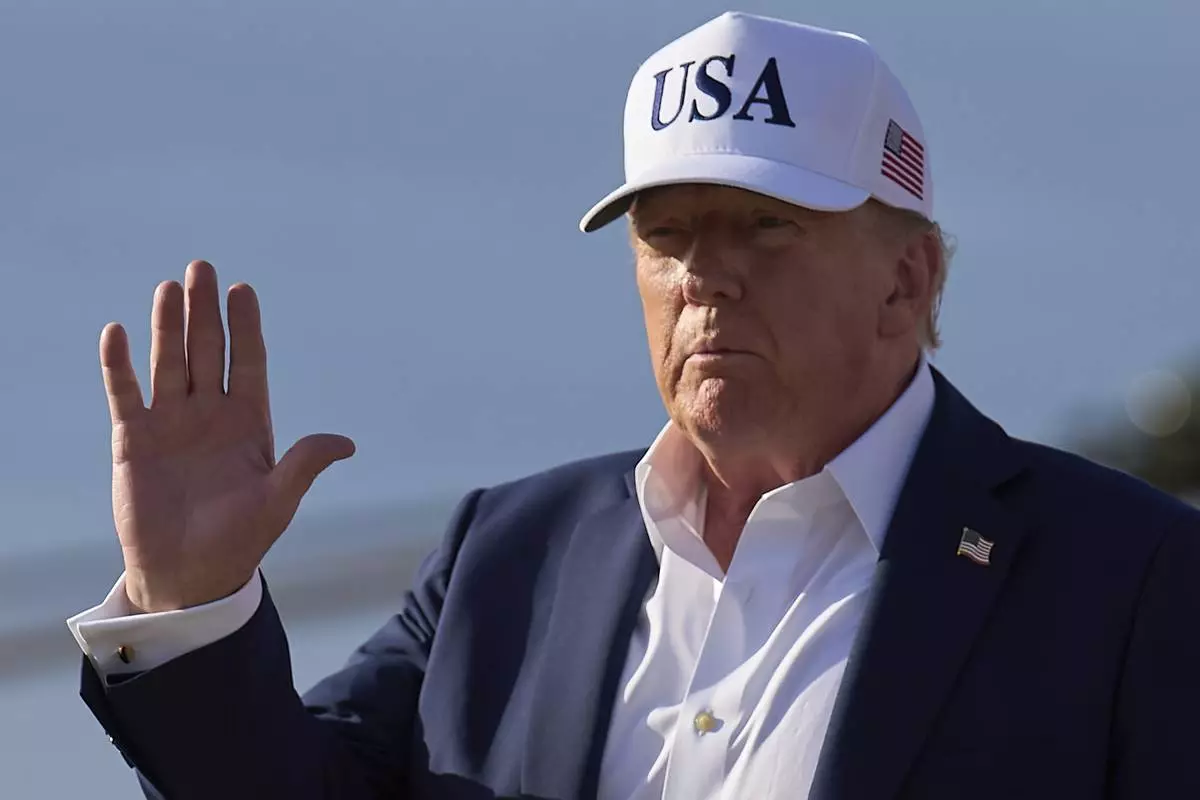
President Donald Trump waves to the media after exiting Air Force One, at Joint Base Andrews, Md., Sunday, July 6, 2025, en route to the White House after spending the weekend in New Jersey. (AP Photo/Jacquelyn Martin)