President Donald Trump expressed his disdain for wind power during a meeting with his Cabinet recently, calling it an expensive form of energy that “smart” countries don't use.
His comments on Tuesday contained false and misleading information about the use of wind power in the United States and around the world, and came on the heels of an executive order he signed Monday that would end subsidies around “green” energy.
Here’s a look at the facts.
CLAIM: “Wind is a very expensive form of energy.”
THE FACTS: Onshore wind is one of the cheapest sources of electricity generation, with new wind farms expected to produce electricity around $30 per megawatt hour. This compares to a new natural gas plant, around $65 per megawatt hour, or a new advanced nuclear reactor, which runs over $80, according to estimates from the Energy Information Administration. Onshore wind farms cost less to build and operate than natural gas plants on average in most regions of the United States, even without tax credits. Though natural gas plants are available to produce electricity at any time of the day, unlike wind. Offshore wind is among the sources of new power generation that will cost the most to build and operate, at $88 per megawatt hour, according to the EIA.
While electricity rates have risen nationwide over the past decade, states that have added a significant amount of onshore wind power, such as Iowa, Kansas, Oklahoma and New Mexico, have kept rates from rising as fast as other states, said Brendan Pierpont, director of electricity modeling at the nonpartisan think tank Energy Innovation. For example, the share of electricity generated from wind in Iowa increased from 15% in 2010 to nearly 60% of the state’s electricity generation in 2023, while the state’s electricity rates grew at a rate slower than that of 42 other states, his research found.
Wind power can be expensive if it's built where winds are weaker, but the United States is adding it in places with strong wind resources, he added.
“Wind should be seen as part of an overall portfolio of electricity system resources and is an important part of keeping costs down,” he said Wednesday.
Trump has committed to increasing U.S. energy production, particularly fossil fuels. He signed an executive order Monday aimed at phasing out tax credits for wind and solar facilities.
CLAIM: Wind turbines are “almost exclusively” made in China, but President Xi Jinping told Trump they have “very, very few.”
THE FACTS: China is the world's largest manufacturer of wind turbines, producing more than half of the supply. It is also installing them in China at a record pace. In total, China has 1.3 terawatts of utility-scale wind and solar capacity in development, which could generate more electricity than neighboring Japan consumed in all of 2023, according to a report from the Global Energy Monitor released Wednesday. The report highlighted China's offshore wind development, calling China the undisputed leader in the offshore wind sector, though it also said coal and gas are still on the rise across China.
“The whole narrative that we’re led to believe in the West is that China is building coal plants and that it’s doing nothing for its carbon footprint,” Tom Harper, partner at the global consultant Baringa, said Tuesday. “So the surprising thing is China is building a portfolio of zero-carbon resources that are designed to not perfectly complement each other, but to work alongside each other to reduce reliance on fossil fuels.”
CLAIM: “If you look at smart countries, they don’t use it.”
THE FACTS: At least 136 countries and territories around the world use wind power to generate electricity, according to the EIA, with many countries growing the amount they produce. The top five markets for wind power in 2024 were China, the U.S., Brazil, India and Germany, while Uzbekistan, Egypt and Saudi Arabia represent the next wave of wind energy growth, according to the Global Wind Energy Council.
Council CEO Ben Backwell said 2024 marked yet another record year for wind energy growth, with the “industry increasingly pushing into new regions.”
Michael Gerrard, director of the Sabin Center for Climate Change Law at Columbia University, disputed the idea that smart countries don’t use wind power. China is soaring ahead in building a massive amount of wind power while Germany, the United Kingdom, Finland, Spain, Sweden, France and many other countries in Europe have large programs of wind construction, he said Wednesday.
“By cutting back on wind power development, the U.S. is ceding the lead to China in this important technology, and killing a lot of U.S. jobs,” Gerrard said in an e-mail.
CLAIM: In New England, two whales washed up over 50 years, “and last summer they had 14 washed up. Now, I’m not saying that’s the wind farm that was built, that maybe it is right.”
THE FACTS: There are no known links between large whale deaths and ongoing offshore wind activities, according to the National Oceanic and Atmospheric Administration. NOAA says it analyzes the causes of death whenever possible, following the science and data. Unfounded claims about offshore wind threatening whales have surfaced as a flashpoint in the fight over the future of renewable energy.
The nation's first commercial-scale offshore wind farm officially opened in 2024 east of Montauk Point, New York. The nation’s second-largest offshore wind farm is under construction off the coast of Massachusetts. A five-turbine pilot project has been operating since 2016 off the coast of Rhode Island.
CLAIM: “The birds are dying all over the place.”
THE FACTS: Turbines, like all infrastructure, can pose a risk to birds. However, the National Audubon Society, which is dedicated to the conservation of birds, thinks developers can manage these risks and climate change is a greater threat. An Audubon report found that two-thirds of North American bird species could face extinction due to rising temperatures.
In January, the nonprofit said responsible offshore wind development is a clear win for birds, the U.S. economy and the climate.
“While persistent myths claim widespread and devastating effects of offshore wind turbines on wildlife, the science tells a different story. Our findings clearly indicate that we can responsibly deploy offshore wind in a manner that still protects birds and their habitats,” Sam Wojcicki, Audubon's senior director for climate policy, wrote in a January post. The organization also supports wind energy on land when it is sited and operated properly to minimize the impact on birds and other wildlife.
CLAIM: “You can’t take them down because the environmentalists don’t let you bury the blades.”
THE FACTS: Wind turbine blades are challenging to recycle. They are designed for durability to withstand hurricane-force winds. However, the U.S. already has the ability to recycle most wind turbine materials, according to the Department of Energy. It issued a report in January that found 90% of wind turbines can be recycled using existing infrastructure, while new strategies and innovative recycling methods will be needed to tackle the rest.
Find AP Fact Checks here: https://apnews.com/APFactCheck.
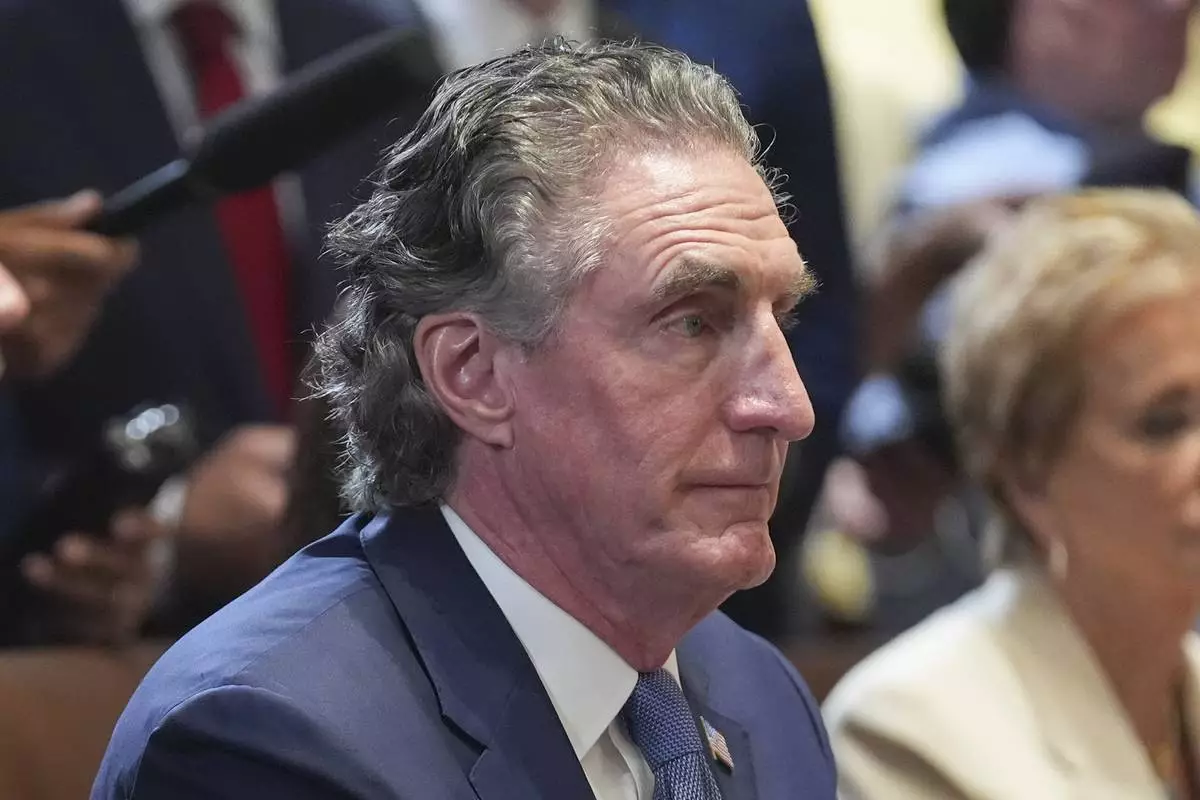
Secretary of Interior Doug Burgum listens to President Donald Trump speak during a cabinet meeting at the White House, Tuesday, July 8, 2025, in Washington. (AP Photo/Evan Vucci)

President Donald Trump, center, speaking during a cabinet meeting with from l-r., Homeland Security Secretary Kristi Noem, Secretary of Housing, Eric Scott Turner, Attorney General Pam Bondi, Secretary of State Marco Rubio and Secretary of Defense Pete Hegseth, at the White House, Tuesday, July 8, 2025, in Washington. (AP Photo/Evan Vucci)
A group of Buddhist monks and their rescue dog are striding single file down country roads and highways across the South, captivating Americans nationwide and inspiring droves of locals to greet them along their route.
In their flowing saffron and ocher robes, the men are walking for peace. It's a meditative tradition more common in South Asian countries, and it's resonating now in the U.S., seemingly as a welcome respite from the conflict, trauma and politics dividing the nation.
Their journey began Oct. 26, 2025, at a Vietnamese Buddhist temple in Texas, and is scheduled to end in mid-February in Washington, D.C., where they will ask Congress to recognize Buddha’s day of birth and enlightenment as a federal holiday. Beyond promoting peace, their highest priority is connecting with people along the way.
“My hope is, when this walk ends, the people we met will continue practicing mindfulness and find peace,” said the Venerable Bhikkhu Pannakara, the group’s soft-spoken leader who is making the trek barefoot. He teaches about mindfulness, forgiveness and healing at every stop.
Preferring to sleep each night in tents pitched outdoors, the monks have been surprised to see their message transcend ideologies, drawing huge crowds into churchyards, city halls and town squares across six states. Documenting their journey on social media, they — and their dog, Aloka — have racked up millions of followers online. On Saturday, thousands thronged in Columbia, South Carolina, where the monks chanted on the steps of the State House and received a proclamation from the city's mayor, Daniel Rickenmann.
At their stop Thursday in Saluda, South Carolina, Audrie Pearce joined the crowd lining Main Street. She had driven four hours from her village of Little River, and teared up as Pannakara handed her a flower.
“There’s something traumatic and heart-wrenching happening in our country every day,” said Pearce, who describes herself as spiritual, but not religious. “I looked into their eyes and I saw peace. They’re putting their bodies through such physical torture and yet they radiate peace.”
Hailing from Theravada Buddhist monasteries across the globe, the 19 monks began their 2,300 mile (3,700 kilometer) trek at the Huong Dao Vipassana Bhavana Center in Fort Worth.
Their journey has not been without peril. On Nov. 19, as the monks were walking along U.S. Highway 90 near Dayton, Texas, their escort vehicle was hit by a distracted truck driver, injuring two monks. One of them lost his leg, reducing the group to 18.
This is Pannakara's first trek in the U.S., but he's walked across several South Asian countries, including a 112-day journey across India in 2022 where he first encountered Aloka, an Indian Pariah dog whose name means divine light in Sanskrit.
Then a stray, the dog followed him and other monks from Kolkata in eastern India all the way to the Nepal border. At one point, he fell critically ill and Pannakara scooped him up in his arms and cared for him until he recovered. Now, Aloka inspires him to keep going when he feels like giving up.
“I named him light because I want him to find the light of wisdom,” Pannakara said.
The monk's feet are now heavily bandaged because he's stepped on rocks, nails and glass along the way. His practice of mindfulness keeps him joyful despite the pain from these injuries, he said.
Still, traversing the southeast United States has presented unique challenges, and pounding pavement day after day has been brutal.
“In India, we can do shortcuts through paddy fields and farms, but we can’t do that here because there are a lot of private properties,” Pannakara said. “But what’s made it beautiful is how people have welcomed and hosted us in spite of not knowing who we are and what we believe.”
In Opelika, Alabama, the Rev. Patrick Hitchman-Craig hosted the monks on Christmas night at his United Methodist congregation.
He expected to see a small crowd, but about 1,000 people showed up, creating the feel of a block party. The monks seemed like the Magi, he said, appearing on Christ’s birthday.
“Anyone who is working for peace in the world in a way that is public and sacrificial is standing close to the heart of Jesus, whether or not they share our tradition,” said Hitchman-Craig. “I was blown away by the number of people and the diversity of who showed up.”
After their night on the church lawn, the monks arrived the next afternoon at the Collins Farm in Cusseta, Alabama. Judy Collins Allen, whose father and brother run the farm, said about 200 people came to meet the monks — the biggest gathering she’s ever witnessed there.
“There was a calm, warmth and sense of community among people who had not met each other before and that was so special,” she said.
Long Si Dong, a spokesperson for the Fort Worth temple, said the monks, when they arrive in Washington, plan to seek recognition of Vesak, the day which marks the birth and enlightenment of the Buddha, as a national holiday.
“Doing so would acknowledge Vesak as a day of reflection, compassion and unity for all people regardless of faith,” he said.
But Pannakara emphasized that their main goal is to help people achieve peace in their lives. The trek is also a separate endeavor from a $200 million campaign to build towering monuments on the temple’s 14-acre property to house the Buddha’s teachings engraved in stone, according to Dong.
The monks practice and teach Vipassana meditation, an ancient Indian technique taught by the Buddha himself as core for attaining enlightenment. It focuses on the mind-body connection — observing breath and physical sensations to understand reality, impermanence and suffering. Some of the monks, including Pannakara, walk barefoot to feel the ground directly and be present in the moment.
Pannakara has told the gathered crowds that they don't aim to convert people to Buddhism.
Brooke Schedneck, professor of religion at Rhodes College in Memphis, Tennessee, said the tradition of a peace walk in Theravada Buddhism began in the 1990s when the Venerable Maha Ghosananda, a Cambodian monk, led marches across war-torn areas riddled with landmines to foster national healing after civil war and genocide in his country.
“These walks really inspire people and inspire faith,” Schedneck said. “The core intention is to have others watch and be inspired, not so much through words, but through how they are willing to make this sacrifice by walking and being visible.”
On Thursday, Becki Gable drove nearly 400 miles (about 640 kilometers) from Cullman, Alabama, to catch up with them in Saluda. Raised Methodist, Gable said she wanted some release from the pain of losing her daughter and parents.
“I just felt in my heart that this would help me have peace,” she said. “Maybe I could move a little bit forward in my life.”
Gable says she has already taken one of Pannakara’s teachings to heart. She’s promised herself that each morning, as soon as she awakes, she’d take a piece of paper and write five words on it, just as the monk prescribed.
“Today is my peaceful day.”
Freelance photojournalist Allison Joyce contributed to this report.
Associated Press religion coverage receives support through the AP’s collaboration with The Conversation US, with funding from Lilly Endowment Inc. The AP is solely responsible for this content.
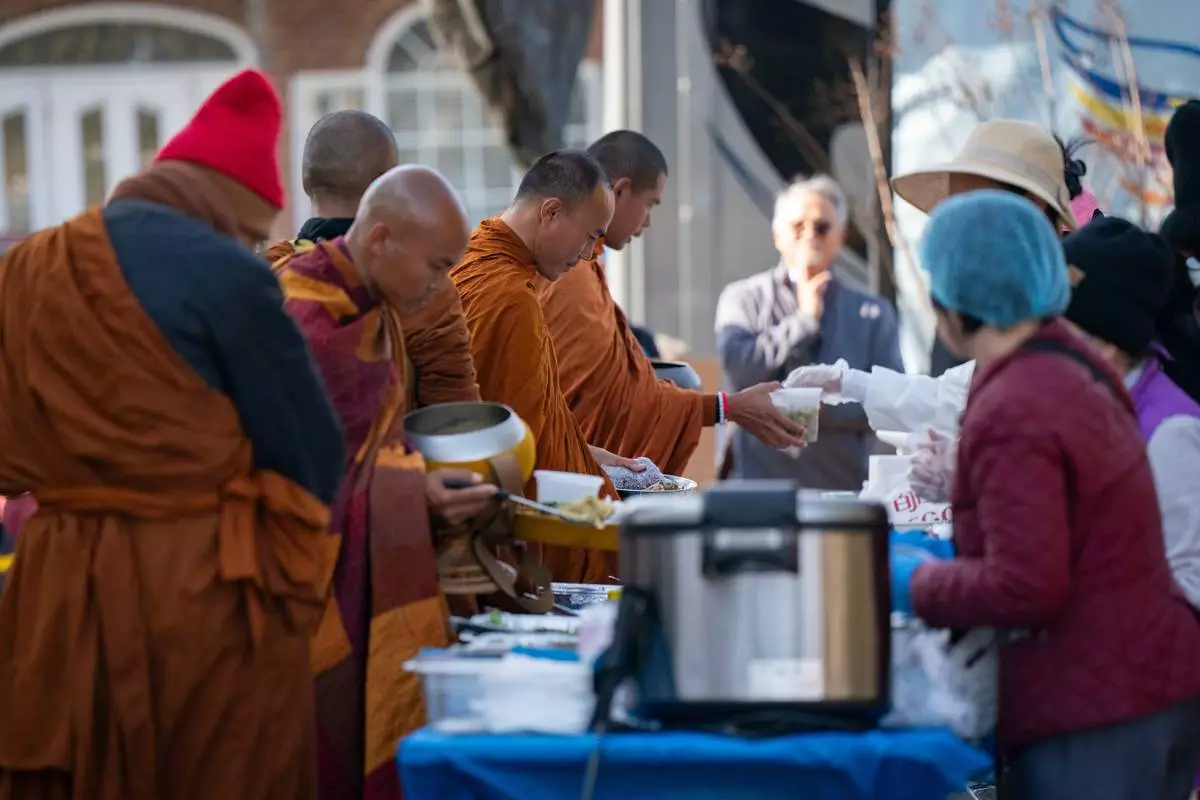
Buddhist monks who are participating in the, "Walk For Peace," get lunch Thursday, Jan. 8, 2026, in Saluda, S.C. (AP Photo/Allison Joyce)
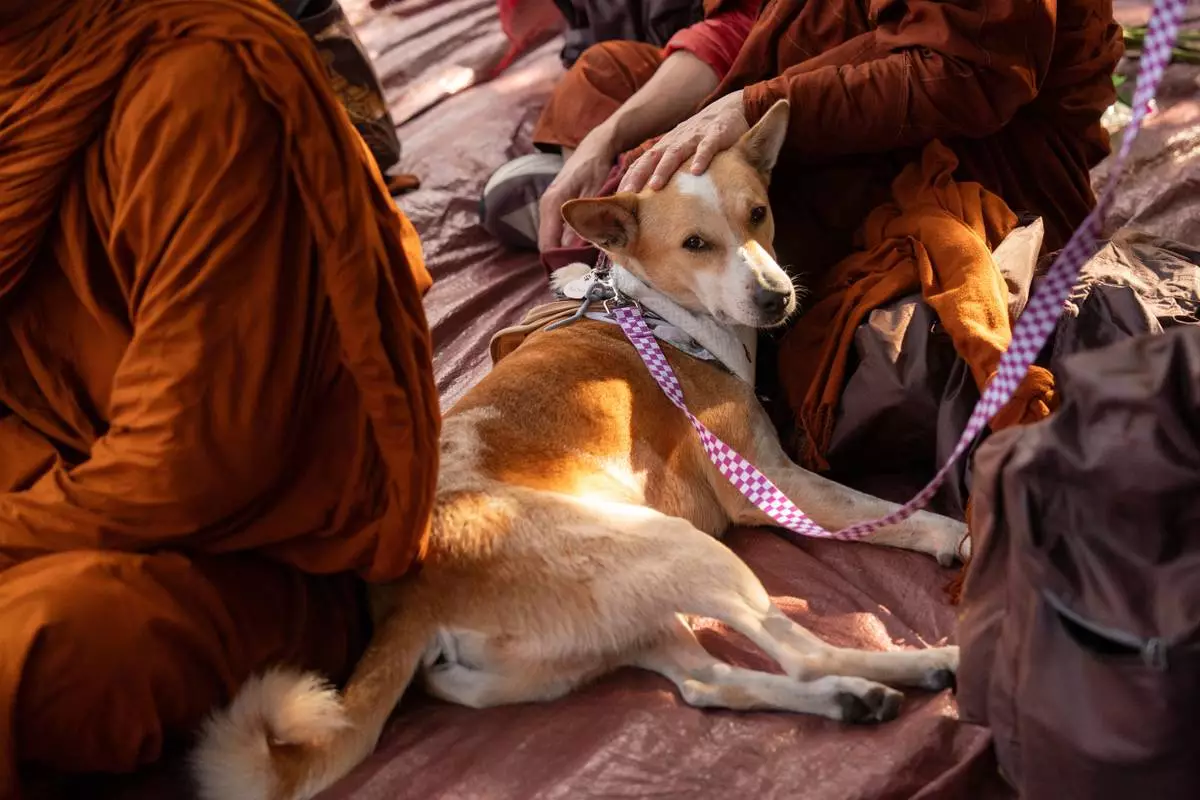
Aloka rests with Buddhist monks who are participating in the, "Walk For Peace," Thursday, Jan. 8, 2026, in Saluda, S.C. (AP Photo/Allison Joyce)
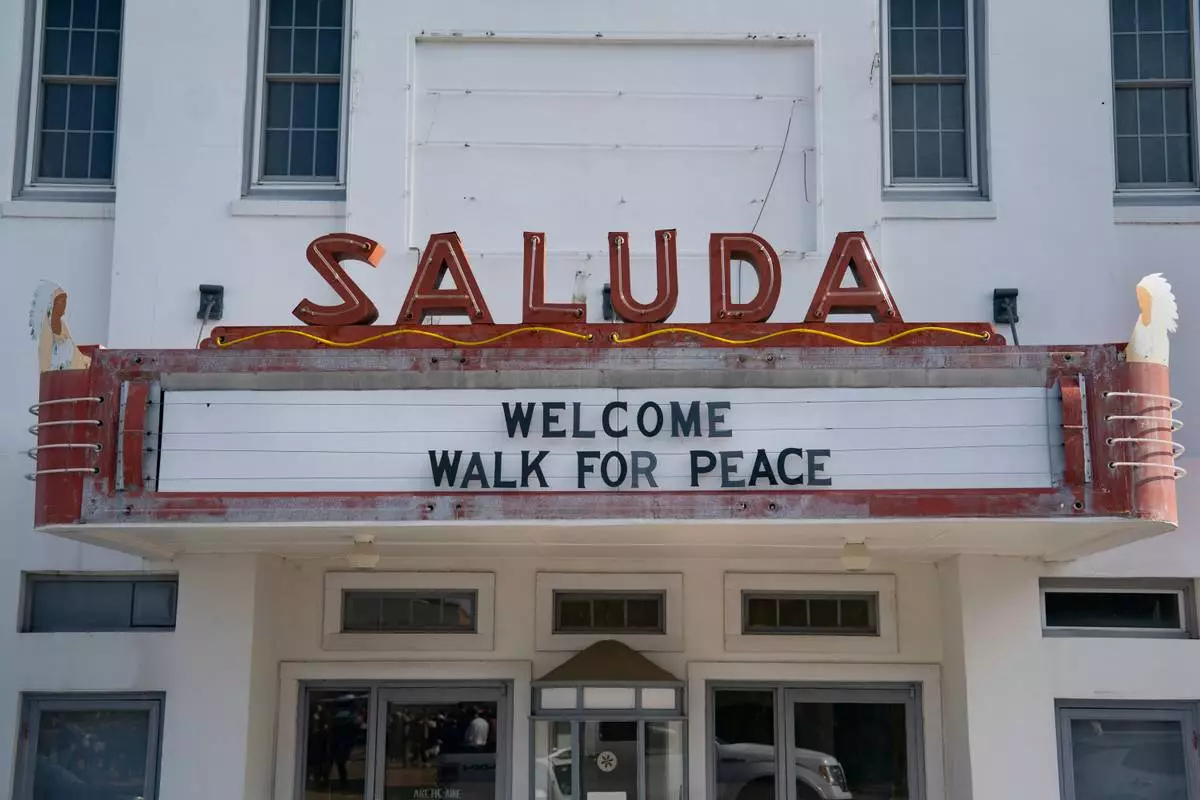
A sign is seen greeting the Buddhist monks who are participating in the, "Walk For Peace," Thursday, Jan. 8, 2026, in Saluda, S.C. (AP Photo/Allison Joyce)
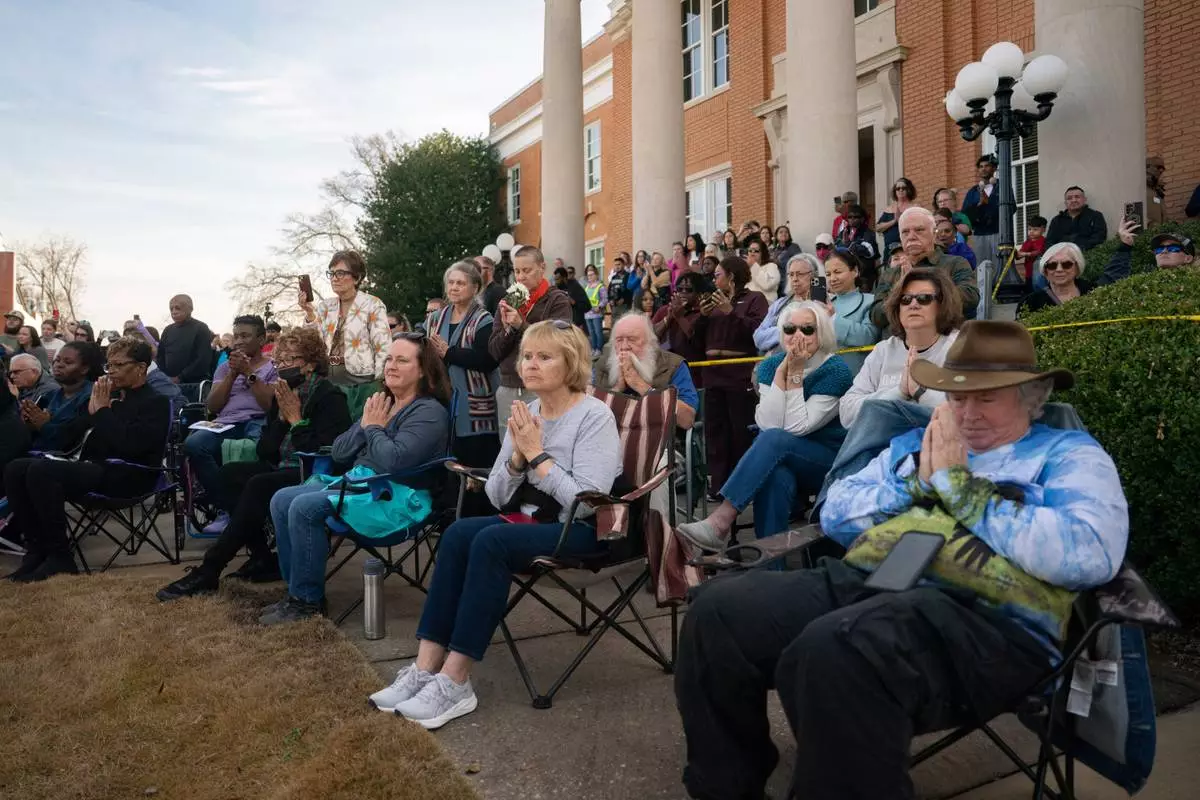
Supporters pray with Buddhist monks who are participating in the, "Walk For Peace," Thursday, Jan. 8, 2026, in Saluda, S.C. (AP Photo/Allison Joyce)
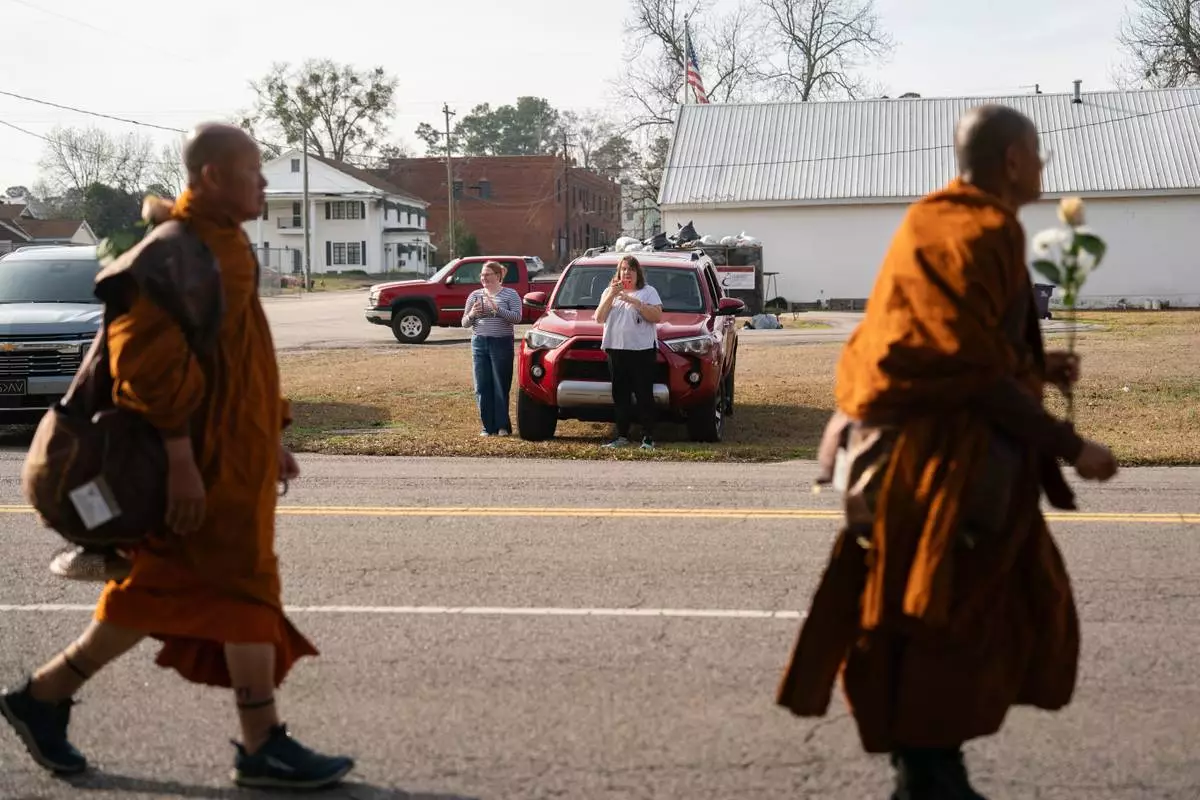
Supporters watch Buddhist monks who are participating in the, "Walk For Peace," Thursday, Jan. 8, 2026, in Saluda, S.C. (AP Photo/Allison Joyce)
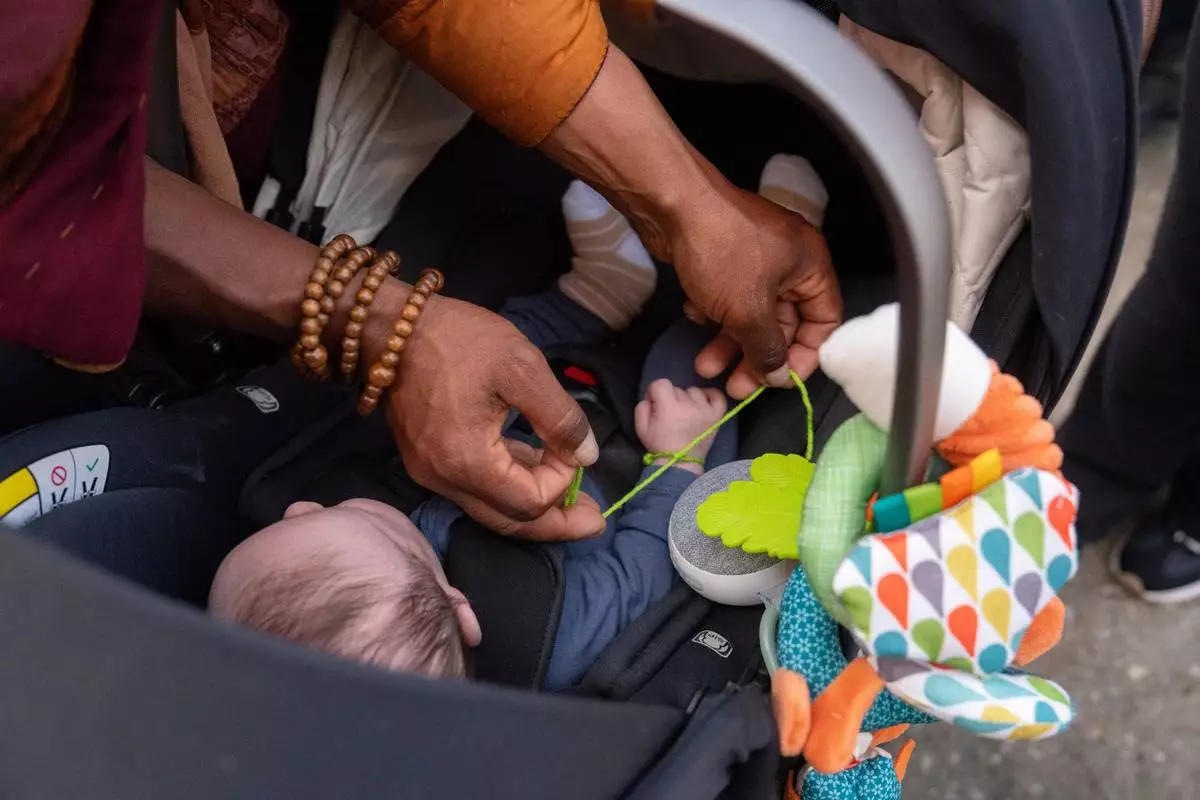
A Buddhist monk ties a prayer bracelet around the wrist of Josey Lee, 2-months-old, during the, "Walk For Peace," Thursday, Jan. 8, 2026, in Saluda, S.C. (AP Photo/Allison Joyce)
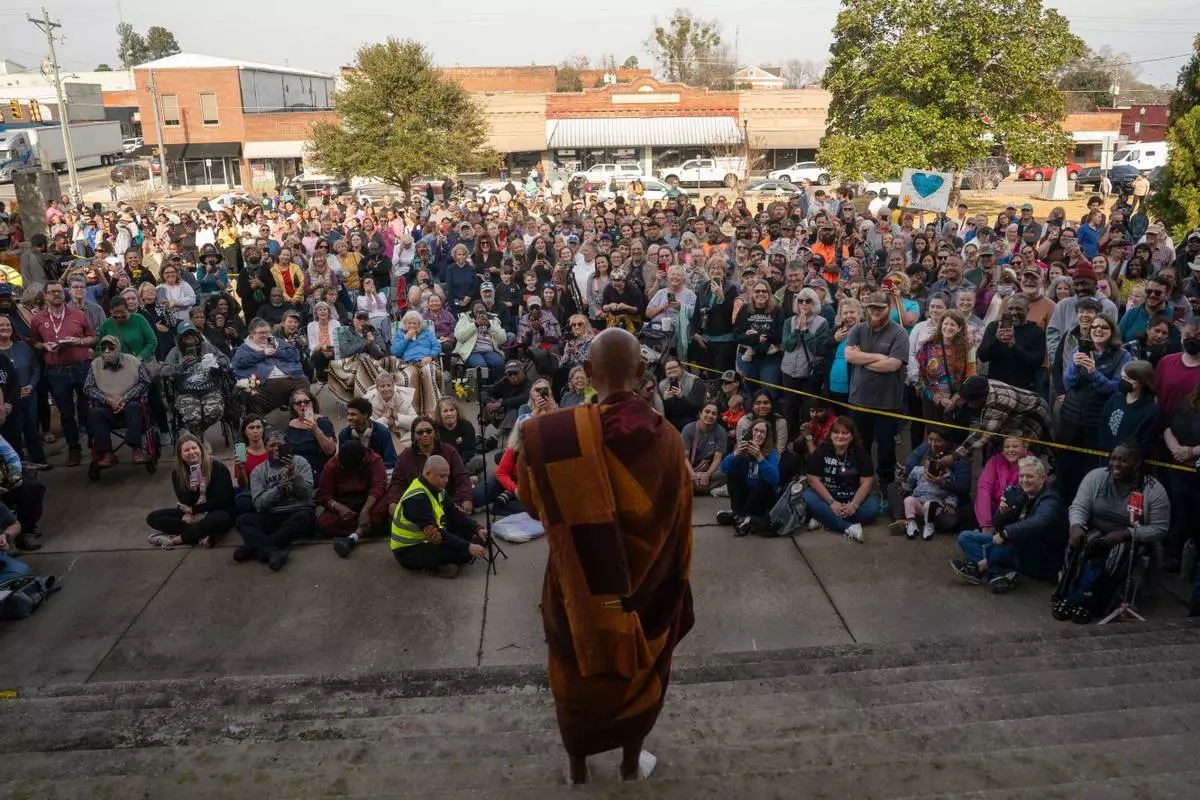
Bhikkhu Pannakara, a spiritual leader, speaks to supporters during the, "Walk For Peace," Thursday, Jan. 8, 2026, in Saluda, S.C. (AP Photo/Allison Joyce)
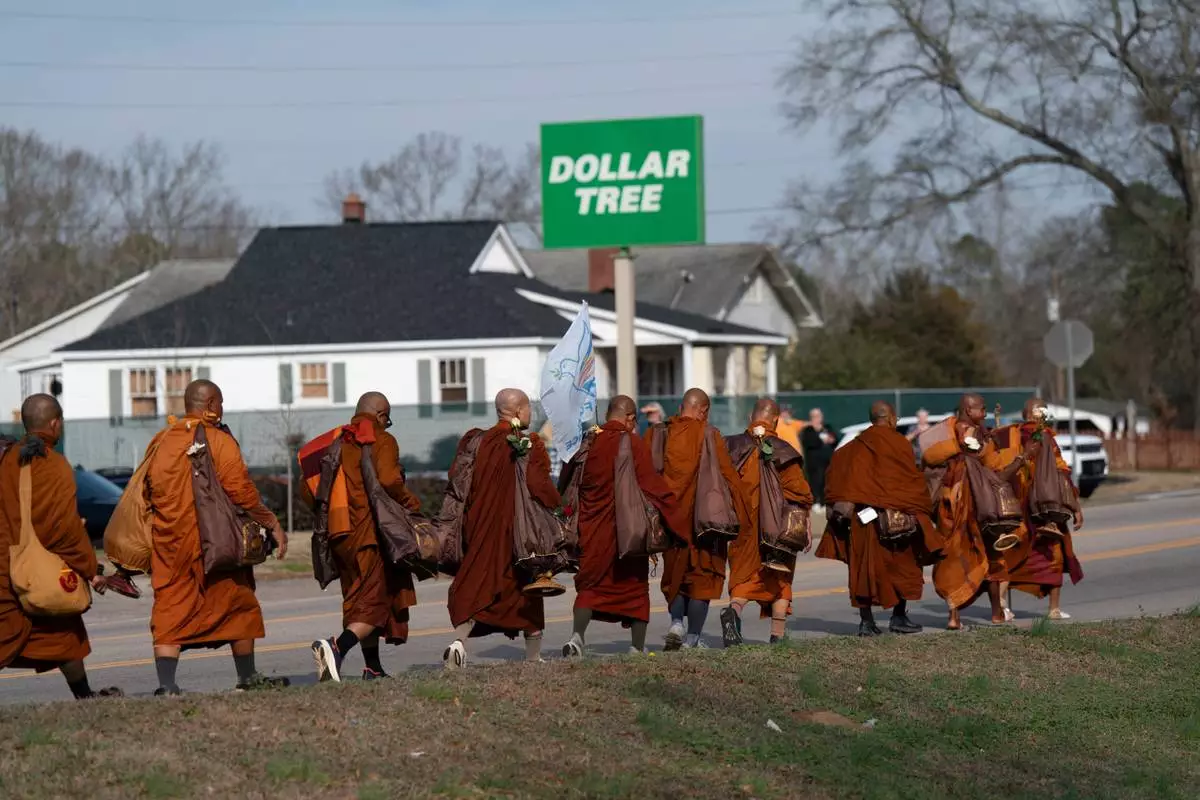
Buddhist monks participate in the, "Walk For Peace," Thursday, Jan. 8, 2026, in Saluda, S.C. (AP Photo/Allison Joyce)
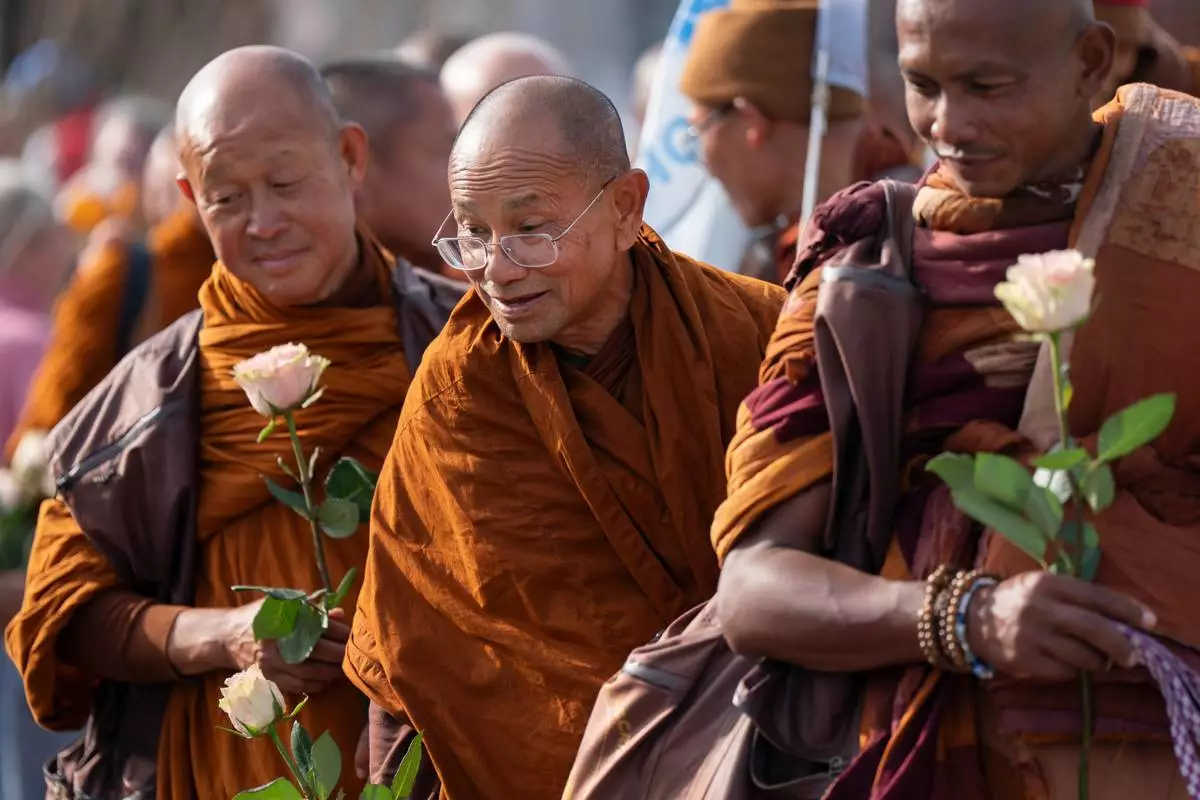
Buddhist monks participate in the, "Walk For Peace," Thursday, Jan. 8, 2026, in Saluda, S.C. (AP Photo/Allison Joyce)
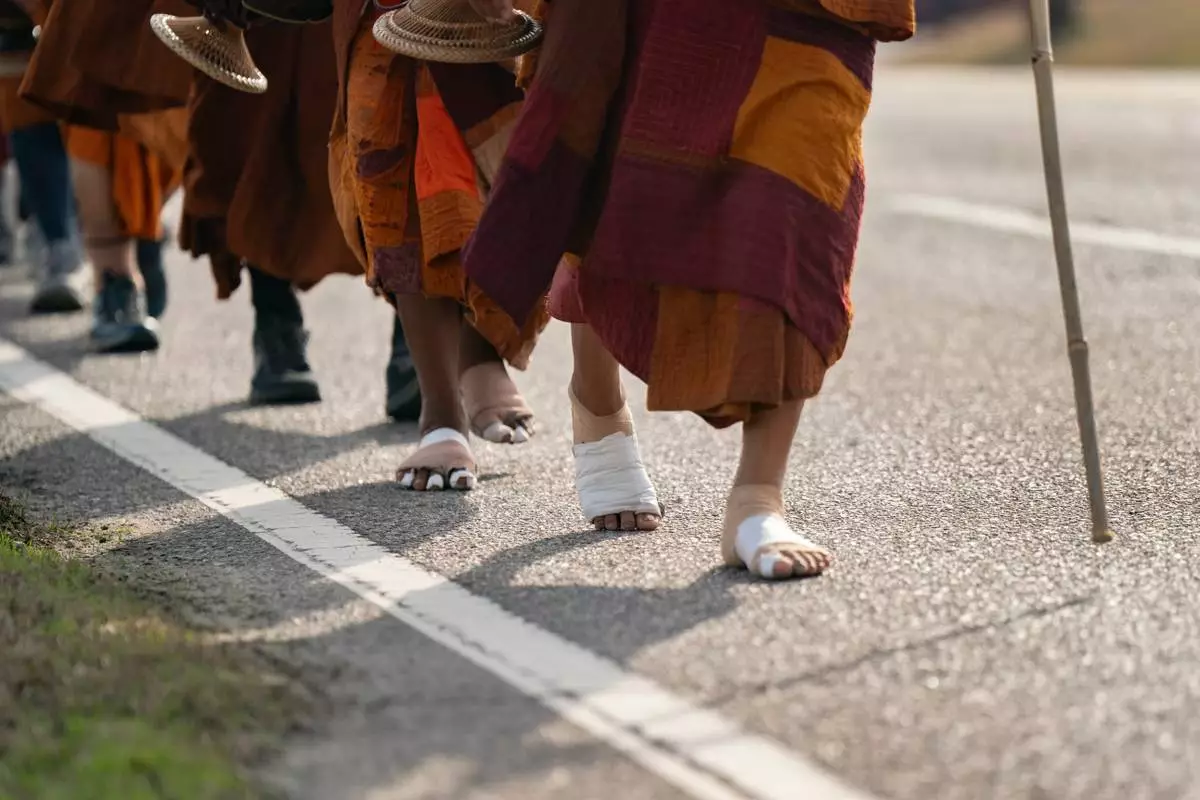
Bhikkhu Pannakara leads other buddhist monks in the, "Walk For Peace," Thursday, Jan. 8, 2026, in Saluda, S.C. (AP Photo/Allison Joyce)
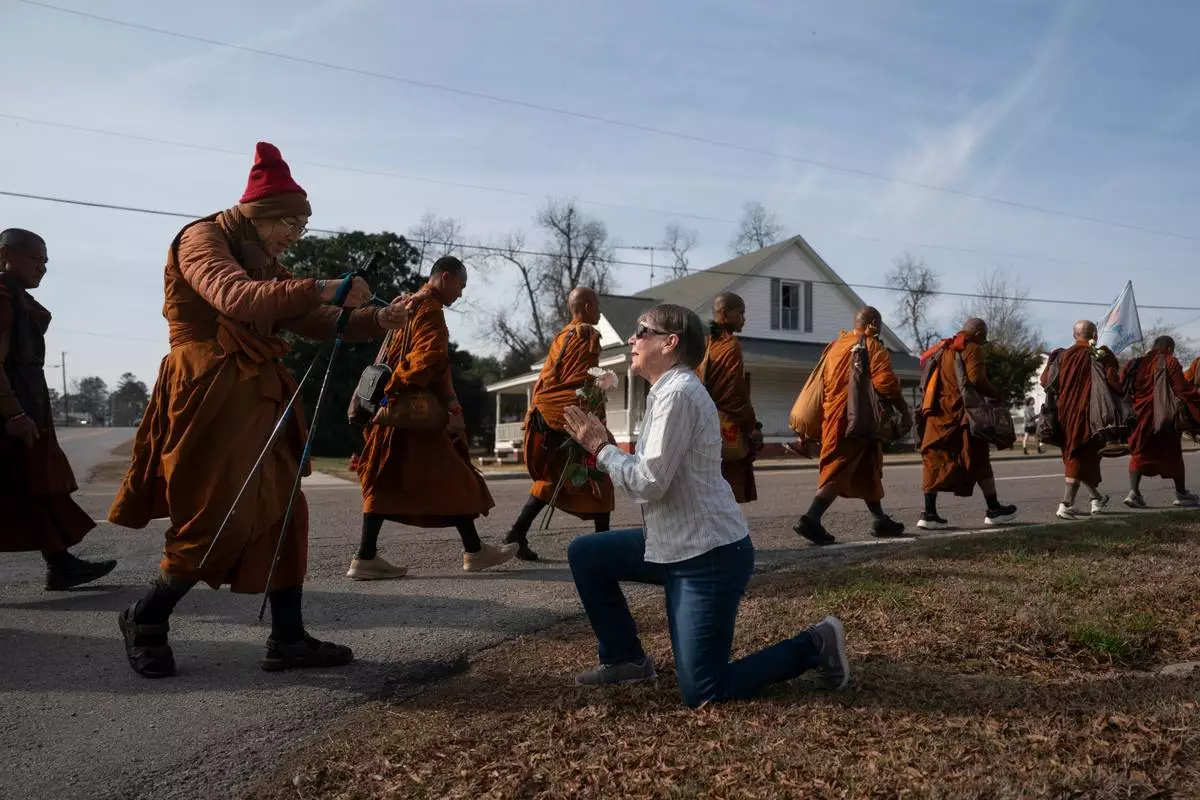
Audrie Pearce greets Buddhist monks who are participating in the, "Walk For Peace," Thursday, Jan. 8, 2026, in Saluda, S.C. (AP Photo/Allison Joyce)
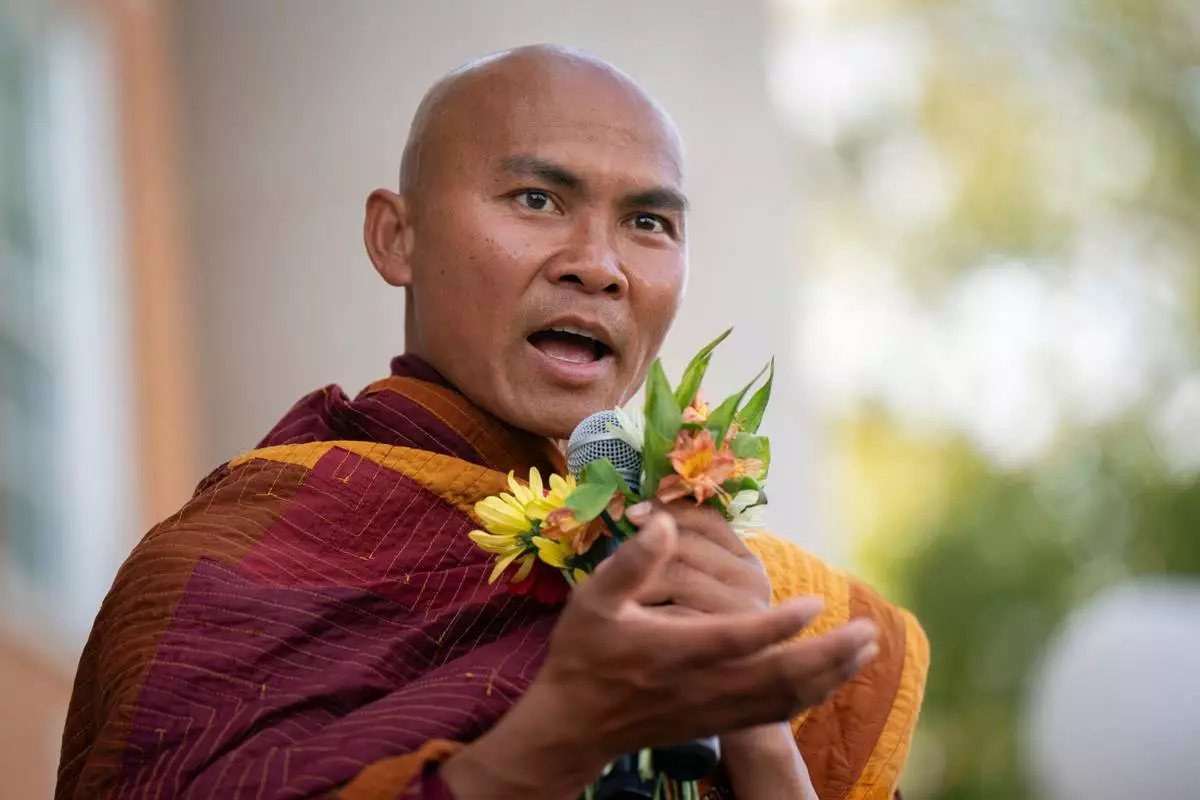
Bhikkhu Pannakara, a spiritual leader, speaks to supporters during the, "Walk For Peace," Thursday, Jan. 8, 2026, in Saluda, S.C. (AP Photo/Allison Joyce)
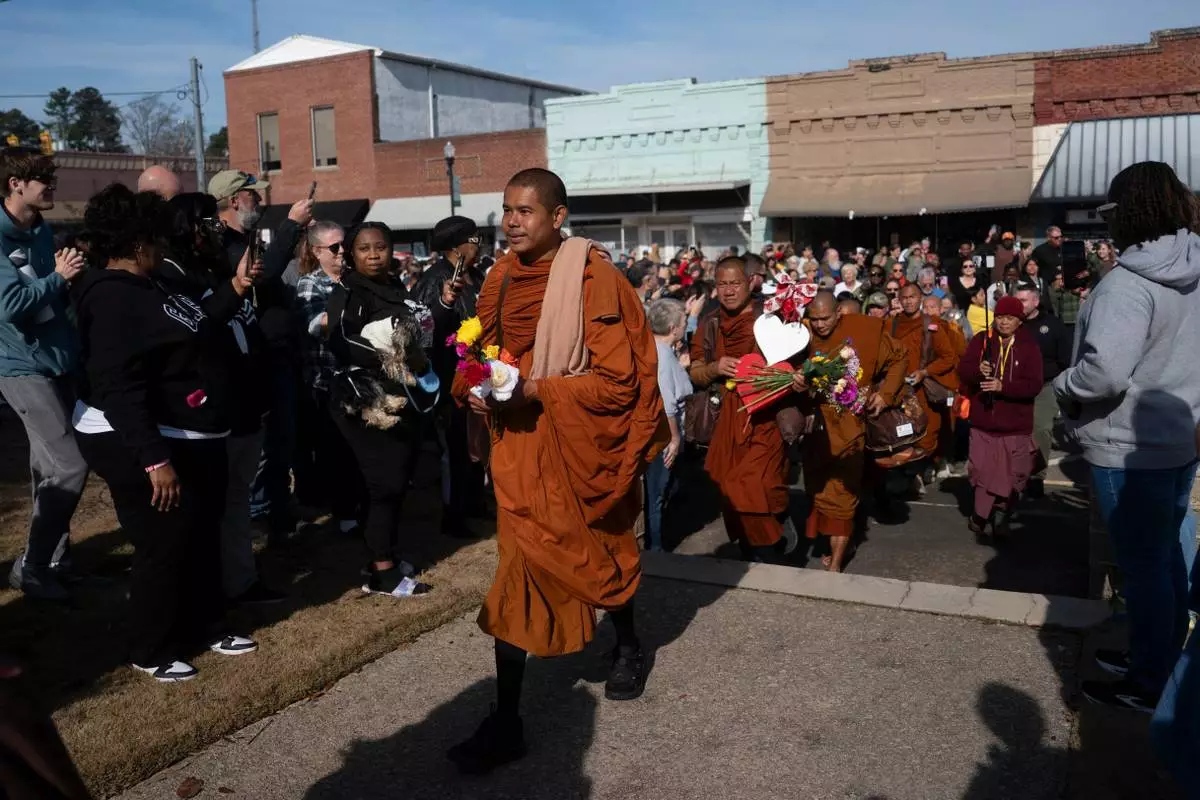
Buddhist monks who are participating in the, "Walk For Peace," arrive in Saluda, Thursday, Jan. 8, 2026, in Saluda, S.C. (AP Photo/Allison Joyce)
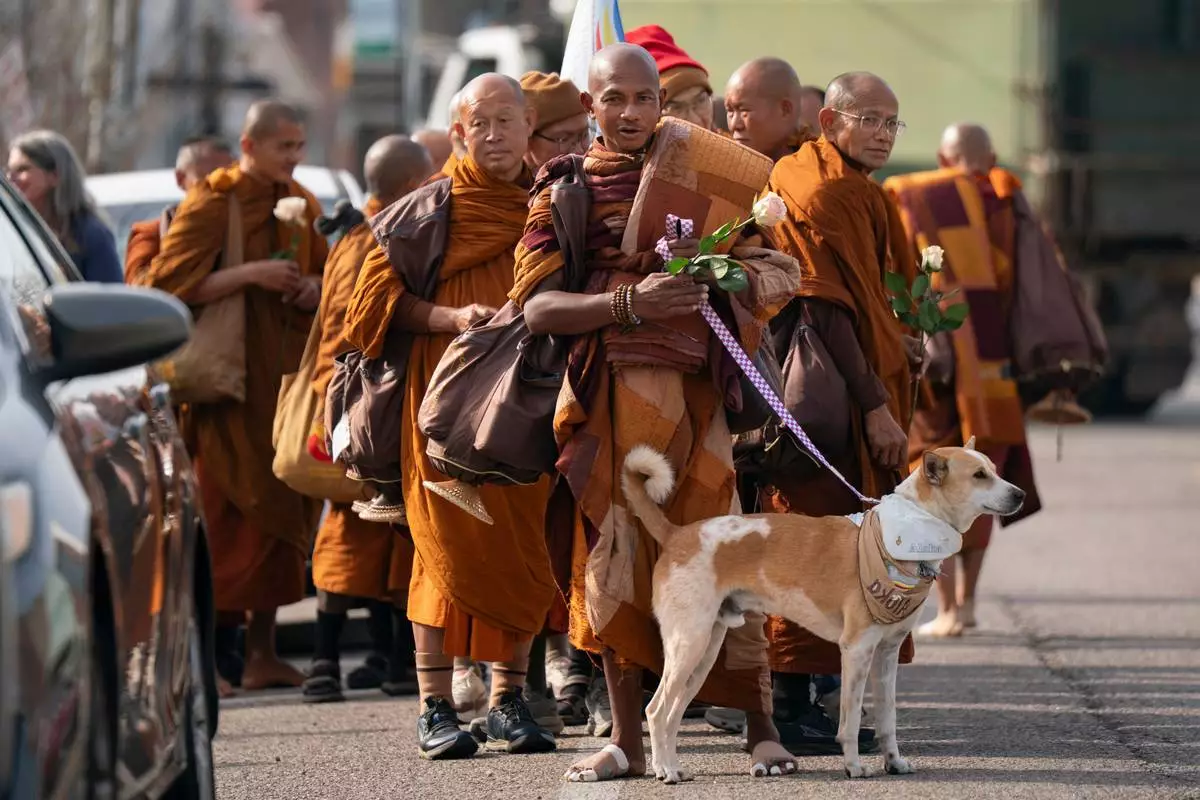
Buddhist monks who are participating in the, "Walk For Peace," are seen with their dog, Aloka, Thursday, Jan. 8, 2026, in Saluda, S.C. (AP Photo/Allison Joyce)