Skip to Content Facebook Feature Image

Hindu music singer inaugurates project to spread yoga in Brazil's favelas

ENT

Hindu music singer inaugurates project to spread yoga in Brazil's favelas
ENT

ENT

Hindu music singer inaugurates project to spread yoga in Brazil's favelas

2025-07-10 14:09 Last Updated At:14:20

RIO DE JANEIRO (AP) — Dozens of Brazilian yoga aficionados saluted the sun in unison in a Rio de Janeiro favela for the inaugural class of a free course allowing residents of the low-income community to qualify as yoga teachers.

Krishna Das, a renowned American vocalist born Jeffrey Kagel and known for his performances of Hindu devotional music known as kirtan, led a spiritual practice and attendees prayed, sang, clapped and even danced.

More Images
People attend a performance by American vocalist of Hindu devotional music Jeff Kagel during a Tranformation Project yoga class in the Rocinha favela, Rio de Janeiro, Wednesday, July 9, 2025. (AP Photo/Bruna Prado)
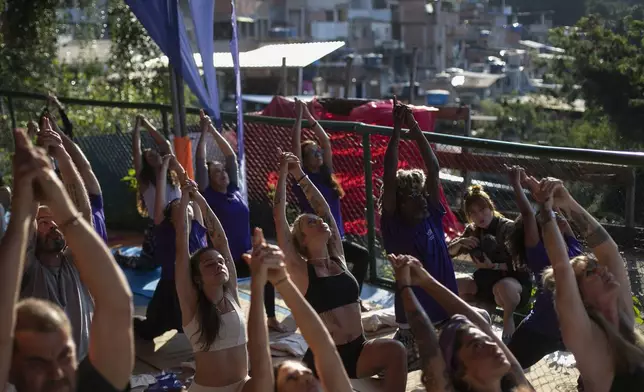
People attend a performance by American vocalist of Hindu devotional music Jeff Kagel during a Tranformation Project yoga class in the Rocinha favela, Rio de Janeiro, Wednesday, July 9, 2025. (AP Photo/Bruna Prado)

People attend a Transformation Project yoga class in the Rocinha favela, in Rio de Janeiro, Wednesday, July 9, 2025. (AP Photo/Bruna Prado)
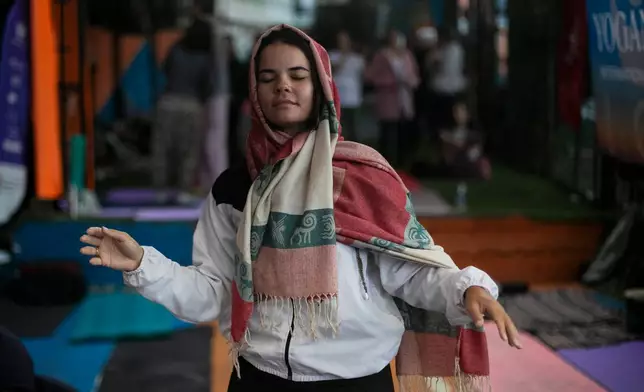
People attend a Transformation Project yoga class in the Rocinha favela, in Rio de Janeiro, Wednesday, July 9, 2025. (AP Photo/Bruna Prado)

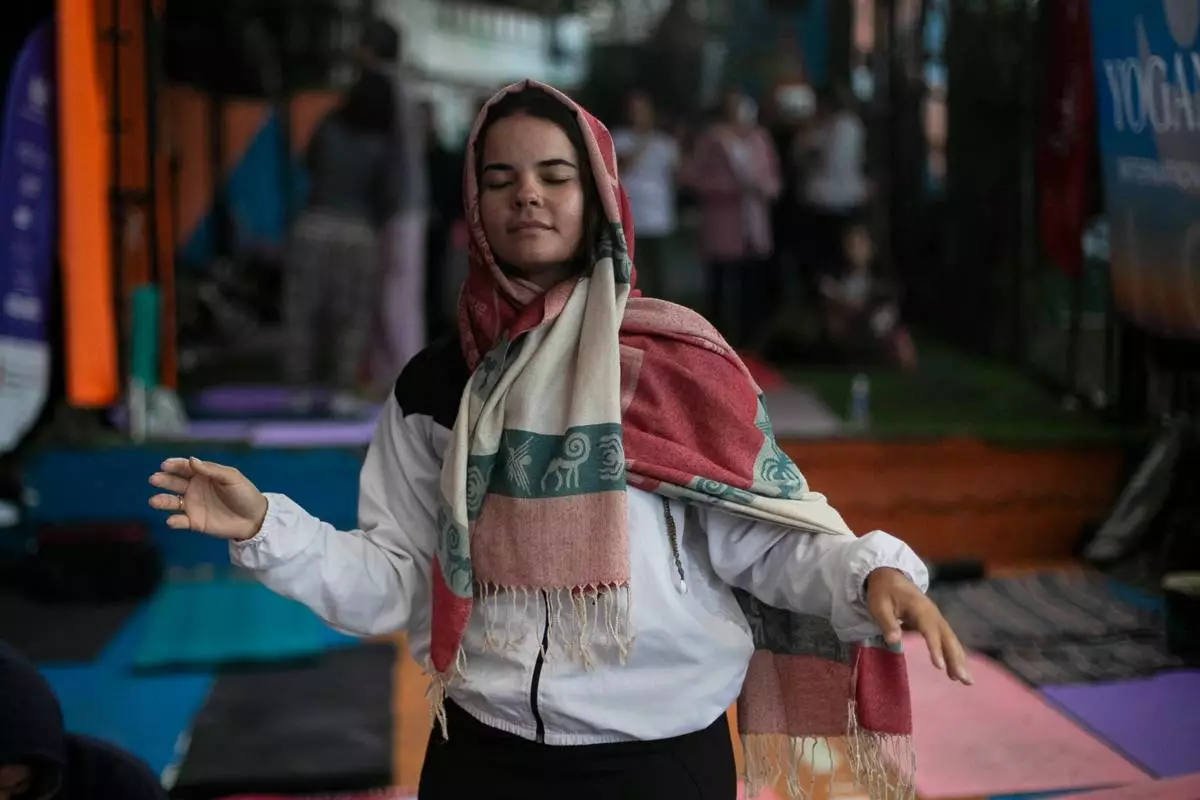
A woman dances during a performance by American vocalist of Hindu devotional music Jeff Kagel during a Transformation Project yoga class in the Rocinha favela in Rio de Janeiro, Wednesday, July 9, 2025. (AP Photo/Bruna Prado)
A woman dances during a performance by American vocalist of Hindu devotional music Jeff Kagel during a Transformation Project yoga class in the Rocinha favela in Rio de Janeiro, Wednesday, July 9, 2025. (AP Photo/Bruna Prado)

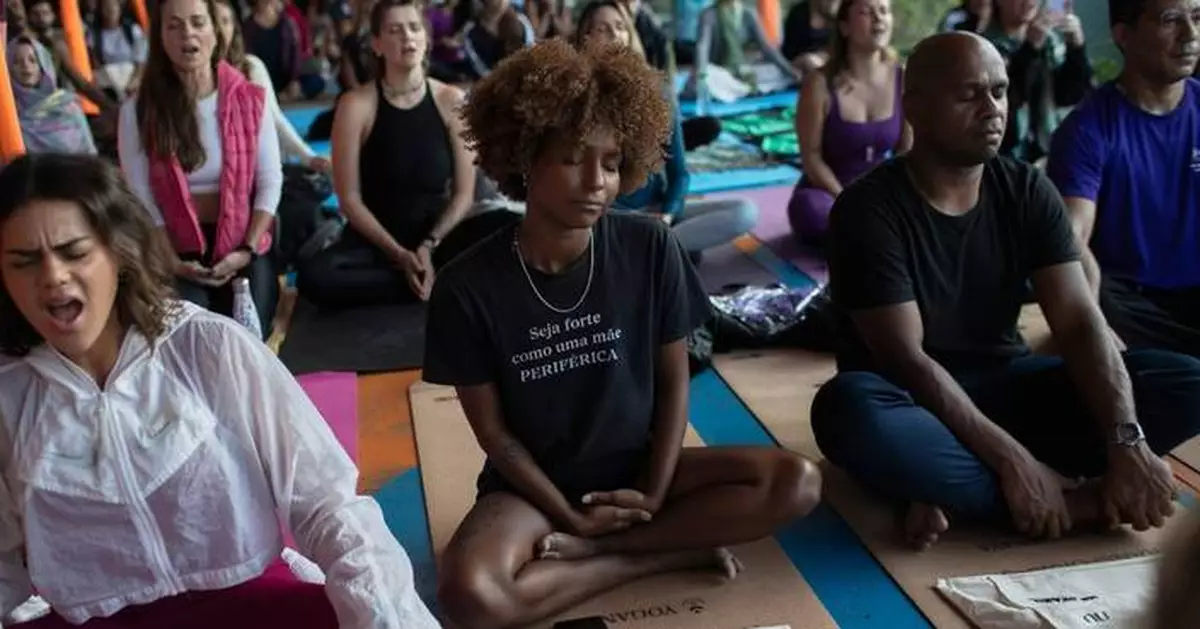
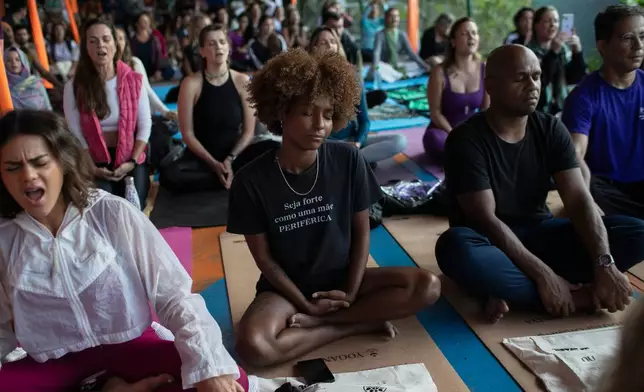
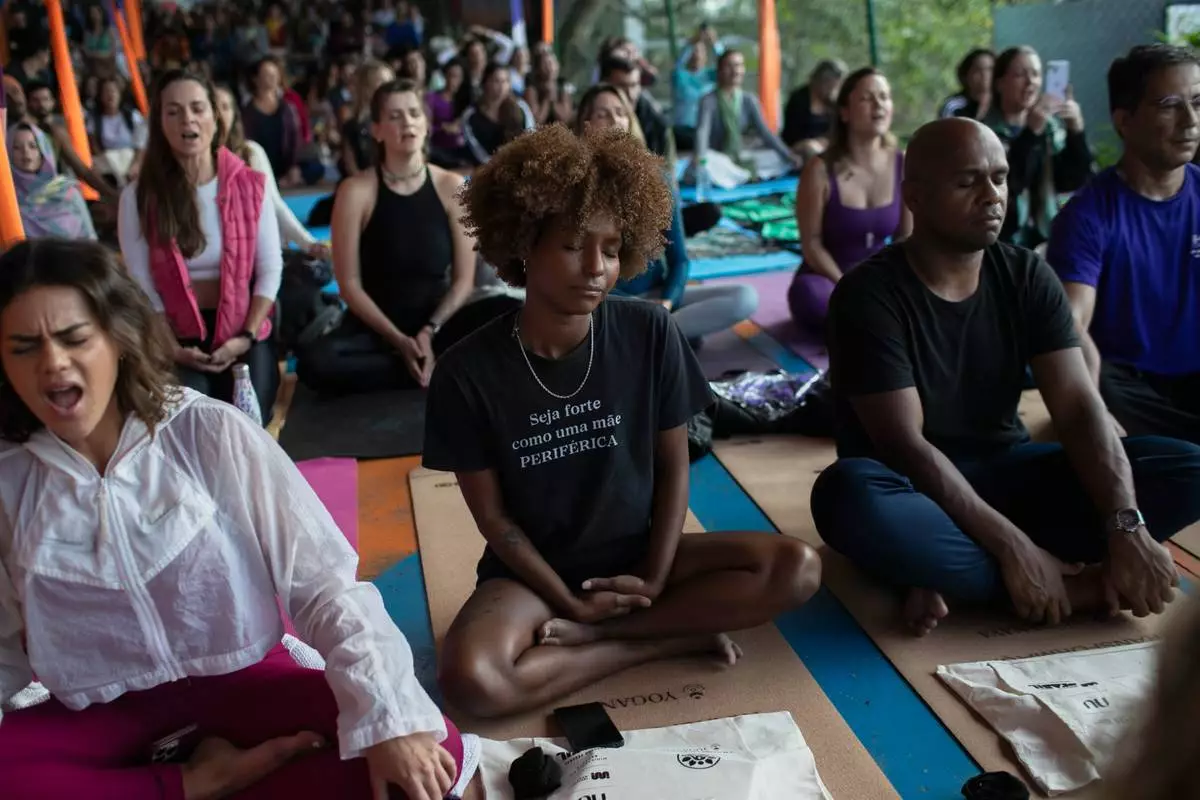
A woman sitting in the lotus position wears a shirt that reads in Portuguese, "Be strong like a mother from the outskirts" while meditating during a Transformation Project yoga class in the Rocinha favela, in Rio de Janeiro, Wednesday, July 9, 2025. (AP Photo/Bruna Prado)

A woman sitting in the lotus position wears a shirt that reads in Portuguese, "Be strong like a mother from the outskirts" while meditating during a Transformation Project yoga class in the Rocinha favela, in Rio de Janeiro, Wednesday, July 9, 2025. (AP Photo/Bruna Prado)

“I felt like I was in another world,” Luciene Costa Gonzaga de Andrade said at the event Wednesday. “The mantras transcend the souls and transform sadness into joy. It was magical.”

Hairdresser Costa Gonzaga de Andrade, 54, is one of 20 people from Rocinha, Brazil’s most populous favela, or low-income neighborhood, who have signed up for the free training program offered by the Yoganaya International School and the company Mude.

She started practicing yoga to alleviate pain in her lower back. She used a cane for three years, but the ancient practice allowed her to regain mobility. Standing on her feet all day is a struggle and she was delighted to learn how to teach yoga.

“It’s a course that would be very expensive for people who, like me, have a low income,” she said. “Who knows, maybe in the future I’ll quit the salon and just teach classes.”

The 14-month project aims to train around 180 new teachers from favelas in Rio and Sao Paulo, who will then carry out paid internships in their communities. Participants receive uniforms, yoga mats, speakers and microphones, as well as stipends and support when entering the job market.

Yoganaya International School founder Renata Mozzini said she created the project specifically for favela residents to pierce the “bubble of elitism.”

“People here often feel like yoga isn’t for them. They think yoga is for those with money or who have life figured out. But the truth is that it’s for everyone,” she said, pointing to an existing yogi community in Rocinha with classes run by “Yoga na Lage,” or Yoga on the Rooftop.

Organizers got wind of the South American tour by Das and invited him to the first class with the Rocinha group, which was open to the public.

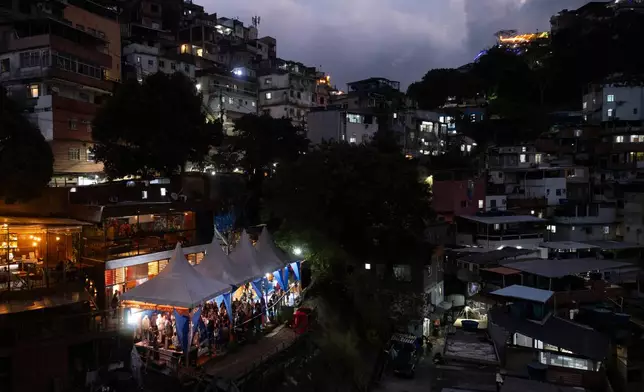
At least 150 people attended, with many mats touching during the class in an open space owned by a restaurant with a spectacular view of the Rodrigo de Freitas lagoon and Rio’s mountains including the Corcovado, where the famed Christ the Redeemer statue is located.

“Tonight was so rich and sweet. It was just beautiful,” Das told The Associated Press afterward. “It’s just a joy to interact with them and to sing and to encourage them to continue because there’s so many obstacles and difficulties to try to overcome.”

Daniela Moraes, who has a stall on the beach and is training to become a teacher, has listened to Das many times on YouTube and was moved to see him sing live. The 47-year-old from Rocinha said the performance being in the favela made it even more special.

“Seeing him shouldn’t be something exclusive,” she said.
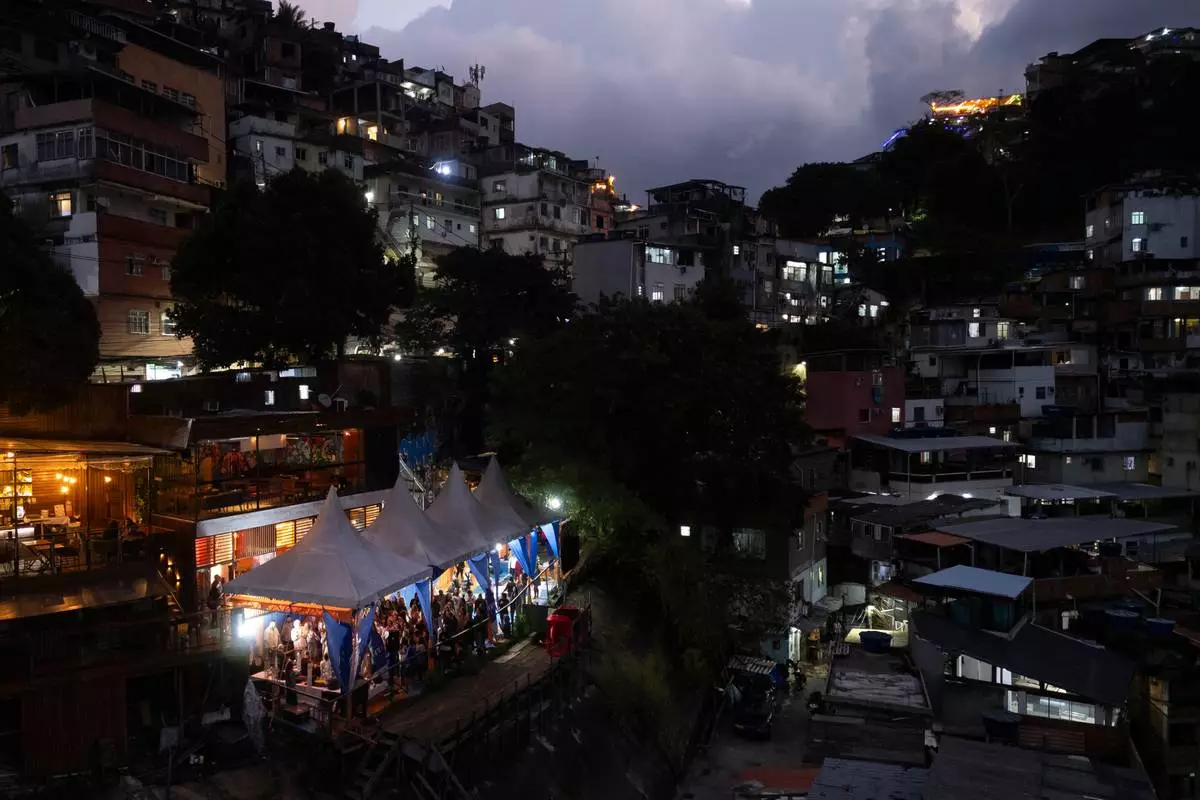
People attend a performance by American vocalist of Hindu devotional music Jeff Kagel during a Tranformation Project yoga class in the Rocinha favela, Rio de Janeiro, Wednesday, July 9, 2025. (AP Photo/Bruna Prado)
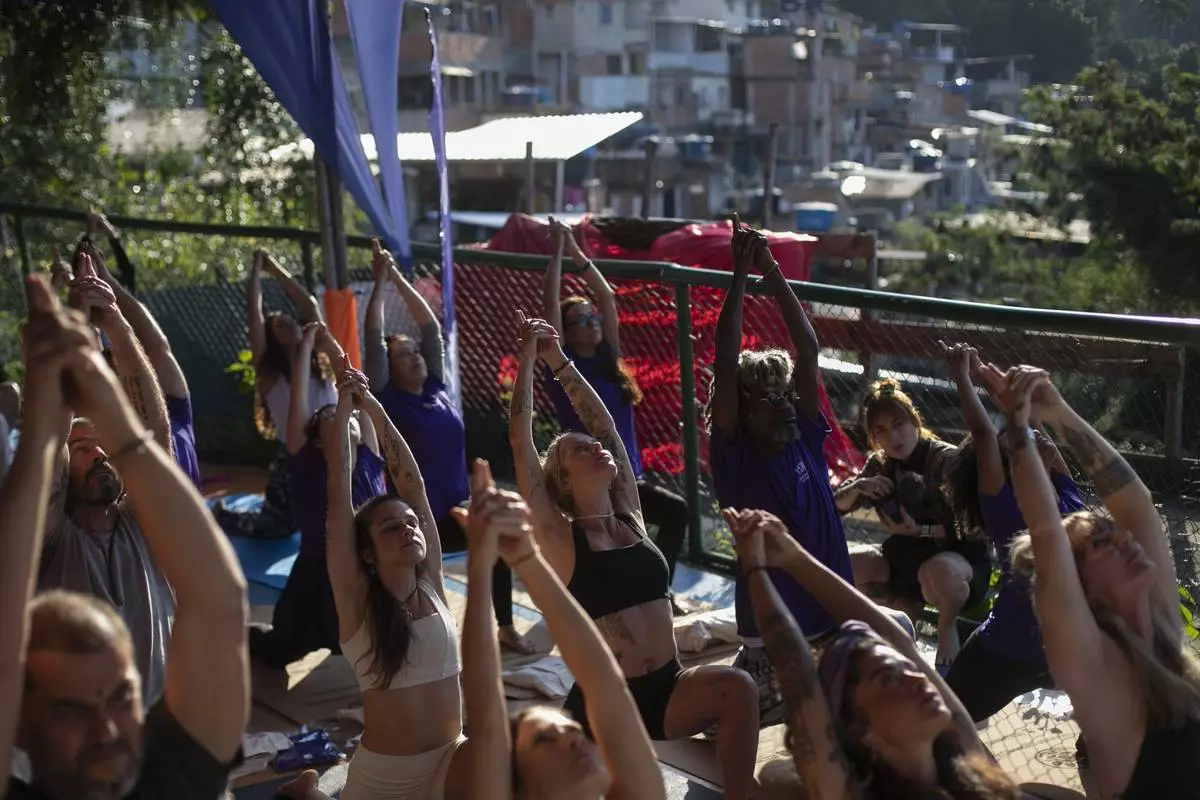
People attend a performance by American vocalist of Hindu devotional music Jeff Kagel during a Tranformation Project yoga class in the Rocinha favela, Rio de Janeiro, Wednesday, July 9, 2025. (AP Photo/Bruna Prado)

People attend a Transformation Project yoga class in the Rocinha favela, in Rio de Janeiro, Wednesday, July 9, 2025. (AP Photo/Bruna Prado)
People attend a Transformation Project yoga class in the Rocinha favela, in Rio de Janeiro, Wednesday, July 9, 2025. (AP Photo/Bruna Prado)

A woman dances during a performance by American vocalist of Hindu devotional music Jeff Kagel during a Transformation Project yoga class in the Rocinha favela in Rio de Janeiro, Wednesday, July 9, 2025. (AP Photo/Bruna Prado)
A woman dances during a performance by American vocalist of Hindu devotional music Jeff Kagel during a Transformation Project yoga class in the Rocinha favela in Rio de Janeiro, Wednesday, July 9, 2025. (AP Photo/Bruna Prado)

A woman sitting in the lotus position wears a shirt that reads in Portuguese, "Be strong like a mother from the outskirts" while meditating during a Transformation Project yoga class in the Rocinha favela, in Rio de Janeiro, Wednesday, July 9, 2025. (AP Photo/Bruna Prado)


A woman sitting in the lotus position wears a shirt that reads in Portuguese, "Be strong like a mother from the outskirts" while meditating during a Transformation Project yoga class in the Rocinha favela, in Rio de Janeiro, Wednesday, July 9, 2025. (AP Photo/Bruna Prado)
MEXICO CITY (AP) — Nicaragua’s Interior Ministry said Saturday the country would release dozens of prisoners, as the United States ramped up pressure on leftist President Daniel Ortegaa week after it ousted former Venezuelan leader Nicolás Maduro.

On Friday, the U.S. Embassy in Nicaragua said Venezuela had taken an important step toward peace by releasing what it described as “political prisoners.” But it lamented that in Nicaragua, “more than 60 people remain unjustly detained or disappeared, including pastors, religious workers, the sick, and the elderly.”

On Saturday, the Interior Ministry said in a statement that “dozens of people who were in the National Penitentiary System are returning to their homes and families.”

It wasn’t immediately clear who was freed and under what conditions. Nicaragua’s government did not immediately respond to a request for comment.

The government has been carrying out an ongoing crackdown since mass social protests in 2018, that were violently repressed.

Nicaragua’s government has imprisoned adversaries, religious leaders, journalists and more, then exiled them, stripping hundreds of their Nicaraguan citizenship and possessions. Since 2018, it has shuttered more than 5,000 organizations, largely religious, and forced thousands to flee the country. Nicaragua’s government often accused critics and opponents of plotting against the government.

In recent years, the government has released hundreds of imprisoned political opponents, critics and activists. It stripped them of Nicaraguan citizenship and sent them to other countries like the U.S. and Guatemala. Observers have called it an effort to wash its hands of its opposition and offset international human rights criticism. Many of those Nicaraguans were forced into a situation of "statelessness."

Saturday on X, the U.S. State Department’s Bureau of Western Hemisphere Affairs again slammed Nicaragua’s government. “Nicaraguans voted for a president in 2006, not for an illegitimate lifelong dynasty,” it said. “Rewriting the Constitution and crushing dissent will not erase the Nicaraguans’ aspirations to live free from tyranny.”

Danny Ramírez-Ayérdiz, executive-secretary of the Nicaraguan human rights organization CADILH, said he had mixed feelings about the releases announced Saturday.

“On the one hand, I’m glad. All political prisoners suffer some form of torture. But on the other hand, I know these people will continue to be harassed, surveilled and monitored by the police, and so will their families.”

Ramírez-Ayérdiz said the liberation of the prisoners is a response to pressure exerted by the United States. “There is surely a great deal of fear within the regime that the U.S. might completely dismantle it,” he said.

FILE - Nicaragua's President Daniel Ortega waves after attending the swearing-in ceremony of Venezuela's President Nicolas Maduro for a third term at the National Assembly in Caracas, Friday, Jan. 10, 2025. (AP Photo/Matias Delacroix, File)

FILE - Nicaragua's President Daniel Ortega waves after attending the swearing-in ceremony of Venezuela's President Nicolas Maduro for a third term at the National Assembly in Caracas, Friday, Jan. 10, 2025. (AP Photo/Matias Delacroix, File)

Recommended Articles