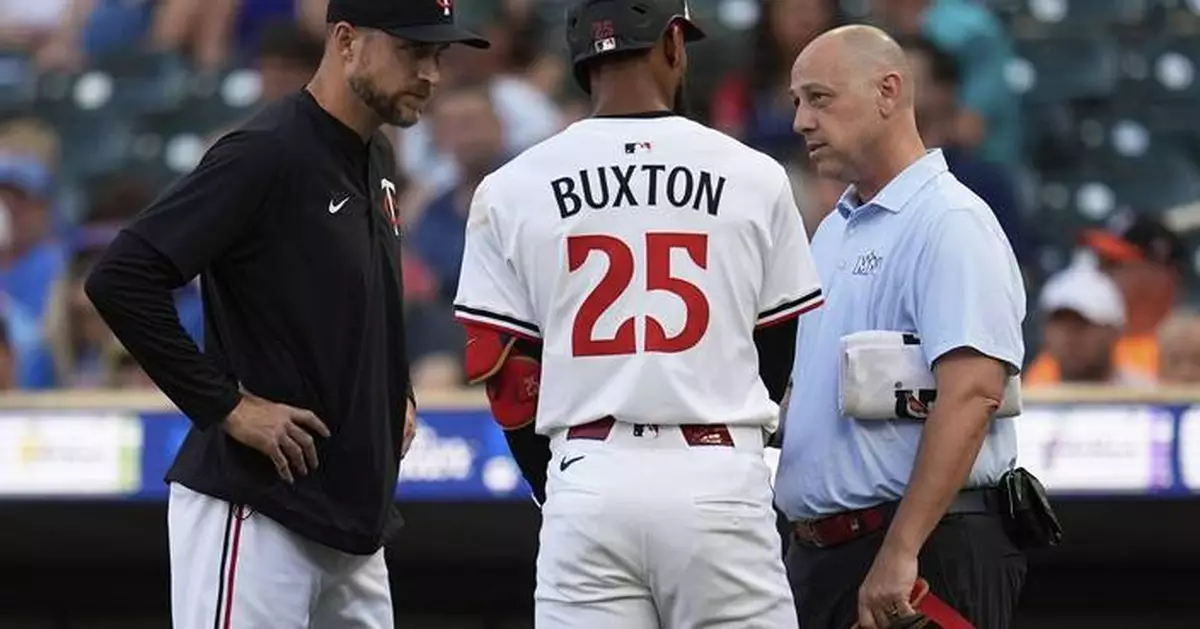
MINNEAPOLIS (AP) — The Minnesota Twins held All-Star center fielder Byron Buxton out of the starting lineup on Thursday because of a bruised left hand that is not expected to affect his availability for long.
Manager Rocco Baldelli said before the game against the Chicago Cubs that Buxton could be available as a substitute — possibly as a pinch-hitter — depending on how the hand was feeling.
Buxton was hit by a pitch in the first inning on Wednesday and stayed in the game to run the bases but was removed before his next at-bat. The pitch hit at least part of the protective pad Buxton wears on his hand. X-rays showed no breaks.
“Nothing’s really gotten worse from yesterday, but he’s definitely sore and for the same reasons he came out of the game yesterday, he’s not going to be starting the game today,” Baldelli said. “I think he’s going to be fine and I wouldn’t be surprised if he’s back out there soon."
Buxton was selected for his second All-Star Game and also chosen as a first-time entrant in the Home Run Derby, but his participation in those events next week in his home state of Georgia did not appear to be in jeopardy.
“We’re just going to be seeing how he is today and tomorrow and see what he’s capable of,” Baldelli said. “The next couple of days will basically give us that answer.”
The 31-year-old Buxton has 20 home runs through 75 games this year, tied for sixth in the American League. He's also third in the AL in runs and slugging percentage, sixth in OPS and seventh in stolen bases.
AP MLB: https://apnews.com/hub/MLB
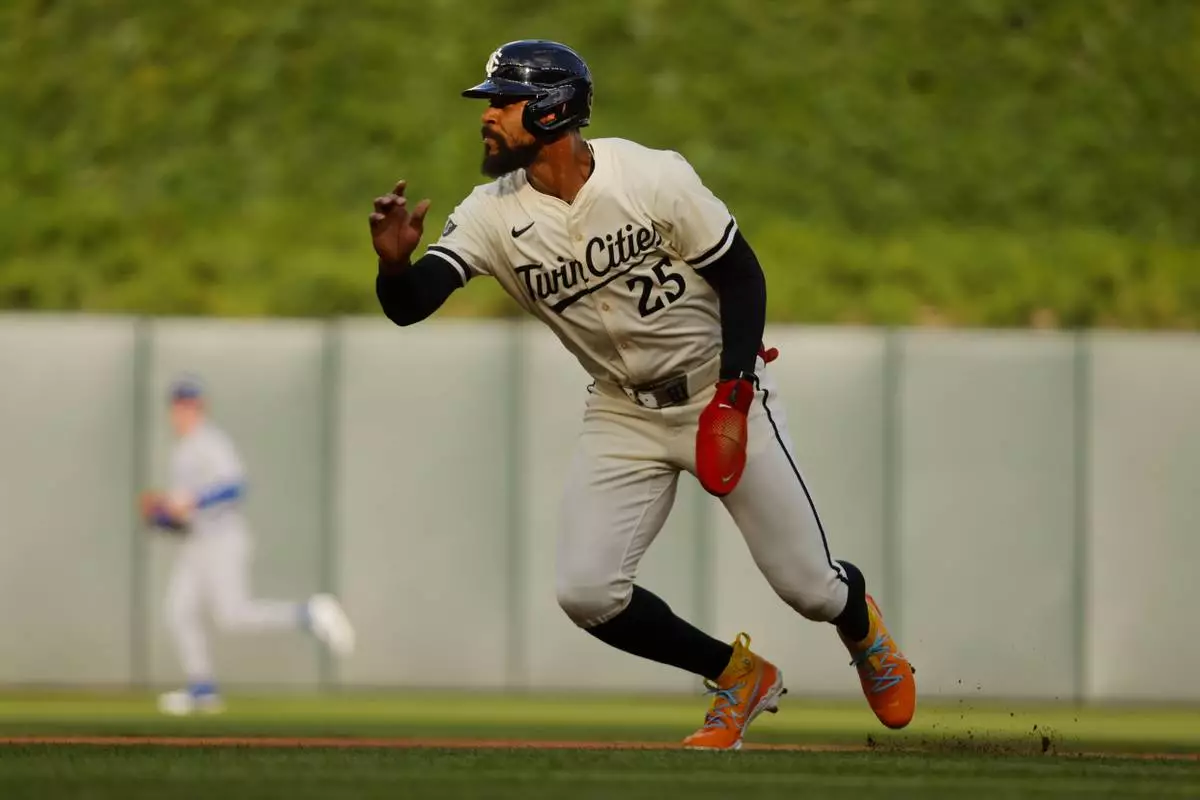
Minnesota Twins' Byron Buxton runs from second base and scores against the Chicago Cubs on a Ryan Jeffers double in the first inning of a baseball game Tuesday, July 8, 2025, in Minneapolis. (AP Photo/Bruce Kluckhohn)
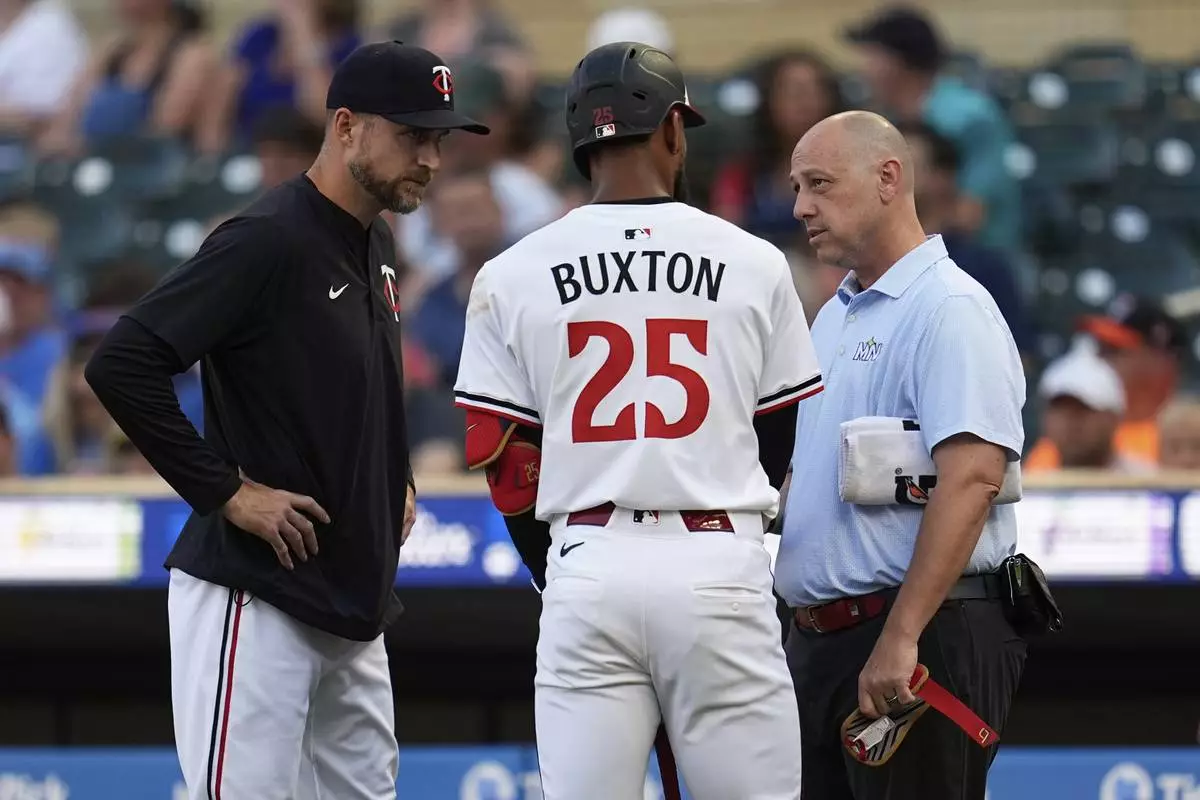
Minnesota Twins' Byron Buxton (25) is looked at by manager Rocco Baldelli (5), left, and a trainer after being hit by a pitch during the first inning of a baseball game against the Chicago Cubs Wednesday, July 9, 2025, in Minneapolis. (AP Photo/Abbie Parr)
President Donald Trump made a lot of tariff threats and trade promises this year. Many materialized into a barrage of new import taxes that overturned decades of U.S. economic policy — but others have yet to be fulfilled as 2025 comes to a close.
Some of Trump’s unrealized threats reflect a broader approach from a president with a track record of using sky-high levies to pressure other countries into new trade deals, one-up retaliatory measures or even punish political critics. At the same time, they arrived as growing list of tariffs did go into effect — from Trump's punishing new taxes on imported metals, to tit-for-tat levies with top U.S. trading partners like China — plunging consumers and businesses worldwide into uncertainty.
Here’s what Trump said when announcing some of his biggest (but still unrealized) tariff threats and promises this year, and where things stand today.
In his words:
What happened: The External Revenue Service has yet to be established as of the end of December. While administration officials continued to reiterate plans for launching the External Revenue Service during Trump's first months back in office, the entity does not yet exist.
In his words:
What happened: The EU's planned levy on American whiskey — which it unveiled as part of broader retaliation in response to Trump's new steel and aluminum tariffs — was postponed, with the latest delay reportedly running until at least February.
Trump's 200% tariff threat on European alcohol never materialized. But spirits were not included in the EU-U.S. trade deal struck over the summer, which set a 15% rate on most European imports.
In his words:
What happened: Despite Trump's repeated threats, the U.S. has yet to impose a 100% tariff on foreign films. After his initial May promise to initiate the process, the White House said no final decision had been made. Also still unclear is how the U.S. would tax a movie made overseas.
In his words:
What happened: The president did not sign an executive order imposing a 100% tariff on pharma products on Oct. 1 and, as of today, no levy has been put into place. But Trump previously suggested that steep levies on pharmaceutical drugs could arrive further down the road, telling CNBC in August that he would start by charging a “small tariff” and potentially raise the rate as high as 250%. Meanwhile, trade agreements with specific countries set their own rates or exemptions — with the U.K., for example, securing a 0% tariff on all British medicine exported to the U.S. for three years. The administration also announced deals with specific companies with promises of lower drug prices.
In his words:
What happened: A sweeping 100% on computer chips has yet to go into effect. When announcing his plans to impose the levy back in August, Trump was not specific about the timing. And other details have remained scarce.
In his words:
What happened: Details about how, when and if a tariff dividend will reach Americans are still scarce. Budget experts have said that the math doesn't add up. And Treasury Secretary Scott Bessent suggested that it might not mean checks from the government. Instead, Bessent told ABC in November, the rebate might take the form of tax cuts. White House National Economic Council Director Kevin Hassett also told CBS News that it's up to Congress.
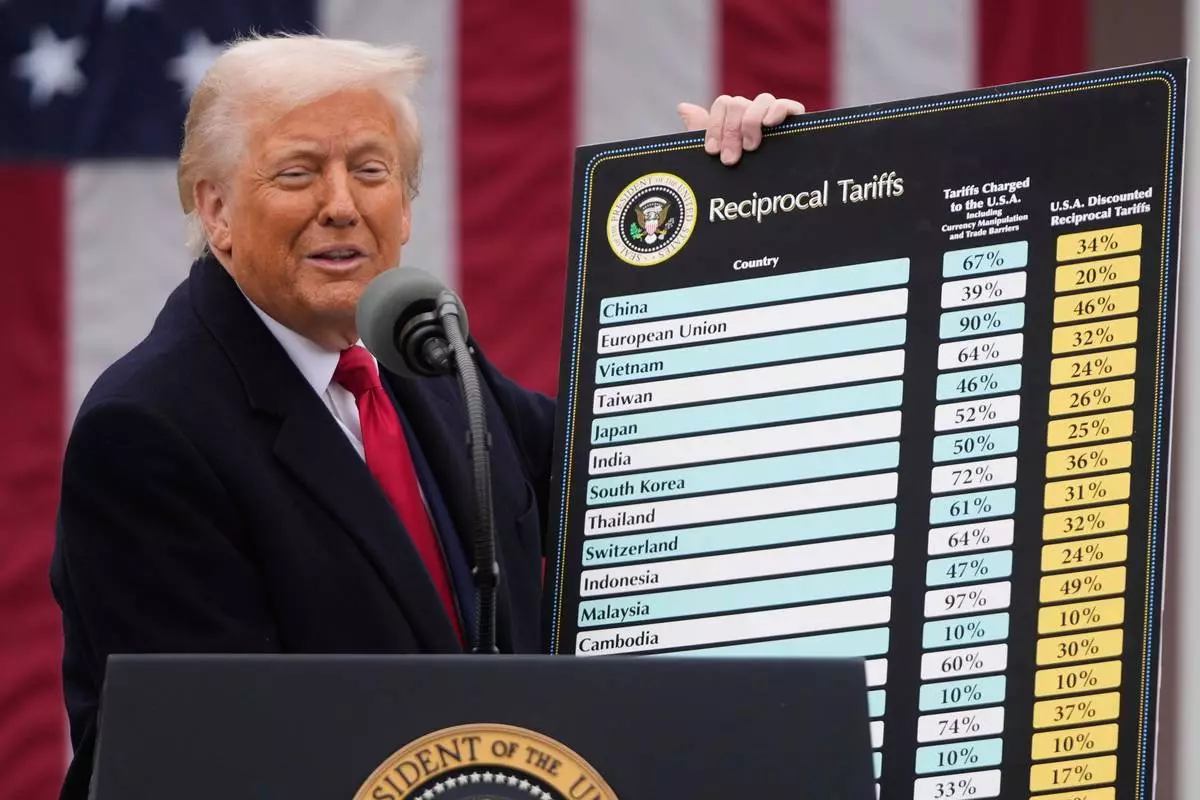
FILE - President Donald Trump speaks during an event to announce new tariffs in the Rose Garden at the White House, on April 2, 2025, in Washington. (AP Photo/Mark Schiefelbein, File)