Skip to Content Facebook Feature Image

Freed from ICE detention, Mahmoud Khalil files $20 million claim against Trump administration

News

Freed from ICE detention, Mahmoud Khalil files $20 million claim against Trump administration
News

News

Freed from ICE detention, Mahmoud Khalil files $20 million claim against Trump administration

2025-07-11 03:47 Last Updated At:03:50

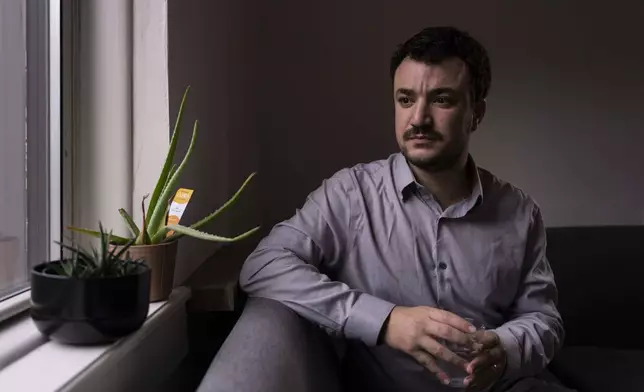
NEW YORK (AP) — On a recent afternoon, Mahmoud Khalil sat in his Manhattan apartment, cradling his 10-week-old son as he thought back to the pre-dawn hours spent pacing a frigid immigration jail in Louisiana, awaiting news of the child’s birth in New York.

For a moment, the outspoken Palestinian activist found himself uncharacteristically speechless.

More Images
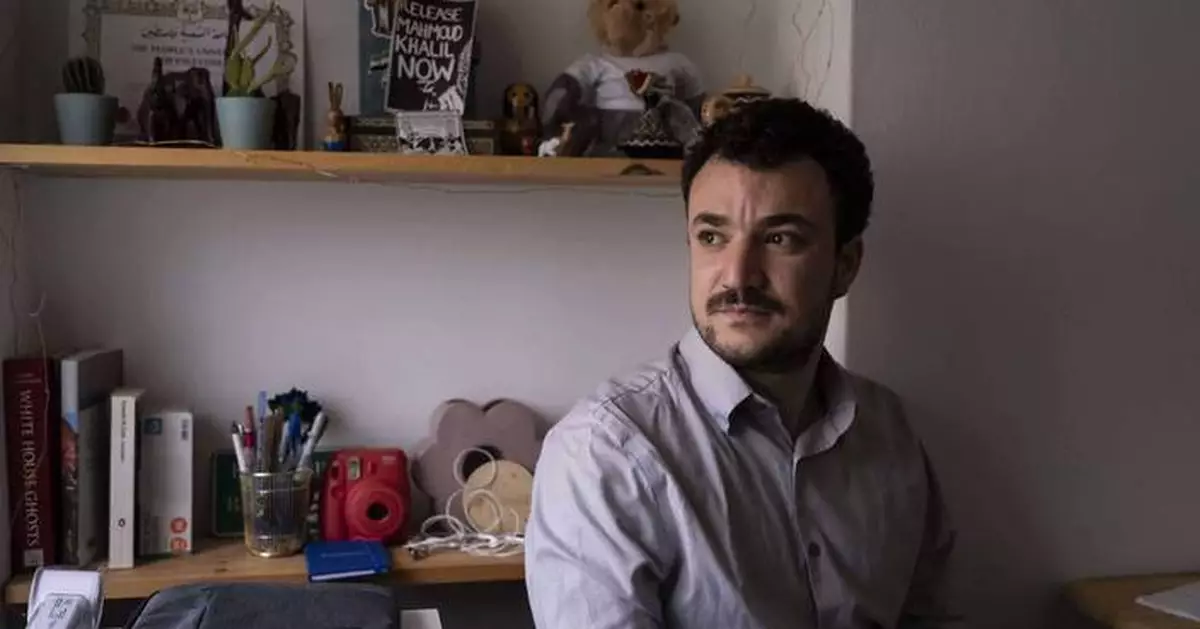
Pro-Palestinian activist Mahmoud Khalil poses for a portrait during an interview, July 3, 2025, in New York. (AP Photo/Yuki Iwamura)
Pro-Palestinian activist Mahmoud Khalil poses for a portrait during an interview, July 3, 2025, in New York. (AP Photo/Yuki Iwamura)

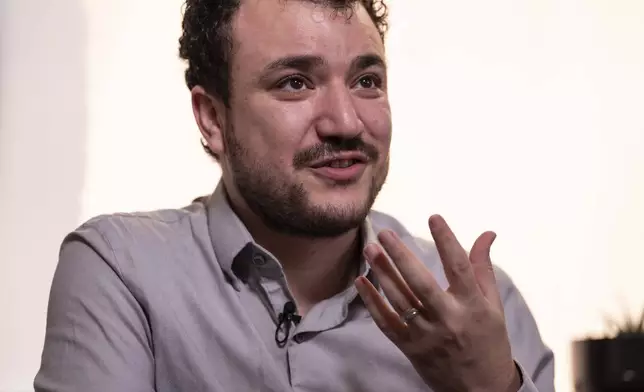
Pro-Palestinian activist Mahmoud Khalil gives an interview, July 3, 2025, in New York. (AP Photo/Yuki Iwamura)
Pro-Palestinian activist Mahmoud Khalil gives an interview, July 3, 2025, in New York. (AP Photo/Yuki Iwamura)

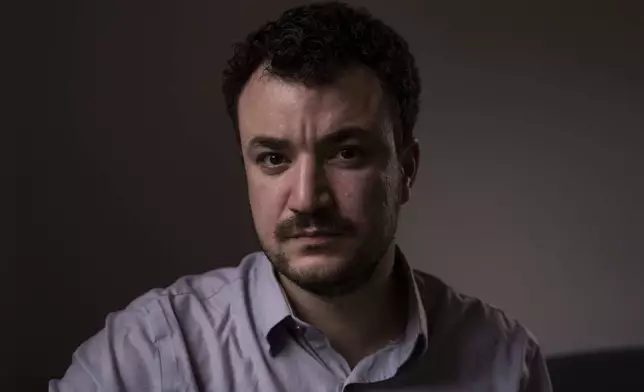
Pro-Palestinian activist Mahmoud Khalil poses for a portrait during an interview, July 3, 2025, in New York. (AP Photo/Yuki Iwamura)
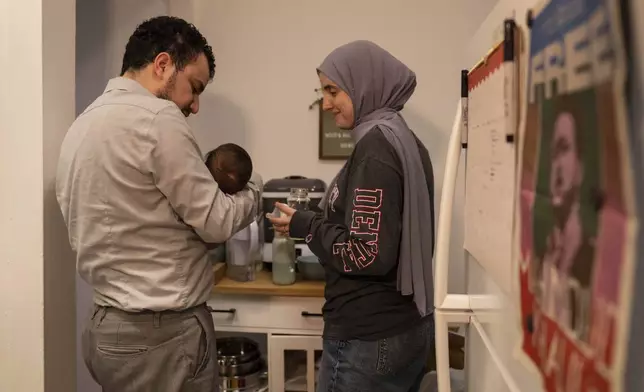
Pro-Palestinian activist Mahmoud Khalil poses for a portrait during an interview, July 3, 2025, in New York. (AP Photo/Yuki Iwamura)

Pro-Palestinian activist Mahmoud Khalil and his wife, Dr. Noor Abdalla, hold their baby Deen during an interview, July 3, 2025, in New York. (AP Photo/Yuki Iwamura)
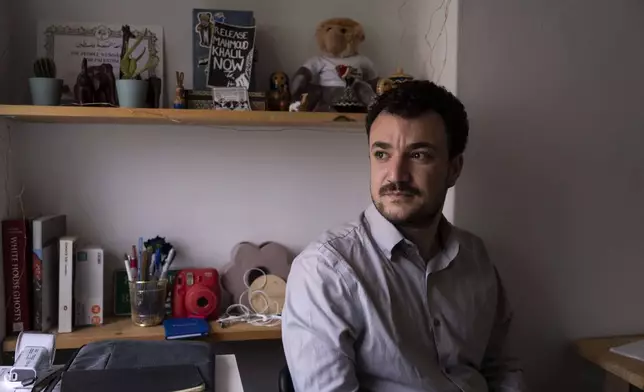
Pro-Palestinian activist Mahmoud Khalil and his wife, Dr. Noor Abdalla, hold their baby Deen during an interview, July 3, 2025, in New York. (AP Photo/Yuki Iwamura)

Pro-Palestinian activist Mahmoud Khalil poses for a portrait during an interview, July 3, 2025, in New York. (AP Photo/Yuki Iwamura)

Pro-Palestinian activist Mahmoud Khalil poses for a portrait during an interview, July 3, 2025, in New York. (AP Photo/Yuki Iwamura)

“I cannot describe the pain of that night,” Khalil said finally, gazing down as the baby, Deen, cooed in his arms. “This is something I will never forgive.”

Now, weeks after regaining his freedom, Khalil is seeking restitution. On Thursday, his lawyers filed a claim for $20 million in damages against the Trump administration, alleging Khalil was falsely imprisoned, maliciously prosecuted and smeared as an antisemite as the government sought to deport him over his prominent role in campus protests.

The filing — a precursor to a lawsuit under the Federal Tort Claims Act — names the Department of Homeland Security, U.S. Immigration and Customs Enforcement and the State Department.

It comes as the deportation case against Khalil, a 30-year-old recent graduate student at Columbia University, continues to wind its way through the immigration court system.

The goal, Khalil said, is to send a message that he won't be intimidated into silence.

“They are abusing their power because they think they are untouchable,” Khalil said. “Unless they feel there is some sort of accountability, it will continue to go unchecked.”

Khalil said he plans to share any settlement money with others targeted in Trump’s “failed” effort to suppress pro-Palestinian speech. In lieu of a settlement, he would also accept an official apology and changes to the administration’s deportation policies.

A White House spokesperson deferred comment to the State Department, which said its actions were fully supported by the law.

In an emailed statement, Tricia McLaughlin, a spokesperson for the Department of Homeland Security, called Khalil’s claim “absurd,” accusing him of “hateful behavior and rhetoric” that threatened Jewish students.

The filing accuses President Donald Trump and other officials of mounting a haphazard and illegal campaign to “terrorize him and his family,” beginning with Khalil’s March 8 arrest.

On that night, he said he was returning home from dinner with his wife, Noor Abdalla, when he was “effectively kidnapped” by plainclothes federal agents, who refused to provide a warrant and appeared surprised to learn he was a legal U.S. permanent resident.

He was then whisked overnight to an immigration jail in Jena, Louisiana, a remote location that was “deliberately concealed” from his family and attorneys, according to the filing.

Inside, Khalil said he was denied his ulcer medication, forced to sleep under harsh fluorescent lights and fed “nearly inedible” food, causing him to lose 15 pounds (7 kilograms). “I cannot remember a night when I didn’t go to sleep hungry,” Khalil recalled.

Meanwhile, the Trump administration publicly celebrated the arrest, promising to deport him and others whose protests against Israel it dubbed “pro-terrorist, anti-Semitic, anti-American activity.”

Khalil, who has condemned antisemitism before and since his arrest, was not accused of a crime and has not been linked to Hamas or any other terror group. “At some point, it becomes like reality TV,” Khalil said of the allegations. “It’s very absurd.”

A few weeks into his incarceration, Khalil was awoken by a fellow detainee, who pointed excitedly to his face on a jailhouse TV screen. A new memo signed by Secretary of State Marco Rubio acknowledged Khalil hadn’t broken the law, but argued he should be deported for beliefs that could undermine U.S. foreign policy interests.

“My beliefs are not wanting my tax money or tuition going toward investments in weapons manufacturers for a genocide,” Khalil said. “It’s as simple as that.”

By then, Khalil had become something of a celebrity in the 1,200-person lock-up. When not dealing with his own case, he hosted “office hours” for fellow immigrant detainees, leaning on his past experience working at a British embassy in Beirut to help others organize paperwork and find translators for their cases.

“I’m pretty good at bureaucracy,” Khalil said.

At night, they played Russian and Mexican card games, as Khalil listened to “one story after another from people who didn’t understand what’s happening to them.”

“This was one of the most heartbreaking moments,” he said. “People on the inside don’t know if they have any rights.”

On June 20, after 104 days in custody, Khalil was ordered released by a federal judge, who found the government's efforts to remove him on foreign policy grounds were likely unconstitutional.

He now faces new allegations of misrepresenting personal details on his green card application. In a motion filed late Wednesday, attorneys for Khalil described those charges as baseless and retaliatory, urging a judge to dismiss them.

The weeks since his release, Khalil said, have brought moments of bliss and intense personal anguish.

Fearing harassment or possible arrest, he leaves the house less frequently, avoiding large crowds or late-night walks. But he lit up as he remembered watching Deen taking his first swim earlier in the week. “It was not very pleasant for him,” Khalil said, smiling.

“I’m trying as much as possible to make up for the time with my son and my wife,” he added. “As well thinking about my future and trying to comprehend this new reality.”

Part of that reality, he said, will be continuing his efforts to advocate against Israel’s war in Gaza, which has killed more than 57,000 Palestinians, more than half of them women and children, according to Gaza’s Health Ministry. On the day after his release, he led a march through Manhattan, draped in a Palestinian flag — and flanked by security.

As he poured Deen’s milk into a bottle, Khalil considered whether he might’ve done anything differently had he known the personal cost of his activism.

“We could’ve communicated better. We could’ve built more bridges with more people,” he said. “But the core thing of opposing a genocide, I don’t think you can do that any differently. This is your moral imperative when you’re watching your people be slaughtered by the minute.”
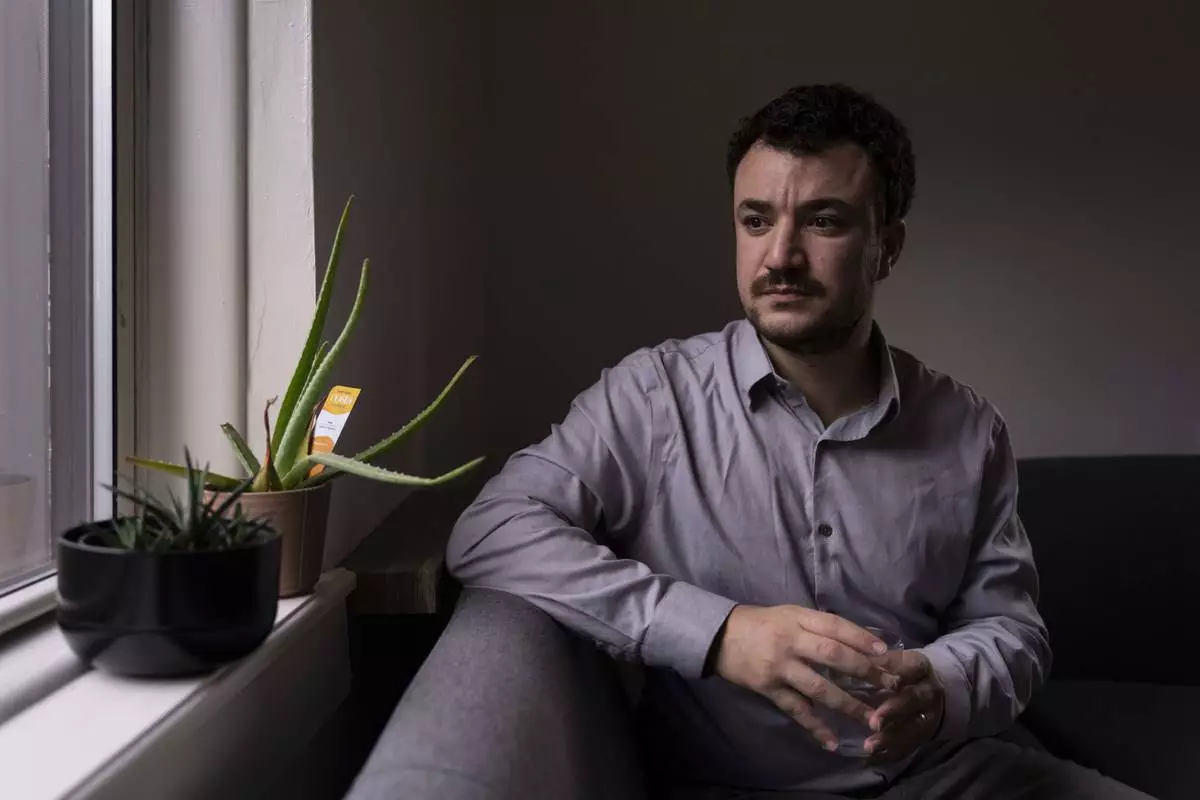
Pro-Palestinian activist Mahmoud Khalil poses for a portrait during an interview, July 3, 2025, in New York. (AP Photo/Yuki Iwamura)
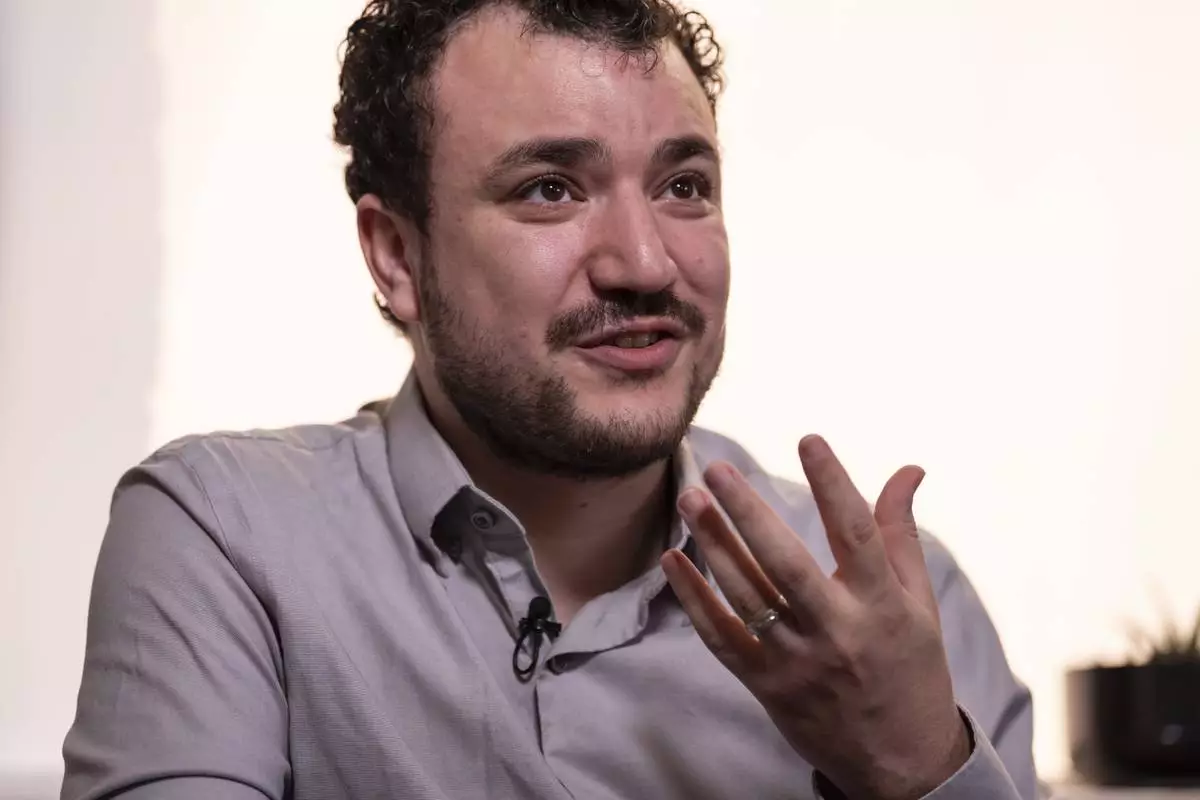
Pro-Palestinian activist Mahmoud Khalil poses for a portrait during an interview, July 3, 2025, in New York. (AP Photo/Yuki Iwamura)

Pro-Palestinian activist Mahmoud Khalil gives an interview, July 3, 2025, in New York. (AP Photo/Yuki Iwamura)
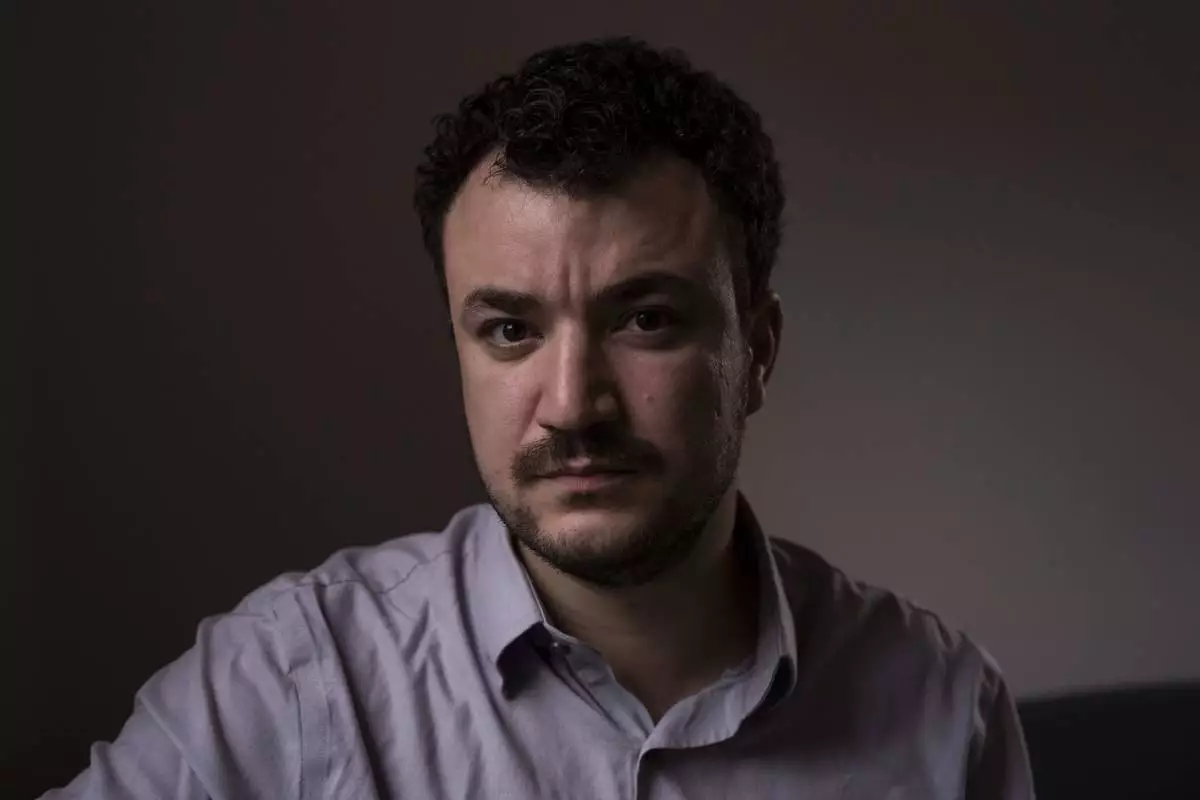
Pro-Palestinian activist Mahmoud Khalil gives an interview, July 3, 2025, in New York. (AP Photo/Yuki Iwamura)

Pro-Palestinian activist Mahmoud Khalil poses for a portrait during an interview, July 3, 2025, in New York. (AP Photo/Yuki Iwamura)
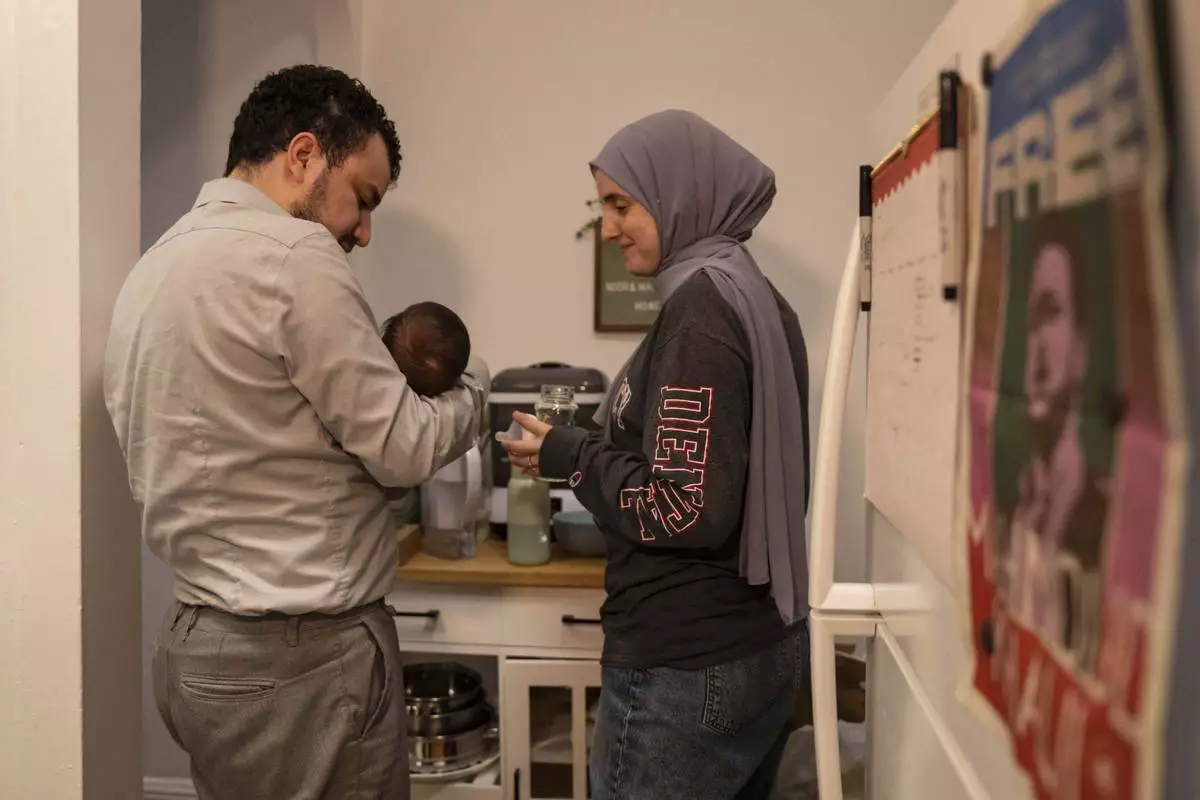
Pro-Palestinian activist Mahmoud Khalil poses for a portrait during an interview, July 3, 2025, in New York. (AP Photo/Yuki Iwamura)

Pro-Palestinian activist Mahmoud Khalil and his wife, Dr. Noor Abdalla, hold their baby Deen during an interview, July 3, 2025, in New York. (AP Photo/Yuki Iwamura)
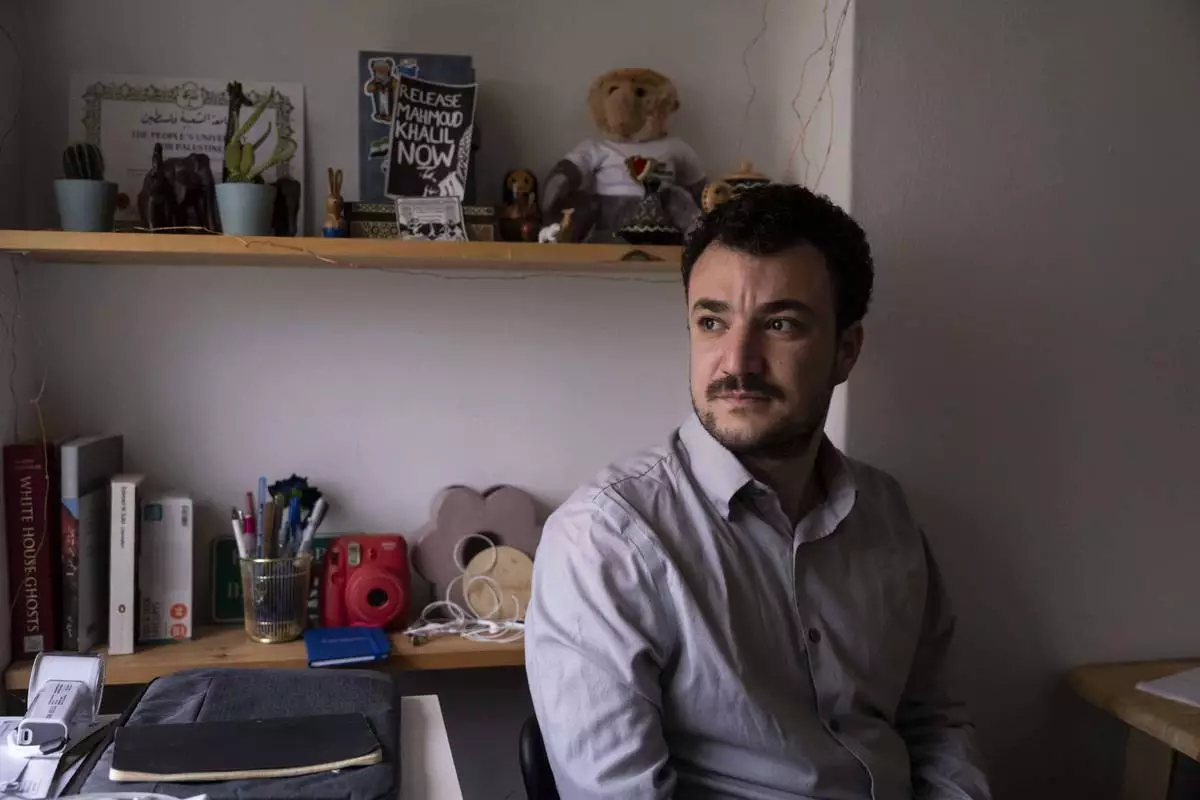
Pro-Palestinian activist Mahmoud Khalil and his wife, Dr. Noor Abdalla, hold their baby Deen during an interview, July 3, 2025, in New York. (AP Photo/Yuki Iwamura)

Pro-Palestinian activist Mahmoud Khalil poses for a portrait during an interview, July 3, 2025, in New York. (AP Photo/Yuki Iwamura)

Pro-Palestinian activist Mahmoud Khalil poses for a portrait during an interview, July 3, 2025, in New York. (AP Photo/Yuki Iwamura)
RHO, Italy (AP) — No ice is colder and harder than speedskating ice. The precision it takes has meant that Olympic speedskaters have never competed for gold on a temporary indoor rink – until the 2026 Milan Cortina Winter Games.

In the pursuit of maximum glide and minimum friction, Olympic officials brought on ice master Mark Messer, a veteran of six previous Olympic speedskating tracks and the ice technician in charge of the Olympic Oval in Calgary, Canada — one of the fastest tracks in the world with over 300 records.

Messer has been putting that experience to work one thin layer of ice at a time since the end of October at the new Speed Skating Stadium, built inside adjacent trade fair halls in the city of Rho just north of Milan.

“It’s one of the biggest challenges I’ve had in icemaking,’’ Messer said during an interview less than two weeks into the process.

If Goldilocks were a speedskater, hockey ice would be medium hard, for fast puck movement and sharp turns. Figure skating ice would be softer, allowing push off for jumps and so the ice doesn’t shatter on landing. Curling ice is the softest and warmest of all, for controlled sliding.

For speedskating ice to be just right, it must be hard, cold and clean. And very, very smooth.

“The blades are so sharp, that if there is some dirt, the blade will lose the edge,’’ Messer said, and the skater will lose speed.

Speedskater Enrico Fabris, who won two Olympic golds in Turin in 2006, has traded in his skates to be deputy sports manager at the speedskating venue in Rho. For him, perfect ice means the conditions are the same for all skaters — and then if it's fast ice, so much the better.

"It's more of a pleasure to skate on this ice,'' he said.

Messer’s first Olympics were in Calgary in 1988 — the first time speedskating was held indoors. “That gave us some advantages because we didn’t have to worry about the weather, wind blowing or rain,’’ he said. Now he is upping the challenge by becoming the first ice master to build a temporary rink for the Olympics.

Before Messer arrived in Italy, workers spent weeks setting up insulation to level the floor and then a network of pipes and rubber tubes that carry glycol — an antifreeze — that is brought down to minus 7 or minus 8 degrees Celsius (17.6 to 19.4 degrees Fahrenheit) to make the ice.

Water is run through a purification system — but it can’t be too pure, or the ice that forms will be too brittle. Just the right amount of impurities “holds the ice together,’’ Messer said.

The first layers of water are applied slowly, with a spray nozzle; after the ice reaches a few centimeters it is painted white — a full day’s work — and the stripes are added to make lanes.

“The first one takes about 45 minutes. And then as soon as it freezes, we go back and do it again, and again and again. So we do it hundreds of times,’’ Messer said.

As the ice gets thicker, and is more stable, workers apply subsequent layers of water with hoses. Messer attaches his hose to hockey sticks for easier spreading.

What must absolutely be avoided is dirt, dust or frost — all of which can cause friction for the skaters, slowing them down. The goal is that when the skaters push “they can go as far as possible with the least amount of effort,’’ Messer said.

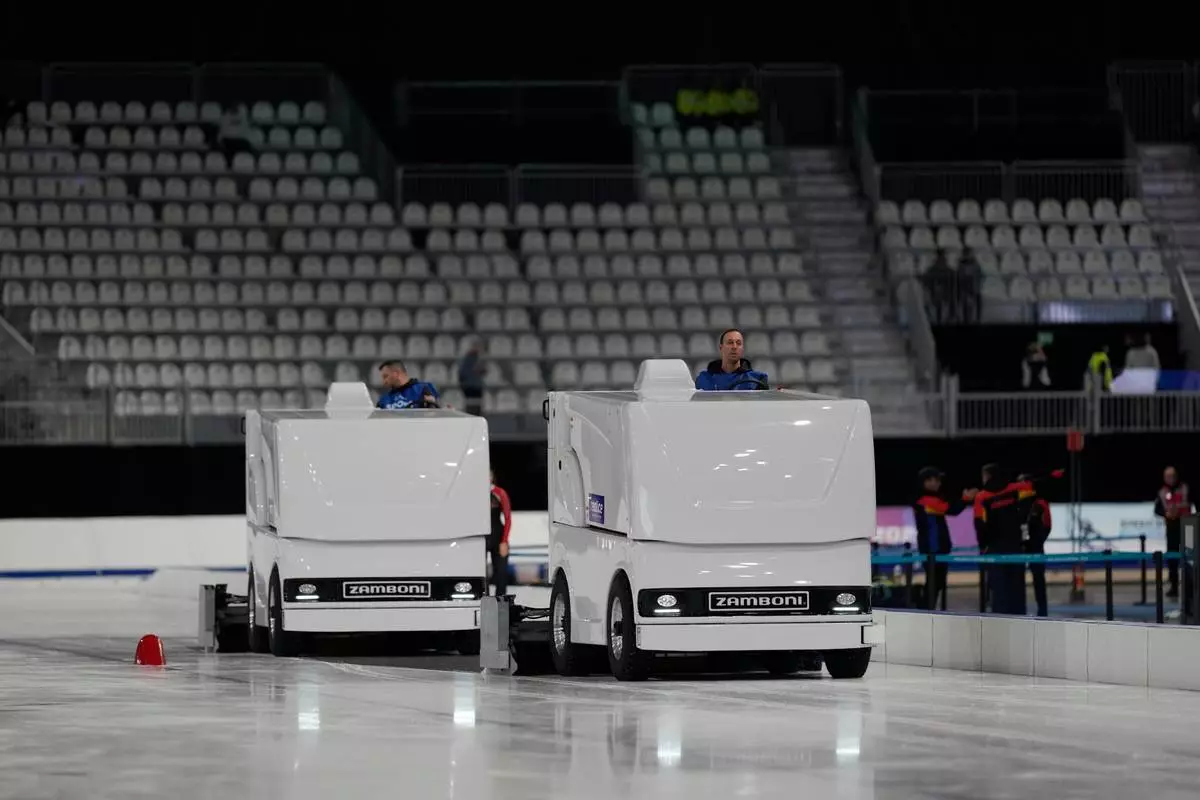
The Zamboni ice resurfacing machine plays a key role in keeping the track clean, cutting off a layer and spraying water to make a new surface.

One challenge is gauging how quickly the water from the resurfacing machine freezes in the temporary rink.

Another is getting the ice to the right thickness so that the Zamboni, weighing in at six tons, doesn’t shift the insulation, rubber tubing or ice itself.

“When you drive that out, if there’s anything moving it will move. We don’t want that,’’ Messer said.

The rink got its first big test on Nov. 29-30 during a Junior World Cup event. In a permanent rink, test events are usually held a year before the Olympics, leaving more time for adjustments. “We have a very small window to learn,’’ Messer acknowledged.

Dutch speedskater Kayo Vos, who won the men’s neo-senior 1,000 meters, said the ice was a little soft — but Messer didn’t seem too concerned.

“We went very modest to start, now we can start to change the temperatures and try to make it faster and still maintain it as a safe ice,’’ he said.

Fine-tuning the air temperature and humidity and ice temperature must be done methodically — taking into account that there will be 6,000 spectators in the venue for each event. The next real test will be on Jan. 31, when the Olympians take to the ice for their first training session.

“Eighty percent of the work is done but the hardest part is the last 20 percent, where we have to try to find the values and the way of running the equipment so all the skaters get the same conditions and all the skaters get the best conditions,’’ Messer said.

AP Winter Olympics: https://apnews.com/hub/milan-cortina-2026-winter-olympics

Serpentines are set on the ice of the stadium where speed skating discipline of the Milan Cortina 2026 Winter Olympics will take place, in Rho, outskirt of Milan, Tuesday, Nov. 11, 2025. (AP Photo/Luca Bruno)

Serpentines are set on the ice of the stadium where speed skating discipline of the Milan Cortina 2026 Winter Olympics will take place, in Rho, outskirt of Milan, Tuesday, Nov. 11, 2025. (AP Photo/Luca Bruno)

Ice Master Mark Messer poses in the stadium where speed skating discipline of the Milan Cortina 2026 Winter Olympics will take place, in Rho, outskirt of Milan, Tuesday, Nov. 11, 2025. (AP Photo/Luca Bruno)

Ice Master Mark Messer poses in the stadium where speed skating discipline of the Milan Cortina 2026 Winter Olympics will take place, in Rho, outskirt of Milan, Tuesday, Nov. 11, 2025. (AP Photo/Luca Bruno)

Workers clean the ice surface during a peed skating Junior World Cup and Olympic test event, in Rho, near Milan, Italy, Saturday, Nov. 29, 2025. (AP Photo/Luca Bruno)

Workers clean the ice surface during a peed skating Junior World Cup and Olympic test event, in Rho, near Milan, Italy, Saturday, Nov. 29, 2025. (AP Photo/Luca Bruno)

Ice Master Mark Messer poses in the stadium where speed skating discipline of the Milan Cortina 2026 Winter Olympics will take place, in Rho, outskirt of Milan, Tuesday, Nov. 11, 2025. (AP Photo/Luca Bruno)

Ice Master Mark Messer poses in the stadium where speed skating discipline of the Milan Cortina 2026 Winter Olympics will take place, in Rho, outskirt of Milan, Tuesday, Nov. 11, 2025. (AP Photo/Luca Bruno)

Ice Master Mark Messer poses in the stadium where speed skating discipline of the Milan Cortina 2026 Winter Olympics will take place, in Rho, outskirt of Milan, Tuesday, Nov. 11, 2025. (AP Photo/Luca Bruno)

Ice Master Mark Messer poses in the stadium where speed skating discipline of the Milan Cortina 2026 Winter Olympics will take place, in Rho, outskirt of Milan, Tuesday, Nov. 11, 2025. (AP Photo/Luca Bruno)

Recommended Articles