Skip to Content Facebook Feature Image

Brazil vows retaliatory tariffs against US if Trump follows through on 50% import taxes

News

Brazil vows retaliatory tariffs against US if Trump follows through on 50% import taxes
News

News

Brazil vows retaliatory tariffs against US if Trump follows through on 50% import taxes

2025-07-11 09:34 Last Updated At:09:41

RIO DE JANEIRO (AP) — Brazilian President Luiz Inácio Lula da Silva said Thursday that he will impose retaliatory tariffs on the United States if President Donald Trump follows through on a pledge to boost import taxes by 50% over the South American country's criminal trial against his predecessor, Jair Bolsonaro.

Lula said he will trigger Brazil's reciprocity law approved by Congress earlier this year if negotiations with the U.S. fail.

More Images
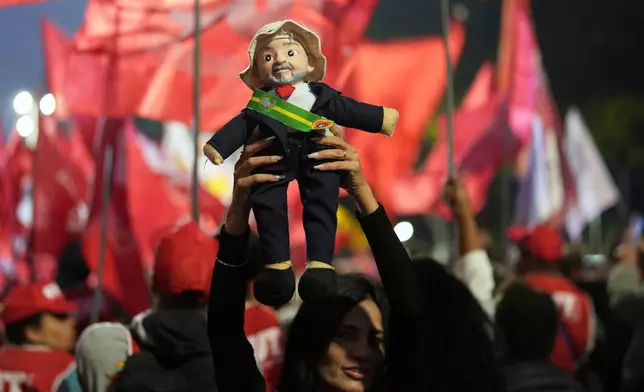
Protesters hold up a doll of Brazilian President Lula Inacio Lula da Silva during a protest against U.S. President Donald Trump's announcement of 50% tariffs on Brazilian goods, in Sao Paulo, Thursday, July 10, 2025. (AP Photo/Andre Penner)
Protesters hold up a doll of Brazilian President Lula Inacio Lula da Silva during a protest against U.S. President Donald Trump's announcement of 50% tariffs on Brazilian goods, in Sao Paulo, Thursday, July 10, 2025. (AP Photo/Andre Penner)
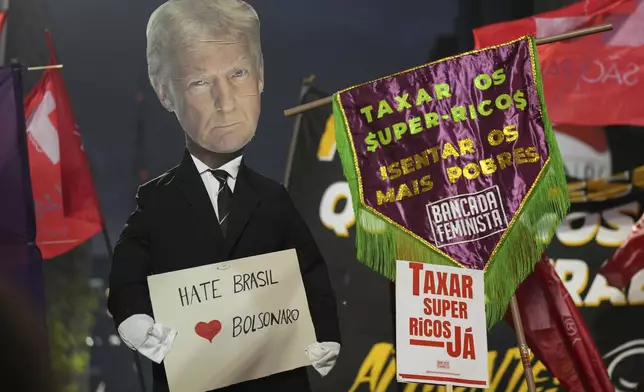
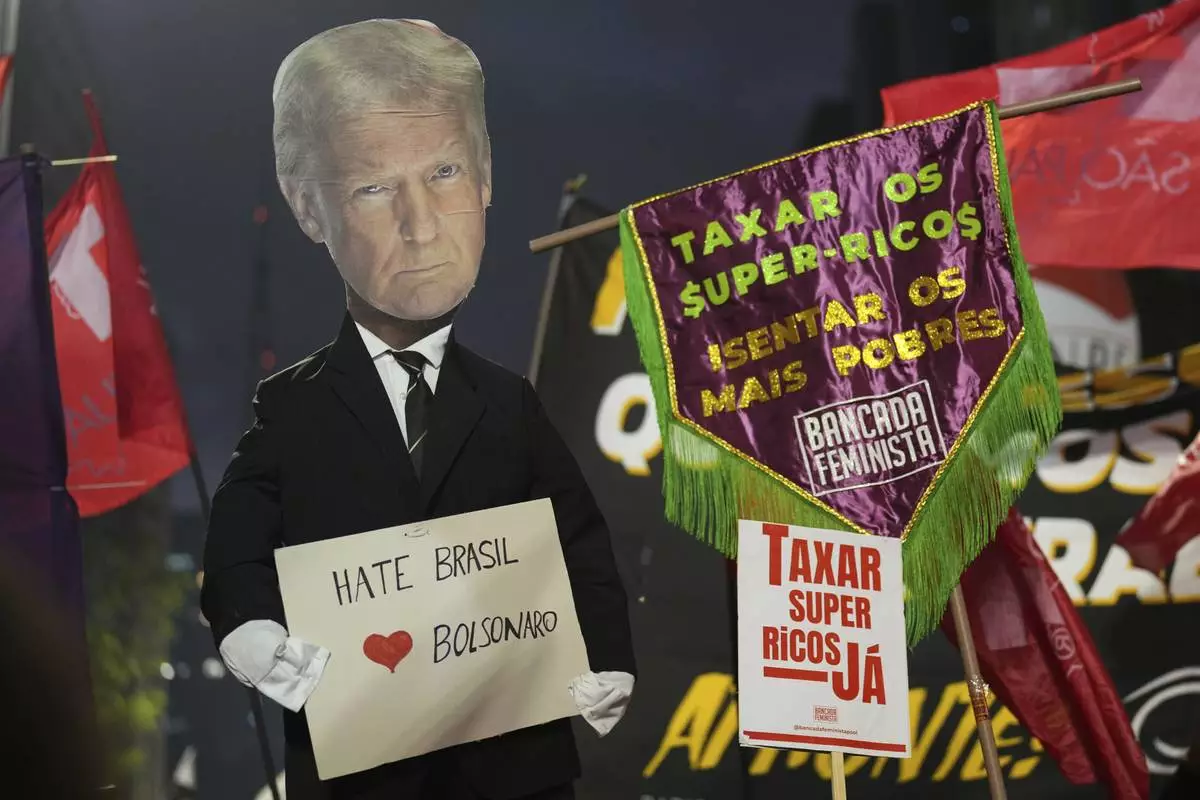
Protesters hold up an effigy of U.S. President Donald Trump in response to Trump's announcement of 50% tariffs on Brazilian goods, in Sao Paulo, Thursday, July 10, 2025. (AP Photo/Andre Penner)
Protesters hold up an effigy of U.S. President Donald Trump in response to Trump's announcement of 50% tariffs on Brazilian goods, in Sao Paulo, Thursday, July 10, 2025. (AP Photo/Andre Penner)
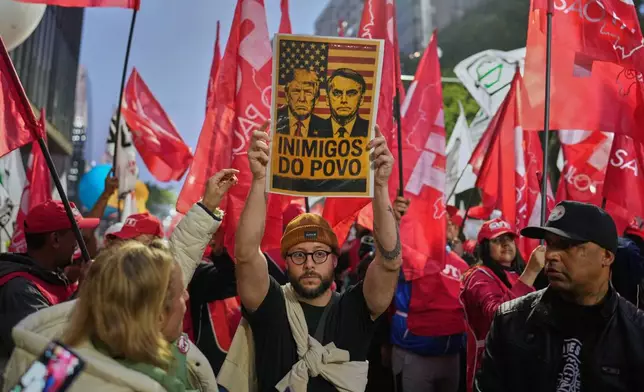
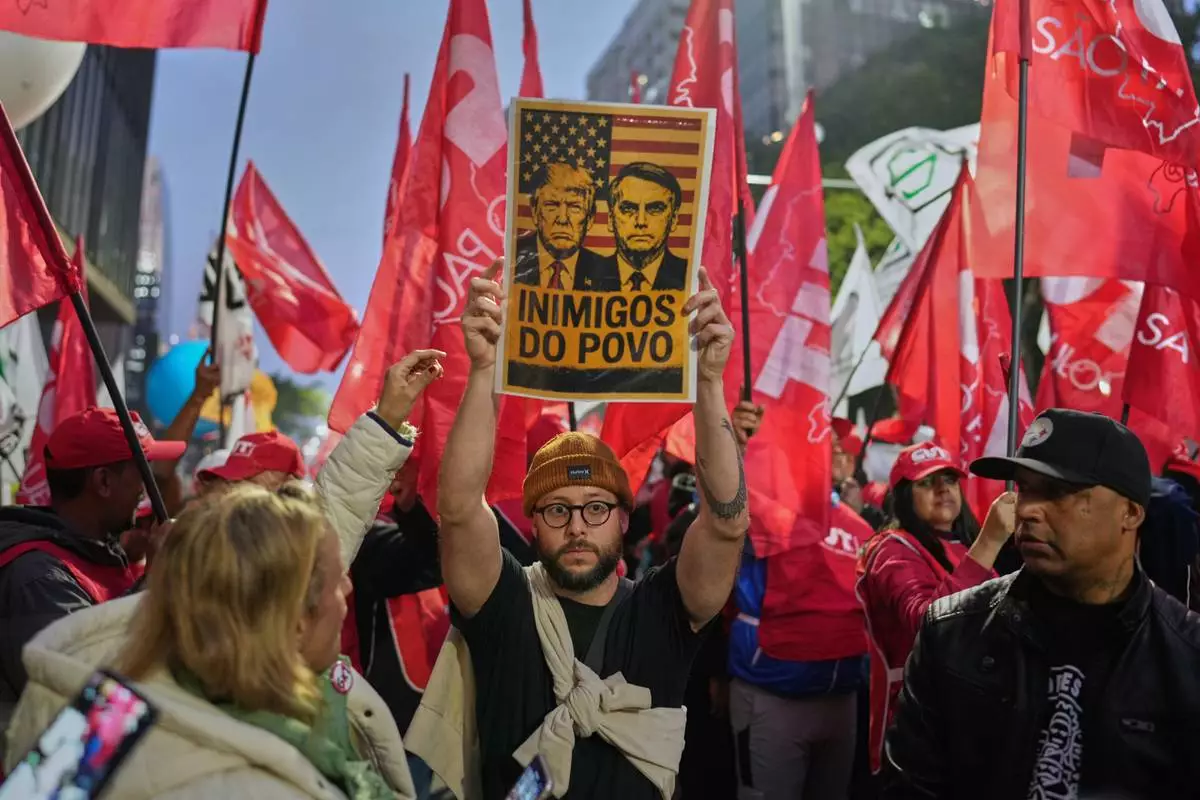
A protester holds a sign of U.S. President Donald Trump and Brazil's former President Jair Bolsonaro, that reads in Portuguese, "Enemies of the people" in response to Trump's announcement of 50% tariffs on Brazilian goods, in Sao Paulo, Thursday, July 10, 2025. (AP Photo/Andre Penner)
A protester holds a sign of U.S. President Donald Trump and Brazil's former President Jair Bolsonaro, that reads in Portuguese, "Enemies of the people" in response to Trump's announcement of 50% tariffs on Brazilian goods, in Sao Paulo, Thursday, July 10, 2025. (AP Photo/Andre Penner)

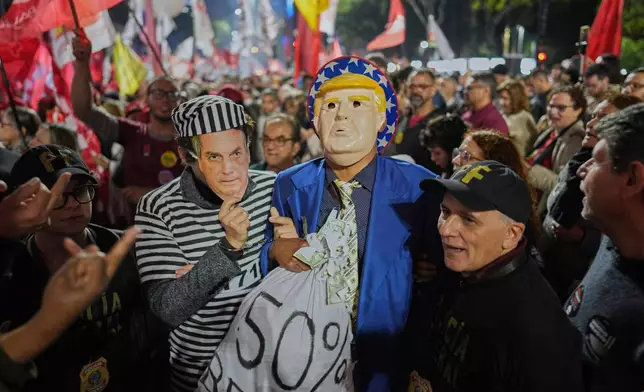
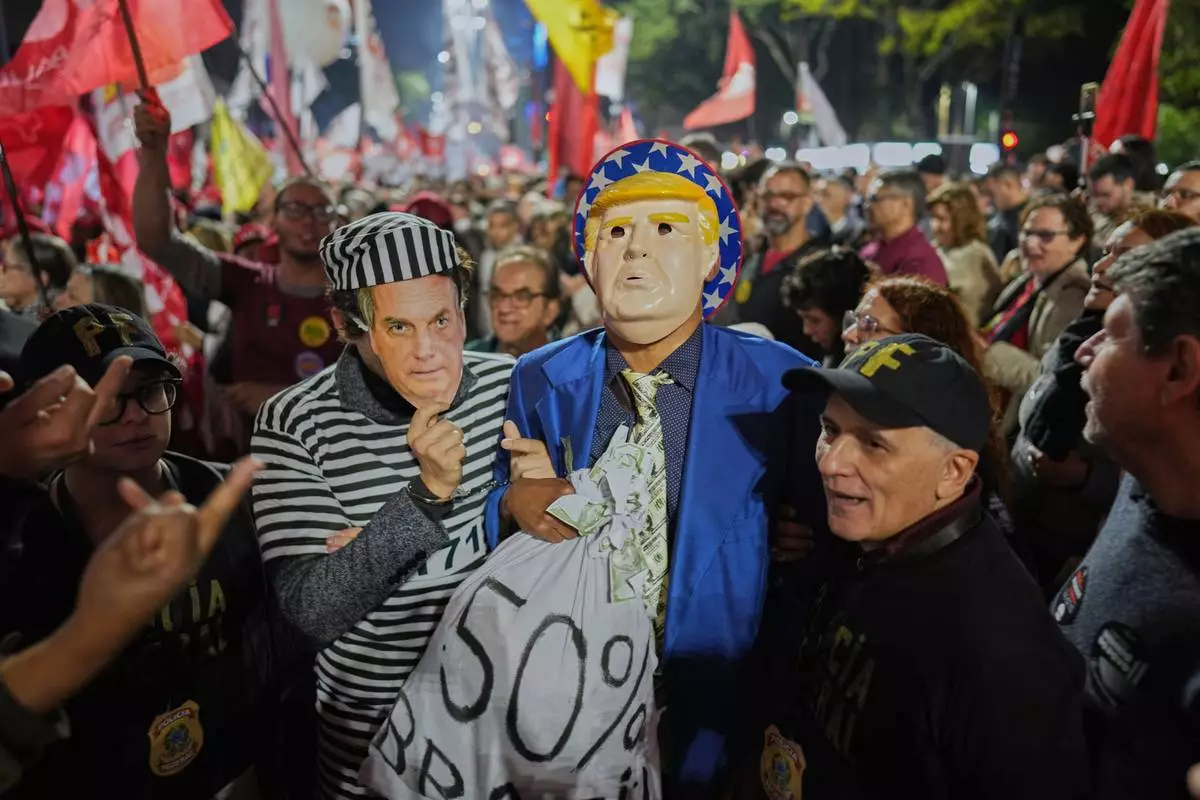
Protesters wearing masks of U.S. President Donald Trump and former President Jair Bolsonaro as a prisoner, protest Trump's announcement of 50% tariffs on Brazilian goods, in Sao Paulo, Thursday, July 10, 2025. (AP Photo/Andre Penner)

Protesters wearing masks of U.S. President Donald Trump and former President Jair Bolsonaro as a prisoner, protest Trump's announcement of 50% tariffs on Brazilian goods, in Sao Paulo, Thursday, July 10, 2025. (AP Photo/Andre Penner)

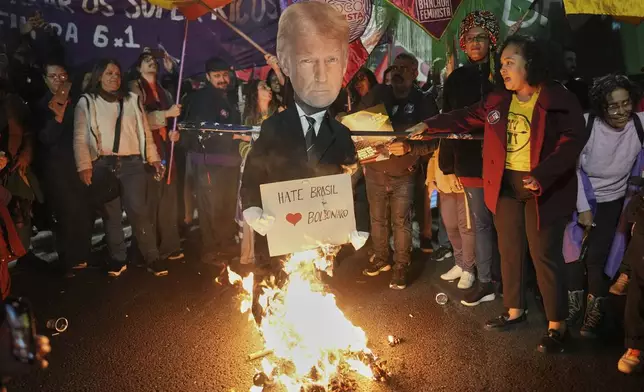
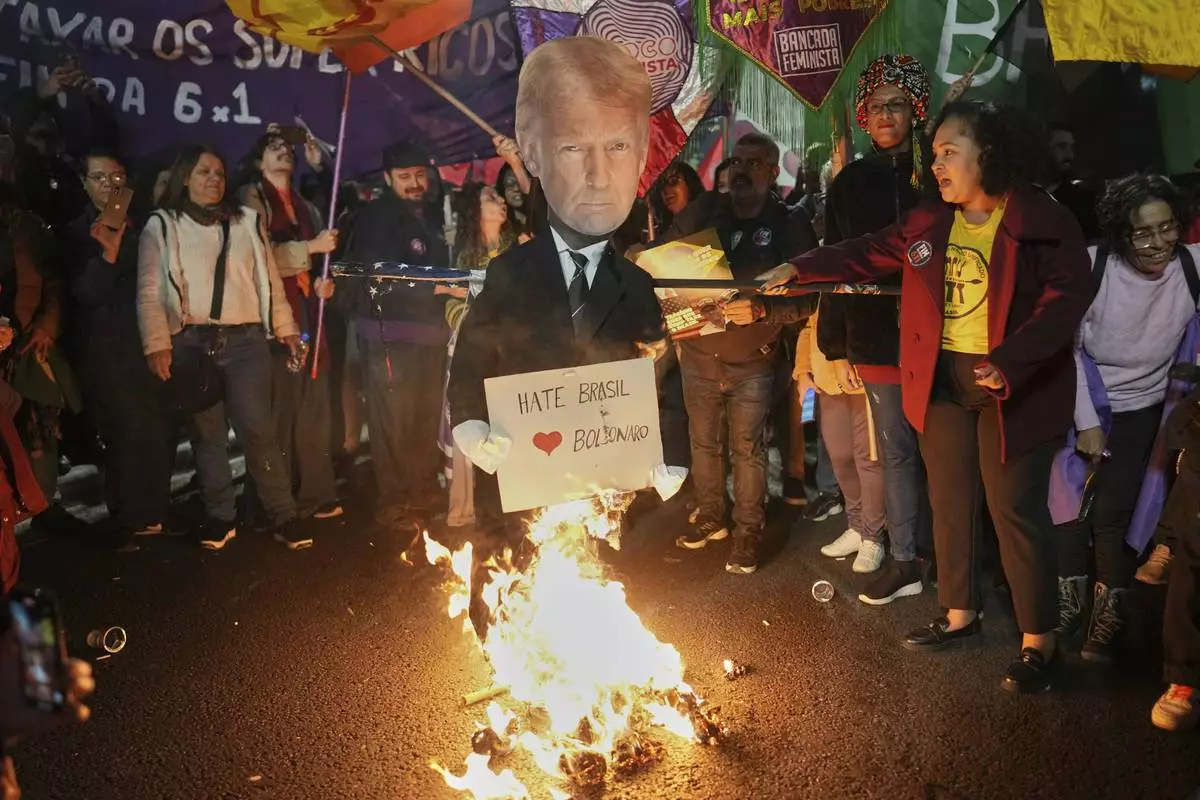
Protesters set fire to an effigy of U.S. President Donald Trump in response to his announcement of 50% tariffs on Brazilian goods, in Sao Paulo, Thursday, July 10, 2025. (AP Photo/Andre Penner)

Protesters set fire to an effigy of U.S. President Donald Trump in response to his announcement of 50% tariffs on Brazilian goods, in Sao Paulo, Thursday, July 10, 2025. (AP Photo/Andre Penner)

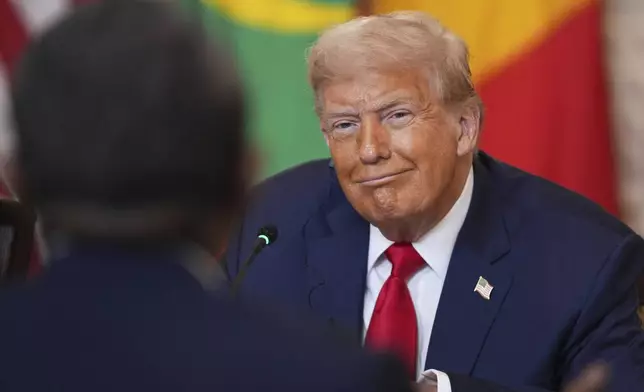
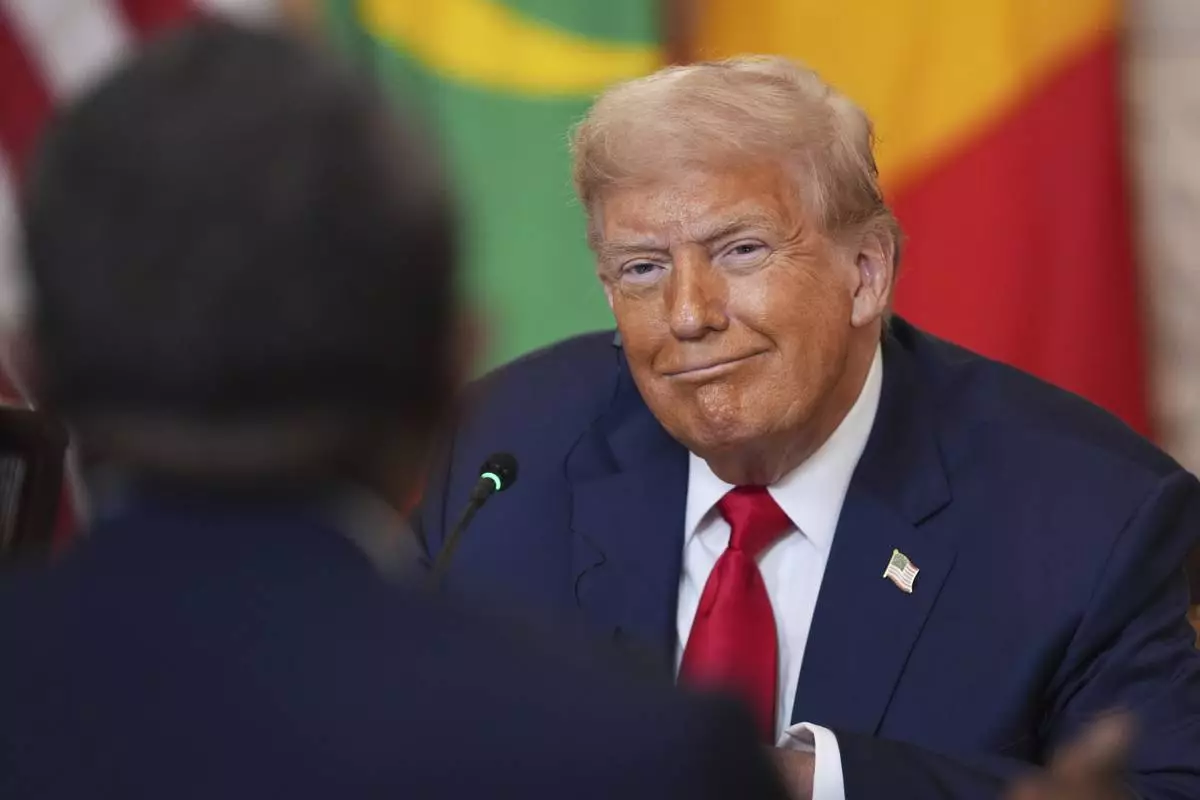
President Donald Trump speaks during a lunch with African leaders in the State Dining Room of the White House, Wednesday, July 9, 2025, in Washington. (AP Photo/Evan Vucci)
President Donald Trump speaks during a lunch with African leaders in the State Dining Room of the White House, Wednesday, July 9, 2025, in Washington. (AP Photo/Evan Vucci)

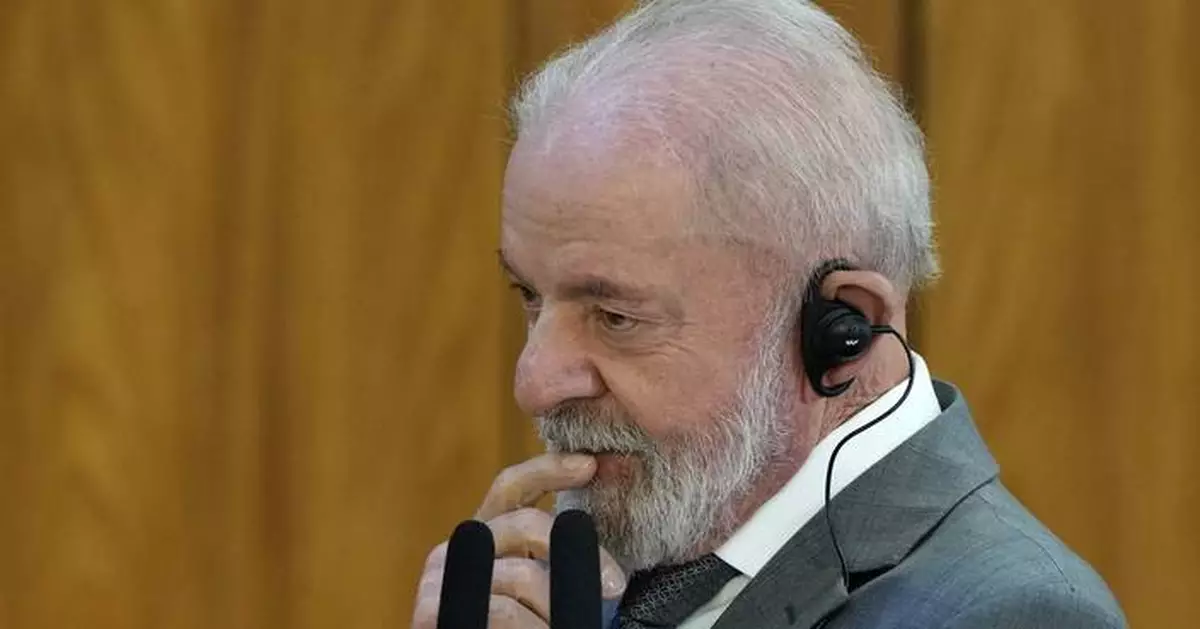
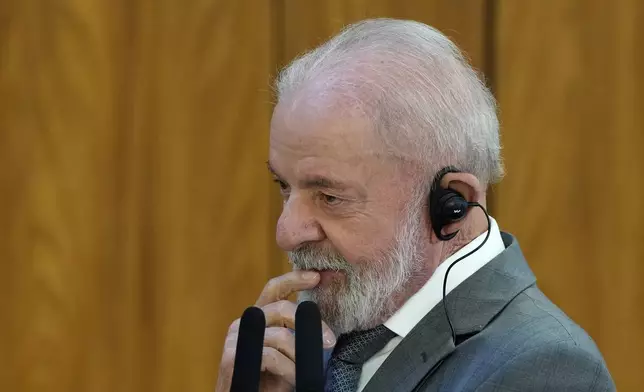
Brazil's President Luiz Inacio Lula da Silva attends an event at the Planalto presidential palace in Brasilia, Brazil, Wednesday, July 9, 2025. (AP Photo/Eraldo Peres)

Brazil's President Luiz Inacio Lula da Silva attends an event at the Planalto presidential palace in Brasilia, Brazil, Wednesday, July 9, 2025. (AP Photo/Eraldo Peres)

“If there’s no negotiation, the reciprocity law will be put to work. If he charges 50 (% tariffs) from us, we will charge 50 from them,” Lula told TV Record in excerpts of an interview that will be fully aired later in the day. “Respect is good. I like to offer mine and I like to receive it.”

Lula's comments raise the risk of a tariffs war erupting between the two countries, similar to what has happened between the U.S. and China. Trump has vowed to respond forcefully if countries seek to punish the U.S. by adding tariffs of their own.

The president of Brazil's Senate, Sen. Davi Alcolumbre, and Chamber of Deputies Speaker Hugo Motta, a pair of moderates who have recently been at odds with Lula, agreed that the recipricity law gives Brazil “the means ... to protect our sovereignty.”

“We will be ready to act with balance and firmness in defense of our economy, our productive sector, and the protection of Brazilian jobs,” they said in a joint statement.

The tariffs letter that Trump sent to Brazil — and posted on social media Wednesday — railing against the “witch hunt” trial against Bolsonaro opened up a new front in his trade wars, with the U.S. leader directly using import taxes to interfere with another nation’s domestic politics.

Trump has already tried to use tariffs to ostensibly combat fentanyl trafficking and as a negotiating tool to change how other nations tax digital services and regulate their economies.

In Brazil’s case, Trump is trying to dictate the outcome of the criminal trial of Bolsonaro, an ally who like Trump has been charged with attempting to overturn a presidential election. Bolsonaro maintains that he is being politically persecuted by Brazil’s Supreme Court over his charges on the alleged plot to remain in power after his 2022 election loss to Lula.

“There’s nothing Lula or Brazil can do about Bolsonaro’s trial,” said Carlos Melo, a political science professor at Insper University in Sao Paulo. “Any change in that would be Brazil's capitulation. Bolsonaro’s situation here won’t change. How do you negotiate over that?"

Lula ordered his diplomats on Thursday to return Trump's letter if it physically arrives at the presidential palace in Brasilia. The document attacks the country's judiciary and mentions recent rulings on social media companies among the reasons why goods from the South American nation will have higher tariffs from Aug. 1.

Trump has initiated his tariffs under the 1977 International Emergency Economic Powers Act, saying in April that the persistent deficit between what the U.S. exports and what it imports is a national crisis.

But the U.S. runs a trade surplus with Brazil, undermining some of the rationale.

A staffer of Brazil's foreign ministry told The Associated Press that trade negotiations that were ongoing since Trump imposed a first set of tariffs in April are now “up in the air.”

Some members of the Lula administration say Trump’s move is actually aimed at Brazil’s connection with other Southern economies, as displayed on Sunday at the summit of BRICS nations hosted in Rio de Janeiro. Brazil's president once again mentioned the hope for an alternative currency to the dollar for transactions, a topic that frequently draws Trump's ire.

“Trump was never worried about democracy anywhere, much less with Bolsonaro’s destiny,” said Gleisi Hoffmann, Brazil’s institutional relations minister.

Trump's interference in Brazilian affairs has brought a sense of unity that was largely absent in the politically divided nation. Some of Bolsonaro's allies claimed Lula had drawn the U.S. president's anger with other decisions, including criticism of Israel's war in Gaza. But other supporters of the former president chose to ask for prudence in negotiations.

Daily O Estado de S. Paulo, a frequent critic of Lula and his administration, said in an editorial on Thursday that Trump’s move against the Brazilian government is “a mafia thing.” It also said Lula's reaction was correct, a rare feature for the newspaper.

Analysts also see Trump’s attempt to interfere in the country's domestic affairs as a potential backfire for Bolsonaro during his trial and a push for Lula, whose reelection bid was facing unpopularity headwinds this year.

Canadians recently elected Mark Carney as prime minister, with his Liberal Party reenergized by Trump’s tariffs and threats to make Canada the 51st U.S. state.

“The reaction of a lot of people is that this is a political gift to Lula,” said Andre Pagliarini, a professor of history and international studies at Louisiana State University who is also affiliated with the Quincy Institute for Responsible Statecraft.

Thomas Traumann, an independent political consultant and former Brazilian minister, called Trump's move “a game changer" for next year's election.

“Trump put Lula back in the game,” Traumann said. “This gives Lula a narrative, puts Bolsonaro as the guilty part for any economic problems.”

The U.S. Court of International Trade ruled in May that Trump had exceeded his authority by declaring an emergency to impose tariffs without congressional approval. The Trump administration is appealing that decision, but opponents plan to use his Brazil letter to bolster their case.

“This is a brazenly illegal effort by Donald Trump to sacrifice the economy to settle his own personal scores, and it is far outside his legal authority,” said Democratic Oregon Sen. Ron Wyden.

The Republican administration has argued that their tariffs are now relatively harmless for the U.S. economy, since inflation has trended down in recent months. But many companies stockpiled imports to get ahead of the import taxes, and it’s unclear what happens when their inventories dwindle and consumers consider the risk of higher prices. Most outside economic analyses expect growth to decline.

In Brazil, Trump’s interest in Bolsonaro’s trial is expected to weigh over the trial. Media outlets have reported that lawmakers and judges are worried the former president will try to leave Brazil for the U.S. if he is convicted.

Lawmaker Eduardo Bolsonaro, a son of the former president, moved to the U.S. in March. On Wednesday night, he asked his supporters on X to post “their thank you to President Donald Trump."

In Thursday's interview, Lula said the elder Bolsonaro “should take the responsibility for agreeing with Trump’s taxation to Brazil.”

“His son went there to make up Trump’s mind, then he (Trump) writes a letter to speak about a case that is in the hands of the Supreme Court. A case that is not a political trial. What is under investigation is the evidence of the case,” Lula said.

Boak reported from Washington.
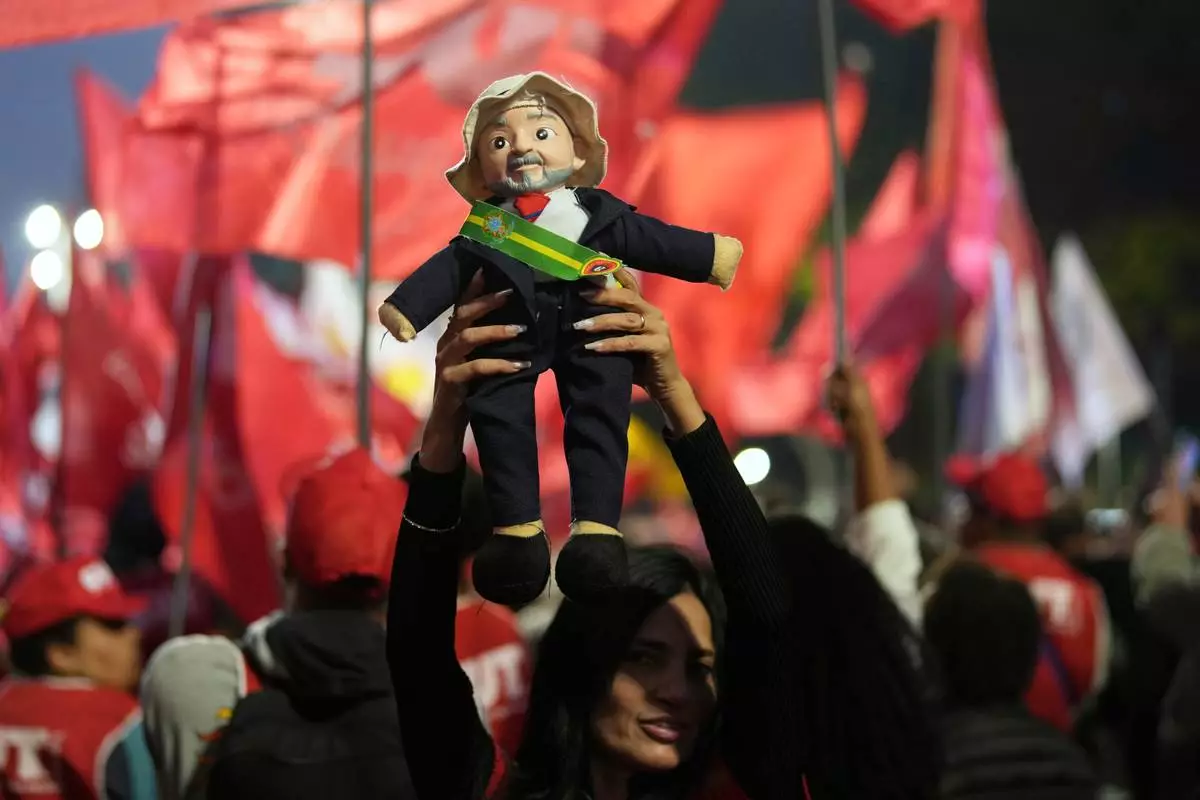
Protesters hold up a doll of Brazilian President Lula Inacio Lula da Silva during a protest against U.S. President Donald Trump's announcement of 50% tariffs on Brazilian goods, in Sao Paulo, Thursday, July 10, 2025. (AP Photo/Andre Penner)
Protesters hold up a doll of Brazilian President Lula Inacio Lula da Silva during a protest against U.S. President Donald Trump's announcement of 50% tariffs on Brazilian goods, in Sao Paulo, Thursday, July 10, 2025. (AP Photo/Andre Penner)
Protesters hold up an effigy of U.S. President Donald Trump in response to Trump's announcement of 50% tariffs on Brazilian goods, in Sao Paulo, Thursday, July 10, 2025. (AP Photo/Andre Penner)
Protesters hold up an effigy of U.S. President Donald Trump in response to Trump's announcement of 50% tariffs on Brazilian goods, in Sao Paulo, Thursday, July 10, 2025. (AP Photo/Andre Penner)
A protester holds a sign of U.S. President Donald Trump and Brazil's former President Jair Bolsonaro, that reads in Portuguese, "Enemies of the people" in response to Trump's announcement of 50% tariffs on Brazilian goods, in Sao Paulo, Thursday, July 10, 2025. (AP Photo/Andre Penner)
A protester holds a sign of U.S. President Donald Trump and Brazil's former President Jair Bolsonaro, that reads in Portuguese, "Enemies of the people" in response to Trump's announcement of 50% tariffs on Brazilian goods, in Sao Paulo, Thursday, July 10, 2025. (AP Photo/Andre Penner)

Protesters wearing masks of U.S. President Donald Trump and former President Jair Bolsonaro as a prisoner, protest Trump's announcement of 50% tariffs on Brazilian goods, in Sao Paulo, Thursday, July 10, 2025. (AP Photo/Andre Penner)

Protesters wearing masks of U.S. President Donald Trump and former President Jair Bolsonaro as a prisoner, protest Trump's announcement of 50% tariffs on Brazilian goods, in Sao Paulo, Thursday, July 10, 2025. (AP Photo/Andre Penner)

Protesters set fire to an effigy of U.S. President Donald Trump in response to his announcement of 50% tariffs on Brazilian goods, in Sao Paulo, Thursday, July 10, 2025. (AP Photo/Andre Penner)

Protesters set fire to an effigy of U.S. President Donald Trump in response to his announcement of 50% tariffs on Brazilian goods, in Sao Paulo, Thursday, July 10, 2025. (AP Photo/Andre Penner)

President Donald Trump speaks during a lunch with African leaders in the State Dining Room of the White House, Wednesday, July 9, 2025, in Washington. (AP Photo/Evan Vucci)

President Donald Trump speaks during a lunch with African leaders in the State Dining Room of the White House, Wednesday, July 9, 2025, in Washington. (AP Photo/Evan Vucci)

Brazil's President Luiz Inacio Lula da Silva attends an event at the Planalto presidential palace in Brasilia, Brazil, Wednesday, July 9, 2025. (AP Photo/Eraldo Peres)
Brazil's President Luiz Inacio Lula da Silva attends an event at the Planalto presidential palace in Brasilia, Brazil, Wednesday, July 9, 2025. (AP Photo/Eraldo Peres)
NEW YORK (AP) — Reviving a campaign pledge, President Donald Trump wants a one-year, 10% cap on credit card interest rates, a move that could save Americans tens of billions of dollars but drew immediate opposition from an industry that has been in his corner.

Trump was not clear in his social media post Friday night whether a cap might take effect through executive action or legislation, though one Republican senator said he had spoken with the president and would work on a bill with his “full support.” Trump said he hoped it would be in place Jan. 20, one year after he took office.

Strong opposition is certain from Wall Street in addition to the credit card companies, which donated heavily to his 2024 campaign and have supported Trump's second-term agenda. Banks are making the argument that such a plan would most hurt poor people, at a time of economic concern, by curtailing or eliminating credit lines, driving them to high-cost alternatives like payday loans or pawnshops.

“We will no longer let the American Public be ripped off by Credit Card Companies that are charging Interest Rates of 20 to 30%,” Trump wrote on his Truth Social platform.

Researchers who studied Trump’s campaign pledge after it was first announced found that Americans would save roughly $100 billion in interest a year if credit card rates were capped at 10%. The same researchers found that while the credit card industry would take a major hit, it would still be profitable, although credit card rewards and other perks might be scaled back.

About 195 million people in the United States had credit cards in 2024 and were assessed $160 billion in interest charges, the Consumer Financial Protection Bureau says. Americans are now carrying more credit card debt than ever, to the tune of about $1.23 trillion, according to figures from the New York Federal Reserve for the third quarter last year.

Further, Americans are paying, on average, between 19.65% and 21.5% in interest on credit cards according to the Federal Reserve and other industry tracking sources. That has come down in the past year as the central bank lowered benchmark rates, but is near the highs since federal regulators started tracking credit card rates in the mid-1990s. That’s significantly higher than a decade ago, when the average credit card interest rate was roughly 12%.

The Republican administration has proved particularly friendly until now to the credit card industry.

Capital One got little resistance from the White House when it finalized its purchase and merger with Discover Financial in early 2025, a deal that created the nation’s largest credit card company. The Consumer Financial Protection Bureau, which is largely tasked with going after credit card companies for alleged wrongdoing, has been largely nonfunctional since Trump took office.

In a joint statement, the banking industry was opposed to Trump's proposal.

“If enacted, this cap would only drive consumers toward less regulated, more costly alternatives," the American Bankers Association and allied groups said.

Bank lobbyists have long argued that lowering interest rates on their credit card products would require the banks to lend less to high-risk borrowers. When Congress enacted a cap on the fee that stores pay large banks when customers use a debit card, banks responded by removing all rewards and perks from those cards. Debit card rewards only recently have trickled back into consumers' hands. For example, United Airlines now has a debit card that gives miles with purchases.

The U.S. already places interest rate caps on some financial products and for some demographics. The Military Lending Act makes it illegal to charge active-duty service members more than 36% for any financial product. The national regulator for credit unions has capped interest rates on credit union credit cards at 18%.

Credit card companies earn three streams of revenue from their products: fees charged to merchants, fees charged to customers and the interest charged on balances. The argument from some researchers and left-leaning policymakers is that the banks earn enough revenue from merchants to keep them profitable if interest rates were capped.

"A 10% credit card interest cap would save Americans $100 billion a year without causing massive account closures, as banks claim. That’s because the few large banks that dominate the credit card market are making absolutely massive profits on customers at all income levels," said Brian Shearer, director of competition and regulatory policy at the Vanderbilt Policy Accelerator, who wrote the research on the industry's impact of Trump's proposal last year.

There are some historic examples that interest rate caps do cut off the less creditworthy to financial products because banks are not able to price risk correctly. Arkansas has a strictly enforced interest rate cap of 17% and evidence points to the poor and less creditworthy being cut out of consumer credit markets in the state. Shearer's research showed that an interest rate cap of 10% would likely result in banks lending less to those with credit scores below 600.

The White House did not respond to questions about how the president seeks to cap the rate or whether he has spoken with credit card companies about the idea.

Sen. Roger Marshall, R-Kan., who said he talked with Trump on Friday night, said the effort is meant to “lower costs for American families and to reign in greedy credit card companies who have been ripping off hardworking Americans for too long."

Legislation in both the House and the Senate would do what Trump is seeking.

Sens. Bernie Sanders, I-Vt., and Josh Hawley, R-Mo., released a plan in February that would immediately cap interest rates at 10% for five years, hoping to use Trump’s campaign promise to build momentum for their measure.

Hours before Trump's post, Sanders said that the president, rather than working to cap interest rates, had taken steps to deregulate big banks that allowed them to charge much higher credit card fees.

Reps. Alexandria Ocasio-Cortez, D-N.Y., and Anna Paulina Luna, R-Fla., have proposed similar legislation. Ocasio-Cortez is a frequent political target of Trump, while Luna is a close ally of the president.

Seung Min Kim reported from West Palm Beach, Fla.

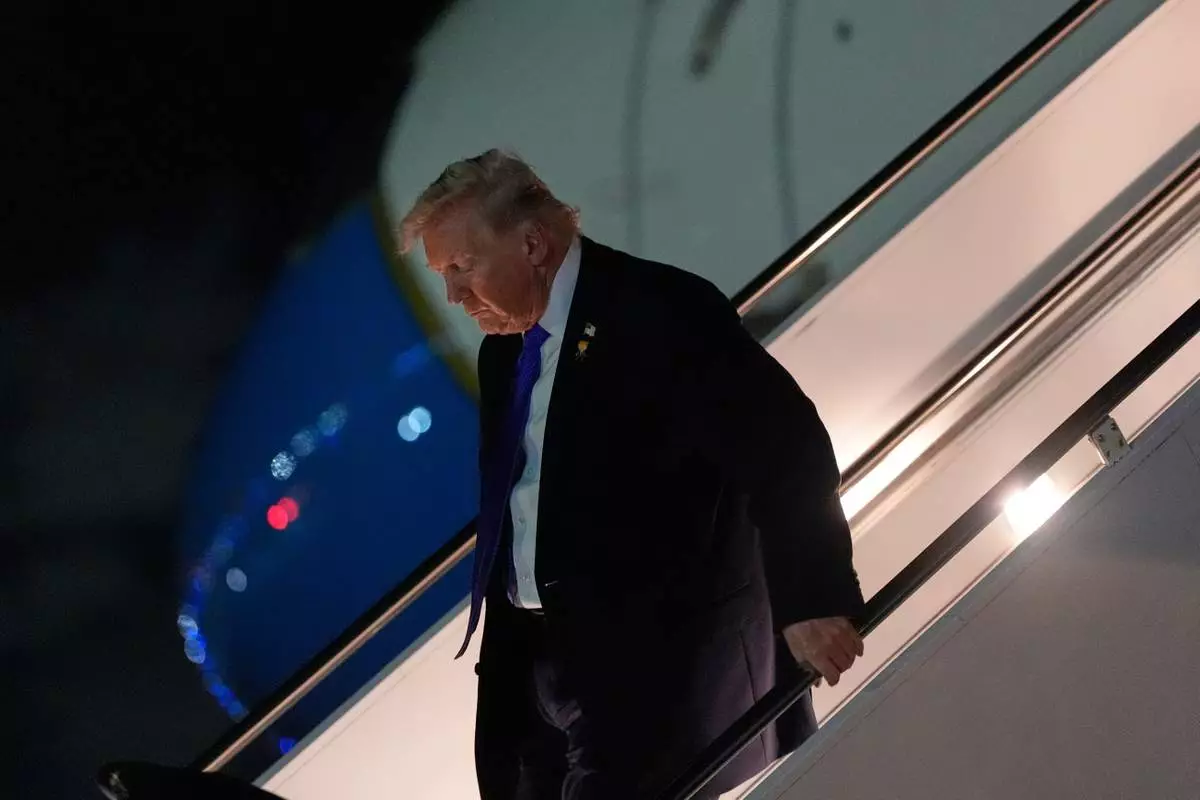
President Donald Trump arrives on Air Force One at Palm Beach International Airport, Friday, Jan. 9, 2025, in West Palm Beach, Fla. (AP Photo/Julia Demaree Nikhinson)

President Donald Trump arrives on Air Force One at Palm Beach International Airport, Friday, Jan. 9, 2025, in West Palm Beach, Fla. (AP Photo/Julia Demaree Nikhinson)

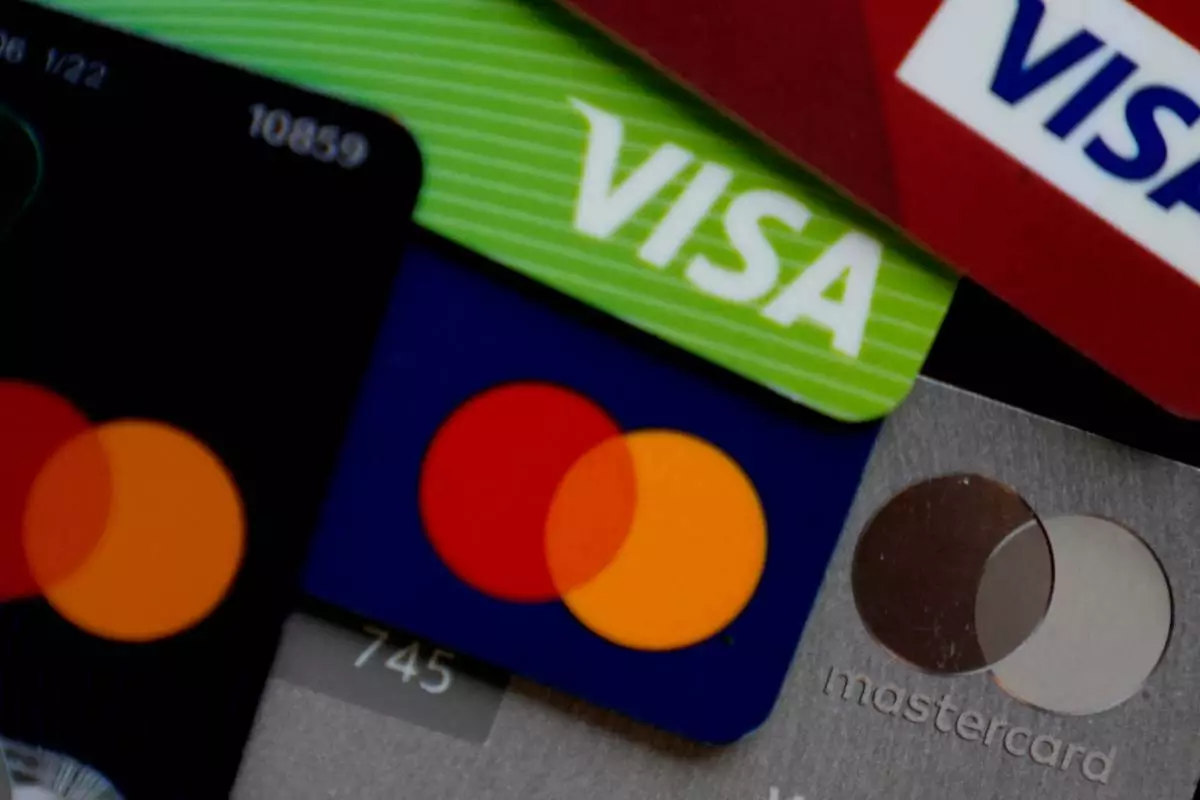
FILE - Visa and Mastercard credit cards are shown in Buffalo Grove, Ill., Feb. 8, 2024. (AP Photo/Nam Y. Huh, File)

FILE - Visa and Mastercard credit cards are shown in Buffalo Grove, Ill., Feb. 8, 2024. (AP Photo/Nam Y. Huh, File)

Recommended Articles