DALLAS (AP) — The Stars traded Matt Dumba to Pittsburgh in a swap of defensemen Thursday, with Dallas getting Vladislav Kolyachonok while sending a 2028 second-round pick to the Penguins.
Dumba never had an impact after signing a $7.5 million, two-year contract in free agency last year. He was a healthy scratch for all 18 playoff games as the Stars lost in the Western Conference final for the third consecutive year.
The 30-year-old Dumba had one goal and nine assists in 63 games during the regular season. It was the fewest goals for Dumba since scoring one in 13 games as a rookie with Minnesota in 2013-14.
Dumba has 258 points (84 goals, 174 assists) in 737 games over 12 seasons. Pittsburgh will be his fourth team in three seasons after he spent the first 10 years of his career with the Wild.
Kolyachonok played for the Penguins and Utah last season, recording seven points (two goals) in 35 games. The 24-year-old's career began in 2021-22 when the Utah franchise was in Arizona. He has 14 points (four goals) in 74 career games.
This story has been corrected. Pittsburgh gets a 2028 second-round pick in the trade, not Dallas.
AP NHL: https://apnews.com/hub/nhl

FILE - Linesman Bryan Pancich (94) holds Dallas Stars' Matt Dumba (3) back after a brief scuffle with Minnesota Wild players in the second period of a preseason NHL hockey game, Sept. 25, 2024, in Dallas. (AP Photo/Tony Gutierrez, File)
SOUTHAMPTON, N.Y. (AP) — The bunched leaderboard, the inability to pull away, the momentum changing with virtually every shot.
Yes, if the U.S. Open plays out Sunday like it did in the third round, then the race for second place will be a nailbiter.
Three players whose names will drive Google searches galore for casual golf fans — Tom Kim, Sam Stevens and Sahith Theegala — found themselves tied with a bigger name, Scottie Scheffler, in a four-way logjam for second with 18 holes to play at Shinnecock.
They all finished Saturday trailing leader Wyndham Clark by six shots.
"As you can see, it’s kind of a jumbled leaderboard," Kim said, “except for where the leader is.”
For the record, a six-shot rally would be one less than the biggest final-round comeback in U.S. Open history. That belongs to Arnold Palmer, back in 1960 at Cherry Hills.
Even if they had resumes approaching Palmer's, the odds would be stacked against these three dreamers. Turns out, they don't.
Kim, Stevens and Theegala have a total of one top-5 finish in majors between them. All in their 20s and looking for a breakthrough, they have a total of 39 starts in majors between them, dating to 2020.
They will play in groups ahead of Scheffler, whose early round of 69 left him in that jumble at 1-under 209 and gave him the last, and featured, tee time with Clark on Sunday.
The other three know they have quite a hill to climb. If Clark falters or Shinnecock Hills rises up — now less likely with the wind expected to calm down — then Scheffler figures to be the best bet to scoop up the trophy and wrap up the career Grand Slam.
“So much of it kind of depends on what Wyndham does,” Stevens said. “I could play a great round tomorrow and shoot 3- or 4-under and still lose by seven.”
But, stranger things have happened.
“There's a disaster waiting to happen on every hole,” Theegala said. “So you just have to be patient.”
A quick look at the group in second place:
At Pepperdine, became only the fifth player in the last 30 years to win the three biggest awards for college players: The Fred Haskins, Ben Hogan and Jack Nicklaus Awards.
But Theegala became a bigger name when he appeared on the Netflix series “Full Swing,” which takes an inside look at players on the PGA Tour. He was still living at home when he made it to the tour, and things like doing his laundry felt new.
Theegala's best major finish was ninth place at the 2023 Masters. His lone win on tour was at 2023 at the Fortinet Championship.
Quotable: “There’s a lot of danger involved in pushing it a little bit, but you do have opportunities to kind of make a push at the end there.”
Kim became a lightning rod for his fiery appearances at the Presidents Cup in 2022 and 2024. There was friction because of the fist-pumping antics he pulled and some difference of opinion over who, if anyone, crossed the line when he teamed with Si Woo Kim in a match against Xander Schauffele and Patrick Cantlay.
Kim also made a splash when he waded into a swamp looking for an errant tee shot at the 2023 PGA at Oak Hill. He came out a muddy mess and had to dip into a stream to clean up — a viral moment that he explained by saying: "I mean it’s a major championship. I’m fighting for every single stroke I have.”
Kim finished in a tie for second at the 2023 British Open, though he shot a 67 to pull into that tie and was still six shots behind winner Brian Harman in a major as lopsided as this one is shaping up to be.
Quotable: “I think you’ve just got to look at it as you’ve got to kind of do your own thing. You can’t really force a lot of things out here. You’ve got to keep staying patient, and that’s what I’m going to do.”
A father of four, Stevens is the third generation of a golf family with deep roots in Kansas and across the Midwest.
His grandfather, Johnny “Slim” Stevens, made more than two dozen starts on the PGA Tour in the 1960s and played in the 1969 U,S. Open. His father, Charlie, played college golf at Oklahoma, had a brief stop on the Korn Ferry Tour and won the Kansas Amateur in 2010.
He has made more than $10 million on the PGA Tour but has yet to post his first win. Asked earlier in the week about his surge at Shinnecock, he said a good conversation with his wife, Kelsey, helped him rediscocver his perspective.
“I’m only 29,” he said, “so I probably don’t need to be bitter about things quite yet.”
Quotable: “You don’t normally shoot a low number trying to shoot a low number. You kind of shoot a low number just because it happens.”
AP golf: https://apnews.com/hub/golf
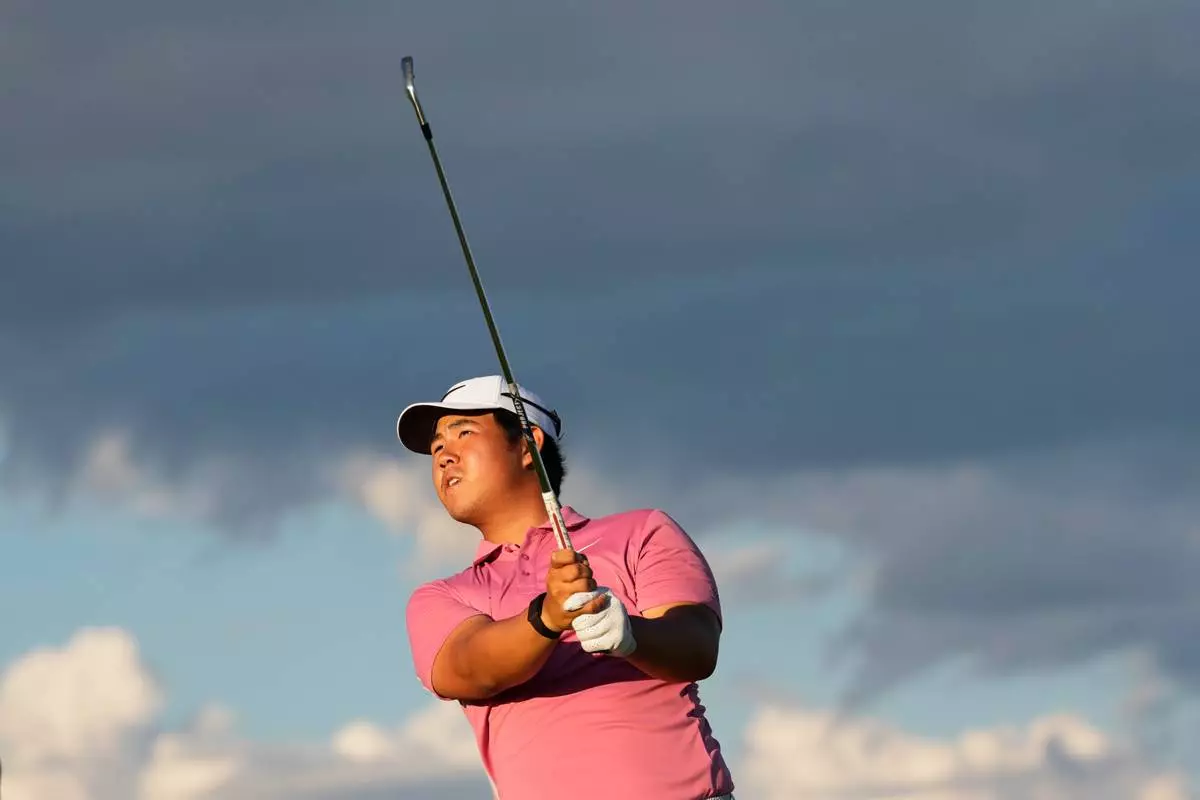
Tom Kim, of South Korea, watches his tee shot on the 17th hole during the third round of the U.S. Open golf tournament at Shinnecock Hills Golf Club in Southampton, N.Y., Saturday, June 20, 2026.(AP Photo/David J. Phillip)

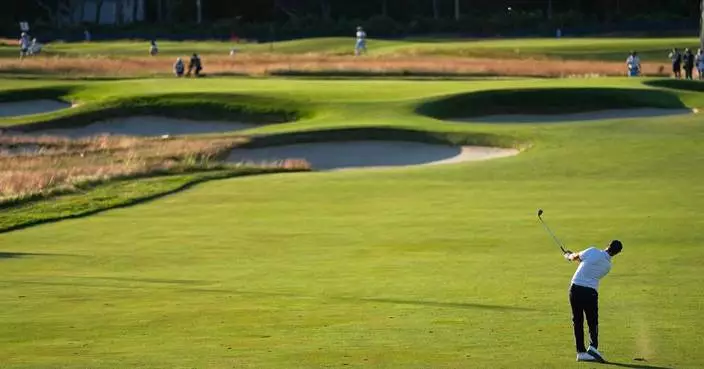
Sam Stevens watches his tee shot on the 17th hole during the third round of the U.S. Open golf tournament at Shinnecock Hills Golf Club in Southampton, N.Y., Saturday, June 20, 2026. (AP Photo/Seth Wenig)
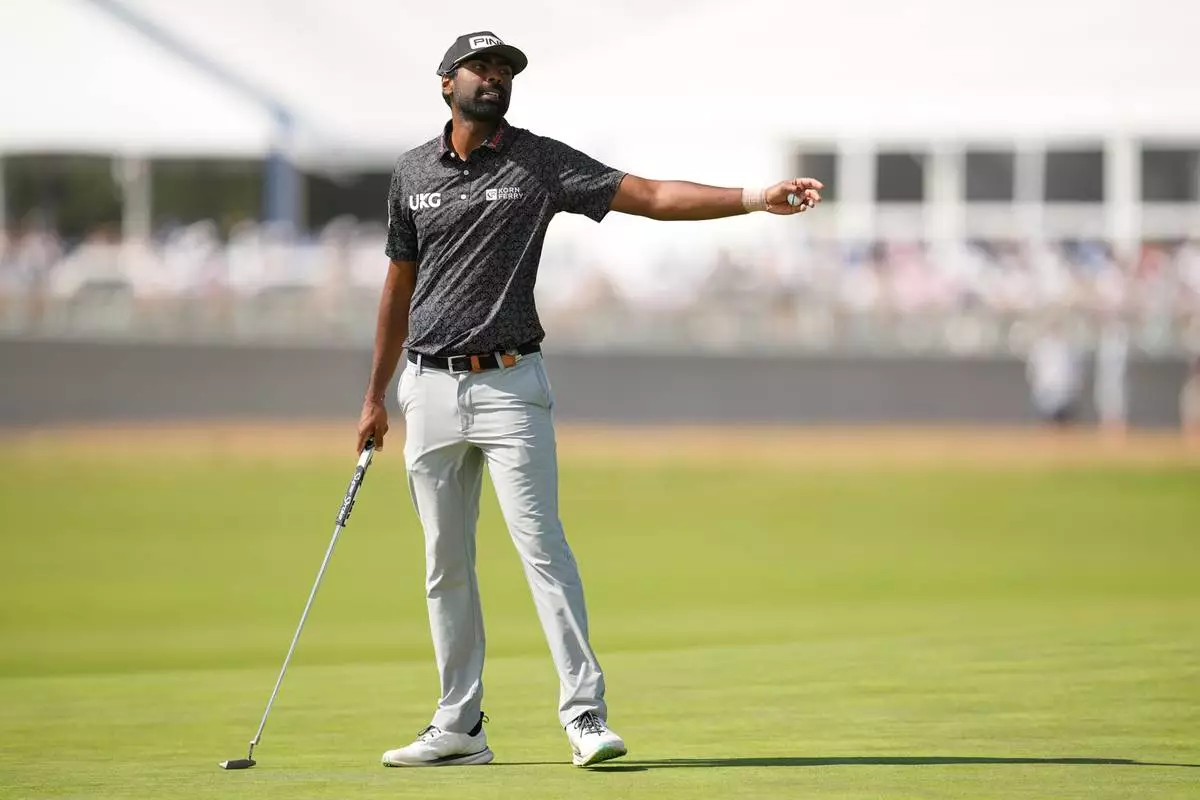
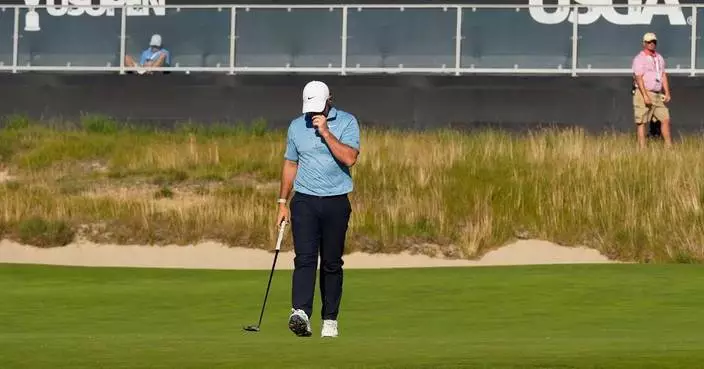
Sahith Theegala reacts after missing a putt on the fourth hole during the third round of the U.S. Open golf tournament at Shinnecock Hills Golf Club in Southampton, N.Y., Saturday, June 20, 2026.(AP Photo/George Walker IV)