HONOLULU (AP) — A Native Hawaiian man who was convicted of a hate crime against a white man must be re-sentenced, a U.S. appeals court ruled Thursday, and the result could be several more years in prison.
Kaulana Alo-Kaonohi was sentenced to six-and-a-half years in 2023 by a judge in Honolulu after a jury found him and another Native Hawaiian man guilty.
The jury found that Alo-Kaonohi and Levi Aki Jr. were motivated by Christopher Kunzelman’s race when they punched, kicked and used a shovel to beat him in 2014 for trying to move into their remote Maui village.
Alo-Kaonohi appealed the conviction, and prosecutors cross-appealed, challenging the judge's conclusion that he could not apply the hate crime enhancement to the sentence.
The 9th U.S. Circuit Court of Appeals panel also ruled Thursday to affirm Alo-Kaonohi's conviction.
It was unclear exactly how much more time Alo-Kaonohi could get, but based on sentencing guidelines and the judge's previous sentence, it could be up to three additional years, said Alexander Silvert, a retired federal defender in Honolulu who was not involved in the case.
Alo-Kaonohi's attorneys and prosecutors did not immediately respond to emails seeking comment on the ruling.
Aki's appeal, along with prosecutors' cross-appeal of Aki's sentence of about four years, were voluntarily dismissed, according to court records.
Kunzelman's wife, Lori Kunzelman, told AP Thursday that she is glad prosecutors pushed for a lengthier sentence.
The Kunzelmans purchased a dilapidated, oceanfront house there sight-unseen for $175,000 because they wanted to leave Arizona after Lori Kunzelman's multiple sclerosis diagnosis.
“We had vacationed on Maui year after year — loved, loved, loved Maui,” she said, adding that they saw the home as an affordable opportunity that her husband could fix up.
She said the beating of her husband “destroyed my marriage” and his brain injuries led them to go through a divorce. She said her husband was traveling in Europe and unavailable to comment on the ruling.
They still own the property, she said, and do not know what to do with it. “The families there won't allow anybody to step foot on that property,” she said. “There's so much animosity.”
The case highlighted struggles between Native Hawaiians who are adamant about not having their culture erased and people who move to the islands without knowing or considering its history and nuanced racial dynamics.
Central to the case was the use of the word, “haole,” a Hawaiian word with meanings that include foreigner and white person. Dennis Kunzelman testified that the men called him “haole” in a derogatory way.
Attorneys for Aki and Alo-Kaonohi said it was not Kunzelman’s race that provoked them but his entitled and disrespectful attitude.
The Hawaii Innocence Project plans to take up the case, according to Kenneth Lawson, the organization's co-director. It intends to argue that an ineffective defense did not present for the jury the history of the word “haole” in Hawaii and show it is not a derogatory term.
“I just don’t believe that it’s a hate crime,” Lawson said.
He also said the defense should have called as witnesses white, non-Hawaiian residents who would have testified that they lived in the village without any racial problems.
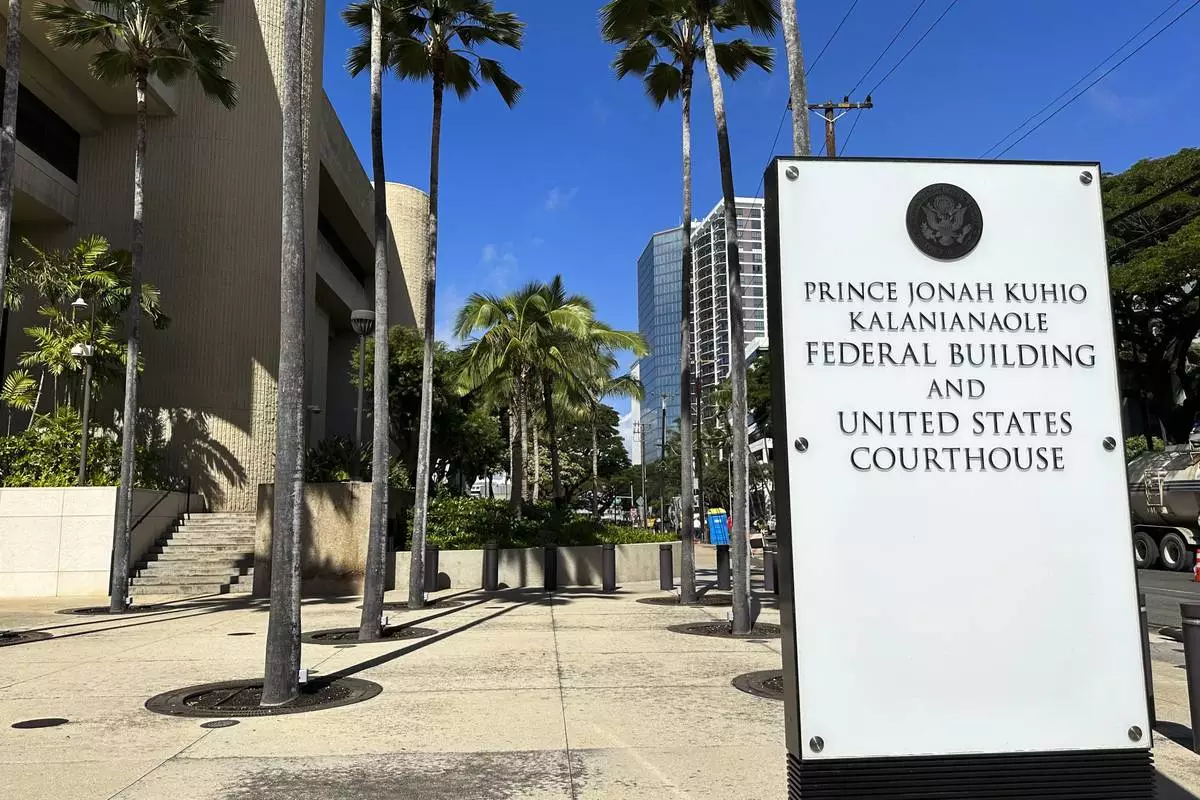
FILE - A sign for the Prince Jonah Kuhio Kalanianaole Federal Building and Courthouse is displayed outside the courthouse on Jan. 22, 2024, in Honolulu. (AP Photo/Jennifer Kelleher, File)