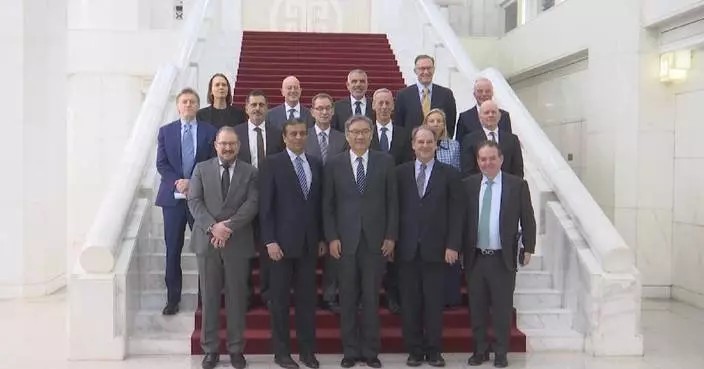
Minister of Culture of the Republic of Cuba Alpidio Alonso Grau shared his country's experience in preserving culture and popularizing education, during the Global Civilizations Dialogue Ministerial Meeting, which opened Thursday in Beijing.
Themed "Safeguarding Diversity of Human Civilizations for World Peace and Development," the two-day event has attracted over 600 guests from 140 countries and regions.
Alpidio Alonso Grau elaborated on how Cuba, which had over two million illiterate people in 1959, ensures widespread access to culture for its population.
"Cuba has shared its civilizational heritage with the world. We promote education and health as pillars of South-South corporation. We preserve and celebrate traditions like rumba and punto cubano, both recognized as intangible cultural heritage of humanity. The democratization of education and culture is the central principle of our socialist society," he said.
"To give you an example of the achievement of a Cuban revolution in education, in 1959, Cuba had just over six million people, more than two million of whom were illiterate -- some of them couldn't even write their own names -- and only three universities. Today Cuba is a nation of educated men and women with universal and free access to all levels of education. More than 50 universities, and in the universities, we have some libraries, galleries, museums, bookstores, theaters and cinemas ensuring equal cultural enjoyment for all," said the Cuban minister.
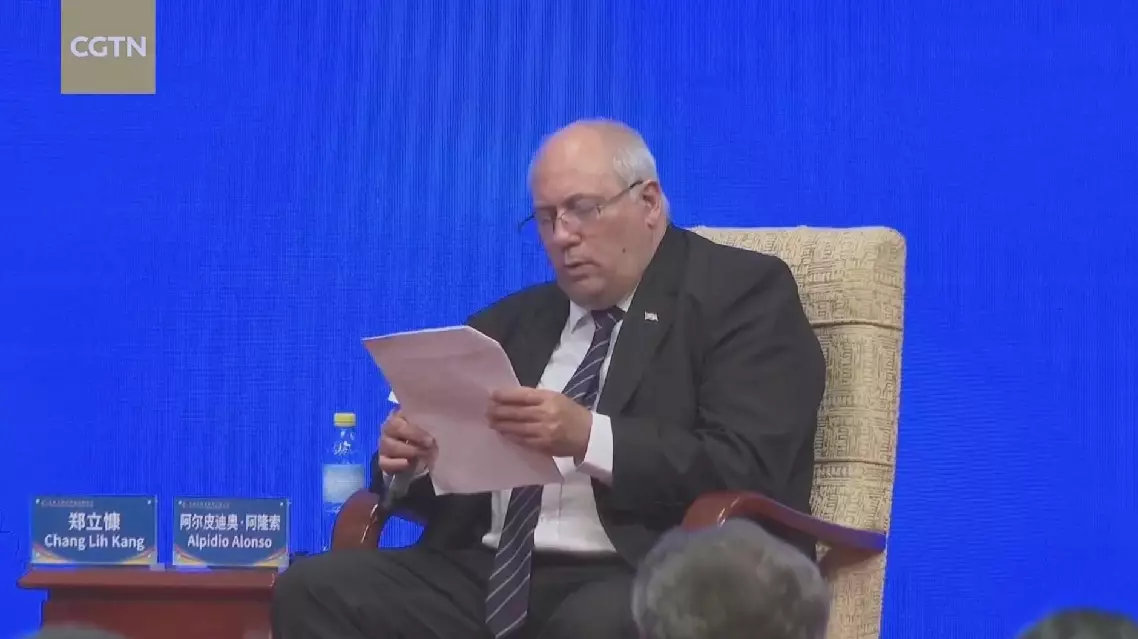
Cuban minister of culture shares experience in preserving culture, popularizing education
Hundreds of activists from Latin America, North America and Europe have arrived in Cuba as part of an international solidarity convoy, bringing over 20 tons of humanitarian aid for Cubans struggling with a severe economic and energy crisis.
The first members of the convoy arrived in Cuba by air while a second group is expected to come aboard a flotilla that sailed out of Mexico.
The first group was officially welcomed to Cuba during a ceremony in Havana, where Cuban President Miguel Diaz-Canel expressed appreciation for the solidarity at a critical time for the Cuban people.
The group brought humanitarian aid to local hospitals including medicines to treat cancer patients. The activists were briefed about the hardships currently being faced by Cubans.
Convoy organizers met with Cuban government officials and talked to the media about their initiative.
"There are deeply humanistic motivations for this convoy. That's why people are conducting these 'acopios,' these aid collections in their own communities, in their own plazas, in their own homes, packing suitcases full of basic medicines that the blockade seeks to prevent the Cuban people from accessing," said David Adler, a convoy coordinator.
Cubans have endured a deep economic crisis for the past few years, made worse by a U.S. embargo. A recent oil blockade against the country has caused a severe energy shortage.
"For us, it's a good opportunity because we are walking in the neighborhoods, we are talking to ordinary people, we are hearing people's stories. With no intermediaries, we are hearing how difficult life is right now, how it's been difficult over the last few years but how its gotten infinitely worse in the last three months because of the fuel blockade brought on by Trump," said Manolo De Los Santos, the executive director of The People's Forum.
The activists said their task is to shed light on what U.S. government policies are doing to Cuba. British Member of Parliament Jeremy Corbyn, who has joined other parliamentarians in the convoy, said that their presence in Cuba is sending a clear message.
"I think the images around the world of ordinary people coming to Cuba with the necessary equipment for children to be treated in hospital, to repair the damaged electricity system and all the rest of it is very important, and I think that will lead to pressure on governments all around the world," said Corbyn.
The 10th Summit of the Community of Latin American and Caribbean States (CELAC), which concluded in the Colombian capital Bogota on Saturday, adopted the Bogota Declaration, calling on relevant countries to abide by UN resolutions and end the economic, commercial and financial blockade against Cuba.
Cuban Foreign Minister Bruno Rodriguez said in his speech that Cuba is facing severe challenges and is engaged in a struggle for dignity and freedom. Cuba is willing to conduct serious and responsible dialogue with the United States on the basis of mutual respect, but the precondition is that neither side should interfere in each other's internal affairs or their respective political, economic and social systems.
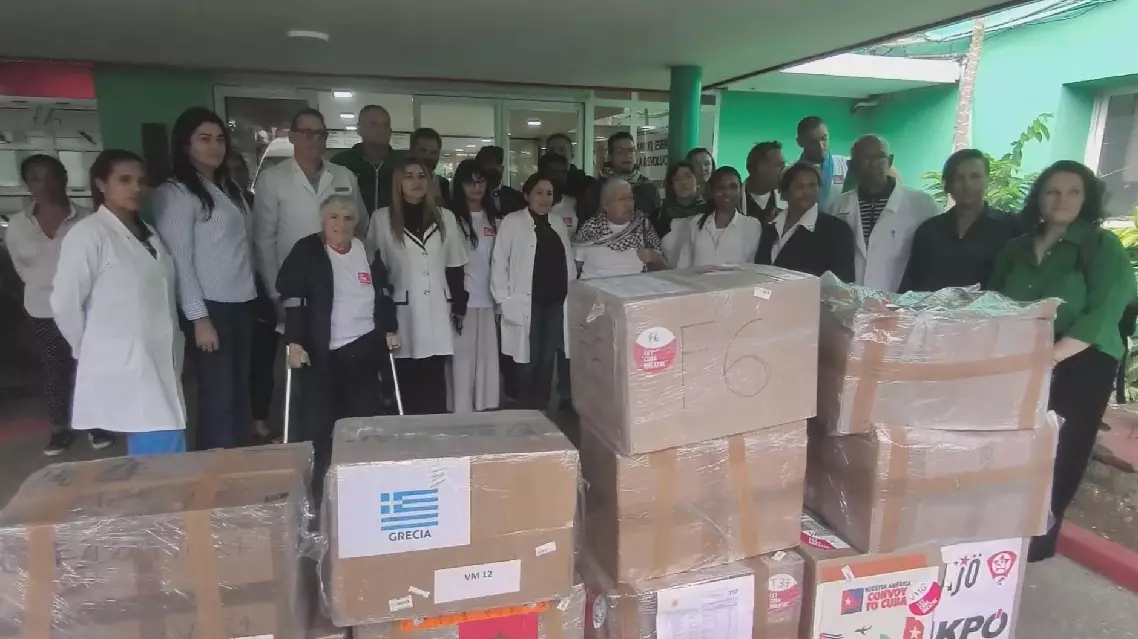
Global activists arrive in Cuba with humanitarian aid