Skip to Content Facebook Feature Image

Braskem Expands Its Own Fleet with the Vessel Brave Future and Strengthens its Global Logistics Strategy

News

Braskem Expands Its Own Fleet with the Vessel Brave Future and Strengthens its Global Logistics Strategy
News

News

Braskem Expands Its Own Fleet with the Vessel Brave Future and Strengthens its Global Logistics Strategy

2025-07-12 00:52 Last Updated At:01:01

SÃO PAULO--(BUSINESS WIRE)--Jul 11, 2025--

Braskem, (B3: BRKM3, BRKM5, and BRKM6; NYSE: BAK; LATIBEX: XBRK), a global pioneer in large-scale biopolymer production, celebrated the arrival of the Brave Future, its new vessel, today. The start of operations of the approximately R$ 500 million ship, which will operate on the route between the United States, Mexico, and Brazil, marks the expansion of the company’s strategy to increase its logistics autonomy, reduce maritime transport costs, and strengthen global competitiveness. The christening ceremony was held in China at the YAMIC shipyard, the company responsible for building the vessel.

This press release features multimedia. View the full release here: https://www.businesswire.com/news/home/20250711942559/en/

The ethane carrier has a length of 188 meters, a capacity of 36,000 m³, and is capable of transporting cargo at temperatures as low as -104°C, it was financed by Ocean Yield and will be operated by the Hartmann Reederei. The vessel is equipped with a dual-fuel engine running on bunker oil and ethane. It boasts high fuel efficiency and a propulsion system with CO₂ emissions approximately 40% lower than the average fleet in operation.

“The Brave Future is a strategic asset that expands our autonomy in the area of logistics, which provides greater predictability to operations, and strengthens our position as a global leader in the petrochemical industry,” highlights Hardi Schuck, Director of Braskem Trading & Shipping (BT&S). Before the christening, the vessel underwent sea trials, a rigorous testing phase at sea that evaluates safety, speed, maneuverability, and equipment performance before the start of commercial operations.

With the new vessel, Braskem now has two dedicated ethane carriers – the Brave Future and the Brilliant Future. In 2026, BT&S expects the delivery of four more ships to serve Braskem. This structure reinforces the company’s commitment to innovative, sustainable logistics solutions aligned with the demands of global maritime trade.

About Braskem

Braskem is a global, human-oriented petrochemical company with a forward-looking approach, cultivating strong relationships and generating value for all. Offering sustainable chemical and plastic solutions to improve people’s lives, the company has a comprehensive portfolio of plastic resins and chemical products for various sectors, including food packaging, civil construction, industrial, automotive, agribusiness, health, and hygiene, among others. Braskem believes that disruptive innovation is the only viable path to establishing a new relationship with the planet. Therefore, it chooses to act in the present by promoting plastic circularity and driving the revolution of bio-based materials. With 40 industrial units in Brazil, the USA, Mexico, and Germany, the company exports its products to customers in over 71 countries through its 8,500 team members who operate globally under a management model that demonstrates a commitment to ethics, compliance with regulations in all countries, and respect for responsible competitiveness.

More information: https://www.braskem.com

Braskem on English social media:

www.linkedin.com/company/braskem
www.facebook.com/BraskemGlobal

Braskem Welcomes the Brave Future to its Fleet of Ethane Carriers.

Braskem Welcomes the Brave Future to its Fleet of Ethane Carriers.

KYIV, Ukraine (AP) — A Ukrainian drone strike sparked a fire at an oil depot in Russia’s southern Volgograd region, regional authorities said on Saturday.

There were no immediate reports of casualties, regional Gov. Andrei Bocharov was quoted as saying in a Telegram post published on the channel of the local administration. The post did not specify the damage, but said that people living near the depot may have to be evacuated.

Ukraine’s long-range drone strikes on Russian energy sites aim to deprive Moscow of the oil export revenue it needs to pursue its full-scale invasion. Russia wants to cripple the Ukrainian power grid, seeking to deny civilians access to heat, light and running water in what Kyiv officials say is an attempt to “weaponize winter.”

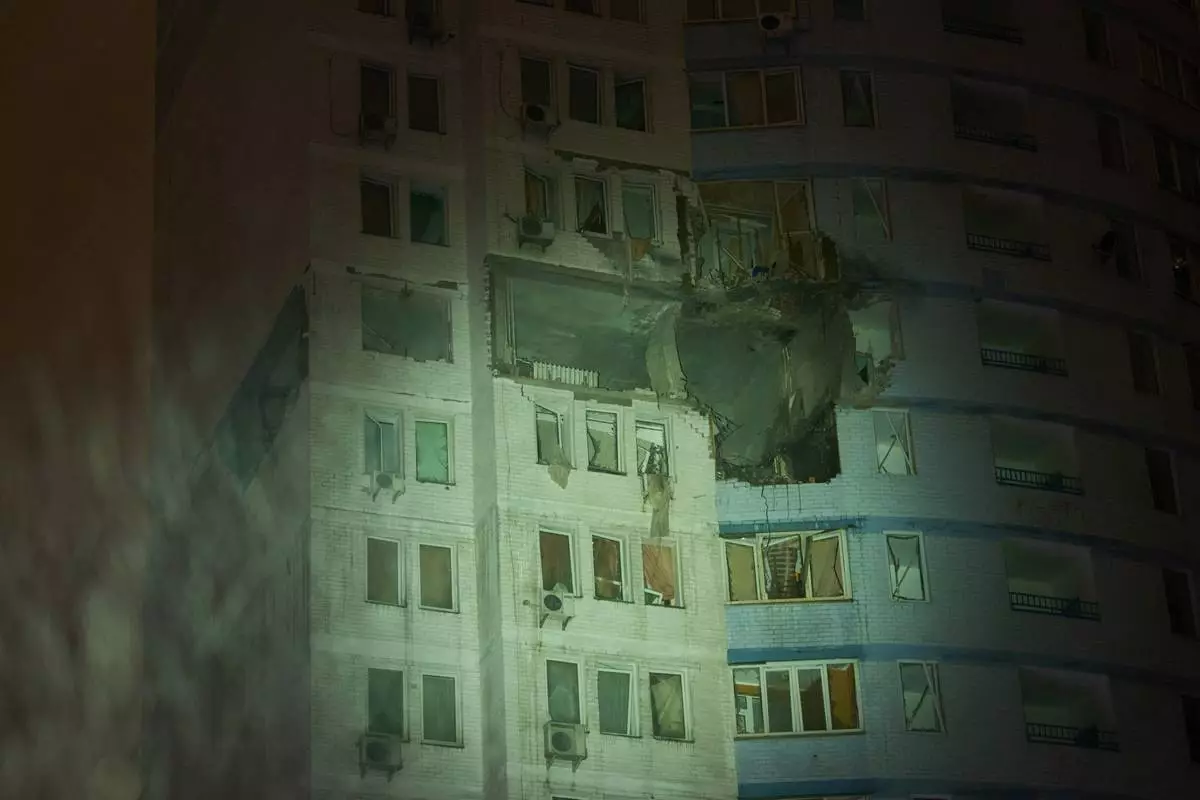
Saturday's attack came the day after Russia bombarded Ukraine with hundreds of drones and dozens of missiles overnight into Friday, according to Ukrainian officials, killing at least four people in the capital. For only the second time in the nearly 4-year-old war, it used a powerful new hypersonic missile that struck western Ukraine on Friday in a clear warning to Kyiv’s NATO allies.

The intense barrage and the launch of the nuclear-capable Oreshnik missile followed reports of major progress in talks between Ukraine and its allies on how to defend the country from further Moscow aggression if a U.S.-led peace deal is struck.

Stéphane Dujarric, spokesman for the U.N. Secretary-General, said Friday's attacks “have resulted in significant civilian casualties and deprived millions of Ukrainians of essential services, including electricity, heating and water at a time of acute humanitarian need.”

Ukrainian Prime Minister Yulia Svyrydenko said heat supply would be fully restored in Kyiv by the end of Saturday.

She said areas lying on the right bank of the Dnieper river would gradually lift emergency blackouts and return to scheduled outages. But resuming power in the left bank, where Russian attacks were concentrated, is more complicated due to significant damage to the power grid, she added.

Russia’s Defense Ministry said Saturday that its forces used aviation, drones, missiles and artillery to strike Ukrainian energy facilities and fuel-storage depots on Friday and overnight. It did not immediately specify the targets or damage.

Overnight into Saturday, Russia struck Ukraine with 121 drones and one Iskander-M ballistic missile, according to the Ukrainian air force. It said 94 drones were shot down.

Separately, the Russian Defense Ministry said 59 Ukrainian drones were “neutralized” overnight over Russia and occupied Crimea.

Follow the AP’s coverage of the war in Ukraine at https://apnews.com/hub/russia-ukraine

This photo provided by the Ukrainian Security Service on Friday, Jan. 9, 2026, shows a fragment believed to be a part of a Russian Oreshnik intermediate range hypersonic ballistic missile that hit the Lviv region. (Ukrainian Security Service via AP)

This photo provided by the Ukrainian Security Service on Friday, Jan. 9, 2026, shows a fragment believed to be a part of a Russian Oreshnik intermediate range hypersonic ballistic missile that hit the Lviv region. (Ukrainian Security Service via AP)

A residential building is damaged after a Russian air strike during a heavy snow storm in Kyiv, Ukraine, early Friday, Jan. 9, 2026. (AP Photo/Efrem Lukatsky)

A residential building is damaged after a Russian air strike during a heavy snow storm in Kyiv, Ukraine, early Friday, Jan. 9, 2026. (AP Photo/Efrem Lukatsky)

Recommended Articles