Skip to Content Facebook Feature Image

Detained immigrants at 'Alligator Alcatraz' say there are worms in food and wastewater on the floor

News

Detained immigrants at 'Alligator Alcatraz' say there are worms in food and wastewater on the floor
News

News

Detained immigrants at 'Alligator Alcatraz' say there are worms in food and wastewater on the floor

2025-07-12 05:40 Last Updated At:05:50

MIAMI (AP) — At the brand new Everglades immigration detention center that officials have dubbed “ Alligator Alcatraz,” people held there say worms turn up in the food. Toilets don't flush, flooding floors with fecal waste, and mosquitoes and other insects are everywhere.

Inside the compound's large white tents, rows of bunkbeds are surrounded by chain-link cages. Detainees are said to go days without showering or getting prescription medicine, and they are only able to speak by phone to lawyers and loved ones. At times the air conditioners abruptly shut off in the sweltering heat.

Days after President Donald Trump toured it, attorneys, advocates, detainees and their relatives are speaking out about the makeshift facility, which Republican Gov. Ron DeSantis' administration raced to build on an isolated airstrip surrounded by swampland. Detainees began arriving July 2.

“These are human beings who have inherent rights, and they have a right to dignity,” immigration attorney Josephine Arroyo said. "And they’re violating a lot of their rights by putting them there.”

Officials have disputed such descriptions of the conditions at the detention center, with spokesperson Stephanie Hartman of the Florida Division of Emergency Management, which built the center, saying: “The reporting on the conditions in the facility is completely false. The facility meets all required standards and is in good working order.”

But authorities have provided few details and have denied media access. A group of Democratic lawmakers sued the DeSantis administration to be allowed in, and officials are holding a site visit by state legislators and members of Congress on Saturday.

Insider accounts in interviews with The Associated Press paint a picture of the place as unsanitary and lacking in adequate medical care, pushing some into a state of extreme distress.

“The conditions in which we are living are inhuman,” a Venezuelan detainee said by phone from the facility. “My main concern is the psychological pressure they are putting on people to sign their self-deportation.”

The man, who asked not to be identified for fear of reprisals, characterized the cells as “zoo cages” with eight beds each, teeming with mosquitoes, crickets and frogs. He said they are locked up 24 hours a day with no windows and no way to know the time. Detainees' wrists and ankles are cuffed every time they go to see an Immigration and Customs Enforcement officer, accompanied by two guards who hold their arms and a third who follows behind, he said.

Such conditions make other immigration detention centers where advocates and staff have warned of unsanitary confinement, medical neglect and a lack of food and water seem “advanced,” according to immigration attorney Atara Eig.

Trump and his allies have touted the Florida facility's harshness and remoteness as fit for the “worst of the worst” and as a national model for how to get immigrants to “self-deport.”

But among those held there are people with no criminal records and at least one teenage boy, attorneys say.

The Venezuelan man, a client of the Immigration Clinic of the University of Miami School of Law, said he and other detainees in his tent protested the conditions Thursday and decided not to go to the dining room.

“They left us without food all night. They took a Cuban protester to a punishment cell,” said the man, who has lived in the U.S. since 2021 and arrived at the facility July 7, according to clinic director Rebecca Sharpless.

Hartman, the DEM spokesperson, disputed detainees' accounts.

“These are all complete fabrications. No such incidents have occurred. Every detainee has access to medicine and medical care as needed and detainees always get three meals, unlimited drinking water, showers, and other necessities,” she said.

But immigration attorney Katie Blankenship also spoke of a lack of medical care, relaying an account from a 35-year-old Cuban client who told his wife that detainees go days without a shower.

The woman, a 28-year-old green card holder and the mother of the couple’s 2-year-old daughter, a U.S. citizen, also spoke to AP on condition of anonymity, fearing possible retaliation.

“They have no way to bathe, no way to wash their mouths, the toilet overflows and the floor is flooded with pee and poop,” the woman said. “They eat once a day and have two minutes to eat. The meals have worms,” she added.

Lawyers say the detainees' due process rights are among numerous constitutional protections being denied.

Blankenship said she was turned away after traveling to the remote facility and waiting for hours to speak with clients, including a 15-year-old Mexican boy with no criminal charges. A security guard told her to wait for a phone call in 48 hours that would notify her when she could return.

“I said, well, what’s the phone number that I can follow up with that? There is none,” Blankenship said. “You have due process obligations, and this is a violation of it.”

Arroyo’s client, a 36-year-old Mexican man who came to the U.S. as a child, has been at the center since July 5 after being picked up for driving with a suspended license in Florida's Orange County. He is a beneficiary of the Obama-era program shielding people who arrived as children from deportation.

Blankenship's Cuban client paid a bond and was told he would be freed in Miami, only to be detained and sent to the Everglades.

Eig has been seeking the release of a client in his 50s with no criminal record and a stay of removal, meaning the government cannot legally deport him while he appeals. But she been unable to get a bond hearing.

She has heard that an immigration court at the Krome Detention Center in Miami “may be hearing cases” from the Everglades facility, but as of Friday, they were still waiting.

Payne, who reported from Tallahassee, is a corps member for The Associated Press/Report for America Statehouse News Initiative. Report for America is a nonprofit national service program that places journalists in local newsrooms to report on undercovered issues.
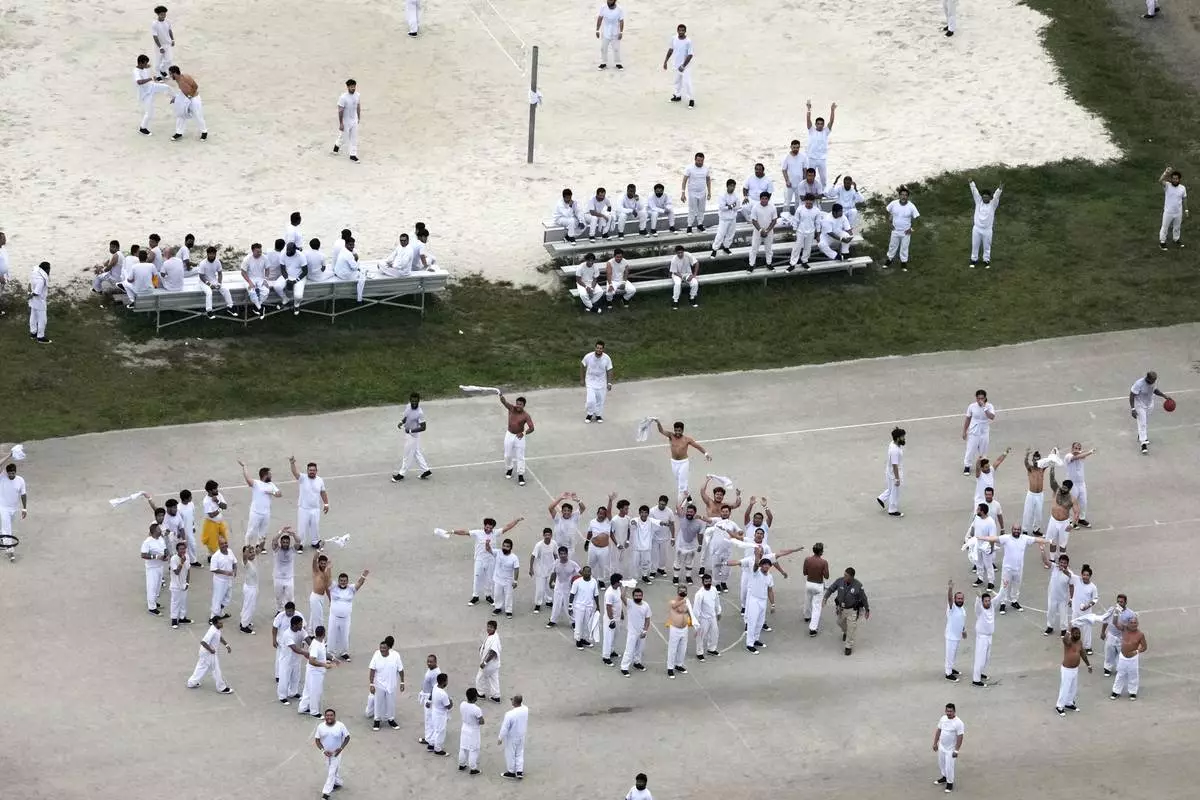
Detainees wave and spell out a rough SOS to a helicopter flying overhead, at U.S. Immigration and Customs Enforcement's Krome Detention Center, Friday, July 4, 2025, in Miami. (AP Photo/Rebecca Blackwell)
Detainees wave and spell out a rough SOS to a helicopter flying overhead, at U.S. Immigration and Customs Enforcement's Krome Detention Center, Friday, July 4, 2025, in Miami. (AP Photo/Rebecca Blackwell)

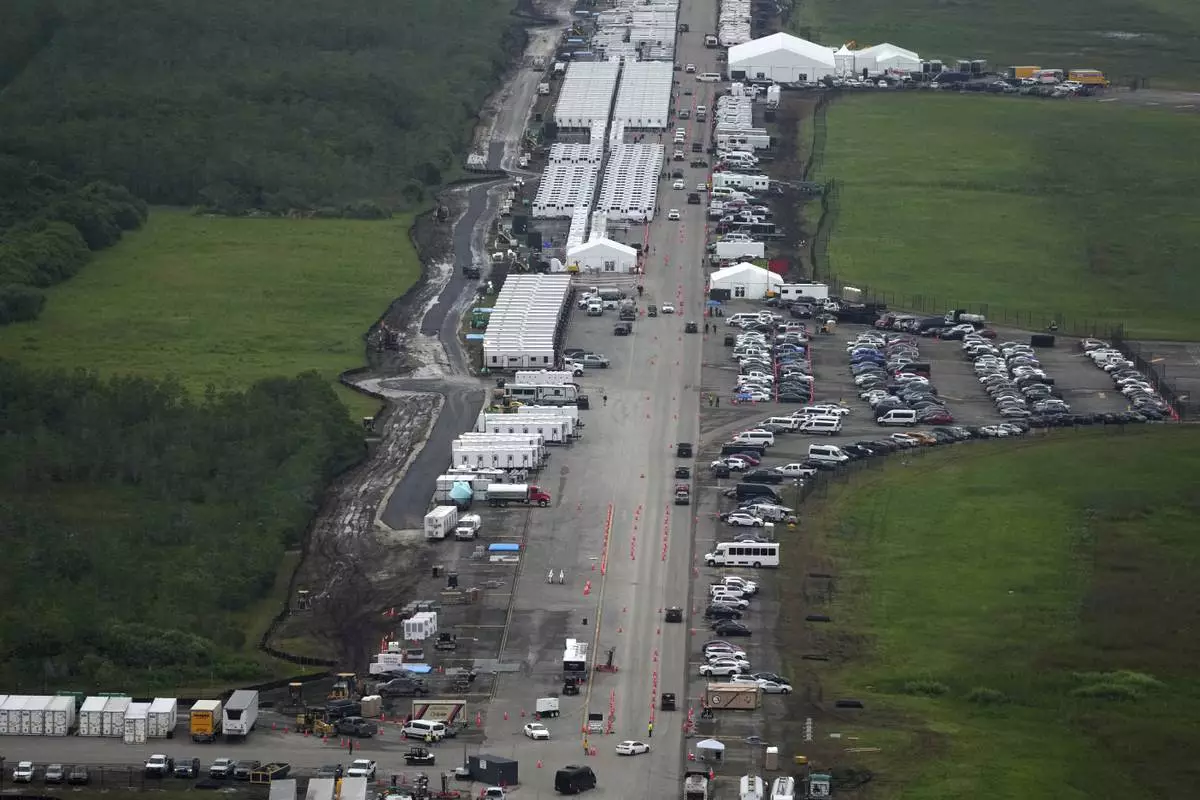
Work progresses on a new migrant detention facility dubbed "Alligator Alcatraz," at Dade-Collier Training and Transition facility in the Florida Everglades, Friday, July 4, 2025, in Ochopee, Fla. (AP Photo/Rebecca Blackwell)
Work progresses on a new migrant detention facility dubbed "Alligator Alcatraz," at Dade-Collier Training and Transition facility in the Florida Everglades, Friday, July 4, 2025, in Ochopee, Fla. (AP Photo/Rebecca Blackwell)
DUBAI, United Arab Emirates (AP) — U.S. President Donald Trump said Iran wants to negotiate with Washington after his threat to strike the Islamic Republic over its bloody crackdown on protesters, a move coming as activists said Monday the death toll in the nationwide demonstrations rose to at least 544.

Iran had no immediate reaction to the news, which came after the foreign minister of Oman — long an interlocutor between Washington and Tehran — traveled to Iran this weekend. It also remains unclear just what Iran could promise, particularly as Trump has set strict demands over its nuclear program and its ballistic missile arsenal, which Tehran insists is crucial for its national defense.

Meanwhile Monday, Iran called for pro-government demonstrators to head to the streets in support of the theocracy, a show of force after days of protests directly challenging the rule of 86-year-old Supreme Leader Ayatollah Ali Khamenei. Iranian state television aired chants from the crowd, who shouted “Death to America!” and “Death to Israel!”

Trump and his national security team have been weighing a range of potential responses against Iran including cyberattacks and direct strikes by the U.S. or Israel, according to two people familiar with internal White House discussions who were not authorized to comment publicly and spoke on condition of anonymity.

“The military is looking at it, and we’re looking at some very strong options,” Trump told reporters on Air Force One on Sunday night. Asked about Iran’s threats of retaliation, he said: “If they do that, we will hit them at levels that they’ve never been hit before.”

Trump said that his administration was in talks to set up a meeting with Tehran, but cautioned that he may have to act first as reports of the death toll in Iran mount and the government continues to arrest protesters.

“I think they’re tired of being beat up by the United States,” Trump said. “Iran wants to negotiate.”

He added: “The meeting is being set up, but we may have to act because of what’s happening before the meeting. But a meeting is being set up. Iran called, they want to negotiate.”

Iran through country's parliamentary speaker warned Sunday that the U.S. military and Israel would be “legitimate targets” if America uses force to protect demonstrators.

More than 10,600 people also have been detained over the two weeks of protests, said the U.S.-based Human Rights Activists News Agency, which has been accurate in previous unrest in recent years and gave the death toll. It relies on supporters in Iran crosschecking information. It said 496 of the dead were protesters and 48 were with security forces.

With the internet down in Iran and phone lines cut off, gauging the demonstrations from abroad has grown more difficult. The Associated Press has been unable to independently assess the toll. Iran’s government has not offered overall casualty figures.

Those abroad fear the information blackout is emboldening hard-liners within Iran’s security services to launch a bloody crackdown. Protesters flooded the streets in the country’s capital and its second-largest city on Saturday night into Sunday morning. Online videos purported to show more demonstrations Sunday night into Monday, with a Tehran official acknowledging them in state media.

In Tehran, a witness told the AP that the streets of the capital empty at the sunset call to prayers each night. By the Isha, or nighttime prayer, the streets are deserted.

Part of that stems from the fear of getting caught in the crackdown. Police sent the public a text message that warned: “Given the presence of terrorist groups and armed individuals in some gatherings last night and their plans to cause death, and the firm decision to not tolerate any appeasement and to deal decisively with the rioters, families are strongly advised to take care of their youth and teenagers.”

Another text, which claimed to come from the intelligence arm of the paramilitary Revolutionary Guard, also directly warned people not to take part in demonstrations.

“Dear parents, in view of the enemy’s plan to increase the level of naked violence and the decision to kill people, ... refrain from being on the streets and gathering in places involved in violence, and inform your children about the consequences of cooperating with terrorist mercenaries, which is an example of treason against the country,” the text warned.

The witness spoke to the AP on condition of anonymity due to the ongoing crackdown.

The demonstrations began Dec. 28 over the collapse of the Iranian rial currency, which trades at over 1.4 million to $1, as the country’s economy is squeezed by international sanctions in part levied over its nuclear program. The protests intensified and grew into calls directly challenging Iran’s theocracy.

Nikhinson reported from aboard Air Force One.

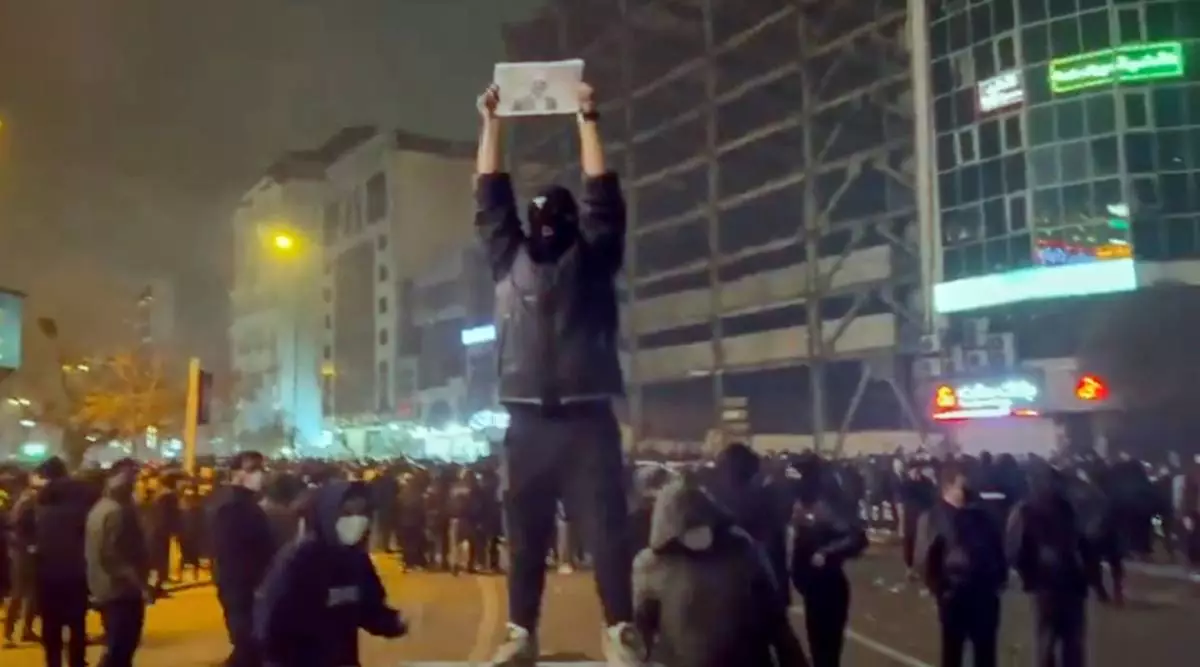
In this frame grab from video obtained by the AP outside Iran, a masked demonstrator holds a picture of Iran's Crown Prince Reza Pahlavi during a protest in Tehran, Iran, Friday, January. 9, 2026. (UGC via AP)

In this frame grab from video obtained by the AP outside Iran, a masked demonstrator holds a picture of Iran's Crown Prince Reza Pahlavi during a protest in Tehran, Iran, Friday, January. 9, 2026. (UGC via AP)

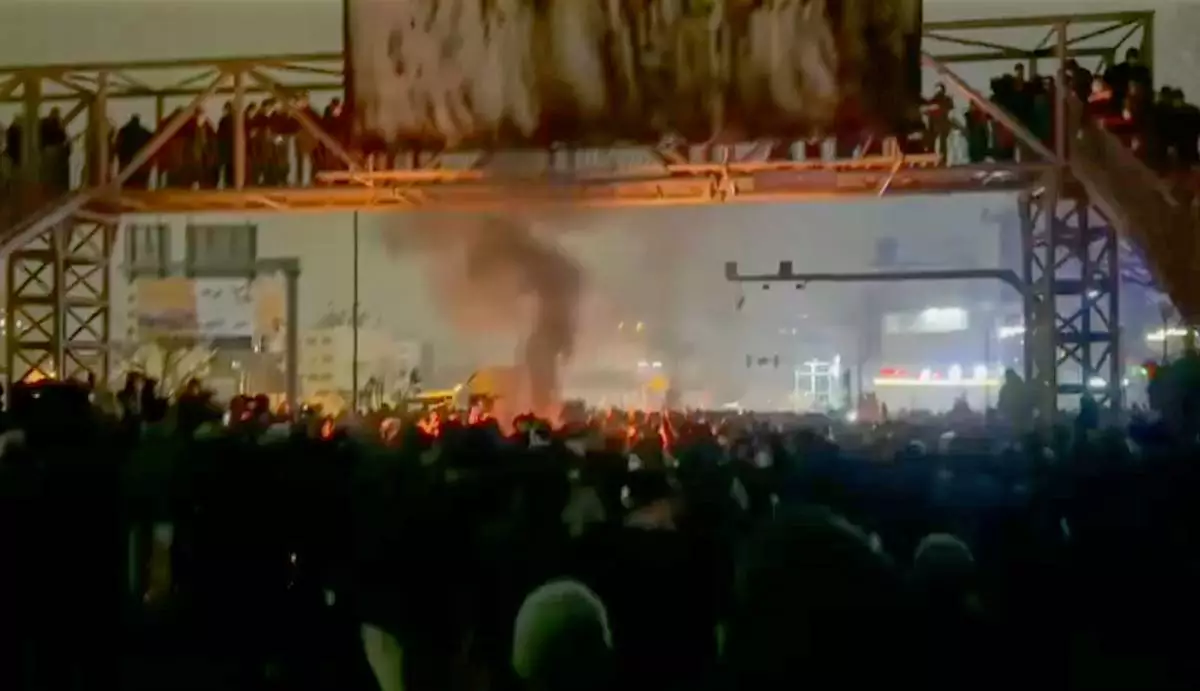
In this frame grab from footage circulating on social media from Iran shows protesters taking to the streets despite an intensifying crackdown as the Islamic Republic remains cut off from the rest of the world in Tehran, Iran, Friday, Jan. 9, 2026.(UGC via AP)

In this frame grab from footage circulating on social media from Iran shows protesters taking to the streets despite an intensifying crackdown as the Islamic Republic remains cut off from the rest of the world in Tehran, Iran, Friday, Jan. 9, 2026.(UGC via AP)

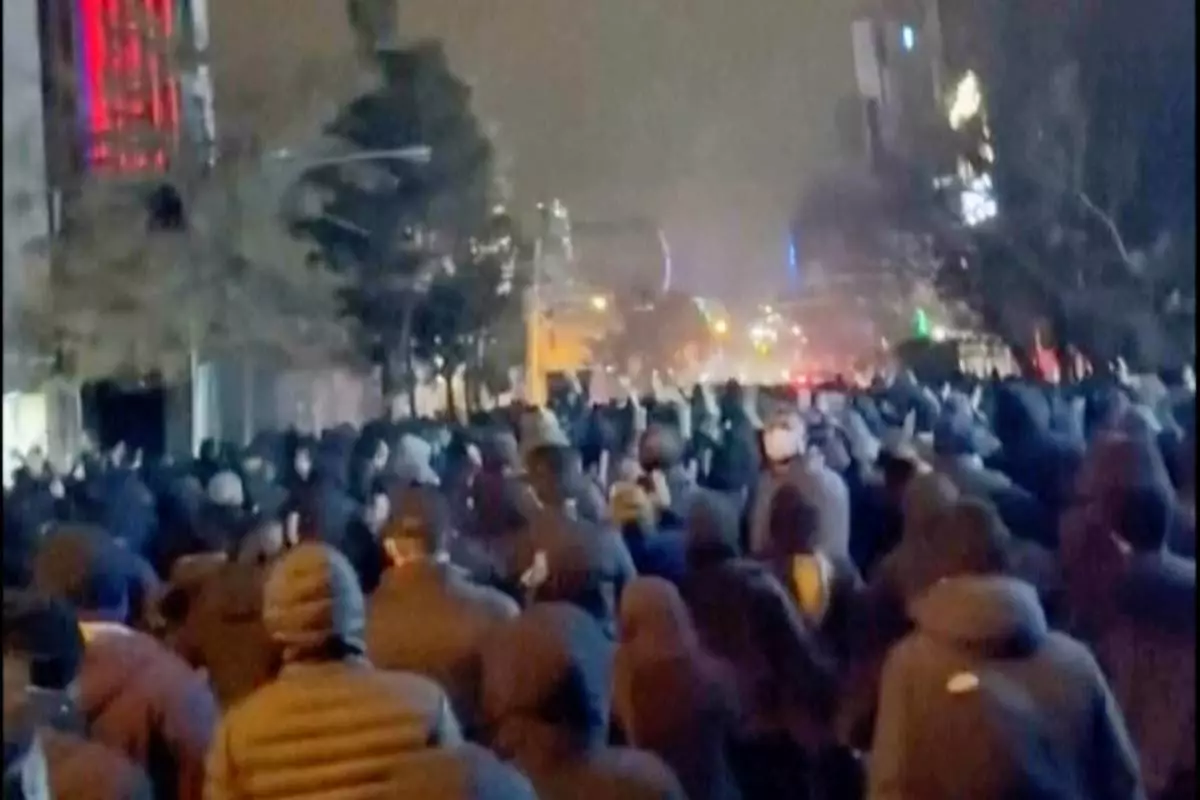
In this frame grab from footage circulating on social media from Iran showed protesters once again taking to the streets of Tehran despite an intensifying crackdown as the Islamic Republic remains cut off from the rest of the world in Tehran, Iran, Saturday Jan. 10, 2026. (UGC via AP)

In this frame grab from footage circulating on social media from Iran showed protesters once again taking to the streets of Tehran despite an intensifying crackdown as the Islamic Republic remains cut off from the rest of the world in Tehran, Iran, Saturday Jan. 10, 2026. (UGC via AP)

Recommended Articles